
Reviewed · SUSHI-MAKING CLASSES
Osaka: Roll and Authentic Sushi Making Class in Dotonbori
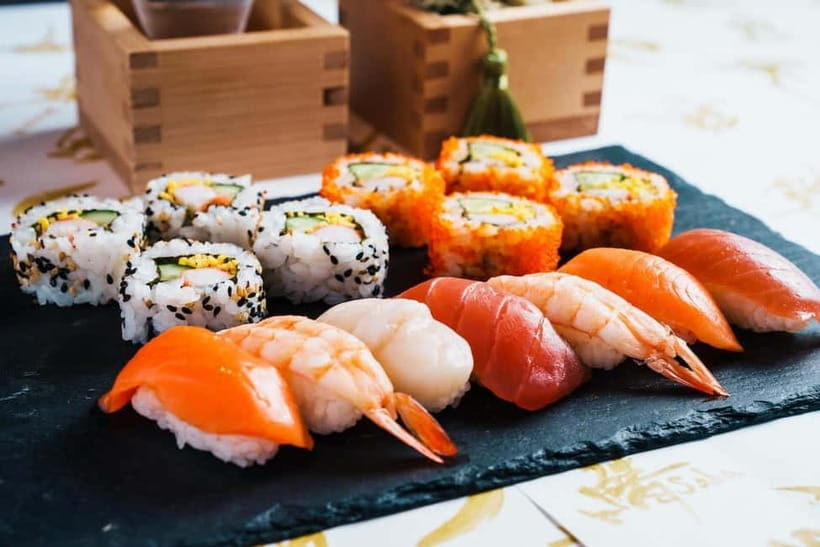
Osaka’s food culture becomes much more memorable when you get your hands on the rice. In this 100-minute sushi class, you learn two basic forms, maki rolls and nigiri, then eat what you make in a central location near Dotonbori and Shinsaibashi.
I like the friendly English-speaking instructors, who keep the class lively with jokes, questions, and useful food tips. I also like the short sushi-history quiz, since it gives the practical work some cultural context. The main drawback is timing: some of the preparation and eating can feel rushed, especially if you are careful with your sushi shapes.
Key points to know before booking
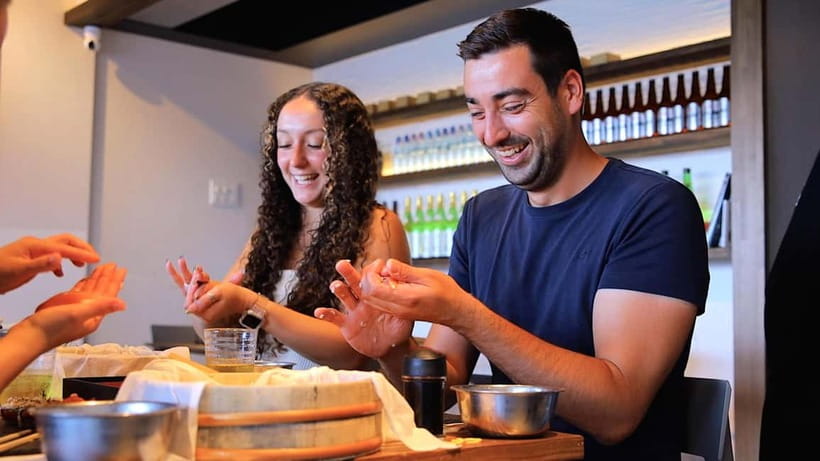
- You make both maki and nigiri: The class covers a rolled sushi style and hand-formed sushi, so you leave with more than one basic technique.
- The atmosphere is social: Instructors such as Shoki, Yui, Takara, Fujiko, and Rika use conversation, humor, and demonstrations to keep the room moving.
- Your finished sushi becomes the meal: Ingredients and instruction are included, and you eat the sushi you prepare.
- The location is easy to pair with sightseeing: The meeting point is about five minutes from Shinsaibashi Station, close to Dotonbori.
- Dietary requests need advance planning: Vegan, vegetarian, gluten-free, halal, and allergy-friendly menus are available with at least three days’ notice.
- The class suits beginners: You do not need cooking experience, and the steps are shown through demonstrations and clear instructions.
Making sushi in Osaka’s food district
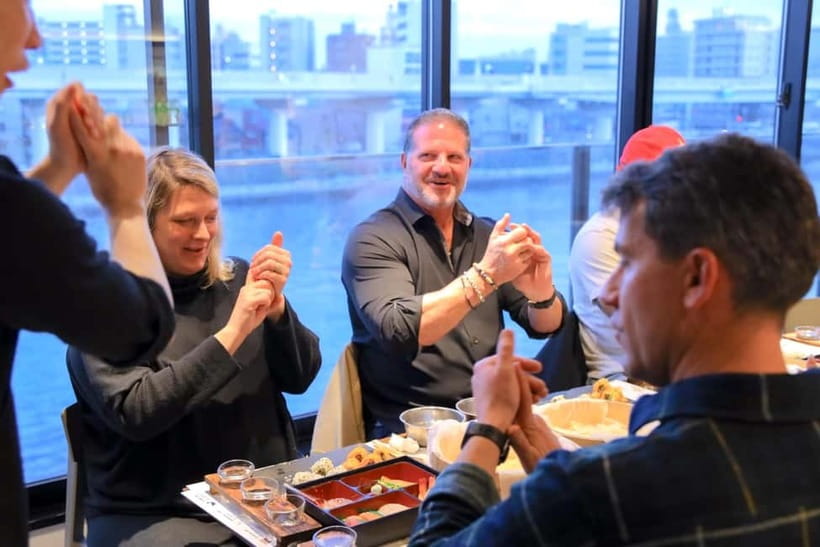
This class works because it puts a hands-on activity in the middle of one of Osaka’s best food areas. You meet on the third floor of the Galleria Acca Building, about five minutes on foot from Shinsaibashi Station. Dotonbori is close by, so you can easily combine the class with an evening of street food, shopping, or neon-lit canal views.
The setting is practical rather than fancy. One useful detail is that the entrance can be hard to spot in the concrete building. There is an elevator, but it does not go all the way to the workshop floor, so you should allow a few extra minutes to find the entrance and reach the room.
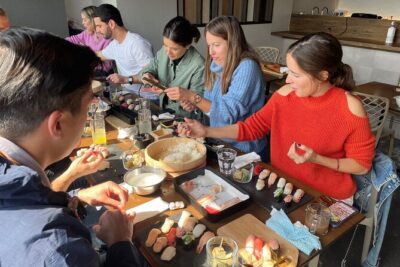
Once you arrive, the tone is relaxed. The instructors speak English and begin by getting the group talking. They may ask where you are from and use that as a way into conversation. This matters more than it might seem. A cooking class can feel stiff if everyone sits silently at separate workstations. Here, the social style helps solo visitors, couples, and families feel part of the group.
The class is suitable for complete beginners. You are not expected to know how to handle sushi rice, shape nigiri, or roll maki before you arrive. The instructors demonstrate each step, then let you try it with their help.
Other classes behind the counter in Osaka:
- Sushi Making Osaka Roll and Authentic Japanese Sushi Class
★ 5.0 · 1,220 reviews - Osaka Sushi Making Experience
★ 5.0 · 400 reviews - Osaka Sushi Making Class – Hands-On Nigiri & Rolls (Same-Day OK)
★ 5.0 · 352 reviews
A light introduction to sushi history
Before the hands-on work begins, you get a short introduction to sushi and its development. The class uses an interactive quiz, so this is not simply a lecture while you stare at a cutting board.
I like this approach because it gives you a reason to pay attention to the food in front of you. Sushi is not just raw fish placed on rice. The class explains the different forms you will make and helps you understand why a maki roll and nigiri are handled differently.
The history segment is brief, which is appropriate for a 100-minute activity. You are here to cook, not sit through a long presentation. Instructors including Shoki have been praised for making this section interesting and easy to follow, while still keeping the mood playful.
Expect plenty of energy. Several instructors use humor, audience participation, and cheerful calls during the practical section. That style will suit you if you enjoy an animated class. If you prefer a quiet, formal cooking lesson, the atmosphere may feel a little loud.
Learning the maki roll technique
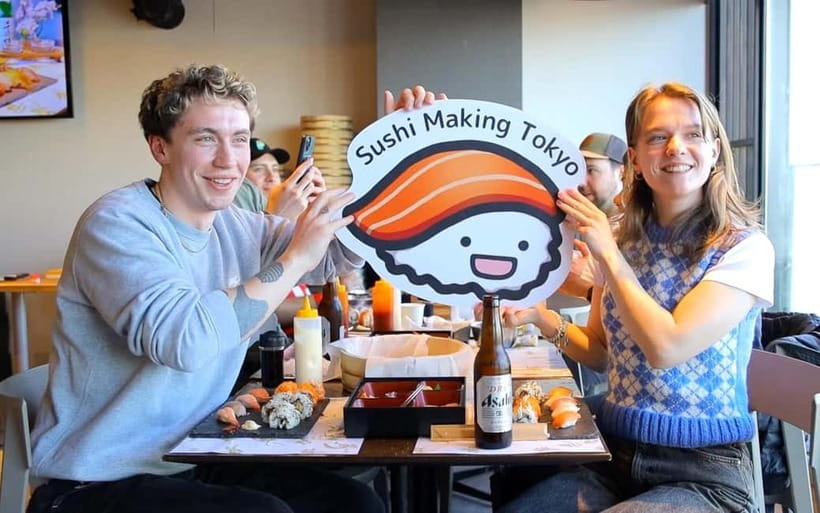
The first main technique is maki, the familiar rolled sushi made with rice, fillings, and nori. The ingredients are prepared for you, allowing the class to focus on assembly, proportion, and technique rather than spending most of the session on kitchen preparation.
You will be shown how to spread the rice, place the fillings, and roll the sushi into a firm shape. The challenge is using the right amount of rice and applying enough pressure to hold the roll together without crushing it. That is exactly the sort of small skill that is difficult to learn from a recipe alone.
The demonstrations are supported by visual explanations, and the instructors repeat the important movements slowly enough for beginners to follow. If your first roll looks uneven, that is part of the fun. The goal is not to produce restaurant-perfect pieces on your first attempt. The goal is to understand the method well enough to try it again at home.
The class does not ask you to make an enormous range of sushi. It focuses on two techniques and gives you time to practice. That is a good choice for a short session. You get a usable foundation instead of a rushed tour through many styles.
Shaping nigiri with a lighter touch
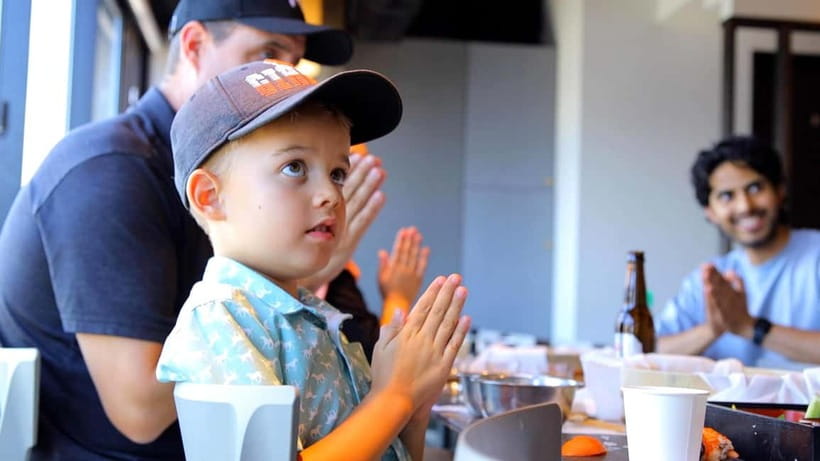
The second technique is nigiri, sushi formed by hand with a small portion of rice and a topping. This is where the class becomes more precise. The rice must be shaped without squeezing it into a hard block, and the topping needs to sit neatly on top.
The instructors guide you through the hand position and the amount of pressure to use. One memorable piece of advice from the class is to be kind to your sushi. It sounds playful, but the point is practical: handle the rice gently.
Many beginners press too hard because they want the rice to stay together. That produces a dense piece. The class helps you find the balance between structure and softness. You also get a better sense of why nigiri requires a different touch from a maki roll.
The instructors keep an eye on the room and offer help as people work. Yui, Shoki, Takara, Fujiko, Rika, and other members of the team are repeatedly singled out for patience, humor, and clear explanations. Names and instructors can vary by session, but the English-language guidance is part of the experience.
Same base, a different sort of day:
- Osaka Go Karting Tour with Funny Costume
★ 5.0 · 2,658 reviews - Osaka Castle: Museum and Tower Entry Ticket
★ 4.5 · 2,380 reviews - Osaka: Shinsekai Food Tour with 13-15 Dishes at 5 Eateries
★ 4.8 · 2,204 reviews - Osaka Food Tour: 13 Dishes at 5 Local Eateries
★ 5.0 · 2,149 reviews
The food you prepare and eat
A major advantage here is that the food you make is also your meal. You are not preparing a symbolic sample and then being sent elsewhere for lunch. You eat the sushi after the practical portion ends.
The amount is intended to be satisfying. One detailed description of the session refers to six pieces of maki and six pieces of nigiri, although the exact presentation can depend on the class setup. You receive ingredients as part of the activity, and the food is generally treated as a proper meal rather than a tiny tasting.
The quality of the ingredients has earned strong praise, and the clean working area adds confidence. You will still need to pay attention during the demonstrations. As one instructor’s joke makes clear, the better you follow the steps, the better your finished sushi will look.
There is one timing issue to keep in mind. Some people have felt hurried while finishing their sushi and then eating it. The class is only 100 minutes, and the instructors need to keep everyone on schedule. If you like to photograph each piece, chat at length, or eat slowly, you may wish the final meal lasted longer.
My advice is simple: listen closely at the start, keep your work area organized, and do not spend too long trying to make one perfect roll. You will enjoy the meal more if you leave yourself enough time to eat.
A social class with a small-group feel
The class has been described as small and intimate, which is important for a practical activity. You want to see the demonstration clearly and be able to ask for help without waiting too long.
The instructors also make an effort to include the people around the table. They ask about home countries, talk about food and travel, and may suggest other places to eat or visit in Osaka. That informal exchange is one of the strongest parts of the class.
Solo visitors should feel comfortable booking. You do not need to arrive with a group to make the activity work. Couples can treat it as a shared date activity, while families can use it as a break from sightseeing. Children will likely enjoy the rolling and shaping, though the supplied information does not set a specific minimum age, so check the booking details if that matters for your group.
The mood is cheerful and sometimes theatrical. Calls of Hoi, hoi, hoi are part of the class spirit. You may find it amusing and infectious, or a little much if you want a subdued culinary lesson. Either way, you should know that this is designed as an entertaining cultural activity, not a silent chef-training course.
Dietary choices and menu planning
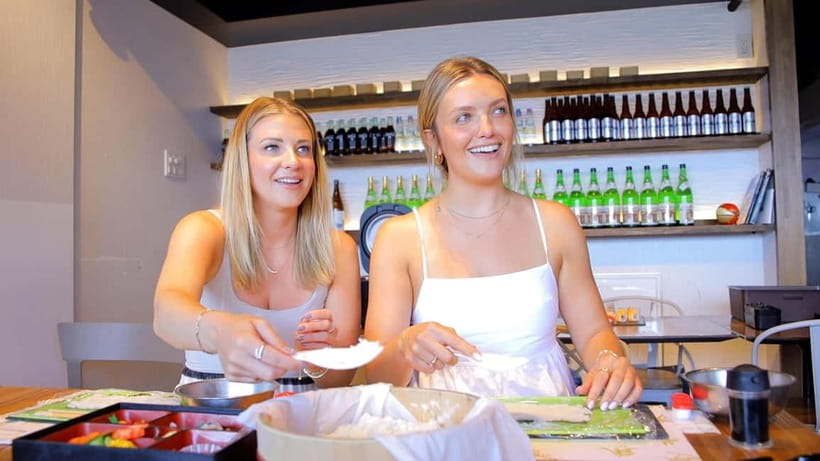
The class can accommodate vegan, vegetarian, gluten-free, halal, and allergy-related menu changes. Meat, nuts, fruits, and dairy are not used in the standard menu information provided for this activity.
You must contact the provider when you reserve if you need a menu change. The deadline is three days in advance, and same-day changes cannot be handled. The class does not accept requests for specific individual ingredients, so you should ask about the available menu rather than assume every preference can be met.
This is a useful option for a mixed group. One person can request halal food while others take the standard menu, provided the request is made in time. Still, you should communicate clearly before paying and confirm that the available ingredients suit your needs.
Is $45 a fair price?
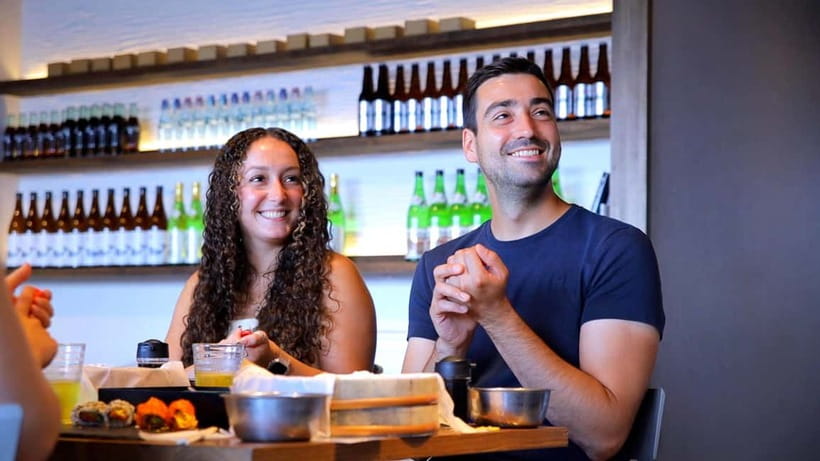
At $45 per person, the price is reasonable for a central Osaka activity that includes the instructor, ingredients, and the sushi you prepare. You are paying for more than a meal. The value comes from the combination of food, instruction, cultural background, and an easy-to-reach location.
Compared with simply buying sushi, the class costs more. A quick meal in Osaka can be cheaper, especially if you choose casual restaurants or food-stall snacks. But a restaurant meal will not teach you how to roll maki, form nigiri, or repeat the process at home.
The location adds value for a short Osaka schedule. You do not need hotel pickup, and you can reach the meeting point from Shinsaibashi Station in about five minutes. Afterward, you can continue through Dotonbori without spending time crossing the city.
I would consider the price particularly fair for couples, families, and anyone who enjoys food-based activities. If you are only looking for the cheapest possible lunch, this is not the best deal. If you want a meal with a skill attached to it, the cost makes sense.
Practical timing and accessibility notes
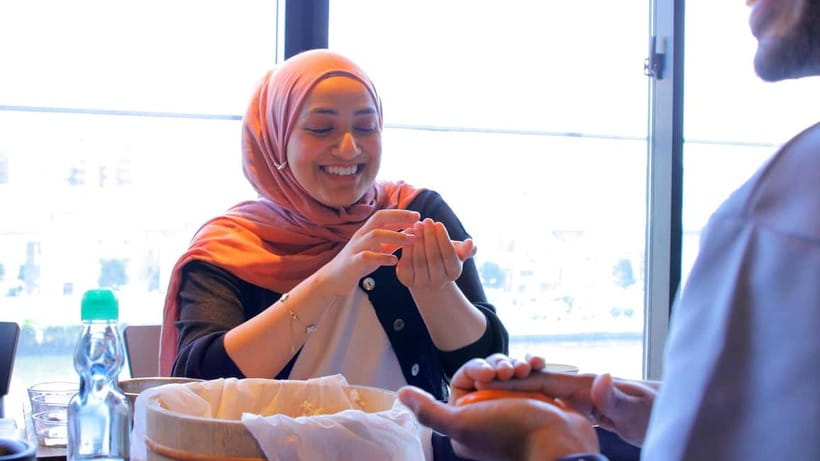
The activity lasts 100 minutes, with starting times depending on availability. That makes it easy to place between sightseeing plans, but you should avoid scheduling something immediately afterward. The class can feel fast during the final stage, and you will want a little time to find the building and settle in.
The meeting point is on the third floor of the Galleria Acca Building. The building has an elevator, though it does not reach the workshop floor. The activity is described as wheelchair accessible, but if you use a wheelchair, it would be sensible to confirm the exact route and the stairs or floor access before booking.
Cancellation is flexible up to 24 hours before the start time for a full refund. A reserve-now, pay-later option is also available, which can help if your Osaka schedule is still shifting.
Who will enjoy this sushi class most?
I would recommend it to you if you want a hands-on Osaka memory rather than another sightseeing stop. It is especially good for:
- First-time sushi makers who want patient guidance.
- Couples looking for a shared activity near Dotonbori.
- Families who enjoy practical, food-centered experiences.
- Solo visitors who like meeting people in a relaxed setting.
- Food lovers who want to understand the difference between maki and nigiri.
- Visitors who need vegan, vegetarian, gluten-free, halal, or allergy-friendly options with advance notice.
You may want to choose something else if you dislike group activities, do not enjoy energetic instructors, or want a long, technical chef lesson. The class teaches useful basics, but it is built around fun and participation rather than professional culinary training.
Should you book the Osaka sushi class?
Yes, if you want an approachable food activity in a central part of Osaka. The strongest reasons to book are the clear English instruction, warm staff, clean setting, good ingredients, and the chance to eat the sushi you make.
Book early enough to arrange any dietary changes, and arrive with realistic expectations about the pace. You are likely to laugh, learn a few useful techniques, and leave with a better understanding of why maki and nigiri feel so different to prepare.
For $45, this is a good-value choice for anyone who wants more than a restaurant meal. Just keep an eye on the clock, especially when it is time to eat.
FAQ
Where is the sushi-making class held?
The meeting point is on the third floor of the Galleria Acca Building, about five minutes on foot from Shinsaibashi Station. It is near Dotonbori and Shinsaibashi in central Osaka.
How long does the activity last?
The class lasts 100 minutes. Starting times vary, so you should check availability for your preferred date.
What types of sushi will I make?
You will make two types of sushi: maki rolls and authentic Japanese sushi in the nigiri style.
Is the class taught in English?
Yes. English-speaking local instructors lead the class, and English is the listed language.
Can I request a special menu?
Yes. Vegan, vegetarian, gluten-free, halal, and allergy-friendly menu changes are available. You must request a change at least three days in advance, and same-day changes are not accepted. Specific individual ingredient requests are not accepted.
What does the $45 price include?
The price includes the cooking class, ingredients, and instructor. Hotel pickup and drop-off are not included.
Just added in Osaka
- Osaka: Mind & Spirit Balance Temple Reiki Healing★ 5.0 · 41 reviews
- Osaka Temple Cool Foot Bath & Matcha Experience〈45min〉★ 4.9 · 82 reviews
- Full Day Kyoto Tour : Bamboo Forest, Golden Temple, Fushimi Inari★ 5.0 · 84 reviews
- Osaka: Minoh, Katsuoji Temple, & Minoh Falls Full-day Tour★ 4.9 · 172 reviews
- OSAKA NIGHT FUSION Japanese Taiko Kabuki Samurai Dance Show★ 4.8 · 155 reviews
- Ramen and Gyoza Cooking Class in Osaka★ 5.0 · 202 reviews
- Osaka: A Modern Samurai, Kabuki, Taiko, & Dance Show★ 4.5 · 66 reviews
- Osaka: Samurai Training Experience KENDO in Osaka★ 5.0 · 111 reviews
Sushi-Making Classes, compared.
Sushi Making Tokyo Roll and Authentic Japanese Sushi Class
Read our review →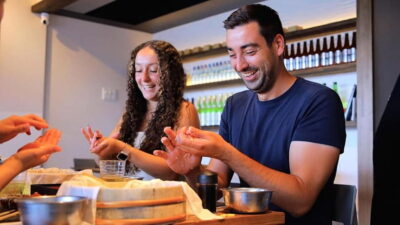
Roll and Authentic Sushi Making Class in Asakusa
Read our review →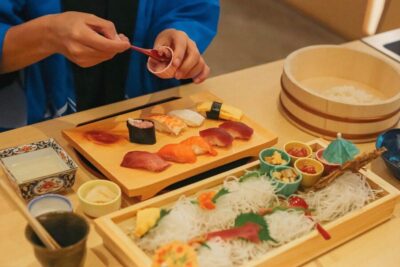
Sushi Making Class in a Happi Coat near a Famous Spot
Read our review →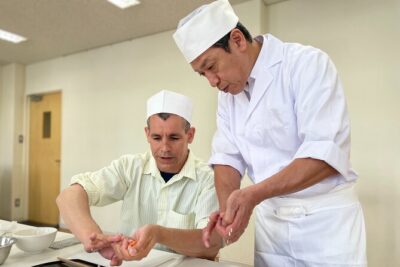
Tokyo Sushi Making Class in Tsukiji with Professional Chef
Read our review →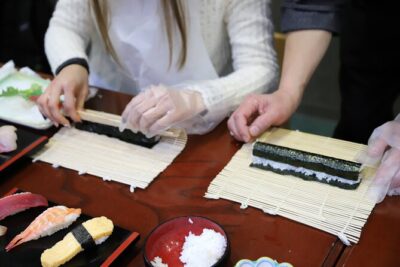
Tsukiji Fish Market Guided Tour and Sushi Making with Pro Chef
Read our review →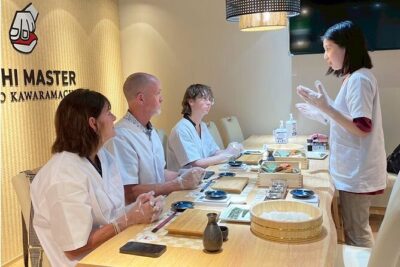
Sushi Making in Kyoto! Same-day bookings welcome!
Read our review →
Tsukiji Fish Market Sushi Making Class with Pro Chef
Read our review →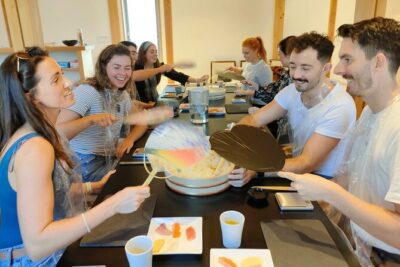
The Original Small-Group Sushi Making Class in Kyoto
Read our review →Browse the lists this tour appears in