
Reviewed · SUMO EXPERIENCES
Tokyo: Challenge Sumo Wrestlers and Enjoy Meal
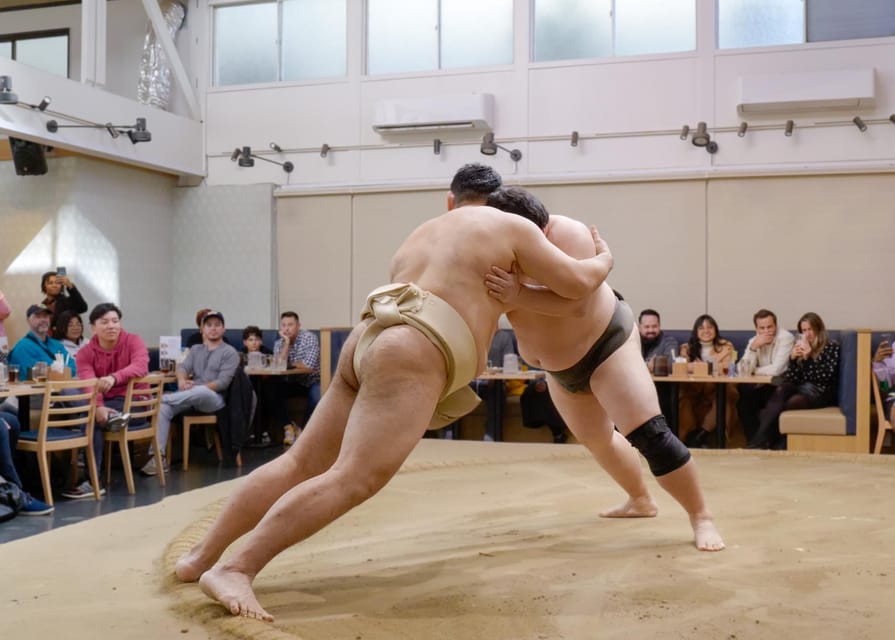
The main event is not simply watching sumo. It is seeing former professionals clash in the dohyo, learning the meaning behind their movements, then stepping into the ring yourself in a padded costume. The English-speaking host keeps the presentation light, clear, and easy to follow.
I like the hands-on contest, especially for families, and I like the chance to ask questions and take a photo with the wrestlers afterward. The meal adds real value, too, since you are not paying only for a short demonstration. The main drawback is sound: a seat near the front helps you hear the commentary, particularly if other groups are talking.
Key points at a glance
- Former professionals in the ring: Watch retired sumo wrestlers demonstrate throws, pushes, and other familiar techniques.
- A real tryout for you: Put on a sumo suit and test your strength in a friendly bout.
- English explanation: Learn basic sumo terms, customs, and the sport’s link to Japanese culture.
- Meal included: Choose tonkatsu for lunch or sukiyaki for dinner when booking.
- Photo opportunity: Pose with the wrestlers at the end, even if you skip the costume bout.
- Simple Tokyo access: Walk about 5 to 8 minutes from Kikukawa Station on the Toei Shinjuku Line.
Meeting Former Sumo Wrestlers Near Kikukawa
This experience takes place in Tokyo’s Kanto region, close to Kikukawa Station. From the station’s A1 exit, allow roughly 5 to 8 minutes on foot. The activity begins and ends at the same meeting point, so you will not need to work out a second pickup location after the meal.
That simple setup matters. You do not get hotel pickup, a private vehicle, or transport between sights, so you should plan your route before arriving. Kikukawa is on the Shinjuku Line, making the meeting point practical if you are already moving around eastern or central Tokyo.
The setting is arranged for a meal and a presentation rather than for a formal tournament. That gives the event a friendly, social feel. You are close enough to see the wrestlers’ movements, but seating still affects how well you hear the host and the questions from the room.
The supplier places the best available seats in booking order. If your party is large, you may be split between tables. That is worth knowing before you book, especially if keeping a family or group together is important.
Other ways to see sumo in Tokyo:
- Tokyo: Sumo Show Experience with Chicken Hot Pot and a Photo
★ 4.8 · 6,678 reviews - Tokyo: Sumo Show and Dining Experience
★ 4.8 · 2,742 reviews - the SUMO show
★ 5.0 · 1,960 reviews
The Sumo Introduction: Terms, Customs, and Culture
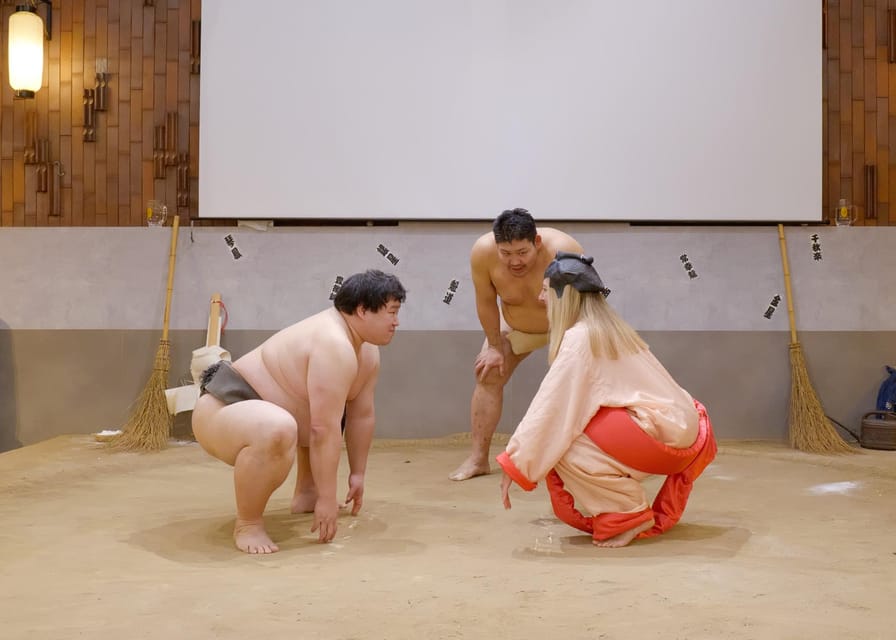
The program opens with an explanation of sumo and its place in Japanese culture. You learn commonly used terms while watching the former wrestlers prepare and demonstrate their techniques.
That introduction helps if sumo is new to you. Without context, a bout can look like two large men pushing one another until someone steps outside the ring. With the basic vocabulary and rules explained, you can pay attention to balance, timing, footwork, and the effort required to force an opponent out of the dohyo.
The host presents the material in English, with Japanese also available. The English explanation has been praised for being clear enough for an international audience, and humor helps keep the talk from feeling like a lecture. The former wrestlers are part of the presentation, not just silent performers, so you get a sense of their personalities as well as their athletic ability.
I would treat this as an introduction rather than a full study of sumo. You will not learn everything about the sport’s ranking system, stable life, or tournament calendar in a short meal experience. You will, however, leave with a better grasp of the basic action and the cultural respect surrounding the ring.
Watching the Exhibition Match in the Dohyo
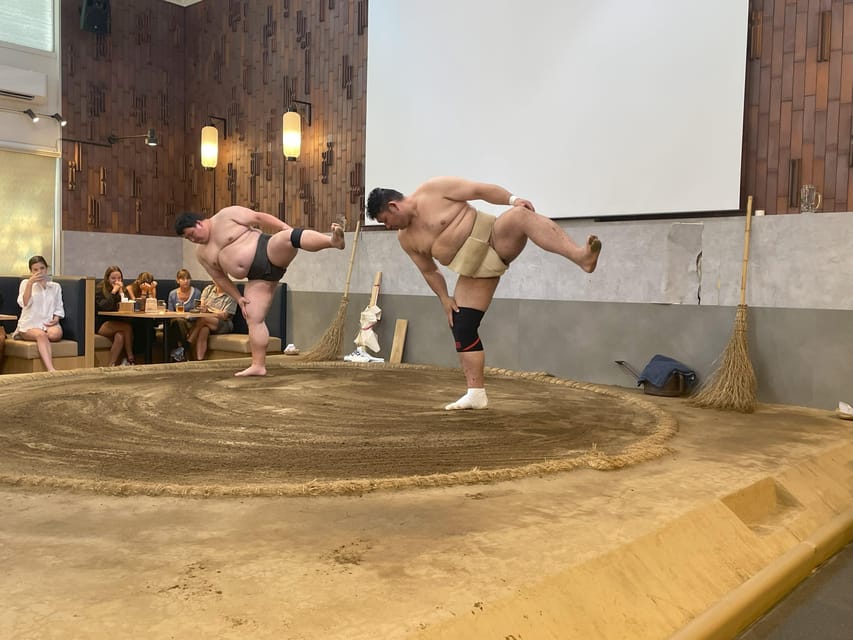
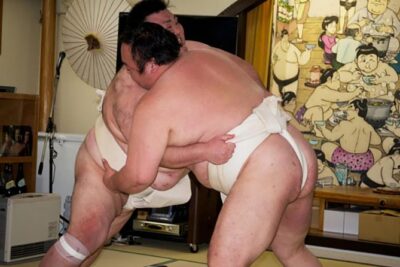
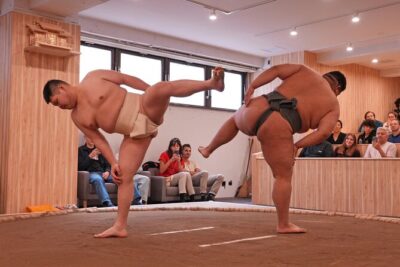
The demonstration is the heart of the afternoon or evening. Two retired wrestlers face one another in the ring, showing the force and technique that make sumo more than a contest of size.
The match is designed for an audience, so expect explanation and humor alongside the athletic display. That balance works well. You get to see the wrestlers make contact and use familiar maneuvers, but the mood remains welcoming rather than intimidating.
The presentation has a useful advantage over watching a tournament from a distance. The former wrestlers can pause, explain what happened, and respond to questions. You are not left trying to understand every movement on your own.
For the best experience, listen closely during the demonstration. The action itself may be easy to see from most seats, but the commentary can be harder to catch if the room becomes noisy. A front seat is not essential for the view, but it is useful for the explanation and question-and-answer portions.
The event has been popular with both adults and children. Younger children may especially enjoy the physical comedy and the chance to see a wrestler up close. Older children and adults are more likely to appreciate the details about technique and tradition.
Putting on the Sumo Suit Yourself
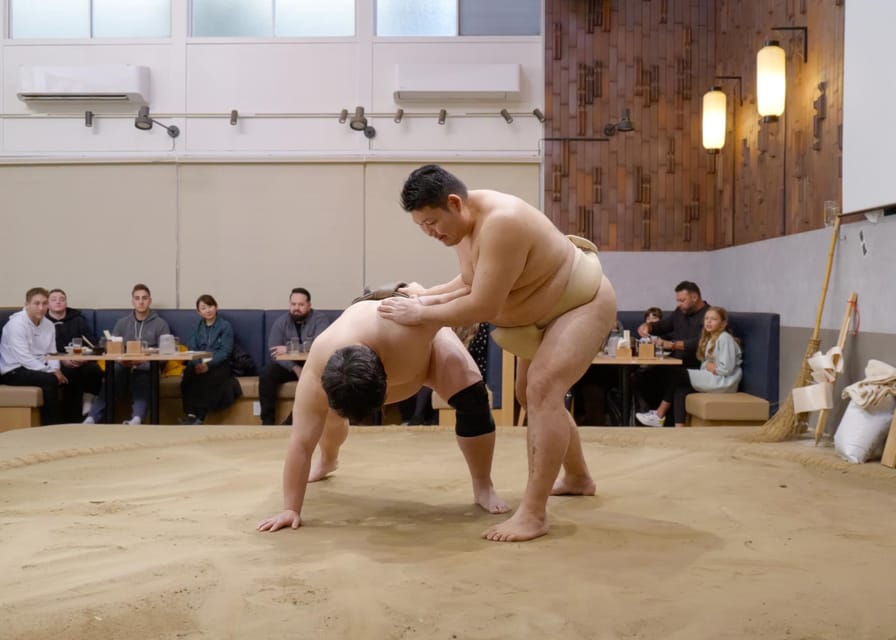
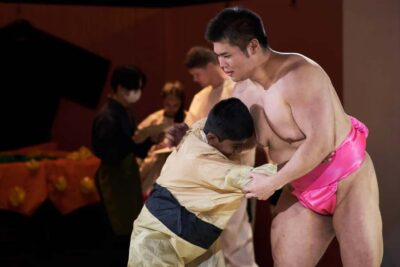
After watching the professionals, you can put on a sumo costume and try the ring. This is the most playful part of the experience, and it turns you from an observer into part of the show.
The suit allows you to challenge a wrestler in a controlled, friendly way. You should not expect to defeat a former professional, but you can feel how difficult it is to shift someone who knows how to use stance, weight, and balance. The point is the laugh and the memory, not a serious athletic test.
This portion suits families especially well. Children in one family described having a great time, and the activity gives them something to do instead of asking them to sit quietly through a cultural talk. Adults can join in, too, although you should follow staff instructions and use good judgment.
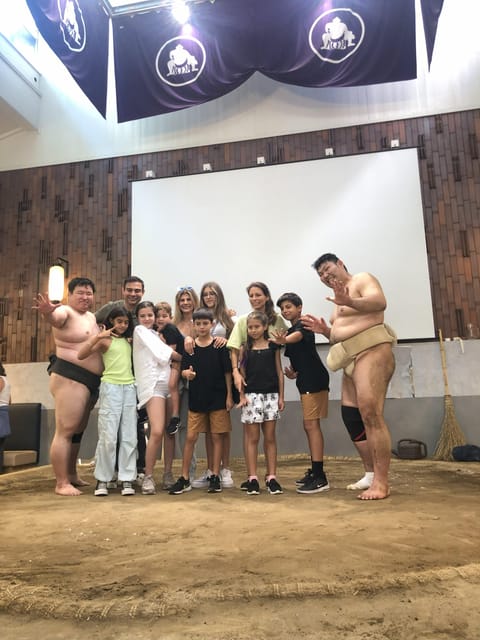
You do not have to wrestle to get a photo with the performers. Everyone has a photo opportunity at the end, so you can skip the bout and still take home the main souvenir. That is useful if you have a bad knee, do not want physical contact, or simply prefer to watch.
Staff can ask you to leave if your behavior becomes troublesome, and there is no refund in that case. This is common-sense guidance, but it matters in a small venue where the activity depends on cooperation.
Same base, a different sort of day:
- Mt Fuji and Hakone 1-Day Bus Tour Return by Bullet Train
★ 5.0 · 26,383 reviews - 1-Day Tokyo Bus Tour
★ 5.0 · 14,250 reviews - Tokyo: TOKYO SKYTREE® Admission ticket
★ 4.5 · 11,192 reviews - Tokyo: teamLab Planets TOKYO Digital Art Museum Entry Ticket
★ 4.6 · 9,779 reviews
Tonkatsu at Lunch or Sukiyaki at Dinner
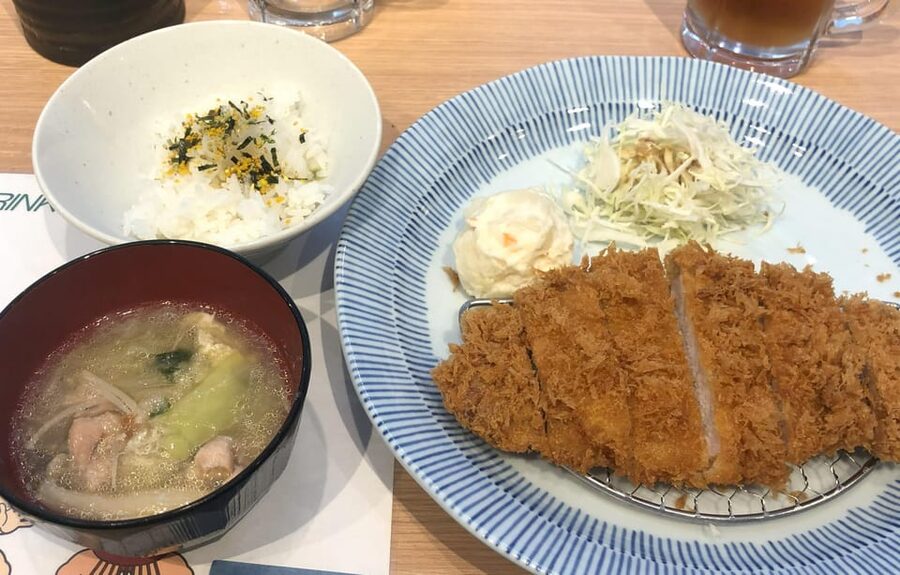
Your booking includes either lunch or dinner, depending on the option you choose. The lunch choice is tonkatsu, a deep-fried pork cutlet. The dinner choice is sukiyaki, a hot pot of beef and vegetables in a sweetened soy broth.
The meal changes the feel of the outing. You are not rushing away after the demonstration, and the table gives you time to talk about what you have just seen. Several parts of the program may be arranged around eating, photos, and questions, so allow a little flexibility beyond the advertised 1.5 hours.
One session was described as lasting about two hours once the introduction, exhibition, costume bout, photos, meal, and question period were all included. The stated duration is 1.5 hours, and starting times vary, so check the current schedule and avoid booking a tight connection afterward.
The food is part of the value, though you should keep expectations sensible. This is a cultural activity with a meal, not a specialist restaurant tour. The tonkatsu has been well received, and one lunch option included a Genghis Khan-style lunchbox and chanko-nabe, the hearty food traditionally associated with sumo wrestlers. The exact meal depends on the option selected when you book, so read that choice carefully.
You may bring your own food and drink, and you should advise the supplier about dietary requirements. Additional food and drinks are not included. Infant meals are also not included, and an infant rate applies only when the child does not occupy a seat.
Questions, Photos, and Time With the Wrestlers
The final part gives you a chance to ask questions and take photos. This is where the event becomes more personal than a standard stage performance.
You can ask about the wrestlers’ careers, training, techniques, or daily life. The former professionals are described as kind and accommodating, and their willingness to answer questions helps connect the sport to real people rather than leaving it as a distant tradition.
The photo session is practical and well organized. If you want a picture with both wrestlers, you do not need to risk a wrestling bout first. Bring your camera or phone and be ready when your group is called.
Photography also gives children a clear finish to the activity. They may not remember every sumo term, but a photo beside a retired wrestler usually makes the experience easier to recall.
What $117 Buys You
The price is about $117 per person. That is not a bargain-basement Tokyo activity, but it includes several parts that would otherwise require separate planning: an English explanation, former professional wrestlers, a live demonstration, the costume challenge, a photo opportunity, and lunch or dinner.
I think the value is strongest when you are not visiting Tokyo during a grand sumo tournament. Tournament tickets can be difficult to arrange, and the schedule may not match your trip. This experience gives you a direct introduction to the sport at a predictable time, with food included.
It is also a better fit for people who want participation rather than a passive performance. If all you want is to watch a formal bout, this will not replace a tournament. If you want to understand the basics, meet former wrestlers, try the ring, and enjoy a meal, the price is easier to justify.
The cost does not include transport to or from the venue, hotel pickup, or extra drinks and food. Add your train fare and allow enough time to reach Kikukawa without rushing.
Who Will Enjoy This Activity Most
I would recommend it first to families with children, first-time visitors to Japan, and anyone curious about sumo but unable to attend a grand tournament. The interactive section keeps the pace moving, and the meal makes the experience feel like a complete outing.
It also works well for mixed-age groups. One person can focus on the cultural explanation, another can enjoy the athletic display, and children can look forward to the costume bout and photos.
You may want to skip it if you strongly prefer quiet, formal cultural events. The mood is light and humorous, and the room can become noisy. It is also not ideal if you need a precisely timed activity, since some sessions may run closer to two hours.
People with dietary concerns should contact the supplier before arrival. The information provided does not spell out every available substitution, so do not assume a particular meal can be changed without notice.
Practical Tips for a Better Visit
- Arrive with enough time to walk from Kikukawa Station’s A1 exit. The walk is short, but Tokyo station exits can take a moment to orient yourself.
- Request or select the front area when possible. The view may be fine elsewhere, but the explanation is easier to hear near the front.
- Choose lunch or dinner carefully when booking. The meal is part of the experience, and the two options are different.
- Tell the supplier about dietary needs before the date of the activity.
- Keep your schedule open for more than 1.5 hours. A session with all demonstrations, food, photos, and questions may take about two hours.
- Let staff guide the costume bout. The activity is meant to be fun, not a chance to ignore safety instructions.
- Bring a phone or camera for the closing photo.
- If you are in a large group, be prepared for separate tables.
Should You Book the Tokyo Sumo Experience?
Book it if you want an accessible introduction to sumo with real former wrestlers, a meal, and a chance to take part. The strongest features are the clear English presentation, the lively exhibition match, and the ability to step into the ring without needing tournament tickets.
I especially like that you can enjoy the photo and question session even if you decide not to wrestle. That makes the activity flexible for families and mixed groups.
Skip it if your main goal is a formal tournament or a quiet, highly serious cultural lesson. For most people looking for a memorable Tokyo activity, though, the combination of sport, humor, food, and personal contact makes the $117 price reasonable. Just sit near the front, allow extra time, and confirm your meal choice and dietary needs before you go.
FAQ
Where does the sumo experience take place?
The meeting point is near Kikukawa Station in Tokyo. Take the Toei Shinjuku Line to Kikukawa and walk about 5 to 8 minutes from the A1 exit.
How long does the activity last?
The advertised duration is 1.5 hours. Some sessions may last closer to two hours once the introduction, demonstration, costume bout, photos, meal, and questions are included.
Is the explanation available in English?
Yes. The experience includes an English explanation, and English and Japanese are listed as the available languages.
What meal is included?
The lunch option includes tonkatsu, a deep-fried pork cutlet. The dinner option includes sukiyaki, beef and vegetables cooked in a sweetened soy broth. The meal depends on the option selected at booking.
Do I have to wrestle a sumo wrestler?
No. You may put on a sumo costume and try a friendly bout, but you can skip that part. A photo opportunity with the wrestlers is available at the end.
Is transportation included?
No. Hotel pickup, hotel drop-off, and transportation to and from the restaurant are not included. You make your own way to the meeting point and return there at the end.
Can I advise the supplier about dietary requirements?
Yes. You should provide any specific dietary requirements when booking or before the activity. Additional food and drinks are not included, and infant meals are not provided.
Just added in Tokyo
- The 10 Tastings of Tokyo With Locals: Private Street Food Tour★ 5.0 · 48 reviews
- Small Town in the Big City: Tasting Tokyo’s Kichijoji★ 5.0 · 195 reviews
- Small Town in the Big City: Tasting Tokyo’s Kichijoji★ 5.0 · 16 reviews
- EXCLUSIVE Tokyo Secret: Kichijoji Small-Group Food & Bar Hopping★ 5.0 · 29 reviews
- Explore Kichijoji: Walk Through One of Tokyo’s Beloved Districts★ 5.0 · 21 reviews
- :Tokyo,Shibuya/ Pro Photography in Kimono / English-Friendly★ 5.0 · 26 reviews
- 【R34】Tokyo:Private Daikoku tour in Modified R34★ 4.9 · 92 reviews
- Tokyo: Allstar Food Tour★ 4.7 · 29 reviews
Sumo Experiences, compared.
Sumo Show Experience with Chicken Hot Pot and a Photo
Read our review →
Tokyo Shinjuku Sumo Show & Experience with Photo
Read our review →
Sumo Show & Experience w/ Optional Kimono & Hot Pot
Read our review →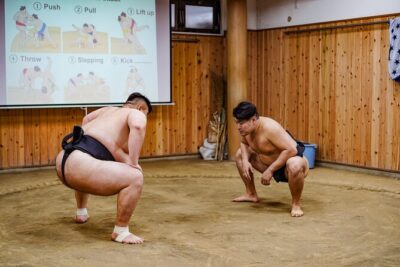
Authentic Sumo Experience in Tokyo: Enter the Sanctuary
Read our review →Browse the lists this tour appears in