
Reviewed · HIDDEN-GEM TOURS
Tokyo: Full Course Tour: Explore 15 Must-Sees & Hidden Gems
Tokyo is at its most useful when you see how its grand sights connect with ordinary life. This full-day route moves from a forest shrine and youth fashion streets to seafood stalls, railway architecture, anime shops, old temples, and local markets, all by foot and public transport. I like the small maximum of seven people and the chance to learn from Japanese guides such as Yasuko and Michiko.
I also like that every listed attraction is free to enter, so your $90 mainly pays for the guide and the planning behind a very ambitious day. The catch is clear: this is a 20,000-step day with limited time at each stop, and it is not suitable for people with mobility issues, low fitness, back problems, pregnancy, or children under 13.
Key points at a glance
- Fifteen major Tokyo stops: Move from Meiji Shrine and Shibuya to Tsukiji, Akihabara, Ueno, and Asakusa in one long day.
- Local transport practice: Use metro and JR trains while learning basic Japanese public transport manners.
- Food-centered Tsukiji stop: Allow 90 minutes for lunch, snacks, and browsing at the Outer Market, with food costs extra.
- Small English-speaking group: The group is limited to seven people, giving the guide room to answer questions and adjust the pace.
- Free sights, extra daily costs: Entrance fees are not needed, but budget about 1,500 yen for trains and metro, plus meals and drinks.
- A fast first-day orientation: You finish knowing where Tokyo’s major districts sit and how to get around them.
A very full day in Tokyo
This is not a slow sightseeing walk. It is a city sampler designed to give you a working map of Tokyo in one day.
You meet outside the West Exit of JR Yoyogi Station at 9:00 in the morning. From there, the route uses trains and the metro between districts, then continues on foot. The total time is 10 hours, and the schedule allows roughly 15 to 30 minutes at most sights, with the longest pause at Tsukiji Outer Market.
That pace has real value if you have just arrived in Tokyo and want help getting oriented. You will see how shrine grounds, department-store districts, office towers, markets, pop-culture streets, and old temple quarters fit together. You will also get practical advice on daily life, etiquette, transport, restaurants, and local customs.
The tradeoff is that this is a sampler, not a deep visit to any one district. You will not have hours for museums, long shopping sessions, or a leisurely temple visit. I would treat the day as a guided introduction, then return later to the places that catch your interest.
Other quiet corners of Tokyo:
- 3h Tokyo E-Bike Tour: Hidden Gems, and Local Life with guide
★ 5.0 · 670 reviews - Tokyo: Custom Hidden Gems & Highlights Tour with Local Guide
★ 4.7 · 272 reviews - Tokyo: 3-hour Guided E-Bike Tour of the City’s Hidden Gems
★ 4.8 · 251 reviews
Meiji Shrine and Harajuku: quiet woods, loud style
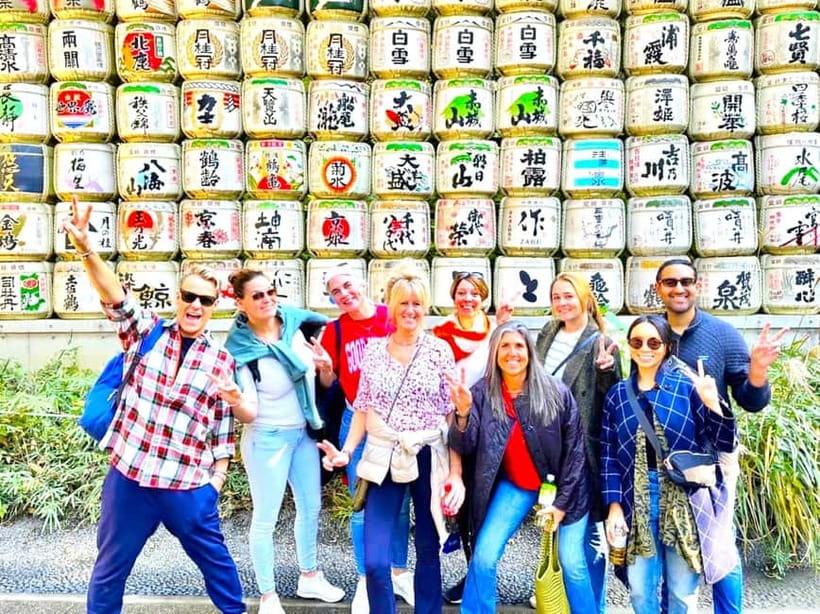
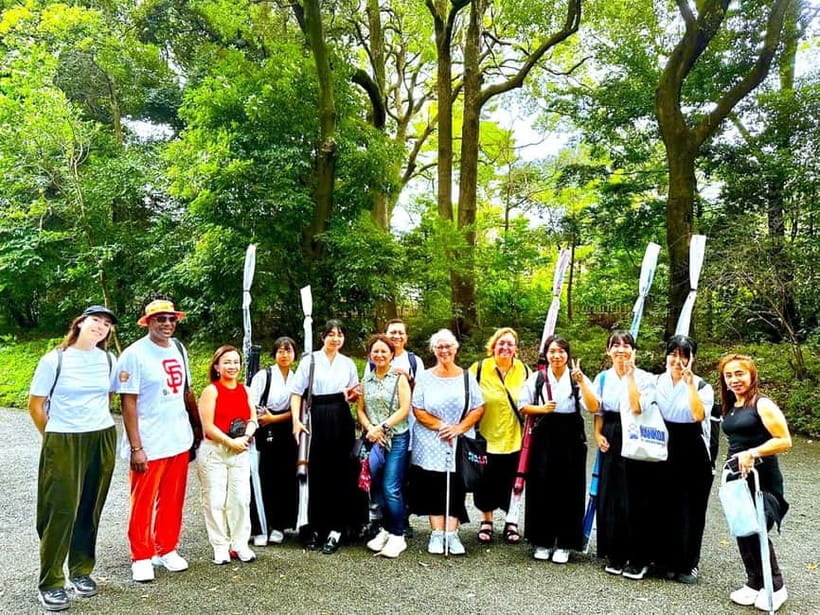
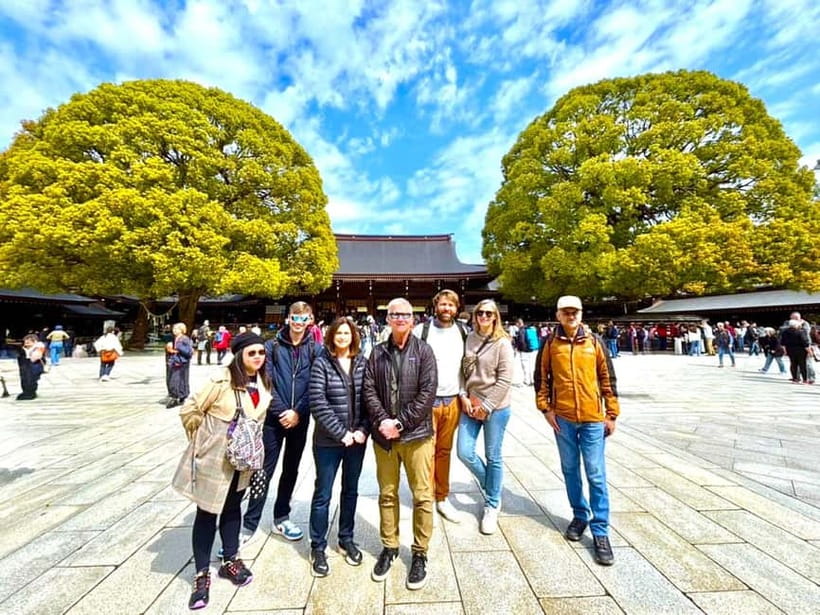
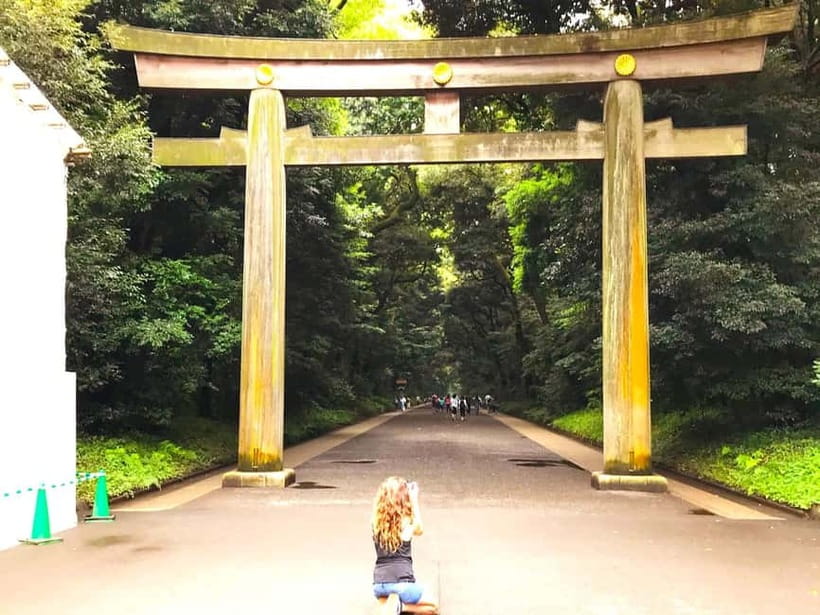
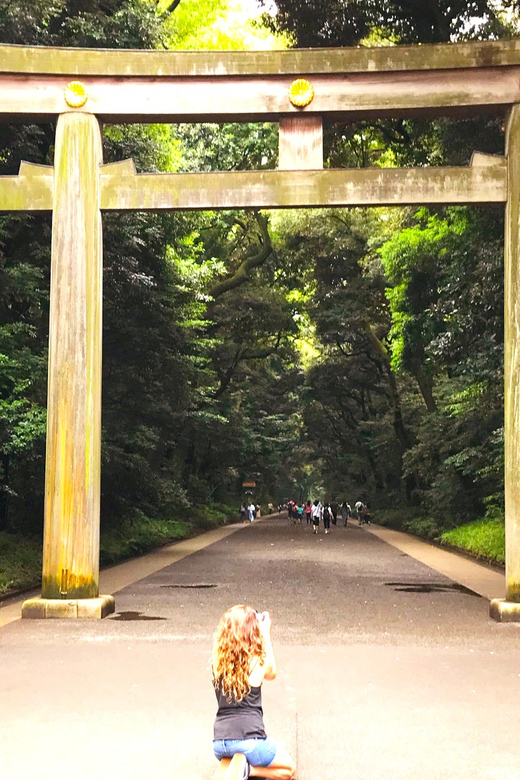
The morning begins at Meiji Shrine, a calm wooded area close to Yoyogi and Harajuku. The shrine offers a sharp contrast with the dense city around it. Your guide can explain the basic role of Shinto shrines, proper conduct, and the meaning of the approach to the main buildings.
The scheduled visit is about 30 minutes. That is enough to see the main area and learn how to behave respectfully, but not enough for a slow walk through every path. Wear shoes that can handle uneven ground and a long day of walking.
Next comes Harajuku Fashion Street, where youth culture, cute fashion, and snack shops take over the scene. The stop lasts about 30 minutes. I like the pairing: Meiji Shrine shows a quieter side of Tokyo, while Harajuku shows how quickly the city changes once you leave the trees.
You may want to spend more time here if shopping or street food is a priority. On this tour, the short stop is mainly about seeing the district and understanding its place in modern Tokyo.
Hachiko and Shibuya Crossing
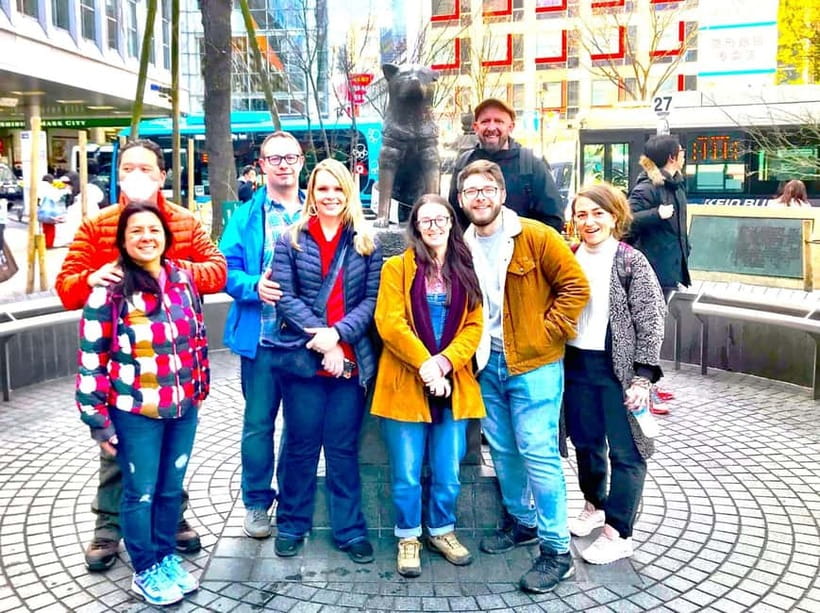
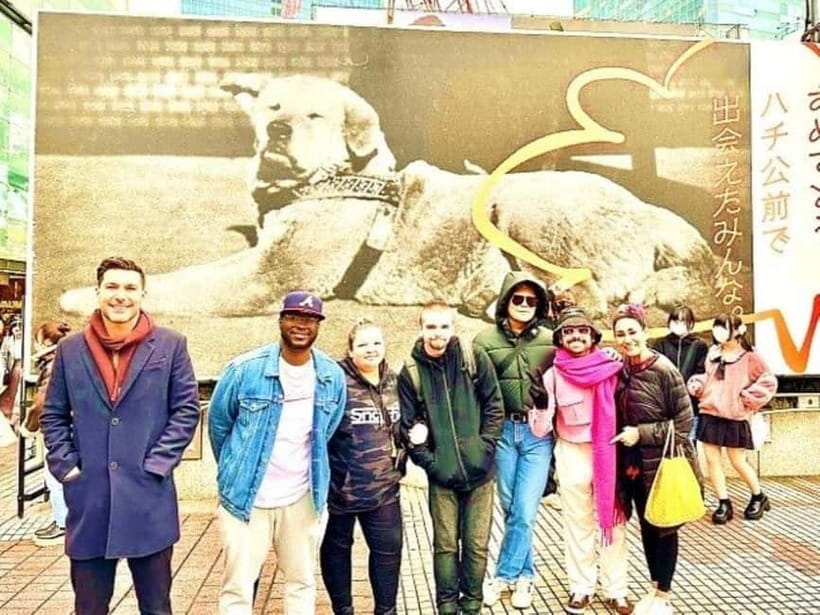
The route continues to the Hachiko Statue, one of Tokyo’s best-known meeting points. Your guide will tell the story behind the loyal dog and explain why the statue became such a lasting symbol of Shibuya.
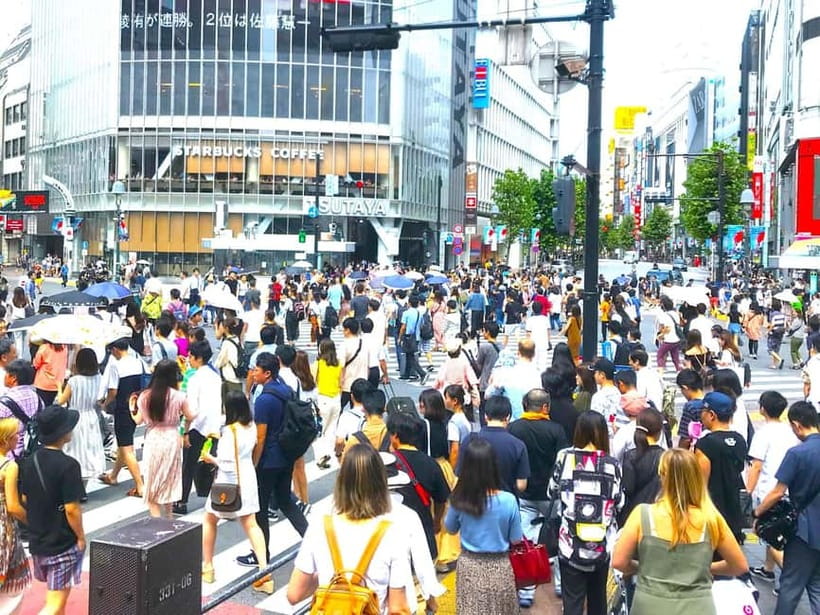
You have around 10 minutes here, followed by another 10 minutes at Shibuya Scramble Crossing. That is enough to take photographs and cross the intersection, but the area can feel rushed if you want to browse shops or visit a viewpoint.
Shibuya is one of the clearest places to see Tokyo’s public energy. Hundreds of people move in several directions when the lights change, while giant screens and tall buildings surround the crossing. The guide helps turn a famous photo stop into a short lesson in how the district works.
After Shibuya, you ride the metro for about 30 minutes. Keep your transport card ready and stay close to the group. A pre-charged Suica, Pasmo, or Icoca card is required, and late arrivals cannot join once the tour has left.
Tsukiji Honganji and the Outer Market
Tsukiji is the food heart of the day. First comes Tsukiji Honganji Temple, with its unusual Indian-influenced architecture and stained-glass details. You get about 30 minutes to look around and hear how this Buddhist temple differs from the Shinto shrine visited earlier.
Then you have 90 minutes at Tsukiji Outer Market. This is the longest stop and the best chance to slow down, eat, and browse. You might find seafood, Japanese snacks, kitchen goods, and small food shops, though the tour does not include lunch or tasting costs.
Bring Japanese yen. Some smaller businesses accept cash only, and the market is a poor place to rely entirely on a credit card. Vegetarian and vegan choices are available on the tour, but tell the guide your needs clearly so food suggestions can be handled during the stop.
The market can be crowded, and you should keep your belongings close while staying with the group. I would use this time for one proper meal and a few small snacks rather than trying to eat everywhere. You need enough energy for the long afternoon ahead.
Same base, a different sort of day:
- Mt Fuji and Hakone 1-Day Bus Tour Return by Bullet Train
★ 5.0 · 26,383 reviews - 1-Day Tokyo Bus Tour
★ 5.0 · 14,250 reviews - Tokyo: TOKYO SKYTREE® Admission ticket
★ 4.5 · 11,192 reviews - Tokyo: teamLab Planets TOKYO Digital Art Museum Entry Ticket
★ 4.6 · 9,779 reviews
The Imperial Palace, Marunouchi, and Tokyo Station
A short metro ride takes you to the Imperial Palace area. The scheduled palace stop is about 15 minutes, so expect an exterior walk around the grounds and former Edo Castle walls rather than a lengthy palace visit.
The stone walls and broad open spaces offer a useful look at Tokyo’s political past. Your guide can connect the old castle town with the modern capital around it. The visit is brief, but the setting gives the day a change of scale after the tight streets of Tsukiji.
The walk continues through Marunouchi, a polished business district where modern office towers sit close to imperial grounds. You have about 15 minutes here, followed by another 15 minutes at Tokyo Station Square.
Tokyo Station is especially striking for its red-brick exterior and role as a major rail gateway. Since you will already be using trains during the day, seeing the station from outside adds context to the city’s transport system. Do not expect a long station tour or time for extensive shopping. These stops are quick visual pauses before the next train.
Akihabara: anime, games, and electric Tokyo
The train ride to Akihabara takes about 10 minutes. The district brings a completely different mood, with anime, gaming, electronics, and Japanese pop culture shaping the streets.
The stop lasts around 30 minutes. That is enough to walk through the main area and get a feel for it, but not enough for serious shopping. If you are hunting for a specific game, figure, or electronic item, make a note of the area and return on another day.
Akihabara is useful on a first Tokyo day because it shows how broad the city’s interests are. The route has already covered religion, food, government, and business. Here, the focus shifts to entertainment and specialist hobbies.
Keep purchases modest unless you want to carry bags through the remaining stops. Oversize luggage is not allowed on the tour, and a crowded train is easier to manage without bulky shopping.
Ueno Park and Ameyoko
Another short train ride brings you to Ueno Park, described as a forest of art and a center for museums and samurai history. The scheduled visit is 30 minutes. You will get an overview of the park and its cultural setting, but museum admissions and extended museum time are not part of this day.
Ueno is one of the route’s best reminders that Tokyo is more than neon streets and shopping. Its open paths and cultural institutions offer a slower setting, even though your own visit remains brief.
From there, you walk to Ameya-Yokocho, usually called Ameyoko. The stop is about 15 minutes and gives you a quick look at a lively market street with inexpensive food and a gritty local feel.
The contrast with Marunouchi is useful. One district presents corporate Tokyo at its most polished; the other feels more crowded, informal, and shop-driven. You may want to return to Ameyoko later if you enjoy browsing, because 15 minutes is enough for a glimpse, not a full market visit.
Sensoji and Asakusa Shrine
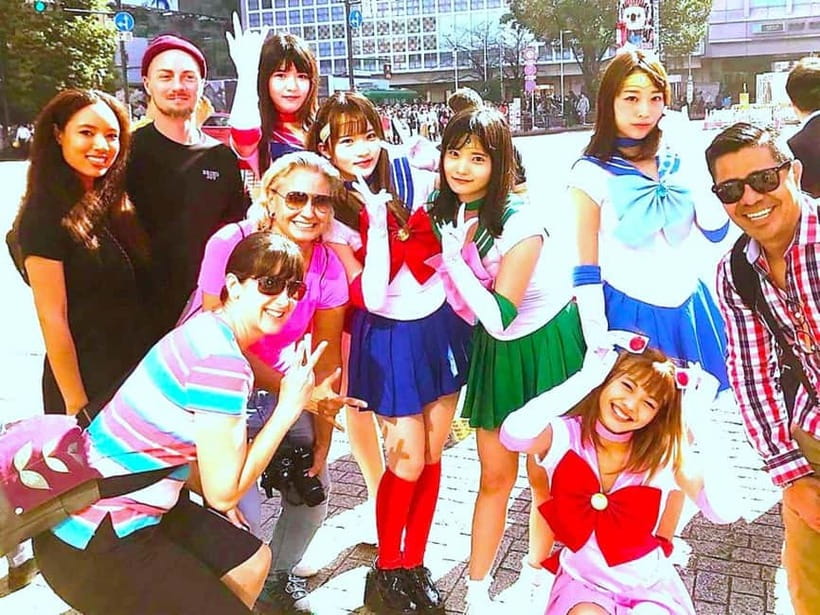
The final major area is Asakusa, where you visit Sensoji Temple and Asakusa Shrine. Sensoji is Tokyo’s oldest temple and the spiritual center of this older district. The scheduled visit lasts about 30 minutes, giving you time to see the approach, temple buildings, and surrounding streets.
Asakusa Shrine receives another 10 minutes. It sits within the Sensoji area but represents Shinto practice, making this a useful chance to compare the two traditions in one place.
Asakusa is a strong ending because it feels different from the morning’s modern districts. The area connects religious customs, older streets, souvenirs, and everyday neighborhood life. The official finish is at Asakusa Shrine.
A goal celebration at a local izakaya is also described as part of the experience, but dinner, drinks, and snacks are not included. Since the listed route ends at Asakusa Shrine, confirm the exact evening plan before booking if the pub stop is important to you. Do not assume that food or alcohol is covered in the $90 price.
What the guide adds
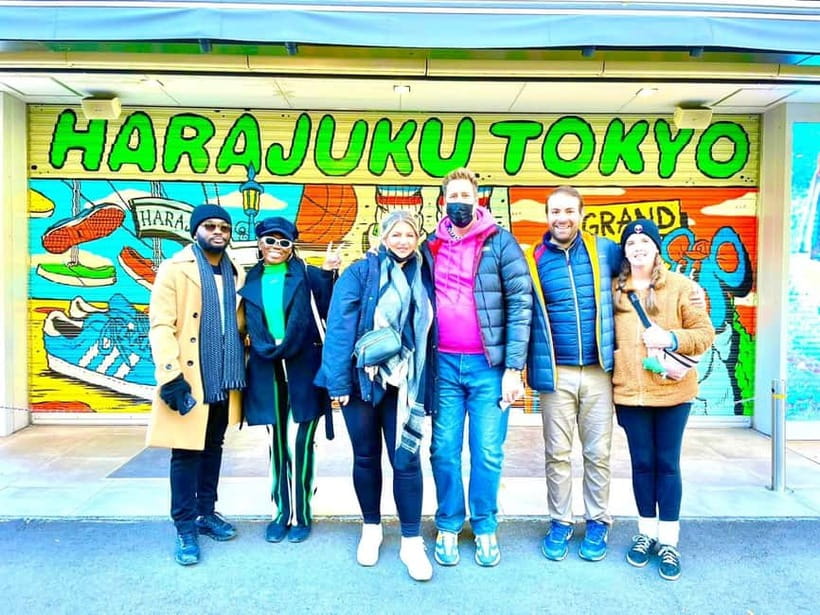
The guide is the main reason to choose this route instead of trying to copy it alone. A born-and-raised Japanese guide can explain etiquette, public transport, local habits, and the small differences between a Buddhist temple and a Shinto shrine while keeping the group moving.
Yasuko has received especially warm praise for clear English, careful organization, and adjusting the day to individual needs. Michiko has also been praised for her city knowledge, considerate pace, and practical help, including making sure one person could find a taxi back to the hotel.
Those details matter on a route this demanding. A guide who watches the group’s condition can make a packed day more comfortable. The group limit of seven also helps. You can ask questions without competing with a large crowd, and the guide has a better chance of noticing if someone is falling behind.
Still, the guide cannot remove every challenge. You must stay with the group, arrive on time, and keep moving between stops. The tour is conducted in English only.
Is $90 a fair price?
The $90 fee is reasonable if you want structure, local explanation, and help with Tokyo’s rail network. Every listed attraction is free to enter, so the price is not paying for admission tickets. It pays for a full day of guiding across several districts, route planning, and the convenience of handling the city’s logistics with a small group.
Your actual daily budget will be higher. Transportation costs about 1,500 yen, or roughly $10, and you must pay for lunch at Tsukiji, snacks, dinner, and drinks yourself. Carry cash in Japanese yen, especially for market purchases and smaller food shops.
The value is strongest for a first day in Tokyo, particularly if you are nervous about trains or do not want to spend hours planning connections. It is less attractive if you prefer a slow pace, already know Tokyo’s transport system, or want long visits inside museums and shops.
The practical demands of the day
Wear sporty shoes and loose clothing. The expected walking total is about 20,000 steps, with repeated station transfers and time on your feet at markets, temples, and streets.
The tour runs in rain, so bring an umbrella or raincoat. High heels are not allowed, and oversize luggage, baby strollers, and baby carriages cannot come along. The experience is not suitable for children under 13, pregnant people, wheelchair users, people with back problems, people with a cold, or anyone with a low fitness level.
Under-18s must be accompanied by an adult, and children under 13 require a private tour. Alcohol and intoxication are not permitted. There are no refunds for problems caused by late arrival, prohibited items, or failure to meet these conditions.
Cancellation is free up to seven days before the tour for a full refund. Check the available start time when booking, then plan to reach the West Exit of JR Yoyogi Station before departure.
Who should book this Tokyo route?
I would recommend it to a first-time Tokyo visitor who wants a strong overview in one day, values local explanation, and does not mind a fast pace. It suits solo visitors, couples, and small groups who want help using public transport without spending their first day studying maps.
It is also a good fit if you want to compare very different parts of the city: shrine and temple culture, youth fashion, seafood markets, office districts, railway architecture, pop culture, museums, and old Asakusa.
I would skip it if your priority is rest, photography at a relaxed pace, detailed museum visits, or long meals. You should also choose another option if 20,000 steps sounds daunting or if you need wheelchair access, a stroller, or a flexible start.
Should you book it?
Book this tour if you want Tokyo explained as a connected city rather than a pile of separate sights. The route is ambitious, the guides bring useful local context, and the small group keeps the day more personal than a large coach tour.
Just go in with the right expectations. You will see a lot, but you will not linger everywhere. Bring good shoes, a transport card, cash, rain gear, and enough energy for the final temple visit. For an active first day, the $90 price is a fair exchange for guidance and a citywide orientation. For a slow holiday, choose a shorter neighborhood walk instead.
FAQ
How long is the Tokyo full-day tour?
The tour lasts 10 hours.
Where does the tour start?
Meet outside the ticket gate at the West Exit of JR Yoyogi Station, at 1-chōme-34 Yoyogi, Shibuya City, Tokyo.
Where does the tour finish?
The scheduled finish is at Asakusa Shrine.
How many people can join the group?
The small group is limited to seven participants.
Is transportation included?
No. Metro and JR train fares are paid separately and cost approximately 1,500 yen, or about $10. A pre-charged Suica, Pasmo, or Icoca card is required.
Are entrance fees included?
All listed attractions are free to enter, and there are no separate entrance fees for them.
Are food and drinks included?
No. Lunch at Tsukiji, snacks, dinner, and drinks are not included. Vegetarian and vegan options are available.
What should I bring?
Bring comfortable walking shoes, easy-to-move clothing, cash in Japanese yen, a public transport card, and rain gear. Plan for about 20,000 steps.
Just added in Tokyo
- The 10 Tastings of Tokyo With Locals: Private Street Food Tour★ 5.0 · 48 reviews
- Small Town in the Big City: Tasting Tokyo’s Kichijoji★ 5.0 · 195 reviews
- Small Town in the Big City: Tasting Tokyo’s Kichijoji★ 5.0 · 16 reviews
- EXCLUSIVE Tokyo Secret: Kichijoji Small-Group Food & Bar Hopping★ 5.0 · 29 reviews
- Explore Kichijoji: Walk Through One of Tokyo’s Beloved Districts★ 5.0 · 21 reviews
- :Tokyo,Shibuya/ Pro Photography in Kimono / English-Friendly★ 5.0 · 26 reviews
- 【R34】Tokyo:Private Daikoku tour in Modified R34★ 4.9 · 92 reviews
- Tokyo:Calligraphy &Make your original folding fan in Asakusa★ 5.0 · 62 reviews
Hidden-Gem Tours, compared.

Kyoto Geisha Walking Tour: Gion District & Hidden Gems
Read our review →
Private Kyoto Tour with a Local, Highlights & Hidden Gems, Personalised
Read our review →
Hotspots & Hidden Gems Walking Tour Private or Group
Read our review →
Ultimate Osaka Walking Tour: Castle, Dotonbori & Hidden Gems
Read our review →
3h Tokyo E-Bike Tour: Hidden Gems, and Local Life with guide
Read our review →
Arashiyama Bamboo Forest & Hidden Gems Bike Tour (Early Bird)
Read our review →
Private Osaka Walking Tour: Highlights & Hidden Gems
Read our review →Browse the lists this tour appears in