
Reviewed · SUMO EXPERIENCES
Tokyo Sumo Morning Practice: Viewing & Exclusive Interaction
Tokyo sumo is at its best before the crowds arrive. This three-hour morning visit takes you into an active stable, where you watch professional wrestlers warm up, practice, and spar at close range. It is real training, not a staged dinner show.
I especially like the choice of front-row floor cushions or rear stools, and the time set aside for questions with the wrestlers. Guides such as Haru, Momo, Sana, and Ryoko have helped visitors understand the rules and customs without making the visit feel stiff. The main consideration is the early start and strict quiet rules during practice.
- See a working sumo stable: Watch warmups, drills, and sparring in a setting normally closed to casual visitors.
- Choose your seat: Use a zabuton on the floor near the action, or a stool at the back.
- Talk with active wrestlers: Ask about training, daily life, and the mental side of the sport.
- Take home a banzuke: Receive an official ranking sheet in a designed souvenir folder.
- Finish near Tokyo Skytree: The tour ends around 11:00 AM, handy for continuing to Asakusa or the Skytree area.
Why This Sumo Morning Feels Different
Many sumo experiences in Tokyo are built around a performance, a meal, or a short photo opportunity. This one takes you to an active training stable during the quiet part of the day. You see the sport before the polished public spectacle begins.
That difference matters. Sumo is not only a bout between two large athletes. It is a strict routine of movement, balance, ritual, restraint, and repeated physical effort. Watching practice lets you notice the work behind the familiar entrance ceremonies and tournament matches.
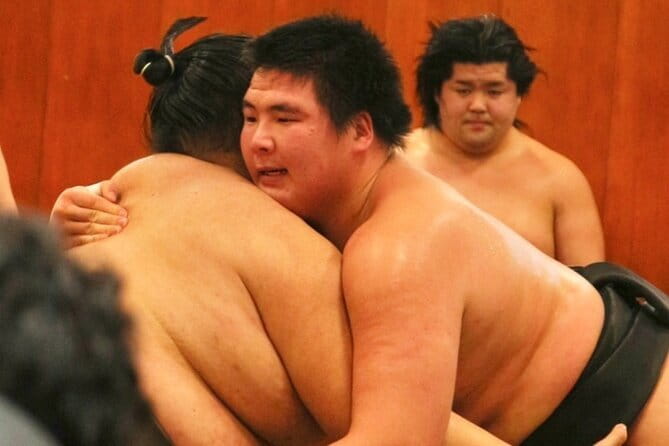
The atmosphere may feel intense. Bodies collide with real force, and the room can become very quiet as wrestlers prepare for a bout. You are not there to cheer or chat. You are there to observe respectfully.
The experience costs $93 per person. That is a serious price for three hours, but the fee covers the stable visit, an English or Japanese speaking guide, the wrestler interaction, and the banzuke souvenir. Compared with a staged show, you are paying for access to a working place rather than a rehearsed presentation.
I would consider it good value if sumo is high on your Tokyo list. If you only want a quick introduction, a tournament ticket or museum visit may suit you better. The value here comes from being close to the training and having time to ask questions afterward.
Starting at Narihira Park Before the City Wakes
Your meeting point is near the multipurpose restroom at Narihira Park. This is an important detail, so allow enough time to find the correct spot rather than arriving at the park and wandering around.
The guide checks your name, hands out sumo-related materials, and explains the manners and rules before you leave. This short briefing is useful because the stable is not a normal sightseeing venue. You need to know when to stay quiet, where you may sit, and how to handle photography.
The park also gives the guide room to explain the sport before you enter the stable. You learn basic history, rules, and etiquette, which helps you understand what you are seeing later. Without that introduction, a morning of drills and sparring can look like a series of powerful collisions. With it, you can pay attention to technique and routine.
Guides named Haru, Momo, Sana, and Ryoko have been singled out for clear explanations and friendly help. The available guide languages are English and Japanese. The quality of the guide matters here because the wrestlers are not presenting a long speech for tourists. Your guide helps turn their answers and actions into something you can follow.
Other ways to see sumo in Tokyo:
- Tokyo: Sumo Show Experience with Chicken Hot Pot and a Photo
★ 4.8 · 6,678 reviews - Tokyo: Sumo Show and Dining Experience
★ 4.8 · 2,742 reviews - the SUMO show
★ 5.0 · 1,960 reviews
Walking Into a Working Sumo Stable
From the park, you take a short walk to an active sumo stable. The stable is where wrestlers train, eat, live, and prepare for competition, although this tour focuses on the training session rather than offering a full tour of every part of the building.
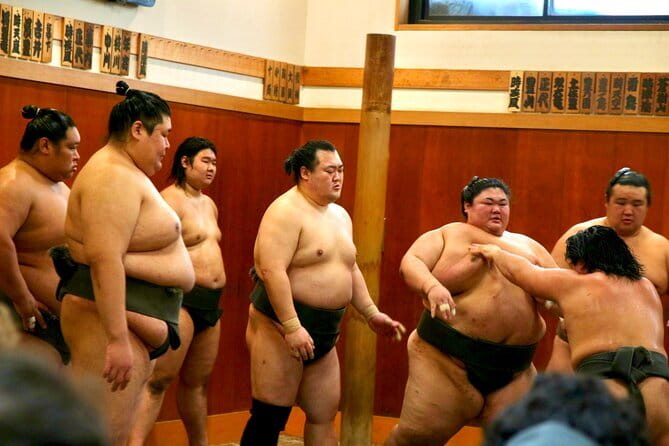
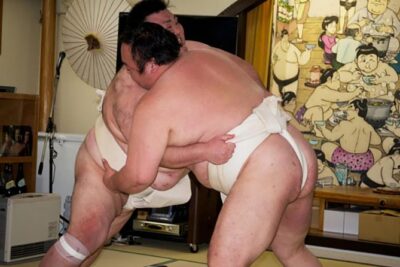
Once inside, the first thing to understand is that the practice is not designed around you. The wrestlers follow their own demanding routine. You might see warmups, repeated exercises, practice bouts, and sparring. The physical effort is direct and sometimes startlingly forceful.
That unscripted quality is the heart of the visit. You are not watching actors recreate a match. You are watching athletes prepare for the sport in the place where they actually train.
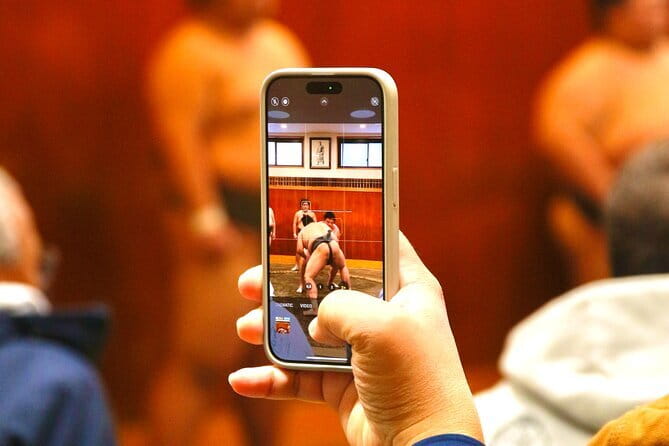
The stable is also a quiet setting. No food, alcohol, drugs, audio recording, or video recording is allowed. Flash photography is forbidden. Still photography is allowed, but you must remain quiet during practice and follow instructions about where and when you can take pictures.
I like this rule even if it requires some restraint. A phone can make you feel like you need to record every second, but the point of the visit is to watch carefully. Put the phone away during the most serious parts and use the approved photo opportunities later.
Zabuton or Stool: Picking the Right Seat
The seating choice is one of the practical strengths of this experience. You can sit on a traditional floor cushion, called a zabuton, near the front. This gives you a close view and a stronger sense of being part of the room.
You can also use a stool at the back if sitting on the floor is uncomfortable. That small option makes the visit easier for people who do not want to kneel or sit low for an extended period.
The front cushions are best for proximity, but they may not suit everyone. The rear stools give you more physical comfort and a wider view. I would choose the zabuton if you can sit comfortably on the floor and want the closest look at the practice. Choose the stool if comfort matters more than being near the action.
Follow the stable’s seating instructions. This is not a place to shift around for a better angle or interrupt someone’s view. The guide will explain the rules, and quiet attention is part of showing respect.
Seeing the Work Behind a Sumo Bout
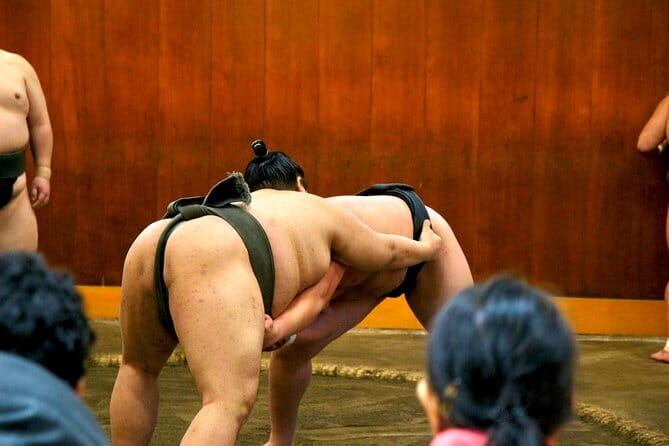
A tournament bout lasts only a short time, but the training behind it is long and repetitive. The morning practice shows you that preparation. You see how much effort goes into warming up, setting the body, and repeating movements with control.
The clashes can look simple from a distance. Up close, you can notice the timing, balance, footwork, and ability to absorb force. The experience also gives you a better sense of sumo as a disciplined athletic life, not simply a contest of size.
The atmosphere may be overwhelming at first. One visitor described the practice as intense while also finding it a useful way to understand the sport’s complicated training demands. That is fair advice. Do not expect a relaxed photo stop. Expect a serious workplace where the athletes are focused.
During the Grand Sumo Tournament periods, roughly two weeks in January, May, and September, the schedule changes. Practice starts about 30 minutes earlier, and the viewing portion lasts about one hour. Check the available starting time carefully if your visit overlaps one of these tournament periods.
Same base, a different sort of day:
- Mt Fuji and Hakone 1-Day Bus Tour Return by Bullet Train
★ 5.0 · 26,383 reviews - 1-Day Tokyo Bus Tour
★ 5.0 · 14,250 reviews - Tokyo: TOKYO SKYTREE® Admission ticket
★ 4.5 · 11,192 reviews - Tokyo: teamLab Planets TOKYO Digital Art Museum Entry Ticket
★ 4.6 · 9,779 reviews
Questions, Photos, and a Possible Practice Bout
After practice, the mood changes. You have a chance to speak directly with active wrestlers through the guide. Ask about their daily lives, training, mindset, or the demands of the sport. This is where the morning becomes personal rather than purely observational.
The guide translates or helps organize the exchange, so prepare a few questions in advance. Good questions are specific: What does a normal training day involve? How do wrestlers prepare mentally for a bout? What part of training is hardest? How does life inside the stable differ during tournament periods?
You can also take commemorative photos with the wrestlers after practice, following the stable’s instructions. This is the appropriate time for pictures. Keep the camera quiet during training and do not use flash.
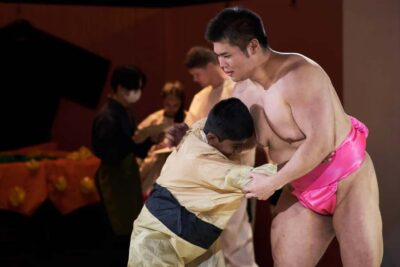
Some visits have included a lighthearted chance for male audience members to try a short wrestle with a professional. This is not listed as a guaranteed part of every outing, so treat it as a possible extra rather than a promise. If it happens, it can be great fun, but the main attraction remains the practice and conversation.
The wrestlers’ willingness to answer questions is important. You are not just standing beside athletes for a quick picture. You have a chance to hear about the people behind the sport and the routine that supports their public performances.
Returning to the Park With a Banzuke
After the stable visit, you return to Narihira Park for the closing session. You receive an official banzuke, the ranking sheet used in the sumo world, inside a specially designed souvenir folder.
This is a better keepsake than a generic tour trinket because it connects directly to what you have just watched. The banzuke is also small and easy to pack, unlike a large souvenir that creates trouble for the rest of your trip.
The final session is not a meal. Instead, the guide stays for a longer question period. You can ask about sumo traditions, clarify something you saw in the stable, or request personal tips for the rest of your Tokyo visit.
That choice will appeal to curious visitors. It also means you should not book this expecting brunch or refreshments. Food is not included, and food is not allowed inside the stable.
The tour wraps up around 11:00 AM. From there, you are well placed to continue toward Tokyo Skytree or Asakusa. The timing makes this easy to pair with another morning or afternoon plan, though you should allow time to reach your next stop.
What the $93 Price Really Covers
At $93, this is not a budget activity. You are paying for more than a guide walking you past a landmark, though. The fee includes the stable visit, guide service, wrestler interaction, photo opportunity, and official souvenir.
The most valuable part is access. A real training session is different from a demonstration created for an audience. You see the athletes working within their own routine, and you have a chance to ask questions once that work is finished.
The guide is another part of the price. Sumo has customs that are easy to miss, and a good explanation prevents confusion. Guides such as Haru, Momo, Sana, and Ryoko have been praised for being helpful, friendly, and clear in English.
Transportation to Narihira Park is not included. You must make your own way to the meeting point, so add local transit costs and time to your budget. The activity itself lasts three hours, but the early start means your morning is shaped around it.
Free cancellation is available up to 24 hours before the activity for a full refund. You can also reserve and pay later, which helps if your Tokyo schedule is still moving around.
Who Should Book This Morning
I would choose this for anyone who wants to understand sumo beyond a quick photo or a match on television. It suits visitors who enjoy seeing how a tradition operates in real life, especially when the setting is quiet and the rules matter.
It is also a good choice for first-time sumo viewers. The park briefing gives you enough background to follow the practice, and the closing questions help fill in the gaps.
Families need to note that children under six are not suitable for this activity. Older children may enjoy the physical action, but parents should explain the quiet rules and the need to remain seated and respectful.
This is less suitable if you want a casual morning with food, constant photography, or video footage. It is also not ideal if you dislike floor seating, though stools are available at the back.
If you are deciding between this and a sumo dinner show, ask yourself what you want to see. Choose this morning visit for real training, direct questions, and a working stable. Choose a show if you want a more theatrical evening with food and entertainment.
Practical Tips for a Respectful Visit
Arrive ready for an early morning and keep your meeting details handy. The multipurpose restroom at Narihira Park is the stated meeting point, and the guide checks names there.
Wear clothing that lets you sit comfortably if you choose a zabuton. If floor seating is not for you, ask for a stool at the back rather than forcing yourself into the front row.
Keep your camera ready for the approved photo time, but do not record video or audio. Flash is not allowed, and silence during practice is part of the experience.
Prepare questions before you arrive. The post-practice Q&A is one of the best parts of the morning, and specific questions will give you more useful answers than a general request to explain sumo.
Plan your next stop after 11:00 AM. Tokyo Skytree and Asakusa are nearby options, making this a practical first activity for a full day in eastern Tokyo.
Should You Book This Sumo Experience?
Book it if you want close access to real sumo training and care about the customs behind the sport. The active stable, flexible seating, wrestler Q&A, and banzuke souvenir give the $93 price a clear purpose.
Skip it if you need a late start, a meal, or a heavily produced show. This is a quiet, rule-bound visit to a working training space, not a loose entertainment event.
For the right visitor, it can become one of the most memorable mornings in Tokyo. You leave with more than a photograph. You have seen the work, heard from the athletes, and gained a better feel for why sumo commands such respect in Japan.
FAQ
Where does the sumo morning tour meet?
Meet near the multipurpose restroom at Narihira Park. The guide checks your name, provides sumo materials, and explains the manners and rules before the group walks to the stable.
How long does the experience last?
The activity lasts about three hours and normally finishes around 11:00 AM.
What languages are available?
The tour is available with an English or Japanese speaking guide.
Is transportation to the meeting point included?
No. You are responsible for getting to Narihira Park.
Can I sit on a chair during the practice?
Yes. Traditional floor cushions called zabuton are available near the front, and stools are available at the back.
Can I take photographs?
Yes, photography is allowed when you follow the stable’s instructions. Flash photography is not allowed, and you must remain quiet during practice.
Can I record video or audio?
No. Video recording and audio recording are not allowed.
Is food included?
No. Food is not included, and food is not allowed inside the stable.
Can children join the activity?
Children under six are not suitable for this experience.
What changes during a Grand Sumo Tournament period?
During the tournament periods in January, May, and September, practice starts about 30 minutes earlier and the viewing time is about one hour.
Can I cancel the booking?
You can cancel up to 24 hours in advance for a full refund. Reserve now and pay later is also available.
Just added in Tokyo
- The 10 Tastings of Tokyo With Locals: Private Street Food Tour★ 5.0 · 48 reviews
- Small Town in the Big City: Tasting Tokyo’s Kichijoji★ 5.0 · 195 reviews
- Small Town in the Big City: Tasting Tokyo’s Kichijoji★ 5.0 · 16 reviews
- EXCLUSIVE Tokyo Secret: Kichijoji Small-Group Food & Bar Hopping★ 5.0 · 29 reviews
- Explore Kichijoji: Walk Through One of Tokyo’s Beloved Districts★ 5.0 · 21 reviews
- :Tokyo,Shibuya/ Pro Photography in Kimono / English-Friendly★ 5.0 · 26 reviews
- 【R34】Tokyo:Private Daikoku tour in Modified R34★ 4.9 · 92 reviews
- Tokyo:Calligraphy &Make your original folding fan in Asakusa★ 5.0 · 62 reviews
Sumo Experiences, compared.
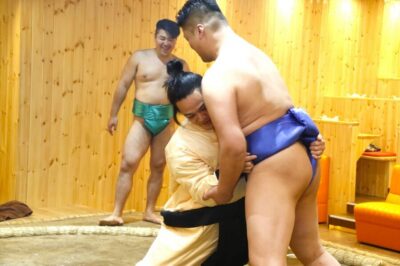
Sumo Show Experience with Chicken Hot Pot and a Photo
Read our review →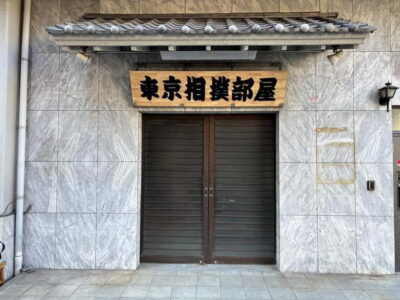
Tokyo Shinjuku Sumo Show & Experience with Photo
Read our review →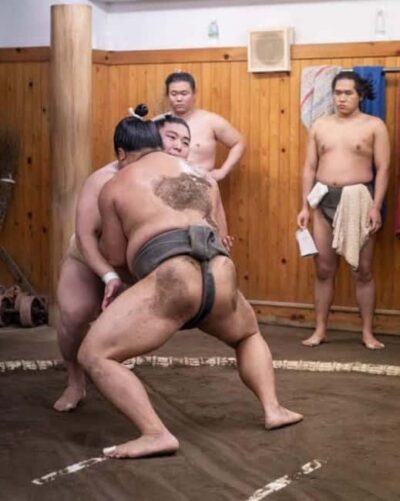
Sumo Show & Experience w/ Optional Kimono & Hot Pot
Read our review →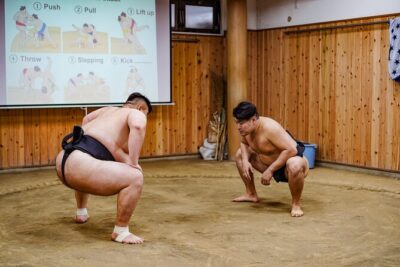
Authentic Sumo Experience in Tokyo: Enter the Sanctuary
Read our review →Browse the lists this tour appears in