
Reviewed · SUMO EXPERIENCES
Tokyo: Sumo Morning Training Visit
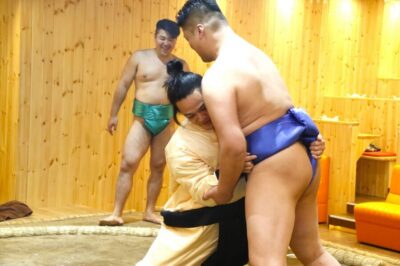
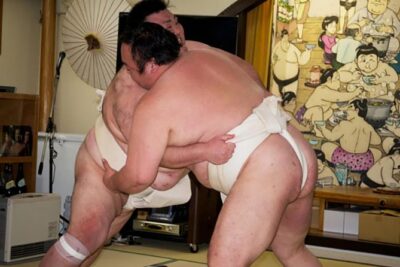
Seeing sumo from a stadium seat is one thing. Sitting close enough to hear bodies hit the clay inside a working sumo stable is another. This one-hour morning visit lets you watch professional wrestlers warm up, practice their drills, and spar before posing for a group photo.
I like the access to a real training session, not a staged show, and the small-scale setting makes the wrestlers’ speed and strength easy to appreciate. The main drawback is the strict etiquette: you must sit quietly and still, often on the floor, and the guide may provide little explanation beyond getting you inside.
Key points to know before booking
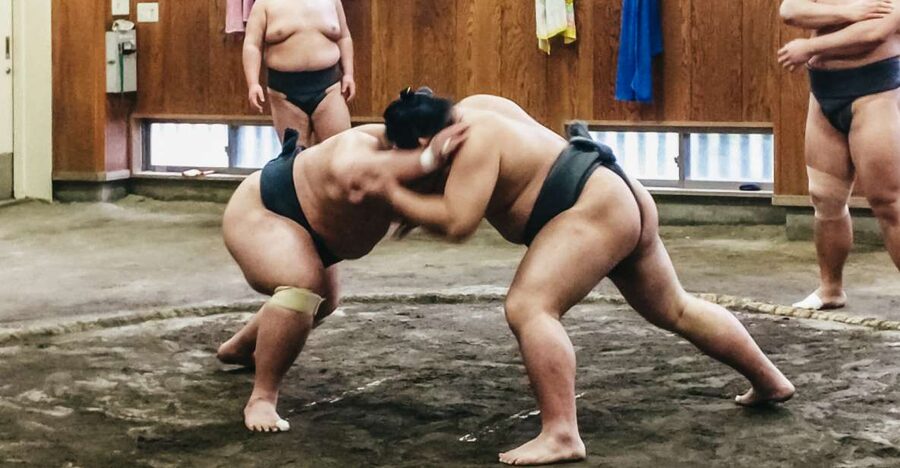
- You watch real morning practice: Warm-ups, stretching, pushing drills, and sparring can all be part of the session.
- The stable is assigned shortly before arrival: The exact meeting place and route usually arrive by email two or three days before the visit.
- The training may last 30 minutes to two hours: Tournament timing and the wrestlers’ schedule affect the length.
- Silence matters: Phones must be on silent, flash photography is forbidden, and video needs prior permission.
- The group photo comes at the end: Leave early and you may miss it.
- Floor seating can be hard: Ask in advance about a chair if knees or hips make sitting low difficult.
Why watching sumo practice feels different
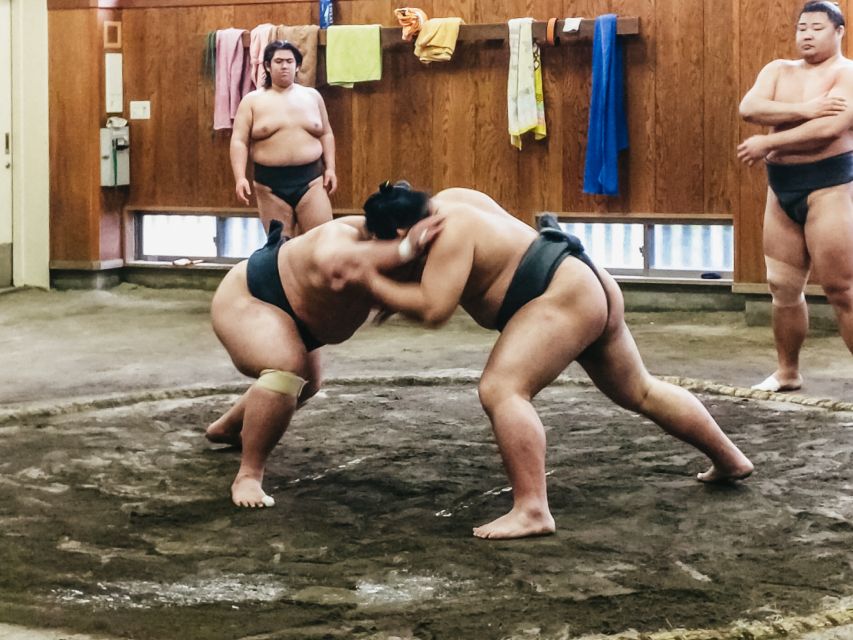
A tournament is polished and public. This visit shows the work behind it. You see wrestlers repeat movements, push through drills, and test balance and technique at close range. The thud of a body meeting the clay tells you more about the sport than a distant view from a large arena.
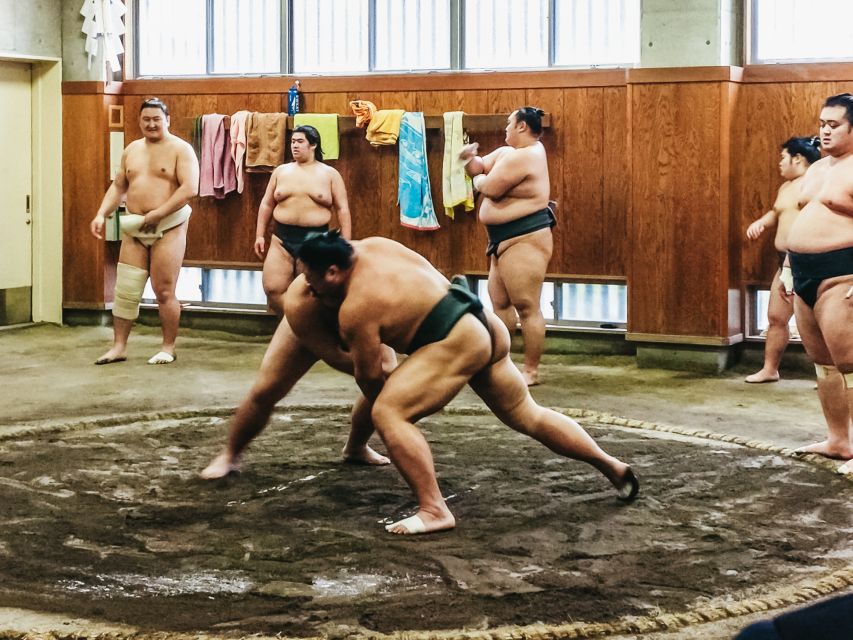
The most memorable part is often the contrast between size and movement. Sumo wrestlers are large, but they are also quick, controlled, and surprisingly light on their feet. A short bout or pushing drill can reveal balance, timing, posture, and endurance far better than a simple photo opportunity.
This is not presented as a stage performance. The wrestlers follow their normal practice, and the schedule can change with their condition or the wider sumo calendar. Some sessions are intense, with repeated sparring. Others may include more warm-up work and fewer full bouts.
That uncertainty is part of the value, but it also calls for realistic expectations. You are not guaranteed a full series of dramatic matches. You are paying to observe the practice of active professionals, with all the quiet repetition that genuine training involves.
Other ways to see sumo in Tokyo:
- Tokyo: Sumo Show Experience with Chicken Hot Pot and a Photo
★ 4.8 · 6,678 reviews - Tokyo: Sumo Show and Dining Experience
★ 4.8 · 2,742 reviews - the SUMO show
★ 5.0 · 1,960 reviews
Getting to the correct Tokyo stable
The most important practical point is that the location shown on a standard Google Map or automatic voucher may not be the actual meeting place. The stable is selected for the date of your visit, and the final meeting point and time are normally sent by email about three days before arrival.
Read that message carefully and check the stable named on your voucher. The booking page may show sample information rather than your final address. Several people have lost part of the practice after following an earlier address or struggling to find the correct entrance.
Arrive at the stated meeting time, not far beforehand. The instructions specifically ask you not to ring the doorbell or enter if you arrive early. Check-in starts at the meeting time, and entry is allowed only with the guide or greeter.
The host speaks English, but the on-site role may be limited. In some sessions, the host mainly checks names, gives the behavior rules, and leads the group into the stable. You should not assume you will receive a full lecture on sumo history, rituals, diet, or ranking.
If directions are unclear, use the phone number in your confirmation email. Quick help has been available for people who called from Tokyo, including early in the morning. A Japanese mobile number is useful for same-day contact, especially if you choose the optional hotel transfer.
What happens during the morning practice
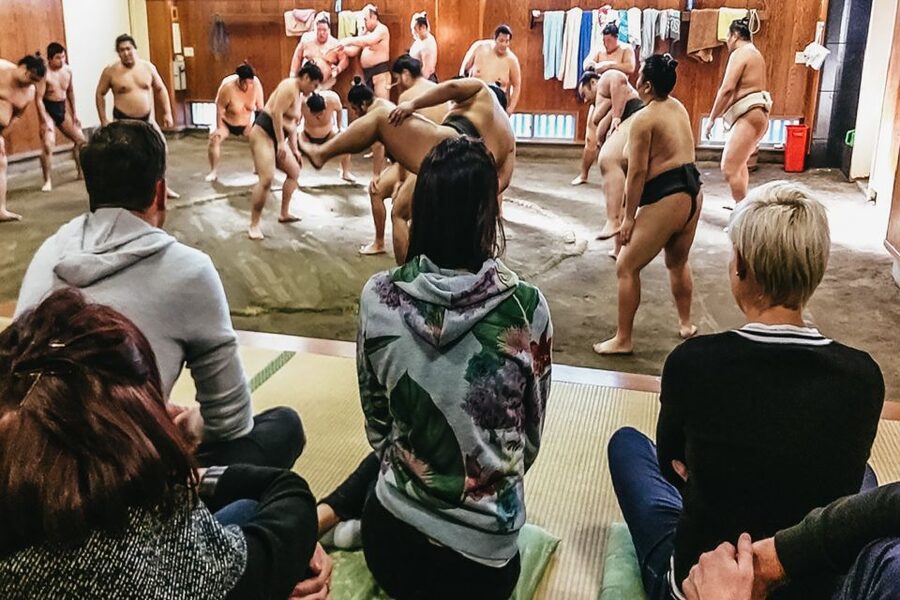
Once inside, you are shown where to sit beside the practice area. Seating is generally free, so arriving on time matters. A place near the front gives you a cleaner view of the clay ring and makes the action easier to follow. From the back, heads and shoulders can block part of the practice.
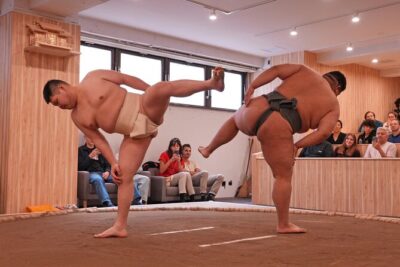
The session may begin with warm-ups and repeated exercises. You might see stretching, bodyweight movements, footwork, and drills designed to build balance and force. These movements can appear simple until you notice the control required to repeat them with a large body.
The wrestlers then work more directly with one another. Pushing practice and sparring may follow, with the intensity building as the session continues. You can hear the impact and see how a wrestler tries to hold position, redirect force, or drive an opponent backward.
The practice is often described as lasting about 60 minutes, which is the duration shown for the activity. Actual sessions have also lasted 90 minutes or two hours. During Tokyo Grand Sumo Tournament months, January, May, and September, practice can be reduced to about 30 minutes. That shorter session does not bring a refund, so check the calendar before booking if duration matters to you.
The quiet can feel unusual at first. You may not talk loudly, eat, drink, or move around freely. Phones must be silent, and flash photography is not allowed. Video recording is permitted only with prior approval, so assume you cannot film unless the host says otherwise.
This restraint is not a minor detail. The stable is a working place, and the wrestlers need to concentrate. Treat the visit more like observing a serious rehearsal than attending a tourist show.
The rules that shape your visit
You will receive or be given behavior instructions, but it helps to know the main points before you arrive:
- Do not enter without the guide.
- Do not ring the bell or go inside early.
- Keep your phone on silent.
- Do not use flash photography.
- Do not eat or drink indoors.
- Do not bring large bags or luggage.
- Do not wear a hat or sunglasses inside.
- Keep noise to a minimum.
- Ask before taking video.
- Remain seated and still during the practice.
The rules may feel firm, but they protect the training environment. Past sessions have required people to sit quietly for a long time, sometimes with their feet positioned carefully and without leaning against walls. If you tend to fidget, need regular movement, or dislike floor seating, this may be a difficult hour or two.
A chair may be possible for people with knee problems, but it must be arranged ahead of time. Do not count on finding spare chairs at the stable. The activity information asks visitors with mobility concerns to raise the issue before the day of the visit.
Same base, a different sort of day:
- Mt Fuji and Hakone 1-Day Bus Tour Return by Bullet Train
★ 5.0 · 26,383 reviews - 1-Day Tokyo Bus Tour
★ 5.0 · 14,250 reviews - Tokyo: TOKYO SKYTREE® Admission ticket
★ 4.5 · 11,192 reviews - Tokyo: teamLab Planets TOKYO Digital Art Museum Entry Ticket
★ 4.6 · 9,779 reviews
Floor seating, views, and comfort
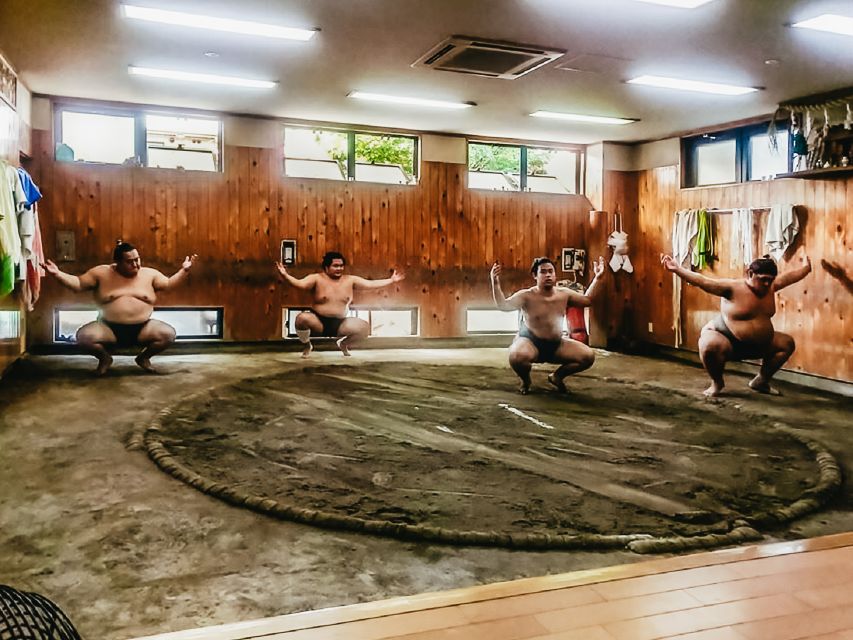
The seating is one of the clearest tradeoffs. Sitting close to the ground helps you feel near the practice area, but it can become uncomfortable during a long session. Some people have managed two hours comfortably, while others have left early because their legs or knees hurt.
The floor is also why arriving on time helps. Seating is not described as reserved, and late arrivals may end up at the back. A rear position can make it hard to see the wrestlers’ feet and lower-body movements, which are central to understanding sumo technique.
Wear comfortable clothing that allows you to sit low. Bring only what you need, since large bags and luggage are not allowed. The instructions also require a face mask or protective covering, so pack one even if you do not expect to use it elsewhere.
There is no indication that food or drinks are provided, and eating or drinking inside is prohibited. Have breakfast and water before you arrive, while allowing enough time to reach the meeting point. You may not be able to take a break once practice begins.
How much explanation will you receive?
This is the weakest part of the experience for many English-speaking visitors. The host or greeter is listed as English-speaking, but the level of commentary can be light. You may get the meeting instructions, behavior rules, and basic help with entry without receiving a detailed explanation of what the wrestlers are doing.
That matters because sumo has many rituals and movements that are not obvious at first. A short introduction to the training routine, the purpose of the drills, and the etiquette around the practice would make the visit easier to understand.
You can prepare by learning a few basic terms before you go, or by reading about sumo movements on your phone before entering the stable. Once practice starts, keep the phone away and observe. Even without commentary, you can follow the broad pattern of warm-up, repeated drills, pushing work, and sparring.
The lack of narration is not entirely negative. It keeps the stable quiet and prevents the visit from becoming a running tour talk. If your priority is direct observation, the silence may suit you. If you want a lesson in Japanese culture, you may find the experience thin unless you do some preparation yourself.
The group photo at the end
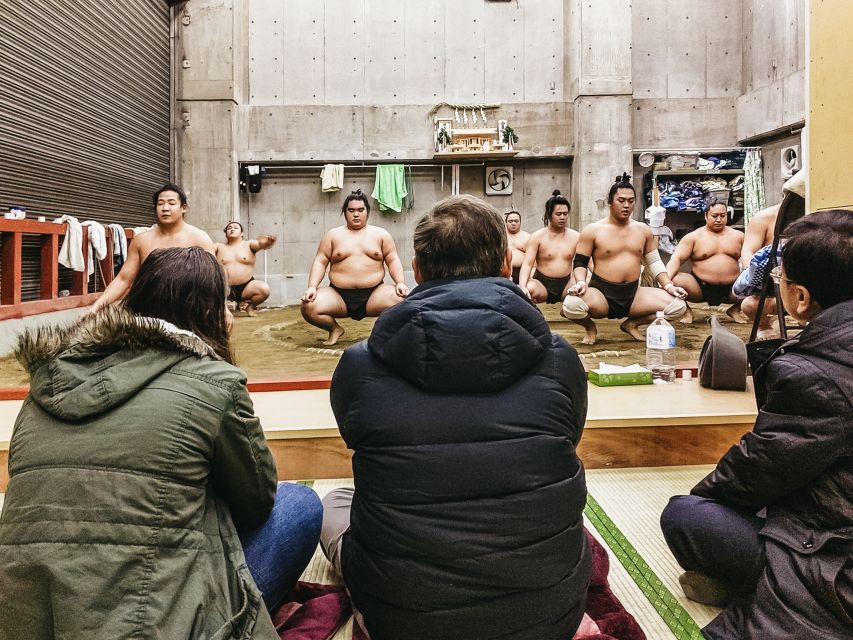
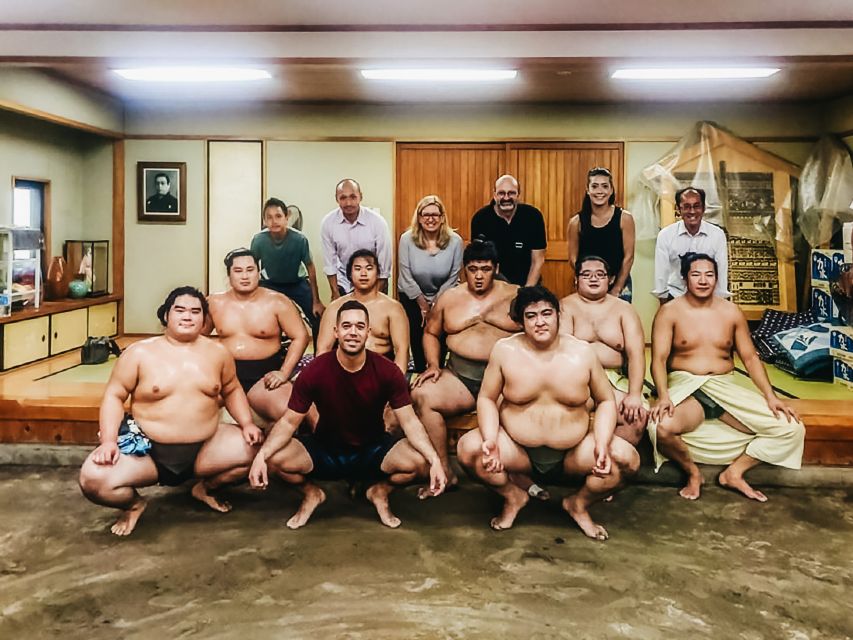
The final group picture is included in the price. After practice, you may have the chance to pose with the wrestlers, which gives the visit a clear personal finish and a memory that is difficult to get at a large tournament.
The photo is not guaranteed if you leave before the practice ends. This is important for families or anyone with limited stamina. If you need to go early, you can leave, but you should not expect the group picture afterward.
The exact arrangement can vary with the stable and the wrestlers’ schedule. Keep your expectations modest and follow the host’s directions. The photo is a bonus, not the main reason to book. The central experience is watching the training at close range.
Is $77 a fair price?
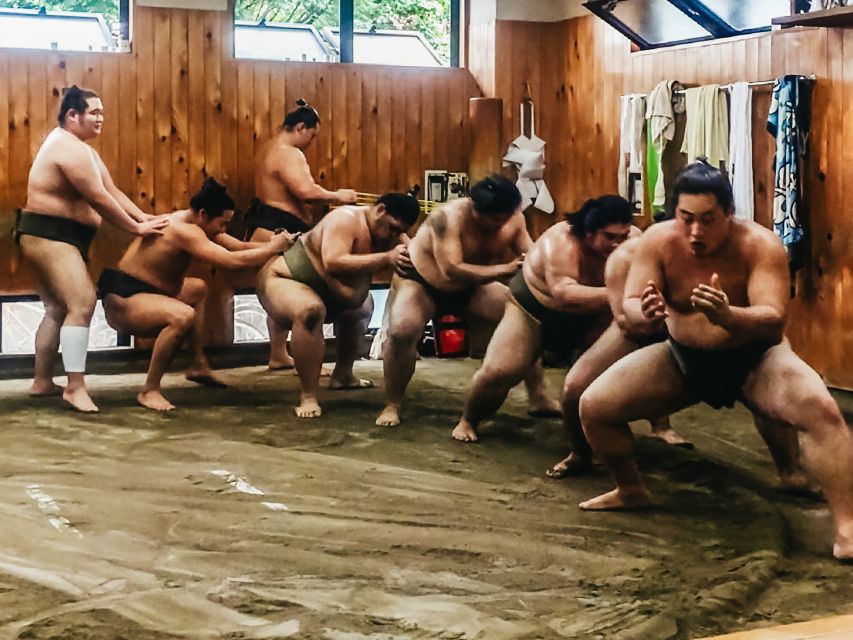
At $77 per person, this is not the cheapest way to encounter sumo. You are not getting a tournament ticket, a meal, or a long guided lesson. You are paying for access to a place most people cannot enter on their own, along with the coordination required to arrange the visit.
The value is strongest if you specifically want to see active wrestlers training up close. A stadium tournament gives you real competition and a fuller sense of the sport as a public event, but the wrestlers will be much farther away. This stable visit reverses that balance: close access, less spectacle.
It can also be cheaper than attending a tournament, especially if tickets are hard to find. But during the Tokyo tournaments in January, May, and September, the stable session may be only 30 minutes. If you want to see actual bouts, an official tournament ticket may offer better value at that time.
I consider the price reasonable for someone who values access and authenticity over comfort and explanation. It is less appealing if you expect a polished guided tour, reserved seating, or a guaranteed two-hour training session.
Optional hotel transfer from Tokyo’s 23 wards
A one-way hotel transfer may be available as an extra option. The hotel must be inside Tokyo’s 23 wards, have a front desk, and be supplied in advance with the hotel name, check-in date, and name of the person who booked.
The vehicle can carry up to four people, and the driver speaks Japanese rather than English. You need to provide a Japanese mobile number for contact on the day before the visit. The pickup time arrives by email at least one day ahead.
This option may help if you are worried about finding an unfamiliar stable early in the morning. It is not a full round-trip service, and missing the pickup by more than 10 minutes counts as a no-show. For most independent visitors, following the final meeting instructions by train or taxi may be simpler, but the transfer can reduce morning uncertainty.
Who will enjoy this experience most?
I would choose this for someone fascinated by Japanese sport, discipline, and daily practice. It suits visitors who are happy to observe quietly and accept that a real training session may be repetitive, restrained, or longer than expected.
Families can enjoy it too. Children who can sit still may find the physical power captivating, and the group photo gives younger visitors a memorable ending. Very young children or anyone unable to stay quiet could struggle with the rules.
This is also a good fit for people who have already seen a tournament and want a closer look at how wrestlers prepare. It is less suitable for anyone who needs constant commentary, easy seating, flexible movement, or a guaranteed series of contests.
Book at least 11 days ahead if you want the option of a full refund for cancellation. Then watch your email before the visit, since the final location is a key part of the booking.
Should you book the Tokyo sumo morning visit?
Book it if your main goal is to see real sumo training from close range. The power, speed, balance, and sound of the practice can be remarkable, and the group photo gives you a pleasant memento afterward.
Skip it if you want a formal cultural lesson or a guaranteed tournament-style show. The guide may offer little explanation, floor seating can be uncomfortable, and the session can be shortened during tournament months.
My practical advice is simple: arrive exactly on time, check the final email rather than relying on the map, sit near the front if you can, prepare for silence, and wear clothing suitable for floor seating. With those expectations, this is a memorable and fairly priced look at one of Japan’s most disciplined sports.
FAQ
Where does the sumo morning training visit meet?
The exact meeting place is decided shortly before the visit. You normally receive the location and directions by email about two or three days in advance. Do not rely on the location shown on Google Maps or the automatic voucher.
How long does the training last?
The normal training session lasts about 60 minutes, but some sessions have lasted 90 minutes or up to two hours. During Tokyo Grand Sumo Tournament months in January, May, and September, training may last only about 30 minutes.
Can I choose a specific sumo stable?
No. The stable and meeting point depend on the day, and specific location requests cannot be accommodated. All participating stables are within Tokyo.
Is the activity guided in English?
An English-speaking host or greeter is provided. The host may mainly check your name, explain the rules, and lead you into the stable. Detailed explanations of sumo history, rituals, and training are not guaranteed.
Can I take photos or videos?
Photography is allowed without flash. Flash photography is forbidden, and video recording requires prior permission. Follow the host’s instructions inside the stable.
Can I take a group photo with the wrestlers?
Yes, a group picture is included. You need to stay until the end of the training session to receive it. If you leave early, the group picture will not be available.
What should I bring?
Bring a face mask or protective covering. Avoid large bags and luggage. Hats, sunglasses, food, and drinks are not allowed inside the stable.
Is seating provided on chairs?
Floor seating is the normal arrangement. If you have knee problems or need a chair, request one in advance because spare seating may not be available on the day.
Can I cancel for a refund?
You can cancel up to 11 days before the scheduled experience for a full refund. The shorter 30-minute training period during tournament months does not qualify for a refund.
Just added in Tokyo
- Nikko: Edo Wonderland Edomura Cultural Theme Park Ticket★ 4.3 · 205 reviews
- 《MEMBERS-ONLY-BAR-HOPPING》Discover Your Special Whiskey in Tokyo!★ 5.0 · 29 reviews
- Japanese Whisky Hunting《HIGH-QUALITY-ONLY》Rare Tasting Class★ 5.0 · 20 reviews
- Luxury Tokyo Sake, Cocktail, Whisky and Pairing Tour★ 5.0 · 18 reviews
- Wagyu & Sake Pairing in Shinjuku – Steak, Shabu-Shabu & More★ 5.0 · 112 reviews
- Small-Group Wagyu Beef and 7 Japanese Dishes Tokyo Cooking Class★ 5.0 · 190 reviews
- From Tokyo: Private Tour to Fuji/Hakone – Onsen, Art, Nature★ 5.0 · 116 reviews
- Tokyo: KABUKI Show at Kabukiza Theatre Admission Ticket★ 4.8 · 152 reviews
Sumo Experiences, compared.
Sumo Show Experience with Chicken Hot Pot and a Photo
Read our review →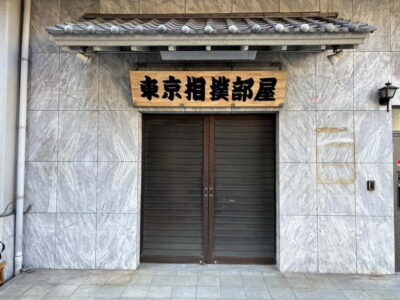
Tokyo Shinjuku Sumo Show & Experience with Photo
Read our review →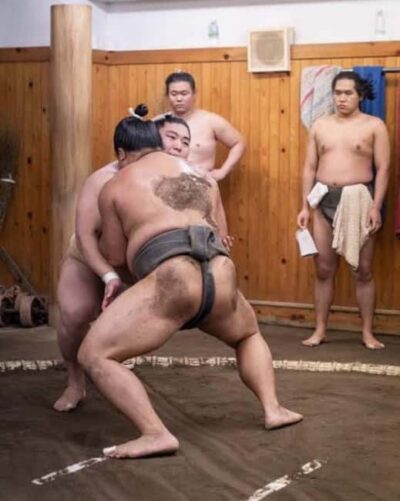
Sumo Show & Experience w/ Optional Kimono & Hot Pot
Read our review →
Authentic Sumo Experience in Tokyo: Enter the Sanctuary
Read our review →Browse the lists this tour appears in