
Reviewed · SAMURAI & NINJA EXPERIENCES
Samurai Ninja Museum Asakusa: Samurai Sword Lesson & Tour
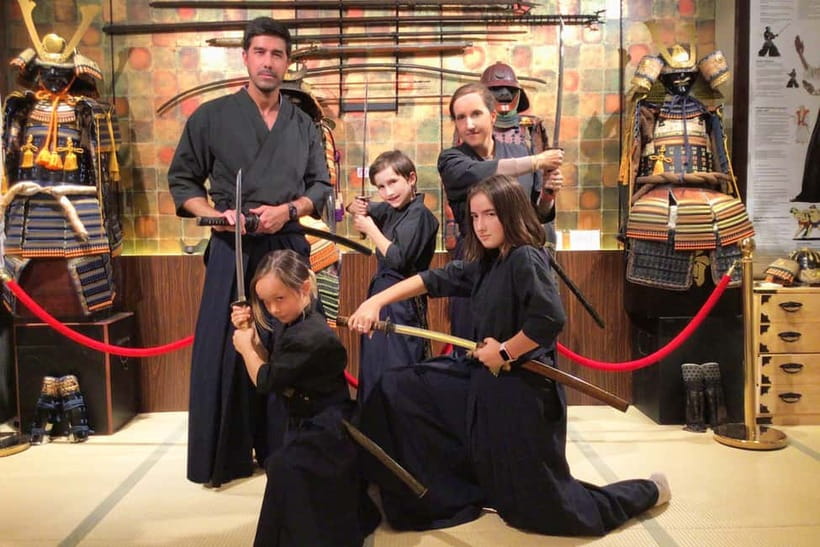
The best part of this Asakusa experience is that you do not just look at samurai objects behind glass. You put on hakama, armor, and a helmet, then learn a short sword routine under an instructor such as Sensei Ryo. It turns a museum visit into a hands-on history lesson.
I like the mix of useful context and good-natured fun. The museum tour explains samurai and ninja history in lively English, while the supervised sword practice and ninja star throwing give children and adults something active to do. The main caution is time: two hours passes quickly, and a larger session or a group with many young children can make the lesson feel rushed.
Key points to know before booking
- A real hands-on workshop: Learn basic katana handling and a choreographed routine rather than only watching a demonstration.
- Dress-up is part of the visit: Use hakama, samurai armor, and a helmet for photos and the sword lesson.
- Strong family appeal: Children from age 6 can take part, and the activities suit adults, teenagers, and older children.
- History comes before or after the lesson: The museum covers samurai and ninja traditions, origins, and the end of the samurai era.
- Small-group options are available: The maximum group size is 16, with private and small-group bookings offered.
- Allow for a brisk pace: Some sessions leave little time for extra sword practice or a leisurely museum tour.
What the two-hour Asakusa experience feels like
This is a compact cultural activity built around participation. You spend about two hours moving between dressing up, sword instruction, museum displays, photographs, and ninja weapon practice. The exact order can vary, so you should treat the session as a planned sequence rather than a museum visit followed by a completely separate class.
The English-speaking staff guide the group throughout. In different sessions, instructors have included Ryo, Koki, Kenny, Kai, Momo, Ren, Leon, and Nao. Ryo receives especially warm praise for his calm teaching and humor, while Kai is noted for working well with children. The names and roles can vary by time slot, but the format remains much the same.
The venue is small, which helps keep the activity close and personal but limits open space. That matters during the sword routine. If your group is full, you may spend more time following instructions in place and less time repeating each movement.
Other samurai and ninja experiences in Tokyo people book:
- Tokyo: Samurai Restaurant Show Ticket with 2 Drinks
★ 4.5 · 1,307 reviews - Tokyo: Samurai Ninja Museum Guided tour and Experience
★ 4.6 · 1,010 reviews - Tokyo: Samurai Sword & Archery Class from Samurai Descendant
★ 5.0 · 603 reviews
Getting dressed as a samurai
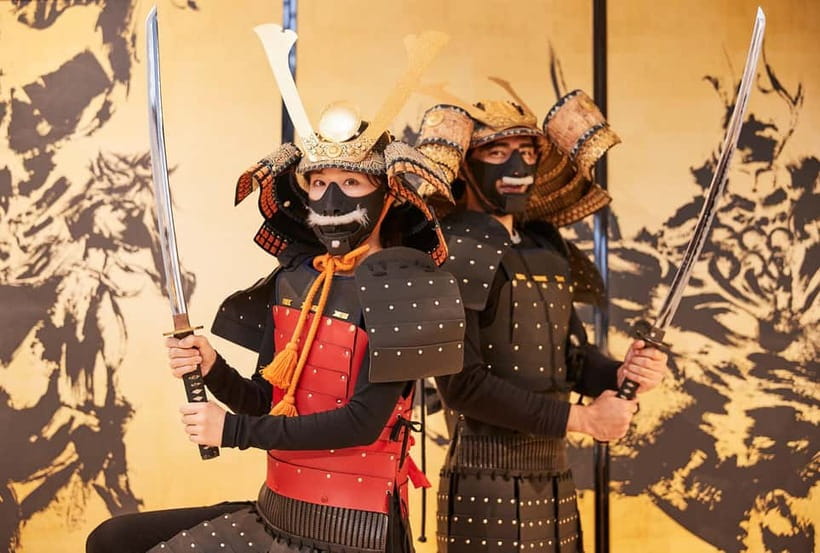
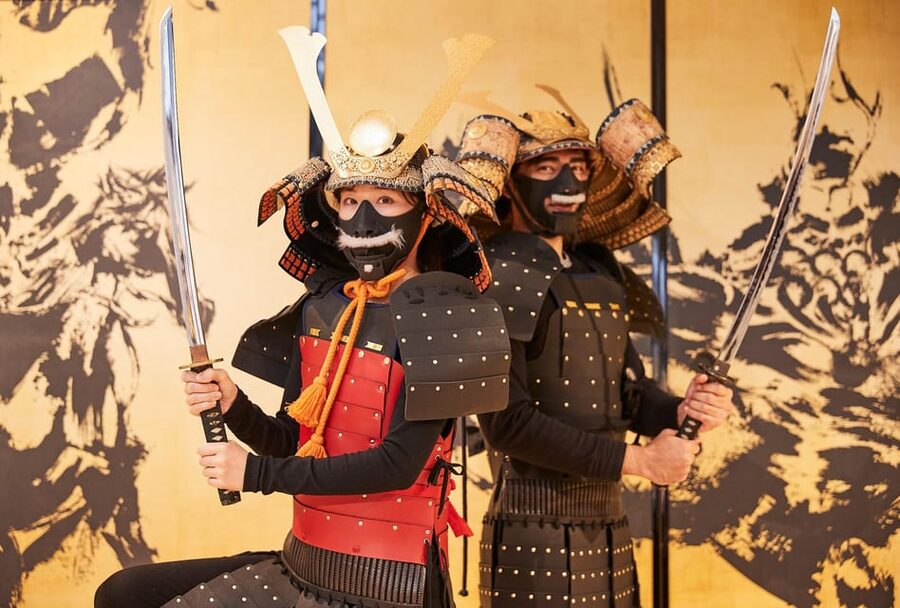
The costume portion gives the visit its immediate sense of fun. You can use a hakama, samurai armor, and a helmet, then pose for photographs against several samurai-themed backgrounds. This is not simply a quick costume prop before the serious part begins. The clothing helps children understand how a warrior might have appeared, and it gives adults a good excuse to take the kind of photos that are hard to create elsewhere in Tokyo.
Expect the armor and helmet to be used as part of the activity, not treated as museum objects only. Staff help with the process, and the costume period also gives your group time to settle in before the lesson.
The photo session works well for families and mixed-age groups. Children can play the role fully, while adults can join in without needing any prior martial arts experience. Take advantage of the photo backgrounds when they are offered, since the workshop moves quickly and you may not get long stretches of unstructured time.
Learning the katana routine with an English-speaking instructor
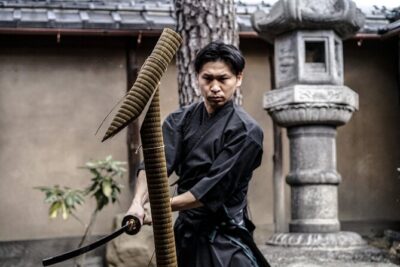
The sword lesson is the heart of the experience. You learn how to hold the katana, make basic movements, and link them into a short routine. The focus is on posture, control, and following a sequence, not on becoming a trained swordsman in one afternoon.
Ryo is one of the instructors most often singled out for patient teaching, clear explanations, and a light touch of humor. Kenny is also praised for making the katana session interesting in English. The teaching style appears friendly and accessible, even for someone with no coordination or martial arts background.
Several sessions include a choreographed sword dance or routine at the end. That gives you a clear goal and makes the lesson feel like more than a quick demonstration. You may be surprised at how much you can remember after only a few attempts, but the lesson remains short enough that there is not much room for independent practice.
That is the main limitation. One family-oriented session was described as having only a few minutes of actual instruction, and another person found the museum tour rushed. The exact feel depends on group size and how much time is given to each activity. If sword technique is your main reason for booking, choose a private or small-group option if available and keep your expectations realistic.
Safe sword play and the family-friendly finish
The activity can include a supervised mock fight or partner routine using foam or rubber swords. This is designed as a playful finale, not a serious combat exercise. You follow the instructor’s movements and work with another participant, often creating the biggest laughs of the session.
The practice is especially effective for families with children old enough to follow directions. Children ages 7 and 9 have been singled out as enjoying the ninja and sword activities, and families with children ages 8, 10, 11, and 14 have found the pace engaging. Children under 6 cannot enter the venue, so this is not an activity for a preschool-age child.
The lesson also suits adults. You do not need to be athletic, coordinated, or familiar with Japanese martial arts. Staff demonstrate the movements and keep the activity structured. Still, the room is not large, and a crowded session can make the final routine less precise. If you want plenty of room for movement, a smaller group is the better choice.
Other swordplay and stealth sessions in Tokyo:
- Best Samurai Experience in Tokyo
★ 5.0 · 458 reviews - Ninja Experience (Family Friendly) at Samurai Ninja Museum TOKYO
★ 5.0 · 441 reviews - Tokyo: Samurai Entertainment Night Show in Kanda Shrine
★ 4.6 · 417 reviews - Tokyo Sword Experience – includes Museum Ticket/Ninja Experience
★ 5.0 · 314 reviews
The museum tour: samurai, ninja, and Japan’s warrior past
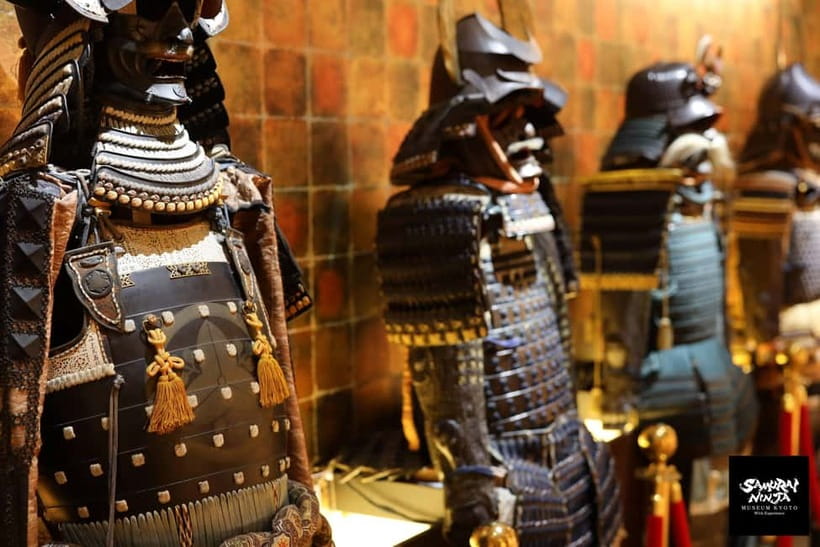
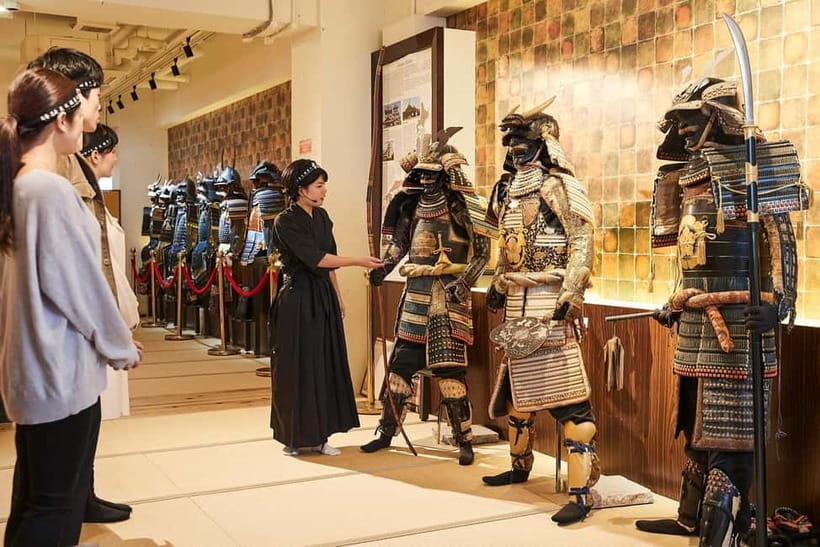
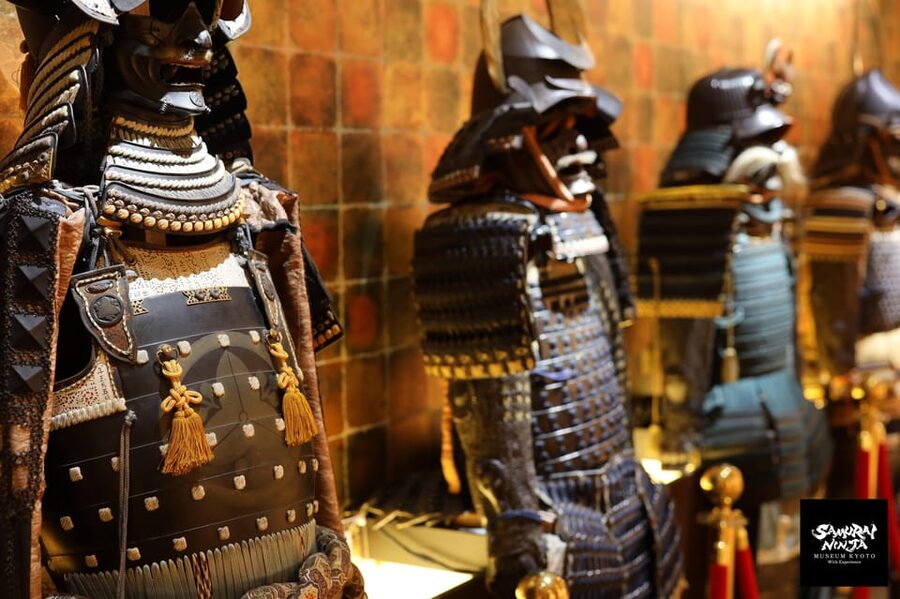
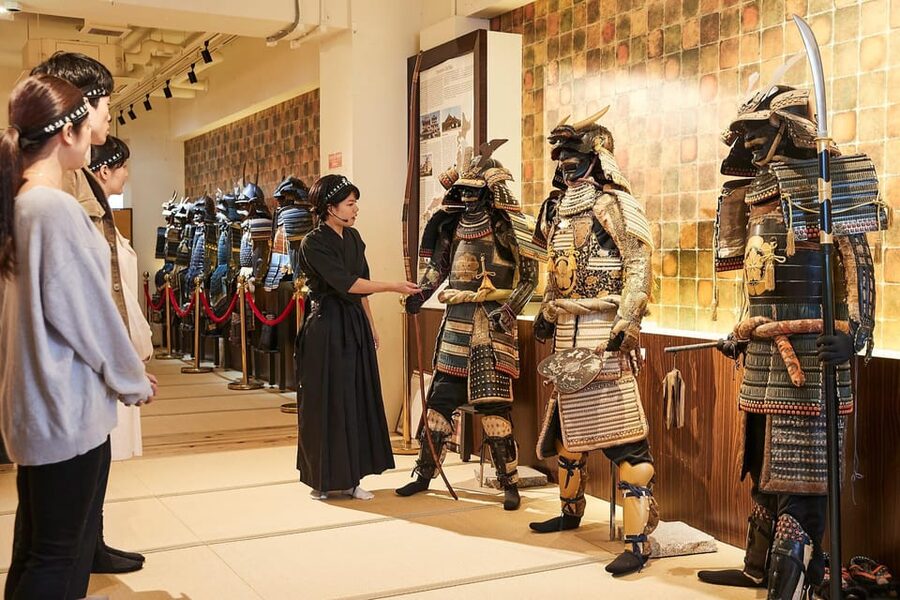
The museum section gives needed context to the costume and sword work. You learn about samurai origins, their place in Japanese history, the development of their role, and the end of the samurai era. The displays also introduce ninja history and tools.
The collection is described as small, with samurai antiques and exhibits rather than a huge national museum-scale display. That is important when deciding what you are buying. This is a short, guided introduction with activities attached. It is not a half-day museum for specialists.
The guide makes a big difference. Ren has been praised for lively explanations, while Momo is noted for keeping children involved during the history lesson. The tone is designed to hold attention, with questions, humor, and at least one engaging game included in some sessions.
I like this balance. You get enough background to understand why the samurai mattered, then immediately connect that information to the objects, clothing, and sword movements in front of you. The history is presented for a general audience, so you should not expect a long academic lecture or a detailed study of individual artifacts.
Some visitors find the museum portion too quick, especially when the class and photos take up much of the two hours. If the museum is your main interest, set aside time for a separate history museum elsewhere in Tokyo. If you want a lively introduction that children will follow, this format makes more sense.
Ninja weapons and the final burst of fun
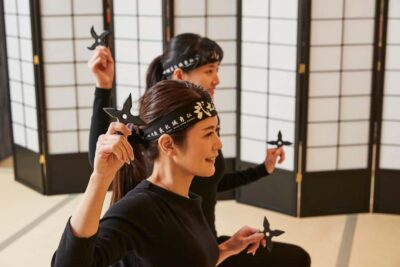
Ninja weapon practice adds variety to the visit. You may try throwing shuriken, commonly called ninja stars, at a target. The activity is supervised and presented as a skill-based game rather than a serious weapons lesson.
The throwing competition can be a highlight for families and groups of friends. It gives children a fresh challenge after the sword routine, and adults tend to join in rather than stand back. Some sessions also include a small game at the end, which adds a playful finish to the historical material.
Do not book this expecting a long ninja training course. The activity is one part of a tightly timed visit. You get a taste of ninja tools, just as you get an introduction to katana handling, rather than a full course in either discipline.
How much value do you get for $63?
At $63 per person, this is not the cheapest way to see a small museum in Tokyo. The price makes more sense when you count the whole package: an English-language guided tour, hakama use, armor and helmet use, a sword lesson, ninja weapon practice, and themed photographs.
I see the strongest value for families and first-time visitors who want an activity everyone can share. A standard museum visit may appeal to one person in the group and lose another. Here, the history, costume, movement, and games create several points of interest within the same two hours.
The value is less convincing if you want serious sword instruction or a long museum visit. The class is introductory, and the museum collection is compact. A full group may also limit repetition time. Private and small-group choices can improve the experience, but they may affect the final price, so check the exact option before paying.
Free cancellation up to 24 hours before the start and reserve-now, pay-later booking make it easier to fit into a Tokyo schedule. Starting times vary, and the meeting point can depend on the option you choose. Check those details carefully rather than assuming every booking uses the same arrangement.
Group size, access, and practical planning
The maximum group size is 16 people, and private or small-group formats are available. Sixteen is still manageable for a guided activity, but it is large enough to affect the sword lesson, especially in a compact room. If you are traveling with young children or care most about practice time, smaller is better.
The activity is listed as wheelchair accessible. You should still confirm the specific meeting arrangements and the option you are booking, since the meeting point may vary.
Wear clothing that allows comfortable movement beneath the costume. The activity involves dressing, holding a sword, following a routine, and taking part in supervised play. You do not need special equipment, and the listed inclusions cover the costume pieces and lesson materials.
English is the listed tour language. The instructors and guides featured in the sessions speak English, and the lesson is structured for people who are new to the subject.
Who will enjoy this most?
I would choose this for a family with children aged 6 and up, a couple looking for a memorable Tokyo activity, or friends who want photographs and a little theatrical fun. It works particularly well when your group has mixed interests, since one person can enjoy the history while another looks forward to the sword routine or shuriken practice.
It is also a good rainy-day option because the visit takes place indoors and packs several activities into a short block of time. The two-hour length fits neatly between other Asakusa plans.
I would hesitate if you want a quiet museum, a large collection, or serious martial arts training. The setting is active, the schedule is full, and some sessions can feel rushed. The experience is best understood as an entertaining cultural workshop with a museum tour, not as a specialist sword seminar.
Should you book the Samurai Ninja Museum experience?
Book it if you want to learn a little Japanese history while doing something with your hands. The combination of costume, katana routine, museum storytelling, and ninja practice gives you more variety than a standard exhibit visit, and the family appeal is unusually strong.
For the best chance of a relaxed lesson, choose a private or small-group option if your budget allows. Arrive ready to take part, not just watch. If you can accept a small museum, a brisk schedule, and introductory rather than advanced sword work, $63 is a fair price for two hours of shared entertainment and cultural context.
FAQ
How long does the Samurai Ninja Museum experience last?
The activity lasts two hours. Starting times vary, so you need to check availability for the date you want.
What is included in the price?
The experience includes a samurai sword lesson, use of hakama, samurai armor, and a samurai helmet, themed photo opportunities, and a ninja weapons trial.
Can children take part?
Children aged 6 and older can enter and participate. Children under 6 cannot enter the samurai venue.
Is the activity available in English?
Yes. The listed tour language is English, and the activity includes an English-speaking live guide.
How many people can join one session?
The maximum group size is 16 people. Private and small-group options are also available.
Can I cancel the booking?
You can cancel up to 24 hours in advance for a full refund. Reserve-now, pay-later booking is also available.
More museums in Tokyo
- Tokyo: teamLab Planets TOKYO Digital Art Museum Entry Ticket
★ 4.6 · 9,779 reviews - Tokyo Studio Ghibli Museum and Ghibli Film Appreciation Tour
★ 4.5 · 421 reviews - Tokyo: Art Aquarium Museum GINZA Entry Ticket
★ 4.5 · 278 reviews - Osaka Castle: Museum and Tower Entry Ticket
★ 4.5 · 2,380 reviews
Just added in Tokyo
- Nikko: Edo Wonderland Edomura Cultural Theme Park Ticket★ 4.3 · 205 reviews
- 《MEMBERS-ONLY-BAR-HOPPING》Discover Your Special Whiskey in Tokyo!★ 5.0 · 29 reviews
- Japanese Whisky Hunting《HIGH-QUALITY-ONLY》Rare Tasting Class★ 5.0 · 20 reviews
- Luxury Tokyo Sake, Cocktail, Whisky and Pairing Tour★ 5.0 · 18 reviews
- Wagyu & Sake Pairing in Shinjuku – Steak, Shabu-Shabu & More★ 5.0 · 112 reviews
- Small-Group Wagyu Beef and 7 Japanese Dishes Tokyo Cooking Class★ 5.0 · 190 reviews
- From Tokyo: Private Tour to Fuji/Hakone – Onsen, Art, Nature★ 5.0 · 116 reviews
- Tokyo: KABUKI Show at Kabukiza Theatre Admission Ticket★ 4.8 · 152 reviews
Samurai & Ninja Experiences, compared.
Samurai Ninja Museum Guided tour and Experience
Read our review →
Kendo and Samurai Experience with Uniform and Gear
Read our review →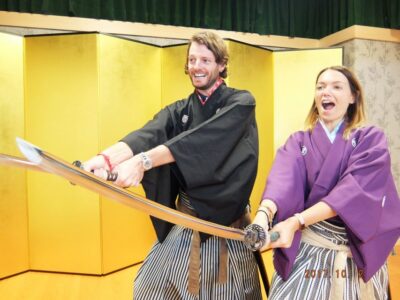
Samurai Sword Class by Experts in Traditional Arts
Read our review →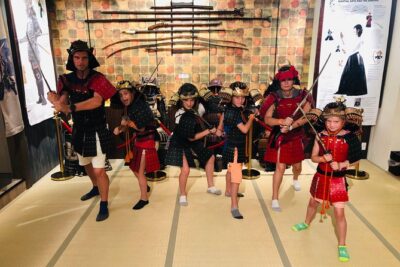
Skip the lines Basic Ticket at SAMURAI NINJA MUSEUM KYOTO
Read our review →
Samurai Sword & Archery Class from Samurai Descendant
Read our review →
Browse the lists this tour appears in