
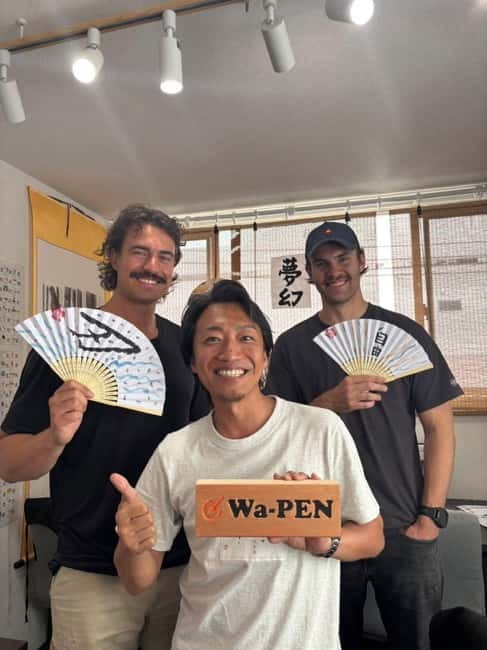
Reviewed · CALLIGRAPHY & CRAFT WORKSHOPS
Tokyo:Calligraphy &Make your original folding fan in Asakusa
Japanese calligraphy becomes much more interesting when you stop treating it as handwriting and start treating it as a physical practice. In Asakusa, instructor Mana guides you through posture, brush control, ink, and the meaning behind hiragana and kanji before you make a one-of-a-kind folding fan.
I like the patient, unhurried teaching style and the chance to practice on thin paper before committing to a final design. I also like the small postcard ritual: you write a note to yourself, then connect the finished souvenir with the rest of your trip. The main consideration is ink. Wear clothes that can handle a spot or two, even though aprons are provided.
Key points to know
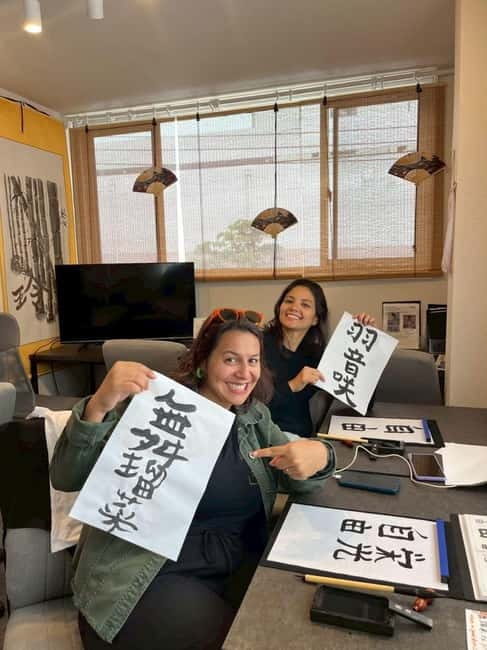
- Start with traditional solid ink: You use water to prepare an ink stick rather than simply opening a bottle.
- Learn eight basic techniques: Guide paper and personal help make the brush work approachable for beginners.
- Work with Mana in English: She explains posture, brush pressure, kanji, names, and design choices in clear English.
- Make more than a practice sheet: Your final calligraphy becomes an original folding fan to take home.
- Take a quiet break in Asakusa: Green tea and a postcard add a calm finish after the brushwork.
- Check the option carefully: The henna tattoo option does not include the calligraphy session.
Why this small Asakusa class is worth your time
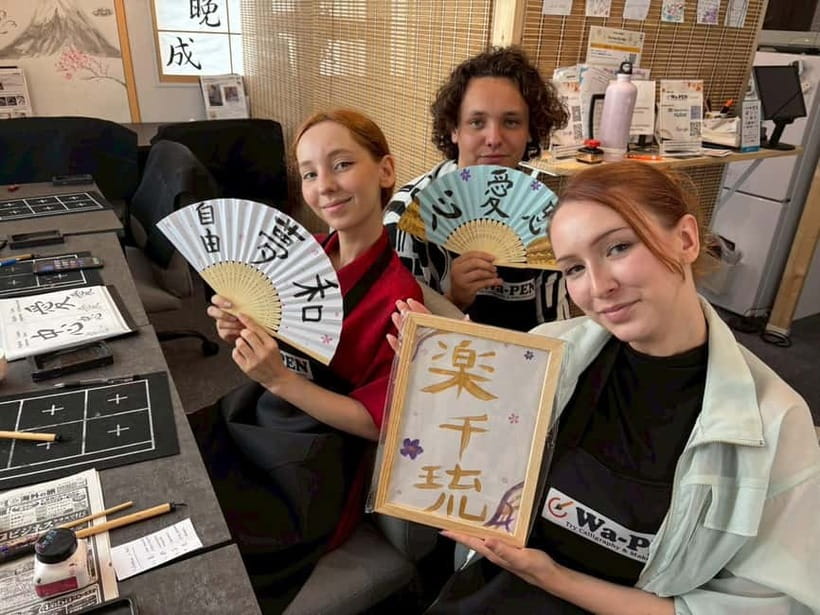
Asakusa is famous for Senso-ji, souvenir shops, and busy streets. This activity gives you a different way to spend part of your time in the district. Instead of only looking at Japanese art, you sit down and make something with it.
At about $16 per person, the experience is priced like a modest paid activity, not a costly art course. You receive instruction, practice materials, ink training, a final design, green tea, a postcard activity, and a folding fan. For a short session, that is a useful bundle, especially if you want a souvenir with a personal connection rather than another mass-produced trinket.
The flexible duration matters. Some bookings may take around 30 minutes, while others can run closer to 90 minutes depending on the option and how long you practice. If you have an appointment immediately afterward, leave room in your schedule. If you want to repeat your strokes until they feel right, the longer timing gives you space to do so.
The experience is taught in English. Mana is especially good at encouraging beginners, including children and older family members. A six-year-old took part successfully, and a grandmother who had always liked calligraphy was able to try a proper class. You do not need an artistic background.
Other things to make with your hands in Tokyo:
- Chopstick Making Workshop in Ginza
★ 4.8 · 1,366 reviews - Tokyo Chopstick Making Workshop with Artisan
★ 5.0 · 466 reviews - Tokyo: Matcha Making Experience with Mochi Sweets in Asakusa
★ 4.9 · 388 reviews
Arriving at the brush and ink table
The meeting point is in the Asakusa area, near 35.7162239, 139.7922354, though the exact point can vary by the option you book. Check the confirmed meeting details before setting out. The convenient location makes this easy to pair with Senso-ji or an afternoon in Asakusa, but do not assume you can walk straight in without checking your booked option.
The session begins with an introduction to Japanese calligraphy. You learn why brush writing is more than forming attractive characters. Posture, attitude, breathing, brush angle, and the amount of ink all affect the result.
That opening talk gives the class some welcome context. You learn about the development of Japanese calligraphy, the role of hiragana, and links between writing and modern Japanese life. The lesson is not a full academic history, but it gives meaning to the marks you are about to make.
You also meet the fude, the Japanese brush used for calligraphy. It responds differently from a pen. A light touch can produce a fine line, while more pressure creates a broader stroke. The brush carries more ink than a ballpoint pen, so you must pay attention to how much you load and how steadily you move.
Preparing ink the traditional way
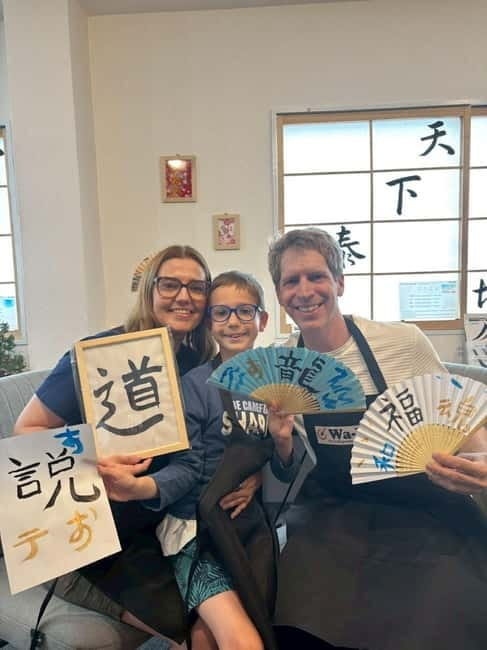
One of the most memorable parts is preparing ink from a solid ink stick. You use water to melt the ink rather than reaching for ready-made liquid ink.
This slows the class down in a useful way. You begin to see calligraphy as a process with several stages, not just a quick attempt at copying a character. It also helps explain why the ink behaves as it does on thin paper.
At first, brush and ink can feel slightly awkward. That is normal. The point is not to produce a perfect character on the first attempt. Mana shows you how to hold the brush and how to manage the ink, then lets you try.
An apron is available, but I would still wear comfortable clothes that can tolerate a little ink. One person wished there had been a towel for cleaning hands at the end, so keeping that small practical issue in mind is sensible. Food and drinks are not allowed during the session, although green tea is part of the later experience.
Practicing eight techniques before the final design
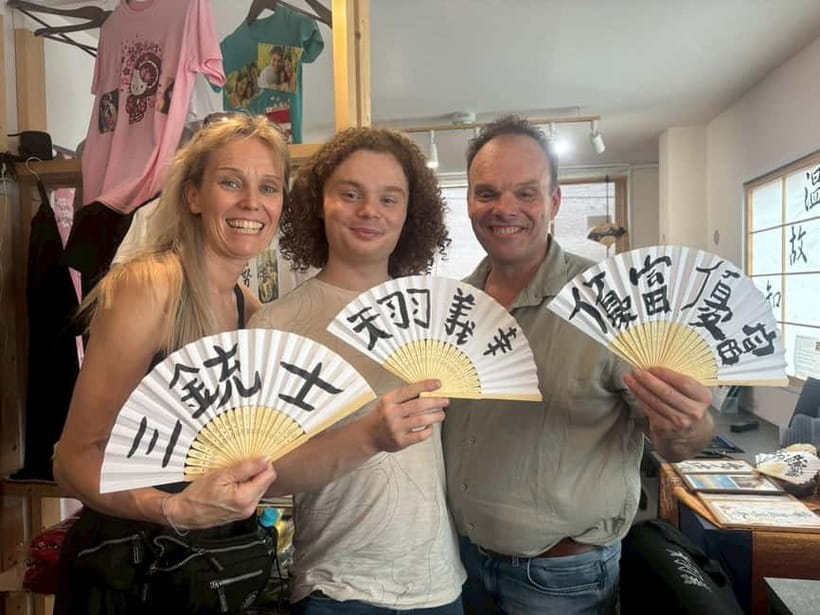
The practice section is the heart of the class. You work through eight basic techniques with guide paper and help from the instructor. The guide sheets give your strokes structure, while the thin practice paper lets you repeat the movement without worrying about wasting expensive materials.
This is where Mana’s patient teaching matters most. She can show you how a stroke begins, how it changes direction, and where to finish. You can practice your name in kanji, select another meaningful character, or choose from a sample book.
The class is not presented as a test. You keep practicing until you are satisfied with your chosen design. That freedom is important because brush writing is often less predictable than beginners expect. The first character may look too heavy, too thin, too crowded, or simply different from what you had in mind.
If you are traveling with a child, the practice sheets help keep the task manageable. If you are with an older relative, the calm pace makes it easy to participate without feeling rushed. Couples can also work on separate designs and compare the finished fans.
You will not become a trained calligrapher in one short sitting. This is an introduction, not a professional course. But you will leave with a better feel for brush pressure, ink, posture, and the visual balance of a character. That is a fair and useful result for the price.
Same base, a different sort of day:
- Mt Fuji and Hakone 1-Day Bus Tour Return by Bullet Train
★ 5.0 · 26,383 reviews - 1-Day Tokyo Bus Tour
★ 5.0 · 14,250 reviews - Tokyo: TOKYO SKYTREE® Admission ticket
★ 4.5 · 11,192 reviews - Tokyo: teamLab Planets TOKYO Digital Art Museum Entry Ticket
★ 4.6 · 9,779 reviews
Choosing a kanji, name, or personal message
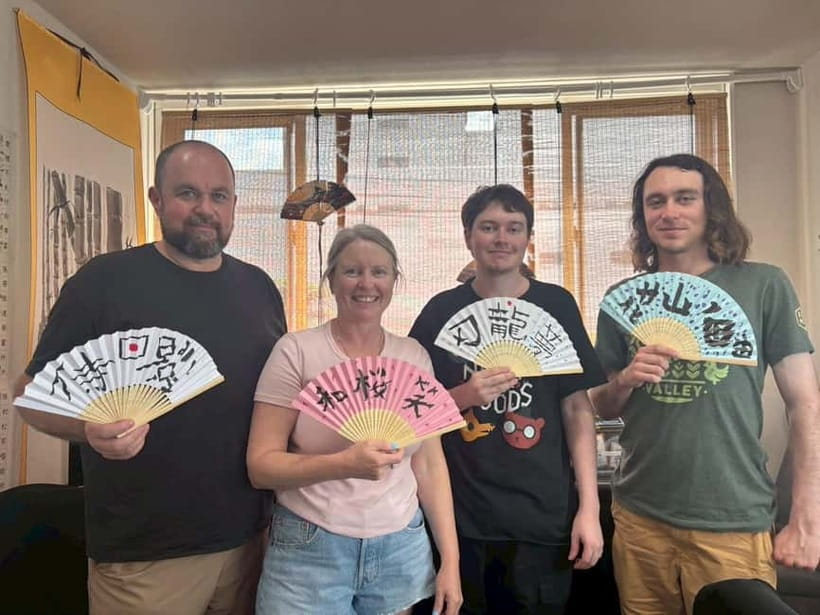
The choice of final design gives the activity its personal edge. You can select a character from a sample book or ask the instructor for help. Writing a name in kanji is a popular choice because it turns a familiar word into something tied to Japan.
You can also choose a kanji with a meaning that fits your trip or your interests. The supplied information does not promise a set list of characters, so the available choices may depend on the sample book and the discussion with the instructor. Ask Mana to explain the meaning and visual shape before you settle on one.
This is worth doing. A character can look beautiful while carrying a meaning you do not actually want on your souvenir. The English instruction makes it easier to ask questions and make a thoughtful choice.
Once you have practiced enough, you create the final version. You may need to accept a little imperfection. That is part of the charm of brushwork. A mechanically perfect printed design would miss the point of the activity.
Turning your writing into an original folding fan
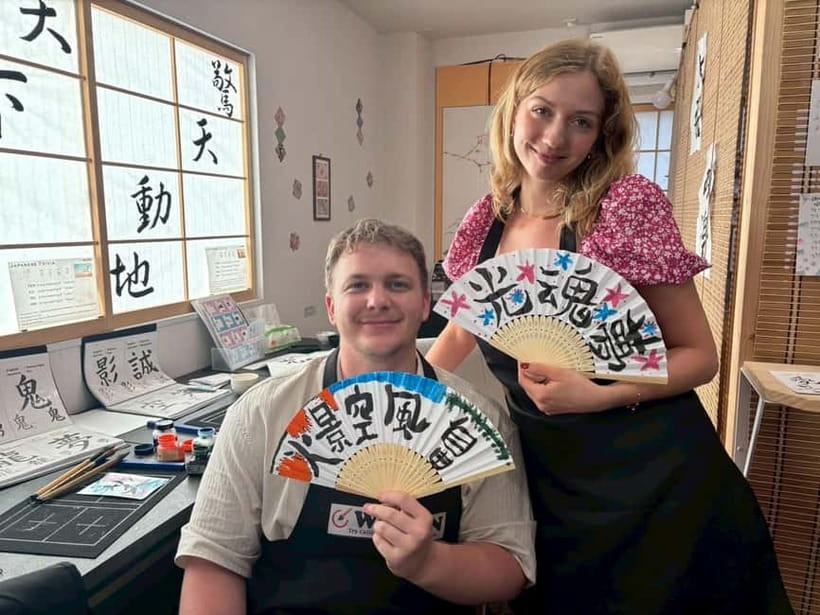
The final fan gives the class a clear purpose. You do not simply leave with loose practice sheets. Your selected calligraphy becomes part of a folding fan that you can take home.
The fan is compact, light, and easy to pack. It also shows the evidence of your own hand, including the small variations that make handmade work appealing. I would keep it flat and protected during the rest of your trip rather than squeezing it into an overfilled day bag.
The fan is included in the experience. T-shirt printing is not. If you want the design printed on a shirt, you can buy a T-shirt at the shop, but the shirt and clothing fee are separate. This distinction matters if you are comparing the basic activity with an option that offers extra merchandise.
Some participants have also received shirts through their chosen arrangements, but you should not assume a T-shirt is part of the $16 experience. Check the option details before booking if clothing is important to you.
Green tea and the postcard to your future self
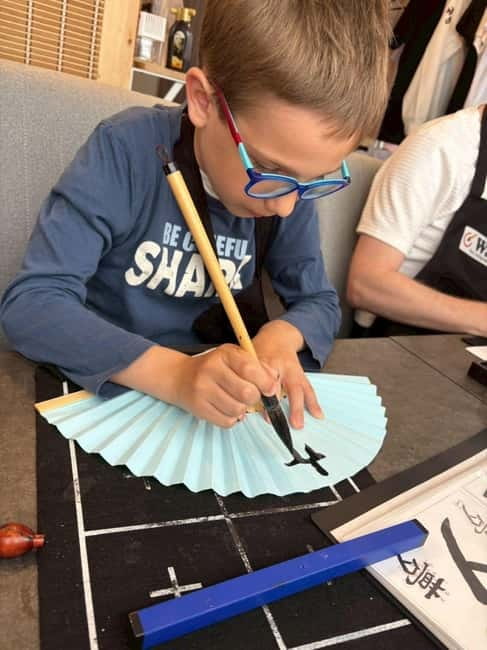
After the brushwork, you enjoy a cup of green tea and write a postcard to yourself. The postcard is a simple idea, but it gives the session a thoughtful ending.
You can write about the feeling of learning calligraphy, the character you chose, or the wider trip. When the postcard arrives later, it can bring back more than a photograph does. It records what you noticed at that moment, before the details of the journey blur together.
The tea also gives your hands and attention a chance to settle after the concentration of the writing. It is not a full tea ceremony, and you should not book it expecting one. Think of it as a quiet closing touch to a practical art lesson.
How long the activity really takes
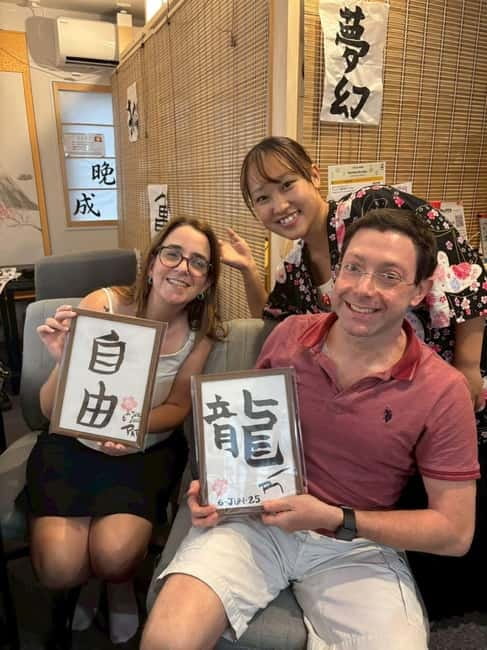
The stated duration ranges from 30 to 90 minutes. That is a wide span, so use it when planning your day.
A shorter session may suit you if you want a quick creative stop between Asakusa sights. A longer session gives you more time to practice, discuss designs, and finish the fan without rushing. People who enjoy repeating the strokes may want to protect the full 90-minute window.
The flexible pace is one of the class’s strengths, but it can also make your schedule less exact. If you have a timed reservation elsewhere, build in a buffer. Mana has allowed people to stay longer so they could finish practicing, but you should still plan around the booked duration rather than count on an extension.
Who will enjoy this most
I would recommend this activity to several kinds of visitors:
- First-time Japan visitors who want a hands-on introduction to writing rather than another sightseeing stop.
- Families looking for an activity that can work for children and grandparents.
- Couples and friends who want matching or contrasting handmade souvenirs.
- Art-minded visitors who enjoy process, repetition, and small changes in brush pressure.
- People seeking a quiet break from heat, crowds, and long stretches of walking around Tokyo.
- Anyone who values a personal souvenir more than a standard shop purchase.
It is less suitable if you want a polished professional artwork with no practice involved. It is also not suitable for wheelchair users according to the activity information. Pets are not allowed, except for assistance dogs.
The atmosphere is calm, but the activity is still hands-on. You will handle ink, work with a brush, and make decisions about your final design. If you prefer to watch rather than participate, this is not the right use of your time.
Booking choices and practical cautions
Free cancellation is available up to 24 hours before the activity for a full refund. You can also reserve now and pay later, which helps if your Tokyo schedule is still moving around.
Pay close attention to the option name when booking. The henna tattoo option does not include the calligraphy experience. That warning is easy to miss, and it could lead to a very different afternoon than you expected.
Wear comfortable clothing and use the apron provided. Do not bring pets, and remember that food and drinks are not allowed during the session. Since the meeting point can vary by option, confirm the exact location after booking.
The activity is conducted in English, which is a major help when you are choosing a character or asking about meaning. Mana has also offered local suggestions, including food ideas and things to do around Tokyo, so you can ask for practical neighborhood advice if time allows.
Is the Asakusa calligraphy and fan workshop worth booking?
Yes, if you want a short, affordable activity that gives you something personal to take home. The best parts are the patient instruction from Mana, the chance to practice without pressure, the traditional ink preparation, and the folding fan that turns your final work into a useful souvenir.
Book it as a gentle creative break, not as a formal calligraphy qualification or a full tea ceremony. Allow up to 90 minutes, wear clothes that can handle ink, and confirm that you are choosing the calligraphy option rather than henna. If those limits suit you, this is a strong $16 addition to an Asakusa day.
FAQ
How much does the calligraphy and folding fan experience cost?
The listed price is $16 per person.
How long does the activity last?
The duration ranges from 30 to 90 minutes. Starting times depend on availability and the option booked.
Is the instruction offered in English?
Yes. The instructor teaches in English, and Mana helps explain calligraphy, kanji, names, brush techniques, and design choices.
What will I make during the session?
You will practice Japanese calligraphy and use your final design to make an original folding fan. You will also write a postcard to yourself.
Is the folding fan included?
Yes, the original folding fan is included in the calligraphy experience.
Is a T-shirt included?
No. Printing your calligraphy on a T-shirt is not included. You can buy a T-shirt at the shop if you want to use that option, with clothing costs separate.
What should I wear?
Wear comfortable clothes that can get a little dirty from ink. Aprons are provided, but some ink may still reach your hands or clothing.
Is the activity suitable for wheelchair users?
No. The activity is listed as not suitable for wheelchair users. Pets are not allowed, although assistance dogs are permitted.
Just added in Tokyo
- The 10 Tastings of Tokyo With Locals: Private Street Food Tour★ 5.0 · 48 reviews
- Small Town in the Big City: Tasting Tokyo’s Kichijoji★ 5.0 · 195 reviews
- Small Town in the Big City: Tasting Tokyo’s Kichijoji★ 5.0 · 16 reviews
- EXCLUSIVE Tokyo Secret: Kichijoji Small-Group Food & Bar Hopping★ 5.0 · 29 reviews
- Explore Kichijoji: Walk Through One of Tokyo’s Beloved Districts★ 5.0 · 21 reviews
- :Tokyo,Shibuya/ Pro Photography in Kimono / English-Friendly★ 5.0 · 26 reviews
- 【R34】Tokyo:Private Daikoku tour in Modified R34★ 4.9 · 92 reviews
- Tokyo: Allstar Food Tour★ 4.7 · 29 reviews
Calligraphy & Craft Workshops, compared.
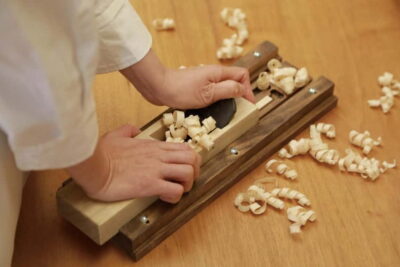
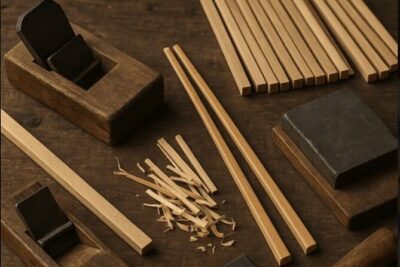
Chopsticks Making Workshop in Gion with Engraving Option
Read our review →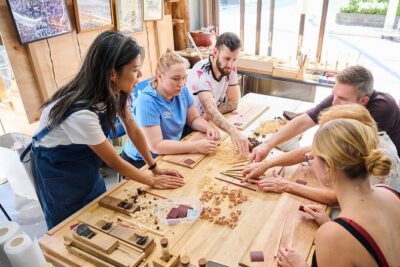
Matcha Making Experience with Mochi Sweets in Asakusa
Read our review →
Authentic knife making experience at a blacksmith in Kyoto
Read our review →
Calligraphy class at Buddhist temple in city center
Read our review →Browse the lists this tour appears in