
Reviewed · GOVERNMENT-LICENSED GUIDE TOURS
Kamakura 4hr Private Trip with Government-Licensed Guide
Kamakura’s best feature is choice. In four hours, you can focus on the Great Buddha and Hasedera, explore Zen temples and bamboo, or add the beach and Enoshima. Your licensed guide meets you at Kamakura Station and shapes the visit around your interests instead of marching you through a fixed route.
I like the private format for two clear reasons: you can move at your own pace, and a local guide can handle confusing train connections, temple customs, and restaurant questions. I also like the personal touches reported by guests, including guides helping with Japanese practice, matcha workshops, family needs, and photography time.
The main drawback is simple: four hours goes quickly, and admission fees, transport, lunch, and personal expenses are extra. You must choose two or three places, so this is a focused introduction, not a complete tour of Kamakura.
Key points to know before booking
- Meet at Kamakura Station: The tour begins on foot, with no private vehicle included.
- Choose two or three sights: Popular combinations include the Great Buddha, Hasedera, Tsurugaoka Hachimangu, and Hokokuji.
- Expect a private experience: Only your group joins the guide, making changes easier.
- Plan for extra costs: Train fares, entrance tickets, food, and personal purchases are not included.
- Guides adapt well to families: Shinji, Hiro, An, Yasuho, Andy, and Mr. Goto are among the guides praised for patience and tailored planning.
- Allow for walking: Kamakura’s temples, shrines, shopping streets, and train stations are linked by footpaths and public transport.
Why a private Kamakura tour works well
Kamakura is close enough to Tokyo for a day trip, but its sights spread across several neighborhoods. The Great Buddha is in Hase, Tsurugaoka Hachimangu is near the central shopping streets, and the great Zen temples cluster around Kita-Kamakura. Enoshima lies farther west.
That layout is manageable if you know where you are going. It can feel less tidy if you are trying to fit several famous sights into a short visit. A private guide gives you a person who can match the route to your priorities and explain the difference between a Shinto shrine and a Buddhist temple as you go.
The meeting point at Kamakura Station is practical. It avoids a long hotel pickup process and puts you near the town’s transport links. Pickup is offered on foot within the designated Kamakura area, but this is not a private car tour. You will use public transportation and walk.
The experience has a strong record, with a 4.9 rating from 58 reviews and a 100 percent recommendation figure. That does not mean every guide or route will suit every person. One guest wanted stronger English, and another felt the tour ended earlier than expected. Still, the repeated strengths are clear: patience, flexibility, local navigation, and the ability to adjust the day.
Other tours with a licensed guide in Kamakura:
- Tokyo 6hr Private Tour with Government-Licensed Guide
★ 5.0 · 3,902 reviews - Tokyo 4hr Private Tour with Government-Licensed Guide
★ 5.0 · 1,394 reviews - Kyoto 6hr Private Tour with Government-Licensed Guide
★ 5.0 · 1,369 reviews
Choosing your two or three Kamakura sights
You should decide what kind of Kamakura day you want before you meet your guide. The available choices range from major landmarks to quiet temple grounds, and they do not all fit together efficiently in four hours.
For a first visit, the most sensible route usually centers on Tsurugaoka Hachimangu, the Great Buddha, and Hasedera. This gives you Kamakura’s political and religious center, its best-known statue, and a temple with gardens and views.
For a quieter day, consider Engakuji, Kenchoji, and one smaller Zen temple. This plan gives you a feel for Kamakura’s temple district without trying to cross the whole town.
For a family or mixed-interest group, combine the Great Buddha with Hasedera, then add Komachi Shopping Street or Enoshima if time and transport allow. Families have also used guides for matcha workshops, Japanese sweets, beach visits, and restaurant help.
Do not select all the listed places. The long menu includes 18 possible stops, but the tour allows two or three sites. The short stop times shown for individual locations are best understood as possible route components, not a promise that you will visit every one.
Tsurugaoka Hachimangu and central Kamakura
Tsurugaoka Hachimangu is Kamakura’s main Shinto shrine and a useful place to begin. It is dedicated to Hachiman, the patron deity of the Minamoto family and of samurai in general. Your guide can explain how the shrine connects to Kamakura’s role as a medieval seat of military power.
The shrine sits near Wakamiya-oji, the broad approach road leading toward the center of town. From here, you are well placed for Komachi Shopping Street, where snacks and small purchases can fill the space between temple visits.
Timing matters. During the first three days of the New Year, the shrine becomes extremely crowded, with special customs and long lines. A guide can help you decide where to begin and how to avoid wasting your short tour in a queue. One useful seasonal detail is that Wakamiya-oji becomes a pedestrian-only street during the New Year period.
This stop works well for first-time visitors and anyone interested in Shinto practice. It may be less appealing if you mainly want gardens, bamboo, or a quiet temple setting.
Meeting the Great Buddha at Kotoku-in
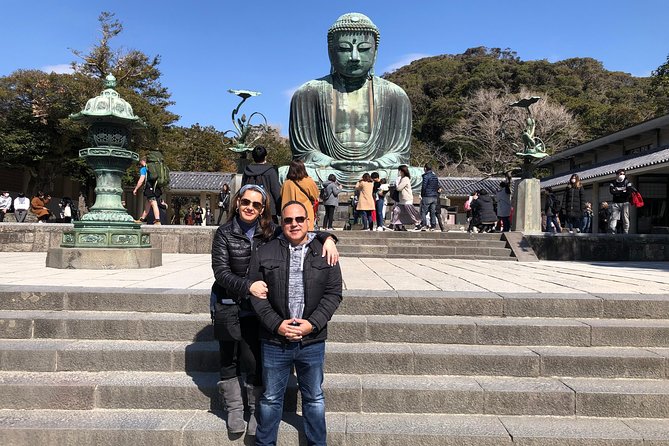
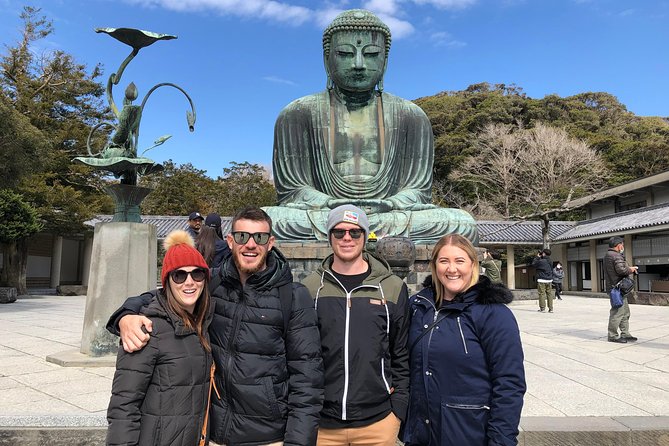
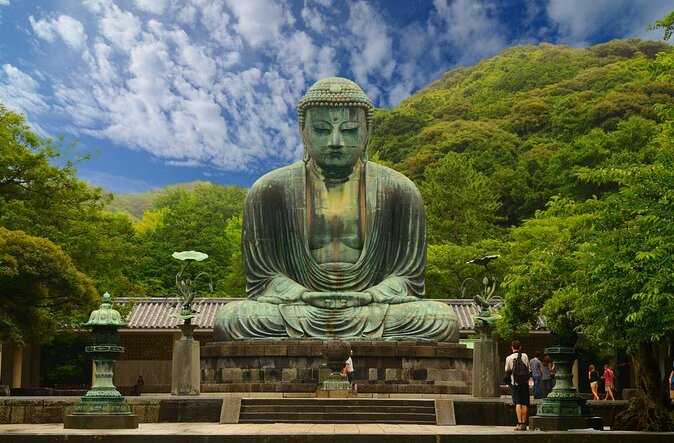
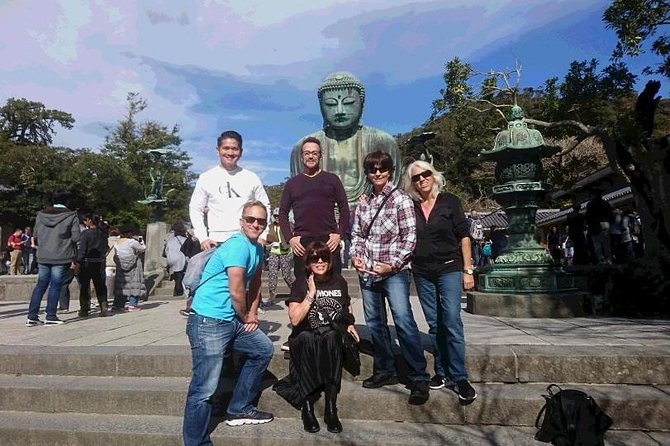
The Great Buddha of Kamakura is a bronze Amida Buddha, 11.4 meters tall, on the grounds of Kotoku-in Temple. It is the image most closely associated with Kamakura, and it deserves a place on a first visit if you have never seen it.
The statue is imposing without being difficult to approach. Your guide can provide the religious and historical background, then give you time to look, photograph, and take in the scale. Several guides have used visual materials or booklets to explain symbolism and the meaning of the sites.
Admission to Kotoku-in is not included, so budget for that separately. The listed visit time is short, which makes the Great Buddha an efficient choice when you want one major sight without spending your entire tour in a single temple compound.
The limitation is that the area around the statue can feel busy, especially during peak cherry blossom season or major holidays. A private guide cannot remove the crowds, but can help you reach the site and keep the visit moving.
Same base, a different sort of day:
- Tokyo: Kamakura & Enoshima Day Trip including Temple Tickets
★ 4.5 · 1,375 reviews - From Tokyo: Kamakura & Enoshima 1-Day Bus Tour
★ 4.5 · 189 reviews - Kamakura Historical Walking Tour with the Great Buddha
★ 5.0 · 129 reviews - Kamakura Private Tour: Temples, Nature, and the Great Buddha
★ 5.0 · 121 reviews
Hasedera, gardens, and views over Kamakura
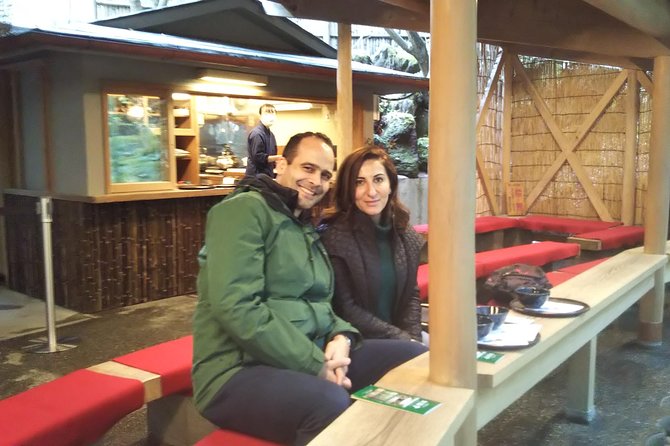
Hasedera is a Jodo Buddhist temple famous for its eleven-headed Kannon statue, a gilded wooden figure measuring 9.18 meters. The temple is also prized for its hillside setting and the view from its upper areas.
This is one of the strongest choices if you want more than a single landmark. You get religious art, garden spaces, a climb through the temple grounds, and a broad view toward the town and coast. The uphill paths require some effort, so tell your guide if your group needs a slower pace.
The listed visit time is only five minutes, but that is not enough to appreciate the place properly. In real planning, you should confirm how much time your guide expects to spend here and what other sight will be shortened to make room. Four hours is tight, and Hasedera rewards more time than a quick photo stop.
Hasedera pairs naturally with the Great Buddha because both are in the Hase area. This cuts down on backtracking and gives you two of Kamakura’s signature sights in one section of town.
Hokokuji and its compact bamboo grove
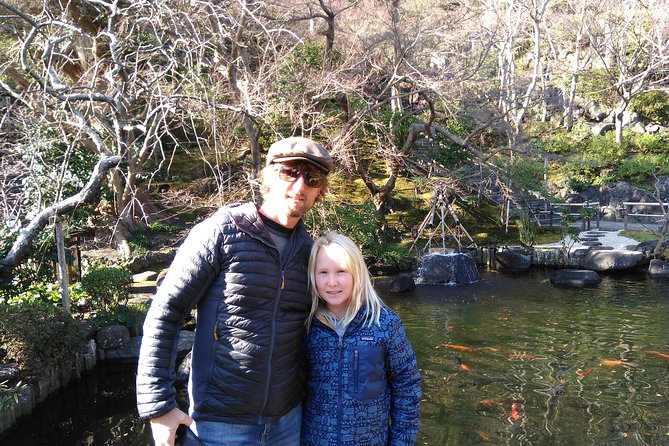
Hokokuji Temple is known for a small bamboo grove behind the main hall. More than 2,000 bamboo stalks fill the grove, with narrow paths running between them.
This is a good pick if you want a calm, photogenic stop rather than another large religious complex. The grove is not enormous, which is useful in a short tour but also means you should not expect a long forest walk. A matcha experience has also been arranged by guides for some families, though you should confirm availability when booking.
Hokokuji is not the easiest companion to every other major sight. It lies in eastern Kamakura, so adding it to the Great Buddha and Enoshima could create a rushed day. Choose it when bamboo and quiet temple scenery matter more to you than covering several famous landmarks.
The great Zen temples near Kita-Kamakura
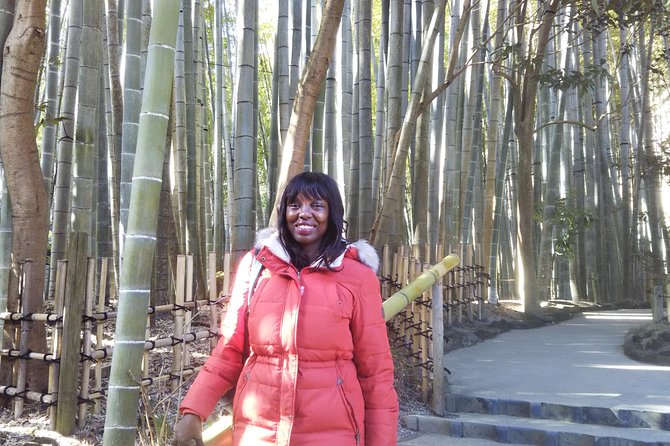
Engakuji and Kenchoji are the two headline Zen temples in the northern part of Kamakura. Engakuji is ranked number two among Kamakura’s five great Zen temples and was founded in 1282 by Hojo Tokimune. Kenchoji is ranked first and was founded in 1253, making it the oldest Zen temple in Kamakura.
These temples suit you if you prefer spacious grounds, religious architecture, and a slower pace. A guide can explain how the Rinzai Zen tradition shaped the area and help you notice details that are easy to miss when walking alone.
Jochiji, Tokeiji, and Jufukuji offer smaller alternatives. Jochiji is number four among the five great Zen temples. Tokeiji is a branch temple of the Engakuji school, while Jufukuji is number three and belongs to the Kenchoji school.
You cannot reasonably visit every Zen temple in four hours along with the Great Buddha and Hasedera. Pick one or two in the Kita-Kamakura area if Zen temples are your main interest. Engakuji is a strong first choice, while Kenchoji gives you the larger historic complex.
Smaller temples for a quieter route
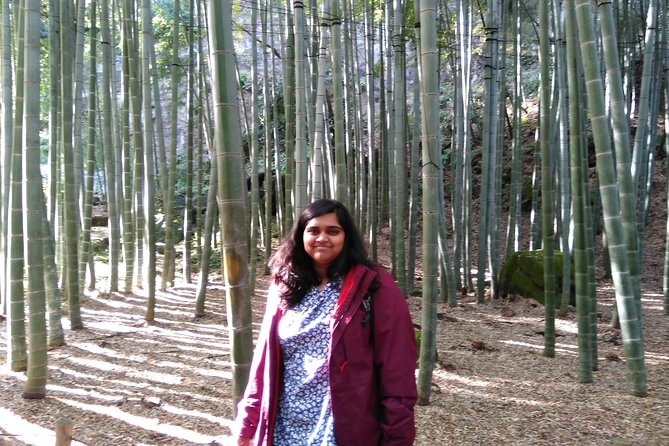
Kamakura has plenty of places beyond its headline attractions. Zeniarai Benten Shrine is famous for coin washing. The custom gives this stop an active, hands-on quality, though you should treat it as a cultural practice rather than a promise of financial luck.
Meigetsuin is known as the Hydrangea Temple because hydrangeas bloom heavily on its grounds. It belongs to the Rinzai Zen sect and dates to 1160. If you visit during the flowering season, it may be especially attractive, but seasonal flowers are never guaranteed at their peak on your exact date.
Jomyoji is a Zen temple in the eastern hills and ranks fifth among the five great Zen temples. Zuisenji sits at the back of a narrow valley, surrounded by wooded hills, and is a good choice for a more secluded setting. Ankokuronji and Myohonji are Nichiren temples in the southeastern hills, while Eishoji is Kamakura’s only surviving nunnery.
These smaller sites are best for repeat visitors or people who prefer quiet corners to headline attractions. They also require careful route planning, since combining several distant temples can leave little time for actual visits.
Enoshima, the beach, and a change of pace
Enoshima is a small island west of Kamakura, connected to the mainland by a bridge. It offers shrines and other attractions, along with a coastal setting that changes the mood from temple grounds to seaside sightseeing.
One family chose the beach and Enoshima after discussing their priorities with the guide. That kind of choice is where the private format earns its keep. If you have already seen major temples elsewhere in Japan, the coast may make your Kamakura day feel more varied.
The catch is distance. Enoshima requires a short train ride from Kamakura, and four hours passes quickly once you add station transfers and walking. Do not pair Enoshima with too many inland temples. Choose it as the main focus, perhaps with one central Kamakura stop.
What the guides add to the day
The strongest part of this experience is not simply transport between famous places. It is the human guidance along the way.
Shinji has handled last-minute bookings, train delays, families, and a matcha and Japanese sweets workshop. Hiro has helped a child practice Japanese, explained Shinto and Buddhism, and introduced a traditional floor-level restaurant. An has helped with train questions and restaurant suggestions, while Yasuho has worked with families visiting during peak cherry blossom season.
Andy has used visual materials he prepared himself, and Mr. Goto has brought a booklet with images and explanations of religious symbols. Isao has met a group in Yokohama, guided them by subway and train to Kita-Kamakura, and arranged a restaurant stop.
These examples show the range of help available, but guide quality can vary. One guest found the English communication less strong than hoped, while another praised Mr. Goto’s excellent English. If language detail matters to you, contact the provider with specific questions before booking.
Price, walking, and what you really pay for
At $108.99 per person, this is not the cheapest way to see Kamakura. You still pay for transportation, entrance fees, lunch, and personal expenses. Private tours also cost more than joining a large group.
The value comes from time and attention. If you are a small group, the guide can adjust the pace, help with trains, answer questions, and choose a sensible route instead of forcing you to study maps between stops. The price makes more sense for families, older relatives, first-time visitors, and anyone who wants context rather than a checklist.
You should also know that the guide’s own entrance fees are covered only for sights listed under the included attractions. The tour is on foot, with public transport, so comfortable shoes matter. Service animals are allowed, and most people can participate, but the hills and temple steps make it sensible to discuss mobility needs in advance.
Free cancellation is available until 24 hours before the start time. Changes or cancellations inside that window are not accepted for a refund.
Who should book this Kamakura experience?
Book it if you want a private, flexible introduction and do not want to spend your short visit solving transport puzzles. It is especially useful for families, multi-generational groups, photographers, and anyone interested in learning how Shinto and Buddhism appear in daily Japanese culture.
It is also a good choice if you have a clear priority, such as the Great Buddha and Hasedera, or if you want a guide to build the day around Enoshima, bamboo, or Zen temples.
Skip it if you prefer to wander alone, want a full-day hike, or expect a private car and all admissions to be included. You should also avoid booking without deciding what matters most. Four hours is enough for a thoughtful selection, not every temple on the map.
FAQ
Where does the tour begin?
You meet the licensed guide at Kamakura Station. The tour begins on foot within the designated Kamakura area.
How long does the experience last?
The tour lasts approximately four hours.
Is this a private tour?
Yes. Only your group participates, and you cannot combine multiple tour groups.
How many attractions can I choose?
The tour includes a customizable selection of two or three sites from the available attractions.
Is transportation included?
No. Transportation fees are not included. You use public transportation and walk between locations.
Are entrance fees included?
No. Entrance fees are generally not included. The guide’s entry fees are covered only for sights listed under the included attractions.
Is lunch included?
No. Lunch and other personal expenses are separate.
Can I visit the Great Buddha?
Yes. Kotoku-in, home of the Great Buddha of Kamakura, is one of the available stops. Its admission fee is not included.
Can the tour include Enoshima?
Yes. Enoshima is one of the possible attractions, but you should allow time for the short train ride and avoid selecting too many additional sites.
What is the cancellation policy?
You can cancel up to 24 hours before the experience start time for a full refund. Cancellations or changes made less than 24 hours in advance are not accepted.
Just added in Kamakura
- First time in Kamakura? Enjoy a Tour of All Must-sees!★ 5.0 · 15 reviews
- Your Own HANKO Name Seal Activity in Kamakura.★ 5.0 · 24 reviews
- When Emperors Reigned and Shoguns Ruled★ 5.0 · 43 reviews
- Buddha, Bamboo & Zen – Bespoke Kamakura Private Walking Tours★ 5.0 · 25 reviews
- Kamakura Walking Tour – The City of Shogun★ 5.0 · 100 reviews
- Kamakura Bamboo Forest and Great Buddha Private Tour★ 5.0 · 12 reviews
- Exciting Kamakura – One Day Tour from Tokyo★ 5.0 · 40 reviews
- Kamakura Tours Half Day or Full Day Tours with a local guide.★ 5.0 · 12 reviews
Government-Licensed Guide Tours, compared.
Tokyo 6hr Private Tour with Government-Licensed Guide
Read our review →
Hiroshima / Miyajima Full-day Private Tour with Government Licensed Guide
Read our review →
Kyoto 4hr Private Tour with Government-Licensed Guide
Read our review →
Hiroshima City 4hr Private Walking Tour with Licensed Guide
Read our review →
Private Kyoto Tour with Licensed Guide & Vehicle (Max 15 persons)
Read our review →
Nikko Full-Day Private Tour with Government-Licensed Guide
Read our review →
Himeji Half-Day Private Tour with Government-Licensed Guide
Read our review →Browse the lists this tour appears in