
Reviewed · GEISHA & GION DISTRICT TOURS
Guided Gion Tour: Explore Kyoto’s Historic Geisha District
Gion is at its best when someone explains what you are looking at. This private walk takes you past Yasaka Shrine, Maruyama Park, Chion-in Temple Gate, and Hanamikoji Street, while your guide adds context about Kyoto’s old entertainment district and its customs. You may also spot a maiko, but that is luck, not a scheduled part of the tour.
I like the private format, since your group of up to eight can ask questions without keeping pace with a large crowd. I also like the choice of timing: an early walk can feel calmer, while an evening outing shows Gion under its streetlights. The main caution is the heat and walking pace. One family found a very hot day difficult, and the two-hour schedule left some people missing parts of the commentary.
Key points to know before booking
- Private group format: The $350 price covers up to eight people, so it can be good value for a family or small group.
- Geisha sightings are not guaranteed: You may spot a real geisha or maiko in Gion, but the tour does not include private time with one.
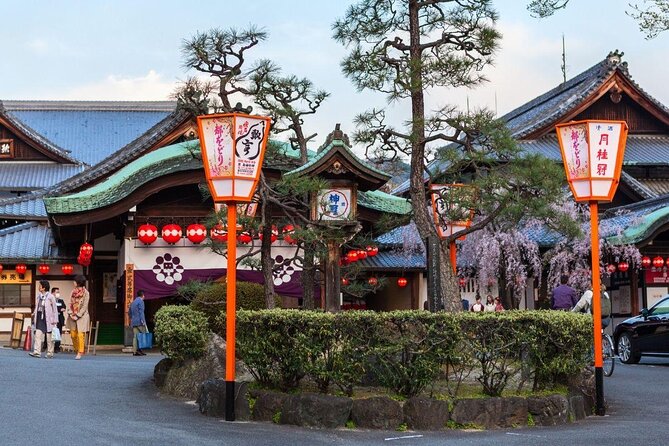
- Six compact stops: The route includes Gion, Hanamikoji Street, Yasaka Shrine, Maruyama Park, Chion-in Gate, and the Izumo no Okuni Statue.
- Flexible times: Morning, daytime, and evening departures are available, giving you a way to work the walk around your Kyoto plans.
- Guide quality matters: Ahmed and Mat received praise for clear explanations and thoughtful service, though one poor experience shows that the guide can shape the day.
- Short but active outing: Expect roughly two hours on foot, with some time for stops, photos, and questions.
Why a private walk helps in Gion
Gion can look simple at first glance: narrow streets, wooden buildings, shrines, and people taking photos. The details are easy to miss. A private guide can explain why the district is so carefully preserved, how the tea-house area functions, and where you have the best chance of seeing a geisha or maiko.
This is not a performance or a guaranteed encounter. That distinction matters. The tour operator is clear that you will not be given time with a geisha or maiko. Your guide tries to point one out in Gion if the timing works, but genuine sightings cannot be arranged on demand.
That makes this experience better suited to visitors who want local context and a focused walk, rather than a staged cultural show. You can ask direct questions as you go. If you are curious about clothing, customs, architecture, or Kyoto’s performing arts, the private setup gives you room to ask without worrying about holding up a busload of people.
The experience has a 4.6 rating from 16 published ratings, with 94 percent recommending it. That is a strong result, but the small number of ratings also means you should pay attention to the mixed feedback. Several people praised guides such as Ahmed and Mat for making the district easier to understand. One person found the guide distant and not very informative. In a private tour, that personal connection matters more than it would on a large group outing.
Other evenings in the old entertainment quarters of Kyoto:
- Kyoto Geisha Walking Tour: Gion District & Hidden Gems
★ 4.7 · 3,273 reviews - Kyoto: Gion Magical Night Walking Tour with Geisha Trivia
★ 4.9 · 2,393 reviews - Kyoto: Gion Geisha District Walking Tour – Stories of Geisha
★ 4.7 · 2,187 reviews
Starting in Gion and watching for maiko
The main Gion stop lasts about an hour and gives you the broadest look at the district. This is where the tour’s focus on old architecture, tea houses, and possible geisha sightings comes together.
You may walk along Hanami Street, where you might be lucky enough to see a geisha or maiko going about her work. Keep your expectations sensible. A sighting may last only a few seconds, and there is no promise that one will appear during your visit.
The value here is not just the chance for a photograph. Gion is a working district, not a theme park. Your guide can help you understand the difference between seeing a performer passing through the neighborhood and attending an arranged cultural activity. That small piece of guidance encourages better behavior around people who are commuting to work.
You will likely spend much of this part outdoors, moving between streets and stopping for explanations. On a hot day, the pace can become tiring. A family on one outing had to pause for a short rest, and some of the group missed commentary because they were struggling with the heat. If you are visiting in summer, choose a cooler time of day if possible and tell your guide when you need a break.
The Izumo no Okuni Statue and Kyoto’s performing arts
The stop at the Izumo no Okuni Statue lasts about 15 minutes. It honors Izumo no Okuni, the figure associated with the founding of Kabuki theater.
This is a useful counterpoint to the tea-house image of Gion. Kyoto’s entertainment districts were shaped not only by buildings and rituals, but also by performance. The statue gives your guide a clear starting point for explaining how Japanese theater developed and why performance remains tied to the city’s cultural identity.
Do not expect a long museum-style presentation here. Fifteen minutes is enough for a look, a few photographs, and a concise explanation. If performing arts are a major interest, use your private format to ask follow-up questions. If your group prefers architecture and scenery, this is a short stop that will not take over the walk.
Chion-in Temple Gate in 15 minutes
The Chion-in Temple Gate is an impressive visual stop. The large wooden entrance reflects the scale and craftsmanship of one of Kyoto’s important Buddhist temple sites.
The scheduled visit lasts about 15 minutes, so you should think of this as an exterior look rather than a full temple visit. You can admire the structure, take photos, and hear about its place in the area. The tour does not list an admission charge for the stop.
This brief visit works well in a two-hour route because it adds a change of mood. Gion’s narrow lanes and tea-house fronts feel intimate. Chion-in’s gate gives you a much larger architectural presence. If you want extended time inside the temple grounds, you may need to return on your own, since the tour continues through several other locations.
Same base, a different sort of day:
- PERFECT KYOTO 1-Day Bus Tour
★ 5.0 · 13,518 reviews - Kyoto: Fushimi Inari, Kinkakuji, Bamboo Grove 1 Day Bus Tour
★ 4.8 · 4,316 reviews - Kyoto: Tea Ceremony in a Traditional Tea House in Kiyomizu
★ 4.9 · 3,519 reviews - Kyoto: Tea Ceremony Ju-An at Jotokuji Temple
★ 4.9 · 3,207 reviews
Yasaka Shrine, one short walk from Gion
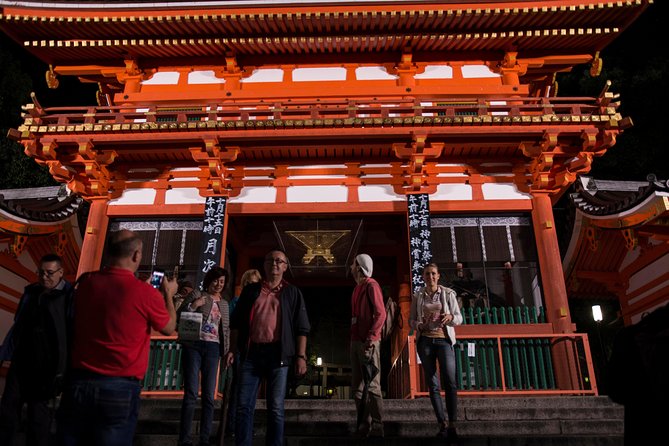
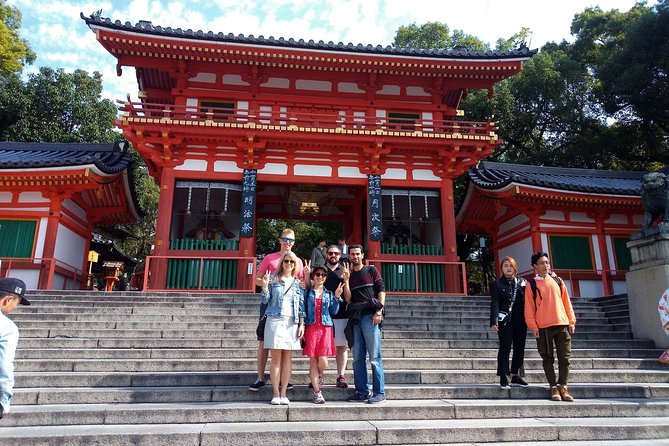
Yasaka Shrine receives about 10 minutes on the route. Its lantern-lined paths and strong connection to Kyoto’s festivals make it one of the city’s essential cultural landmarks.
The short stop is enough to orient yourself, see the main approach, and take photographs. It is not long enough for a slow, detailed shrine visit. That is not necessarily a flaw. The tour is designed as a compact introduction to several parts of Gion, rather than a deep visit to one religious site.
I like the way this stop links the neighborhood to Kyoto’s living traditions. Gion is often presented only as a place to look for geisha, but Yasaka Shrine shows that the area also has an active spiritual and festival life. Ask your guide about the shrine’s role if that side of Kyoto interests you.
A breather in Maruyama Park
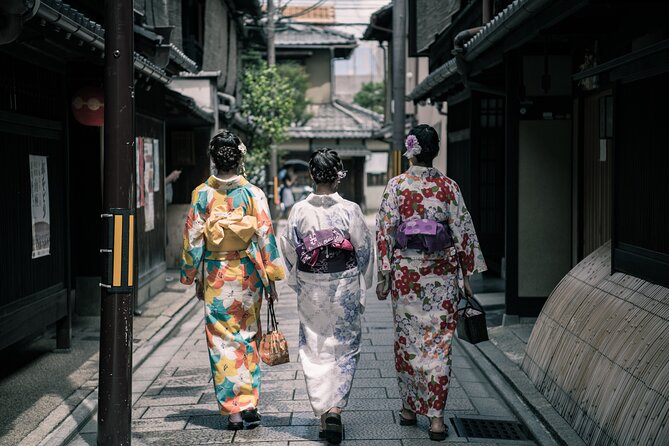
Maruyama Park is planned as a 10-minute stop. It gives you greenery, open paths, ponds, and a break from the tighter streets of Gion. Seasonal cherry blossoms are one of the park’s attractions, though the exact experience will depend on the time of year.
This may be the most useful place to slow down. The park gives your group a chance to rest, regroup, and listen without standing in a narrow lane. That matters on a hot day, especially for children, older adults, or anyone who finds a steady walking pace tiring.
Ten minutes is brief for a park, so do not book this tour expecting a long garden visit. You will get an introduction and a short stroll. The benefit is variety: after the preserved streets and shrine buildings, Maruyama Park adds a quieter outdoor setting.
Hanamikoji Street and traditional Kyoto fronts
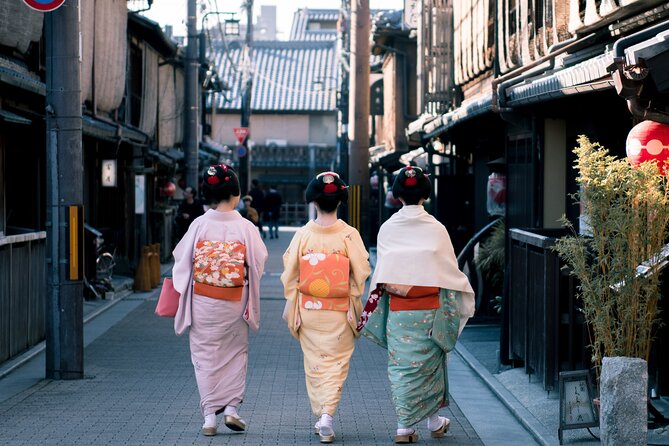
Hanamikoji Street is one of the clearest snapshots of Gion. Traditional teahouses and wooden machiya buildings line the route, giving you the architectural feel many people hope to find in Kyoto.
This is a place where a guide adds real value. You can see the buildings on your own, but you may not know what is private, what is a business, or how to behave around the entrances. A good guide helps you look without treating the street like a film set.
The stop is listed at about 10 minutes, though the larger Gion portion of the walk gives you more time in the district overall. Expect photos and explanation rather than a long visit inside a tea house. The tour does not include a meal, tea ceremony, or meeting with a geisha.
Hanamikoji can also be one of the busiest parts of the route. If you prefer quieter streets, an early morning departure is the better choice. An evening tour offers a different mood as the streetlights come on, but it may also bring more people and less predictable chances for a clear view.
Choosing the best time of day
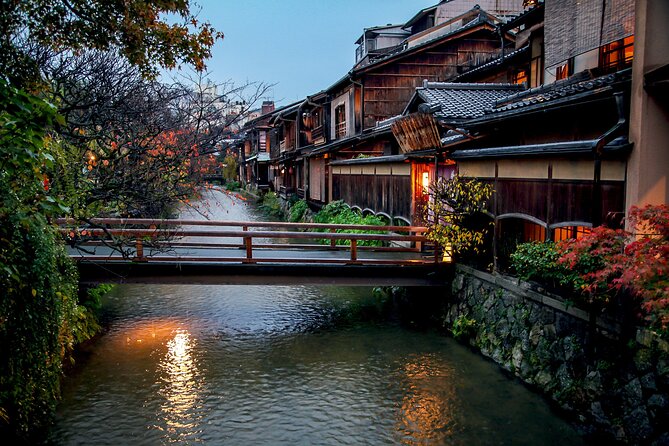
The tour is available throughout the day, which is one of its practical strengths.
An early morning tour should appeal to you if you want a calmer walk and cleaner photographs. The district is less likely to feel crowded, and cooler air can make the two-hour route easier.
A daytime tour gives you clear views of the architecture and park. It is also the time when heat can be most uncomfortable. One family found the pace difficult during an extremely hot outing, so consider your group’s stamina before choosing the middle of the day.
An evening tour lets you see Gion change as the lights come on. This can create a more atmospheric setting around the wooden facades and narrow lanes. It does not improve your odds of seeing a geisha or maiko in any guaranteed way, but it offers a different look at the district.
What the $350 price means for your group
The listed price is $350 per group of up to eight people. For one or two people, that is a substantial cost for a two-hour walk. For a family or group of friends sharing the fee, the value improves quickly.
At the full group size, the price works out to $43.75 per person. For four people, it is $87.50 per person. The fee covers guiding and management, not a meal, admission ticket, or arranged geisha encounter.
The strongest value comes from the private format. You are paying for a route shaped around your group, the ability to ask questions, and help noticing details you might pass without understanding. The value is weaker if you only want photographs and do not care about explanations, since you can walk through much of Gion independently.
The tour is often booked about 40 days ahead. That suggests planning early if your Kyoto dates are fixed, especially if you want a particular morning or evening time. Confirmation arrives at booking, and a mobile ticket is provided.
Transport, walking, and practical limits
Pickup is offered, and one account describes meeting the guide at Kyoto Station before taking a bus to Gion. Treat the exact meeting arrangement as something to confirm for your booking rather than assuming every departure begins at the station.
The route is near public transportation, and most people can take part. Still, it is a walking tour with several stops packed into two hours. The heat-related feedback is worth taking seriously. Ask for a slower pace if needed, and choose your time with the weather in mind.
The experience requires good weather. If poor weather cancels it, you are offered another date or a full refund. You can cancel for a full refund up to 24 hours before the start time. Cancellations or changes inside 24 hours are not refunded or accepted.
Who should book this Gion tour?
I would recommend it to first-time Kyoto visitors who want help reading the district rather than simply passing through it. Families and small groups get the best financial value, since the private fee is shared among as many as eight people.
It also fits you if you have specific questions about Gion, Kabuki, shrine customs, traditional buildings, or geisha culture. The guides Ahmed and Mat received especially warm praise for clear answers, considerate service, and useful explanations.
I would be more cautious if your main goal is guaranteed contact with a geisha or maiko. That is not part of the tour. I would also think twice for anyone who dislikes walking, struggles in hot weather, or wants a slow visit inside each temple and shrine. This is a compact overview with several short stops, not an in-depth visit to one site.
Should you book this private Gion walk?
Book it if you want a personal introduction to Kyoto’s most famous old district, especially if you are sharing the $350 fee with a group. The route covers a lot in two hours, and the best guides can turn ordinary-looking streets into a more meaningful visit.
Choose an early morning departure for comfort and quieter streets, or an evening slot for lanterns and streetlights. Go in knowing that a maiko sighting is a lucky extra, not the product being sold. With that expectation, this is a useful, flexible Gion orientation led by a private guide, with enough room for questions and a good mix of streets, shrines, park paths, and cultural landmarks.
FAQ
How long does the Guided Gion Tour last?
The tour lasts approximately two hours.
How many people can join the private tour?
The private group can include up to eight people.
Is a geisha or maiko encounter guaranteed?
No. You may see a geisha or maiko in Gion, but sightings are not guaranteed. The tour does not include arranged time with one.
What places are included on the route?
The route includes Gion, the Izumo no Okuni Statue, Chion-in Temple Gate, Yasaka Shrine, Maruyama Park, and Hanamikoji Street.
Is pickup available?
Yes, pickup is offered. The tour is also near public transportation.
Are admission tickets included?
The listed inclusions cover guiding and management fees. The stops shown on the route have no admission ticket listed.
What happens if the weather is poor?
The experience requires good weather. If it is canceled because of poor weather, you can choose another date or receive a full refund.
Just added in Kyoto
- Private Cooking Class Udon in Kyoto Japan★ 5.0 · 23 reviews
- Your Private Vacation Photography Session In Kyoto★ 5.0 · 110 reviews
- Kyoto: Zen Meditation at a Private Temple with a Monk★ 5.0 · 25 reviews
- Private Pewter Sake Cup Experience with a Kyoto Artisan★ 5.0 · 31 reviews
- Kyoto Wagashi(Japanese sweets) Cooking Class near Fushimiinari★ 5.0 · 60 reviews
- Kyoto:Family-Friendly Kimono & Yukata Experience at WARGO★ 5.0 · 147 reviews
- Private Guided Traditional Buddhist Cooking in Japan★ 5.0 · 16 reviews
- Kyoto: Gion Geisha District & Sake-in-Hand Walking Tour★ 5.0 · 37 reviews
Geisha & Gion District Tours, compared.

Kyoto Geisha Walking Tour: Gion District & Hidden Gems
Read our review →
Gion Geisha District Walking Tour – Stories of Geisha
Read our review →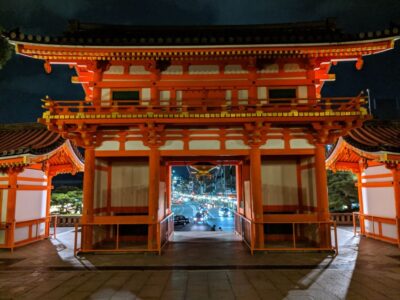
Best of Kyoto: Gion, Geisha, Pagodas & Cobblestones
Read our review →
Kyoto Night Foodie Tour in Gion (9+ dishes + 6 Sake tastings)
Read our review →
Kyoto Gion: 2-Hour Geisha Culture & History Walking Tour
Read our review →
Chopsticks Making Workshop in Gion with Engraving Option
Read our review →
Browse the lists this tour appears in