
Reviewed · GEISHA & GION DISTRICT TOURS
Kyoto: Gion Magical Night Walking Tour
Kyoto’s Gion feels most atmospheric after dark, when lanterns glow, temple grounds grow quiet, and the famous streets are easier to appreciate without a wall of people around you. This walking tour links the district’s best-known sights with smaller lanes and religious sites that are easy to miss on your own.
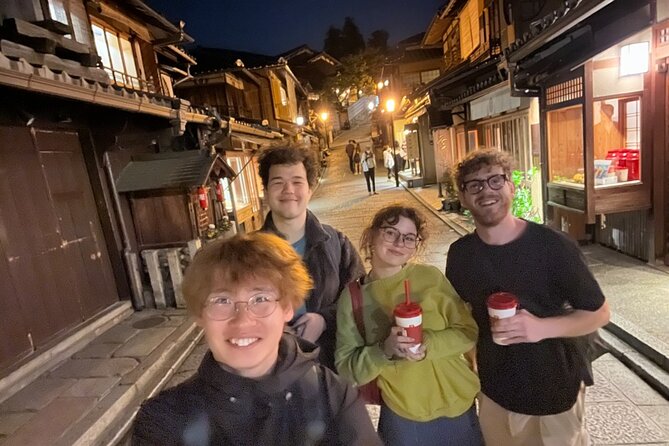
I like the small group size, which makes it easier to hear the guide and ask questions. I also like the human side of the tour: guides such as Karen, Ricky, Hina, May, Sho, and Pam have explained geisha life, local customs, and family connections to Kyoto in a way that turns a simple walk into a cultural lesson.
The main thing to consider is the walking. The route includes slopes and stairs, and one hour 40 minutes can feel longer after a full day of sightseeing. The meeting point also deserves care, since one unhappy customer missed the group after not finding anyone at the start.
Key points to know before booking
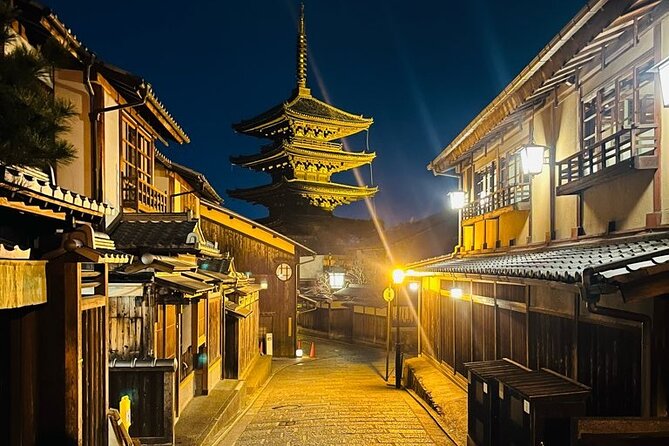
- Lantern-lit Gion after dark: The quiet streets, shrines, pagodas, and traditional wooden buildings look quite different at night.
- Small groups capped at 10: Most departures are designed to feel personal rather than crowded, with plenty of chances to speak with the guide.
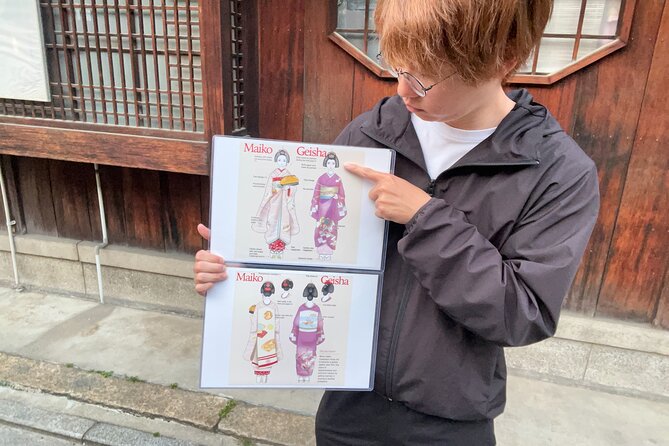
- Geisha culture explained with care: You learn about Maiko and Geiko, their place in Kyoto society, and the etiquette of seeing them in public.
- A route beyond the postcard streets: The walk includes Gionmachi Minamigawa, Yasui-Konpiragu, Sannenzaka and Ninenzaka, Yasaka Shrine, and less obvious cultural stops.
- About 1 hour 40 minutes on foot: Comfortable shoes matter, especially on slopes, stairs, and older stone-paved streets.
- Good value at $29.60: The price is modest for a guided introduction to several major sights, though admission tickets are not the point of the tour.
Why Gion works better after sunset
Gion is one of Kyoto’s most recognizable districts, but its fame can work against it during the day. Narrow lanes fill with tour groups, photography stops, and people trying to catch sight of a Maiko or Geiko. At night, the pace changes.
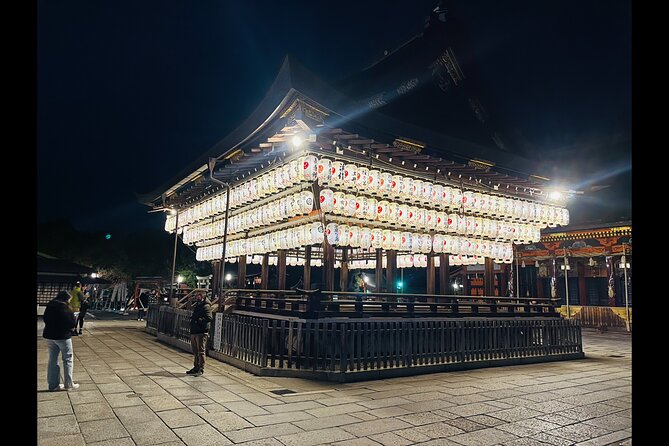
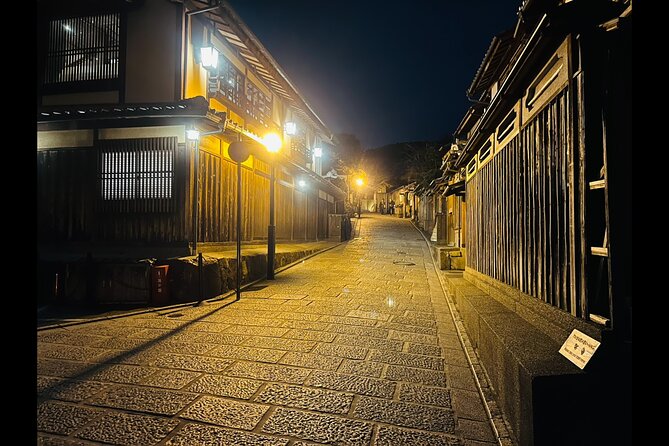
Streetlights and restaurant lanterns bring out the warm wood of the old buildings. Shrines feel calmer. Pagodas and temple roofs take on a softer outline. You still see the district as a working neighborhood, but the setting is less noisy and less hurried.
Some departures have taken place around 7:30 in the evening, when the streets were quiet and the shrines were lit by lanterns. A little rain may even reduce the number of people around, though the tour requires good weather and can be moved or canceled if conditions are poor.
This is not a night of staged entertainment. You are walking through public streets and religious sites, learning how to look at them with more context. That makes the experience a good match for you if you want more than a quick photo of Yasaka Pagoda.
Other walking tours in Kyoto people book:
- Kyoto Geisha Walking Tour: Gion District & Hidden Gems
★ 4.7 · 3,273 reviews - Kyoto: Gion Magical Night Walking Tour with Geisha Trivia
★ 4.9 · 2,393 reviews - Kyoto: Gion Geisha District Walking Tour – Stories of Geisha
★ 4.7 · 2,187 reviews
Meeting at Minamiza Theater
The tour begins at Minamiza Theater, at the eastern end of Shijo Bridge in Gion. The listed address is in the Gion Ward of Higashiyama, and the start is at the theater’s second-floor west lobby.
Arrive with enough time to identify the theater and find the correct lobby. The one poor experience in the tour history involved a person who could not locate the group and did not receive a response to a message sent before the walk. The operator said the group met at the correct point, but the lesson is clear: do not wait until the last minute, and check the meeting instructions carefully before leaving your hotel.
The end point is in Gionmachi Kitagawa. Since the walk finishes in the same general district, you can continue to dinner or explore nearby streets afterward. The route is not a ride between sights. You are on foot from start to finish.
Gionmachi Minamigawa and the world of Maiko
The first listed stop is Gionmachi Minamigawa, one of Kyoto’s best-known streets. Traditional façades and narrow lanes give you an immediate sense of why Gion attracts so much attention.
This is also where the guide can explain the difference between Maiko and Geiko and how they fit into Kyoto’s traditional entertainment world. The walk does not promise a sighting, but you might see one if you are lucky. If that happens, the practical advice is simple: greet her with a smile and say Konnichiwa, then allow her to continue on her way.
That small piece of etiquette matters. Gion is not a theme park, and the people in traditional dress are not there for tourists. A good guide helps you understand the district without encouraging intrusive behavior. The strongest part of this tour is likely to be the explanation of how the old streets function, not simply the chance to spot someone in a kimono.
The stop is scheduled for about 10 minutes, so do not expect a long lecture here. Instead, think of it as an introduction that gives meaning to the lanes you will walk through later.
Yasui-Konpiragu and Kyoto’s shrine traditions
The next stop is Yasui-Konpiragu, a shrine associated with relationships. Its traditions cover both strengthening a good bond and cutting away a harmful one, so the site carries a different mood from a simple shrine for good luck.
The guide can explain how religious places in Kyoto often connect with ordinary concerns: love, marriage, misfortune, health, and family life. This is one reason a guided walk helps. Without context, Yasui-Konpiragu may look like another attractive shrine. With an explanation, you understand why people come here and what the rituals mean to them.
The stop lasts about 10 minutes and does not require an admission ticket. The grounds add a short pause to the route, but the walk continues quickly, so listen closely if you want to remember the details.
Other evenings in the old entertainment quarters of Kyoto:
- Best of Kyoto: Gion, Geisha, Pagodas & Cobblestones
★ 4.9 · 2,058 reviews - Night Walk in Gion: Kyoto’s Geisha District
★ 4.5 · 2,003 reviews - Kyoto Night Foodie Tour in Gion (9+ dishes + 6 Sake tastings)
★ 5.0 · 1,762 reviews - Kyoto Gion Geisha District Walking Tour – The Stories of Geisha
★ 5.0 · 1,441 reviews
Sannenzaka, Ninenzaka, and Yasaka Pagoda
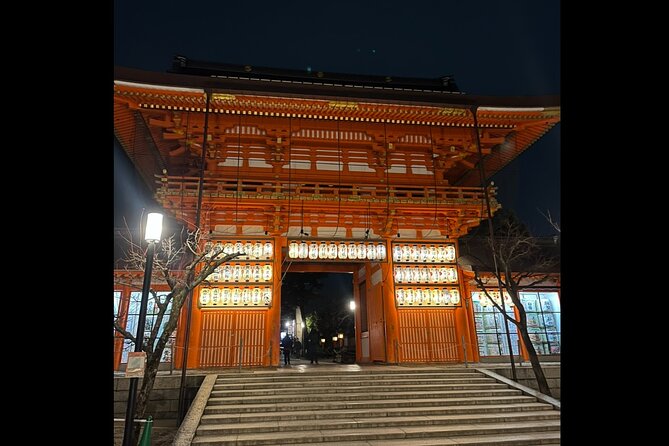
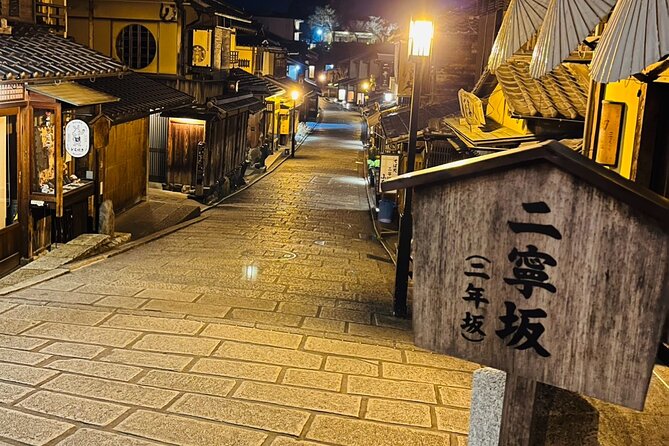
The route then moves toward Sannenzaka and Ninenzaka, streets leading toward Kiyomizu-dera. Their traditional townscape is among the most photographed in Kyoto, with old-style buildings, sloping lanes, and the five-story Yasaka Pagoda rising above the roofs.
At night, these streets can be especially pleasant. The lanterns and streetlights bring out the shape of the buildings, while fewer people make it easier to pause for a photo. Several departures have included time for pictures, which is useful because the views can be easy to rush through during a busy daytime visit.
This is also where you should expect the physical effort to increase. The route includes hills, stairs, and uneven older streets. One hour 40 minutes is not a long hike, but the repeated slopes can be tiring if you have already spent the day walking around Kyoto.
Wear comfortable shoes and keep your hands free for the occasional stair or incline. If you have trouble with slopes, stairs, or extended walking, this is not the best choice. The tour information says most people can participate, but it specifically warns that the route is unsuitable for anyone uncomfortable with hills and stairs.
The large Kannon statue and a quieter pause
Two additional stops are described by their features rather than by name. One was built in 1955 to honor the souls of World War II victims and includes a very large statue of Kannon.
This gives the walk a more solemn turn. Gion is often presented through its restaurants, wooden teahouses, and geisha traditions, but Kyoto’s religious sites also hold memories of war, loss, and prayer. A stop connected with postwar remembrance broadens the story beyond old streets and picturesque buildings.
Because the stop is not listed with a separate duration, the guide’s timing may vary. Treat it as part of the walk’s wider cultural setting rather than as a full temple visit. You are seeing the site from the route, not signing up for an extended religious tour.
A temple garden, tea house, and bamboo grove
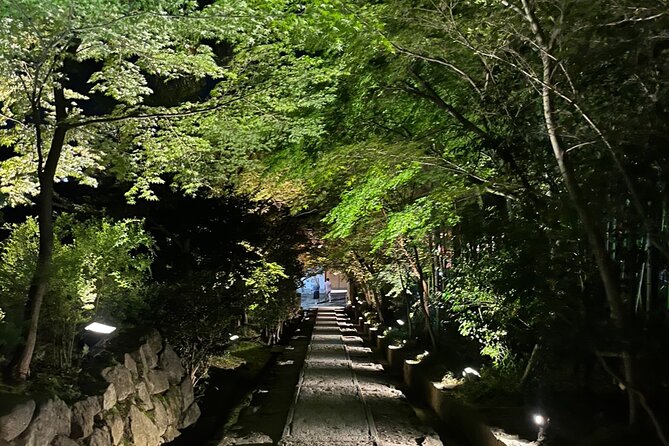
Another stop is a temple built about 400 years ago by the wife of a shogun to mourn her husband. Its grounds include a garden, a 400-year-old tea ceremony house, and a bamboo grove.
This is one of the more appealing combinations on the route. You get architecture, remembrance, garden design, tea culture, and bamboo in one setting. At night, the garden and grove may feel more restrained than they do in daylight, with the atmosphere shaped by darkness and selective lighting rather than broad views.
The exact stop name and visit length are not specified, so you should not assume that every part of the garden or tea house is open for a full inspection. The value comes from the guide’s explanation and the chance to place these features within Kyoto’s religious and social history.
Yasaka Shrine and the Gion finish
The final named stop is Yasaka Shrine, the head shrine of roughly 2,300 related shrines across Japan. Locally, it is known as Gion-san and is connected with protection from bad luck, good fortune, and beauty.
The shrine works well as the closing point because it links the neighborhood’s name, its religious traditions, and its old entertainment culture. Lantern-lit shrine buildings make a strong final scene, and the open grounds give the group room to gather before the tour ends.
Plan to spend about 10 minutes here. This is not a ticketed shrine visit, and the tour does not appear to include a long independent exploration period. You are getting a guided introduction, not a detailed architectural study.
From here, the walk ends at 625 Gionmachi Kitagawa. You can use the location as a starting point for your own evening, but the tour itself finishes after the guided route.
What the guides add to the walk
The guides are a major part of the experience. Karen is repeatedly praised for answering questions, handling families patiently, and explaining the area with humor. Ricky has led walks focused on Kyoto’s history, culture, and the relationship between Maiko, Geiko, and wider Kyoto society.
Hina has brought personal family insight, while May has been described as friendly and passionate about Gion. Sho Hamada has guided visitors through local history and expressed a clear affection for Kyoto. Pam has led groups through the district’s sights and nighttime views.
The guide quality may vary by departure, as it would with any scheduled walking tour. English ability may also differ. One departure with Sho was enthusiastic, but communication was sometimes slower because the guide was still learning English. That does not cancel out the value of the walk, but it is worth remembering if you want highly detailed answers to every question.
The group limit is especially useful here. The tour information gives a maximum of 10 people, while the main description advertises a small group of up to eight. Either way, this is far smaller than a standard coach-style city tour. A small group lets you stand close enough to hear, ask about a shrine, or request clarification without holding up dozens of people.
Is $29.60 a fair price?
At $29.60 per person, this is a reasonable price for a guided introduction to Gion. You are not paying for entry to major attractions, since the named stops are listed with free admission. You are paying for route planning, interpretation, local context, and the time saved finding the less obvious corners.
The value is strongest on a first visit. If you walk through Gion alone, you can see the same streets and shrine gates, but you may not understand the meaning of Yasui-Konpiragu, the role of Yasaka Shrine, or the distinction between Maiko and Geiko. The guide gives those details a place in the larger picture.
It is less useful if you want a long, slow photography session at each stop or a formal temple tour with extensive interior access. The walk covers a lot in less than two hours, so the pace includes regular stops but does not allow unlimited time at each location.
The high overall score of 4.8 from 136 ratings and the 96 percent recommendation rate point to a reliably positive experience, but the one serious complaint about meeting-point communication should not be ignored. Make the start simple for yourself by confirming the location and arriving early.
Who should book this Gion walk?
I would choose this tour for a first-time Kyoto visit, especially if you want to see Gion after dark without spending hours planning a route. It also suits couples, families with older children, and solo visitors who prefer a small group and a guide to provide context.
Families should note that the route is not passive sightseeing. Children aged 12 and 14 have handled the walk well, but the hills and stairs still require comfortable shoes and reasonable stamina. The guide’s willingness to answer questions can make the cultural material more engaging for young people.
Photography fans should like the nighttime lighting and quieter streets, but you should not expect the whole tour to stop whenever you want. The group follows a set route, and the guide must keep everyone together.
You should skip it if you dislike walking on slopes, need step-free access, or want an unhurried visit inside each religious site. You may also prefer to explore alone if you already know Gion well and mainly want time to photograph without a schedule.
Practical details that matter
The tour uses a mobile ticket, and confirmation is provided when you book. Service animals are allowed, and the activity is near public transportation.
Free cancellation is available up to 24 hours before the start time. Cancellations or changes made within 24 hours are not refunded. The tour requires good weather and a minimum number of participants. If the operator cancels for either reason, you are offered another date or experience, or a full refund.
Bring comfortable shoes and prepare for a mixture of paved streets, slopes, and stairs. An umbrella is sensible in uncertain weather, but keep in mind that poor conditions can affect whether the tour runs.
Should you book the Kyoto Gion Magical Night Walking Tour?
Book it if you want a short, affordable way to make sense of Gion at night. The best parts are the small group, the lantern-lit streets, the mix of famous and less obvious sites, and the thoughtful explanation of Maiko, Geiko, shrines, and local etiquette.
Do not book it expecting private access, guaranteed geisha sightings, or a relaxed temple tour with long stops. You will walk steadily, climb some slopes, and follow a shared route.
For most first-time visitors, $29.60 is a sound investment in orientation and context. Arrive early at Minamiza Theater, wear good shoes, and treat any Maiko or Geiko you see with respect. With those expectations, this is a practical way to meet Gion after the crowds have thinned.
FAQ
How long does the Gion Magical Night Walking Tour last?
The tour lasts approximately 1 hour and 40 minutes.
How large is the tour group?
The activity has a maximum of 10 travelers, while the tour description refers to a small group of up to eight people.
Where does the tour begin and end?
The tour begins at Minamiza Theater in Kyoto’s Higashiyama Ward. It ends at 625 Gionmachi Kitagawa.
What sights are included?
The route includes Gionmachi Minamigawa, Yasui-Konpiragu, Sannenzaka and Ninenzaka, Yasaka Shrine, a postwar Kannon memorial site, and a temple area with a garden, tea ceremony house, and bamboo grove.
Is the tour suitable for people who do not like hills or stairs?
No. The tour includes slopes and stairs and is not recommended for anyone uncomfortable with that type of walking.
Can I cancel for a full refund?
Yes. You can cancel at least 24 hours before the experience start time for a full refund. Cancellations within 24 hours are not refunded.
More walking tours elsewhere in Japan
- Nishiki Market Brunch Walking Tour (7 Tastings + Brunch)
★ 5.0 · 1,355 reviews - Kyoto Arashiyama Walking Tour: Bamboo, Monkeys, Gardens & Secrets
★ 5.0 · 1,216 reviews - Kyoto Gion: 2-Hour Geisha Culture & History Walking Tour
★ 5.0 · 1,186 reviews - Kyoto: Izakaya Bars Guided Walking Tour
★ 4.9 · 815 reviews
Just added in Kyoto
- Private Cooking Class Udon in Kyoto Japan★ 5.0 · 23 reviews
- Your Private Vacation Photography Session In Kyoto★ 5.0 · 110 reviews
- Kyoto: Zen Meditation at a Private Temple with a Monk★ 5.0 · 25 reviews
- Private Pewter Sake Cup Experience with a Kyoto Artisan★ 5.0 · 31 reviews
- Kyoto Wagashi(Japanese sweets) Cooking Class near Fushimiinari★ 5.0 · 60 reviews
- Kyoto:Family-Friendly Kimono & Yukata Experience at WARGO★ 5.0 · 147 reviews
- Private Guided Traditional Buddhist Cooking in Japan★ 5.0 · 16 reviews
- Kyoto: Gion Geisha District & Sake-in-Hand Walking Tour★ 5.0 · 37 reviews
Geisha & Gion District Tours, compared.

Kyoto Geisha Walking Tour: Gion District & Hidden Gems
Read our review →
Gion Geisha District Walking Tour – Stories of Geisha
Read our review →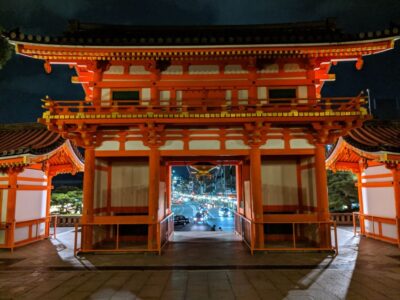
Best of Kyoto: Gion, Geisha, Pagodas & Cobblestones
Read our review →

Kyoto Night Foodie Tour in Gion (9+ dishes + 6 Sake tastings)
Read our review →
Kyoto Gion: 2-Hour Geisha Culture & History Walking Tour
Read our review →
Chopsticks Making Workshop in Gion with Engraving Option
Read our review →
Browse the lists this tour appears in