
Reviewed · GEISHA & GION DISTRICT TOURS
Kyoto Gion Historical Walking Tour
Kyoto’s eastern hills make the city’s past easy to see. In three hours, you move from Gion’s refined lanes to temple gates, park paths, stone slopes, and the great approach to Kiyomizu-dera. The route does more than collect photo stops. It connects Kyoto’s religious life, theater traditions, samurai politics, and modern city streets.
I especially like the route’s strong sense of place and the guides’ focus on explaining why each site matters. Guides named in the tour feedback include Jay, Ben, Ayumi, Michel, and Tommy, with Jay praised for his academic background in Japanese history and Ayumi noted for her lively explanations of geisha and samurai culture. I also like that the tour finishes at Kiyomizu-dera, giving you a useful base for exploring the area afterward.
The tradeoff is simple: this is a serious walking tour. Three hours can mean hills, uneven paving, and stair climbing, with limited time for food or long temple visits. Wear proper shoes, eat beforehand, carry water, and do not book it if a slow, mostly seated outing is what you want.
Key points to know before you book
- Gion to Kiyomizu-dera in one sweep: The route links Kyoto’s most recognizable eastern sights without requiring you to plan several separate visits.
- History is the main event: Expect discussion of religion, theater, geisha culture, samurai, emperors, and the Meiji Restoration.
- A small group helps: The maximum group size is 12, making it easier to hear the guide and ask questions.
- Good English guidance: Guides including Jay, Ben, Ayumi, Michel, and Tommy have led tours praised for clear English and engaging explanations.
- Bring energy and water: The walk includes slopes, stairs, cobblestones, and a few hours on your feet.
- Kiyomizu-dera admission costs extra: The walking tour ends at the temple entrance, but entry is not included.
Why this route gives you a useful first look at Kyoto
Gion and Higashiyama can feel confusing at first. The streets twist, temple grounds spread uphill, and the most interesting details are often easy to miss when you are focused on finding the next gate. A guide gives the route a clear thread.
The walk begins near Ben’s Cookies Kyoto Shijo, in the Shijo area, then heads toward Gion and the eastern hills. You finish in front of Kiyomizu-dera, one of Kyoto’s best-known temples. That direction matters. The walk gradually shifts from urban streets to older lanes and temple grounds, so you can see how Kyoto changes block by block.
You are not simply ticking off shrines and temples. The guide explains how religion, entertainment, politics, and daily life have shaped the district. The tour also covers the Meiji Restoration, a major turning point in Japan’s move from the shogunate era to modern government. That larger context helps the temples feel like part of Kyoto’s story rather than isolated monuments.
The group limit of 12 is another practical advantage. The guide can stop to answer questions, point out small details, and keep the pace together without managing a huge crowd. In a district this busy, that makes a real difference.
Other walking tours in Kyoto people book:
- Kyoto Geisha Walking Tour: Gion District & Hidden Gems
★ 4.7 · 3,273 reviews - Kyoto: Gion Magical Night Walking Tour with Geisha Trivia
★ 4.9 · 2,393 reviews - Kyoto: Gion Geisha District Walking Tour – Stories of Geisha
★ 4.7 · 2,187 reviews
Tatsumi Bridge and Gion Shimbashi: Kyoto’s polished old quarter
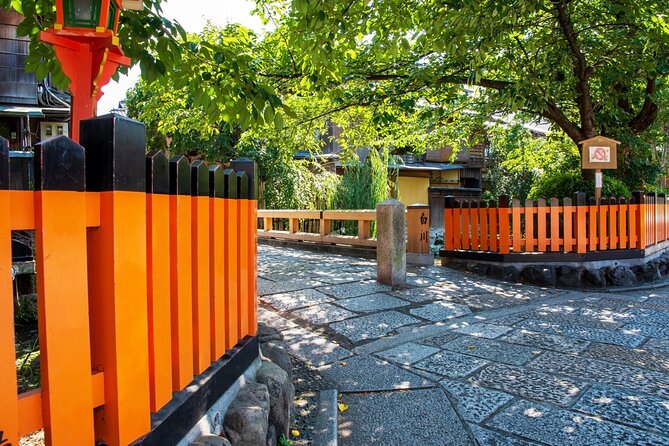
The first stop is Tatsumi Bridge, in the Gion Shimbashi area. This is one of Kyoto’s most attractive historic settings, with a narrow waterway, traditional buildings, and carefully preserved streets. It is a short stop, listed at about 15 minutes, but it sets the mood for the entire walk.
Here, your guide can help you understand Gion beyond its postcard image. The district is tied to traditional theater, tea houses, and geisha culture, subjects that can be misunderstood if you only see people hurrying through the lanes. The tour’s historical focus gives you a more grounded introduction.
This is also one of the better early photo points. The bridge and surrounding lanes are compact, so expect other people in the area. Be considerate with cameras, especially around private entrances and working businesses. The tour presents Gion as a living neighborhood, not an open-air stage set.
Chion-in’s massive gate and Buddhist setting
The walk continues to Chion-in, beginning with the Sanmon gate. At about 10 minutes, this stop is brief, but the gate makes an immediate impression. It is one of Japan’s largest wooden temple gates and gives you a sense of the scale of the temple complex before you enter farther into the grounds.
The gate also provides a useful lesson in how Buddhist temples announce their presence. You pass from the city into a more formal religious space, and the contrast is sharp. The guide can explain the temple’s place in Kyoto’s religious life and why its architecture feels so imposing.
The wider Chion-in visit lasts about 20 minutes. That is enough for an introduction and a look at the main setting, but not enough for a slow, independent exploration of every corner. If you are devoted to temple architecture, make a note to return on your own after the tour or schedule extra time elsewhere.
The tour does not include admission fees, and the itinerary lists Chion-in stops as free. The important cost to remember comes later at Kiyomizu-dera.
Maruyama Park and the shift from temple to open space
Maruyama Park offers a welcome change after the temple gate and grounds. This old urban park gives the route some breathing room, with trees, paths, and a calmer setting inside the eastern temple district. The planned stop is about 10 minutes.
I like this part because it shows that Kyoto’s historic center is not only stone lanes and religious buildings. Parks have long given residents room to gather, rest, and enjoy seasonal scenery. Your guide may also use the park to explain how the surrounding temple district fits into present-day Kyoto.
The short stop means you will not have much time to sit. Think of Maruyama Park as a transition point rather than a full park visit. If you want a relaxed stroll or extended photography, you will need to return later.
Other evenings in the old entertainment quarters of Kyoto:
- Best of Kyoto: Gion, Geisha, Pagodas & Cobblestones
★ 4.9 · 2,058 reviews - Night Walk in Gion: Kyoto’s Geisha District
★ 4.5 · 2,003 reviews - Kyoto Night Foodie Tour in Gion (9+ dishes + 6 Sake tastings)
★ 5.0 · 1,762 reviews - Kyoto Gion Geisha District Walking Tour – The Stories of Geisha
★ 5.0 · 1,441 reviews
Nene-no-Michi: a stone path with a personal name
Nene-no-Michi, or the Path of Nene, is one of the most atmospheric sections of the walk. This historic stone-paved lane is named for Nene, the wife of Toyotomi Hideyoshi, an important figure in Japan’s unification.
The path winds through the Higashiyama area and connects the tour’s historical subjects with a quieter, more intimate setting. It is a good place to listen to stories about powerful families, political change, and the people connected to Kyoto’s past.
Because the surface is paved in stone and the route is popular, watch your footing and keep your pace comfortable. The lane looks inviting, but it is not a smooth modern sidewalk. This is one reason walking shoes matter more than stylish but flimsy footwear.
Yasaka Pagoda and the famous Higashiyama slopes
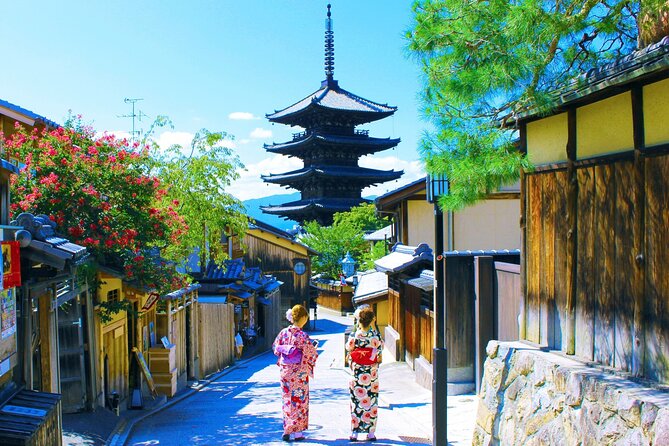
Hōkan-ji Temple, better known as Yasaka Pagoda, is one of the most recognizable sights in eastern Kyoto. Its five-story pagoda rises above the surrounding streets and gives the neighborhood its classic profile.
The scheduled stop is around 10 minutes. That is enough to view the pagoda from the surrounding lanes and hear about its religious and architectural role. You should not expect a long interior visit. The value here is the guide’s explanation and the chance to see how the pagoda anchors the historic district.
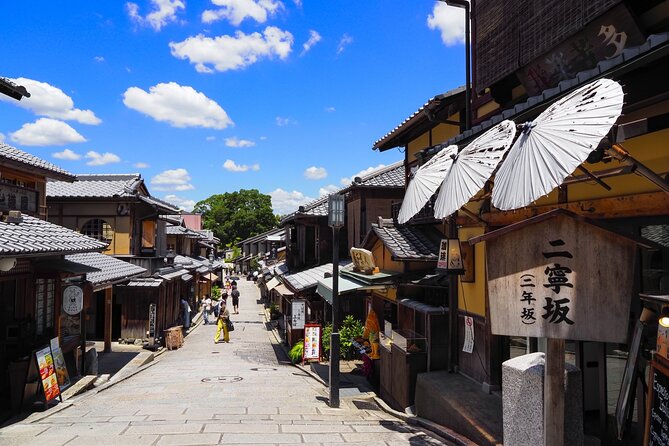
From here, the route moves into Ninen-zaka and Sannen-zaka. These stone-paved pedestrian slopes are lined with traditional buildings, tea shops, food shops, and souvenirs. Ninen-zaka means Two-Year Slope, while Sannen-zaka means Three-Year Slope. The names add a small piece of local character to streets that can otherwise feel like one continuous stream of shops.
The planned stops are short, about five minutes at Ninen-zaka and 10 minutes at Sannen-zaka. That keeps the tour moving, but it also means you may want to return later to browse. The lanes are among Kyoto’s busiest sightseeing areas, so expect crowds and occasional bottlenecks.
Take care on the slopes. The paving is uneven, and there are stairs in parts of the wider route. One useful point to keep in mind is that the tour requires more than ordinary flat-city walking. If you have trouble with hills or stairs, ask about the pace before booking.
Kiyomizu-dera: a strong finish, with admission extra
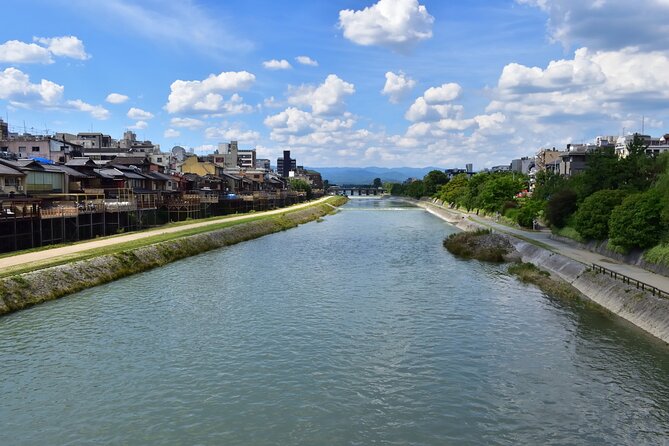
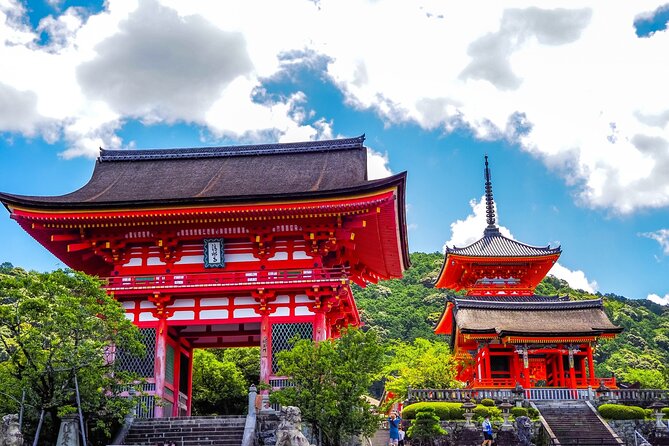
The final stop is Kiyomizu-dera, a UNESCO World Heritage Site dating back to the eighth century. The temple sits on a hillside above Kyoto and is known for its large wooden stage and city views.
The scheduled stop is about 10 minutes, so the tour gives you an introduction rather than a full visit. It ends in front of the entrance, which is convenient if you want to continue exploring. You can enter on your own, but the admission fee is not included in the tour price.
This arrangement is a good fit for independent visitors. You receive the historical background first, then you can decide how much time to spend inside Kiyomizu-dera. I would plan extra time after the walk if the temple is high on your list. The same applies to Ninen-zaka, Sannen-zaka, and the nearby shops.
The ending also gives you a practical advantage. You do not have to retrace the entire route to return to Gion. From Kiyomizu-dera, you can continue sightseeing in Higashiyama or make your own way onward using public transportation.
What the guides add to the walk
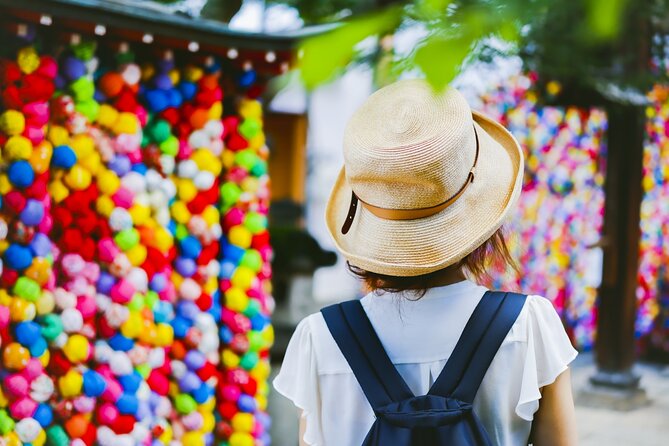
The strongest part of this experience is the human explanation between the landmarks. The tour is information-heavy, but the guides bring in humor, folklore, local suggestions, and answers to questions.
Jay has been singled out for his strong command of Japanese history, clear English, and ability to explain the relationship between samurai, monks, emperors, and Kyoto’s changing political role. Ben has been praised for memorable stories and useful suggestions for gardens, temples, and interesting shops. Ayumi brings particular energy to subjects such as geisha and samurai culture.
Michel and Tommy have also led tours praised for being friendly, flexible, and easy to understand. The exact guide is not guaranteed, but the range of guide styles suggests that this is a tour built around explanation rather than a memorized list of dates.
You can also expect the guide to help with practical details during the walk. Guides have taken pictures, checked on the group, answered questions, and sometimes continued slightly beyond the planned three hours. If you have a reservation afterward, keep some flexibility in your schedule and tell the guide early.
The $40 price and what you get for it
At $40 per person, this is a reasonable price for a three-hour guided walk through several of Kyoto’s most important districts. You are paying for the route, the organization, and the English-speaking guide. The small maximum group size improves the value because you are less likely to spend the entire time listening from the back of a crowd.
The price does not cover lunch, gratuity, or admission fees. There are also no long meal stops built into the walk. Eat before you start and carry water or a small snack, especially if you are walking in warm weather.
The tour is most worthwhile early in your Kyoto visit. It gives you a working map of Gion and Higashiyama, explains what you are seeing, and helps you decide which places deserve a return visit. If you already know Kyoto’s history well and prefer to wander alone, the value will be lower.
Who should book this Kyoto walk
Book it if you want a strong introduction to Gion and Higashiyama, especially if you enjoy history, religion, architecture, and local stories. It is also a good first-day activity because the guide can suggest places to revisit during the rest of your stay.
Adults and older children who can manage three hours of walking should do well. One family brought an eight-year-old, but the steady stream of temples and history eventually became tiring for the child. For younger children, the length and information load may be more than they want.
This tour also suits solo visitors and couples who want company without joining a huge group. The 12-person limit keeps the experience fairly personal, while mobile tickets make the booking process simple.
Free cancellation is available up to 24 hours before the start time. The tour depends on good weather and a minimum group size, so a cancellation caused by weather or insufficient bookings brings the choice of another date or a full refund.
Should you book the Kyoto Gion Historical Walking Tour?
I would book this tour if you want to understand Kyoto while seeing its most photogenic eastern districts. The route is well chosen, the finish at Kiyomizu-dera is practical, and the guides add the historical links that are easy to miss on your own.
Skip it if you dislike hills, stairs, crowds, or long stretches without a meal break. For everyone else, $40 buys a useful three-hour introduction to Gion and Higashiyama, with enough free time afterward to return to the places that catch your eye.
FAQ
How long does the Kyoto Gion Historical Walking Tour last?
The tour lasts approximately three hours.
Where does the tour begin?
It begins in front of Ben’s Cookies Kyoto at 89 Shinchō, Shimogyo Ward, Kyoto.
Where does the tour end?
It ends in front of the entrance to Kiyomizu-dera at 1-chōme-294 Kiyomizu, Higashiyama Ward, Kyoto.
Is the tour conducted in English?
Yes. The tour is led by an English-speaking guide.
What places are included on the route?
The route includes Tatsumi Bridge, Chion-in Temple Sanmon, Chion-in Temple, Maruyama Park, Nene-no-Michi, Hōkan-ji Temple and Yasaka Pagoda, Ninen-zaka, Sannen-zaka, and Kiyomizu-dera.
Is admission to Kiyomizu-dera included?
No. Admission to Kiyomizu-dera is not included in the tour price.
Is lunch included?
No. Lunch is not included, and you should plan to eat before the tour or bring a snack.
How large is the group?
The tour has a maximum of 12 participants.
Can I cancel for a full refund?
Yes. You can cancel for a full refund if you cancel at least 24 hours before the experience start time. Changes or cancellations made less than 24 hours in advance are not accepted for a refund.
More walking tours elsewhere in Japan
- Nishiki Market Brunch Walking Tour (7 Tastings + Brunch)
★ 5.0 · 1,355 reviews - Kyoto Arashiyama Walking Tour: Bamboo, Monkeys, Gardens & Secrets
★ 5.0 · 1,216 reviews - Kyoto Gion: 2-Hour Geisha Culture & History Walking Tour
★ 5.0 · 1,186 reviews - Kyoto: Izakaya Bars Guided Walking Tour
★ 4.9 · 815 reviews
Just added in Kyoto
- Private Cooking Class Udon in Kyoto Japan★ 5.0 · 23 reviews
- Your Private Vacation Photography Session In Kyoto★ 5.0 · 110 reviews
- Kyoto: Zen Meditation at a Private Temple with a Monk★ 5.0 · 25 reviews
- Private Pewter Sake Cup Experience with a Kyoto Artisan★ 5.0 · 31 reviews
- Kyoto Wagashi(Japanese sweets) Cooking Class near Fushimiinari★ 5.0 · 60 reviews
- Kyoto:Family-Friendly Kimono & Yukata Experience at WARGO★ 5.0 · 147 reviews
- Private Guided Traditional Buddhist Cooking in Japan★ 5.0 · 16 reviews
- Kyoto: Gion Geisha District & Sake-in-Hand Walking Tour★ 5.0 · 37 reviews
Geisha & Gion District Tours, compared.

Kyoto Geisha Walking Tour: Gion District & Hidden Gems
Read our review →
Gion Geisha District Walking Tour – Stories of Geisha
Read our review →
Best of Kyoto: Gion, Geisha, Pagodas & Cobblestones
Read our review →

Kyoto Night Foodie Tour in Gion (9+ dishes + 6 Sake tastings)
Read our review →
Kyoto Gion: 2-Hour Geisha Culture & History Walking Tour
Read our review →
Chopsticks Making Workshop in Gion with Engraving Option
Read our review →
Browse the lists this tour appears in