
Reviewed · ZEN & MEDITATION EXPERIENCES
Kyoto: Zen Garden, Zen Mind (Private)
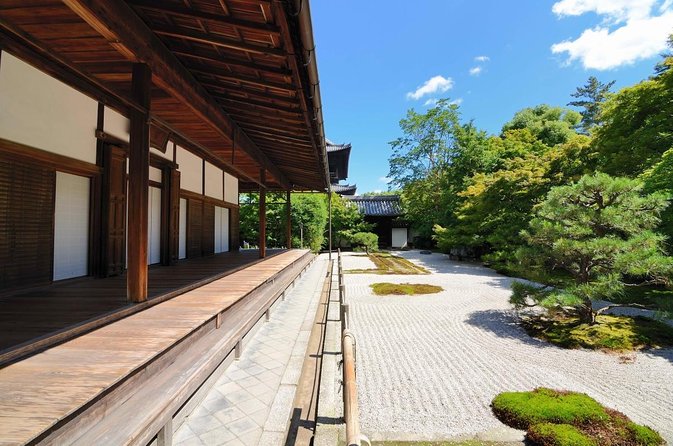
Kyoto’s Zen gardens can look simple at first: a few rocks, raked gravel, moss, and little else. The real pleasure of this private walk is learning how much thought sits behind that apparent simplicity. Andrew, a landscape designer with 15 years of experience, explains the design choices, religious ideas, and cultural habits that give these gardens their force.
I like the private format, which lets you ask questions and shape the conversation around gardening, Buddhism, Japanese history, or daily life in Kyoto. I also like the route itself: three important temple sites linked on foot, away from the limits of a bus or taxi. The main consideration is price. At $380 per group of up to four, it makes the most sense for a small group that wants serious explanation rather than a quick sightseeing stop.
Key points before you book
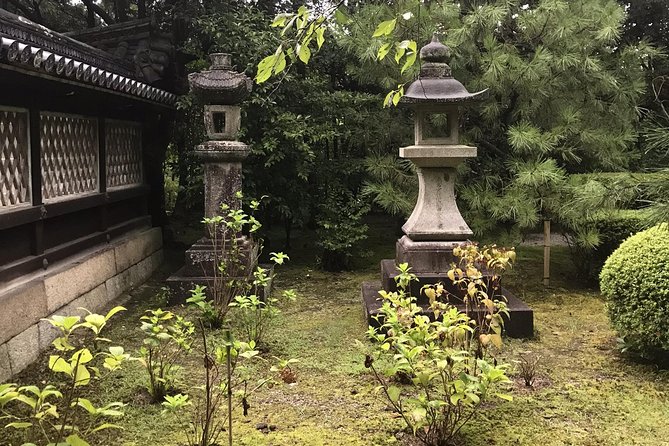
- Three temple settings in one walk: Visit Konchi-in, Tenjuan, and the main Nanzen-ji complex.
- Andrew’s design perspective: Your guide brings 15 years of professional experience in landscape design to the gardens.
- A private group of up to four: You get room for questions and a tour shaped around your interests.
- Three and a half hours on foot: Wear comfortable shoes and expect a steady walking experience between sites.
- Garden meaning, not just garden photos: The discussion includes Zen philosophy, Buddhism, Shinto, history, and Japanese aesthetics.
- Entrance fees are extra: The total temple admission is ¥1,600 per person, in addition to the group tour price.
Why this walk changes the way you see Kyoto gardens
I find Zen gardens rewarding but easy to misread. Without context, you may see a quiet rectangle of gravel and stones, take a few photographs, and move on. Andrew’s role is to slow that process down and point out the relationships among rocks, open space, planting, composition, and spiritual practice.
The tour is not limited to garden facts. Andrew also discusses the basics of Shinto and Buddhism, the traditions that shaped Kyoto, and the connections between religious ideas and garden design. This wider frame matters because Japanese gardens are not simply decorative parks. Their arrangements can suggest mountains, islands, water, distance, age, restraint, or a way of looking at the world.
That makes the experience a good choice if you want more than a checklist of famous temples. You will still see major places, but the emphasis is on reading them. I especially like that the guide’s professional training gives the conversation a practical side. You can ask not only what a garden may symbolize, but also how its elements work together as a designed space.
The tour is private, so you are not tied to the pace of a large group. That can be useful in a garden, where one person may want to linger over composition while another wants to ask about religious customs or history. The available feedback also points to Andrew adapting the discussion to individual interests and staying longer when needed, although you should treat the advertised duration as about three and a half hours.
Other quiet hours in Kyoto:
- Kyoto Zen Meditation & Garden Tour at a Zen Temple with Lunch
★ 5.0 · 441 reviews - Kyoto: Zen Experience in a Hidden Temple
★ 5.0 · 437 reviews - Kyoto: Tea Ceremony Meditation – Make Matcha with Tea Master
★ 4.8 · 406 reviews
Starting at Keage Station
The meeting point is outside Keage Station in Kyoto’s Higashiyama Ward. Starting here gives the walk a clear structure: you meet near public transportation, then continue on foot toward the Nanzen-ji area.
Walking is a central part of the experience, not an inconvenience added to it. The tour description specifically emphasizes reaching places that cars and buses cannot. That means you get the practical benefit of Kyoto’s rail network at the beginning, then use your feet where they are most useful.
Your guide can make the transition from street to temple grounds more meaningful by explaining how the area fits into Kyoto’s religious and cultural setting. Do not expect a sightseeing bus experience or a rapid series of photo stops. The pace is built around looking, listening, and discussing.
Because the tour lasts several hours and includes three sites, sensible shoes are important. The information provided does not give a detailed accessibility assessment, but most participants can take part. If someone in your party has specific mobility concerns, ask the operator before booking.
Konchi-in: a focused introduction to Zen design
The first stop is Konchi-in, a sub-temple of Nanzen-ji. You spend about an hour here, with admission included in the route but not in the tour price. The total admission cost for all three temples is ¥1,600 per person.
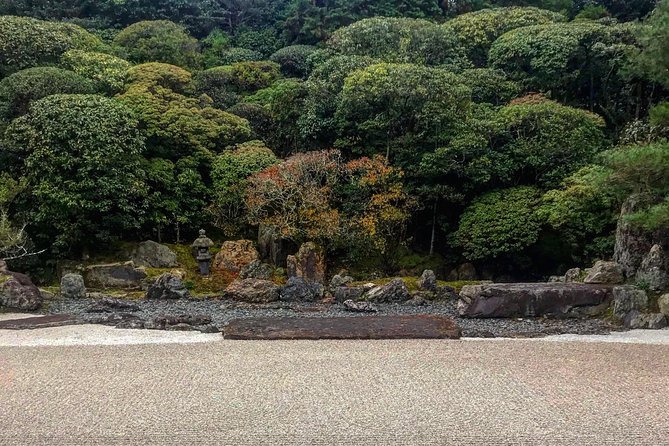
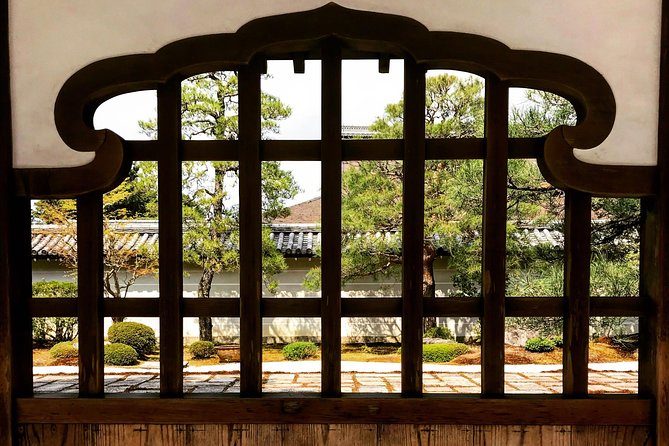
Konchi-in is a strong opening because it lets Andrew establish the basic ideas behind Zen gardens before you move on. You can expect attention to the structure of the garden, the placement of rocks, the use of open space, and the visual choices that can be missed when you look only for flowers or bright color.
This is where a guide with design training can add real value. A garden may appear spare, but spare does not mean accidental. Andrew can help you notice proportion, balance, framing, and the way one feature directs your attention to another.
The hour-long visit also gives the discussion room to expand beyond physical design. Andrew has been praised for connecting garden choices with Buddhist ideas, Japanese aesthetics, society, and Kyoto’s past and present. That makes Konchi-in more than a warm-up stop. It becomes the place where you learn how to look at the next two sites.
A possible drawback is that visitors who prefer fast sightseeing may find an hour at one sub-temple slow. This tour is for people who want explanation and reflection. If you only want to see as many places as possible, a regular temple-hopping day may suit you better.
Tenjuan Temple: quieter details and a slower pace
The second stop is Tenjuan, another sub-temple of Nanzen-ji. The planned time here is about one hour. The available description characterizes the location as quiet and peaceful, which fits the purpose of the tour: give yourself time to observe rather than rush through a famous gate.
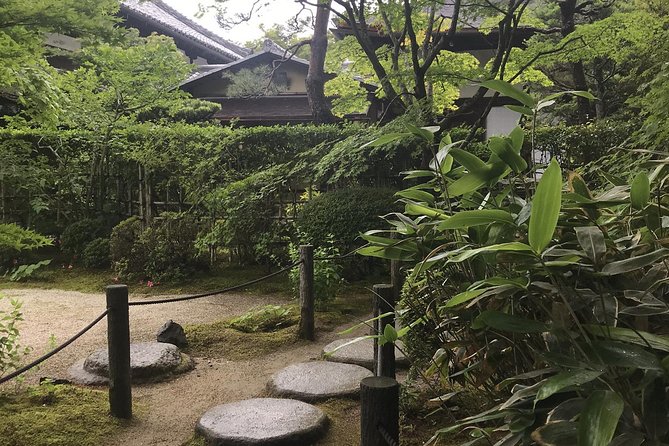
Tenjuan offers a chance to apply what you have learned at Konchi-in. Instead of receiving one long lecture, you can compare how different garden spaces handle rock, gravel, planting, empty areas, and views. Andrew’s explanations can help you see why two gardens may both feel Zen while using different arrangements.
The discussion can also widen into Japanese religion. The tour includes basic ideas from Shinto and Buddhism, and those traditions often overlap in the cultural setting you encounter around Kyoto’s temples and shrines. The point is not to turn the walk into a formal religious class. It is to give you enough background to understand why gardens and temple spaces are treated with such care.
Tenjuan may be the most useful stop for people who value atmosphere. A quiet setting gives you time to look without a crowd pressing behind you. Still, conditions can vary by day and season, and the tour cannot guarantee that every area will be empty.
Other gardens to walk in Kyoto:
- Kyoto Arashiyama Walking Tour: Bamboo, Monkeys, Gardens & Secrets
★ 5.0 · 1,216 reviews - Kyoto Arashiyama Bamboo forest & Garden Half-Day Walking Tour
★ 5.0 · 413 reviews - Kyoto Kiyomizu Tea Ceremony with Scenic Garden Views
★ 5.0 · 101 reviews - Kyoto: Zen Meditation and Garden Tour at a Temple with Lunch
★ 4.9 · 86 reviews
Nanzen-ji: ending at a major Zen temple
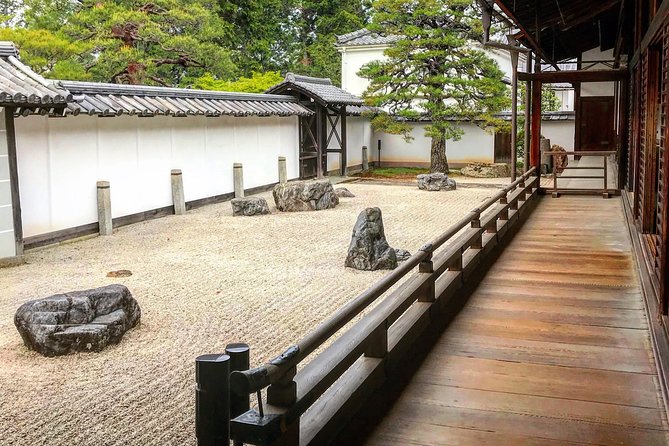
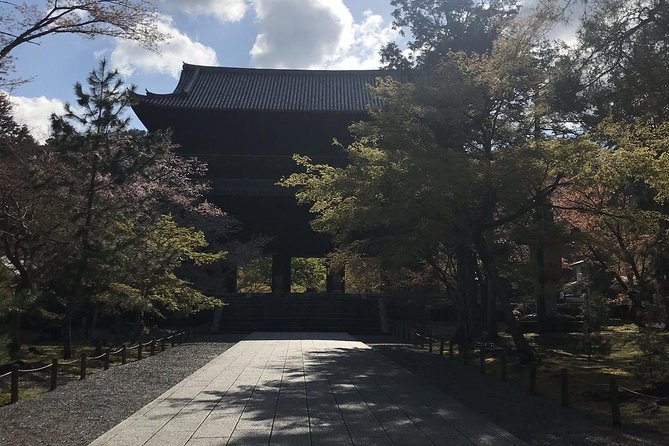
The final stop is Nanzen-ji, the head temple of the Nanzen-ji Zen Monastery. You spend about an hour here before finishing in front of the temple in Nanzenji Fukuchicho.
Ending at Nanzen-ji gives the tour a broad final setting after the more focused sub-temples. By this point, you have a vocabulary for discussing garden design and a better sense of how individual temple spaces relate to Zen practice and Kyoto’s religious culture.
Nanzen-ji also gives Andrew room to connect specific garden details with larger ideas. The strongest part of this experience is not memorizing names or dates. It is learning to link a garden’s visual structure to Japanese aesthetics, Buddhism, history, and contemporary life in Kyoto.
The finish is practical. You end in front of Nanzen-ji rather than returning to Keage Station. That leaves you in a useful area for continuing your own sightseeing, though the provided details do not specify onward directions or nearby stops. Plan the rest of your day with the ending point in mind.
What Andrew adds to the experience

Andrew is identified as the guide, and the experience provider is AN Design. His background in landscape design is the central reason to choose this walk instead of a general temple tour.
He explains both the philosophy and construction of rock gardens, which is a useful pairing. Some guides can describe religious symbolism but say little about how a garden is physically composed. Others can identify design features without explaining why they matter. Here, the stated focus brings those two sides together.
The feedback also highlights Andrew’s ability to connect subjects that are often separated in guidebooks. A question about a stone may lead to Japanese aesthetics, Buddhist thought, temple history, or present-day Kyoto. That kind of conversation is especially useful if you have questions that do not fit neatly into a standard tour script.
The private setup should help. With only your group taking part, you can ask about a detail that catches your eye, request more information about Buddhism, or keep the discussion focused on garden construction. The tour is best when you arrive ready to participate rather than simply follow.
Is $380 good value for four people?
The price is $380 per group, with up to four people included. That is not an inexpensive walk for one person, but the calculation changes when shared by a small group. Four people would pay about $95 each for the guided experience, before the ¥1,600-per-person temple admission.
For two people, the same group price makes the tour considerably more costly per person. Solo visitors face the weakest value unless the subject is a major personal interest. You are paying for a private specialist guide, not just transportation or entry to temples.
I see the value in three parts. First, you visit three temple locations in one organized route. Second, you receive professional guidance on a subject that can be difficult to understand alone. Third, you get a private conversation rather than a fixed group lecture.
The tour is less compelling if you already have strong training in Japanese garden design or want only a brief introduction. It is also not the right pick if your budget is tight and you would rather spend the money on several separate attractions.
Remember that the ¥1,600 admission is extra for each person. The information supplied also describes a mobile ticket and confirmation at booking, so you should have the necessary booking details available on your phone.
Who will enjoy this private Kyoto walk?
I would recommend it most strongly to people with an interest in Japanese gardens, architecture, religion, design, or cultural history. Nature lovers may enjoy it too, but the attraction is not simply greenery. The focus is on how gardens are made and what their choices can mean.
It also suits repeat visitors to Kyoto who have already seen the main sights and want a more focused subject. First-time visitors can benefit just as much, especially if they want a framework for understanding temple gardens during the rest of their trip.
Families and friends may like the private format because the group can ask questions without worrying about holding up strangers. The tour is also a good match for anyone who prefers an informed walk to a large organized excursion.
I would be more cautious about booking it for young children who need constant movement. Each stop lasts about an hour, and much of the experience involves looking closely and listening. The same is true for anyone seeking a food tour, shopping walk, or broad overview of Kyoto neighborhoods.
Timing, weather, and cancellation details
The experience lasts approximately three hours and 30 minutes. It begins at Keage Station and ends at Nanzen-ji, so allow extra time afterward for your next activity.
The tour requires good weather. If poor weather causes cancellation, you will be offered another date or a full refund. You can cancel for a full refund up to 24 hours before the start time, but cancellations or changes made less than 24 hours ahead are not accepted.
The experience is near public transportation, and most people can participate. Since the route is on foot, plan for several hours of walking and choose clothing suited to the weather.
Should you book Kyoto: Zen Garden, Zen Mind?
Book it if you want to understand Kyoto’s gardens rather than simply photograph them. Andrew’s mix of professional garden design, Zen philosophy, Buddhism, Shinto traditions, history, and contemporary Kyoto gives the walk a clear purpose.
I especially recommend it for a group of three or four, when the $380 fee becomes easier to justify. The three temple stops provide variety, while the private format leaves space for questions and personal interests.
Skip it if you want a cheap introduction, a fast temple circuit, or a tour with little walking. The admission fee is extra, the price is high for a solo booking, and the experience depends on your willingness to spend time with subtle details.
For the right audience, this is the sort of tour that can change the rest of your Kyoto sightseeing. Afterward, a rock garden is less likely to look empty. You will have more tools for seeing what its designer chose, what was left out, and how the space asks you to look.
FAQ
How long does the Kyoto Zen garden tour last?
The tour lasts approximately three hours and 30 minutes.
Where does the tour begin?
It begins at Keage Station, at Higashikomonozacho in Kyoto’s Higashiyama Ward.
Where does the tour end?
The walk ends in front of Nanzen-ji in Nanzenji Fukuchicho.
Which temples are included?
The route includes Konchi-in, Tenjuan Temple, and Nanzen-ji Temple.
How long do you spend at each temple?
The planned time is about one hour at each of the three stops.
Is the tour private?
Yes. Only your group takes part, with a maximum of four people.
Who leads the tour?
The guide is Andrew, a landscape designer with 15 years of experience.
Are temple entrance fees included in the $380 price?
No. The total admission fee for the three temples is ¥1,600 per person and is paid separately.
Is the tour suitable for most people?
Most people can participate, and the tour is near public transportation. It is a walking experience, so specific mobility concerns should be discussed with the operator before booking.
What happens if the weather is poor?
If the tour is canceled because of poor weather, you can choose a different date or receive a full refund.
Just added in Kyoto
- Your Private Vacation Photography Session In Kyoto★ 5.0 · 110 reviews
- Kyoto: Zen Meditation at a Private Temple with a Monk★ 5.0 · 25 reviews
- Private Cooking Class Udon in Kyoto Japan★ 5.0 · 23 reviews
- Private Pewter Sake Cup Experience with a Kyoto Artisan★ 5.0 · 31 reviews
- Kyoto Wagashi(Japanese sweets) Cooking Class near Fushimiinari★ 5.0 · 60 reviews
- Kyoto:Family-Friendly Kimono & Yukata Experience at WARGO★ 5.0 · 147 reviews
- Private Guided Traditional Buddhist Cooking in Japan★ 5.0 · 16 reviews
- Kyoto: Gion Geisha District & Sake-in-Hand Walking Tour★ 5.0 · 37 reviews
Zen & Meditation Experiences, compared.

Kyoto Zen Meditation & Garden Tour at a Zen Temple with Lunch
Read our review →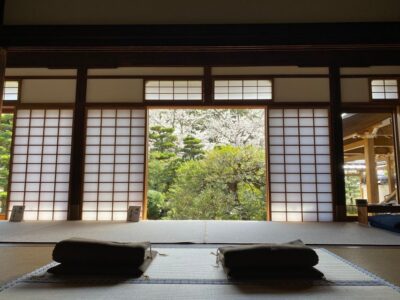

Tea Ceremony Meditation – Make Matcha with Tea Master
Read our review →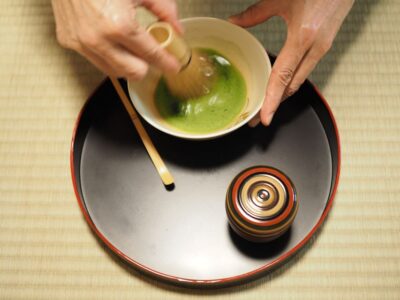

4.5-Hour Kyoto Bike Tour with Lunch and UNESCO Zen Temples
Read our review →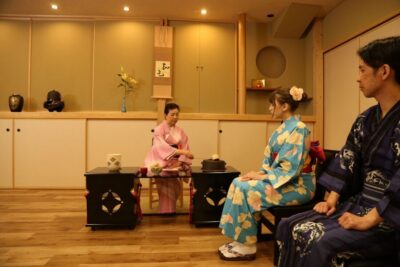
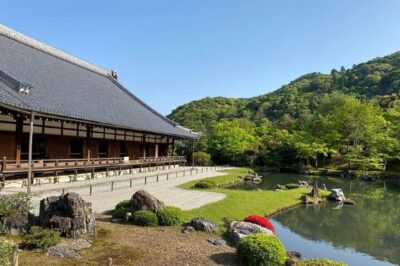
Arashiyama Guided Tour, Bamboo, Monkey, Zen Temple
Read our review →Browse the lists this tour appears in