
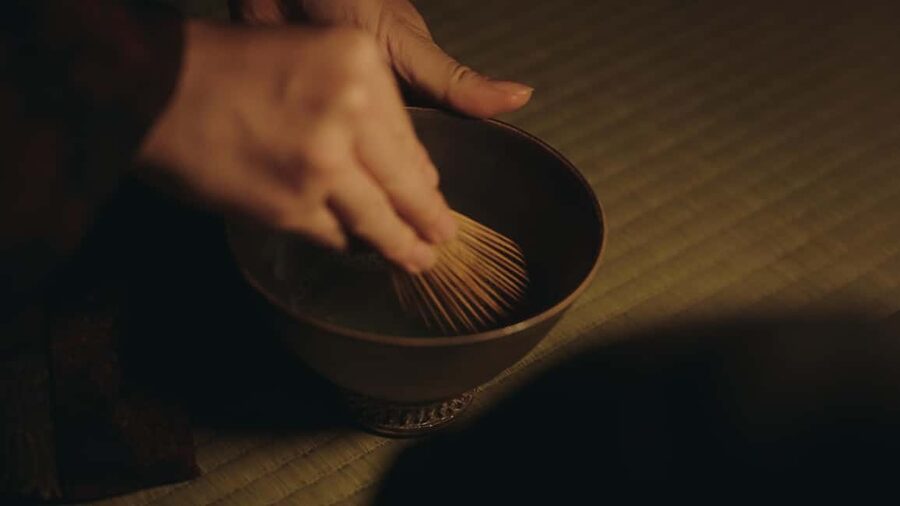
Reviewed · TEA CEREMONY EXPERIENCES
Kyoto: Tea Ceremony Meditation – Make Matcha with Tea Master
Kyoto’s tea ceremony can look formal and mysterious until someone shows you what each movement means. In this 45-minute matcha workshop, an English-speaking tea master demonstrates the ritual, explains the customs, and then helps you prepare your own bowl inside a 100-year-old townhouse.
I especially like the small group of up to 10 and the chance to use handcrafted utensils rather than simply watch a performance. I also like the relaxed teaching style. Hosts such as Miki, Aki, Yoko, Joko, and Kiyoka have been praised for clear English, patience, and welcoming questions. The main consideration is time: this is a focused introduction, not a long formal tea gathering, and kimono rental is not included.
Key points to know before you book
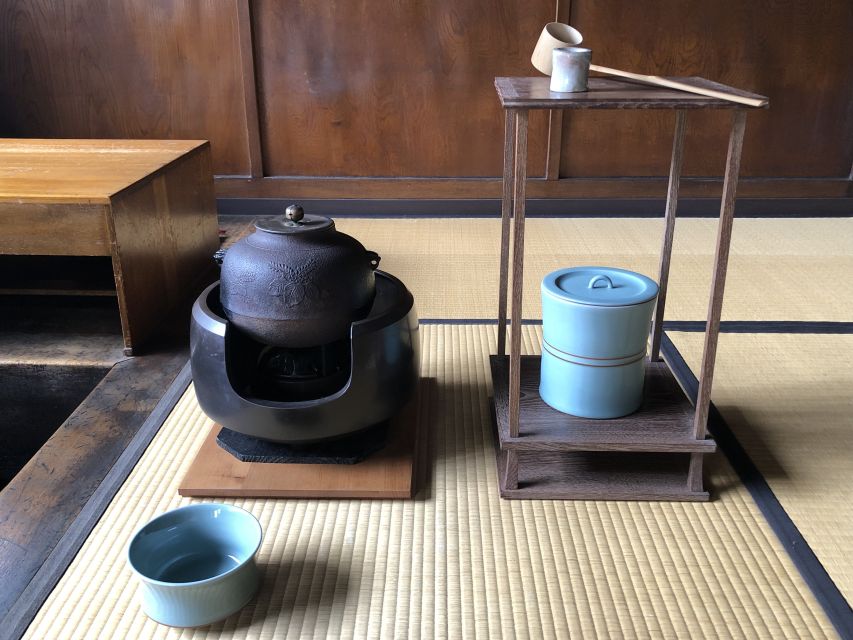
- A 100-year-old Kyoto townhouse: Tatami, quiet rooms, and a traditional setting give the lesson a sense of place.
- You make the matcha yourself: After the demonstration, you whisk your own bowl and drink it with a Japanese sweet.
- Omotesenke-style instruction: The host introduces one of Japan’s respected tea traditions without making the ceremony difficult for newcomers.
- Small and personal: Groups are limited to 10, with individual help during the hands-on portion.
- Good cultural value for $45: The price includes the ceremony, one matcha, and a traditional sweet.
- Bring your questions, not your perfume: Avoid cologne, arrive no more than 10 minutes early, and do not bring food, drinks, or bikes inside.
Entering a 100-year-old Kyoto townhouse
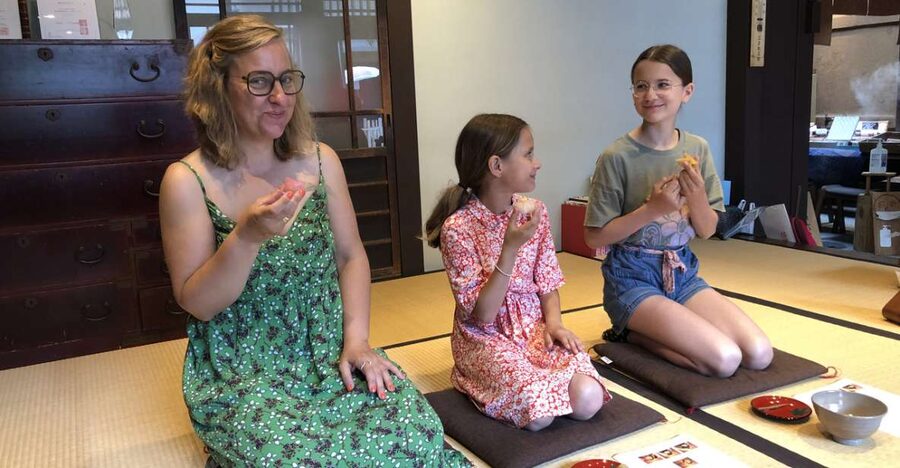
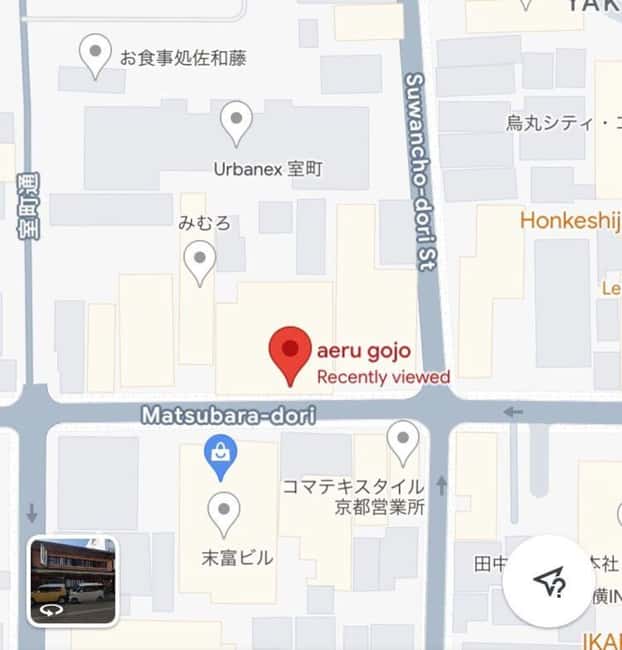
The experience begins at aeru gojo, a traditional townhouse in central Kyoto. If you approach from Karasuma-dori Street, turn at the corner with the Family Mart and walk straight for one block. Look for the sign beside Only Corporation and across from Zen Kyoto.
The setting matters. Tea ceremony is built around attention to small things: the room, the bowl, the sound of the whisk, and the quiet exchange between host and guest. A modern hotel meeting room could teach you the same basic motions, but the tatami and old townhouse help the lesson feel connected to Kyoto.
The space is described as calm and contemporary Japanese in its arrangement, with the scent of tatami helping you slow down. You do not need to dress in a kimono, kneel perfectly, or know any Japanese etiquette before you arrive. The host adapts the explanation for first-time visitors and keeps the mood friendly rather than stiff.
Arrive no earlier than 10 minutes before your scheduled time. The room is limited in size, and it is not intended for eating before or after the class. There is no private parking lot. If you arrive by rental bicycle, use public bicycle parking nearby rather than bringing the bike to the venue.
Other tea ceremonies in Kyoto people book:
- Kyoto: Tea Ceremony in a Traditional Tea House in Kiyomizu
★ 4.9 · 3,519 reviews - Kyoto: Tea Ceremony Ju-An at Jotokuji Temple
★ 4.9 · 3,207 reviews - Kyoto: 45-Minute Tea Ceremony Lesson Experience
★ 4.3 · 2,378 reviews
The opening demonstration and Omotesenke tradition
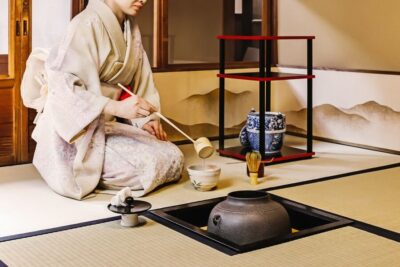
Your tea master first demonstrates the preparation of matcha. This is the part to watch closely. The ceremony is not simply a recipe for powdered green tea. The order of the actions, the way utensils are handled, and the attention given to the guest all carry meaning.
The host is trained in the Omotesenke tradition, one of Japan’s respected schools of tea ceremony. You receive a practical introduction to its approach, not a full course in every branch of Japanese tea culture. That distinction is useful. In 45 minutes, the goal is to give you a genuine sense of the ritual and its purpose without burying you in rules.
The explanation covers the history and ideas behind matcha, along with the etiquette of being host and guest. You learn why certain gestures are made and how the ceremony creates a calm exchange between two people. The instructors are encouraged to answer questions, so you can ask about the tea, the utensils, Japanese customs, or details that catch your eye.
This is where the English instruction makes a real difference. The hosts use clear English and explain each stage patiently. Miki has been singled out for her calm teaching and careful answers, while Aki, Yoko, Joko, and Kiyoka have also led sessions praised for warmth and strong communication. The exact host depends on the date, but the format is designed for English-speaking participants.
Making your own bowl of matcha
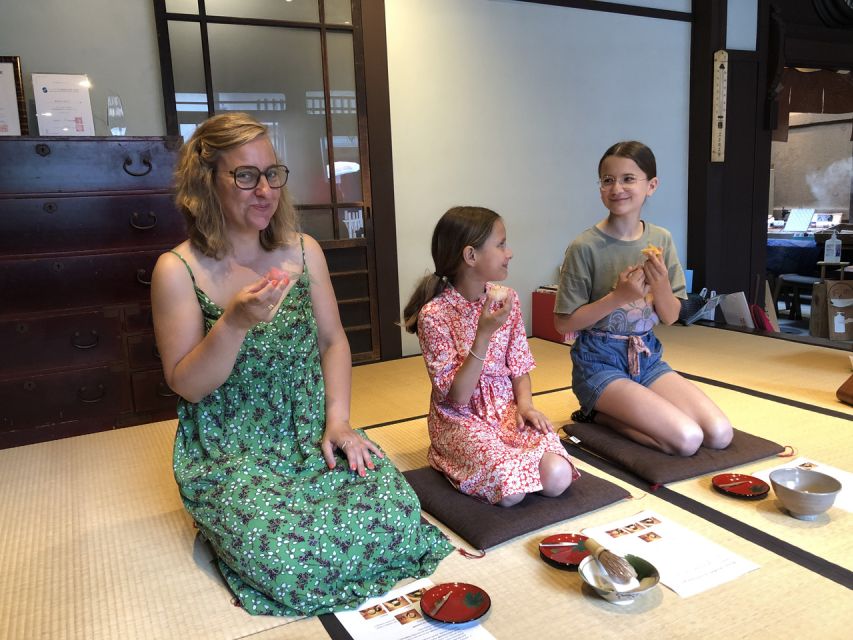
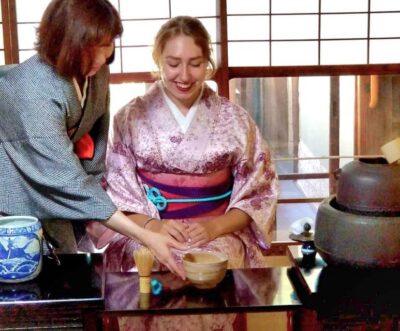
After watching the demonstration, you take your turn. The host shows you how to use the bowl and bamboo whisk, then gives you time to prepare your own matcha. You are not left to copy a fast performance from across the room. The small group allows the teacher to offer individual help.
That hands-on step is the heart of the activity. Watching a tea ceremony can be beautiful, but whisking the tea yourself gives you a physical memory of the process. You notice how much control is needed, how the powder blends with the water, and how the simple tools shape the result.
The utensils are authentic, handcrafted pieces made by Japanese artisans. This does not turn the class into a shopping demonstration. Instead, it gives you a chance to handle objects designed for the ceremony and understand why the bowl, whisk, and other tools matter.
Your finished cup is served with a traditional Japanese sweet. The sweet provides a gentle contrast to matcha’s bitter, grassy taste and is part of the way tea is enjoyed. One cup of matcha and the sweet are included in the $45 price. There are no free refills, so book this for the cultural lesson and the ritual, not for a large serving of tea.
Some people will find the preparation soothing. Others will mainly enjoy the practical skill and the chance to ask questions. Both are valid reasons to book it. The tone is relaxed and welcoming, but the tea is still treated with respect.
What the 45 minutes really gives you
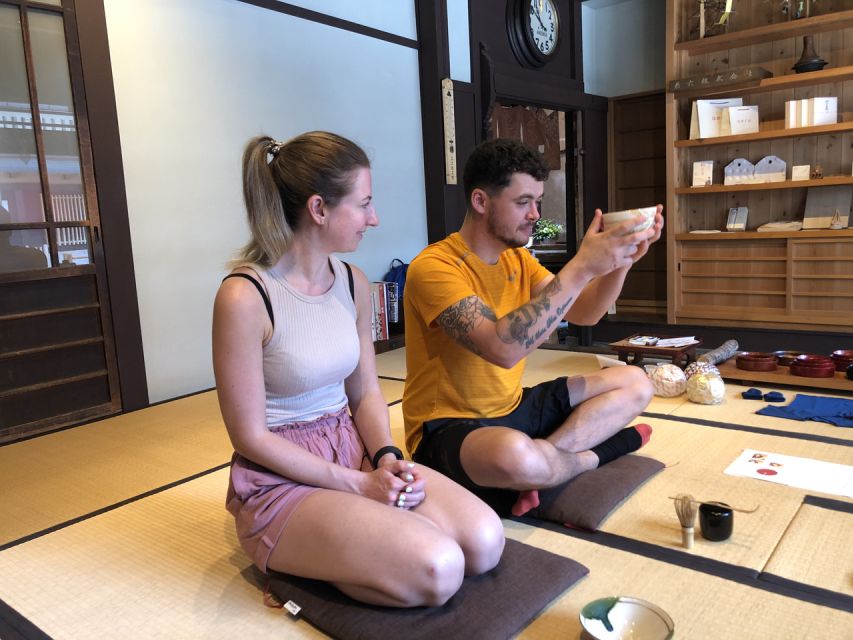
Forty-five minutes is a smart length for this type of activity. It fits neatly into a day of sightseeing and gives you enough time to see the demonstration, hear the cultural background, prepare matcha, and enjoy the sweet without taking over your schedule.
The tradeoff is that the experience cannot cover everything. You will not receive a full history of every tea school, a complete lesson in Japanese aesthetics, or a long formal gathering. If you already have serious tea ceremony training, you may want a more specialized program.
For a first encounter, though, the short format works well. You get a clear structure and a satisfying finish. Several sessions have also worked well for children, including ages eight and ten, and for teenagers. A patient host can make the activity accessible to families, although one past booking noted that a particularly restless toddler required extra attention. The room is peaceful, so it is best for children who can take part quietly for short periods.
Solo visitors should also feel comfortable booking. You may share the room with people from different countries, and the small format gives you a natural way to meet them without turning the class into a large social event.
Other tea rooms and ceremonies in Kyoto:
- Kyoto: Table-Style Tea Ceremony at a Kyo-Machiya
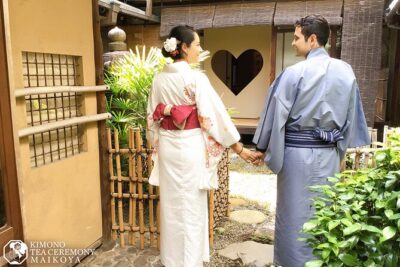
★ 4.9 · 1,211 reviews - Kimono Tea Ceremony at Kyoto Maikoya, NISHIKI
★ 5.0 · 911 reviews - Kyoto: Arashiyama Bamboo Forest, Monkeys, Matcha & Temple Tour
★ 5.0 · 759 reviews - Kyoto: Tea Museum Tickets and Matcha Grinding Experience
★ 4.9 · 739 reviews
Why the small group changes the experience
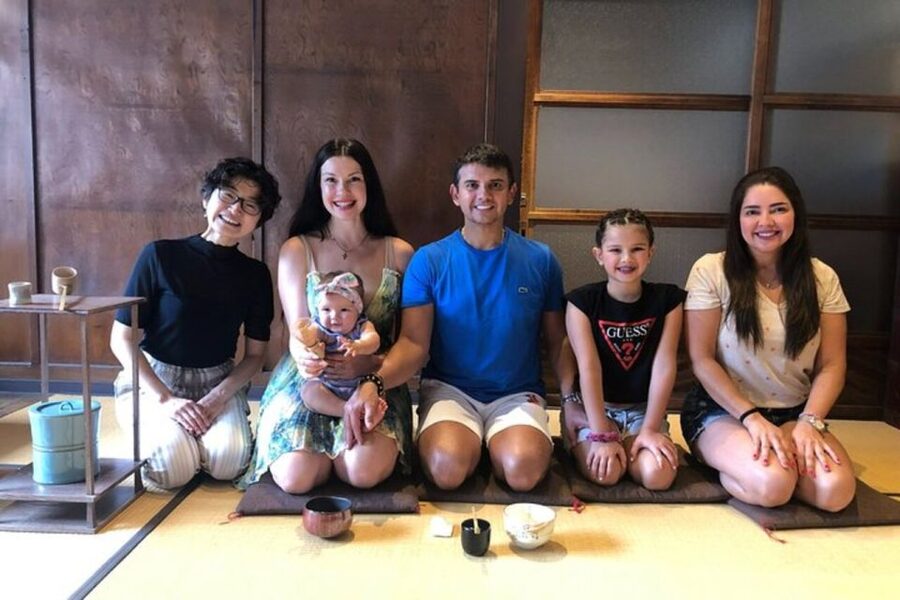
A group capped at 10 people is one of the strongest features here. Tea ceremony depends on seeing small movements, and a packed room would make that harder. With fewer people, you can watch the teacher’s hands and hear the explanation without fighting for space.
The small size also leaves room for questions. You can ask about the meaning of a gesture, the taste of the tea, or how the ceremony fits into Japanese life. The hosts do not treat questions as interruptions. Conversation is part of the teaching.
This format is especially useful if you are new to Japanese customs. The ceremony has rules, but the teacher explains them in a way that helps you participate instead of making you worry about mistakes. You can learn how to behave as a guest while also having a turn as host.
The atmosphere is informal enough for families and newcomers, but not so casual that the ceremony loses its shape. That balance is difficult to get right. Here, the demonstration retains its quiet, careful quality, while the workshop keeps you involved.
The matcha, sweets, and handmade utensils
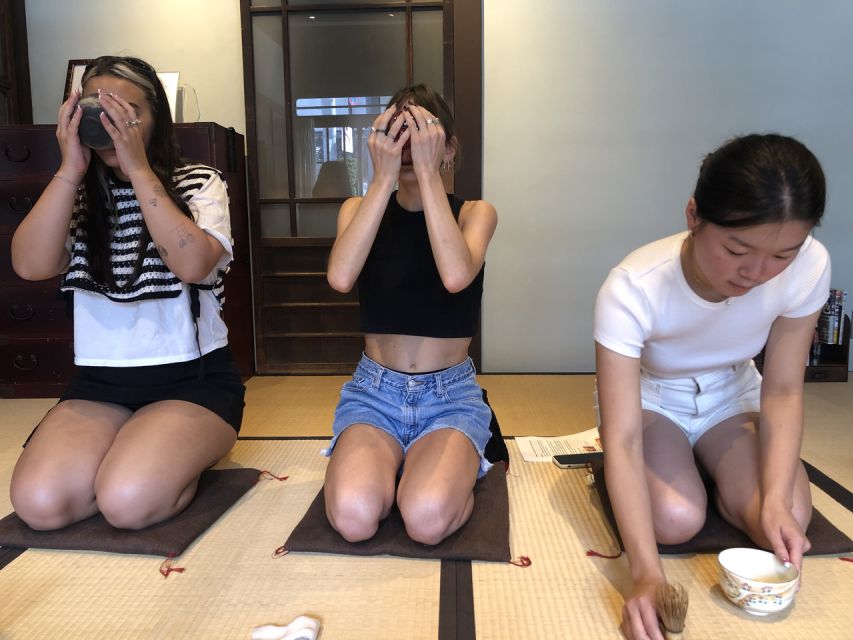
The tea itself is a small serving, but quality matters more than quantity in this setting. You prepare and drink one bowl, then taste it with the Japanese sweet. The combination gives you a straightforward introduction to matcha as part of a ceremony rather than as a trendy café drink.
The utensils add another useful layer. Handcrafted tea tools are made to be held and used, not just displayed. When you handle them under instruction, you begin to see how Japanese craft connects with daily rituals. The bowl and whisk are not random props selected for a tourist activity.
At the end, you can browse Japanese crafts and purchase items to take home. This is optional, and the activity does not require you to buy anything. Still, it can be a better souvenir choice than a generic matcha product because the objects connect directly with what you learned.
Keep your expectations realistic. The included souvenir is the memory of the ceremony, not a free tea set. Any items available for purchase are separate from the $45 booking price.
Price, timing, and practical value
At $45 per person, this is fairly priced for a small-group cultural activity in central Kyoto. The fee includes the tea ceremony, one bowl of matcha, and a traditional sweet. You are also paying for an English-speaking instructor, access to a historic townhouse, use of artisan-made tools, and hands-on guidance.
I would compare it with the cost of a standard sightseeing stop. A temple visit may cost less, but it usually gives you a place to look around rather than a person to teach you a skill. Here, you leave with a basic understanding of how matcha is made and how the tea gathering works.
The activity is easy to place between other central Kyoto plans because it lasts less than an hour. You arrange your own transport, and hotel pickup and drop-off are not included. The meeting point is in the city center, but follow the directions carefully because townhouse entrances can be easy to miss.
The booking terms are useful if your schedule may change. You can cancel up to 24 hours before the activity for a full refund, and the reserve-now, pay-later option lets you hold a place without paying immediately. Wheelchair access is available.
Avoid perfume or cologne. Matcha has a delicate aroma, and the request is meant to protect the experience for everyone in the room. Food and drinks are not allowed, and bikes should not be brought inside.
Who should book this tea ceremony
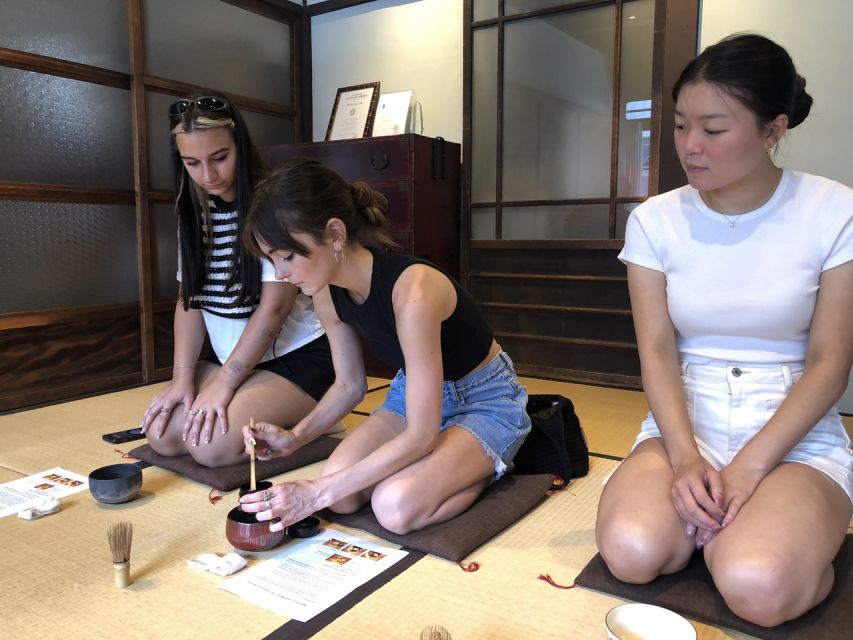
I would recommend this experience to first-time visitors who want more than a photograph of a tea room. It gives you enough context to understand what you are seeing and enough participation to make the memory personal.
It suits people who enjoy craft, food culture, Japanese customs, and quiet activities. It is also a good choice for solo visitors, couples, families with older children, and anyone who wants a break from Kyoto’s crowded streets.
You should think twice if you want to wear a kimono, have your hair styled, or take part in a longer formal ceremony. Those services are not included. You should also choose another activity if your main goal is a large meal or several cups of tea.
The workshop works best when you arrive ready to slow down. Leave the shopping bags and strong fragrance behind, listen to the explanation, and give yourself permission to make an imperfect bowl. The point is not to perform like a tea master after one lesson. The point is to understand the care behind the ritual.
Should you book it?
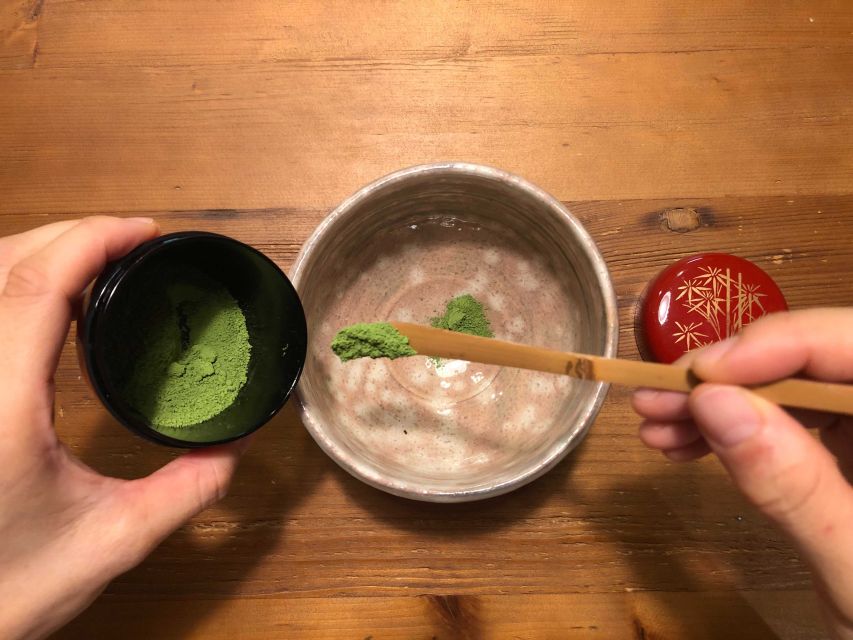
Yes, if you want a compact and personal introduction to Kyoto’s tea culture. The combination of a 100-year-old townhouse, an English-speaking Omotesenke-trained host, artisan utensils, one prepared bowl of matcha, and a traditional sweet offers strong value at $45.
Book it early if you want a particular time, especially for a family or a small private-feeling group. Choose it over a kimono package if learning matters more to you than dressing up. Choose it over a longer ceremony only if you are happy with a clear, hands-on introduction rather than an extended formal ritual.
The biggest reason to book is simple: you do not just watch the ceremony. You learn enough to prepare matcha yourself and understand why the quiet movements matter.
FAQ
How long does the tea ceremony experience last?
The experience lasts 45 minutes. It includes the demonstration, cultural explanation, hands-on matcha preparation, and time to enjoy the tea with a traditional Japanese sweet.
Is the activity taught in English?
Yes. The instructor language is English, and the tea masters explain the ceremony, answer questions, and guide you through making your own matcha.
How many people can join the group?
The activity is limited to 10 participants. The small group allows more direct guidance during the matcha-making portion.
Is kimono rental included?
No. Kimono rental and hair setting are not included in the experience.
What is included in the $45 price?
The price includes the tea ceremony experience, one cup of matcha, and traditional Japanese sweets.
Can I cancel the booking?
You can cancel up to 24 hours in advance for a full refund. A reserve-now, pay-later option is also available.
More meditation sessions in Kyoto
- Kyoto Zen Meditation & Garden Tour at a Zen Temple with Lunch
★ 5.0 · 441 reviews - Kyoto: Zen Experience in a Hidden Temple
★ 5.0 · 437 reviews - Tokyo: Zen Meditation at a Private Temple with a Monk
★ 5.0 · 510 reviews - Miyajima: Cultural Experience in Zen Temple
★ 5.0 · 258 reviews
Just added in Kyoto
- Kyoto: Private Photoshoot Service★ 5.0 · 158 reviews
- Kyoto Rickshaw Tour★ 5.0 · 210 reviews
- Izakaya Style Cooking Class★ 5.0 · 219 reviews
- Ninja 2-hour Hands-on Lesson by Japanese master in Kyoto -Medium★ 5.0 · 218 reviews
- Kyoto: Traditional Concert at Townhouse or Bathhouse★ 4.9 · 224 reviews
- Kyoto: Arashiyama Bamboo, Temple, Matcha, Monkeys & secret spots★ 5.0 · 219 reviews
- Kyoto Geisha District Walking Tour in Gion★ 5.0 · 232 reviews
- The right way to know Kyoto★ 5.0 · 257 reviews
Tea Ceremony Experiences, compared.
Tea Ceremony in a Traditional Tea House in Kiyomizu
Read our review →
World Heritage Kyoto & Nara Uji Authentic Matcha Experience
Read our review →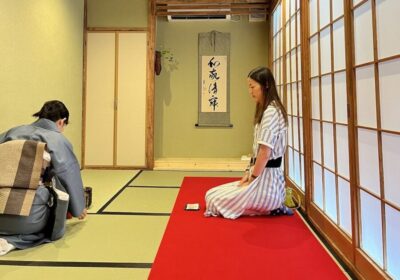
Arashiyama Bamboo Forest, Monkeys, Matcha & Temple Tour
Read our review →Browse the lists this tour appears in