Reviewed · TEA CEREMONY EXPERIENCES
KYOTO Tea Ceremony with kimono near by Imamiya Jinjya Shrine
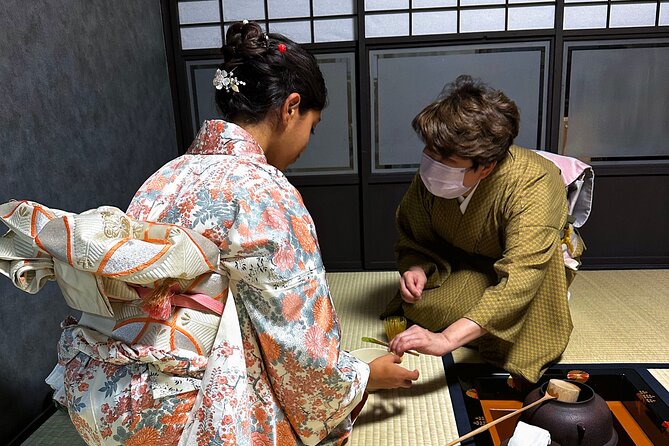
The heart of this Kyoto experience is the careful transformation from everyday visitor to kimono-wearing tea student. You choose a kimono, receive help with the layered dressing and hair styling, pose for photos, then sit with a tea master who demonstrates the ceremony and teaches you to prepare matcha.
I like the hands-on format, since you do more than watch. You learn how to hold and serve the tea, and you taste it with a seasonal sweet. I also like the small-group setting, capped at 12 people, and the connection to a tea room used for three generations.
The main consideration is time. Ninety minutes passes quickly, and the kimono dressing can take a good part of the session. The meeting point is near Daitokuji and Imamiya Shrine rather than central Gion, so allow time to reach northern Kyoto.
Key points to know before booking
- Choose from Nishijin kimonos: You select a color and pattern from a collection associated with Kyoto’s traditional textile district.
- Hair styling is included: The staff helps arrange your hair before dressing you in the kimono.
- A tea master leads the ceremony: The instructor has studied tea ceremony for 30 years.
- You prepare your own tea: After watching the demonstration, you get a chance to make matcha yourself.
- Photos are part of the experience: Staff help you pose and take pictures while you are dressed.
- The setting is near Daitokuji: The tea room has been used for three generations and sits in an area tied to Kyoto tea culture.
From ordinary clothes to a Kyoto kimono
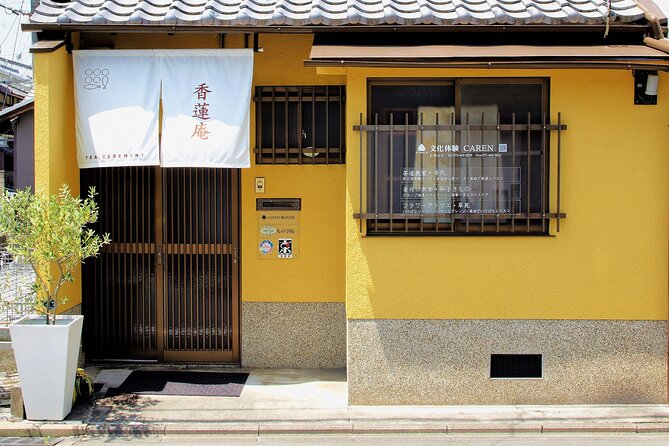
The session begins at Tea Ceremony Caren, at 74-4 Murasakino Daitokujicho in Kyoto’s Kita Ward. The location is near Daitokuji Temple and Imamiya Jinjya Shrine, in a quieter northern part of the city than the busy lanes around Gion.
You first choose a kimono by color and pattern. This is a pleasant part of the experience, but it is also one reason to arrive ready to make a decision. The selection process moves quickly, and the staff have an efficient system for fitting each person.
The dressing itself is not a simple matter of putting on one robe. You are helped into several layers, with the fabric arranged and secured so the finished outfit sits correctly. That detail matters. It gives you a better sense of why a kimono is a formal garment, not merely a costume for photographs.
The staff dress both men and women, and hair styling is included for women. The process may feel busy when several people arrive at once, so arriving a little early is sensible if the schedule allows. You will be more comfortable if you wear simple clothing underneath and avoid bringing bulky items.
The finished look includes the kimono and accompanying accessories. The exact choice depends on the collection available that day, but the experience is built around letting you select a color and pattern that suits you.
Other kimono experiences in Kyoto people book:
- Kimono Tea Ceremony at Kyoto Maikoya, NISHIKI
★ 5.0 · 911 reviews - Kyoto: Kimono Rental with Hairstyling and Accessories
★ 4.8 · 653 reviews - Kyoto: Kimono Tea Ceremony at Orizuruya Gion
★ 4.9 · 618 reviews
Photos before the tea begins
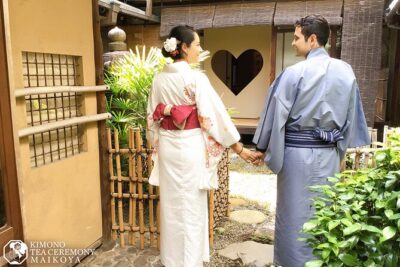
Once dressed, you have a short photo session. Staff help with poses and take pictures, giving you a chance to enjoy the outfit before sitting for the ceremony.
I see this as more than a quick souvenir stop. The clothing is carefully arranged, and the staff take time to make sure you look comfortable. If you are traveling with family or friends, this is a useful moment for group photos. Solo participants are included as well, and the staff can help create individual portraits.
Do not expect a long professional photography session with a separate photographer and a large collection of edited images. The information provided describes a simple photo shoot and staff assistance with pictures. That is enough for memorable snapshots, but you should still keep your expectations practical.
The photo portion also helps explain why this experience appeals to people who are curious about Japanese clothing as much as tea. You get to see the details of the outfit, sit in it, and learn how its presentation affects the ceremony.
A tea room with three generations of use
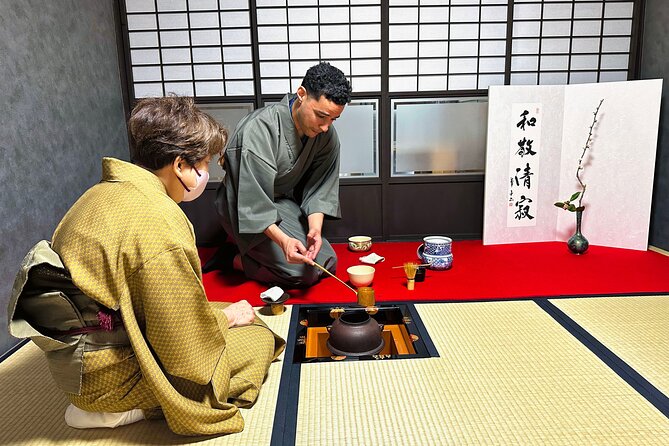
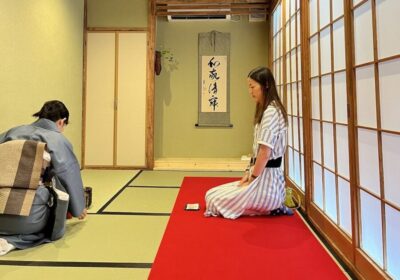
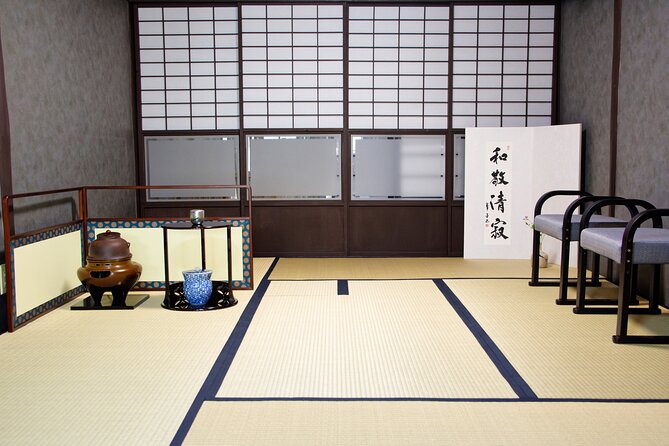
After dressing and taking photos, you move to the tea room. The room has been used for three generations, and its age is part of the setting. It is described as a little old, so do not book this expecting a polished modern studio.
That modest quality may actually suit the activity. Japanese tea ceremony is tied to simplicity, restraint, and attention to small actions. A room with a long working history can make the demonstration feel less like a stage show and more like a cultural lesson held in a real place.
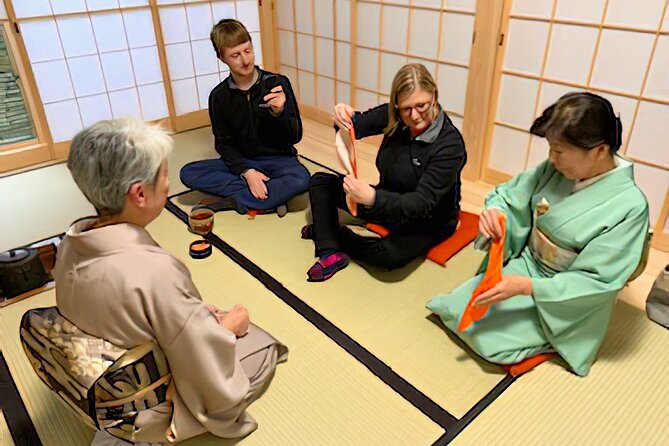
The exact arrangement can vary, but the group size is limited to 12 people. That is large enough to meet other people from around the world, yet small enough for the instructor and assistants to guide participants through the steps.
The ceremony is conducted in Japanese with interpretation and explanation for international visitors. One interpreter mentioned in the experience is Akira, who also helps with photos and explains details such as the history and use of the tea ceremony fan. Staff members also answer questions and help you follow the actions.
Watching the tea master work
The tea master begins by showing the traditional procedure. The ceremony is built around controlled movements, careful placement, and respectful manners. You learn that preparing tea is not simply a matter of whisking powder into hot water.
The instructor has studied tea ceremony for 30 years. That length of practice is important because many of the ceremony’s meanings are carried through small gestures that can be easy to miss if you only watch a short demonstration.
You receive an explanation of the ceremony’s history and etiquette as the demonstration unfolds. The guide also discusses manners, so you understand why the tea and sweets are approached in a particular way.
This is the part that gives the activity substance. The kimono and photographs are appealing, but the ceremony provides the cultural context. You learn how the clothing, room, seasonal sweet, tea bowl, fan, and movements fit together.
The tone is intended to be welcoming rather than intimidating. You are not expected to perform every detail perfectly on your first attempt. The aim is to let you try the actions with guidance and appreciate the care behind them.
Other tea ceremonies in Kyoto people book:
- Kyoto: Tea Ceremony in a Traditional Tea House in Kiyomizu
★ 4.9 · 3,519 reviews - Kyoto: Tea Ceremony Ju-An at Jotokuji Temple
★ 4.9 · 3,207 reviews - Kyoto: 45-Minute Tea Ceremony Lesson Experience
★ 4.3 · 2,378 reviews - Kyoto: Table-Style Tea Ceremony at a Kyo-Machiya
★ 4.9 · 1,211 reviews
Matcha, seasonal sweets, and your turn to serve
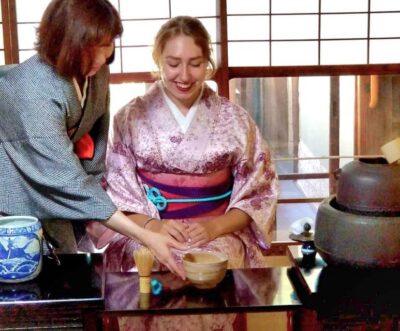
After the demonstration, you are served a cup of Japanese tea with a seasonal sweet. The sweet is not just a snack. In the tea ceremony tradition, it balances the bitterness of matcha and forms part of the order of the experience.
You then have an opportunity to prepare tea yourself. Depending on the group arrangement, you may make a cup for another participant. This hands-on part is one of the best reasons to choose this experience over a demonstration where you only sit and watch.
The movements may feel awkward at first, especially while wearing a kimono. That is normal. The clothing restricts your stride and posture, which gives you a practical sense of how formal movement works with traditional dress.
The instructors and assistants guide you through the process and encourage you as you work. A solo participant is not left out, and the format allows individuals as well as couples and families to take part.
Expect matcha to taste distinctly bitter and grassy if you have not had it before. The seasonal sweet helps, but this is not a dessert tasting. The focus is the ritual and preparation, not a large amount of food or drink.
Why the Daitokuji area matters
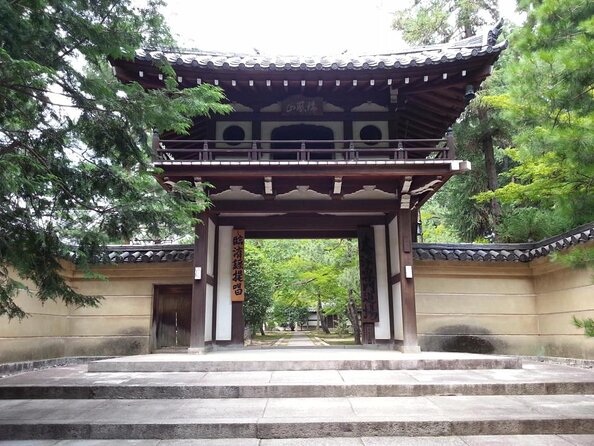
The meeting point is in Murasakino, near Daitokuji Temple and Imamiya Jinjya Shrine. The area is useful for a day of northern Kyoto sightseeing, especially if you want to pair the tea ceremony with temples and shrines nearby.
Daitokuji is described as a place deeply connected to Japanese tea culture. That setting adds meaning to the session. You are not simply attending a generic cultural class in a hotel room far from Kyoto’s traditional districts.
The exact activity ends back at the meeting point. One version of the experience includes a walk to a temple before the ceremony, but you should confirm the day’s arrangement if that detail matters to you. The core program is the kimono dressing, photos, tea demonstration, explanation, tasting, and hands-on preparation.
Because the location is outside the most central sightseeing zone, check your route carefully before setting out. Public transportation is nearby, but private transportation is not included. Plan your arrival around the meeting time rather than assuming you can reach the address quickly from central Kyoto.
Is $99.49 a fair price?
At $99.49 per person, this is not the cheapest way to wear a kimono or taste matcha in Kyoto. The value depends on how many parts of the experience you would otherwise book separately.
The price includes help choosing and putting on an authentic kimono, hair styling, a photo session, instruction from a professional tea master, tea, a seasonal sweet, interpretation, and a chance to prepare your own cup. It also gives you a structured cultural activity lasting about 90 minutes.
If your main goal is a quick kimono rental for street photos, a lower-cost option may suit you better. If you mainly want to drink matcha, you can find simpler tea experiences. This package makes more sense if you want the clothing, ceremony, explanation, photographs, and hands-on practice in one appointment.
The current rating is 5 out of 5 from 343 ratings, with 99 percent recommending the experience. Those numbers suggest strong satisfaction, but the practical value still depends on your interests. You are paying for personal assistance and instruction, not just a cup of tea.
For families, the price can be easier to justify because everyone can take part. Children and teenagers can enjoy the dressing and photographs, while older relatives may appreciate the slower cultural focus. A family member who has long wanted to attend a traditional tea ceremony may find the combination especially meaningful.
The practical parts that affect your visit
The activity lasts about one hour and 30 minutes. That sounds generous until you account for choosing a kimono, hair styling, dressing, photographs, the demonstration, explanations, tea, and your own turn at preparation.
You should avoid scheduling another fixed activity immediately afterward. The dressing stage can become hectic if the whole group arrives at once, and you will enjoy the ceremony more if you are not watching the clock.
The group limit is 12 people. This is not a private lesson, but it is also not a large bus-group performance. You may share the room with other couples, families, or solo participants, which can make the practical tea-making part more social.
The experience is near public transportation, but private transportation is not provided. The address is in Kyoto’s Kita Ward, so it is important to distinguish this from activities based around Gion, Kyoto Station, or Arashiyama.
Mobile tickets make entry simple. Confirmation is provided at booking, and the activity ends at the same meeting point where it begins.
Free cancellation is available up to 24 hours before the start time for a full refund. Changes or cancellations within 24 hours are not accepted for a refund. The activity can also be affected by poor weather or by not reaching its minimum number of participants. In those cases, you are offered another date or experience, or a full refund.
Who will enjoy this most?
I would recommend this for first-time visitors who want a guided introduction to two recognizable parts of Japanese culture: kimono and tea ceremony. It works especially well if you want an activity that is more structured than visiting a temple alone.
It suits couples, families, groups of friends, and solo visitors. The staff help with photos, and solo participants still have the chance to prepare tea rather than simply watching everyone else.
It is also a good pick for anyone who wants cultural context. The guide explains the history and etiquette instead of asking you to copy movements without understanding them.
You may want to choose something else if you dislike formal clothing, seated ceremonies, staged photographs, or unfamiliar tea flavors. The kimono dressing is layered and hands-on, and the ceremony asks you to slow down and follow a set sequence.
The experience is also less suitable if your schedule is packed with distant sightseeing stops. The northern Kyoto location and 90-minute duration make it best as part of a planned day near Daitokuji and Imamiya Shrine.
Should you book the kimono tea ceremony?
I would book this if you want more than a costume photograph. The strongest part is the combination of careful dressing, a real tea demonstration, historical explanation, seasonal sweets, and a chance to make tea yourself.
The staff attention is a major benefit. Hair styling, kimono fitting, posing help, interpretation, and guidance during the ceremony remove much of the uncertainty for first-time participants. The 30-year experience of the tea master also gives the demonstration weight.
Book it with realistic expectations. The tea room is old, the group is shared, and the session is compact. You are not receiving a private, full-day study of tea ceremony.
For about $99.49, I think the package offers good value if you would otherwise pay separately for kimono rental, styling, photographs, and a tea lesson. It is one of the better choices for a family or couple seeking a memorable cultural appointment in northern Kyoto.
FAQ
How long does the Kyoto kimono tea ceremony last?
The experience lasts approximately one hour and 30 minutes.
Where does the activity begin and end?
It begins and ends at Tea Ceremony Caren, located at 74-4 Murasakino Daitokujicho, Kita Ward, Kyoto, 603-8231, Japan.
Is hair styling included?
Yes. Staff help set your hair before putting on the kimono.
Can I choose my own kimono?
Yes. You choose a kimono by color and pattern from the available Nishijin collection.
Do I get to prepare tea myself?
Yes. After watching the tea master’s demonstration and learning about tea ceremony etiquette, you have the opportunity to prepare your own tea.
What is the cancellation policy?
You can cancel at least 24 hours before the start time for a full refund. Cancellations or changes made less than 24 hours before the activity are not refunded or accepted.
More kimono experiences elsewhere in Japan
- Kyoto: Kimono and Tea Ceremony Experience at Cultural Asset
★ 4.3 · 306 reviews - Kyoto: Traditional Kimono Rental
★ 4.7 · 265 reviews - Kyoto: Kimono Tea Ceremony with Matcha and Sweet
★ 4.9 · 249 reviews - Osaka: Sumo Show & Experience w/ Optional Kimono & Hot Pot
★ 4.5 · 609 reviews
More temples and shrines in Kyoto
- Arashiyama Bamboo, Temple, Monkeys, or Secret Sake Brewery
★ 4.8 · 886 reviews - Kyoto: Arashiyama Bamboo Forest, Monkeys, Matcha & Temple Tour
★ 5.0 · 759 reviews - Osaka/Kyoto: Arashiyama, Nara & Fushimi Inari Shrine w/Lunch
★ 4.4 · 754 reviews - Kyoto: Ninnaji Temple Entry Ticket
★ 4.2 · 650 reviews
Just added in Kyoto
- Kyoto: Private Photoshoot Service★ 5.0 · 158 reviews
- Kyoto Rickshaw Tour★ 5.0 · 210 reviews
- Kyoto: Traditional Concert at Townhouse or Bathhouse★ 4.9 · 224 reviews
- Ninja 2-hour Hands-on Lesson by Japanese master in Kyoto -Medium★ 5.0 · 218 reviews
- Kyoto: Arashiyama Bamboo, Temple, Matcha, Monkeys & secret spots★ 5.0 · 219 reviews
- Izakaya Style Cooking Class★ 5.0 · 219 reviews
- Kyoto: Gion & Pontocho Food Tour with 13 Dishes★ 4.9 · 235 reviews
- Kyoto: Afternoon Japanese Izakaya Cooking Class★ 4.9 · 241 reviews
Tea Ceremony Experiences, compared.
Tea Ceremony in a Traditional Tea House in Kiyomizu
Read our review →
World Heritage Kyoto & Nara Uji Authentic Matcha Experience
Read our review →