
Reviewed · GEISHA & GION DISTRICT TOURS
Private Walking Tour in Gion and Higashiyama
Kyoto’s Gion and Higashiyama districts are easy to wander, but far harder to understand as you go. A narrow lane may lead to a teahouse, temple, or old shop, yet without context, you can walk past the meaning. This three-hour private walk gives you a local guide, a clear route, and a useful introduction to geisha culture, Zen Buddhism, and everyday Japanese customs.
I like two things right away: you get the guide’s full attention, and the route links several of Kyoto’s best-known sights without asking you to plan the day yourself. Dominic, one guide associated with this experience, is described as friendly, well-informed, and generous with local insight. The main consideration is price: at $144.88 per person, it makes the most sense for a small group that values personal attention and shared costs.
Key points to know before booking
- Gion comes first: Begin near the Izumo-no-Okuni statue and learn how Kyoto’s geisha districts developed.
- Kennin-ji adds historical depth: Spend about 30 minutes at one of Kyoto’s oldest Zen temples.
- The walk connects famous streets: Hokan-ji, Yasaka Pagoda, and Ninenzaka bring traditional Higashiyama close to eye level.
- You finish at Yasaka Shrine: The route ends near the shrine’s south gate, about seven minutes from the starting area.
- It is truly private: Only your group participates, so questions and pacing are easier to manage.
- The schedule is compact: Expect about three hours, with walking between stops and short visits at several sights.
Starting in Gion, where Kyoto’s old world still feels close

The meeting point is by the Statue of Izumo-no-Okuni in Kawabatacho, in Kyoto’s Higashiyama Ward. This is a practical starting place for a walk into Gion, and the tour finishes near Yasaka Shrine rather than returning you to the exact same spot.
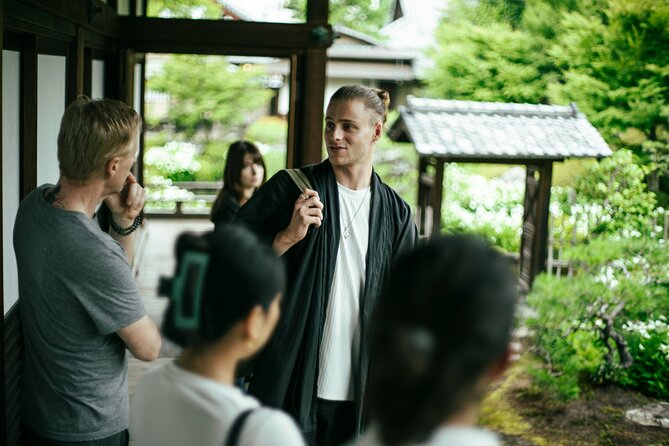
Your first hour focuses on Gion and the world of geisha. The useful part here is not simply spotting traditional buildings. A guide can explain the customs, social role, and traditions connected with geisha culture, helping you see why the district is more than a photogenic collection of wooden facades.
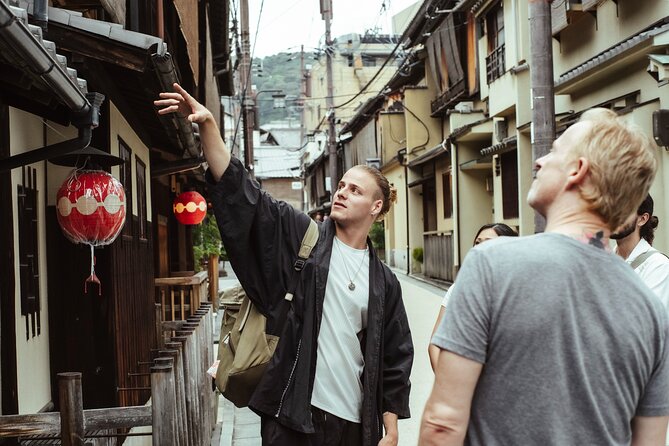
Gion is also a place where good manners matter. You are walking through a working neighborhood, not a stage set. A private guide can help you keep the experience respectful while explaining what you are seeing. That personal setting is especially helpful if you have questions about geisha, teahouses, or Japanese traditions that might feel awkward to ask in a large group.
The route is described as a shortcut to the main sights, but do not read that as a rushed sightseeing dash. The tour allows about an hour for Gion, then moves through several compact stops. You will still want comfortable shoes, since the experience is on foot and includes historic streets with uneven surfaces.
Other walking tours in Kyoto people book:
- Kyoto Geisha Walking Tour: Gion District & Hidden Gems
★ 4.7 · 3,273 reviews - Kyoto: Gion Magical Night Walking Tour with Geisha Trivia
★ 4.9 · 2,393 reviews - Kyoto: Gion Geisha District Walking Tour – Stories of Geisha
★ 4.7 · 2,187 reviews
Kennin-ji and Kyoto’s Zen tradition
Kennin-ji receives about 30 minutes. It is one of Kyoto’s oldest Zen temples, and this stop shifts the focus from Gion’s entertainment culture to Buddhism and Japanese spiritual life.
I like this contrast. The tour does not treat Higashiyama as one single old-town postcard. Instead, it places different parts of Kyoto beside each other: geisha culture, temple practice, traditional streets, seasonal scenery, and shrine customs.
At Kennin-ji, your guide explains the origins of Buddhism and its influence on Japanese culture. Thirty minutes is enough for an introduction, but not a full study of the temple. If you are passionate about temple architecture, Zen art, or religious history, you may wish you had more time here.
Still, the short visit works well in a first look at Kyoto. You get context before moving on, and the private format lets you ask for clarification instead of simply following a guide’s speech. That matters when religious terms or temple customs are unfamiliar.
Hokan-ji and the famous Yasaka Pagoda
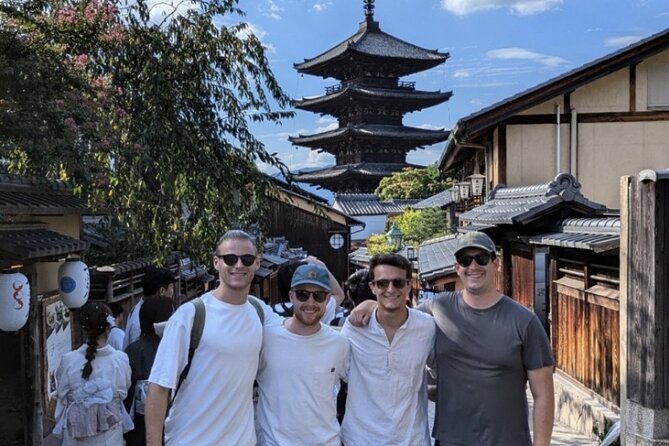
The next stop is Hokan-ji Temple, better known in this setting for its five-story Yasaka Pagoda. The visit is planned for about 20 minutes, followed by time around the old streets of Higashiyama.
This part of Kyoto is among the most recognizable sections of the walk. Narrow lanes, traditional shops, cafes, and teahouses create the classic old-Kyoto setting. Hokan-ji gives you a strong visual marker, while the surrounding streets provide the slower, more atmospheric part of the visit.
The tradeoff is space. Popular historic streets can feel tight, especially around well-known photo spots. The tour’s private format will not make the lanes wider, but it can make navigation simpler because you are not trying to keep track of a large group.
You should also note the wording of the stop. The tour includes a visit to the temple area and the old town around it, but the supplied details do not promise extensive interior access or a long temple visit. Think of this as a focused look at one of Higashiyama’s signature scenes, with useful explanation around it.
Walking Ninenzaka instead of rushing through it
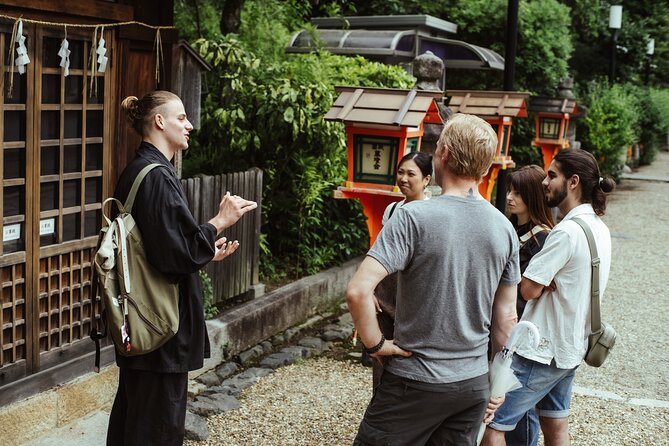
Ninenzaka Path is one of the most enjoyable links between the major sights. The route passes old shops, cafes, and teahouses, giving you a chance to see how the district blends daily commerce with preserved traditional streets.
This is where a guide’s navigation can save time. You can simply follow the route and pay attention to the buildings, shopfronts, and small details instead of constantly checking a map. The guide also helps connect the street to the larger story of Higashiyama.
I would treat Ninenzaka as part of the experience rather than a separate attraction to tick off. The supplied schedule does not assign a precise number of minutes to this section, so the pace may depend on the group and the guide. That is another advantage of a private tour: you can ask for a little more explanation or keep moving if you have already explored similar streets.
Do not expect a quiet, untouched village. Ninenzaka is a well-known historic route with shops and cafes. Its appeal comes from the architecture, setting, and continuity of the street, not from being undiscovered.
Other evenings in the old entertainment quarters of Kyoto:
- Best of Kyoto: Gion, Geisha, Pagodas & Cobblestones
★ 4.9 · 2,058 reviews - Night Walk in Gion: Kyoto’s Geisha District
★ 4.5 · 2,003 reviews - Kyoto Night Foodie Tour in Gion (9+ dishes + 6 Sake tastings)
★ 5.0 · 1,762 reviews - Kyoto Gion Geisha District Walking Tour – The Stories of Geisha
★ 5.0 · 1,441 reviews
Maruyama Park in just ten minutes
Maruyama Park receives about 10 minutes, making it the briefest scheduled stop. The park is known for cherry blossoms in spring and colorful momiji, or Japanese maple leaves, in fall. Temples surround the area, and the setting offers attractive views.
The short stop makes sense as a scenic pause between the old streets and Yasaka Shrine. In spring or autumn, the seasonal appeal may be especially strong. At other times of year, you should view this as a quick green break rather than a full park visit.
If seasonal scenery is your main goal, ten minutes may feel limited. The tour is designed to cover several major parts of Gion and Higashiyama, so Maruyama Park is one piece of a wider route, not the centerpiece. You get an introduction and a chance to enjoy the setting without spending a large part of the tour away from the main historic streets.
Yasaka Shrine and the final customs of the walk
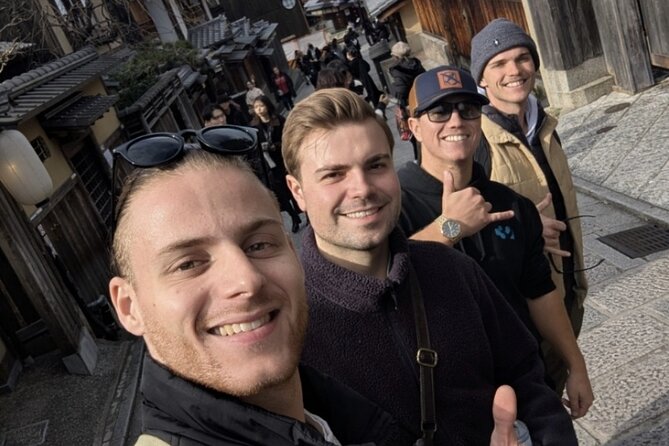
The walk ends at Yasaka Shrine, with about 30 minutes set aside for the visit. The shrine is known for its architecture, long cultural importance, and active traditional practices.
One detail that makes this stop useful is the chance to learn about omikuji, the fortune slips found at Japanese shrines. A guide can explain how this custom fits into a shrine visit, which is more helpful than simply watching people draw a paper fortune and moving on.
Yasaka Shrine is also a practical ending point. The tour finishes in front of the main gate on the south side, about a seven-minute walk from the starting area. You are not left at a remote edge of town, and the route ends close to one of Gion’s best-known landmarks.
The final 30 minutes give the tour a tidy finish: you begin with geisha culture, pass through Zen Buddhism and traditional streets, then finish with Shinto practice. That variety is one of the strongest reasons to choose this walk over a simple photo tour.
What the private format is worth
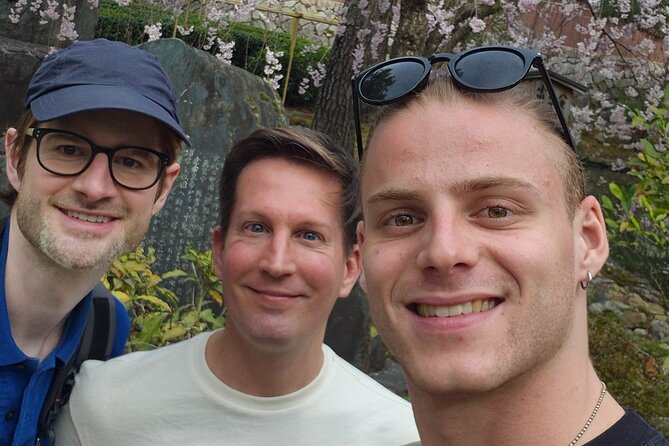
The price is $144.88 per person, with group discounts available. Since this is a private activity, only your own group takes part. That makes the cost easier to judge than a standard group tour because the value depends heavily on how many people share the booking.
For one person or a couple, the price is a serious expense for three hours. You are paying for a dedicated guide, route planning, navigation, and the ability to ask questions throughout the walk. The listed stops do not require a separate admission ticket as part of the experience, so the main cost is the guiding service rather than entry fees.
For a family or small group, the calculation improves, especially if a group discount applies. You also avoid the common problems of a large walk: waiting for people at every corner, losing the guide in a crowd, or having questions ignored because the schedule is tight.
The strongest praise connected with this experience focuses on the guide’s manner. Dominic is singled out as friendly, clear, and willing to add local insight. A perfect 5 rating from 15 reviews and a 100 percent recommendation rate are encouraging, though the sample is small. I would treat those numbers as a positive signal, not a guarantee that every guide or departure will feel identical.
Timing, walking, and practical details
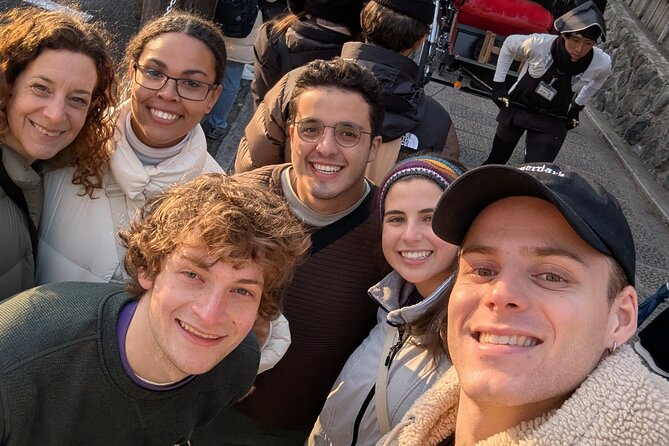
Plan on about three hours. The scheduled stop times add up to roughly two and a half hours, leaving room for walking between districts, transitions, and explanations along the route.
The route starts near the Izumo-no-Okuni statue and ends at Yasaka Shrine. Since the tour is not a loop, check your plans for afterward. The ending location is still close to the starting area, but you should not expect to be returned directly to the meeting point.
A mobile ticket is available, which is convenient for a phone-based booking. Confirmation normally arrives at booking, though reservations made within four hours of departure are confirmed as soon as possible and depend on availability.
Most people can participate, and service animals are allowed. The supplied details do not give a specific accessibility assessment for every street or temple area, so anyone concerned about mobility should ask the provider before booking. Historic Higashiyama includes narrow streets and a great deal of walking, so comfortable footwear is a sensible choice.
Free cancellation is available up to 24 hours before the start time. Cancellations made inside that window are not refunded, and changes are not accepted within 24 hours. Keep the local time in mind when making changes.
Who will get the most from this Kyoto walk
I would choose this tour if you are visiting Kyoto for the first time and want a clear introduction to Gion and Higashiyama without doing extensive preparation. It is also a good fit if you enjoy asking questions and prefer a conversation to a fixed speech.
Families and small groups should look closely at the group discount. The private format can make the walk easier to manage, especially when different people want different amounts of explanation.
This is less ideal if you want a slow photographic walk, long temple visits, or a full day focused only on Gion. The itinerary covers several areas, so the experience favors variety and context over extended time at one site.
You should also consider the price against your own travel style. If you are comfortable navigating Kyoto and already understand the major customs, you may prefer exploring independently. If you want a well-organized introduction with a guide who can answer questions as they arise, the additional cost is easier to justify.
Should you book the Gion and Higashiyama private tour?
Book it if you want personal guidance, cultural explanation, and a compact route through several of Kyoto’s best-known historic districts. The combination of Gion, Kennin-ji, Yasaka Pagoda, Ninenzaka, Maruyama Park, and Yasaka Shrine gives you a broad first look in about three hours.
I would especially consider it for a small group that can use the discount, or for anyone who wants the ease of having a guide handle the route. Dominic’s praised friendliness and local insight are a promising sign, but remember that the specific guide may depend on availability.
Skip it if your priority is low cost, a slow independent wander, or long visits inside individual temples. At $144.88 per person, this is not a bargain walk. It is a focused private introduction, and its value comes from the guide’s attention and the meaning added to places you could otherwise pass without understanding.
FAQ
How long does the private Gion and Higashiyama tour last?
The experience lasts approximately three hours.
Where does the tour begin?
It begins at the Statue of Izumo-no-Okuni in Kawabatacho, Higashiyama Ward, Kyoto.
Where does the tour end?
It ends at Yasaka Shrine, in front of the main gate on the south side. The ending point is about a seven-minute walk from the starting area.
Is this a private tour?
Yes. Only your group participates in the activity.
What places are included on the route?
The route includes Gion, Kennin-ji Temple, Hokan-ji Temple and Yasaka Pagoda, Ninenzaka Path, Maruyama Park, and Yasaka Shrine.
Does the tour discuss geisha culture?
Yes. The Gion portion includes information about geisha culture and Japanese traditions.
How much does the tour cost?
The listed price is $144.88 per person. Group discounts are available.
Are admission tickets included?
The scheduled stops are shown with no admission ticket required for the tour. The provided details do not list separate entry charges.
Can I cancel for a full refund?
Yes, if you cancel at least 24 hours before the experience start time. Cancellations made less than 24 hours before the start time are not refunded.
More walking tours elsewhere in Japan
- Nishiki Market Brunch Walking Tour (7 Tastings + Brunch)
★ 5.0 · 1,355 reviews - Kyoto Arashiyama Walking Tour: Bamboo, Monkeys, Gardens & Secrets
★ 5.0 · 1,216 reviews - Kyoto Gion: 2-Hour Geisha Culture & History Walking Tour
★ 5.0 · 1,186 reviews - Kyoto: Izakaya Bars Guided Walking Tour
★ 4.9 · 815 reviews
Just added in Kyoto
- Kyoto: Zen Meditation at a Private Temple with a Monk★ 5.0 · 25 reviews
- Private Cooking Class Udon in Kyoto Japan★ 5.0 · 23 reviews
- Your Private Vacation Photography Session In Kyoto★ 5.0 · 110 reviews
- Private Pewter Sake Cup Experience with a Kyoto Artisan★ 5.0 · 31 reviews
- Kyoto Wagashi(Japanese sweets) Cooking Class near Fushimiinari★ 5.0 · 60 reviews
- Kyoto:Family-Friendly Kimono & Yukata Experience at WARGO★ 5.0 · 147 reviews
- Private Guided Traditional Buddhist Cooking in Japan★ 5.0 · 16 reviews
- Kyoto: Gion Geisha District & Sake-in-Hand Walking Tour★ 5.0 · 37 reviews
Geisha & Gion District Tours, compared.

Kyoto Geisha Walking Tour: Gion District & Hidden Gems
Read our review →
Gion Geisha District Walking Tour – Stories of Geisha
Read our review →
Best of Kyoto: Gion, Geisha, Pagodas & Cobblestones
Read our review →
Kyoto Night Foodie Tour in Gion (9+ dishes + 6 Sake tastings)
Read our review →
Kyoto Gion: 2-Hour Geisha Culture & History Walking Tour
Read our review →
Chopsticks Making Workshop in Gion with Engraving Option
Read our review →
Browse the lists this tour appears in