
Reviewed · WAGYU & KAISEKI DINING
Wagyu & Sake Pairing in Shinjuku – Steak, Shabu-Shabu & More
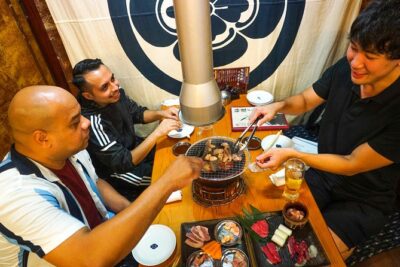
The clever part of this Shinjuku evening is that it treats wagyu and sake as a pair, not as two separate Japanese specialties. You move from beef tongue and tataki to sirloin, hotpot, udon, and dessert, with a different sake style or cocktail alongside each course. I like the generous range of preparations, and I like the small maximum of eight diners, which gives guides such as Joe, Chi, Andrea, Tadashi, and Miyuki room to explain things and answer questions.
I also like that you leave with useful food advice for the rest of your Japan trip, including help reading Japanese menus and choosing sake. The main caution is the compact setting: one four-star account found the dining area small and seating tight for six people, so this is better for social diners than anyone seeking a quiet, spacious restaurant meal.
Key points to know before booking
- A full wagyu progression: Expect several cuts and cooking styles, including grilled tongue, tataki, sirloin, hotpot, dashi udon, appetizers, and dessert.
- A sake match for each course: Pairings can include aged or fermented sake, warm sake, nigori, unpasteurized sake, and original sake cocktails.
- A small group of eight or fewer: The format encourages conversation and gives you direct time with the host.
- A hands-on meal: You may help prepare and cook some of the food rather than simply watch plates arrive.
- A 6 pm start in Shinjuku: The experience lasts about three hours and finishes back at Ushinobi Shinjuku.
- Strong value for serious food fans: The $148.65 price includes the full-course meal and sake pairings, but not extra drinks such as beer.
Why this meal is more than steak and drinks
Japan gives you plenty of ways to eat beef, but wagyu can be confusing at first. Menus may list a grade, a cut, a region, and a cooking method, while the word wagyu itself covers several Japanese cattle breeds and many levels of quality.
This evening gives you a framework. You learn what separates wagyu from ordinary beef, how grading relates to the meat, and why a fatty cut can taste different depending on how it is cooked. The explanations are practical because they arrive alongside the food. You are not sitting through a long classroom talk before dinner. You taste, compare, and then ask questions while the flavors are still fresh.
Sake receives the same treatment. The evening introduces different styles and serving methods, including warm sake, nigori, unpasteurized sake, and aged or fermented examples. Some pairings are original cocktails designed for the beef. That matters because sake is not one single flavor. It can be light, creamy, earthy, sweet, dry, warm, or surprisingly strong.
I especially like this approach for a first visit to Japan. You do not need to arrive with a trained palate. You only need curiosity and a healthy appetite.
Other tasting rooms and breweries in Tokyo:
- Ramen and Sushi Cooking Class with Sake Pairing Set in Tokyo
★ 5.0 · 291 reviews - Sake Tasting Masterclass in Shinjuku (8+ Varieties with a Pro)
★ 5.0 · 271 reviews - Sake Omakase in Tokyo: Guided Tasting by Certified Sommeliers
★ 5.0 · 239 reviews
Starting at Ushinobi Shinjuku at 6 pm
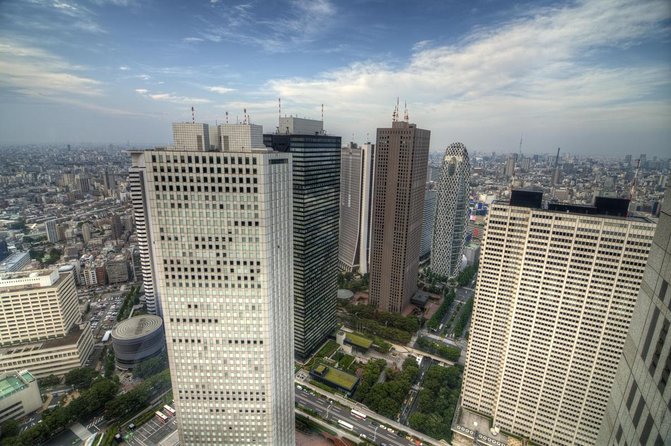
The meeting point is Ushinobi Shinjuku, inside the NSK Building at 201, 1-chōme-22-1 Hyakuninchō, Shinjuku City. The experience begins at 6 pm and returns to the same restaurant after roughly three hours.
The evening starts with Japanese drinks served as an aperitif while the host explains the basic connection between wagyu and sake. You hear about their regional differences, history, and place in Japanese food culture. This opening sets up the meal well because you learn what to notice before the first serious course arrives.
The restaurant is near public transportation, which helps with a fixed evening start. I would still plan enough time to find the building and restaurant without rushing. The meeting point is in Shinjuku City, an area where a few extra minutes for navigation can make the difference between arriving calm and arriving breathless.
The compact group is a real advantage here. With no more than eight people, a host such as Joe or Tadashi can explain a cut at the table instead of giving a speech to a large room. Several hosts have been praised for making the explanations easy to follow in English, and the personal style seems to vary by guide. Joe has been especially effective at mixing food instruction with relaxed conversation, while Chi has been described as engaging and warm.
The opening courses: beef tongue, tataki, and sake cocktails
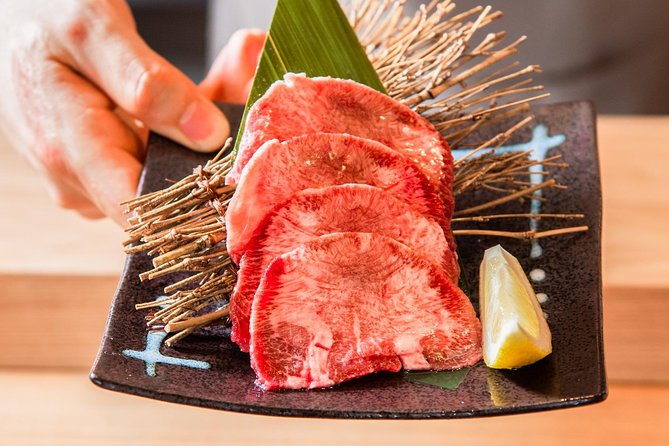
A sample menu begins with two appetizers, followed by grilled wagyu beef tongue paired with an original sake cocktail. Beef tongue can be a useful first course because its texture differs from the soft, marbled cuts many people expect from wagyu. Grilling gives it a savory edge, while the cocktail offers a less traditional way to meet sake.
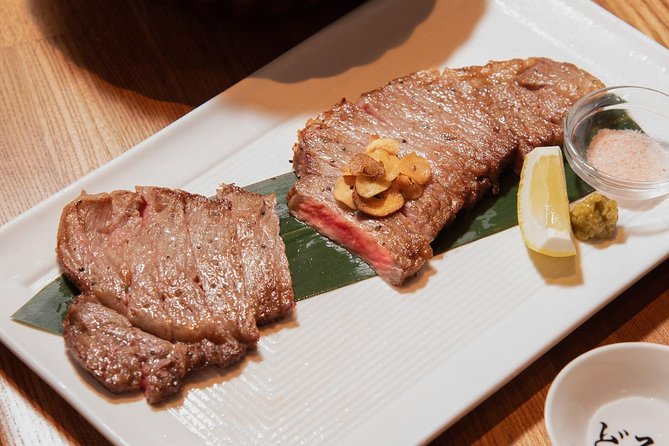
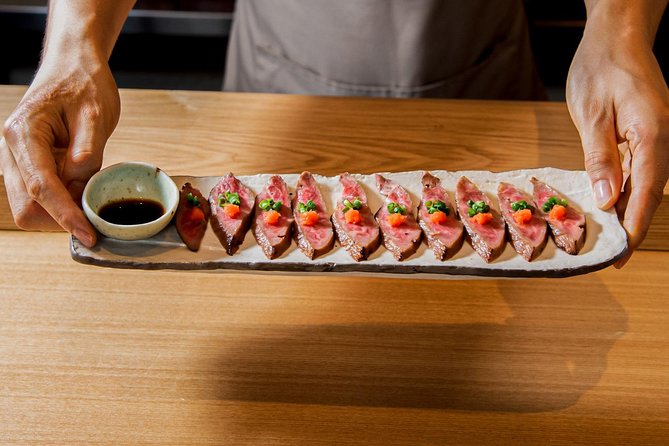
Next comes wagyu chuck flap tataki with warm sake. Tataki is usually lightly seared, leaving the center less cooked than the outer surface. Chuck flap has a different character from sirloin, so you get a useful comparison early in the meal.
The warm sake is not simply a heated version of whatever you have already tasted. Temperature changes aroma and mouthfeel, and it can make a pairing work in a different way. This is the sort of detail that helps you order more confidently later in Japan. You begin to understand that the right question is not just Do you have sake? but Which style suits this food?
A seasonal salad follows in the sample menu. It gives your palate a break from the richness of the beef. The exact ingredients are seasonal, so this course may change with the date of your visit.
Sirloin with nigori, then wagyu hotpot
The main steak course is wagyu sirloin served with nigori. Sirloin offers a familiar reference point, but wagyu changes the experience through its fat and tenderness. With nigori, an unfiltered or cloudy sake, the pairing takes a creamier route than the earlier warm pour.
This is also where the meal can begin to feel substantial. The portions have been described as generous, and you should arrive hungry. The experience is not a short tasting built around tiny bites. It is a full dinner with multiple beef courses, starch, and dessert.
The sample menu then moves to wagyu chuck hotpot with unpasteurized sake. Hotpot brings a different rhythm to the meal. Instead of receiving another steak, you encounter beef in a preparation that emphasizes broth, heat, and shared dining. Depending on the setup that night, you may have a chance to help prepare or cook part of the food. That hands-on element was important to several diners because it turned the meal into something you participated in rather than simply consumed.
Unpasteurized sake adds another lesson. It gives you a chance to compare a less processed style with the aged, warm, cloudy, or cocktail preparations served earlier. You do not need to memorize technical terms. The useful takeaway is that sake has enough range to work with several stages of a meal.
Other long dinners in Tokyo:
- Tokyo Night Foodie Tour in Shinjuku – Seasonal Sushi, Wagyu Beef
★ 5.0 · 1,161 reviews - Tokyo: Wagyu and 7 Japanese Dishes Cooking Class
★ 4.9 · 273 reviews - Small-Group Wagyu Beef and 7 Japanese Dishes Tokyo Cooking Class
★ 5.0 · 190 reviews
Dashi udon and a sake surprise for dessert
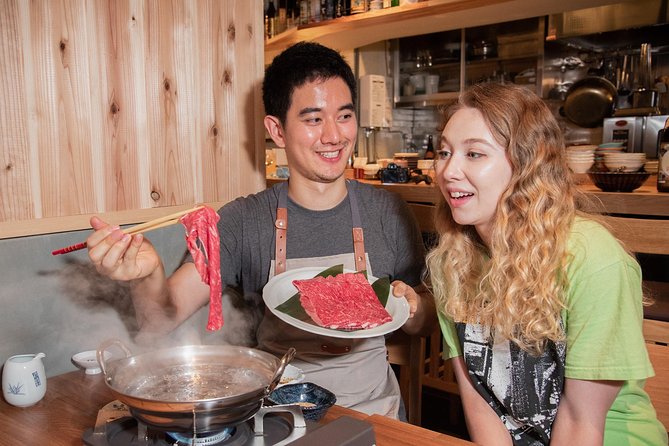
Wagyu dashi udon brings the dinner toward comfort food. Dashi is a Japanese stock with a savory, rounded flavor, and udon adds the satisfying heft of noodles. After several beef courses, this dish helps turn the tasting into a complete Japanese dinner.
The sample menu finishes with dessert and sake with a surprise. The exact ending is not specified, which is part of the fun but also means you should not book this expecting a fixed dessert you already have in mind.
The sequence is well judged. You start with small plates and drinks, build through several types of beef, add a hotpot and noodles, and finish sweetly. The quantity is one reason the price can make sense. At $148.65 per person, you are paying for food, a broad sake pairing, instruction, and a hosted evening rather than only a restaurant table.
Extra drinks such as beer are not included. If you want something beyond the planned sake pairings, budget separately. For many diners, the included pours are already the main attraction, and the quantity of sake has been described as generous.
What you learn about wagyu and sake
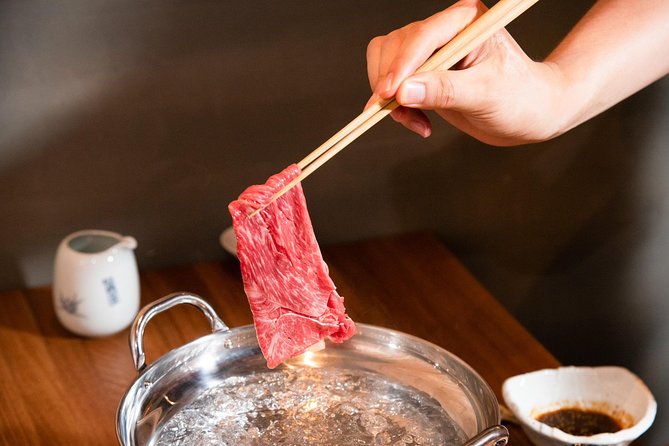
The educational side is strongest when you ask questions. You can learn about the wagyu grading system, the way sake is made, and how regional differences affect the bottle or cut in front of you.
The hosts also give practical advice for the rest of your trip. That can include help with Japanese menus and pointers for buying sake on your own. This is more useful than a list of abstract tasting terms because it continues to help after the three-hour meal ends.
I would make a note of the sake styles you prefer. If you like the creamy nigori, the warm sake, or an aged example, ask the host how to identify similar bottles. If you prefer a lighter or drier pour, say so. The small format makes that kind of back-and-forth possible.
The evening also helps you avoid a common mistake: treating the highest wagyu grade as automatically the best choice for every dish. A richly marbled steak can be wonderful, but a different cut may work better in tataki, hotpot, or soup. Seeing several cuts prepared in several ways makes that lesson clear.
The setting and social side
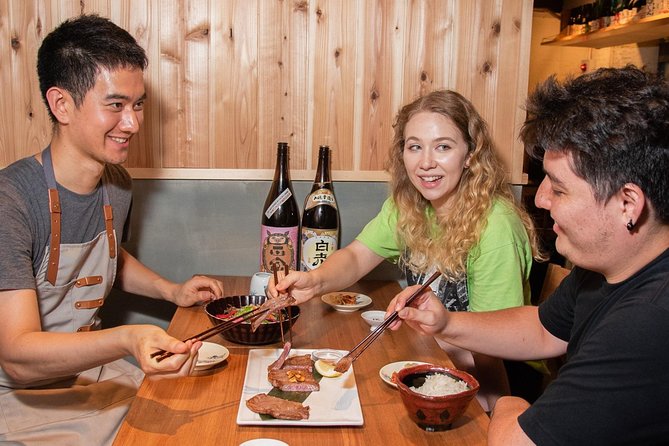
The dining area is intimate, and that has two sides. The good side is direct contact with the host, the chef, and the other diners. Several people have enjoyed sharing the meal with strangers, especially when the group is as small as six.
The less appealing side is space. One account found the back area of the bar small and seating tight. You should expect an informal restaurant setting, not a large dining room with generous personal space. If you want a private table or a polished, quiet atmosphere, this may not be the right choice.
For most food-focused visitors, the social format is part of the value. Conversation gives the explanations a natural flow, and the meal feels less formal than a luxury restaurant tasting menu. It can also be a good choice for solo diners who want company without joining a large sightseeing group.
The guide matters. Named hosts include Chi, Tadashi, Joe, Andrea, and Miyuki, and the strongest descriptions consistently focus on friendly presentation, clear explanations, and easy conversation. The exact host may vary, so book for the structure of the experience rather than one particular personality.
Who should book this Shinjuku evening
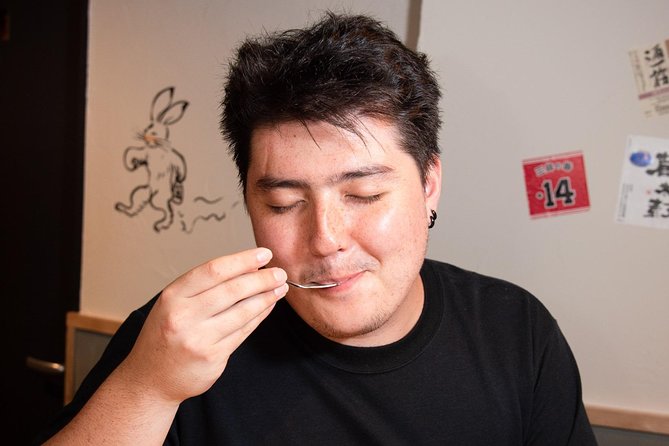
I would choose this for you if you want a substantial Japanese dinner and enjoy learning while you eat. It works especially well as an early-trip experience because the menu guidance and sake advice can shape later meals.
It suits:
- First-time visitors who want an introduction to wagyu and sake
- Couples and friends who enjoy shared dishes and conversation
- Solo diners who prefer a small hosted group
- Food-focused visitors willing to try several cuts and preparations
- Anyone curious about Japanese sake but unsure how to begin
It is less suitable if you do not drink alcohol, want only a steak dinner, or prefer a spacious and quiet restaurant. It is also not a strong match for strict dietary needs. Vegan, vegetarian, and gluten-free options are limited, and you must send food restrictions at least one week before the date. Last-minute requests cannot be accommodated.
All travelers can generally participate, and the activity is near public transportation. The ticket is mobile, confirmation arrives at booking, and the experience ends where it starts. You can cancel for a full refund up to 24 hours before the 6 pm start time. Inside that window, refunds and changes are not accepted.
Is $148.65 good value?
The price is high for an ordinary dinner, but this is not an ordinary dinner. You receive a full course, several wagyu cuts, multiple preparations, a broad sake pairing, a host, and an explanation of what you are tasting.
The strongest value comes if you would otherwise pay for both a good wagyu meal and a separate sake tasting. The included pairings are central to the experience, not a token sample. A number of diners found the sake alone made the price worthwhile, while the food provides the reason to keep comparing one pour with the next.
The value drops if you do not want much food or alcohol. You are paying for quantity, variety, and instruction. Someone seeking only a small premium steak may find a regular restaurant more efficient.
At 4.9 out of 5, with 98 percent recommending it and 10 or more bookings in the previous month, demand appears strong. Those figures cannot tell you if the compact seating suits your taste, but they do support the idea that the experience delivers what it promises for food-focused diners.
My call: book it if you want a full evening
I would book this wagyu and sake pairing if you want more than a restaurant meal and have room in your Tokyo budget for one special food experience. The best reasons are the range of beef preparations, the unusual sake matches, the small group, and the practical advice you can use afterward.
Book with care if you have allergies, dietary restrictions, or little interest in alcohol. Send restrictions at least a week ahead, and expect limited alternatives. Also accept that the dining area may feel tight.
For everyone else, this is a well-shaped three-hour introduction to two major parts of Japanese food culture. Arrive hungry, keep an open mind about different cuts and sake styles, and you should leave with both a full stomach and a clearer idea of what to order next.
FAQ
How long does the wagyu and sake experience last?
The experience lasts approximately three hours.
What time does the tour begin?
It begins at 6 pm local time.
Where does the experience start and end?
It starts at Ushinobi Shinjuku in the NSK Building at 201, 1-chōme-22-1 Hyakuninchō, Shinjuku City, Tokyo. It ends back at the same meeting point.
How many people can join?
The maximum group size is eight people.
What food and drinks are included?
A full-course wagyu meal and the planned sake pairings are included. The sample menu includes appetizers, grilled wagyu tongue, chuck flap tataki, seasonal salad, sirloin, chuck hotpot, dashi udon, and dessert. Extra drinks such as beer are not included.
Can the experience accommodate dietary restrictions?
You must send food restrictions at least one week before the experience date. Vegan, vegetarian, and gluten-free options are limited, and last-minute food requests cannot be accommodated.
Can I cancel for a refund?
Yes. You can cancel at least 24 hours before the local start time for a full refund. Cancellations or changes made less than 24 hours before the experience are not accepted.
Just added in Tokyo
- Nikko: Edo Wonderland Edomura Cultural Theme Park Ticket★ 4.3 · 205 reviews
- 《MEMBERS-ONLY-BAR-HOPPING》Discover Your Special Whiskey in Tokyo!★ 5.0 · 29 reviews
- Japanese Whisky Hunting《HIGH-QUALITY-ONLY》Rare Tasting Class★ 5.0 · 20 reviews
- Luxury Tokyo Sake, Cocktail, Whisky and Pairing Tour★ 5.0 · 18 reviews
- Small-Group Wagyu Beef and 7 Japanese Dishes Tokyo Cooking Class★ 5.0 · 190 reviews
- From Tokyo: Private Tour to Fuji/Hakone – Onsen, Art, Nature★ 5.0 · 116 reviews
- Tokyo: KABUKI Show at Kabukiza Theatre Admission Ticket★ 4.8 · 152 reviews
- Tokyo: KABUKI, BUNRAKU, etc. presented by National Theatre★ 4.6 · 135 reviews
Wagyu & Kaiseki Dining, compared.
Tokyo Night Foodie Tour in Shinjuku – Seasonal Sushi, Wagyu Beef
Read our review →
Small-Group Wagyu Beef and 7 Japanese Dishes Tokyo Cooking Class
Read our review →Browse the lists this tour appears in