
Reviewed · SUMO EXPERIENCES
Tokyo Shinjuku Sumo Show & Experience with Photo
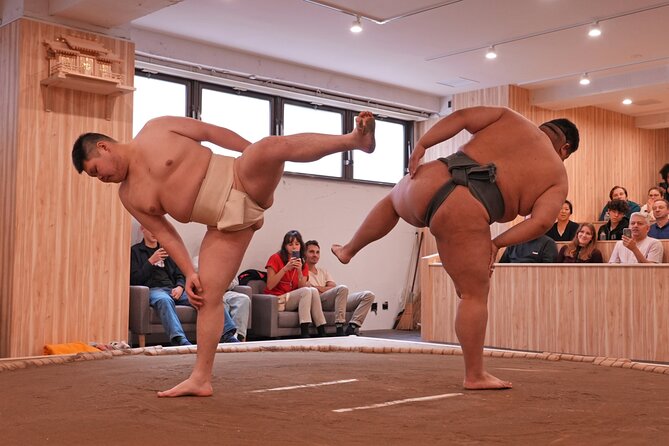
Sumo here is not a quiet museum lesson. Two large, highly trained wrestlers perform live bouts and explain the force, balance, rituals, and tactics behind Japan’s national sport. The bilingual host keeps the show moving, with salt throwing, ring stomping, pre-match ceremonies, and plenty of audience interaction.
I like the way the experience makes a formal sport easy to understand, and I like that you are not stuck watching from a distance. You may step onto the dohyō for a friendly challenge, ask questions, and take photos with the wrestlers. The main consideration is that this is an entertaining introduction, not a full professional tournament. If you want serious competition, you will need to attend an official sumo event.
Key points to know before you book
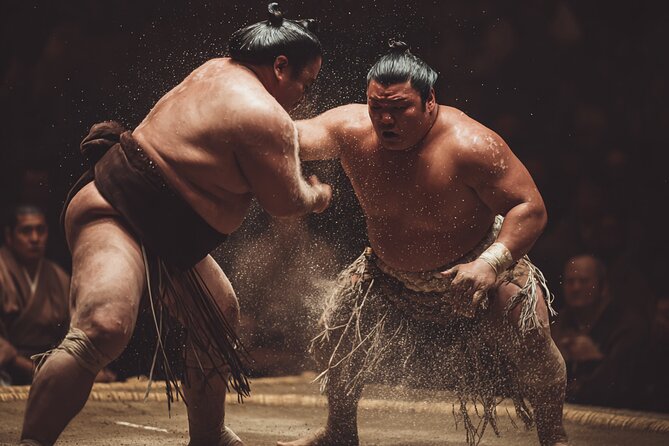
- Live bouts with two sumo wrestlers: See powerful demonstrations at close range in a traditional-style Shinjuku venue.
- A bilingual host explains the rituals: Learn why wrestlers throw salt, stomp the ring, and follow a careful pre-match routine.
- Audience participation is central: You may try a friendly sumo challenge, with children often joining in inflatable sumo costumes.
- The 90-minute format is easy to fit into a Tokyo day: It gives you a clear introduction without taking up an entire afternoon.
- Photo time adds a personal touch: You can pose with the wrestlers and ask questions after seeing them perform.
- Good value for families and first-time visitors: At $79.59 per person, the ticket buys a live cultural presentation, instruction, interaction, and a photo opportunity.
What happens inside Shinjuku Sumo Club
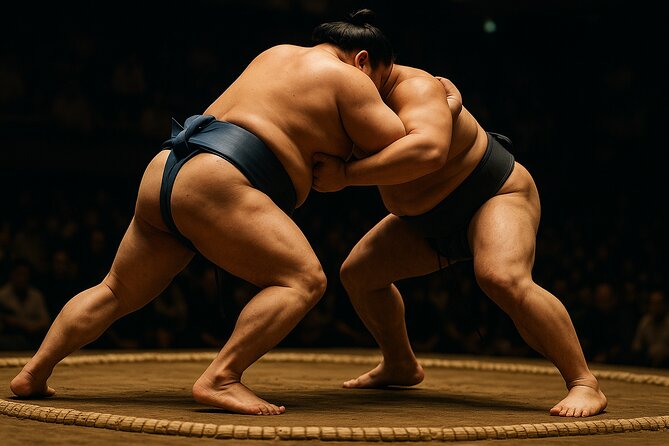
The experience takes place at Shinjuku Sumo Club, a traditional-style venue in Tokyo’s Shinjuku district. The location is near public transportation, and the venue is described as easy to find from the train station. Even so, allow extra time to get there. One visitor arrived just in time after heavy traffic and advised allowing at least 30 minutes.
Once seated, you are introduced to the basic world of sumo. The host explains where the sport came from, why it developed as it did, and how a match works. The tone is light and playful, but the subject is treated with respect. That balance matters because sumo can look simple at first glance: two wrestlers push, pull, and try to force each other out of a circle. The host helps you see the technique underneath the spectacle.
The program usually features two wrestlers. Names have included Ogawa, Tani, Gucci, and George in different sessions, so the exact performers may vary. Some sessions have featured retired wrestlers who now use their experience to teach and entertain. That does not make the demonstrations fake. It simply means you should think of this as a cultural show and hands-on introduction, rather than a ranked tournament bout.
Other ways to see sumo in Tokyo:
- Tokyo: Sumo Show Experience with Chicken Hot Pot and a Photo
★ 4.8 · 6,678 reviews - Tokyo: Sumo Show and Dining Experience
★ 4.8 · 2,742 reviews - the SUMO show
★ 5.0 · 1,960 reviews
Why the salt, stomping, and waiting matter
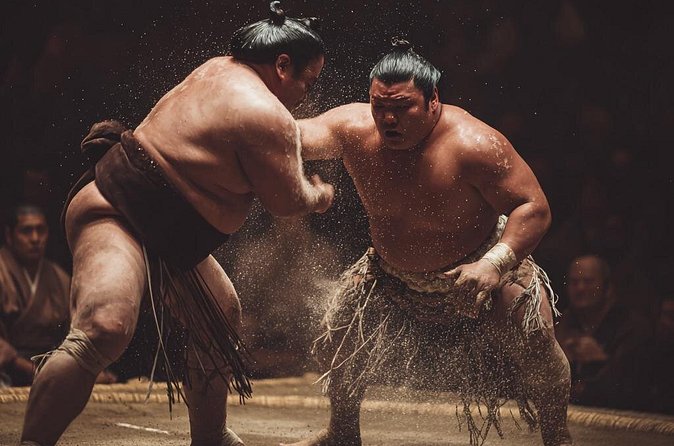
One of the best parts of the program is learning to read the ceremony before the match. The wrestlers throw salt into the ring, stomp their feet, and complete a series of deliberate movements before they engage. To someone seeing sumo for the first time, these actions can seem theatrical or even mysterious.
The bilingual MC gives them meaning. You learn that the rituals are tied to the sacred character of the dohyō and the older religious traditions surrounding sumo. The long preparation also changes how you watch the match. Instead of seeing only two people collide, you begin to notice posture, focus, timing, and the careful use of space.
The explanations are made for a general audience, not for sumo experts. You will hear about the rules, key movements, tactics, origins, and the lifestyle connected with the sport. The presentation is especially useful if you have never watched a tournament and want enough background to understand what happens in the ring.
The host is a major part of the experience. Past sessions have included MCs named Shane, Manny, and Mr. So. Their style has been described as humorous, clear, and respectful, with plenty of time for questions. The exact host can vary, but the format depends on a bilingual presenter who can explain Japanese customs in accessible English.
The live demonstrations: strength with a lighter mood
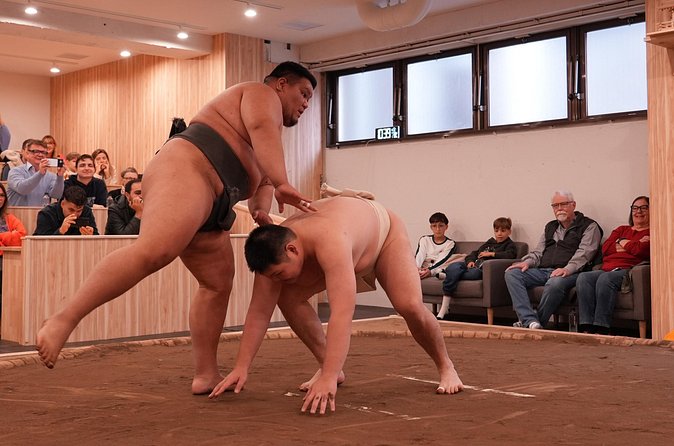
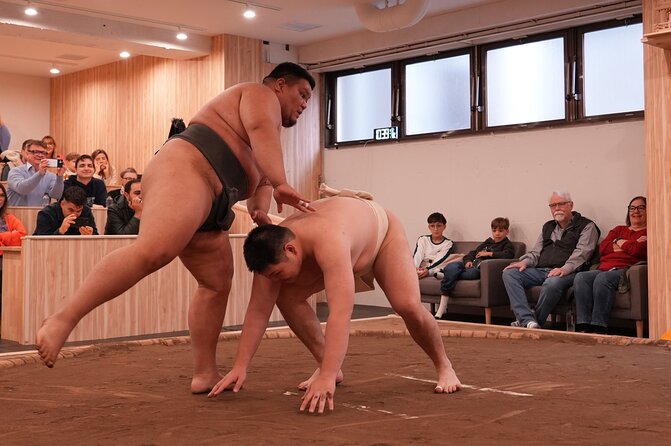
The bouts are the visual heart of the experience. You see the wrestlers perform at close range, which lets you appreciate how quickly they move for their size. Their mass is impressive, but so are their balance and control. Sumo is not simply about being the biggest person in the ring.
The demonstrations also have a playful side. The wrestlers perform for the room, react to the audience, and use humor to make the sport less intimidating. You may laugh between bouts, then suddenly notice the speed and force behind a movement. That mix of instruction and entertainment is why the activity works well for people with very different levels of interest.
You should set your expectations correctly. This is not designed to recreate the tension of a major professional tournament. The matches are demonstrations, and some performers are retired. If you want rankings, intense competition, and the full atmosphere of a formal tournament, book a tournament visit instead. If you want to understand the sport and have a good evening in Shinjuku, this format is far easier and more relaxed.
Stepping onto the dohyō
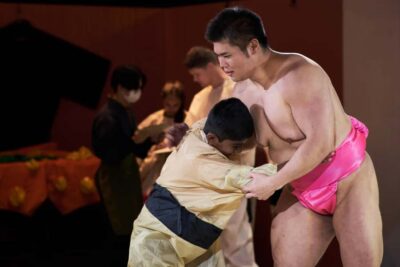
The audience participation is more than a short photo opportunity. Some people are invited to step onto the dohyō and challenge a wrestler in a friendly bout. The wrestlers guide the activity, so you are not expected to know any sumo techniques before taking part.
For children, this can be the most memorable section. The program has included young participants in inflatable sumo costumes, producing the kind of comic spectacle that gets the whole room laughing. Adults may also be invited to try their strength. You can cheer for friends, family members, or other participants from your seat.
This part gives you a better feel for the sport than watching alone. Even a playful push against a wrestler makes the difference in size and strength clear. You also see how much balance and positioning matter. The aim is fun, not a serious contest, and the atmosphere stays friendly.
Participation is not something you should assume every individual will receive. The activity is built around audience involvement, but the exact number of people who enter the ring can depend on the session. If you prefer to watch, you still get the demonstrations, explanations, questions, and photo time.
Same base, a different sort of day:
- Mt Fuji and Hakone 1-Day Bus Tour Return by Bullet Train
★ 5.0 · 26,383 reviews - 1-Day Tokyo Bus Tour
★ 5.0 · 14,250 reviews - Tokyo: TOKYO SKYTREE® Admission ticket
★ 4.5 · 11,192 reviews - Tokyo: teamLab Planets TOKYO Digital Art Museum Entry Ticket
★ 4.6 · 9,779 reviews
Photos, questions, and meeting the wrestlers
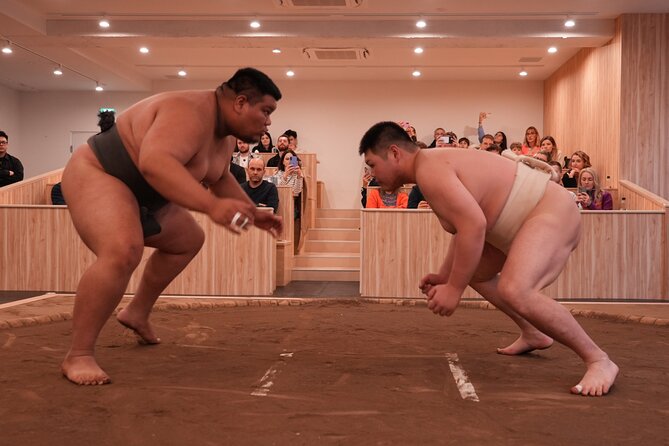
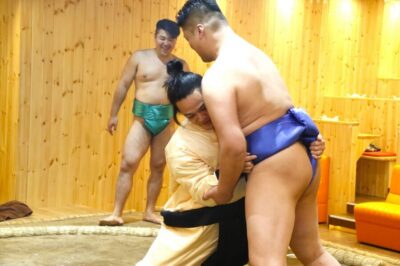
The photo session gives the experience a personal ending. You can take pictures with the wrestlers and see them at close range after the formal demonstrations. This is useful if you want more than a performance that ends when the lights go up.
The question period also adds value. You can ask about the sport, the wrestlers, training, rituals, rules, or other points raised during the show. A good question can turn a general explanation into something more human. Several sessions have been praised for making the athletes feel approachable and for giving the audience time to connect with them beyond their size and public image.
Do not expect a long private meeting with each wrestler. This is a group experience, and the 90-minute schedule has to include the show, explanations, participation, and photographs. Still, the chance to ask questions and pose with the performers makes the event feel more direct than simply viewing a match from stadium seats.
How the 90 minutes fit into your Tokyo plans
The experience lasts about one hour and 30 minutes. That makes it a practical addition to a day in Shinjuku, especially if you want a planned indoor activity that does not consume half a day.
You can pair it with time in the Shinjuku area before or after the show. The venue is near public transportation, but Tokyo journeys can take longer than the map suggests. Station exits, crowded streets, and traffic can all slow you down. Aim to arrive at least 30 minutes early if you are unfamiliar with the area or traveling during a busy period.
The mobile ticket is convenient. You do not need to arrange a paper ticket in advance, and confirmation is provided when you book. The venue is suitable for most people, and the activity is described as accessible to most participants. The supplied details do not give a full breakdown of seating, step-free access, or specific facilities, so contact the provider if you have mobility needs that require precise arrangements.
Some sessions offer drinks or allow you to buy drinks and snacks while watching. One point to note is that an advertised drink inclusion may amount to one bottled water per person rather than a choice of beverages. Check the current inclusions if refreshments matter to you.
Is $79.59 a fair price?
At $79.59 per person, this is not the cheapest way to spend 90 minutes in Tokyo. You are paying for a hosted cultural presentation, two live performers, audience participation, and a photo opportunity. For a family, the cost can add up quickly, so the children’s interest in sumo should guide your decision.
I think the price makes sense if you want a simple, organized introduction to Japanese culture without needing to understand tournament schedules or Japanese-language explanations. The bilingual hosting removes a major barrier. You get the context that helps the rituals make sense, then see the sport performed rather than only hearing about it.
The value is weaker if you already know sumo well or mainly want competitive wrestling. A few people may find the show only moderately interesting compared with other Tokyo activities, especially if they prefer museums, food tours, or formal sporting events. This is a polished cultural show with humor and participation. It is not a substitute for a tournament.
For first-time visitors, families, couples, and curious newcomers, the combination is strong. You learn something, laugh, meet the performers, and leave with photos. That is a useful amount of content for an evening activity in a city where it can be hard to choose between dozens of attractions.
Who will enjoy this most?
Families are a natural match. The explanations are easy to follow, the host uses humor, and children can sometimes join the sumo challenge. The inflatable costume bouts are particularly well suited to younger visitors who may not sit through a long formal lecture.
Couples and friends can also enjoy the social side. You can cheer for participants, take pictures together, and share an experience that feels distinctly Japanese without requiring specialist knowledge. It works well for people who want something more active than sightseeing but less demanding than a full-day excursion.
I would also recommend it to anyone who has watched sumo on television but never understood the rituals. The session gives you the basic vocabulary and rules needed to appreciate future matches. If you are already a devoted sumo fan, use this as a close-up cultural encounter, not as a serious sporting event.
The show is also a good choice for visitors who have limited time in Tokyo. You do not need to plan around a tournament calendar, and the short format leaves room for other parts of the city. The main requirement is an open mind about presentation style. The wrestlers perform with humor, and the host keeps things lively rather than solemn.
Booking, cancellation, and practical details
The experience has free cancellation if you cancel at least 24 hours before the local start time. Cancellations made less than 24 hours in advance are not refunded, and changes within that period are not accepted.
Most people can participate, and the venue is near public transportation. Confirmation is supplied at booking, and the ticket is mobile. Plan your route carefully and leave a buffer before the start time, since arriving late can mean missing the opening explanations and rituals.
You should also remember that performers and hosts may change. Names such as Shane, Manny, and Mr. So have been associated with different sessions, while wrestlers have included Ogawa, Tani, Gucci, and George. Treat those names as examples of past lineups, not a guarantee for your date.
Should you book the Shinjuku Sumo Show?
Book it if you want a friendly, funny, and informative first look at sumo. The strongest reasons are the bilingual explanations, the close view of the wrestlers, the chance to join a playful challenge, and the photo session. The show gives you enough context to understand the rituals without asking you to commit to a full tournament day.
Skip it if you want only serious competition or already have a strong knowledge of sumo. For most first-time visitors, though, the 90-minute format and central Shinjuku setting make this an easy cultural choice. At $79.59, it is best viewed as a live lesson with entertainment built in, not simply a wrestling match.
FAQ
How long does the Shinjuku Sumo Show last?
The experience lasts approximately one hour and 30 minutes.
Where does the sumo experience take place?
It takes place at Shinjuku Sumo Club in Tokyo’s Shinjuku district.
Is the experience conducted in English?
A bilingual MC explains the sport, rituals, history, rules, and demonstrations.
Can I participate in sumo wrestling?
Audience members may have the chance to step onto the dohyō for a friendly sumo challenge. Children may also participate, sometimes using inflatable sumo costumes.
Can I take photos with the wrestlers?
Yes. The experience includes a photo opportunity with the sumo wrestlers.
Is this a real professional sumo tournament?
No. The event features live demonstrations and friendly audience interaction. Some wrestlers may be retired, so it is best understood as an introduction to sumo rather than a formal tournament.
What is the cancellation policy?
You can receive a full refund by canceling at least 24 hours before the experience start time. Cancellations or changes made less than 24 hours in advance are not accepted for a refund.
Just added in Tokyo
- Nikko: Edo Wonderland Edomura Cultural Theme Park Ticket★ 4.3 · 205 reviews
- 《MEMBERS-ONLY-BAR-HOPPING》Discover Your Special Whiskey in Tokyo!★ 5.0 · 29 reviews
- Japanese Whisky Hunting《HIGH-QUALITY-ONLY》Rare Tasting Class★ 5.0 · 20 reviews
- Luxury Tokyo Sake, Cocktail, Whisky and Pairing Tour★ 5.0 · 18 reviews
- Wagyu & Sake Pairing in Shinjuku – Steak, Shabu-Shabu & More★ 5.0 · 112 reviews
- Small-Group Wagyu Beef and 7 Japanese Dishes Tokyo Cooking Class★ 5.0 · 190 reviews
- From Tokyo: Private Tour to Fuji/Hakone – Onsen, Art, Nature★ 5.0 · 116 reviews
- Tokyo: KABUKI Show at Kabukiza Theatre Admission Ticket★ 4.8 · 152 reviews
Sumo Experiences, compared.
Sumo Show Experience with Chicken Hot Pot and a Photo
Read our review →
Sumo Show & Experience w/ Optional Kimono & Hot Pot
Read our review →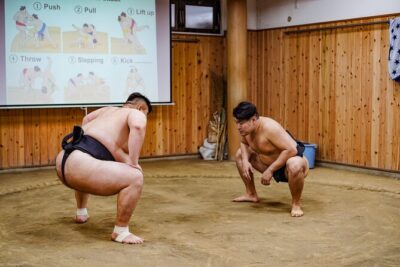
Authentic Sumo Experience in Tokyo: Enter the Sanctuary
Read our review →
Luxury Sumo Show Experience & Japanese cuisine & Drink
Read our review →Browse the lists this tour appears in