
Reviewed · GEISHA & GION DISTRICT TOURS
Kioto: Gion Tour, recorrido a pie (Español/Castellano)
Gion is much more than a street where you hope to spot a geisha. This two-hour walk uses three historic hanamachi, or geisha districts, to explain how Kyoto grew around the Kamo River, its shrines, its theaters, and its traditional neighborhoods. You may meet José or Juan, guides praised for clear explanations and easy conversation in Spanish.
I like the small group limit of six, which gives you room to ask about anything from maiko customs to ordinary life in Japan. I also like the route’s range: Pontocho Alley, Gion-Kobu, Gion-Higashi, bridges, statues, and Yasaka Shrine all fit into one walk. The main limitation is that Hanamikoji-dori is not included, and a maiko or geiko sighting is never promised.
Key points at a glance
- Three hanamachi in two hours: Visit Pontocho, Gion-Kobu, and Gion-Higashi rather than seeing only one famous lane.
- A Spanish-speaking local guide: José and Juan are among the guides associated with the experience, with a strong focus on questions and personal explanations.
- A 3.3-kilometer walking route: Expect about two miles on foot, with time spent outdoors and on city streets.
- Yasaka Shrine and the Gion Festival: If time permits, the tour connects Gion’s name and traditions to this major shrine and its 1,100-year-old festival.
- Small groups, not guaranteed private tours: The limit is six participants, which makes conversation easier but does not necessarily mean your party has exclusive use of the guide.
- Hanamikoji is excluded: Do not book this walk expecting the classic Hanamikoji-dori route or a guaranteed geisha encounter.
What this Gion walk is really about
Many first-time visitors picture Gion as one photogenic lane lined with wooden houses. That picture is not wrong, but it is incomplete. Gion is a working historic district, and its meaning becomes clearer when you connect its streets with Pontocho, the Kamo River, Yasaka Shrine, and the old entertainment quarters.
This tour is designed around those connections. In two hours, you walk through three of Kyoto’s five hanamachi. The word refers to districts associated with geiko and maiko, the professional entertainers often called geisha in English. You hear about their training, routines, customs, and working lives while also learning how the neighborhoods developed.
I like that balance. You are not simply shown a wooden facade and told to take a photograph. You are given a reason for the facade, the narrow lane, the bridge, or the shrine entrance. That makes the walk useful even if you never see a maiko.
The group is limited to six people. That is small enough for a natural question-and-answer session, though the experience should not be confused with a guaranteed private tour for only you and your companions. The description presents it as personal and private in feel, while the booking details set a maximum group size of six.
Other evenings in the old entertainment quarters of Kyoto:
- Kyoto Geisha Walking Tour: Gion District & Hidden Gems
★ 4.7 · 3,273 reviews - Kyoto: Gion Magical Night Walking Tour with Geisha Trivia
★ 4.9 · 2,393 reviews - Kyoto: Gion Geisha District Walking Tour – Stories of Geisha
★ 4.7 · 2,187 reviews
Meeting the guide beside Disney Kyoto
The meeting point is in front of the Disney store at Kyoto Shijo-Kawaramachi. Kyoto has only one Disney store, so the location is meant to be easy to identify. Look for a guide seated outside with an iPad displaying the tour name in Spanish and the scheduled time.
Arrive with enough time to find the exact storefront and settle in. The tour begins on foot, and the route covers 3.3 kilometers, or about two miles. Comfortable shoes matter more than stylish ones here. Water, sunscreen, a hat, and an umbrella are sensible additions, especially because the tour runs outdoors in changing weather.
The published price is $35 per person. For that amount, you are paying for two hours with a Spanish-speaking guide and a route that links several districts and landmarks. There are no added services included, so the value depends mainly on how much you want interpretation rather than independent sightseeing.
If you already know Kyoto well and only want photographs, you may prefer to walk Gion alone. If you want context, translation, and a chance to ask constant questions, $35 is a reasonable price for a small group walk.
Pontocho Alley and the Kamo River
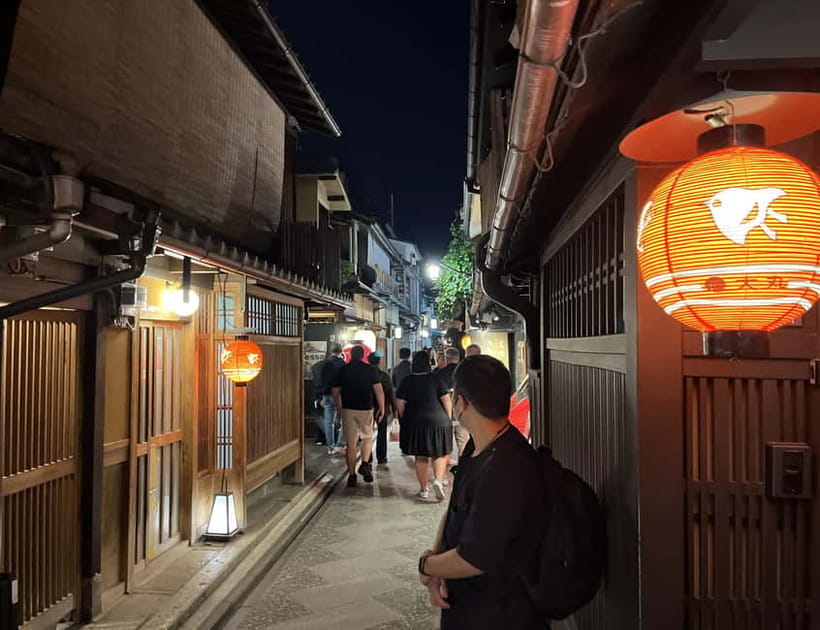
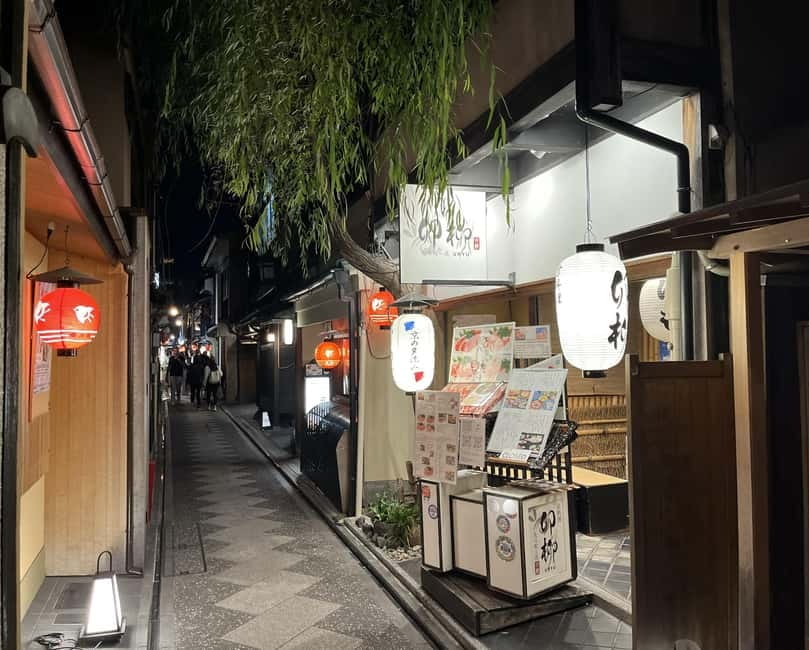
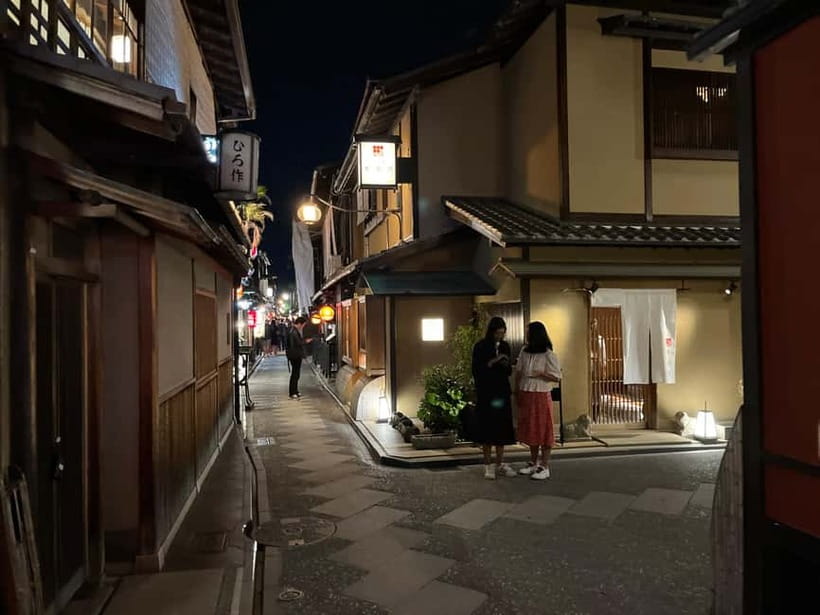
The route begins in Pontocho Alley, one of the best-known traditional entertainment areas in central Kyoto. The alley itself is narrow and atmospheric, but the guide’s explanation is more useful than a quick stroll alone. You learn how the district fits into Kyoto’s entertainment culture and why its location near the Kamo River mattered.
Pontocho Kaburenjo is included along the way. This is an important theater and cultural venue connected with traditional performances. The stop helps place the local arts in a real neighborhood rather than treating geiko culture as a museum display.
The route then reaches the Kamo River, including the Yagi-san and Kita-san statues. These details are easy to miss if you are moving from one major sight to another. A guide can point out why they matter and add the sort of local explanation that is difficult to get from a standard map.
Sanjo Ohashi, the Sanjo Bridge, follows. Bridges in Kyoto are not just crossings. They connect the commercial center with older districts and provide a useful way to understand how people moved through the city. You also continue along Yamato-dori, adding another layer of ordinary urban Kyoto before the tour turns toward Gion.
This opening section is a good reason to choose the walk over a narrow Gion-only route. It gives you a broader sense of the city, although the tradeoff is that no single stop receives a long visit.
Gion-Kobu and the preserved streets of Shirakawa
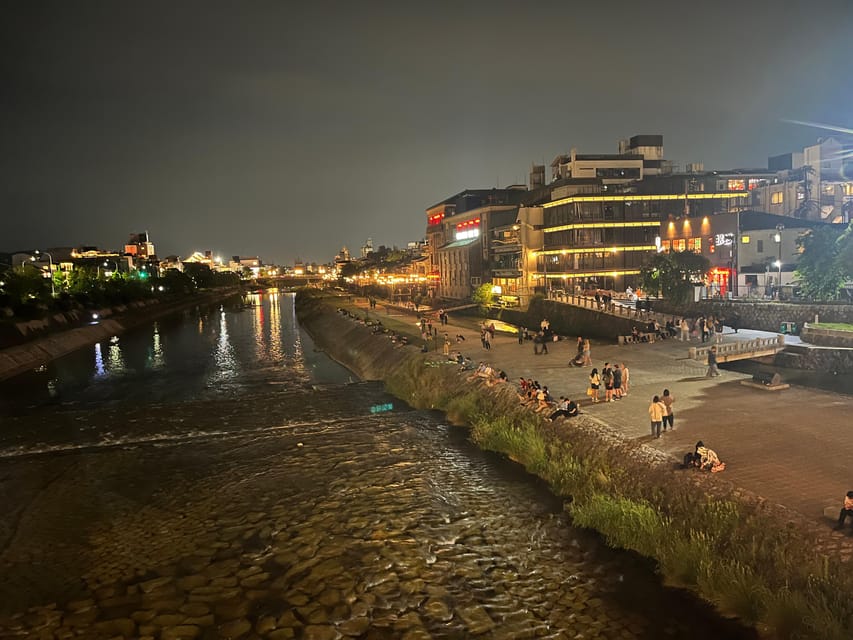
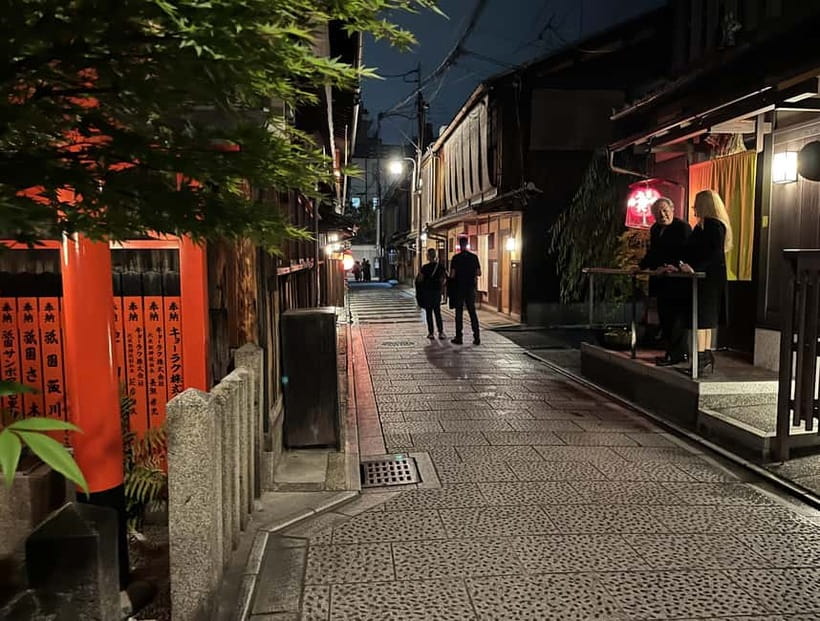
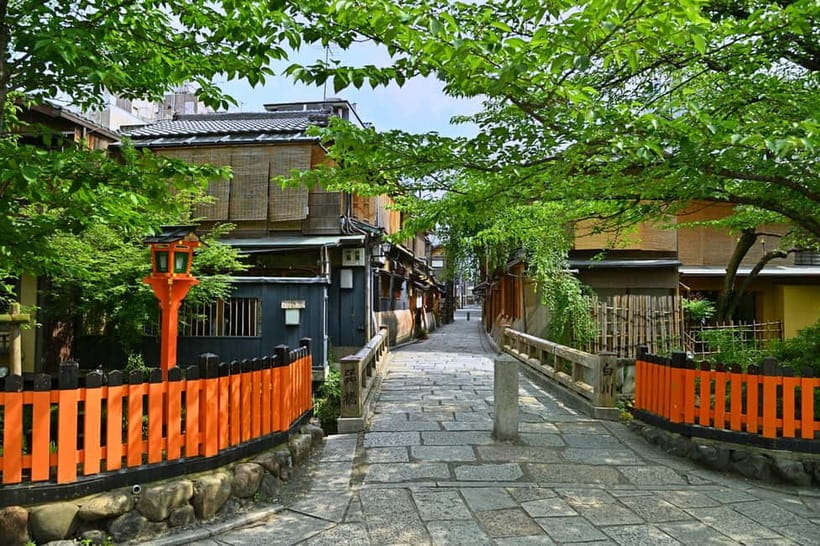
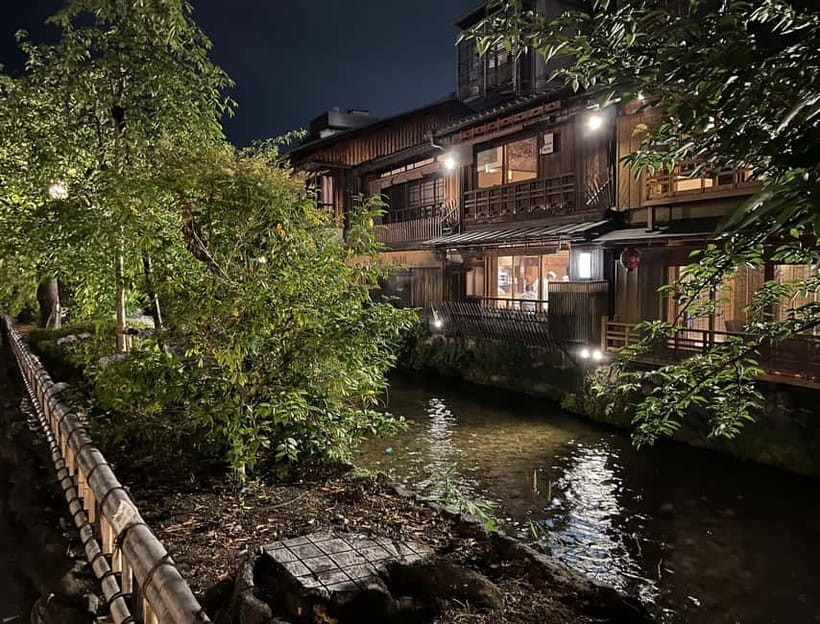
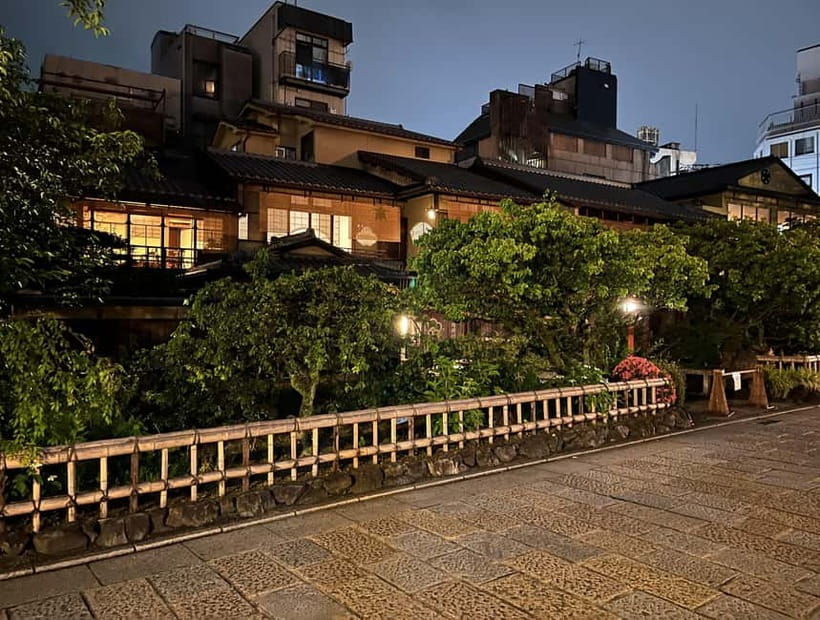
Gion-Kobu is one of Kyoto’s major hanamachi, and the tour includes Gion-Shinbashi-dori and Gion Shirakawa. This is the part many people picture when they think of old Kyoto: wooden machiya houses, carefully maintained lanes, and a quieter feel beside the Shirakawa waterway.
Your guide explains the difference between the buildings, the neighborhood, and the people who work within the hanamachi. You learn about geiko and maiko life, including practices, activities, routines, and training. The point is not simply to identify traditional clothing. It is to understand that this is a professional culture with its own demands and etiquette.
Tatsumi-jinja, a small shrine, and Tatsumi Bridge are also on the route. These stops reward attention. They are not the sort of huge sights that take over your day, but they help you see how religious places, waterways, performance districts, and private homes sit close together in central Kyoto.
The preserved neighborhood is also where good manners matter. Keep voices low, do not block narrow lanes, and do not photograph people without permission. A guide can explain what you are seeing, but you still need to respect the fact that Gion is not a stage set. People live and work here.
One important point: Hanamikoji-dori is not part of this itinerary. If the famous street is your main goal, check your plans carefully and visit it separately. This tour offers Gion-Shinbashi, Gion Shirakawa, and other streets instead.
Same base, a different sort of day:
- PERFECT KYOTO 1-Day Bus Tour
★ 5.0 · 13,518 reviews - Kyoto: Fushimi Inari, Kinkakuji, Bamboo Grove 1 Day Bus Tour
★ 4.8 · 4,316 reviews - Kyoto: Tea Ceremony in a Traditional Tea House in Kiyomizu
★ 4.9 · 3,519 reviews - Kyoto: Tea Ceremony Ju-An at Jotokuji Temple
★ 4.9 · 3,207 reviews
Gion-Higashi and the working side of tradition
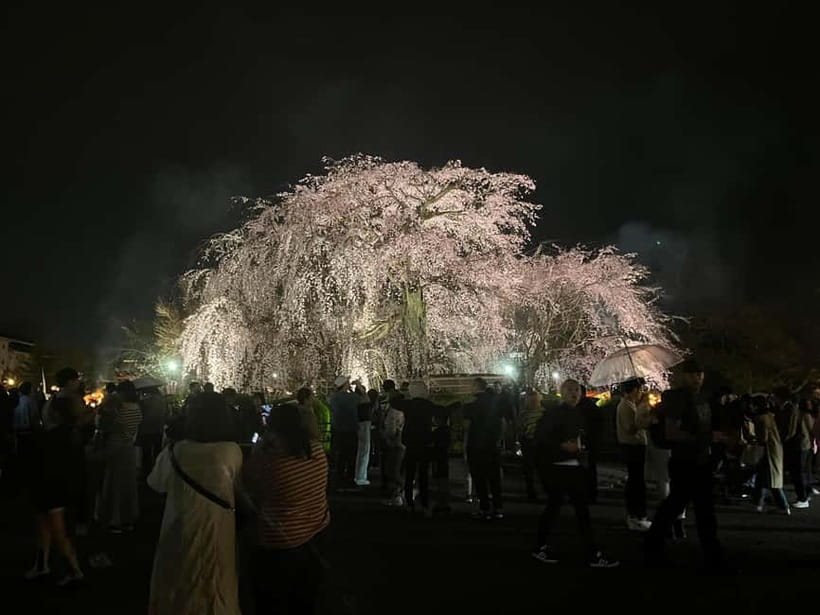
The walk continues into Gion-Higashi, another hanamachi with its own identity. Seeing more than one district is valuable because it prevents you from treating all of Gion as one identical neighborhood. The guide can compare the areas and explain how the hanamachi system works within Kyoto.
This is also where an inquisitive attitude pays off. The activity is built for questions, so ask about whatever catches your eye. You can ask about the buildings, Japanese customs, geiko and maiko, daily routines, or the guide’s own experience of life in Japan.
That last part is a strong feature. The tour is not limited to formal history. The guide also discusses ordinary life, which can make Kyoto feel less like a postcard and more like a real city. José is described as warm, flexible, and willing to explain a subject in more than one way. Juan is also associated with the tour and is described as offering detailed explanations and pointing out lesser-seen passages.
Guide assignments can change, so you should not book on the assumption that a particular person is guaranteed. Still, the repeated emphasis on friendliness, patience, and answering questions gives you a useful picture of the tour’s style.
Yasaka Shrine and the origin of Gion
Yasaka Shrine, formerly called Gion Shrine, is included if time allows. This is not a minor add-on. The shrine helps explain where the district’s name came from and connects the neighborhood to religious history more than 1,100 years old.
The shrine is also linked to the Gion Festival, one of Japan’s three most famous and important festivals. The guide may explain its origins and its connection with Gion, depending on the pace of the group and the time available.
Because the shrine visit is conditional, do not treat it as a guaranteed long stop. The walking route has many points to cover, and the guide may need to keep moving. If Yasaka Shrine is a priority, ask at the start how much time is likely to be available.
Even a short explanation can add a lot. Without it, you might see Yasaka Shrine as a beautiful entrance gate and a few halls. With context, you understand why it matters to the surrounding district and how religious tradition helped shape the area.
What you will learn about maiko and geiko

The tour explains maiko and geiko life, including their routines, practices, and activities. This is important because the subject is often reduced to costumes and photographs. A good explanation gives you a more respectful view of the work and training involved.
You should also keep your expectations realistic. A maiko or geiko sighting cannot be guaranteed. The route is not a celebrity hunt, and the activity does not promise access to private entertainment establishments or performances.
If you do see someone dressed for work, follow local etiquette. Watch from a respectful distance, avoid blocking the street, and do not treat a person as a photo prop. The guide can help you understand what you are seeing without turning the encounter into a chase.
This is one of the tour’s practical strengths. By learning more about the district before wandering alone, you are less likely to make the common mistakes that annoy residents and workers.
Timing, walking effort, and seasonal changes
The standard duration is two hours. The 9:45 and 12:30 departures may include a free visit to the Gion Gallery if you want to extend the tour. The information provided does not state how long that extra visit lasts, so ask the guide about timing before adding it to a tight schedule.
The route is 3.3 kilometers. That is manageable for most people who are comfortable walking, but you should expect a steady city walk rather than a series of seated talks. Wear shoes you can use on pavement for two hours, and carry water.
The route changes slightly during cherry blossom season, roughly from late March to early April. The purpose is to show attractive blossoms around Gion. Exact bloom dates vary, so the seasonal adjustment should be seen as a bonus rather than a promise of peak flowers.
Weather preparation is simple. Bring an umbrella, sunscreen, a sun hat, and water. The tour information does not promise indoor shelter, and much of the experience takes place outside.
Spanish language and the group atmosphere
The live guide speaks Spanish, and the tour is intended for Spanish-speaking participants. That makes a big difference when you want to ask about social customs or history rather than simply follow directions.
The small group size also matters. With no more than six participants, you have a better chance to ask follow-up questions and hear the answer clearly. The guide can check whether everyone understands, which is especially helpful when discussing unfamiliar terms such as hanamachi, maiko, and geiko.
The language level appears flexible. José has been described as able to explain clearly in English when a Spanish learner needs help. Still, the advertised language is Spanish, not English, so choose this tour primarily if you are comfortable receiving the main explanation in Spanish.
The tone is conversational rather than rigid. You can ask about sights along the route or subjects outside the formal schedule, as long as the group’s time allows. That makes the experience a good fit for curious people who do not want to save every question for the end.
How the tour compares with exploring alone
You can walk through Gion without a guide, and the streets are accessible to independent visitors. The problem is not finding the district. The problem is knowing what you are looking at.
On your own, you may recognize a machiya house, a shrine, or a bridge, but miss the connection between them. You may also focus too heavily on the most famous street and overlook Pontocho, Gion-Higashi, the statues, or the historic meaning of the Kamo River crossings.
This tour gives you a route and an explanation. It also reduces the chance that you will spend two hours searching for a geisha sighting and miss the rest of the neighborhood.
The drawback is pace. A guide-led route has to keep moving, and you may not have as much time for photographs as you would alone. The itinerary is full, so people who prefer slow wandering should plan an extra visit to Gion after the tour.
Who should book this $35 experience?
I would recommend it to Spanish-speaking visitors who want a first orientation to Gion and central Kyoto. It suits couples, friends, and solo visitors who enjoy asking questions and want more than a photo walk.
It is especially useful early in your Kyoto stay. After two hours, you will have a better sense of which streets deserve a return visit and how Pontocho, Gion-Kobu, Gion-Higashi, and Yasaka Shrine relate to one another.
Families and mixed-age groups may also appreciate the modest length, though everyone should be ready to walk 3.3 kilometers. People with limited walking stamina should review the route before booking.
I would not choose it if your main goal is Hanamikoji-dori, a guaranteed maiko or geiko sighting, or a private tour exclusively for your own party. I would also skip it if you want a formal performance rather than an outdoor history and culture walk.
Final verdict: a smart first look at Gion
At $35, this is a good-value introduction to Gion for Spanish speakers. You visit three hanamachi, hear about maiko and geiko life, connect the district with Yasaka Shrine and the Gion Festival, and get room to ask questions in a group capped at six.
The most useful feature is the guide’s personal explanation. José and Juan are associated with a style that is friendly, detailed, and open to questions, though the assigned guide may vary. Just remember the boundaries: Hanamikoji-dori is excluded, Yasaka Shrine depends on time, and no geisha sighting is guaranteed.
Book it if you want context and conversation. Skip it if you prefer to wander slowly and photograph only the best-known streets. For a first Spanish-language look at Kyoto’s traditional entertainment districts, the balance is strong.
FAQ
Where does the Gion tour meet?
The guide waits in front of the Disney store at Kyoto Shijo-Kawaramachi. Look for someone seated with an iPad displaying the Spanish tour name and the scheduled time.
How long is the walking tour?
The tour lasts two hours and covers about 3.3 kilometers, or roughly two miles.
Is the tour conducted in Spanish?
Yes. The live tour guide language is Spanish.
How many people can join the tour?
The group is limited to six participants.
Which districts are included?
The route visits Pontocho, Gion-Kobu, and Gion-Higashi, three of Kyoto’s five hanamachi.
Is Hanamikoji-dori part of the itinerary?
No. Hanamikoji-dori is specifically excluded from the route.
Will I definitely see a maiko or geiko?
No. A maiko or geiko sighting cannot be guaranteed.
Is Yasaka Shrine included?
Yasaka Shrine can be visited if time allows. The guide may also explain the Gion Festival and the connection between the shrine and the district’s name.
What should I bring?
Wear comfortable shoes and bring water, sunscreen, a sun hat, and an umbrella.
Just added in Kyoto
- Private Cooking Class Udon in Kyoto Japan★ 5.0 · 23 reviews
- Your Private Vacation Photography Session In Kyoto★ 5.0 · 110 reviews
- Kyoto: Zen Meditation at a Private Temple with a Monk★ 5.0 · 25 reviews
- Private Pewter Sake Cup Experience with a Kyoto Artisan★ 5.0 · 31 reviews
- Kyoto Wagashi(Japanese sweets) Cooking Class near Fushimiinari★ 5.0 · 60 reviews
- Kyoto:Family-Friendly Kimono & Yukata Experience at WARGO★ 5.0 · 147 reviews
- Private Guided Traditional Buddhist Cooking in Japan★ 5.0 · 16 reviews
- Kyoto: Gion Geisha District & Sake-in-Hand Walking Tour★ 5.0 · 37 reviews
Geisha & Gion District Tours, compared.
Kyoto Geisha Walking Tour: Gion District & Hidden Gems
Read our review →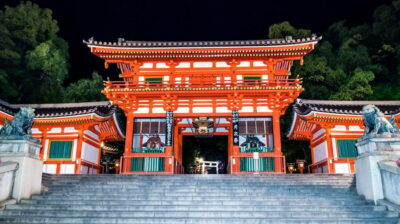
Gion Geisha District Walking Tour – Stories of Geisha
Read our review →
Best of Kyoto: Gion, Geisha, Pagodas & Cobblestones
Read our review →
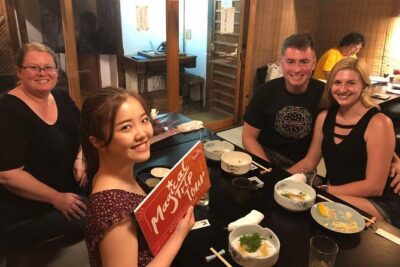
Kyoto Night Foodie Tour in Gion (9+ dishes + 6 Sake tastings)
Read our review →
Kyoto Gion: 2-Hour Geisha Culture & History Walking Tour
Read our review →
Chopsticks Making Workshop in Gion with Engraving Option
Read our review →
Browse the lists this tour appears in