
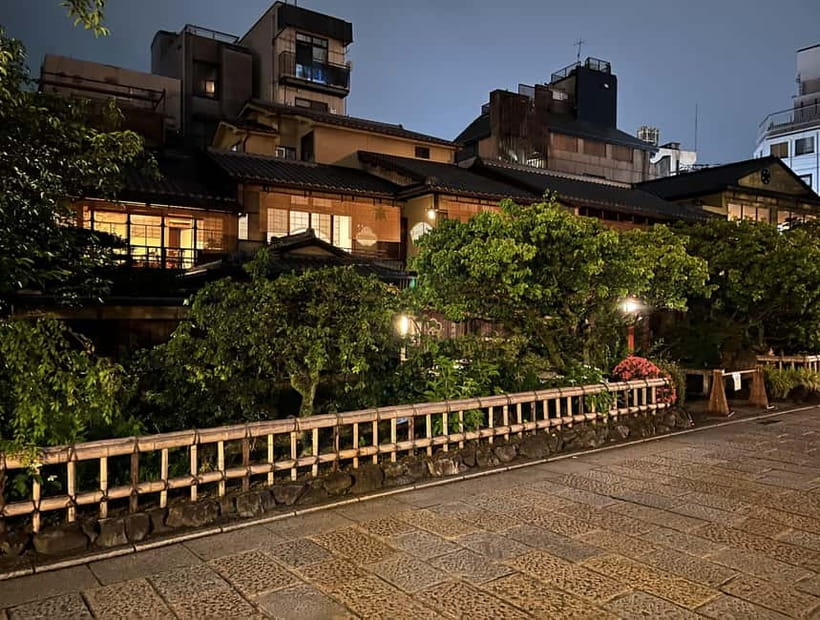
Reviewed · GEISHA & GION DISTRICT TOURS
Kyoto: Gion Walking Tour
Gion is best understood on foot, and this tour looks beyond the famous photo stops. In two hours, you visit three hanamachi districts, follow a 3.3-kilometer route, and learn why small details in wooden townhouses, bridges, shrines, and narrow lanes matter. Guides such as Jose and Saskia bring maps, photographs, personal stories, and plenty of patience for questions.
I like the small six-person limit, which makes the walk feel more like a conversation than a marching group. I also like the route’s wider view: Pontocho, Gion-Kobu, Gion-Higashi, and Yasaka Shrine give you more context than a quick stroll along one famous street. The main consideration is that Hanamikoji-dori is not included, and a maiko or geiko sighting is never promised.
Key points at a glance
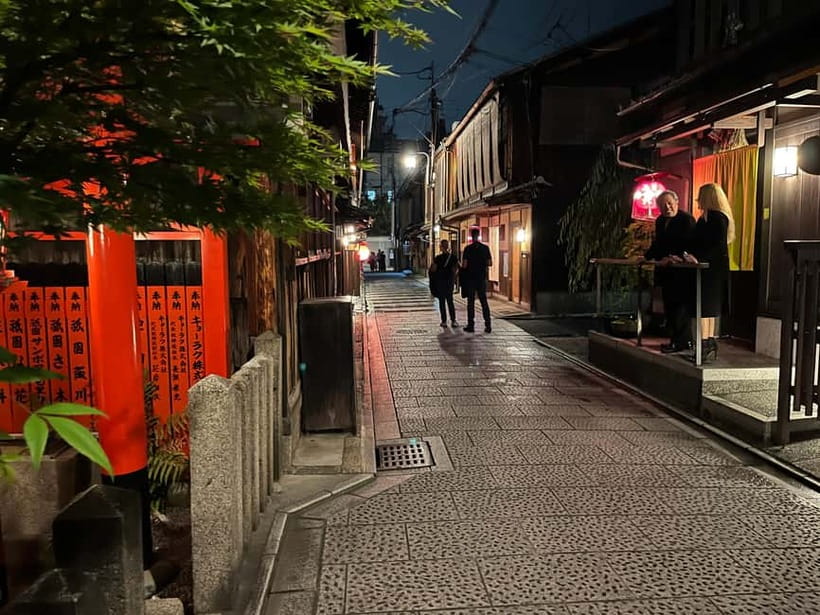
- Three hanamachi in one walk: Visit Pontocho, Gion-Kobu, and Gion-Higashi rather than seeing only one corner of Gion.
- A genuinely small group: The maximum is six people, so you can hear the guide and ask questions without shouting.
- A 3.3-kilometer route: Wear comfortable shoes and expect steady walking over two hours.
- More than geisha lore: The tour covers Kyoto’s past, Japanese customs, architecture, festivals, and everyday life.
- Yasaka Shrine connection: If time allows, you learn how the former Gion Shrine gave the district its name and connects to the Gion Festival.
- Flexible conversation: Jose and Saskia are praised for adapting explanations to family interests, language needs, and spontaneous questions.
Why this Gion walk offers more than a photo stop
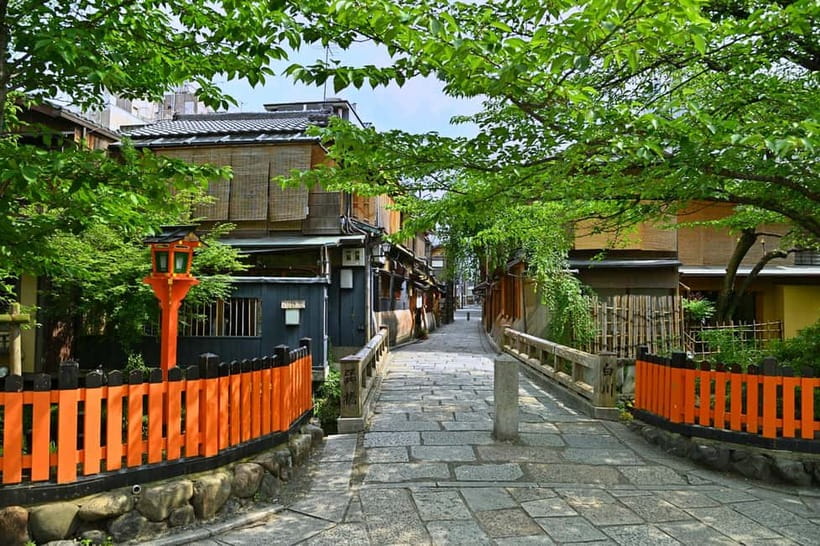
Many first-time visitors picture Gion as one picturesque lane lined with old wooden houses. That picture is not wrong, but it is incomplete. This tour treats Gion as a group of connected historic neighborhoods, each with its own place in Kyoto’s entertainment culture and city life.
You walk through former and current hanamachi, the traditional districts associated with geiko and maiko. The guide explains how these areas function, what the different terms mean, and how working life in the districts fits into Japanese culture. You also hear about Kyoto’s history and the guide’s own experience of living in Japan.
That personal angle is important. The guides are not simply reciting dates. Jose and Saskia are described as warm, energetic, and eager to connect the past with modern daily life. They use an iPad to show images, maps, and older views of the city, which helps you notice how Kyoto has changed.
The tone is lively, but the subject is treated with care. You learn about maiko and geiko routines without turning the district into a costume show. Just remember that this is a walking and explanation tour, not a performance or guaranteed sighting.
Other walking tours in Kyoto people book:
- Kyoto Geisha Walking Tour: Gion District & Hidden Gems
★ 4.7 · 3,273 reviews - Kyoto: Gion Magical Night Walking Tour with Geisha Trivia
★ 4.9 · 2,393 reviews - Kyoto: Gion Geisha District Walking Tour – Stories of Geisha
★ 4.7 · 2,187 reviews
Starting at the Disney Store in central Kyoto
The meeting point is in front of the Disney Store at Kyoto Shijo-Kawaramachi. There is only one Disney Store in Kyoto, and the guide sits outside holding an iPad with the Get Your Guide image and the tour title.
This is a practical meeting point in a busy downtown area, so arrive with enough time to locate the entrance and spot the guide. The tour is offered at different starting times, including morning and afternoon options. The 9:45 and 12:30 departures may also include a free visit to the Gion Gallery if you want to extend the experience.
The meeting point is central, but the route itself is a walking tour. You are not being driven between sights, and no refreshments or other amenities are included. Bring water, sunscreen, and an umbrella if the forecast calls for rain. Kyoto summers can be hot, while spring and autumn walks can still involve a fair amount of sun.
Pontocho Alley and the Kamogawa River
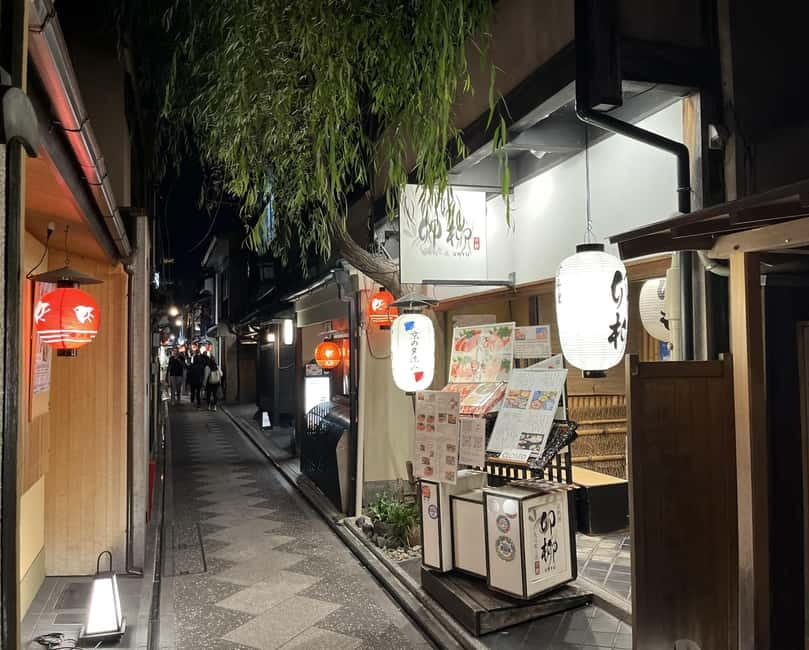
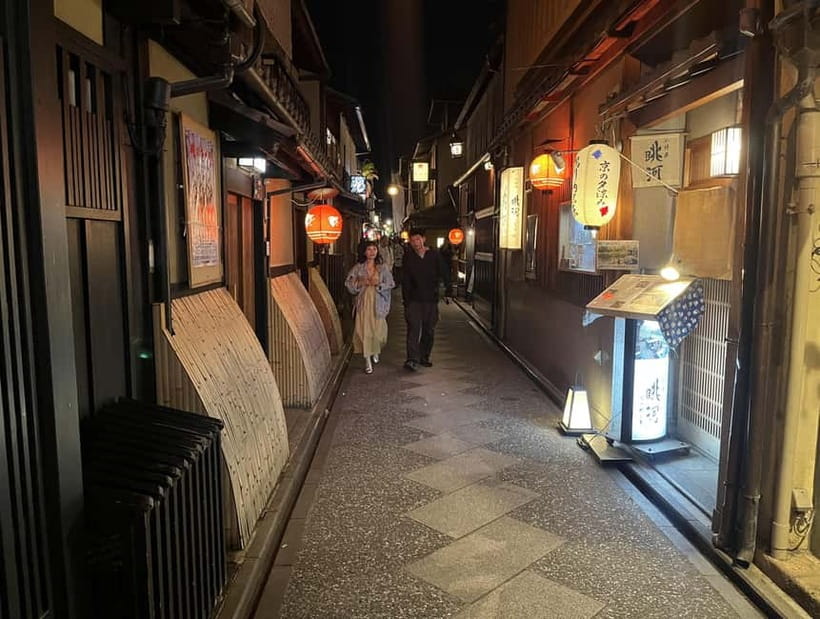
The walk begins around Pontocho Alley and Pontocho Kaburenjo. This puts you inside one of Kyoto’s best-known entertainment districts, but the value comes from learning how to read the setting rather than simply photographing it.
You then reach the Kamogawa River and the Yagi-san and Kita-san statues, followed by Sanjo Ohashi. These stops help connect the neighborhood to Kyoto’s broader urban story. Bridges and riverbanks can look like simple scenery when you are walking alone. With a guide, they become reference points for understanding how people moved through the city and how the districts relate to one another.
The route then continues toward Yamato Dori. Expect frequent pauses for short explanations rather than one long lecture. This pace has two advantages: you get regular chances to look around, and you can ask about something that catches your eye before the group moves on.
If you prefer a fast walk with only a few photo stops, this format may feel slow. If you want the guide to explain small architectural details and answer questions as you go, it is a strong match.
Gion-Kobu and the wooden streets of Gion-Shinbashi
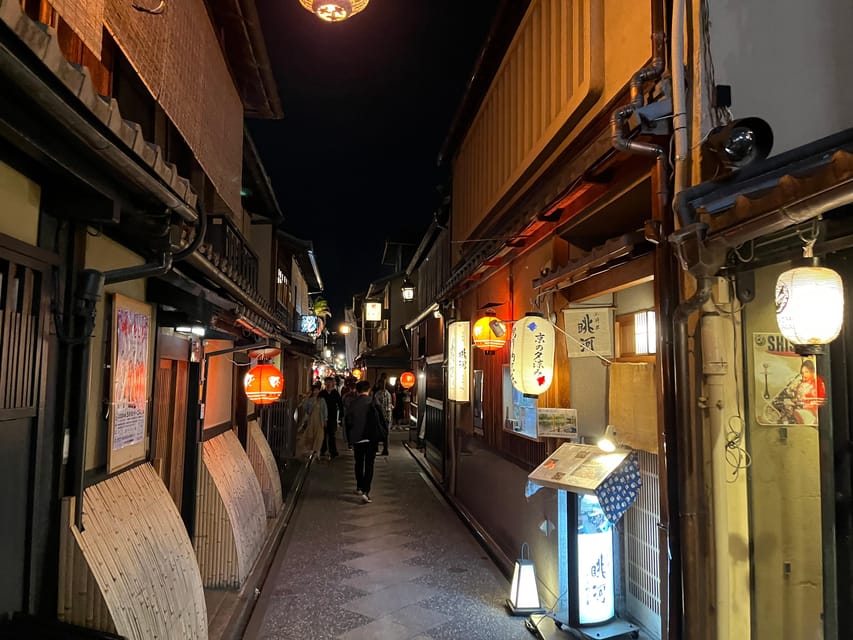
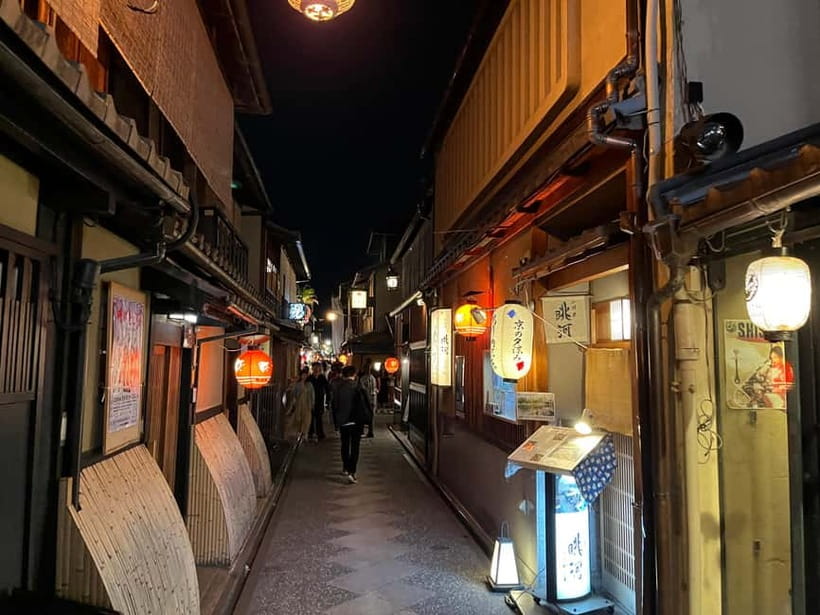
Gion-Kobu is one of the main areas on the route, including Gion-Shinbashi Dori and Gion Shirakawa. Here, the old wooden machiya houses and carefully preserved streets create the classic Gion atmosphere.
The guide points out features you could easily pass without noticing. You learn about the appearance and function of traditional buildings, the hanamachi system, and the routines connected with maiko and geiko life. The aim is not just to tell you that a street is old. It is to explain why the street looks the way it does and how it fits into Kyoto’s social history.
Gion Shirakawa is especially appealing for visitors who want a quieter setting than the largest shopping streets. During cherry blossom season, roughly late March to early April, the route may change to include better blossom views around Gion. That seasonal adjustment is useful, but it also means the exact walk may not be identical on every date.
The guide may use photographs or maps to compare past and present Kyoto. This is one of the tour’s strongest teaching tools. A modern street can be hard to interpret until you see what occupied the same space before.
Other evenings in the old entertainment quarters of Kyoto:
- Best of Kyoto: Gion, Geisha, Pagodas & Cobblestones
★ 4.9 · 2,058 reviews - Night Walk in Gion: Kyoto’s Geisha District
★ 4.5 · 2,003 reviews - Kyoto Night Foodie Tour in Gion (9+ dishes + 6 Sake tastings)
★ 5.0 · 1,762 reviews - Kyoto Gion Geisha District Walking Tour – The Stories of Geisha
★ 5.0 · 1,441 reviews
Tatsumi Jinja and Tatsumi Bridge
Tatsumi Jinja and Tatsumi Bridge add a smaller-scale stop to the walk. These are the kinds of places that are easy to pass while following the crowd, yet they help explain why Gion is more than a single entertainment strip.
The short talks at each stop keep the walk moving while giving you useful pauses. Guides have been praised for answering repeated questions with the same enthusiasm as new ones, which matters if you are traveling with children or with family members who are discovering Japanese customs for the first time.
This part of the route also offers a good chance to ask about details you have noticed elsewhere in Japan. The tour is designed to handle broad questions about Japanese life, not just questions about geisha districts. You can ask about customs, food, architecture, local routines, or something you saw earlier in your trip.
Gion-Higashi and the limits of the route
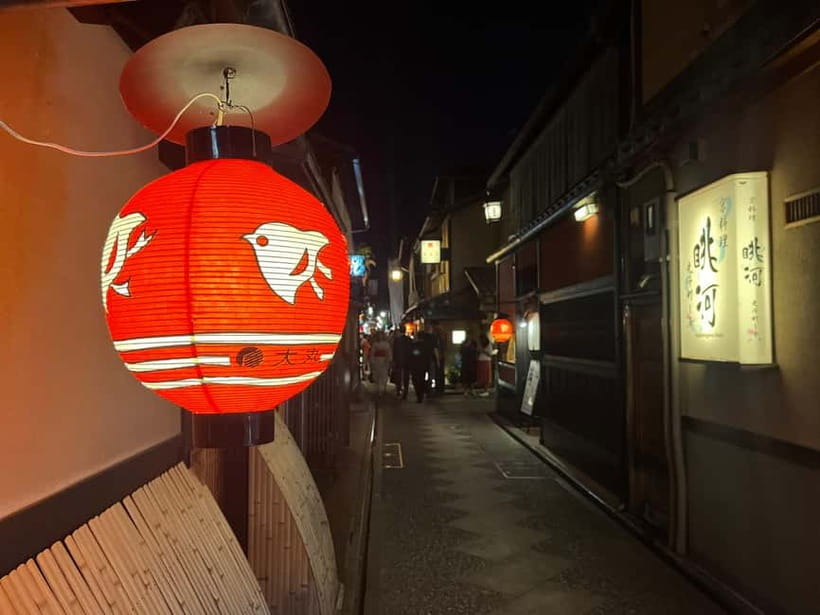
The walk continues into Gion-Higashi, another of Kyoto’s five hanamachi. Seeing both Gion-Kobu and Gion-Higashi gives you a better sense that Gion is not one uniform neighborhood.
The tour also covers Pontocho, bringing the total to three hanamachi in two hours. That is a useful balance. You see several districts without spending the entire day on one theme, though the pace is purposeful and you will not have time to linger at every corner.
A key boundary is worth noting: Hanamikoji-dori is not included. Many people associate Gion with this street, so check your expectations before booking. You can visit it separately, but it is not part of this advertised route.
The tour does not promise a maiko or geiko sighting. You might see one, as some participants have, but timing and chance control that outcome. The real value is the explanation of the district and its culture, not a quick encounter or photograph.
Yasaka Shrine and the origin of Gion
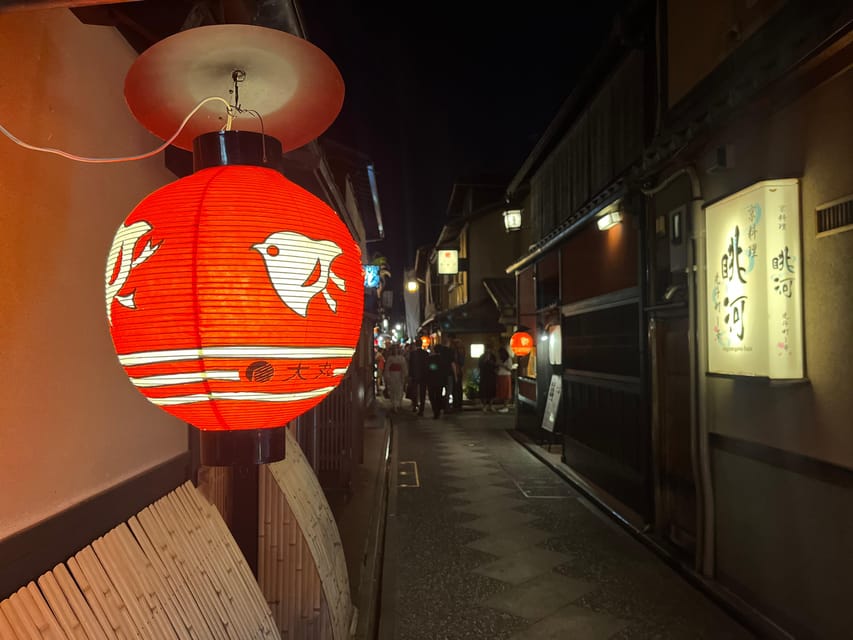
The final major stop is Yasaka Shrine, formerly called Gion Shrine. The district’s name comes from this connection, and the shrine gives the walk a useful religious and historical counterpoint to the entertainment quarters.
If time allows, the guide explains the Gion Festival, one of Japan’s three most important and famous festivals. The festival and the shrine both reach back more than 1,100 years, giving you a sense of how long religious practice, neighborhood identity, and public celebration have been linked here.
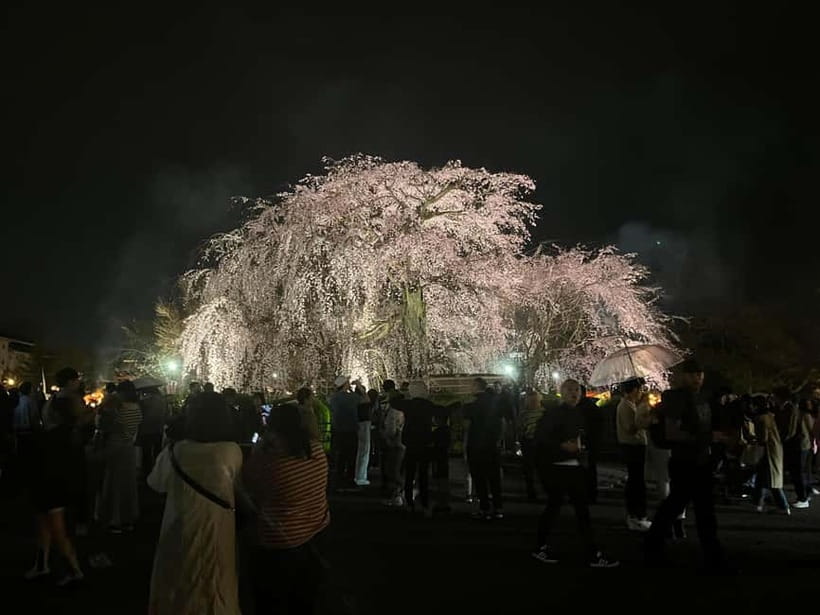
Yasaka Shrine can be especially atmospheric later in the day. One evening walk included time to visit the shrine and learn about smaller areas associated with beauty and love. Those details are not guaranteed on every departure, since the route and timing can vary, but they show how the guide can respond to what interests you.
The shrine also gives you a natural place to ask about how religious customs work in Japan. If you have already visited temples or shrines elsewhere, this stop helps you compare what you have seen.
Guides who make questions part of the tour
The most consistent strength here is the guide-led conversation. Jose is described as enthusiastic, funny, and well prepared, often using visual material to show changes in Kyoto. Saskia is praised for her energy, clear explanations, and ability to lead in Dutch. Both have been described as foreign residents of Japan who have spent years learning the country and its culture.
That background may appeal to you if you want explanations in clear English or prefer a guide who understands the questions international visitors tend to ask. Spanish, Dutch, French, and English are offered, though you should confirm the language available for your chosen departure.
The small group makes a real difference. With no more than six participants, you can hear the guide in busy streets, see images on the iPad, and stop without waiting for a large crowd to gather. Some departures may effectively become private if only one booking is made, but the standard limit is six, not a guaranteed private booking.
The guides also offer practical advice beyond the formal route. Past tours have included restaurant suggestions and answers to questions collected during a trip. That can make this a useful early activity in Kyoto, since you can use the guide’s suggestions for the rest of your stay.
Price, pace, and who gets the best value
At $35 per person, this is not the cheapest way to walk through Gion, but the price is fair for a two-hour small-group tour with a maximum of six people. You are paying for interpretation, local context, and the chance to ask questions, not for entrance tickets or included food.
There are no amenities provided, and the tour covers about two miles. You should bring your own water and be ready to walk for the full two hours. Comfortable shoes matter more than stylish ones, especially if you are already spending the day sightseeing.
I see the best value for first-time visitors who want to understand Kyoto instead of simply collecting photographs. Families can benefit from the flexible explanations, and couples or solo visitors may appreciate the conversational size. It also suits anyone curious about maiko and geiko culture but wary of tours that reduce Gion to a hunt for a sighting.
You may want to skip it if you have limited mobility, dislike walking, or want a formal temple tour with admission to major interiors. The supplied details do not describe accessibility arrangements, so ask the provider directly if that is important for you.
Free cancellation is available up to 24 hours before the tour, and you can reserve now while paying later. Those policies give you some flexibility, especially during a Kyoto trip with changing plans.
Should you book the Gion Walking Tour?
I would book this tour if you want context, conversation, and a small group. The route covers three hanamachi, Yasaka Shrine, traditional streets, bridges, and the story behind the Gion Festival. More important, it teaches you how to look at Gion.
Book it early in your Kyoto stay if you want restaurant tips and a better sense of the city before exploring on your own. Choose it later if you prefer to arrive with a long list of questions from the rest of your Japan trip.
Do not book it expecting Hanamikoji-dori, a guaranteed maiko sighting, or a staged geisha experience. Book it for the careful explanations, personal stories, useful visual aids, and the chance to ask about almost anything you see. At $35, that is a solid deal for a focused introduction to Gion.
FAQ
How long is the Kyoto Gion Walking Tour?
The tour lasts two hours and covers approximately 3.3 kilometers, or about two miles.
How many people can join the tour?
The group is limited to six participants.
Which areas does the tour visit?
The route visits Pontocho, Gion-Kobu, and Gion-Higashi. It also includes locations such as Pontocho Alley, Gion-Shinbashi Dori, Gion Shirakawa, Tatsumi Jinja, Tatsumi Bridge, and Yasaka Shrine.
Is Hanamikoji-dori included?
No. Hanamikoji-dori is not included in the itinerary.
Will I definitely see a maiko or geiko?
No. A maiko or geiko sighting cannot be guaranteed.
Which languages are available?
The tour is offered in Spanish, Dutch, French, and English.
What should I bring?
Bring comfortable shoes, water, sunscreen, a sun hat, and an umbrella.
More walking tours elsewhere in Japan
- Nishiki Market Brunch Walking Tour (7 Tastings + Brunch)
★ 5.0 · 1,355 reviews - Kyoto Arashiyama Walking Tour: Bamboo, Monkeys, Gardens & Secrets
★ 5.0 · 1,216 reviews - Kyoto Gion: 2-Hour Geisha Culture & History Walking Tour
★ 5.0 · 1,186 reviews - Kyoto: Izakaya Bars Guided Walking Tour
★ 4.9 · 815 reviews
Just added in Kyoto
- Private Cooking Class Udon in Kyoto Japan★ 5.0 · 23 reviews
- Your Private Vacation Photography Session In Kyoto★ 5.0 · 110 reviews
- Kyoto: Zen Meditation at a Private Temple with a Monk★ 5.0 · 25 reviews
- Private Pewter Sake Cup Experience with a Kyoto Artisan★ 5.0 · 31 reviews
- Kyoto Wagashi(Japanese sweets) Cooking Class near Fushimiinari★ 5.0 · 60 reviews
- Kyoto:Family-Friendly Kimono & Yukata Experience at WARGO★ 5.0 · 147 reviews
- Private Guided Traditional Buddhist Cooking in Japan★ 5.0 · 16 reviews
- Kyoto: Gion Geisha District & Sake-in-Hand Walking Tour★ 5.0 · 37 reviews
Geisha & Gion District Tours, compared.

Kyoto Geisha Walking Tour: Gion District & Hidden Gems
Read our review →
Gion Geisha District Walking Tour – Stories of Geisha
Read our review →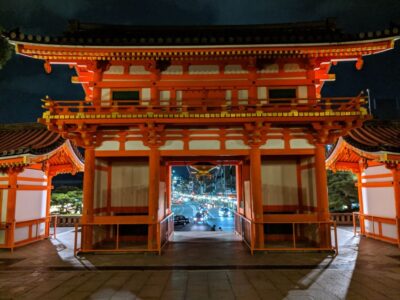
Best of Kyoto: Gion, Geisha, Pagodas & Cobblestones
Read our review →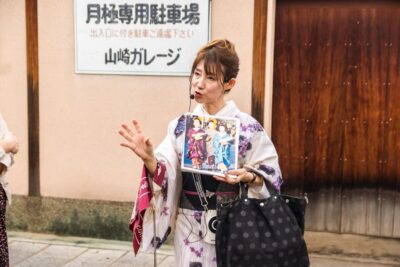
Kyoto Night Foodie Tour in Gion (9+ dishes + 6 Sake tastings)
Read our review →
Kyoto Gion: 2-Hour Geisha Culture & History Walking Tour
Read our review →
Chopsticks Making Workshop in Gion with Engraving Option
Read our review →
Browse the lists this tour appears in