
Reviewed · CALLIGRAPHY & CRAFT WORKSHOPS
Kyoto: Japanese Calligraphy Class
Japanese calligraphy is much more than copying a few characters. In this one-hour class near Kyoto Station, you learn how brush angle, ink, and stroke order shape the writing. Then you turn your practice into a personal souvenir, often a scroll, fan, postcard, picture frame, or stationery.
I especially like two things here: English instruction makes the activity easy for first-timers, and the staff help create Kanji versions of your own name and favorite word. The main consideration is time. One hour goes quickly, so you will get an enjoyable introduction rather than a full course in Japanese calligraphy.
The class suits families, couples, solo visitors, and small groups. Instructors such as Rena, Lana, Waka, Yoshia Kobayashi, and Kou are praised for patient, friendly teaching. Children under five cannot join, and the exact meeting point may vary by booking option.
Key points to know before booking
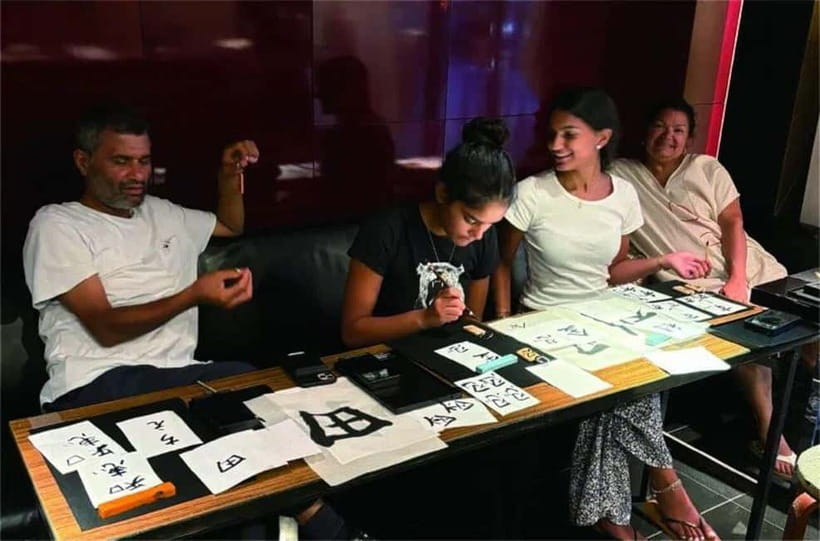
- A Kyoto Station location: The class takes place in front of Kyoto Station, making it easy to fit into a day of sightseeing.
- Your name becomes a Kanji design: Staff suggest characters and explain their meanings, so your souvenir has a personal story behind it.
- A calm break from sightseeing: Brush practice gives you a quiet hour away from Kyoto’s busy streets and packed schedules.
- Souvenirs are part of the class: You can take home work on washi paper, plus items such as a Japanese fan, postcard, frame, or stationery.
- English help throughout: Instructors explain brush use, ink application, writing basics, and the cultural meaning of the characters.
- Good for beginners and families: No previous calligraphy skill is needed, but children must be at least five years old.
What happens during the hour near Kyoto Station
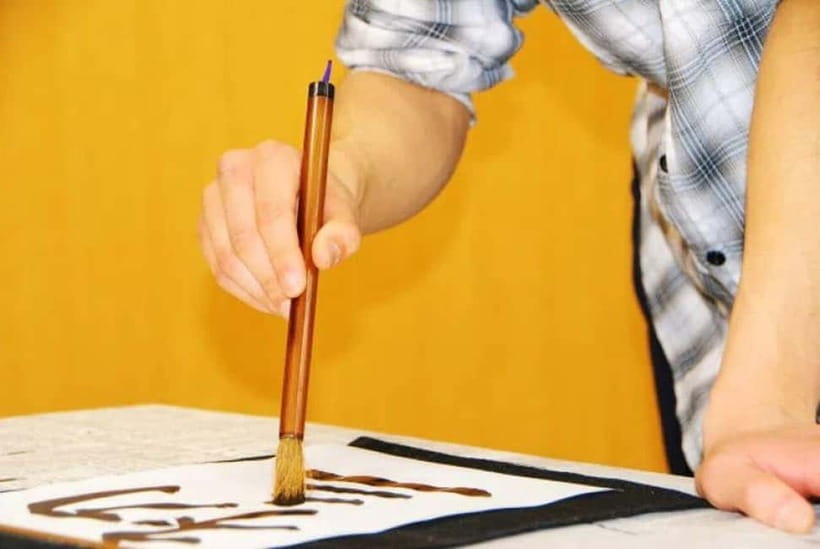
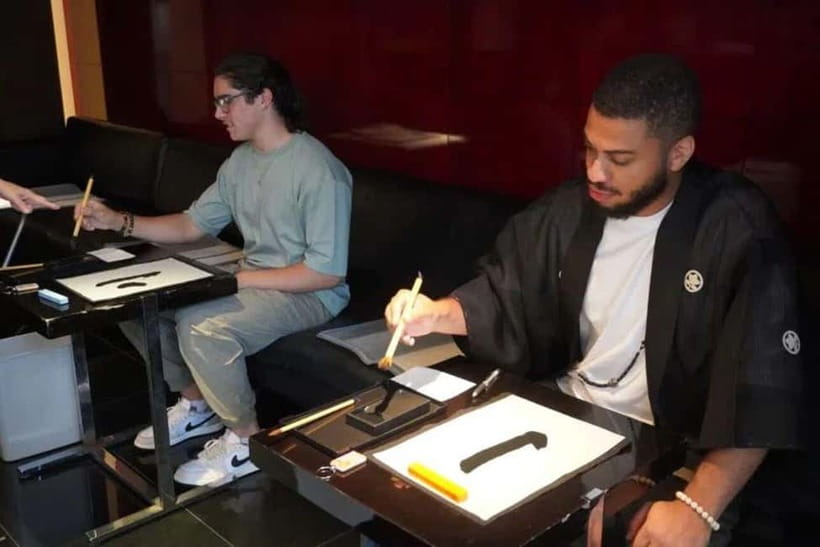
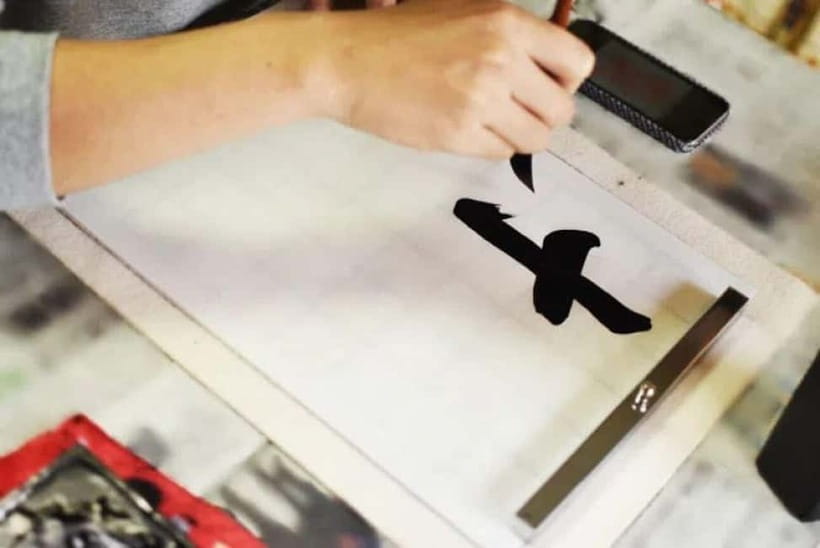
The class begins with a short explanation of the tools. You learn how to hold the brush, how to apply ink, and how the brush creates thick and thin lines on washi paper. This opening lesson matters because a calligraphy brush behaves differently from a normal pen. Pressure and movement both affect the final mark.
You should not worry about having neat handwriting. The instructors are used to beginners and offer individual help as you practice. Several participants describe one-to-one guidance as a major strength, especially when learning how to set each stroke correctly.
The class then moves to basic Japanese characters. You copy examples and get a feel for stroke order, spacing, and balance. This part is less about producing a perfect character than learning why Japanese writing has such a measured pace. The quiet concentration is one of the pleasures of the activity.
At this stage, you may notice that the brush needs a light touch. Too much ink can blur the paper, while too little can leave a weak line. That small trial-and-error process is part of the fun, and the instructors are there to correct your hand position and answer questions about Japanese writing.
Other things to make with your hands in Kyoto:
- Kyoto : Chopsticks Making Workshop in Gion with Engraving Option
★ 5.0 · 958 reviews - Authentic knife making experience at a blacksmith in Kyoto
★ 4.8 · 350 reviews - Kyoto: Calligraphy class at Buddhist temple in city center
★ 5.0 · 167 reviews
Turning your name into Kanji
The most personal part comes when you write your own name and a favorite word. The staff help you choose possible Kanji characters and explain their meanings. This is not simply a phonetic translation. The selected characters can suggest ideas such as courage, courtesy, peace, nature, or beauty.
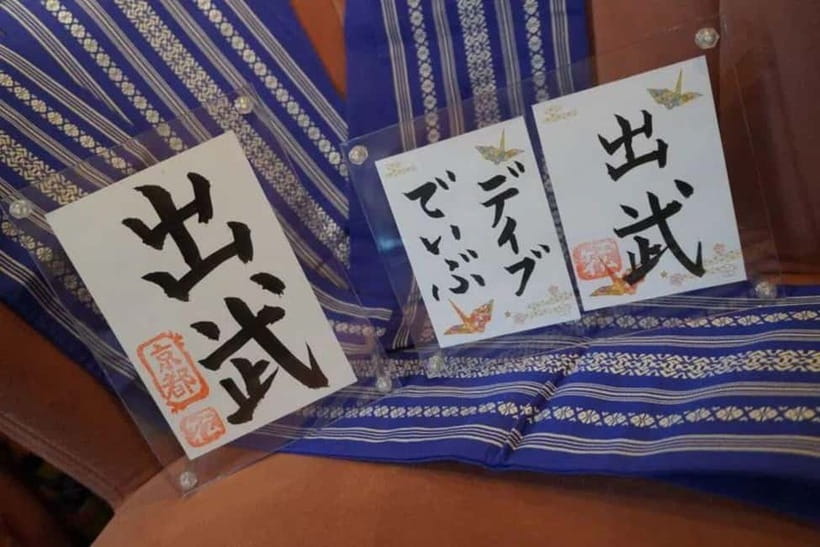
For example, the name Brian may be written as 武礼安. The characters can suggest martial strength or bravery, courtesy and gratitude, and peace. Liz may become 梨図, using characters associated with a pear and a picture or drawing. The result is a name with visual and symbolic meaning, not just a sound written in a different script.
This explanation adds real value to the class. You leave with more than attractive brush marks. You also understand that choosing Kanji involves sound, meaning, and appearance. The staff can help you find a combination that feels suitable, but you should ask questions if the meaning matters to you. A name written in Kanji is a creative interpretation, not a direct equivalent in the same way as a Roman-alphabet spelling.
You can also choose a favorite word. That might be a simple idea such as peace, love, strength, family, or happiness, though the exact choice is up to you and the help available during the session. The instructors explain the possible characters so you can make an informed choice rather than copying a design without understanding it.
Making souvenirs from your brushwork
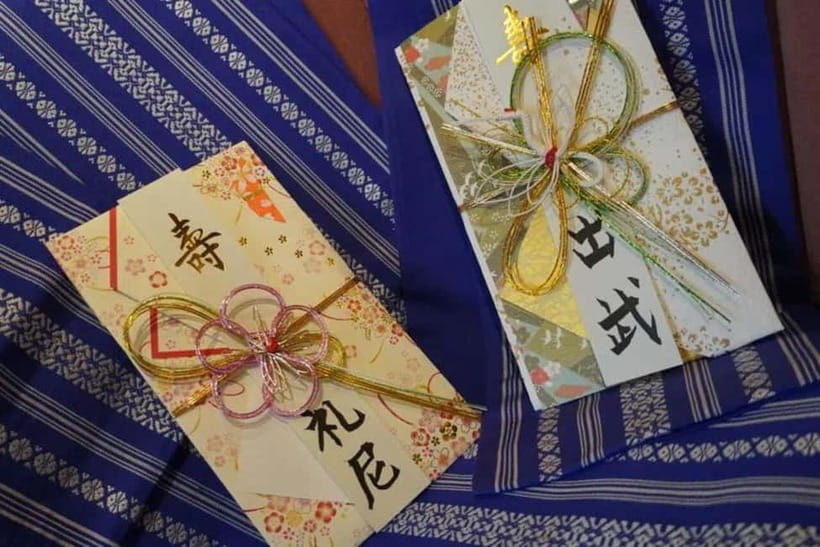
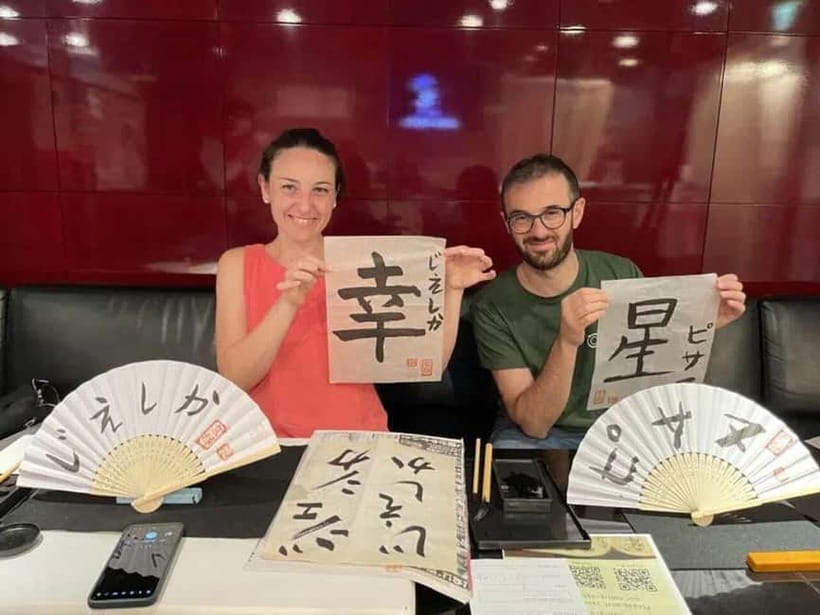
The class includes brushes, ink, and washi paper, along with some items you can take home. Depending on the selected option and the work you complete, these may include a scroll, Japanese fan, picture frame, postcard, or stationery.
This is where the activity feels especially practical for a short Kyoto visit. You do not need to find a shop afterward or figure out how to pack a delicate piece of art. Your own writing becomes the keepsake. It may not look like professional calligraphy, but that is part of its appeal. It records your effort and the date of your visit.
A fan or framed piece can make a more display-ready souvenir, while a postcard or sheet of stationery is easier to pack. If you are visiting with children, having a finished item to carry home gives the class a clear purpose. Families have found the activity easy to enjoy together, with the adults learning alongside the children.
The number and type of souvenirs can depend on the option booked and the completion of the activities. I would check the exact option before paying if a particular item matters to you. The information provided confirms that some souvenirs are included, but it does not promise the same set for every booking.
Why the instructors matter
Calligraphy can feel intimidating when you cannot read the characters. The teaching style makes a big difference, and this class is built around patient assistance in English.
Rena is praised for explaining both the technical side of the writing and the cultural ideas behind it. Lana and Waka are noted for clear explanations and close support with individual strokes. Yoshia Kobayashi and Kou have also helped participants with both calligraphy and wider questions about Japanese culture.
The names matter because this is not a self-guided table activity. You have an instructor nearby who can show you how to hold the brush, correct a stroke, and explain why a character looks the way it does. Several people found that the staff balanced instruction with encouragement, which is useful when your first attempts look uneven.
English is the stated teaching language. That makes the experience accessible if you know little or no Japanese. You can ask about character meanings, writing styles, and cultural points without relying on gestures or a translation app.
The class may be private or arranged for a small group. That is useful if you want more direct help, though the exact group format depends on the option you select. If you are booking for a family or friends, check the available format so your expectations match the reservation.
Same base, a different sort of day:
- PERFECT KYOTO 1-Day Bus Tour
★ 5.0 · 13,518 reviews - Kyoto: Fushimi Inari, Kinkakuji, Bamboo Grove 1 Day Bus Tour
★ 4.8 · 4,316 reviews - Kyoto: Tea Ceremony in a Traditional Tea House in Kiyomizu
★ 4.9 · 3,519 reviews - Kyoto Geisha Walking Tour: Gion District & Hidden Gems
★ 4.7 · 3,273 reviews
A good pause in a busy Kyoto day
The location in front of Kyoto Station is one of the strongest practical features. Kyoto Station is a major arrival and departure point, so you can place the class before a train, after arriving in the city, or between visits around southern Kyoto.
The activity takes about one hour, though the timing can vary depending on how quickly you complete the work. That makes it easier to fit into a packed schedule than a longer craft workshop. Still, I would avoid scheduling a tight connection immediately afterward. You need time to finish your pieces, gather your souvenirs, and reach your next stop.
The calm pace also gives the class a useful contrast with sightseeing. Kyoto can involve crowded buses, busy temple approaches, and a lot of walking. Sitting with ink and paper for an hour lets you focus on one small task. The quiet is not a distraction from the city experience. It gives you a different way to connect with Japanese culture.
The presence of matcha has also been mentioned as part of one visit, but it is not listed as a standard inclusion in the activity details. Do not book this class expecting a tea service unless your chosen option clearly includes it.
Is the $51 price good value?
At $51 per person, this is not the cheapest way to spend an hour in Kyoto. You are paying for instruction, materials, staff assistance, and finished souvenirs rather than simply watching a demonstration.
I think the price is reasonable if you want a hands-on activity with a personal result. The value improves for visitors who care about Japanese writing, families who want an activity suitable for several ages, and anyone looking for a meaningful keepsake that they made themselves.
The price is harder to justify if you only want a quick photo or a mass-produced souvenir. A one-hour class cannot provide advanced calligraphy training, and your finished work will reflect your beginner status. That is not a flaw, but you should book it for the experience and the personal connection, not for professional-quality artwork.
The included use of brushes, ink, and washi paper keeps the activity straightforward. You do not need to bring special equipment. Since some finished items can be taken home, the class also avoids the extra cost of buying a separate craft souvenir afterward.
Who will enjoy this most
This class works particularly well for first-time visitors to Japan. You get a gentle introduction to a visible part of Japanese culture without needing to read Japanese or understand complex history beforehand.
Families with children aged five and older can enjoy it together. Children have a clear creative task, while adults can ask more detailed questions about the characters and their meanings. The activity is also a good fit for couples who want a shared keepsake, or friends who want to compare their writing and choose different Kanji.
It suits solo visitors, too. The one-to-one help makes it easier to ask questions at your own pace, and you do not need to arrive with a group. Private and small-group formats are available, depending on the booking option.
I would be less likely to recommend it to someone seeking a long, serious study of calligraphy. The class is an introduction with a finished souvenir, not a multi-session course. Visitors with mobility needs should also confirm the practical arrangements for their chosen meeting point, since the available details do not describe accessibility features.
Booking details worth checking
You can cancel up to 24 hours before the activity for a full refund. The reserve-now, pay-later option lets you hold a place without paying at the time of booking, which is useful when your Kyoto schedule is still changing.
Check the starting times before choosing a date. The class lasts about one hour, but the finish can vary with the pace of the activities. The meeting point may also vary by option, even though the general location is in front of Kyoto Station.
Children under five are not suitable for the class. English is the listed language, and private or small-group arrangements may be available. If you want a specific souvenir, group format, or time of day, read the selected option carefully before confirming.
Should you book the Kyoto calligraphy class?
I would book this if you want an easy, personal cultural activity with strong English support and something tangible to carry home. The best parts are the patient instruction, the chance to give your name a Kanji interpretation, and the way the class turns basic practice into a fan, scroll, card, frame, or other keepsake.
The main limits are the short duration and the price. You will not become an accomplished calligrapher in an hour, and the exact souvenir selection can vary. But for a well-placed Kyoto activity that works for beginners, families, and small groups, $51 can be fair value, especially when you want a quiet break and a souvenir with your own brush marks on it.
FAQ
Where is the Japanese calligraphy class held?
The general location is in front of Kyoto Station in Kyoto, Japan. The exact meeting point may vary depending on the option booked.
How long does the class last?
The class takes about one hour. The timing may vary depending on how quickly you complete the activities.
Is instruction available in English?
Yes. English instruction is included, and English is the listed language for the activity.
What will I learn during the class?
You will learn how to use a brush, apply ink, write basic characters, and create your name and a favorite word in Kanji and alphabets.
Can I write my own name?
Yes. Staff help suggest possible Kanji characters for your name and explain their meanings.
What materials are included?
Brushes, ink, and washi paper are included. Some souvenir items are also provided, depending on the option and completed activities.
Are children allowed to join?
Children aged five and older can join. The activity is not suitable for children under five.
Just added in Kyoto
- Private Cooking Class Udon in Kyoto Japan★ 5.0 · 23 reviews
- Your Private Vacation Photography Session In Kyoto★ 5.0 · 110 reviews
- Kyoto: Zen Meditation at a Private Temple with a Monk★ 5.0 · 25 reviews
- Private Pewter Sake Cup Experience with a Kyoto Artisan★ 5.0 · 31 reviews
- Kyoto Wagashi(Japanese sweets) Cooking Class near Fushimiinari★ 5.0 · 60 reviews
- Kyoto:Family-Friendly Kimono & Yukata Experience at WARGO★ 5.0 · 147 reviews
- Private Guided Traditional Buddhist Cooking in Japan★ 5.0 · 16 reviews
- Kyoto: Gion Geisha District & Sake-in-Hand Walking Tour★ 5.0 · 37 reviews
Calligraphy & Craft Workshops, compared.
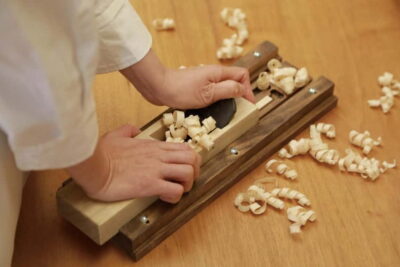
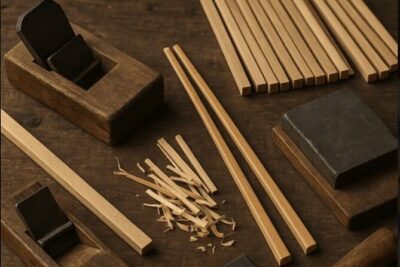
Chopsticks Making Workshop in Gion with Engraving Option
Read our review →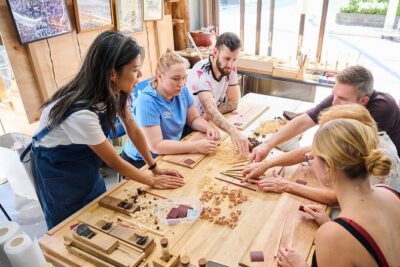


Matcha Making Experience with Mochi Sweets in Asakusa
Read our review →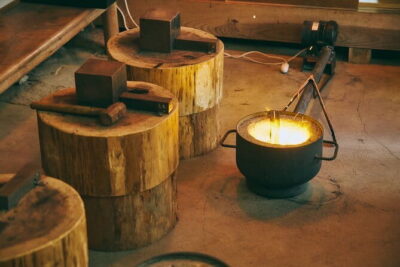
Authentic knife making experience at a blacksmith in Kyoto
Read our review →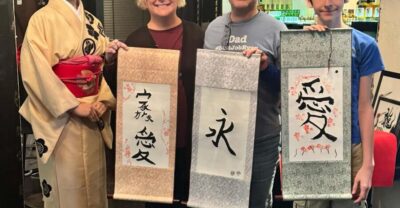
Calligraphy class at Buddhist temple in city center
Read our review →Browse the lists this tour appears in