
Reviewed · CALLIGRAPHY & CRAFT WORKSHOPS
Kyoto: Local Home Visit and Japanese Calligraphy Class
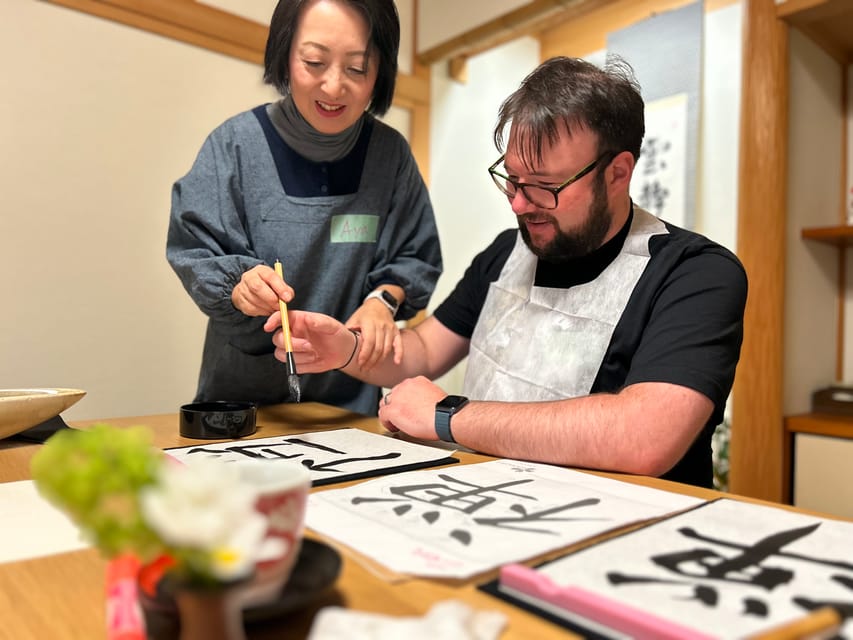
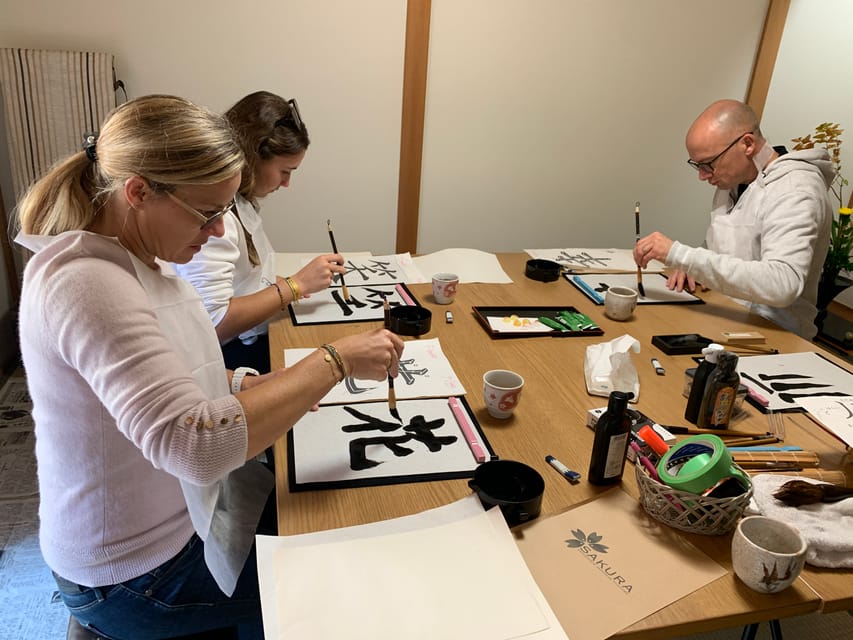
The special part of this one-hour private class is the setting. You visit a local Kyoto home near Nijo Castle, meet your hosts, and learn calligraphy in a personal space rather than a large studio. Aya guides you through the brushwork, explains the background of the art, and helps you create a kanji piece that means something to you.
I like two things here: you leave with a real washi paper keepsake, and the private format allows patient, hands-on help. The main drawback is the short lesson. You can learn the basics and make a good souvenir, but calligraphy takes years to master, so this is an introduction, not expert training.
Key points to know before booking
- Local home near Nijo Castle: The class takes place about 200 meters west of the castle, giving you a look at daily Kyoto life as well as a cultural lesson.
- Aya leads the instruction: She explains calligraphy’s background and demonstrates the brush movements before helping you practice.
- Choose a kanji with personal meaning: Love, peace, strength, wisdom, or another idea can become the focus of your artwork.
- Private group format: You receive direct help instead of working in a crowded class.
- One-hour schedule: The compact lesson suits a busy Kyoto itinerary, but late arrival cuts into your practice time.
- Bring socks: Shoes come off indoors, and bare feet are not allowed.
A Kyoto home visit with brush, ink, and washi
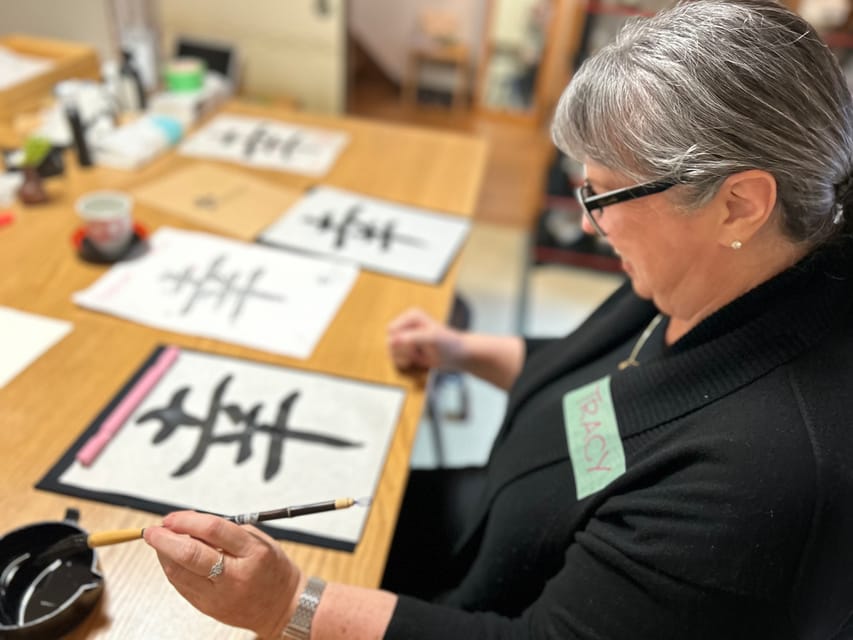
Japanese calligraphy, or shodo, is more than writing a word neatly. The brush starts and stops with purpose. Pressure changes the width of the line. A pause can matter as much as a stroke. Even a simple kanji carries a sense of movement, balance, and character.
That makes this class a good match for anyone who wants more than a quick photograph at a cultural attraction. You sit down, slow your pace, and pay attention to how your hand moves. The lesson gives you a small but genuine taste of the concentration behind the art.
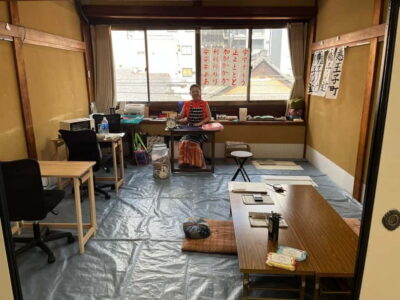
The setting adds something important. You are not simply entering a classroom near a famous sight. You visit a local home where real Kyoto residents live, close to Nijo Castle. That home setting gives the hour a more personal feel, and the conversation with your hosts can be as memorable as the writing itself.
Do keep the scale in mind. This is not a formal apprenticeship, and you will not become a trained calligrapher in 60 minutes. The value comes from learning the basic method, trying the strokes yourself, and making a personal piece under careful guidance.
Other things to make with your hands in Kyoto:
- Kyoto : Chopsticks Making Workshop in Gion with Engraving Option
★ 5.0 · 958 reviews - Authentic knife making experience at a blacksmith in Kyoto
★ 4.8 · 350 reviews - Kyoto: Calligraphy class at Buddhist temple in city center
★ 5.0 · 167 reviews
What happens during the one-hour class
The session begins with an explanation of Japanese calligraphy and its place in Japanese culture. Aya has also explained how she learned the art herself, which helps put the lesson in human terms. Instead of treating calligraphy as a mysterious old custom, she shows you the practice and discipline behind it.
You then learn how to handle the brush and ink. Expect instruction on the order and shape of basic strokes, along with guidance on pressure and direction. Your first attempts may look uneven. That is normal. The point is to understand how the brush behaves before trying to make a finished character.
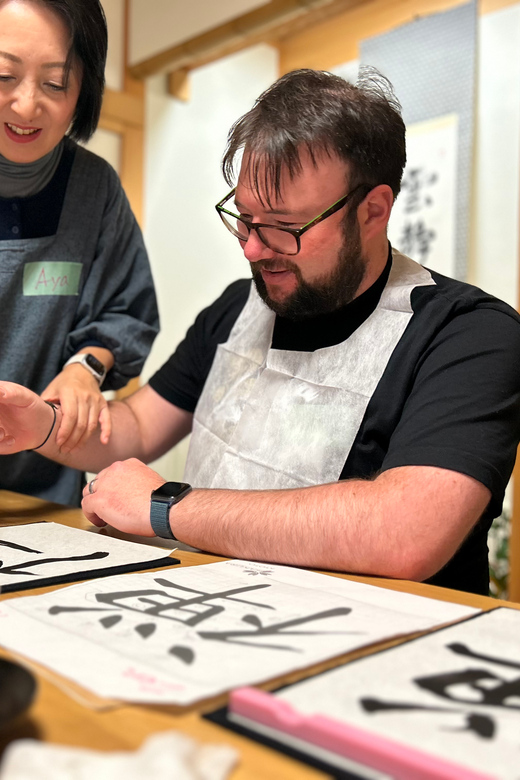
Aya’s teaching style is patient and practical. She demonstrates, lets you try, and then offers corrections. You may write several kanji with help from Aya and an assistant, giving you more than one chance to settle your hand. That is especially useful if you have never used a calligraphy brush.
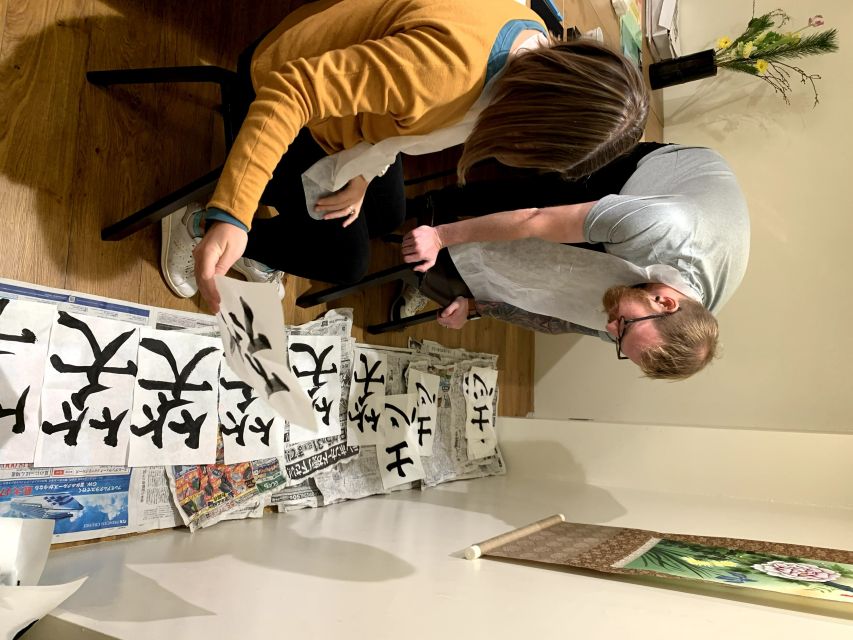
The class then turns toward your final artwork. You choose a kanji that connects with you. The suggested ideas include love, peace, strength, and wisdom, but you can select the character that best fits your time in Japan. You also add your name in Japanese, giving the piece a personal mark rather than leaving it as a generic souvenir.
The finished work is yours to take home. It may not have the exact balance of a master’s example, but that is part of its appeal. You can see your own progress in the page, from the first practice stroke to the final character.
Why the private format matters
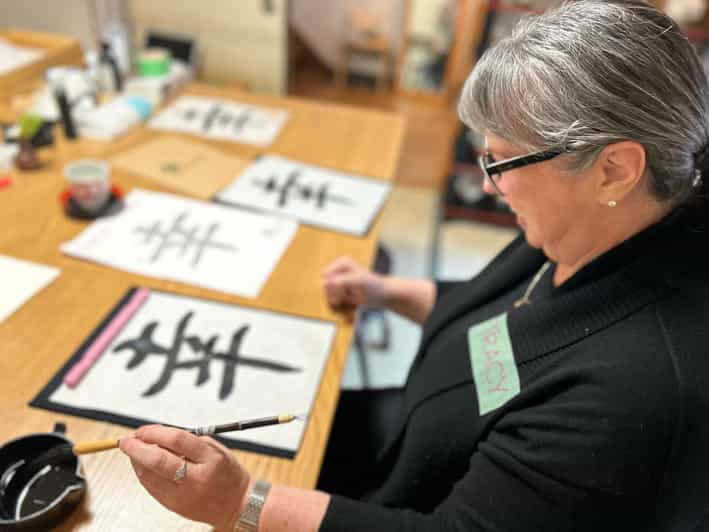
A private group can make a big difference in a hands-on lesson. Calligraphy is difficult to understand from a distance. You need someone to notice how you hold the brush, where you press too hard, and when you lift the tip too soon.
The private arrangement gives Aya and her assistant room to focus on your work. If you are a couple, family group, or small party, you can ask questions as you go. The atmosphere is also likely to feel less formal than a larger workshop.
Several details point to a friendly and relaxed teaching style. The instructors make time for questions about calligraphy and other traditional arts, and the class can include conversation about places to visit around Kyoto. That local connection is useful if you have time near Nijo Castle and want ideas for nearby temples or sights.
The private format also works well for beginners who feel awkward about making mistakes in front of strangers. You can try a stroke, laugh at the result, and try again without worrying about keeping pace with a large group.
The tradeoff is that the hour passes quickly. Private instruction gives you better attention, but it does not create more time. Arrive ready to start, and do not treat the first ten minutes as disposable.
Choosing your kanji and making the piece personal
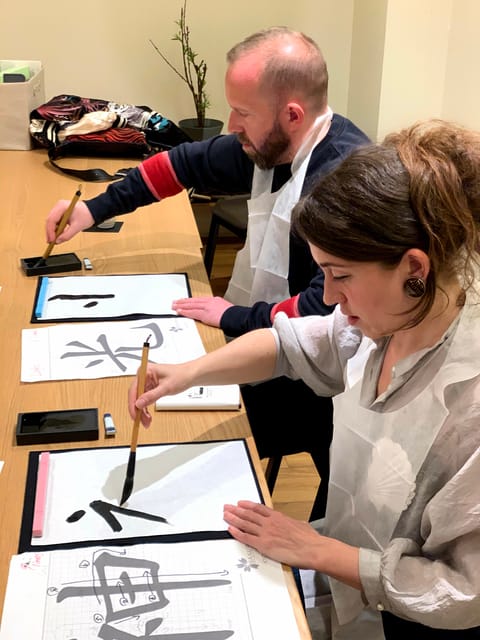
Choosing one character is one of the strongest parts of the class. A word such as peace or strength can connect the artwork to a personal goal, a family member, a honeymoon, or simply the feeling you want to remember from Japan.
You do not need to know Japanese before arriving. The lesson is designed to explain the character and help you reproduce it. Aya can show you the correct sequence of strokes and help you place your name beside the main kanji.
Adding your name matters because it changes the piece from a practice sheet into a personal record. It also gives you something to explain when you display it at home. You can remember not only the word you selected, but also the effort needed to form it.
The material is simple: brush, ink, and Japanese washi paper. Those tools are included, so you do not need to buy supplies before the class. The washi gives the final work the right look and feel for a piece of Japanese calligraphy.
You should still keep your expectations sensible. Your finished kanji may have small irregularities. That is not a defect in the souvenir. It shows that you made it yourself, with guidance from a trained teacher.
Same base, a different sort of day:
- PERFECT KYOTO 1-Day Bus Tour
★ 5.0 · 13,518 reviews - Kyoto: Fushimi Inari, Kinkakuji, Bamboo Grove 1 Day Bus Tour
★ 4.8 · 4,316 reviews - Kyoto: Tea Ceremony in a Traditional Tea House in Kiyomizu
★ 4.9 · 3,519 reviews - Kyoto Geisha Walking Tour: Gion District & Hidden Gems
★ 4.7 · 3,273 reviews
The location west of Nijo Castle
The meeting point is about 200 meters west of Nijo Castle, on the north side of Ebisugawa Street, just west of Nishinotoin Street. On the opposite side of the street, you should see the Lions Mansion building.
Kyoto has several places with similar names, so use the venue name in your map application rather than searching by address alone. If you take a taxi, provide the phone number as well. This is a small but important point, since arriving at the wrong address could cost you much of a one-hour lesson.
The location makes sense in a day of sightseeing. You can pair the class with a visit to Nijo Castle, though you should allow enough time to move between your sightseeing stop and the home. The activity is not a long excursion, so it can fit neatly between major Kyoto attractions.
There is no waiting space if you arrive much too early. Plan to arrive about five minutes before the start time. That gives you time to find the entrance without turning up so early that you must wait on the street.
Price and value at $66 per person
At $66 per person, this is not the cheapest one-hour activity in Kyoto. You are paying for private instruction, a local home setting, the teacher’s time, equipment, ink, washi paper, and a finished piece to take away.
I think the price makes the most sense for people who value direct contact and a personal souvenir. A short group demonstration might cost less, but it would not offer the same level of correction or the same chance to ask questions. The private setup is the key part of the value.
The price is also easier to justify for a couple or small group that wants a shared activity. You can learn together, compare your characters, and leave with separate pieces. It works especially well as a quieter break from Kyoto’s crowded major sights.
For a serious calligraphy student, the hour may feel limited for the cost. You will not cover advanced techniques or produce professional work. If your main goal is intensive training, look for a longer course. If your goal is a meaningful introduction and a handmade souvenir, the price is more reasonable.
The booking terms offer useful flexibility. You can cancel up to 24 hours before the activity for a full refund, and you can reserve now and pay later. Check the available start times before building the rest of your day around it.
Practical rules that affect your visit
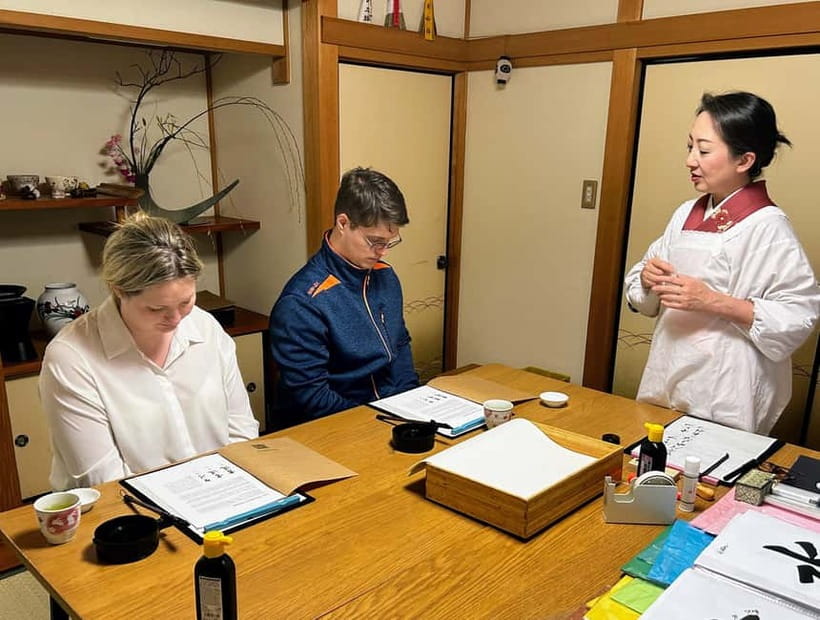
You must wear socks. Shoes come off indoors, and bare feet are not accepted. If you forget, socks may be available for purchase, but it is easier to bring your own.
Smoking, indoor smoking, vaping, alcohol, and drugs are not allowed. Strong fragrances are also prohibited. These rules suit a private home and a quiet activity involving paper, ink, and close instruction.
The class is wheelchair accessible. It is not suitable for children under 13. English and Japanese instruction is available, which makes the class workable for international visitors who do not speak Japanese.
Punctuality matters more than usual because the total lesson lasts only one hour. Arriving late shortens your lesson, and the class cannot be offered if you are more than 15 minutes late. Use the venue name and phone number when navigating so a map mistake does not become a missed class.
Who will enjoy this Kyoto activity most
I would recommend this class to first-time visitors who want a calm cultural activity with something physical to do. You do not just watch a demonstration. You hold the brush, make the strokes, and take away the result.
It is also a good fit for couples. The private setting gives you a shared project, and the final pieces become separate reminders of the same hour. It can work particularly well during a honeymoon or anniversary trip because the artwork has a personal meaning rather than a factory-made design.
Art lovers and people interested in Japanese traditions will get the most from Aya’s explanations. You can ask about the art’s background, her own training, and the choices behind each stroke.
I would be more cautious about recommending it to someone who dislikes structured instruction or wants a long, relaxed visit with no time pressure. The activity is short, and the need to arrive early and follow indoor rules may feel fussy. Children under 13 cannot join, so families with younger children will need another plan.
Should you book the calligraphy class?
Book it if you want a small, personal window into Kyoto life, especially if you like the idea of learning by doing. The local home setting, patient instruction from Aya, and handmade washi artwork give the hour more substance than a simple souvenir stop.
Skip it if you want advanced calligraphy training, a long cultural program, or a flexible drop-in activity. The lesson is brief, and lateness can cost you a large part of it.
For most visitors who have one free hour near Nijo Castle, I think it is a worthwhile choice. Arrive in socks, arrive early, choose a kanji with meaning, and let the finished brushwork be your own imperfect proof that you tried.
FAQ
Where does the calligraphy class take place?
It takes place in a local home about 200 meters west of Nijo Castle, on the north side of Ebisugawa Street just west of Nishinotoin Street.
How long does the class last?
The class lasts one hour.
How much does the activity cost?
The listed price is $66 per person.
Is the class private?
Yes. The activity is offered for a private group.
Who teaches the class?
Aya is the calligraphy teacher, supported by an assistant. English and Japanese instruction are available.
What will I learn?
You will learn basic Japanese calligraphy instructions and brush movements, including how to form kanji characters.
Can I choose my own kanji?
Yes. You can choose a meaningful kanji, with examples including love, peace, strength, and wisdom.
Do I get to keep my artwork?
Yes. You create a calligraphy piece on Japanese washi paper and take it home.
What should I bring?
Bring socks. Shoes are not allowed indoors, and bare feet are not accepted.
Can children join the class?
The class is not suitable for children under 13.
Just added in Kyoto
- Private Cooking Class Udon in Kyoto Japan★ 5.0 · 23 reviews
- Your Private Vacation Photography Session In Kyoto★ 5.0 · 110 reviews
- Kyoto: Zen Meditation at a Private Temple with a Monk★ 5.0 · 25 reviews
- Private Pewter Sake Cup Experience with a Kyoto Artisan★ 5.0 · 31 reviews
- Kyoto Wagashi(Japanese sweets) Cooking Class near Fushimiinari★ 5.0 · 60 reviews
- Kyoto:Family-Friendly Kimono & Yukata Experience at WARGO★ 5.0 · 147 reviews
- Private Guided Traditional Buddhist Cooking in Japan★ 5.0 · 16 reviews
- Kyoto: Gion Geisha District & Sake-in-Hand Walking Tour★ 5.0 · 37 reviews
Calligraphy & Craft Workshops, compared.
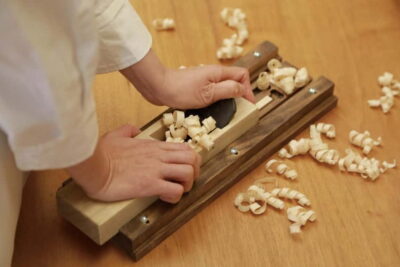
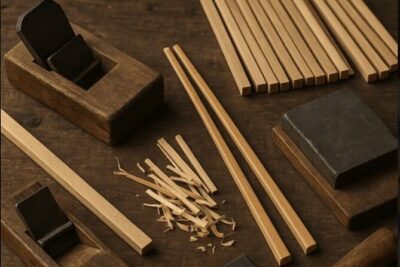
Chopsticks Making Workshop in Gion with Engraving Option
Read our review →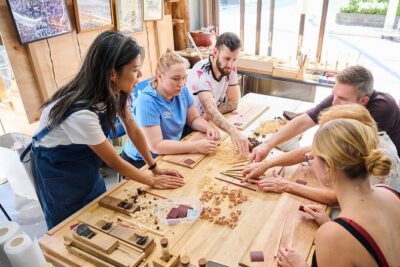


Matcha Making Experience with Mochi Sweets in Asakusa
Read our review →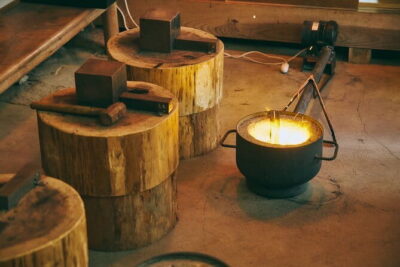
Authentic knife making experience at a blacksmith in Kyoto
Read our review →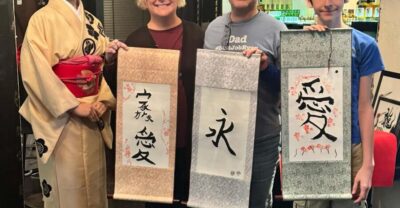
Calligraphy class at Buddhist temple in city center
Read our review →Browse the lists this tour appears in