
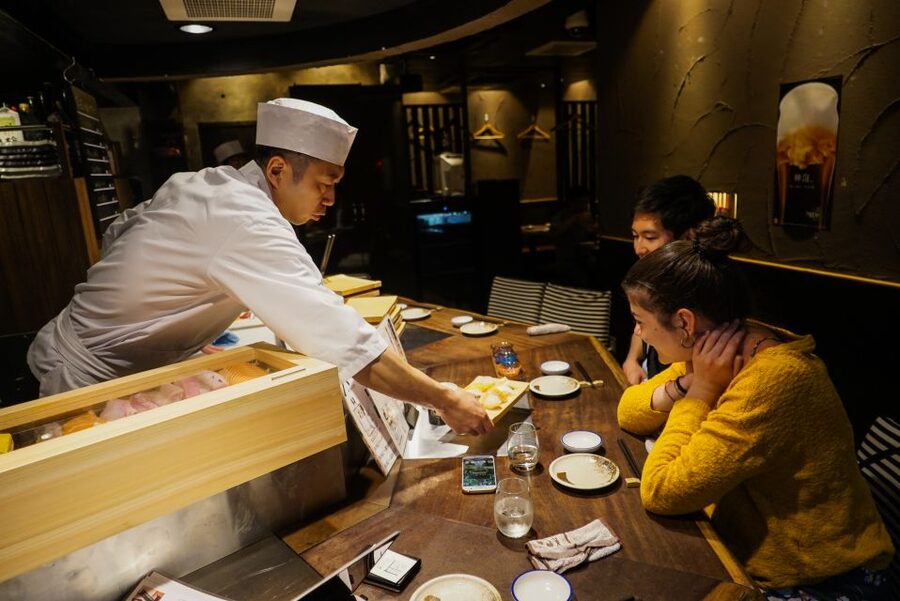
Reviewed · GEISHA & GION DISTRICT TOURS
Kyoto: Foodie Night Tour in Gion with 9 dishes + 6 Sake
Gion after dark is best understood with a table, a small glass of sake, and someone who knows how Kyoto residents eat. This three-and-a-half-hour walk takes you from the Izumo no Okuni statue into old lanes, then to traditional restaurants around Gion and Pontocho for nine dishes and six sake tastings.
I like the mix of food and place. You get Kyoto specialties such as obanzai, oden, and yuba, while your guide explains how the city’s evening life fits into these historic districts. I also like the chance to try several Kyoto sakes without committing to a full bottle.
The main caution is value. At $361 per person, this is an expensive food walk, and the quality may not be even at every stop. One meal received high praise while another was called poor, so book this for the guide, setting, and tasting range as much as for a guaranteed gourmet dinner.
Key points to know before booking
- Nine dishes across traditional restaurants and cafés: Expect Kyoto-style small dishes, a dinner course, and a local dessert rather than one large restaurant meal.
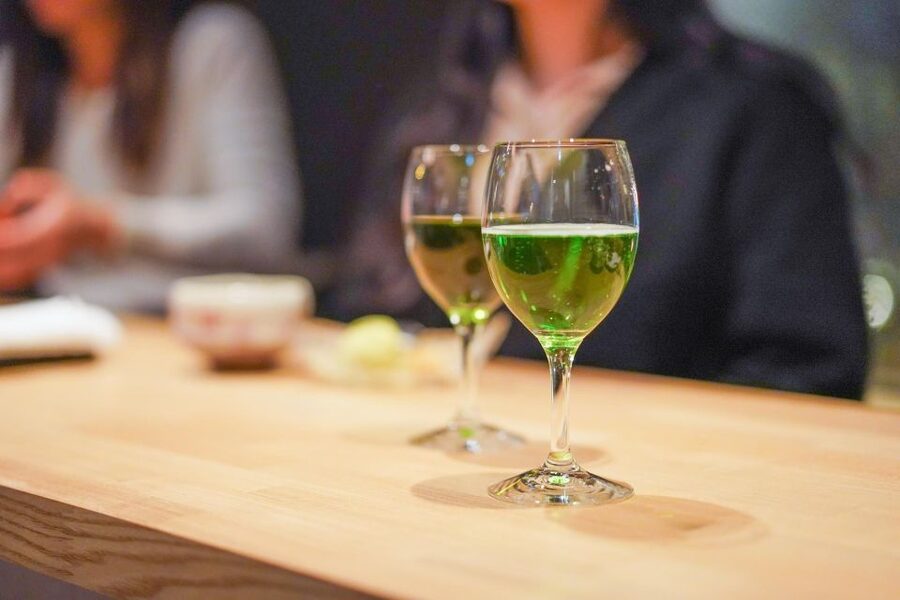
- Six Kyoto sake tastings: The experience includes a Kiki sake tasting with three different Kyoto sakes, plus six kinds of sake tastings listed in the inclusions.
- Gion and Pontocho after dark: The route links two of Kyoto’s most atmospheric evening districts, with old wooden buildings and narrow lanes.
- An English-speaking local guide: Rika has been praised for helping the group talk easily, while more explanation about Gion and Pontocho would improve the experience.
- Food quality can vary: The first stop may be the strongest part of the meal, while later food has received mixed reactions.
- Plan for walking and cash: Some locations are not wheelchair or stroller accessible, and most bars do not accept credit cards.
Why this Kyoto night tour is different
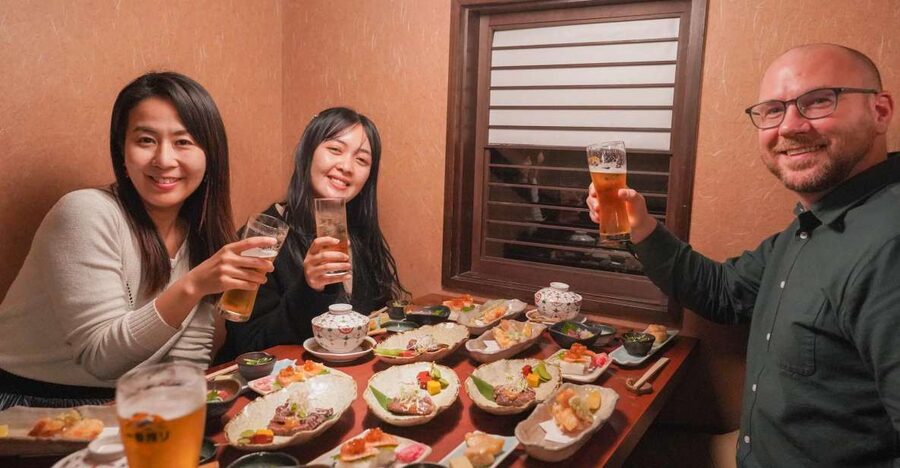
Many Kyoto food outings focus on a single restaurant. This one works more like a moving dinner. You meet near Gion Shijo Station, walk through Gion, sit down for traditional dishes and sake, continue through Pontocho, and finish with dessert in a Kyoto café.
That format gives you a better sense of how the neighborhoods connect. Gion is associated with old Kyoto architecture, tea houses, and geisha culture. Pontocho is another narrow dining district, known for its traditional buildings and evening restaurants. You are not simply eating in a modern venue and going home. The streets between stops are part of the experience.
The tour lasts 210 minutes, with roughly an hour planned at each dining stage. That is enough time to eat without rushing, but it also means you should arrive ready for a full evening rather than a quick tasting. The route begins and ends at the Izumo no Okuni statue outside Exit 5 of Gion Shijo Station.
The food is presented as a course with nine dishes and dessert. The exact menu can vary, so you should think in terms of Kyoto categories rather than a fixed restaurant menu. That is useful if you want an introduction to local food, but less useful if you are seeking one carefully controlled meal.
Other evenings in the old entertainment quarters of Kyoto:
- Kyoto Geisha Walking Tour: Gion District & Hidden Gems
★ 4.7 · 3,273 reviews - Kyoto: Gion Magical Night Walking Tour with Geisha Trivia
★ 4.9 · 2,393 reviews - Kyoto: Gion Geisha District Walking Tour – Stories of Geisha
★ 4.7 · 2,187 reviews
Meeting at the Izumo no Okuni statue
The starting point is easy to identify if you use the correct landmark: the statue of Izumo no Okuni in front of Gion Shijo Station, right outside Exit 5. This matters because Gion Shijo Station has several exits and the streets around it can become confusing after dark.
From there, your guide leads the group into Gion. The walk is not just transportation between restaurants. You will see old Kyoto-style buildings and hear about how local people spend an evening in the area.
The setting is one of the tour’s strongest features. Gion can feel formal and mysterious if you only stroll through it on your own. A local guide gives you a way to read the streets and understand why the neighborhood is important. You might also see a geisha passing by, but that is a matter of timing, not a promised part of the program.
The guide speaks English, and the experience is designed around conversation. Rika, one guide associated with the tour, was especially good at getting people talking with one another. That can make a shared meal feel relaxed instead of stiff.
One point needs care: the information describes the experience as a private group in one place, but also says it is not a private tour. Do not assume you will have a guide entirely to yourself. Ask the operator about the expected group arrangement if that detail matters to you.
The first dinner stop: obanzai, oden, and yuba
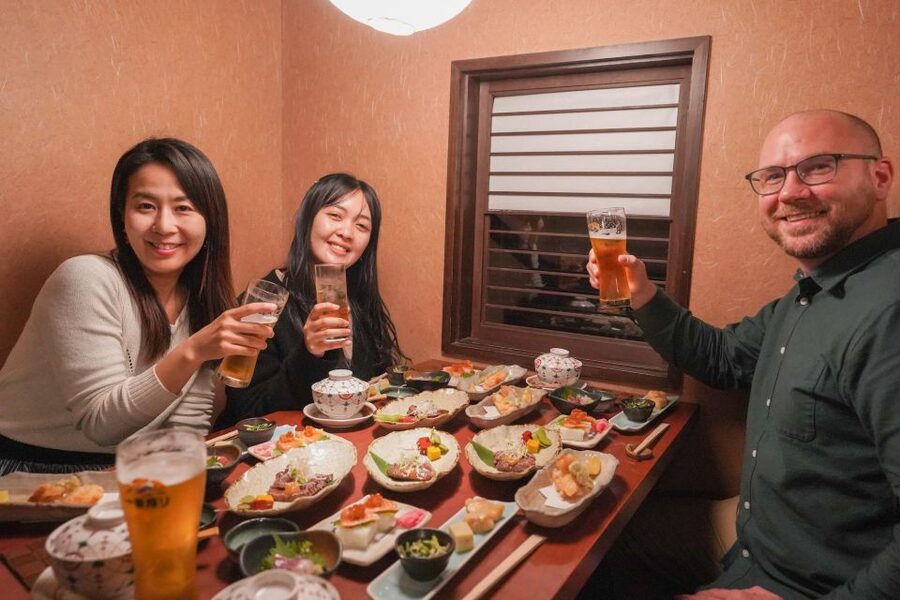
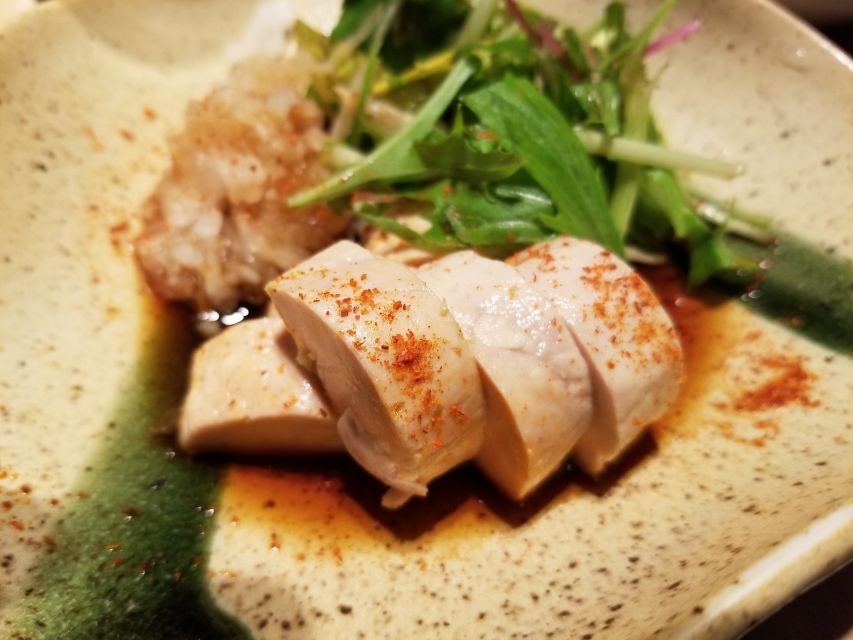
The first restaurant is described as a place you might not find without local help. It has a traditional setting and serves simple Kyoto dishes rather than flashy food. This is where the tour’s food theme makes the most sense.
You might taste obanzai, the home-style cooking associated with Kyoto. Obanzai often centers on carefully seasoned vegetables and everyday dishes, not heavy sauces or large portions. The appeal is subtle seasoning and variety. It gives you a useful contrast to restaurant food designed mainly for spectacle.
Oden may also appear. This Japanese stew is built from ingredients simmered in broth, so its flavor comes from time and seasoning rather than strong spice. Yuba, or tofu skin, is another Kyoto specialty. Its delicate texture and mild flavor may appeal to you if you enjoy restrained Japanese cooking, though it can seem plain if you expect bold flavors.
The first stop includes sake, and the traditional room adds to the sense of place. You share food at the table while the guide explains what you are eating. That personal explanation is important because several of these dishes may be unfamiliar, and a short description can make a quiet-looking plate much more interesting.
The first dinner has also been the part most likely to win people over. One especially positive assessment praised the authentic food locations, while another found the first dinner excellent but had a poor experience at the second food stop. I would set your expectations accordingly: enjoy the first restaurant on its own terms, but do not assume every later dish will reach the same level.
Six sake tastings, with room for comparison
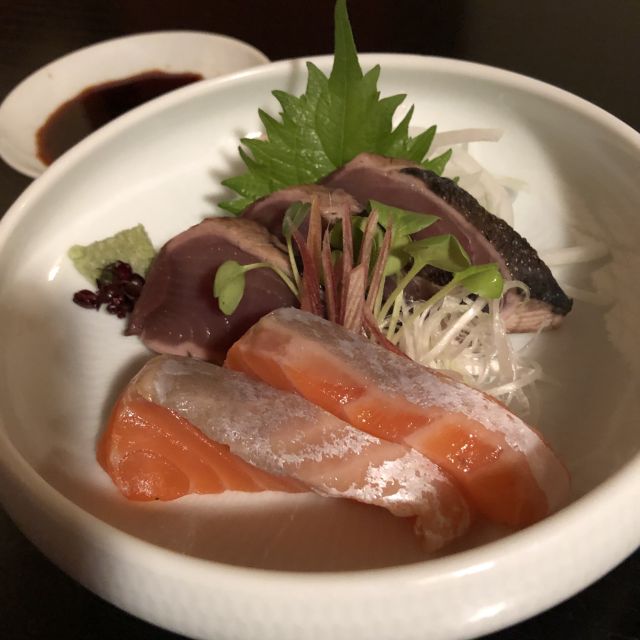
Sake is not just an extra drink here. The evening includes six kinds of sake tastings, and the course specifically describes a Kiki sake experience with three different Kyoto-made sakes. Two additional drinks are included, with alcoholic and non-alcoholic choices available.
That gives you a chance to compare rather than simply order one familiar drink. Your guide explains the selections as you taste them, helping you notice differences between bottles. The information does not provide the exact brands or tasting order, so you should not book this expecting a fixed list of labels.
You must be at least 20 years old to drink alcohol in Japan. If you are under 20, the tour offers non-alcoholic options, but the sake portion will not apply to you in the same way. If you do not drink, clarify how the included drink arrangements work when booking.
The sake tasting also affects the value calculation. A restaurant meal, a guide, six sake samples, two drinks, a dessert, and local orientation can add up quickly in Kyoto. Still, $361 is a high price for three and a half hours. You are paying for access, explanation, and a planned route, not only for the food on the plates.
Other tasting rooms and breweries in Kyoto:
- Kyoto Night Foodie Tour in Gion (9+ dishes + 6 Sake tastings)
★ 5.0 · 1,762 reviews - 3-Hour Kyoto Insider Sake Brewery Tour with Tastings & Pairings
★ 5.0 · 917 reviews - Arashiyama Bamboo, Temple, Monkeys, or Secret Sake Brewery
★ 4.8 · 886 reviews - Kyoto: Insider Sake Brewery Tour with Sake and Food Pairing
★ 5.0 · 704 reviews
Walking through Pontocho between meals
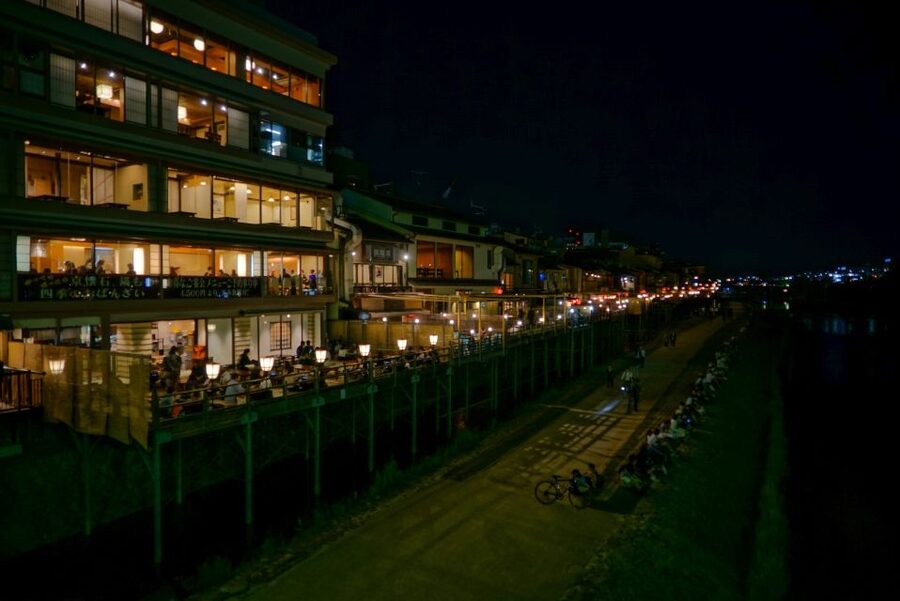
After the first restaurant, the group walks through Pontocho to the next stop. This section keeps the evening from becoming a series of disconnected meals. You see another traditional dining district and get a feel for Kyoto’s narrow evening streets.
Pontocho is best appreciated at a slow pace. The lane is associated with small restaurants and traditional buildings, and the transition from Gion gives the tour a useful change of mood. The guide can point out how the two areas differ, though one person who enjoyed the food and guide still wanted more information about Gion and Pontocho.
That is a fair criticism to keep in mind. The guide may be warm and good at conversation, but warmth does not always mean a detailed neighborhood lecture. If your top priority is architecture, history, and formal cultural commentary, ask for more explanation as you walk.
For me, this portion is valuable because you can see how food districts work in daily life. You are not only checking off famous sights. You are moving between places where people go out to eat, drink, and meet friends.
The second dinner stop and the biggest uncertainty
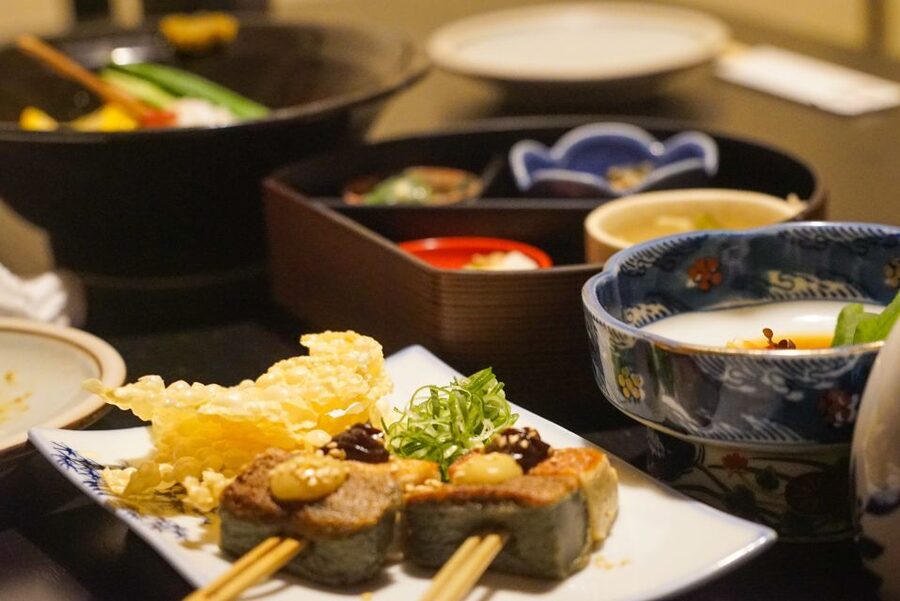
The second dining stop is another part of the evening meal. The full course is listed as nine dishes with dessert, but the exact division between the two restaurants is not specified. You may receive more traditional dishes, additional small plates, or other food chosen by the venue.
This is also where the experience carries its greatest risk. One assessment described the second stop as quite bad after an excellent first dinner. Another strongly objected to the food and felt a wagyu serving was closer to a poor beef cut than the premium meat expected at this price.
That does not mean every group will have the same meal. Menus, ingredients, and restaurant arrangements can change. It does mean you should not treat the word foodie as a promise of a carefully graded tasting menu. The experience is better understood as a guided local evening with food included.
If you are highly particular about meat quality, restaurant style, or menu control, $361 may be better spent on a restaurant you select yourself. If you enjoy trying whatever a local route brings you, the uncertainty may be more acceptable.
Dietary requests must be made by the day before the tour. Same-day changes are not accepted. The operator also cannot guarantee an allergy-free meal because the food is prepared in kitchens it does not control, and substitutions may not be possible at every stop.
Dessert in a traditional Kyoto café
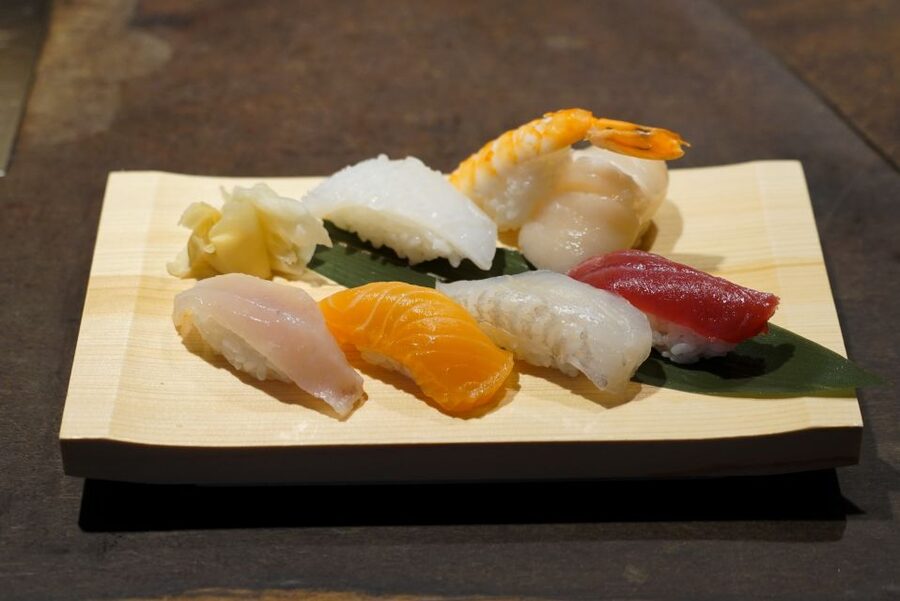
The evening ends at a café around Pontocho or nearby Gion, in a traditional building. Dessert provides a change from the savory dishes and sake, and it gives the group time to slow down before returning to the meeting point.
The dessert is described as a local Kyoto sweet, but no specific item is guaranteed. You might find this stop a welcome finish after several savory plates. If you prefer a long dessert course, note that it is part of a one-hour stage that may include additional food rather than a dedicated pastry tasting.
The final return is to the Izumo no Okuni statue. You are not left at an unfamiliar restaurant or required to find your way back through the old streets. That makes the route practical for a first evening in Kyoto, especially if you would rather not arrange several restaurants yourself.
Is $361 a fair price?
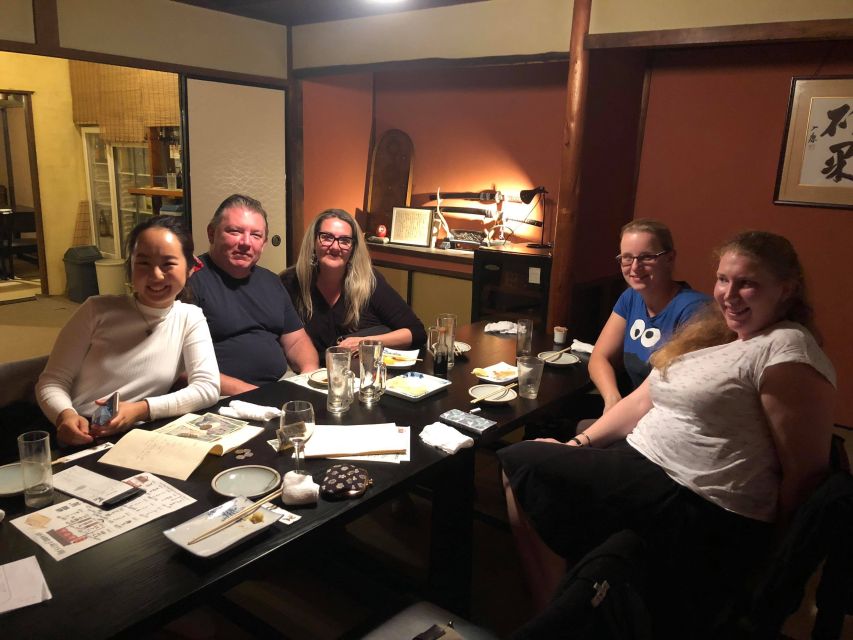
The price is the hardest part of the decision. At $361 per person, the tour costs more than a casual Kyoto dinner and more than many simple food walks. The included package is substantial: nine dishes, dessert, two drinks, six sake tastings, a guide, the walking route, and tour photos.
The cost makes more sense if you value access to small traditional venues and want a ready-made evening. You are also buying help with ordering and understanding foods that may not be obvious from a menu. For a first visit, that can remove a lot of guesswork.
The price makes less sense if your main goal is maximum food quality. The uneven reports about the two dinner stops matter, especially when the tour uses language aimed at food lovers. You may have a very good first meal and a weaker second one, yet still pay the full premium.
I would compare it with what you would spend on your own meal and sake tastings, then ask how much you value the guide and neighborhood context. If you already enjoy choosing restaurants in Kyoto, you may prefer to build your own evening. If you want a planned route and social table, the extra cost is easier to defend.
Who should book this Gion food tour?
This experience suits you if you want:
- A guided introduction to Kyoto dishes rather than a single formal restaurant meal
- An evening walk through Gion and Pontocho
- Several sake samples in one sitting
- Conversation with an English-speaking local guide
- A structured first night in Kyoto with transport between food stops handled on foot
- A mix of food, neighborhood atmosphere, and cultural explanation
It is less suitable if you need a wheelchair or stroller-friendly route. Some locations cannot accommodate either, and the tour is not recommended for people with mobility issues.
It may also be a poor match for strict dietary needs. Requests must be made in advance, and allergy-free preparation cannot be guaranteed. Summer visitors should bring water and wear a hat, since Kyoto can be very hot and humid.
You should also carry cash for food, drinks, and extras. Most bars do not accept credit cards, and the tour information specifically advises you to be prepared with cash.
Should you book it?
Book this tour if your ideal Kyoto evening includes old streets, a local guide, small traditional dishes, and several sake samples in places you might not choose on your own. The setting and guide-led conversation are the real draw, and Rika’s ability to bring a group together is a useful example of what the best version of the tour can offer.
Skip it if $361 needs to guarantee excellent food at every stop. The meal quality may vary, and the experience does not provide a fixed menu or assured premium beef. For food-first visitors, independent restaurant research may bring better value.
My practical advice is to choose this for the complete evening, not only the dinner. You are paying for Gion and Pontocho after dark, local guidance, a sake comparison, and a simple route back to the station. That package can be worthwhile, but only if you accept that the food is part of a cultural outing rather than a tightly controlled fine-dining event.
FAQ
Where does the tour meet?
Meet your English-speaking guide in front of the Izumo no Okuni statue outside Exit 5 of Gion Shijo Station.
How long does the experience last?
The tour lasts 210 minutes, or three and a half hours.
How many dishes and drinks are included?
The package includes a dinner course with nine dishes and dessert, two drinks, and six kinds of sake tastings.
Which Kyoto foods might I try?
Possible dishes include obanzai, oden, and yuba. The exact menu can vary between stops.
Is alcohol included?
Yes. The experience includes alcoholic and non-alcoholic drink options, along with the sake tastings. Only people aged 20 or older may drink alcohol under Japanese law.
Is the tour conducted in English?
Yes. The tour includes a live English-speaking guide.
Can I request dietary changes?
You must make any dietary request by the day before the tour. Same-day requests cannot be accepted, and allergy-free preparation cannot be guaranteed.
Is the route suitable for wheelchairs or strollers?
No. Some locations on the route are not accessible to wheelchairs or strollers, and the experience is not recommended for people with mobility issues.
More bar hopping tours elsewhere in Japan
- Kyoto: Izakaya Bars Guided Walking Tour
★ 4.9 · 815 reviews - Kyoto Bar Hopping Night Tour
★ 5.0 · 613 reviews - Kyoto: Afternoon Japanese Izakaya Cooking Class
★ 4.9 · 241 reviews - Izakaya Style Cooking Class
★ 5.0 · 219 reviews
More food tours elsewhere in Japan
- Kyoto: Gion Food Tour 13 Dishes at 4 Eateries
★ 5.0 · 408 reviews - Kyoto Foodie Night Tour
★ 5.0 · 376 reviews - Kyoto: Gion & Pontocho Food Tour with 13 Dishes
★ 4.9 · 235 reviews - Kyoto: Gion Local Food Tour (Taste 15 Dishes)
★ 5.0 · 171 reviews
Just added in Kyoto
- Private Cooking Class Udon in Kyoto Japan★ 5.0 · 23 reviews
- Your Private Vacation Photography Session In Kyoto★ 5.0 · 110 reviews
- Kyoto: Zen Meditation at a Private Temple with a Monk★ 5.0 · 25 reviews
- Private Pewter Sake Cup Experience with a Kyoto Artisan★ 5.0 · 31 reviews
- Kyoto Wagashi(Japanese sweets) Cooking Class near Fushimiinari★ 5.0 · 60 reviews
- Kyoto:Family-Friendly Kimono & Yukata Experience at WARGO★ 5.0 · 147 reviews
- Private Guided Traditional Buddhist Cooking in Japan★ 5.0 · 16 reviews
- Kyoto: Gion Geisha District & Sake-in-Hand Walking Tour★ 5.0 · 37 reviews
Geisha & Gion District Tours, compared.

Kyoto Geisha Walking Tour: Gion District & Hidden Gems
Read our review →
Gion Geisha District Walking Tour – Stories of Geisha
Read our review →
Best of Kyoto: Gion, Geisha, Pagodas & Cobblestones
Read our review →
Kyoto Night Foodie Tour in Gion (9+ dishes + 6 Sake tastings)
Read our review →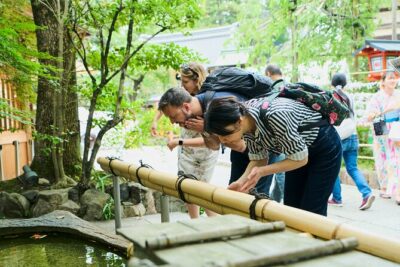
Kyoto Gion: 2-Hour Geisha Culture & History Walking Tour
Read our review →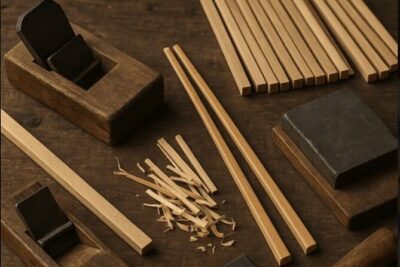
Chopsticks Making Workshop in Gion with Engraving Option
Read our review →
Browse the lists this tour appears in