
Reviewed · CALLIGRAPHY & CRAFT WORKSHOPS
Kyoto: Traditional Mini Umbrella Making Workshop
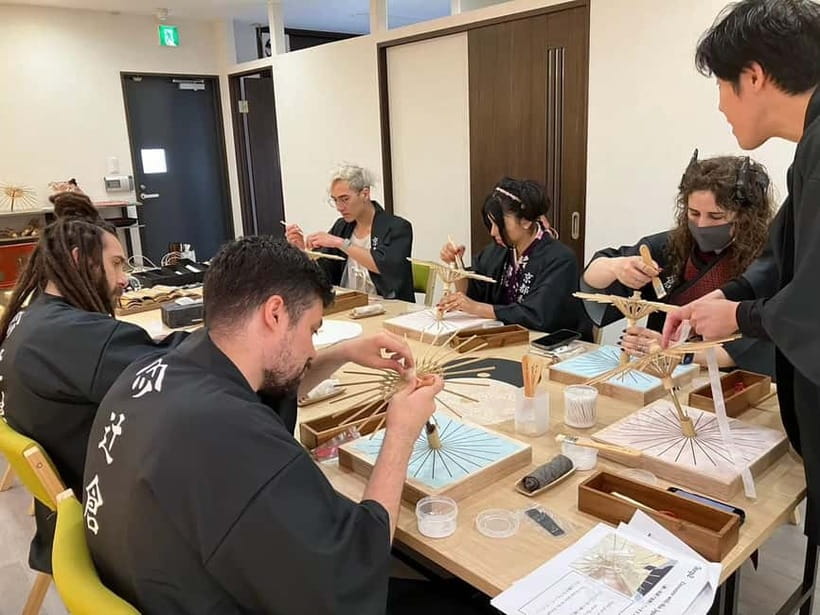
Kyoto’s traditional mini umbrella workshop gives you something many sightseeing stops cannot: time to make an object with your own hands. At Japan’s oldest umbrella shop, you’ll shape and assemble a small Hime Wagasa with genuine Japanese materials, then take it home in a decorative box with a bamboo display stand. The finished umbrella is both artwork and souvenir.
I especially like the calm setting, with traditional umbrellas and Japanese lighting around the work area, and the patient instruction that helps you manage the fine details. Ai Takenaka is praised for being friendly and helpful, while other instructors guide each step in clear English. The main drawback is the price: at $70 per person, this is not a quick craft-shop activity, and 90 minutes can feel short if you want to master every part of the process.
Key points
- Make a real Hime Wagasa: Use genuine Japanese materials and traditional umbrella-making methods.
- Work in central Kyoto: The shop is two minutes north of the Shijo Kawaramachi intersection.
- Bring home a complete display: Your package includes a bamboo stand, decorative box, and carry bag.
- Get patient, hands-on help: Instruction is available in Japanese and English, with Ai Takenaka among the named instructors.
- Add artisan finishing work: A craftsman can complete extra finishing touches for an additional fee.
- Plan around the age rule: The workshop is not suitable for children under six.
Why a miniature Wagasa makes a better souvenir
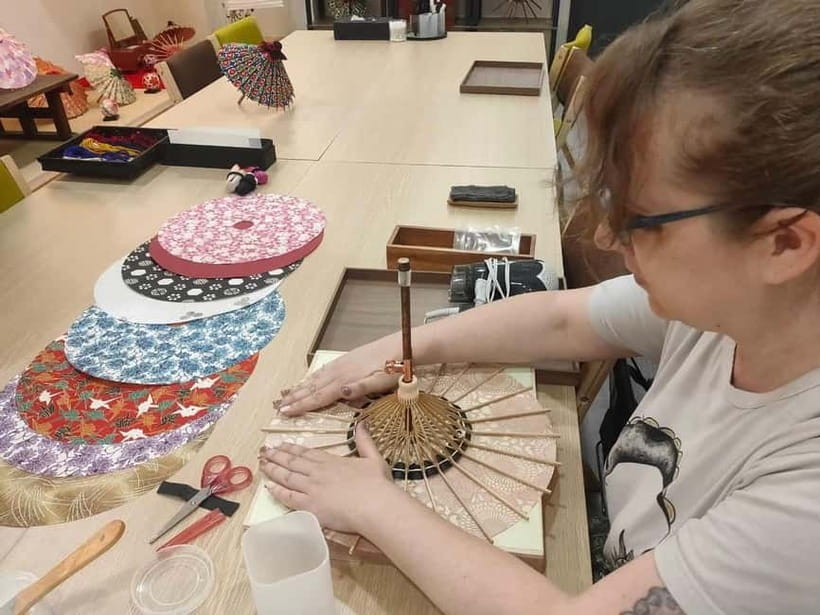
A souvenir from Kyoto is easy to buy. Finding one that connects you to the place is harder. This workshop solves that problem by giving you a finished object that also carries the memory of making it.
A Wagasa is a traditional Japanese umbrella, not a modern rain umbrella. Its appeal comes from the careful relationship between bamboo, paper, structure, color, and decoration. In miniature form, it becomes a practical keepsake for your home rather than something you need to pack for daily use.
You are not simply choosing an umbrella from a shelf. You are shaping and assembling the parts under guidance. That difference matters. The result may not look exactly like a shop-made piece, and that is part of its charm. Small irregularities can remind you that your hands made it.
The umbrella also has a gift-friendly meaning. A Wagasa is presented here as a symbol of happiness, so you can keep it as a Kyoto memento or give it to someone at home. The included bamboo stand makes the choice easier because the umbrella is ready to display instead of needing a separate holder.
Other things to make with your hands in Kyoto:
- Kyoto : Chopsticks Making Workshop in Gion with Engraving Option
★ 5.0 · 958 reviews - Authentic knife making experience at a blacksmith in Kyoto
★ 4.8 · 350 reviews - Kyoto: Calligraphy class at Buddhist temple in city center
★ 5.0 · 167 reviews
Arriving two minutes from Shijo Kawaramachi
The workshop is in central Kyoto, just two minutes north of the famous Shijo Kawaramachi intersection. That location is useful if you are already spending time around Kyoto’s main shopping streets, restaurants, and department stores.
You do not need to set aside a full day for this activity. The class lasts 90 minutes, so it can fit into a central Kyoto plan before or after shopping and sightseeing. Still, allow enough time to arrive without rushing. A hands-on craft class is more enjoyable when you enter with a clear head rather than racing in at the last minute.
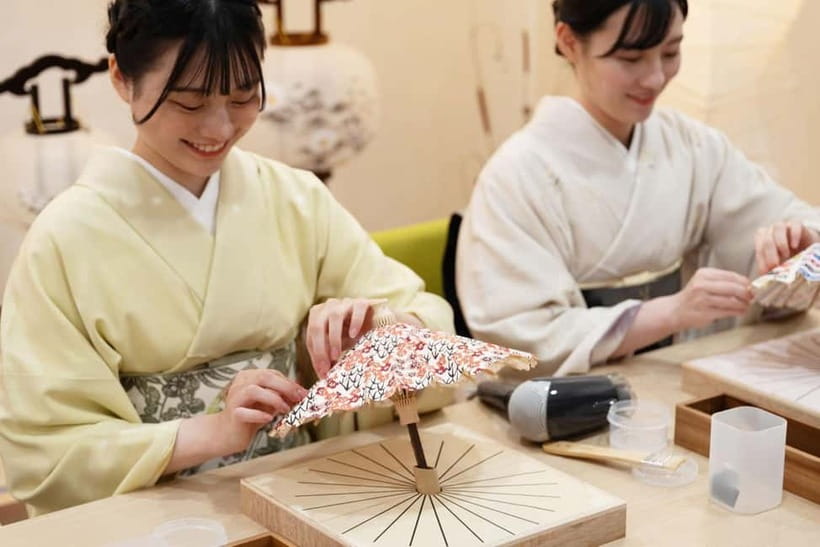
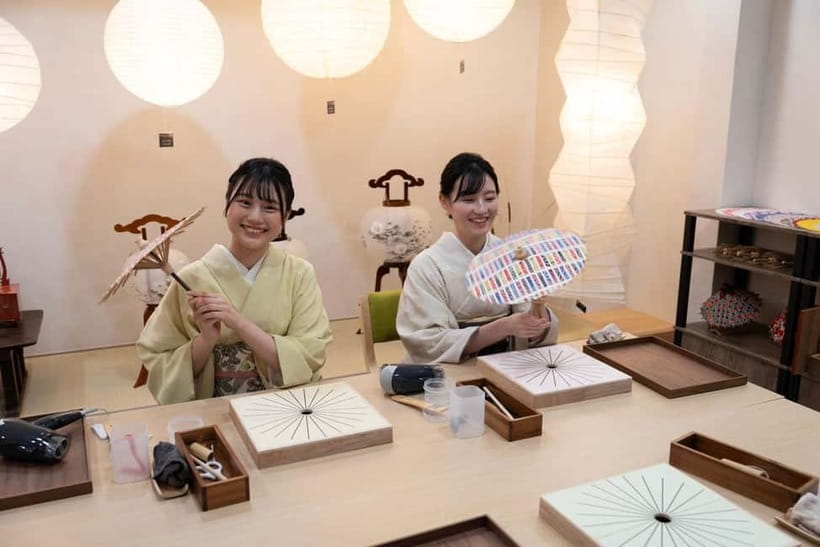
The setting is part of the appeal. The workshop is decorated with authentic Japanese umbrellas and traditional lighting, creating a quieter mood than the busy streets outside. I like this contrast. You move from one of Kyoto’s busiest commercial areas into a room focused on slow, careful work.
The central location also makes this a practical choice for mixed-interest groups. One person can enjoy shopping nearby while another prefers craft and culture. Since the class itself takes only 90 minutes, it does not demand the commitment of a full-day excursion.
The 90-minute making process
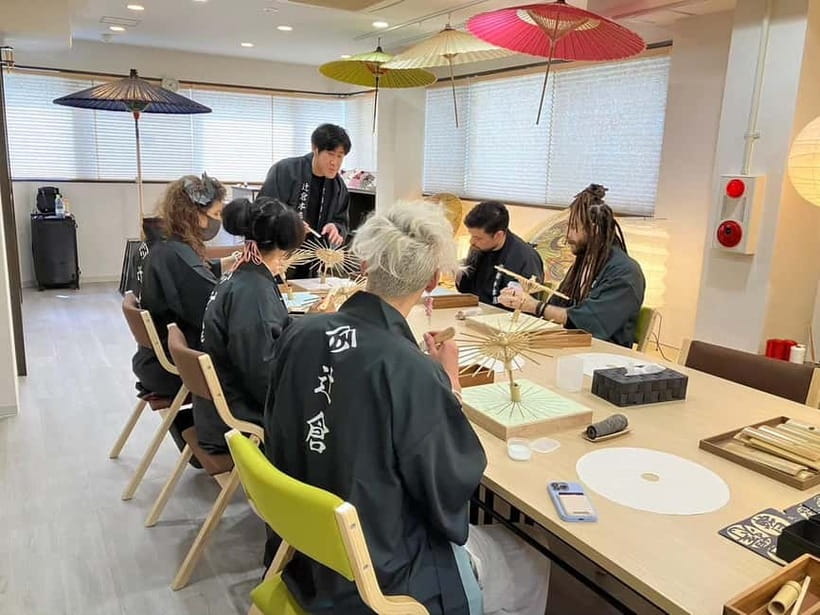
The activity begins with an introduction to the craft and the materials. Your instructor explains how the pieces fit together and shows you the methods used to create a traditional mini umbrella. Since the umbrella has many small parts, careful listening at this stage pays off.
Next comes the hands-on work. You shape and assemble the components of your own Hime Wagasa under the instructor’s direction. The task requires attention to detail, especially when you are trying to keep the parts aligned and create a neat final shape.
This is not a class where you simply decorate a ready-made object. You take part in the assembly, which gives the workshop more substance than a basic paint-and-take-home activity. At the same time, you are not left to figure out the craft alone. English and Japanese instruction is available, and the class is designed around guidance from experienced artisans.
Expect the pace to vary. Some people will move quickly through the steps, while others will want extra help. The instructors are repeatedly praised for being patient and kind, which is important here. A mini umbrella may look simple when finished, but the construction calls for concentration.
That focus can be a welcome change from sightseeing. For part of the 90 minutes, your attention is on the material in front of you rather than on maps, train times, or photographs. You may find the workshop relaxing precisely because it asks you to slow down.
Patient instruction matters more than speed
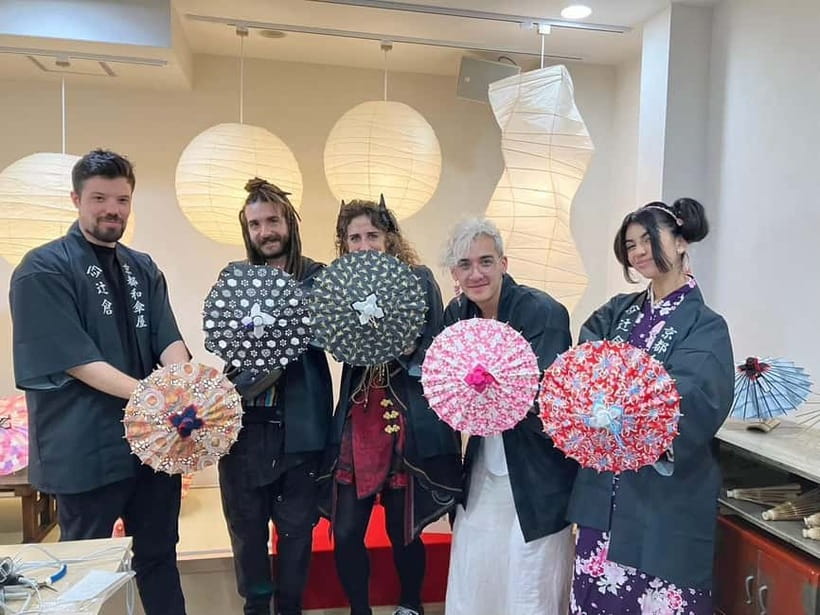
The strongest practical feature of this activity is the level of help available. Several comments highlight instructors who explain the process carefully and show the best way to handle the materials. Ai Takenaka is specifically named as friendly and helpful.
That does not mean every participant will produce a flawless umbrella. It means you have support when a step is delicate or confusing. The instructor’s role is especially valuable for first-time crafters who do not know how much pressure to use or how to position a piece.
The class also appears to work well for groups. A group of nine, including children between three and nine years old, was accommodated on one occasion. However, the stated age guidance says the activity is not suitable for children under six. If your party includes younger children, follow the official restriction rather than assuming that a previous group’s arrangement will apply to you.
For older children, the craft can be a good cultural activity if they can sit still, listen, and handle small components with care. Adults who want a quiet creative break may enjoy it even more. You do not need prior craft experience, but you should be ready to pay attention.
Same base, a different sort of day:
- PERFECT KYOTO 1-Day Bus Tour
★ 5.0 · 13,518 reviews - Kyoto: Fushimi Inari, Kinkakuji, Bamboo Grove 1 Day Bus Tour
★ 4.8 · 4,316 reviews - Kyoto: Tea Ceremony in a Traditional Tea House in Kiyomizu
★ 4.9 · 3,519 reviews - Kyoto Geisha Walking Tour: Gion District & Hidden Gems
★ 4.7 · 3,273 reviews
What you take home after the class
The main souvenir is your handmade Hime Wagasa. You also receive a bamboo umbrella stand, which lets you put the piece on display as soon as you return home.
The decorative box and carry bag are useful extras. They make the umbrella easier to protect during the rest of your Japan trip and simpler to transport on the journey home. These inclusions add real value because a delicate craft deserves more than loose packing in a suitcase.
The stand also changes how you think about the purchase. Without it, the umbrella might be a decorative object that needs careful storage. With it, you have a small presentation piece for a shelf, table, or cabinet. If you plan to give the Wagasa as a present, the box and bag make that more practical.
You can also pay an additional fee for a craftsman to add finishing touches to your mini umbrella. This option is worth considering if you want a more polished final piece or plan to give the umbrella as a special gift. If your priority is personal involvement, you may prefer to keep the handmade character visible.
The supplied information does not specify the exact finishing work or its price, so ask about those details before agreeing to the extra service.
Is $70 a fair price?
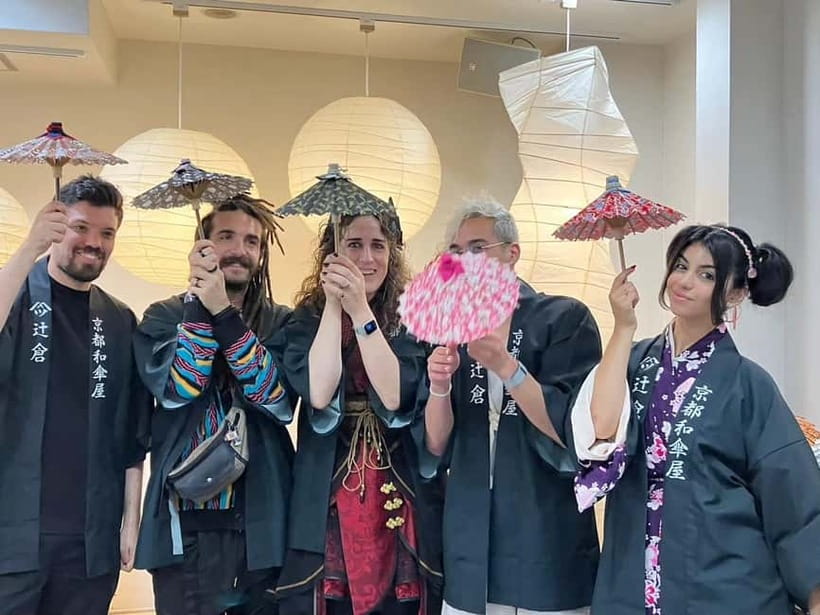
At $70 per person, this is not the cheapest activity in Kyoto. You can buy many souvenirs for less, and a short workshop always needs to justify its cost.
Here, the price includes all crafting materials, the 90-minute instruction, a bamboo stand, a decorative box, and a carry bag. You are also paying for access to a traditional craft setting and guidance from artisans at a long-established umbrella shop. That makes the value stronger than the price of a simple decoration class.
I would see the cost this way: you are buying a guided cultural activity plus a finished keepsake. If you only want a small object to take home, $70 may feel high. If you want an activity that gives you a story to tell and a display piece you made yourself, the price is easier to accept.
The included stand and packaging matter here. They reduce the chance that you will need to spend more on presentation or protection. The optional craftsman finishing service is the one extra cost to keep in mind.
This workshop is likely best value for couples, families with older children, friends, and solo visitors who enjoy making things. It is less suitable if you prefer fast sightseeing, have a tight budget, or dislike detailed handwork.
The atmosphere: quiet work in a traditional setting
The room is described as serene, with traditional Japanese lighting and umbrellas used as decoration. That setting supports the purpose of the class. You are not working in a generic activity room with a few cultural props added at the last minute.
The surroundings also help explain why Wagasa making is more than a simple souvenir project. The umbrellas around you give a visual sense of the finished craft and let you notice the forms, colors, and careful construction while you work.
Do not expect a large sightseeing presentation or a long lecture. The focus is making your own piece. The cultural learning comes through the materials, the techniques, and the instructor’s guidance rather than through a formal museum-style talk.
That balance should suit you if you prefer doing over watching. You will not spend the entire session listening to background information. Instead, you learn by handling the parts and following the process.
Who should book this workshop?
Book it if you want a hands-on activity in central Kyoto and appreciate objects with a personal connection. It is particularly suited to anyone who enjoys craft, design, Japanese traditions, or meaningful gifts.
It also works well as a pause in a busy Kyoto itinerary. After temples, markets, and shopping streets, a quiet 90-minute class gives your day a different rhythm. The central location makes it easy to combine with other plans.
Families should check the age rule carefully. Children under six are not considered suitable for the activity, even though one larger group that included younger children was accommodated. For children six and older, the deciding factor is patience and interest in careful handwork.
Visitors using a wheelchair can consider the workshop because it is wheelchair accessible. Instruction is offered in Japanese and English, so English-speaking participants can follow the activity with help from the instructor.
Booking, cancellation, and practical details
The workshop costs $70 per person and lasts 90 minutes. Starting times vary, so check availability for the date you want.
You can reserve now and pay later, which helps if your Kyoto schedule is still changing. Free cancellation is available up to 24 hours in advance for a full refund.
Smoking, alcohol, drugs, and explosive substances are not allowed. Those rules are straightforward, but remember that the class involves small craft parts and careful assembly, so arrive ready to concentrate.
If you want the artisan finishing option, ask about it during the activity. It costs extra, and the standard workshop already includes the materials needed to make your own umbrella.
Should you book the Kyoto mini umbrella workshop?
I would book this workshop if you want more than a purchased souvenir. The strongest reasons are the central location, genuine materials, patient instruction, and the useful package of a bamboo stand, box, and carry bag.
The price is the main question. At $70, you should enjoy hands-on craft enough to make the cost worthwhile. You should also accept that the finished umbrella will reflect your own work unless you pay for extra finishing.
Choose it for a quiet, focused cultural activity with a keepsake you can display or give away. Skip it if your schedule is packed, your budget is tight, or you would rather spend your Kyoto time visiting temples and gardens. For the right person, this is a memorable way to turn a short afternoon into something you can carry home.
FAQ
Where is the traditional mini umbrella workshop located?
It is in central Kyoto, two minutes north of the Shijo Kawaramachi intersection.
How long does the workshop last?
The activity lasts 90 minutes.
How much does the workshop cost?
The listed price is $70 per person.
What do I make during the class?
You make a Hime Wagasa, a traditional Japanese mini umbrella, using genuine Japanese materials and traditional techniques.
What is included with the umbrella?
The activity includes all crafting materials, a bamboo umbrella stand, a decorative box, and a carry bag.
Is instruction available in English?
Yes. The workshop offers instruction in Japanese and English.
Can children join the workshop?
Children under six are not suitable for this activity. The workshop is wheelchair accessible, and a craftsman can add finishing touches to your umbrella for an additional fee.
Just added in Kyoto
- Your Private Vacation Photography Session In Kyoto★ 5.0 · 110 reviews
- Kyoto: Zen Meditation at a Private Temple with a Monk★ 5.0 · 25 reviews
- Private Cooking Class Udon in Kyoto Japan★ 5.0 · 23 reviews
- Private Pewter Sake Cup Experience with a Kyoto Artisan★ 5.0 · 31 reviews
- Kyoto Wagashi(Japanese sweets) Cooking Class near Fushimiinari★ 5.0 · 60 reviews
- Kyoto:Family-Friendly Kimono & Yukata Experience at WARGO★ 5.0 · 147 reviews
- Private Guided Traditional Buddhist Cooking in Japan★ 5.0 · 16 reviews
- Kyoto: Gion Geisha District & Sake-in-Hand Walking Tour★ 5.0 · 37 reviews
Calligraphy & Craft Workshops, compared.
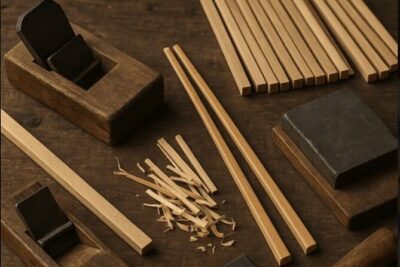
Chopsticks Making Workshop in Gion with Engraving Option
Read our review →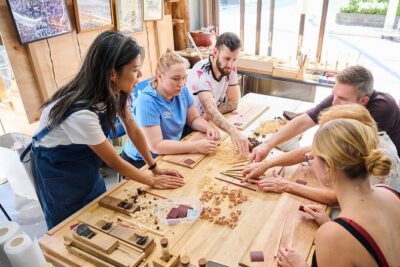


Matcha Making Experience with Mochi Sweets in Asakusa
Read our review →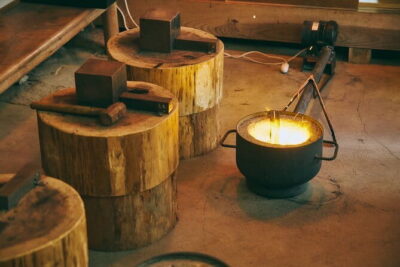
Authentic knife making experience at a blacksmith in Kyoto
Read our review →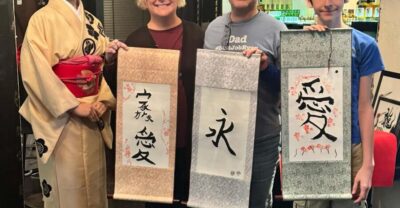
Calligraphy class at Buddhist temple in city center
Read our review →Browse the lists this tour appears in