
Reviewed · GEISHA & GION DISTRICT TOURS
Gion Night Walking Tour
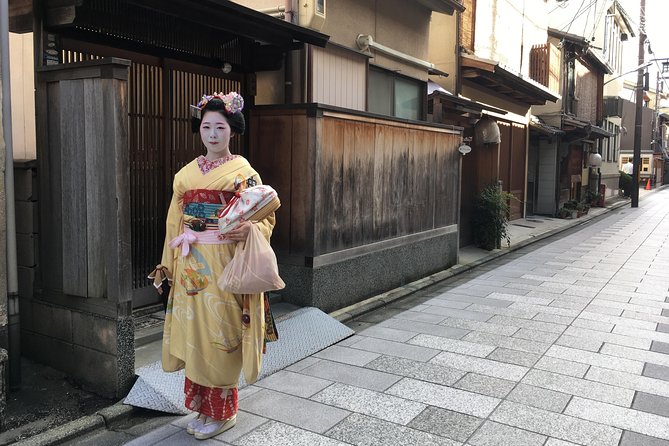
Gion changes after sunset. Lanterns glow over narrow lanes, wooden teahouses close their doors, and you may catch sight of a maiko or geiko hurrying to an appointment. This small-group walk takes you into that evening world without pretending the district is a stage show. The group is capped at 10, which gives you room to hear the guide and ask questions.
I like the careful route through both Gion and nearby historic quarters, and I like the balance of culture, religion, architecture, and people-watching. Guides such as Kevin, Niall, and Raphael have been praised for clear English, humor, and useful local tips. The catch is simple: sightings are never promised, and the walk requires good weather.
Key points to know before booking
- Small group of 10 maximum: You get a more personal walk than with a large flag-led crowd.
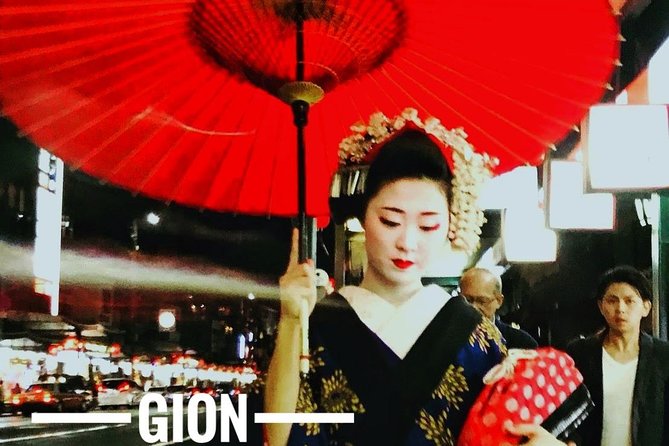
- Evening timing matters: Gion’s lanterns and quiet lanes are at their best after dark, and this is also when you may see geiko or maiko heading to appointments.
- Four strong stops: The route includes Miyagawacho Kaburenjo, Yasakanoto, Yasaka Shrine, and Gion Shirakawa.
- Expect about two hours on foot: The pace is designed for general participation, but comfortable shoes still matter.
- Good value at $33.03: You pay for local explanation and a focused route rather than admission to a paid attraction.
- Sightings are a bonus, not a guarantee: The cultural setting and historic streets remain worthwhile even if no geiko appears.
Why Gion is best after sunset
A daytime walk through Gion can feel busy and exposed. At night, the district takes on a more restrained mood. Lantern light picks out tiled roofs, wooden facades, and polished alleyways. You are not simply checking off a famous neighborhood. You are seeing a working entertainment district at the time when its traditional arts are most visible.
The tour focuses on geiko and maiko, the women trained in traditional arts and hospitality. The guide explains what happens behind the closed doors of Gion, where appointments, performances, music, dance, and formal social customs continue away from the public street.
That context matters. Without it, a glimpse of a woman in formal dress can become a shallow photo opportunity. With a guide, you get a better sense of the training, work, and traditions behind the appearance. The walk also helps you understand why respectful behavior is important. These are working people moving between appointments, not performers waiting for cameras.
You may see a maiko, a geiko, or several of them. Some outings have produced multiple sightings, including both younger maiko and older geiko. Still, the guide cannot control who is working that evening. Go for the setting and the explanation first. Treat a sighting as a welcome extra.
Other walking tours in Kyoto people book:
- Kyoto Geisha Walking Tour: Gion District & Hidden Gems
★ 4.7 · 3,273 reviews - Kyoto: Gion Magical Night Walking Tour with Geisha Trivia
★ 4.9 · 2,393 reviews - Kyoto: Gion Geisha District Walking Tour – Stories of Geisha
★ 4.7 · 2,187 reviews
A genuinely small group, with guides who shape the evening
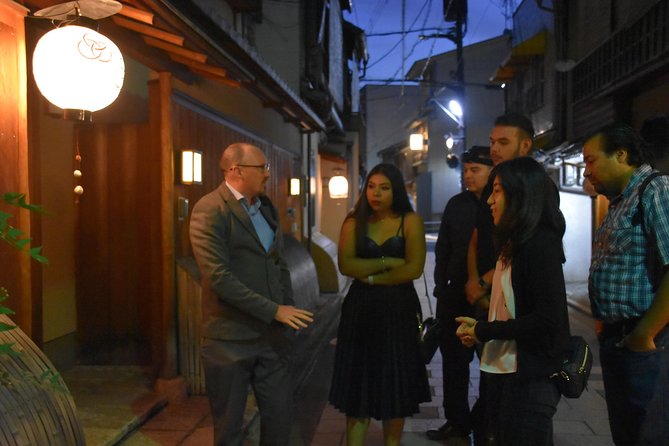
The maximum group size is 10. That is one of the strongest reasons to choose this walk instead of a cheaper, crowded stroll. A small group makes it easier to hear explanations in narrow lanes, pause without blocking the pavement, and ask about details that catch your eye.
The guide team has included Kevin, Karim, Nile, Niall, Shanda, Philippe, Cha Cha, and Raphael. The experience can vary slightly with the guide, but the most praised qualities are consistent: clear English, a friendly manner, strong local knowledge, and a willingness to answer questions.
Kevin has been singled out for knowing the neighborhood well and giving the right amount of information. Niall has been noted for an easy, professional style and strong explanations of geiko culture. Other guides have added restaurant and shopping suggestions, which can be useful if Gion is part of a longer Kyoto evening.
Raphael has also led a French-language outing and adjusted the meeting arrangement for that group. That indicates some flexibility, though you should not assume a French guide is available on every date. If language support matters, confirm it before booking.
Some outings begin with a short slideshow and drinks at the Kyoto Fun office before the walk. The supplied meeting information, however, identifies the start at Tsuruha Drug Yasaka Shrine Store, at 543 Gionmachi Minamigawa. Another description points to a 7-Eleven near Miyagawasuji. Because these directions do not match perfectly, check the current confirmation and map pin before you set out. This is a small practical detail, but it can prevent a rushed start in an unfamiliar part of Kyoto.
Miyagawacho Kaburenjo: starting with the geiko quarters
The first main stop is Miyagawacho Kaburenjo, in one of Kyoto’s traditional entertainment quarters. The walk through this area introduces the structure of geiko life and the arts connected with it.
This is not a museum visit. There is no admission ticket, and the value comes from the guide’s explanation as you move through the district. You will learn about the private side of the neighborhood, the role of the houses and venues, and why the streets can feel both public and carefully guarded.
Allow around 30 minutes here. That is enough time to establish the story without making the opening feel like a lecture. If you are new to Kyoto’s geiko culture, this is likely the most useful part of the walk because it gives meaning to everything you see later.
The main limitation is that the area is still a working neighborhood. You should expect to look from public streets rather than enter private establishments. Keep voices low, follow the guide’s instructions, and do not treat people leaving for work as scenery.
The unnamed Zen temple stop adds a quieter pause
The route also passes through the grounds of a beautiful temple, where the guide gives a short introduction to Zen Buddhism. The specific temple is not identified in the tour details, so you should not book this expecting a named temple visit or an extended religious tour.
Even so, this pause adds useful balance. Gion is often presented through geiko, restaurants, and lantern-lit streets. A brief temple explanation reminds you that Kyoto’s culture is not one single tradition. The walk brings together Buddhist practice, Shinto customs, architecture, and the old entertainment quarters.
Because the stop is brief, think of it as context rather than a major attraction. If you want a detailed temple visit, reserve separate time for one of Kyoto’s larger temple complexes.
Other evenings in the old entertainment quarters of Kyoto:
- Best of Kyoto: Gion, Geisha, Pagodas & Cobblestones
★ 4.9 · 2,058 reviews - Night Walk in Gion: Kyoto’s Geisha District
★ 4.5 · 2,003 reviews - Kyoto Night Foodie Tour in Gion (9+ dishes + 6 Sake tastings)
★ 5.0 · 1,762 reviews - Kyoto Gion Geisha District Walking Tour – The Stories of Geisha
★ 5.0 · 1,441 reviews
Yasakanoto: one of the evening’s best photo stops
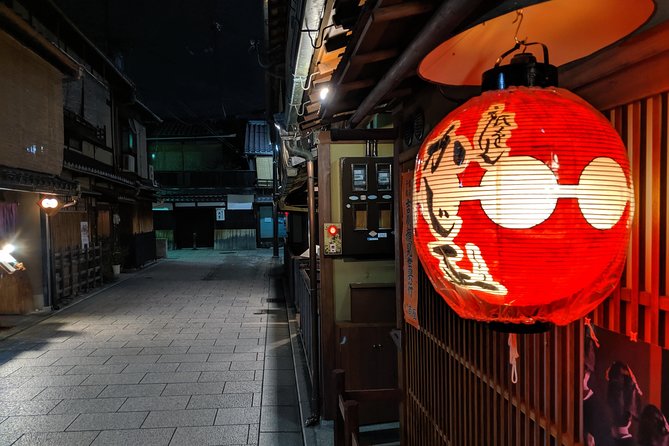
Yasakanoto provides one of the strongest visual moments on the route. The pagoda and surrounding streets create a classic Kyoto view, especially when the light fades and the old buildings take on a softer outline.
The stop lasts about 15 minutes. That is enough time for photographs and a short explanation, but not enough for a long architectural tour. Your guide can help place the view within the old district, which makes the photo feel less like a random postcard and more like part of the neighborhood’s story.
Bring a phone or camera, but keep it ready rather than making photography the whole purpose of the stop. The lanes can be narrow, and the group needs to keep moving. The best image may come from pausing briefly, listening, and letting the guide point out the angle.
Walking the preserved lanes toward Yasaka Shrine
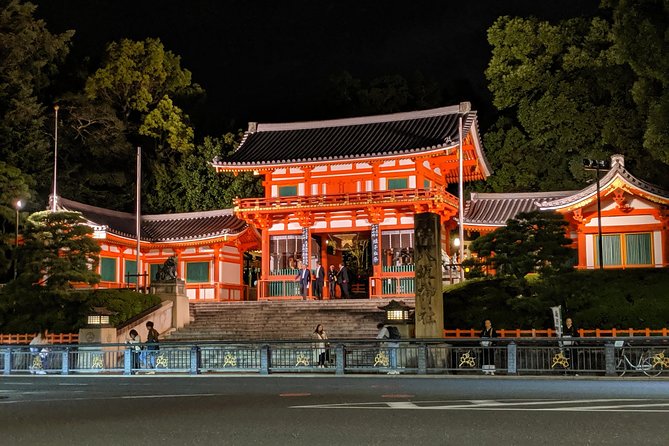
Between the major stops, you wander through preserved streets in the historic district. This in-between time is important. It gives you a chance to notice the details that disappear when you move from attraction to attraction by taxi or train.
The route passes areas near modern clubs and high-end restaurants, so Gion is not a frozen old town. Traditional facades sit beside current nightlife. That mix helps you see the district as a living part of Kyoto rather than a backdrop preserved only for visitors.
You may find that the walk feels more atmospheric on a quiet evening, while a busy night gives you a stronger sense of Gion as a working entertainment quarter. Either way, the guide’s presence helps you read the streets. Look for the contrast between discreet entrances, lanterns, restaurant fronts, and the dressed figures moving quickly between appointments.
Yasaka Shrine under lantern light
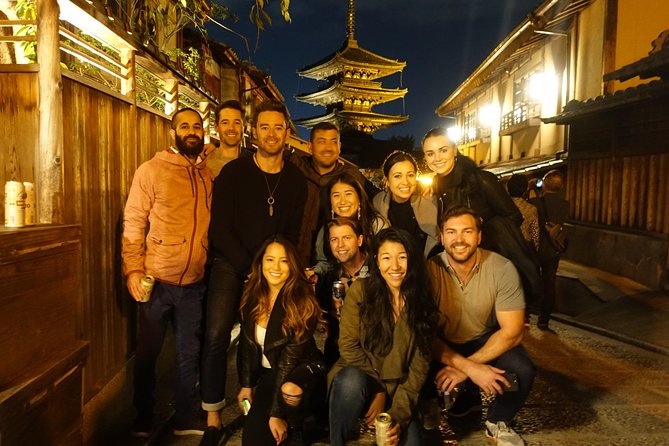
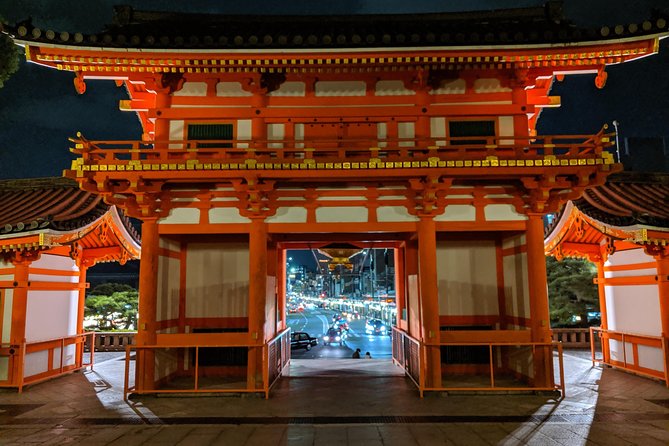
Yasaka Shrine is another major stop, with about 20 minutes set aside for the visit. At night, the lanterns give the shrine a warm, distinctive look, and the guide explains Shinto customs before inviting you to make a prayer for good fortune.
This is a practical introduction rather than a formal religious class. If you have never visited a Shinto shrine, the guide can make the setting easier to understand and help you approach the visit with respect. You get a short cultural lesson and time to take in the atmosphere without needing to plan a separate shrine visit that evening.
The stop also breaks up the walk. After the lanes and geiko discussion, Yasaka Shrine gives the tour a different focus. You are no longer looking only at Kyoto’s traditional arts. You are also considering how religious spaces remain part of daily life in the city.
Gion Shirakawa: the elegant final stretch
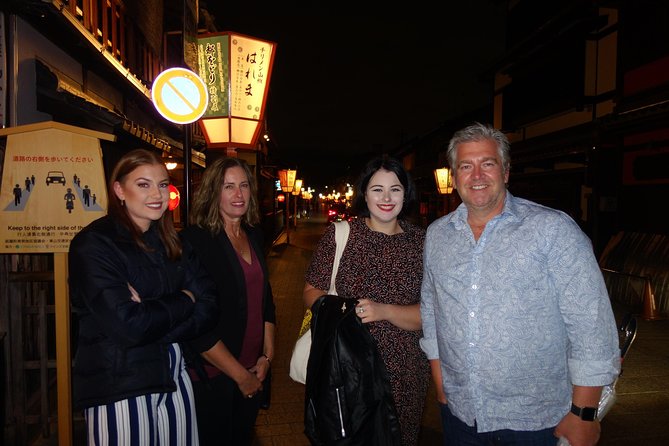
Gion Shirakawa is described as one of the most beautiful parts of Gion, and the route saves it for late in the walk. The canal, traditional buildings, and evening lighting create a calm finish after the busier sections near restaurants and clubs.
The stop lasts about 15 minutes. You will walk past modern nightlife and high-end dining rooms on the way, then reach one of the district’s more refined streets. It is a good place to absorb the difference between Gion’s public energy and its quieter corners.
The activity returns to the meeting point rather than ending at a different station or attraction. That makes the route easy to plan around, though it also means you should not expect a direct drop-off near your dinner reservation. Use the final part of the walk to decide if you want to stay in Gion for food or head back toward your accommodation.
Is $33.03 a fair price?
At $33.03 per person, this is a sensible price for a two-hour guided walk in one of Kyoto’s most confusing areas. You are not paying for a ticketed show or a private geiko performance. You are paying for a compact route, local interpretation, and a better chance of understanding what you are seeing.
The value is strongest for first-time visitors who would otherwise wander through Gion without knowing the difference between the neighborhoods, the religious sites, and the traditional entertainment culture. It is also good for anyone who prefers questions and conversation to a large audio-guided group.
The price is less compelling if you already know Gion well, have spent time studying geiko culture, or want a long temple visit. It is also not the right purchase if your main goal is a guaranteed encounter with a geiko or maiko. No responsible walking tour can promise that.
The 4.9 rating from 142 reviews and 99 percent recommendation figure suggest a strong record, but I would still judge the tour by your interests. The small group and guide quality are the real reasons to book it, not the rating alone.
Who will enjoy this Kyoto walk?
The activity is suitable for ages 10 to 77, and most people can participate. You should be comfortable walking for about two hours through historic streets. Wear shoes that handle uneven pavement, and bring protection from rain if the forecast is uncertain.
I would recommend it to:
- First-time Kyoto visitors who want a clear introduction to Gion
- Families with older children who can manage an evening walk
- People interested in Japanese religion, traditional arts, and neighborhood history
- Photographers who want lantern-lit streets and Yasakanoto after dark
- Anyone who prefers a group small enough for direct questions
- Visitors looking for restaurant or shopping suggestions in the area
I would be more cautious if you have limited mobility, since the experience is a walking tour and the route includes old streets. Service animals are allowed, and the activity is near public transportation, but the supplied details do not describe the exact walking surface or step-free route. Ask before booking if that is important for you.
The tour requires good weather. If it is canceled because of rain or another weather problem, you are offered another date or a full refund. The same applies if the minimum number of participants is not reached. For your own cancellation, you receive a full refund if you cancel at least 24 hours before the start time. Cancellations or changes inside that window are not refunded or accepted.
Should you book the Gion Night Walking Tour?
Book it if you want a well-explained evening introduction to Gion, especially in a small group. The route covers more than geiko culture. You also get Yasaka Shrine, a Zen explanation, Yasakanoto, Gion Shirakawa, and a useful look at how old Kyoto and modern nightlife share the same streets.
Go with realistic expectations. You may see several maiko or geiko, or you may see none. The strongest parts of the tour are the guide, the manageable group size, and the way the walk gives meaning to places you might otherwise pass without understanding.
At $33.03, it is a good buy for a first Kyoto visit. Just verify the meeting-point instructions, allow the full two hours, and treat any geiko sighting as luck rather than a promise.
FAQ
How long does the Gion Night Walking Tour last?
The tour lasts approximately two hours.
How many people can join the tour?
The group has a maximum of 10 participants.
What age range is the tour suitable for?
The activity is described as suitable for ages 10 to 77.
Where does the tour start?
The meeting point is listed as Tsuruha Drug Yasaka Shrine Store, 543 Gionmachi Minamigawa, Higashiyama Ward, Kyoto. Another description refers to a 7-Eleven near Miyagawasuji, so check your booking confirmation for the current meeting details.
Where does the tour finish?
The walk ends back at the meeting point.
What places are included?
The route includes Miyagawacho Kaburenjo, a Zen temple area, Yasakanoto, preserved streets in the historic district, Yasaka Shrine, and Gion Shirakawa.
Can I see a geiko or maiko?
You may see geiko or maiko walking through Gion, but sightings are not guaranteed.
What happens if the weather is poor?
If the activity is canceled because of poor weather, you are offered a different date or a full refund. You can also cancel for a full refund up to 24 hours before the start time.
More walking tours elsewhere in Japan
- Nishiki Market Brunch Walking Tour (7 Tastings + Brunch)
★ 5.0 · 1,355 reviews - Kyoto Arashiyama Walking Tour: Bamboo, Monkeys, Gardens & Secrets
★ 5.0 · 1,216 reviews - Kyoto Gion: 2-Hour Geisha Culture & History Walking Tour
★ 5.0 · 1,186 reviews - Kyoto: Izakaya Bars Guided Walking Tour
★ 4.9 · 815 reviews
Just added in Kyoto
- Private Cooking Class Udon in Kyoto Japan★ 5.0 · 23 reviews
- Your Private Vacation Photography Session In Kyoto★ 5.0 · 110 reviews
- Kyoto: Zen Meditation at a Private Temple with a Monk★ 5.0 · 25 reviews
- Private Pewter Sake Cup Experience with a Kyoto Artisan★ 5.0 · 31 reviews
- Kyoto Wagashi(Japanese sweets) Cooking Class near Fushimiinari★ 5.0 · 60 reviews
- Kyoto:Family-Friendly Kimono & Yukata Experience at WARGO★ 5.0 · 147 reviews
- Private Guided Traditional Buddhist Cooking in Japan★ 5.0 · 16 reviews
- Kyoto: Gion Geisha District & Sake-in-Hand Walking Tour★ 5.0 · 37 reviews
Geisha & Gion District Tours, compared.
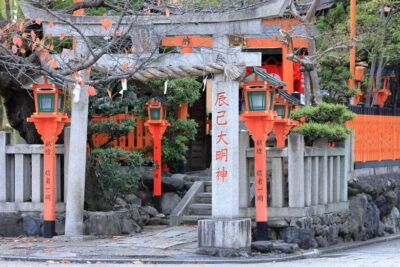
Kyoto Geisha Walking Tour: Gion District & Hidden Gems
Read our review →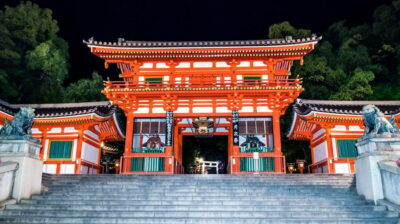
Gion Geisha District Walking Tour – Stories of Geisha
Read our review →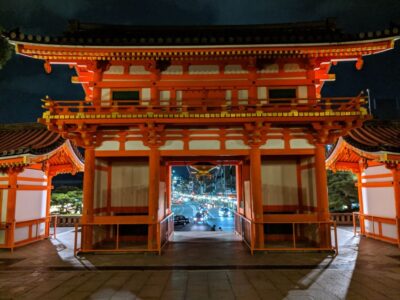
Best of Kyoto: Gion, Geisha, Pagodas & Cobblestones
Read our review →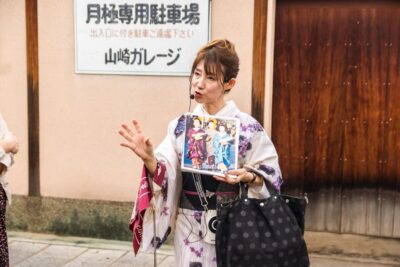
Kyoto Night Foodie Tour in Gion (9+ dishes + 6 Sake tastings)
Read our review →
Kyoto Gion: 2-Hour Geisha Culture & History Walking Tour
Read our review →
Chopsticks Making Workshop in Gion with Engraving Option
Read our review →
Browse the lists this tour appears in