
Reviewed · HIROSHIMA & MIYAJIMA DAY TRIPS
History of Hiroshima Group Walking Tour
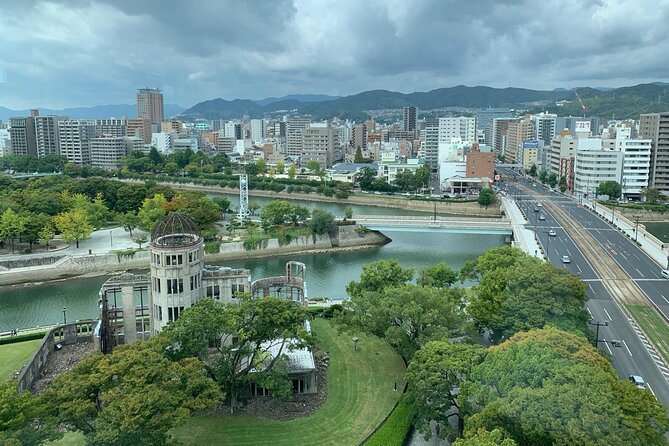
Hiroshima’s Peace Memorial Park can feel quiet and simple at first glance, but every monument carries a hard question. This two-hour walking tour gives you the names, stories, and historical setting needed to understand what you are seeing, from the Gates of Peace to the Atomic Bomb Dome and the actual Hypocenter.
I like two things here. First, the guide has a Peace Studies background and brings more than dates to the walk. Second, the route includes lesser-known memorials, including the monument to Korean victims and the Rest House, a building that survived only 170 meters from ground zero. The main consideration is pace: nine stops in two hours means the visit is focused rather than leisurely.
Key points before you book
- A compact route through nine important sites: You move from the Gates of Peace through the park to the Atomic Bomb Dome and Hypocenter.
- Personal stories give the monuments meaning: The walk explains Sadako, mothers caught in the bombing, Korean victims, and those remembered in the cenotaph.
- Guides bring different personalities: Cva, Malek, Moe, Shiva, and Ali are named in the tour feedback, with repeated praise for clear explanations, warmth, humor, and strong answers to questions.
- A useful choice for a short Hiroshima stay: The tour lasts about two hours and covers the central peace sites without requiring a full day.
- Good value at $32.84 per person: You are paying for context and interpretation, not admission tickets, since the listed stops are free.
- Expect a group setting: Up to 30 people may join, so the experience is social and practical rather than private.
Why this short Hiroshima walk works
Hiroshima is not a place you simply check off with a few photographs. The Peace Memorial Park contains memorials, bells, statues, and surviving structures spread across a walkable area. Without context, some can blur together.
This tour gives each stop a purpose. You learn why the bomb was used, how Hiroshima changed after August 6, 1945, and how the city became linked with peace. The guide also connects the public memorials with individual lives, which is often what makes the visit stay with you.
The tour is led by guides including Cva, Malek, Moe, Shiva, and Ali. The guide may vary, but the experience is built around explanation and conversation. Cva is praised for mixing strong historical detail with a little humor when the subject becomes especially heavy. Malek is noted for explaining the area and its past clearly, while Moe brings attention to the Japanese view of Hiroshima before and after the bombing. Shiva is described as energetic and able to answer questions, and Ali is praised for a friendly, flexible approach.
That range matters. This is not a silent walk from monument to monument. You can ask questions, and the guide’s tone helps keep the visit human rather than turning it into a list of military facts.
Other walking tours in Hiroshima people book:
- Hiroshima Historical Walking Tour – Why A-Bomb was Dropped
★ 4.8 · 893 reviews - Hiroshima Peace (Heiwa) Walking Tour at World Heritage Sites
★ 5.0 · 872 reviews - Hiroshima City 4hr Private Walking Tour with Licensed Guide
★ 5.0 · 437 reviews
Starting at the Gates of Peace
The meeting point is near Ristorante Mario at 4-11 Nakajimacho. The first stop is the Gates of Peace, where the guide sets out the basic history behind the bombing and its place in world history.
Nine of the ten gates represent the word peace in different languages, according to the tour explanation. This is a thoughtful opening because it places Hiroshima in an international setting before you begin walking through the park. You are not starting with a single building or object. You are starting with an idea that the city has chosen to repeat and share.
The opening discussion lasts about 20 minutes. That is a useful amount of time for a difficult subject. The guide can establish the political and historical background before the group reaches the more personal memorials.
If you already know a great deal about the Second World War, you may find this first section familiar. Its value lies in the way it prepares you for the rest of the route and gives you a framework for questions.
Arashi no Naka no Boshi and the human cost
The Arashi no Naka no Boshi Statue is translated as Mother and Baby in the Storm. The monument honors mothers who died while trying to save their children.
This is a brief five-minute stop, but it changes the scale of the tour. The opening discussion deals with governments, warfare, and world events. Here, the focus narrows to a parent trying to protect a child. That shift is important because Hiroshima’s story is not only about weapons or policy. It is also about ordinary people caught in an event they could not control.
You should expect the guide to keep moving after a short explanation. The stop is not designed as a long viewing session, so take a moment to look closely before the group continues.
The Cenotaph and the names of the dead
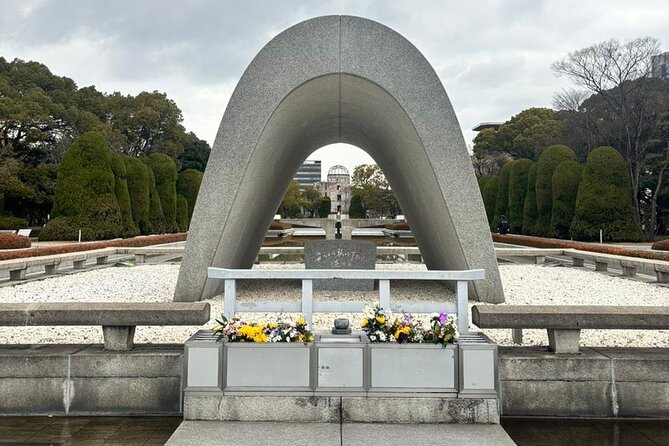
The Hiroshima Peace City Monument, also called the Cenotaph for the Atomic Bomb Victims, receives about 20 minutes.
This is one of the central memorial points in the park. The names of people who died in the atomic bombing are remembered here. The guide helps place the monument within the wider memorial grounds, so you can understand why it matters beyond its clean, restrained shape.
I appreciate this part of the route because it gives the tour a moment of stillness. The earlier stops introduce the subject. The cenotaph asks you to face the scale of loss.
The subject is emotionally demanding, and the group format may not suit everyone. You will be listening while other people stand nearby and ask questions. Still, the guide’s role is useful here, especially if you want historical meaning rather than only a quiet pause.
Other long days west of Hiroshima:
- Peaceful Hiroshima & Miyajima UNESCO 1 Day Bus Tour
★ 5.0 · 5,309 reviews - Hiroshima: Hiroshima and Miyajima UNESCO Sites 1-Day Tour
★ 4.9 · 2,330 reviews - Hiroshima / Miyajima Full-day Private Tour with Government Licensed Guide
★ 5.0 · 1,298 reviews - Hiroshima in a Nutshell: Morning Bike Adventure
★ 5.0 · 524 reviews
Inside the National Peace Memorial Hall
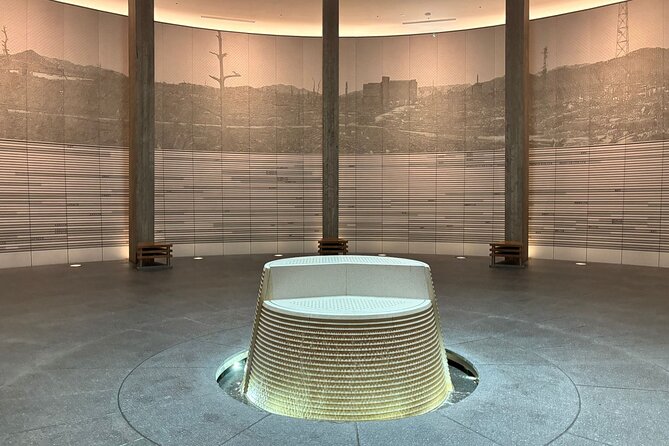
The Hiroshima National Peace Memorial Hall for the Atomic Bomb Victims is allotted 20 minutes. It presents the destruction of the city and adds another layer to the story told outdoors.
This stop is valuable because the park’s monuments can feel abstract. The hall helps show what happened to Hiroshima itself. You gain a clearer sense of the damage and of the memorial work that followed.
The supplied details do not promise a long independent visit or a full museum tour, so I would treat this as a guided introduction. If you want to study every display at length, you may need to return on your own after the walk. That is one of the trade-offs of fitting so much into two hours.
The Rest House, only 170 meters from ground zero
The Rest House of Hiroshima Peace Park is given 15 minutes. Its key story is survival: the building remained standing just 170 meters from the ground zero.
This is one of the route’s most striking physical reminders. The Atomic Bomb Dome is the famous surviving structure, but the Rest House shows that other buildings also carried the force of the blast and remained part of the city’s story.
The distance from ground zero makes the stop especially useful. Rather than hearing only a broad statement about destruction, you can connect the event to a specific building and a precise location. The guide explains why the structure matters, turning it from an ordinary-looking stop into evidence of what happened.
Sadako, paper cranes, and the Children’s Peace Monument
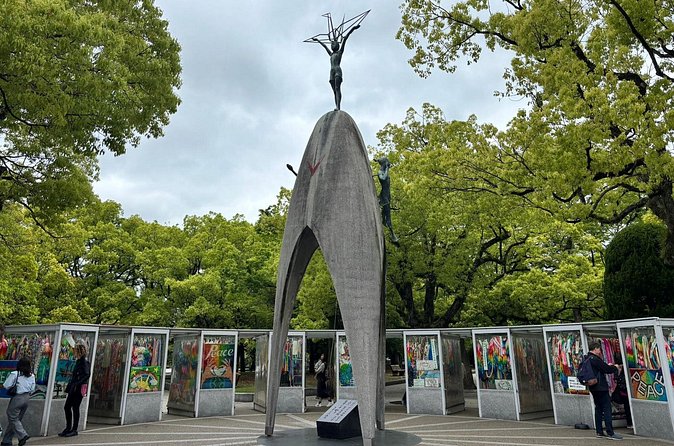
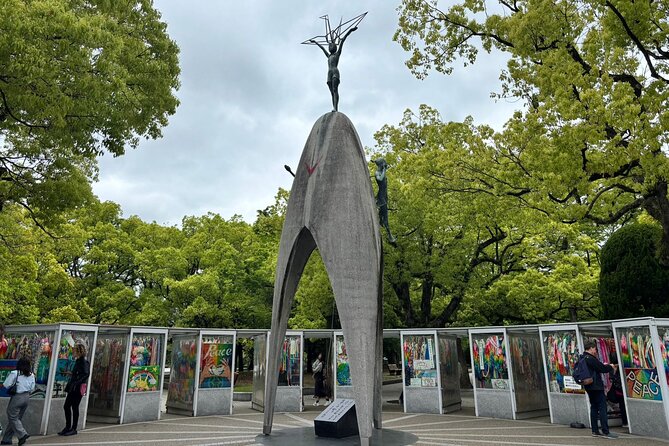
The Children’s Peace Monument receives 10 minutes. It is dedicated to Sadako and the other children who died in the bombing, and it explains the story behind the paper crane as a symbol of peace.
This is likely to be one of the most accessible stops for families and younger visitors. The story gives a child’s perspective on the bombing and shows how one life became linked with an international symbol.
The short time allocation keeps the visit moving, but the subject has lasting weight. You can look at the monument, hear about Sadako, and understand why paper cranes are associated with Hiroshima. Families should note that the topic is serious, even though the symbol itself is familiar and often presented in a gentle way.
Two children aged 0 to 10 can join free of charge. That makes the tour more practical for a family, especially if the adults want a clear introduction to the park without arranging a separate guide.
Remembering Korean victims and survivors
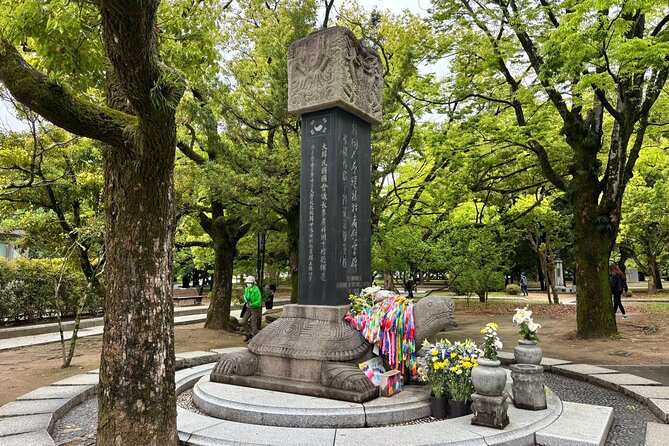
The Monument to Korean Victims and Survivors is a five-minute stop that many independent walks might miss.
This memorial broadens the story beyond Hiroshima’s Japanese population. Korean victims and survivors were also affected by the bombing, and their remembrance is part of the park’s history. The stop is short, but it matters because it reminds you that wartime Hiroshima included people from more than one national background.
I like the inclusion of this monument. It signals that the guide is not presenting a single, simplified story. The tour remains compact, yet it makes room for a group whose experience can be overlooked.
The Peace Bell and the Atomic Bomb Dome
The Peace Bell is a five-minute stop. Its message is direct, and the guide uses it to connect the park’s memorials with Hiroshima’s call for peace.
After that, the group reaches the Atomic Bomb Dome, with about 15 minutes set aside. The building survived the bombing and has become the image most closely linked with Hiroshima. Its damaged frame is powerful because it is both a physical remnant and a reminder of the city before and after the blast.
The Dome is not merely an old building to photograph. Its location and condition make the past visible in a way that a written account cannot. The guide explains how it survived and why it became central to Hiroshima’s identity.
Because the tour has already covered several monuments, the Dome arrives with more meaning than it would at the start. You have heard about victims, children, Korean survivors, and buildings close to the blast. The structure becomes part of a connected story rather than an isolated landmark.
Finishing at the actual Hypocenter
The listed end point is the Hiroshima Atomic Bomb Hypocenter Monument at 1-5-25 Otemachi. This is the ground-zero location, and finishing there gives the walk a stark final point.
Ending at the Hypocenter is one of the tour’s strongest choices. The route moves through memorials and surviving structures, then brings you to the precise place where the bomb exploded. That closing location can help you understand the geography of the park and the surrounding city.
The finish also gives you a practical advantage. You end near public transportation and in central Hiroshima, rather than being returned to the original meeting point. If you have plans afterward, check your route before the tour begins so you know how to continue from the Hypocenter.
What $32.84 buys you
At $32.84 per person, this is a fair price for a short guided walk in a city where context matters. The listed sites do not charge an admission fee, so the cost is for the guide’s time, route planning, historical explanation, and ability to answer questions.
That value depends on how you travel. If you are happy to read signs and move through the park alone, you can see many of these sites without paying. If you have only a few hours in Hiroshima, the guide helps you use that time well and avoids a disconnected visit.
The maximum group size is 30 people. That is large enough that you should not expect a private conversation at every stop. On the other hand, the group format keeps the price below a private tour and gives you a chance to hear questions that may not occur to you.
Group discounts are available, and mobile tickets make the booking side simple. Food is not included, but the tour lasts about two hours, so lunch is easy to arrange before or after.
Who should take this tour
I would choose this walk if you are visiting Hiroshima for the first time, especially if your schedule is tight. It gives you a clear introduction to the Peace Memorial Park, the Atomic Bomb Dome, and the Hypocenter without taking most of your day.
It also suits you if you want a guide who can discuss more than dates. The strongest part of the experience is the connection between public monuments and individual stories. Parents, students, and anyone interested in peace studies may find that approach especially useful.
You may prefer to explore alone if you need long, quiet periods at each memorial or if you want to spend hours inside the National Peace Memorial Hall. Nine stops in two hours requires steady movement. The route is easy enough for most people to join, but the pace leaves limited time for extended reflection.
The walk also works well as a first visit followed by independent time. Let the guide explain the layout and key stories, then return to the places that affected you most.
Practical details that matter
Confirmation is provided at booking, and the tour begins near public transportation. The meeting point is at Ristorante Mario, 4-11 Nakajimacho, Naka Ward. The listed end point is the Hypocenter Monument, 1-5-25 Otemachi.
Wear comfortable shoes and prepare for an outdoor walking route. The tour requires good weather, and it can be canceled if the minimum number of participants is not reached. In those cases, you are offered another date or experience, or a full refund.
Free cancellation is available up to 24 hours before the start time. Cancellations or changes inside that 24-hour window are not refunded or accepted. Check the local start time carefully.
Should you book it?
Book this tour if you want a focused, guided introduction to Hiroshima’s Peace Memorial Park and have about two hours available. The route is strong because it combines famous sites with less obvious memorials, and it ends at the actual Hypocenter rather than stopping at the Atomic Bomb Dome.
The guide’s clear explanations, warm delivery, and occasional humor are especially helpful with such painful material. At $32.84, I consider it good value for a first visit, provided you understand that a group of up to 30 people and a firm two-hour pace leave little room for lingering.
Skip it only if you already know the park well or prefer a slow solo visit. For most first-time visitors, this walk gives the place a human shape and helps you see Hiroshima as more than a collection of memorials.
FAQ
How long does the History of Hiroshima Group Walking Tour last?
The tour lasts approximately two hours.
Where does the tour start?
The meeting point is Ristorante Mario, 4-11 Nakajimacho, Naka Ward, Hiroshima, 730-0811, Japan.
Where does the tour finish?
The listed end point is the Hiroshima Atomic Bomb Hypocenter Monument at 1-5-25 Otemachi, Naka Ward, Hiroshima, 730-0051, Japan.
Which sites are included?
The route includes the Gates of Peace, Arashi no Naka no Boshi Statue, the Cenotaph for the Atomic Bomb Victims, Hiroshima National Peace Memorial Hall, the Rest House, Children’s Peace Monument, Monument to Korean Victims and Survivors, Peace Bell, and the Atomic Bomb Dome.
Are admission tickets included?
The guided tour is included, and the listed stops have no admission charge. Lunch and other food are not included.
Can children join the tour?
Yes. Two children aged 0 to 10 can join free of charge.
What happens if I need to cancel?
You can cancel at least 24 hours before the start time for a full refund. Cancellations or changes made less than 24 hours before the start time are not accepted or refunded.
More walking tours elsewhere in Japan
- Hiroshima Walking Tour Why A Bomb was dropped to Hiroshima
★ 5.0 · 347 reviews - Miyajima Half-day Trip Historical Walking Tour
★ 5.0 · 284 reviews - Hiroshima: History of Hiroshima Group Walking Tour
★ 4.8 · 266 reviews - Hiroshima: Food and Culture Guided Walking Tour with Dinner
★ 4.9 · 212 reviews
Just added in Hiroshima
- Iya Valley BROMPTON Slow Cycling Tour★ 5.0 · 28 reviews
- Iya Valley All Must-Sees Private Chauffeur Full-day Tour with a Driver★ 5.0 · 20 reviews
- Shore Excursion from Hiroshima Port : Private Tour in Hiroshima★ 5.0 · 17 reviews
- Hiroshima & Miyajima All-Inclusive Tour w/Licensed guide Pancho★ 5.0 · 54 reviews
- Okunoshima Rabbit Island Cycling Tour with Local Guide★ 4.5 · 17 reviews
- The Peace Memorial to Miyajima : Icons of Peace and Beauty★ 4.5 · 31 reviews
- Private Full Day Hiroshima Tour★ 4.5 · 29 reviews
- Hiroshima Saijo Sake Tasting Tour with visit to 7 Breweries★ 5.0 · 104 reviews
Hiroshima & Miyajima Day Trips, compared.
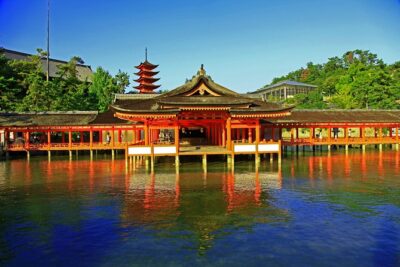
Peaceful Hiroshima & Miyajima UNESCO 1 Day Bus Tour
Read our review →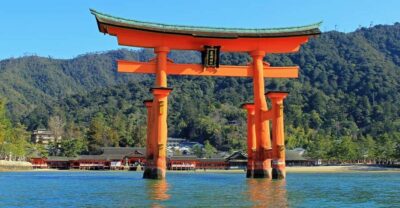
Hiroshima and Miyajima UNESCO Sites 1-Day Tour
Read our review →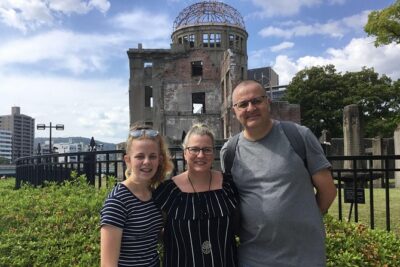
Hiroshima / Miyajima Full-day Private Tour with Government Licensed Guide
Read our review →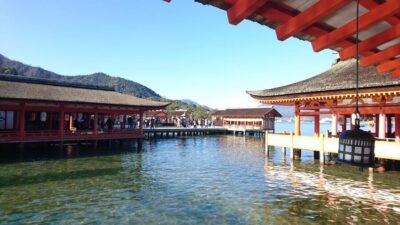
Osaka/Kyoto: Hiroshima Miyajima Bus Tour & Shinkansen Ticket
Read our review →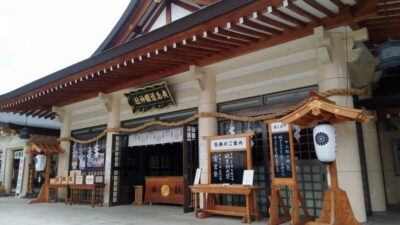
Hiroshima Historical Walking Tour – Why A-Bomb was Dropped
Read our review →
Hiroshima Peace (Heiwa) Walking Tour at World Heritage Sites
Read our review →
Hiroshima in a Nutshell: Morning Bike Adventure
Read our review →
Hiroshima City 4hr Private Walking Tour with Licensed Guide
Read our review →Browse the lists this tour appears in