
Reviewed · WALKING TOURS
Kanazawa: Private Walking Tour with a Local
Kanazawa is best understood on foot, with a local who can connect its gardens, old neighborhoods, markets, food, and daily life. This private walk gives you that freedom: guides such as Emi, Hanayo, Cynthia, and Chris adjust the route to your interests rather than following a fixed script. I especially like the chance to ask practical questions and get advice you can use after the tour.
I also like the flexible length and the option to begin at your hotel or another central meeting point. A guide can steer you toward Omicho Market, the samurai district, Higashi Chaya, Kanazawa Castle, Kenroku-en, or food stops, depending on your pace. The main consideration is simple: you pay $82 per person, but entrance fees, meals, transport, and optional activities are extra, so a full day with several paid sights can cost more.
Key points to know before booking
- A private route built around you: Bring a list of interests, or let your guide shape the walk from scratch.
- Strong local orientation: You can learn how to move around Kanazawa and get useful tips for meals, shopping, museums, and later sightseeing.
- Major sights can fit into one walk: Omicho Market, the samurai area, Higashi Chaya, Kanazawa Castle, Kenroku-en, and the Gold Leaf Museum have all featured in customized routes.
- Food advice is part of the value: Guides may explain market specialties, recommend restaurants, or point out treats such as gold-leaf ice cream, bean-paste sweets, and matcha sweets.
- Flexible timing: The experience lasts from 3 to 6 hours, though the exact pace depends on your interests and walking speed.
- A good first-day choice: The advice you receive can help you plan the rest of your stay.
Why a private walk works so well in Kanazawa
Kanazawa can look compact on a map, but its main sights are spread across several districts. You have the market near the center, castle grounds and Kenroku-en nearby, the old tea districts farther out, and museums and smaller streets that reward a little extra time.
A standard sightseeing route can show you the famous places without helping you understand how they fit together. This walk is more useful because you can ask the questions that arise as you go. You might ask which sweets are worth trying, how to behave in a traditional neighborhood, where to eat after the tour, or which museum deserves your limited time.
I like this setup for a first or second day in town. You get an orientation without being tied to a large group, and the guide can point out shortcuts, meeting points, and streets you might miss while studying a map. One guest covered about 8 kilometers with a guide, using small shortcuts to see more of the city. That gives you an idea of the possible range, though your own route may be shorter.
The personal element matters here. Guides have included Emi, Selda, Nicola, Akari, Christopher, Hanayo, Sachi, and Yukari, among others. Their backgrounds and styles differ, so your experience depends partly on the person assigned to you. The strongest pattern is a guide who contacts you before the walk, asks what you want, and then adjusts the day around those wishes.
Other guided walks in Kanazawa:
- Kanazawa Private/Group Walking Tour: Local & Major Highlight
★ 4.8 · 113 reviews - True Kanazawa: Private Walking tour with a Local guide
★ 5.0 · 66 reviews - Kanazawa: City Highlights & Hidden Gems Private Walking Tour
★ 4.8 · 42 reviews
Starting at the Kanazawa Textile Artists Association
The stated pickup point is the Kanazawa Textile Artists Association, but you can request another meeting place in or near central Kanazawa. Your hotel, a well-known landmark, or a quiet café can work if agreed in advance.
That flexibility saves time. You do not need to cross town just to reach the guide, and a hotel meeting can be helpful if you are still learning the city. The guide can also finish at a useful place, such as a market, restaurant area, or another sight, although the exact ending depends on the route arranged with your Lokafyer.
Before the tour, tell the guide your walking limits, food interests, museum plans, and must-see places. Families should also explain the ages of children. One guide adjusted her conversation for a child, which shows why that early exchange is worth having.
The tour is wheelchair accessible, but it remains a walking experience. Ask in advance about the route you want, especially if you plan to combine several districts or include attractions with entrance fees. Comfortable shoes are essential.
Omicho Market: a practical introduction to Kanazawa food
Omicho Market is one of the most useful possible early stops because it gives you a quick sense of local eating habits. A guide can explain what you are looking at, suggest things to sample, and help you avoid ordering blindly when signs are unfamiliar.
One guide took a group through the Daiwa food hall and pointed out items to try. Other walks included gold-leaf ice cream, sweets filled with bean paste, and matcha-based treats. These details may sound small, but they can make the rest of your time in Kanazawa easier and more enjoyable.
The market is also a good place to ask for restaurant advice. Your guide can suggest where to eat later, though meals are not included in the tour. If you want to stop for food, clarify whether that will be a short tasting, a purchased snack, or a longer meal that uses part of your walking time.
I would not book this experience expecting an organized food tour. Food is one possible part of a broader walk. If eating is your main purpose, say so before the tour and ask how much time can be devoted to markets and local specialties.
The samurai district and old Kanazawa streets
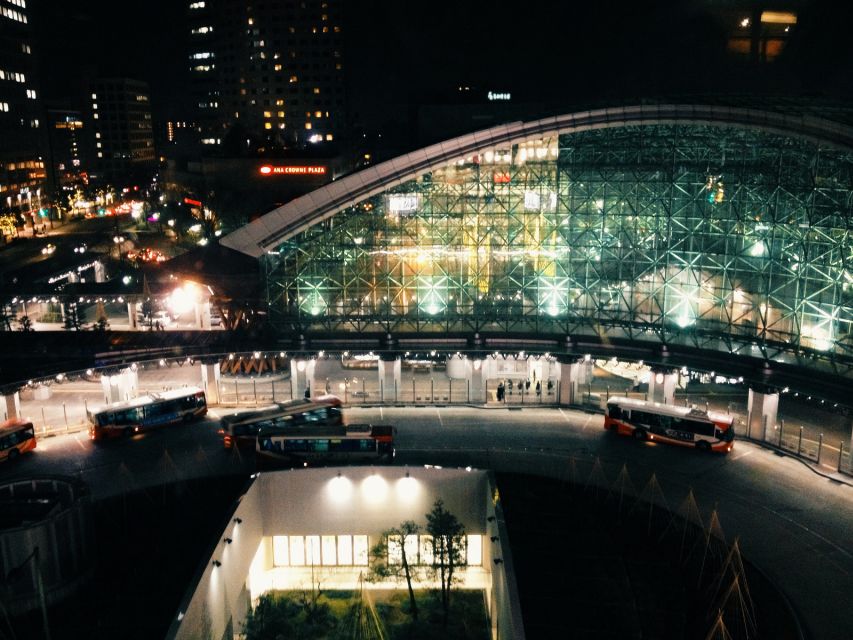
The samurai area offers a different feel from the market. Here, the value of a local guide is less about pointing out one famous object and more about explaining how the neighborhood developed and how to behave around residential streets.
Several guides have used the samurai district to explain Kanazawa’s past and present. You can ask about the city’s social structure, old homes, local customs, and the ways historic areas function today. The walk is especially useful if you prefer stories about ordinary life rather than a list of dates.
Do not assume every historic house or paid site is included. Entrance fees are separate, and the route may focus on streets and outward views if you prefer to keep moving. If you have a particular interior in mind, mention it before the walk and be prepared to cover the guide’s admission as well as your own.
Same base, a different sort of day:
- World Heritage Shirakawa-go and Experience Tours from Kanazawa
★ 5.0 · 4,049 reviews - Kanazawa: Kenrokuen Tea Ceremony Experience
★ 4.8 · 1,139 reviews - Kanazawa Half Day Tour (Private Guide)
★ 5.0 · 361 reviews - Kanazawa Full Day Tour (Private Guide)
★ 5.0 · 323 reviews
Kanazawa Castle and Kenroku-en
Kanazawa Castle and Kenroku-en are natural anchors for a first visit. Together they show the scale of the former castle town and the careful design of its public spaces.
A guide can help you understand the relationship between the castle grounds and the garden instead of treating them as isolated photo stops. The pace can remain relaxed, or you can use the time to cover more ground. One four-hour route included the castle, Omicho Market, Higashi Chaya, the Gold Leaf Museum, and Kenroku-en, along with explanations of Japanese culture and etiquette.
That is an ambitious list. You can see a great deal in four hours, but you should not expect a slow, detailed visit to every site on such a route. If Kenroku-en is your priority, tell the guide to protect time for the garden. If you prefer broad orientation, the same arrangement can give you a useful overview.
Kenroku-en is also a place where a local viewpoint helps. A guide can point out what makes the garden important and explain details you might otherwise pass without noticing. You will still want time to walk at your own speed and take photographs, so avoid packing the route too tightly.
Higashi Chaya and Kanazawa’s traditional culture
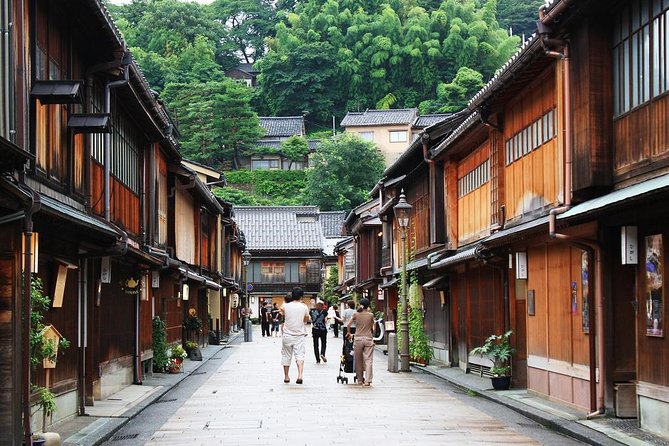
Higashi Chaya is one of Kanazawa’s best-known old districts, and a local guide can help you see more than its photogenic streets. The area opens questions about traditional entertainment, architecture, craft, and the difference between a living neighborhood and a staged attraction.
Some walks include tea-related activities as an extra. A tea experience is not part of the base price, so ask about cost and timing before adding one. The guide can also explain local customs and appropriate behavior, a useful service in a place where quiet streets and traditional businesses deserve respect.
One earlier walk through the geisha district and nearby temples focused on notable sites and local stories. Another guide helped a group find its dinner reservation afterward so they would not get lost. That sort of practical help is one of the better reasons to book a private walk at the start of your stay.
Keep in mind that the tour does not promise a fixed list of attractions. If Higashi Chaya is the reason you are booking, name it clearly. Otherwise, your guide may choose another district that better matches your interests.
The Gold Leaf Museum and small cultural details
Kanazawa is closely linked with gold-leaf craft, and gold-leaf details may appear in shops, sweets, souvenirs, and museum displays. A stop connected with this craft can add texture to the city beyond the major gardens and old streets.
One route included the Gold Leaf Museum and a gold-leaf ice cream stop. Another guide gave a gold-leaf memento and a discount coupon for the 21st Century Museum of Contemporary Art. Those extras are not guaranteed, but they show how a guide can add local context and useful next steps.
The museum itself is not included as an entrance benefit. You cover admission for yourself and the guide if you ask to enter an attraction. That policy is important when planning a route with several museums or cultural sites.
I would treat this part of the walk as an optional layer. It suits travelers interested in craft, design, and shopping. If your priority is gardens and architecture, use the time elsewhere.
What the guides do best
The most praised part of this experience is the guide’s personal attention. Strong guides make contact beforehand, ask what you want to see, and keep the conversation flexible during the walk.
Emi has been praised for clear English, local insight, and the ability to speak comfortably with children. Hanayo has been described as lively and helpful with food, markets, history, and practical tips. Cynthia has guided visitors through hotel pickups and major sights with a friendly, steady approach.
Chris has led walks that combine city landmarks with questions about Japanese society and culture. Christopher brought an anthropology background to conversations about Kanazawa and Japanese life. Yukari has been especially effective for travelers who want a mixture of facts, stories, humor, and good food and shopping advice.
These names are useful examples, not a promise of a particular guide. You should expect the quality and style to vary from person to person. The overall rating is 4.8 from 141 ratings, and the repeated praise centers on clear communication, flexibility, warmth, and strong local recommendations.
English, Spanish, and French are available. If language is important to your plans, confirm your preferred language when booking.
Is $82 per person a fair price?
At $82 per person, this is not the cheapest way to see Kanazawa. It can be good value if you are traveling with several people, want a private route, and will use the advice throughout the rest of your stay.
The price covers the guide and customized walking tour. It does not cover food, drinks, local transport, entrance fees, or optional activities. That makes the final cost depend on your choices. A simple walking route through public areas keeps extra spending low. A route with museums, tea activities, snacks, and transport will cost more.
I see the strongest value in the first-day version of this tour. If a guide helps you choose restaurants, understand market food, find the right neighborhoods, and plan the next day, the benefit continues after the walk ends. A private tour also lets you avoid spending time on sights that do not interest you.
Solo travelers should weigh the price more carefully. For families or small groups, the privacy and shared cost make the arrangement easier to justify. Children under three are free, and children from three through twelve receive a 50 percent discount.
Who should book this walk?
You should consider it if you want:
- A private introduction to Kanazawa without a fixed route
- Help choosing between markets, gardens, museums, old districts, and food stops
- A local person to answer practical questions
- A walking tour that can adapt to children or different interests
- Advice for the rest of your stay
- A guide in English, Spanish, or French
This is less suitable if you want a formal lecture, guaranteed entry to a set list of attractions, or a dedicated food tour with meals included. It is also not the right pick if you dislike walking or want transport between every stop.
Practical details for planning your day
The experience lasts from three to six hours. Three hours can give you a useful introduction, while four to six hours allows a wider route with more districts and cultural stops. Be realistic about distance, weather, and how much time you want inside each attraction.
Cancellation is free up to 24 hours before the start time. You can request a specific starting time, which helps if you are coordinating trains, meals, or museum reservations.
Wear comfortable shoes and carry what you need for changing weather. Bring questions. The more clearly you explain your priorities, the more useful the private format becomes.
Should you book the Kanazawa private walking tour?
I would book this tour early in a Kanazawa stay, especially for a first visit. The best use of the experience is not simply checking off famous sights. It is learning how the city fits together, finding food and shopping advice, and leaving with a sensible plan for the rest of your time.
The $82 price is reasonable for a private, flexible walk, particularly for couples, families, or small groups. Just budget separately for admissions, food, and transport, and tell the guide what matters most before the meeting. If you want a personal introduction rather than a rehearsed route, this is a strong choice.
FAQ
How long is the Kanazawa private walking tour?
The tour lasts from 3 to 6 hours. Available starting times can vary, and you can request a specific time.
Where does the tour begin?
The listed pickup point is the Kanazawa Textile Artists Association. You can also request pickup at your hotel, an iconic landmark, or a quiet café in or near central Kanazawa.
Is the tour private?
Yes. It is arranged for a private group, with a route customized to your interests.
Which languages are available?
Live guides are available in English, Spanish, and French.
Are entrance fees included?
No. You pay entrance fees separately, including the guide’s admission when you ask the guide to enter an attraction with you.
Are food and drinks included?
No. Meals, drinks, personal expenses, and optional activities are not included.
Is the tour suitable for children and wheelchair users?
The tour is wheelchair accessible. Children under three are free, and children from three through twelve receive a 50 percent discount. Comfortable shoes are recommended because this is a walking tour.
Just added in Kanazawa
- Kanazawa: Sushi & Japanese Cooking Class at a Historic School★ 5.0 · 66 reviews
- Taste of Kanazawa (Food tasting in Omicho Market & Higashi Chaya)★ 5.0 · 58 reviews
- Takayama and Shirakawago/Photoshoot by professional photographer★ 5.0 · 67 reviews
- Kanazawa private 1 day/Photoshoot by professional photographer★ 5.0 · 33 reviews
- Photoshoot session by professional photographer in Kanazawa★ 5.0 · 42 reviews
- Private Tour of Shirakawago and Gokayama from Kanazawa★ 5.0 · 50 reviews
- Shirakawago & Kanazawa from Kanazawa★ 5.0 · 51 reviews
- Private Tour of Shirakawago from Kanazawa (Half Day)★ 5.0 · 24 reviews
Walking Tours, compared.
Kyoto Geisha Walking Tour: Gion District & Hidden Gems
Read our review →
Tokyo Tsukiji Fish Market Food and Culture Walking Tour
Read our review →
Imperial Palace and Shogun Historical Walking Tour
Read our review →
Gion Geisha District Walking Tour – Stories of Geisha
Read our review →
Shinjuku Local Bar and Izakaya Guided Walking Tour
Read our review →
Asakusa Walking Tour with Sensoji Temple Visit
Read our review →
Nishiki Market Brunch Walking Tour (7 Tastings + Brunch)
Read our review →Browse the lists this tour appears in