
Reviewed · HIROSHIMA & MIYAJIMA DAY TRIPS
Kimono and Calligraphy Experience in Miyajima
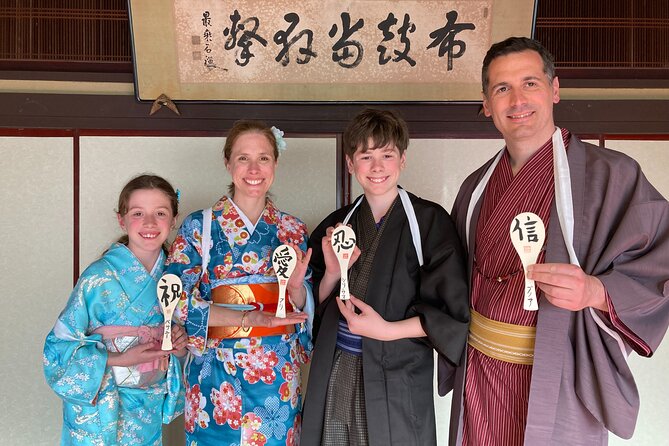
Miyajima is famous for its shrine and sea views, but this small cultural activity takes you away from the main crowds and into a temple setting. You choose a kimono, learn the basics of Japanese brush writing, and finish by decorating a wooden rice scoop for good luck. The hands-on format makes this more than a costume photo stop.
I like the choice of more than 100 kimono, including options that worked well for a plus-sized participant, and I like that you take home a personalized keepsake rather than a generic souvenir. The staff also take photos during the lesson and share them afterward. The main drawback is getting to the temple: map apps may direct you along a mountain-side road, so allow extra time and do not expect a location beside Miyajima’s busiest streets.
Key points
- Choose from more than 100 kimono, with dressing help from the staff.
- Practice kanji and your own name in hiragana or katakana.
- Write on a wooden rice scoop that you can take home in a protective container.
- Learn in a quiet temple and tea-room setting, away from the main tourist flow.
- Small groups of up to six allow for patient, personal instruction.
- Morning and afternoon sessions make this useful around shrine visits and tide times.
A temple setting instead of a rental shop
The activity begins at Tokujuji Temple, also listed as Soto Zen Konkozan Tokujuji, at 741-1 Miyajimacho in Hatsukaichi. This is not a shopfront near the busiest shopping streets. The quieter setting gives the outing a more personal feel, though reaching it may take more effort than you expect.
That distance is part of the appeal. You are not being dressed in a crowded commercial space while people hurry past. Instead, the kimono lesson takes place at a temple with a Japanese garden and a traditional tea room. The setting gives the activity a calm backdrop and creates better photo opportunities than a plain rental counter.
Allow time to find the meeting point. One couple arrived early for a later appointment and was accommodated, but you should not count on that every day. The clearest practical advice is to check the walking route before leaving the ferry area and follow the map carefully. One map service reportedly sent people along a mountain-side road, so a route that looks short on screen may involve an inconvenient walk.
Other long days west of Hiroshima:
- Peaceful Hiroshima & Miyajima UNESCO 1 Day Bus Tour
★ 5.0 · 5,309 reviews - Hiroshima: Hiroshima and Miyajima UNESCO Sites 1-Day Tour
★ 4.9 · 2,330 reviews - Hiroshima / Miyajima Full-day Private Tour with Government Licensed Guide
★ 5.0 · 1,298 reviews
Choosing a kimono from more than 100 options
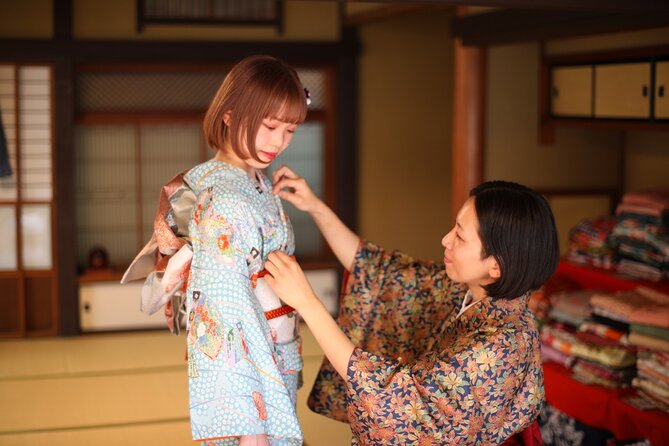
Your first task is choosing your kimono. The collection includes more than 100 garments, so you are not limited to one standard pattern or color. Staff help you put on the kimono, tie the obi belt, and arrange the other pieces needed to complete the outfit.
This part matters because wearing the clothing is not treated as a rushed prelude to the calligraphy. It is one of the two main activities. The staff take time to help with the dressing, and the small group size means you are less likely to feel lost in a crowd.
The selection also appears suitable for a range of body shapes. A plus-sized participant found several workable options, which is useful information if you have worried that a traditional outfit activity may not accommodate you. The supplied details do not give exact garment measurements or a full size chart, so anyone with specific fitting needs should ask before booking.
Once dressed, you can take photographs in the garden and around the temple setting. The staff also photograph you during the lessons. After completing the provided questionnaire, the photos are shared with you, giving you a record of the activity without requiring a companion to act as photographer.
The kimono will make movement more restricted than ordinary clothing. Keep that in mind if you plan to rush straight from this appointment to another timed activity. For a one-hour session, however, the outfit is central to the fun, not an inconvenience to tolerate.
Learning the first brush strokes
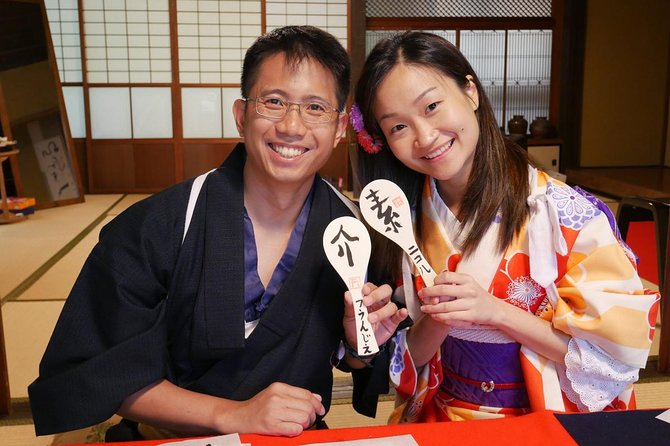
The calligraphy lesson begins with the basics. You learn how to hold the brush and practice simple lines before moving to Chinese characters, known in Japanese as kanji. That order is helpful for first-timers because you get a feel for brush pressure and movement before attempting a finished piece.
You then choose a kanji character from sample options. The examples give you a starting point, but the instruction is not described as rigid. One participant was allowed to choose a character outside the prepared list, so you may be able to request a different one if you have a particular word or idea in mind.
The staff guide you through practice attempts before you write the final design. That practice is important. Japanese calligraphy is not simply writing ordinary letters with a different pen. Brush angle, pressure, and stroke order affect the look of each character, and the lesson gives you enough time to try before committing the final version.
You also make a sample of your name in Japanese. Depending on the sound and spelling, it may be written in hiragana or katakana, the Japanese syllabaries. This gives you a personal project even if the kanji choices do not mean much to you.
The staff then show you how to sign the artwork in Japanese and add a stamp. These finishing touches make the piece feel more complete. You are not only copying a character from a worksheet. You are creating a small work with a name, signature, and seal.
The wooden rice scoop keepsake
The most distinctive part of the craft is writing on a wooden rice scoop. Miyajima is known for rice scoops as a local symbol and souvenir, so this gives the activity a direct connection to the island rather than producing a generic sheet of practice paper.
You practice on paper first, then transfer your selected kanji and name to the scoop. This creates a little tension in a good way. The final surface matters, but you have already had a chance to learn the strokes and settle your hand.
The scoop is yours to take home, and a container is provided to protect it. That makes it easier to pack than a wet sheet of calligraphy paper and gives you a useful reminder of the day. You can display it at home or keep it with other travel mementos.
The keepsake also helps explain the price. At $84.92 per person, this is not a budget activity for an hour of sightseeing. You are paying for staff assistance with dressing, access to a large kimono collection, a private cultural lesson, photography, and a finished souvenir. If you only want a quick costume photograph, the price may feel high. If you want instruction and a personal object to take home, the package offers better value.
Other dressing and photo sessions in Hiroshima:
- Kimono and Tea Ceremony in Miyajima
★ 5.0 · 73 reviews - An Amazing set of Cultural experience: Kimono, Tea Ceremony and Calligraphy
★ 5.0 · 69 reviews - Cultural Activities :Kimono, tea ceremony, Calligraphy and Amulet
★ 5.0 · 44 reviews - Kimono Tea Ceremony at Kyoto Maikoya, NISHIKI
★ 5.0 · 911 reviews
Why the six-person limit matters
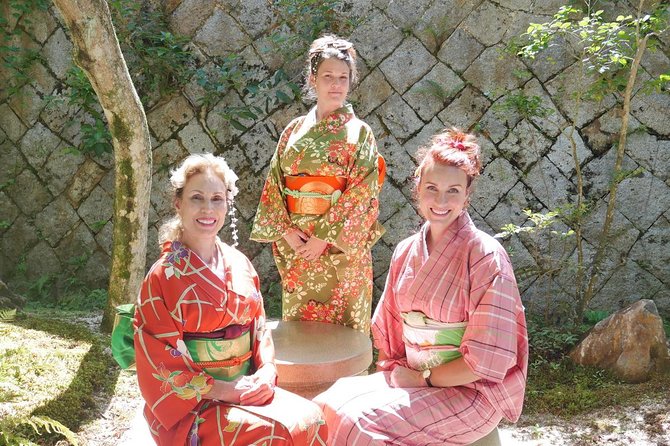
The maximum group size is six. That is small enough for the staff to help with kimono fitting, watch your brush technique, answer questions, and take pictures without turning the session into a production line.
The patient teaching is especially useful for families and anyone nervous about trying calligraphy for the first time. A family group of seven was able to take part, although the stated maximum is six, so you should not assume larger groups can always be accommodated. If your party exceeds six, confirm the arrangement before booking.
The activity has a minimum age of six. Younger children may enjoy choosing colors, wearing the kimono, and decorating the scoop, while older children and adults may get more from the writing lesson. The activity is also suitable for a mixed-age group, since no previous Japanese language or calligraphy skill is required.
The provided information says most people can participate and that the location is near public transportation. It does not give detailed information about step-free access, restroom facilities, or specific mobility arrangements. If those details matter to you, ask the operator before reserving.
Fitting it into a Miyajima day
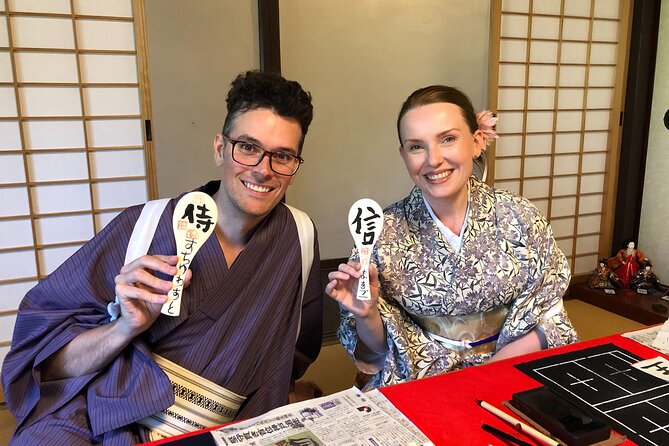
The session lasts about one hour and is offered in the morning or afternoon. That makes it easy to place around a visit to Itsukushima Shrine, shopping, or time by the waterfront.
It can also fill an awkward gap in your schedule. Tide levels change the look and access around the shrine, and one booking was used while waiting between high and low tides. Rather than wasting that time, you can spend it in a calm indoor and garden setting.
Give yourself enough time before the start. The meeting point is at Tokujuji Temple, and the route may be less direct than the address suggests. Arriving late could reduce the time available for kimono selection and dressing, which are important parts of the session.
The activity ends back at the meeting point. That is convenient if you want to continue exploring Miyajima from there, but it does not provide transport to another part of the island.
Photos, pacing, and the overall feel
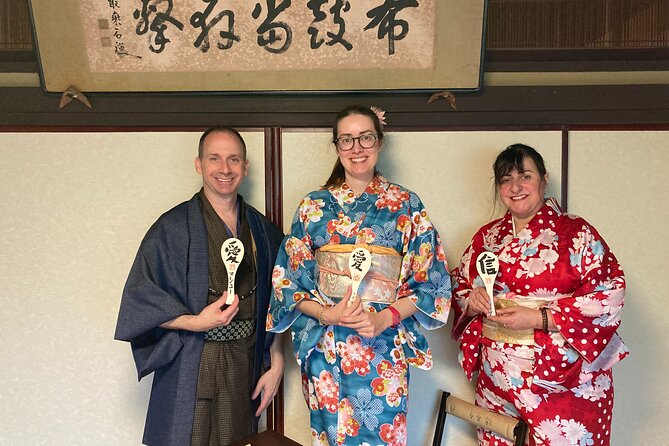
Photography is built into the activity. Staff take pictures while you learn, and garden photos are also possible. You receive the images after answering a questionnaire, so you do not have to depend entirely on your own phone.
The pace is gentle rather than hurried. You choose clothing, get dressed, pose for photographs, learn brush handling, practice lines, select a kanji, write your name, sign and stamp the work, and decorate the scoop. Trying to compress all of that into one hour requires reasonable focus, but the small group and helpful staff keep the lesson manageable.
The setting also changes the mood. Calligraphy in a tea room while wearing a kimono feels more connected to Japanese culture than simply renting an outfit and walking through the shopping district. You are still taking part in a visitor activity, but you are learning a skill and making something personal along the way.
The activity is not a full lesson in Japanese language or the history of kimono. It gives you a short, approachable introduction. If you want a detailed explanation of textile types, formal dressing rules, or advanced calligraphy, this one-hour format will be too brief.
Who will enjoy this most
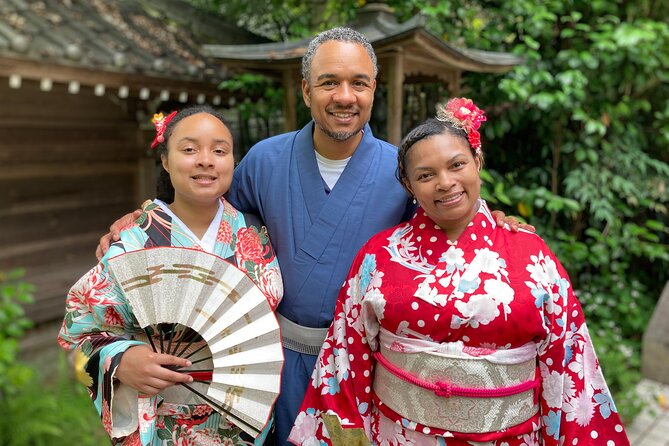
I would recommend this for you if you want a cultural activity that is easy to join without prior knowledge. It suits couples, families, friends, and solo participants who enjoy making something with their hands.
It is a particularly good choice for:
- First-time visitors who want more than shrine photographs.
- Families with children aged six and older.
- People who want a kimono option beyond standard rental-shop sizing.
- Anyone looking for a calm activity during a break in a Miyajima sightseeing day.
- Visitors who value a physical souvenir and digital photographs.
- Couples or small groups who prefer personal instruction over a large class.
You may want to skip it if your schedule is packed with timed visits, if walking to a quieter temple location would be difficult, or if you only want to wear a kimono without taking a lesson. The cost is easiest to justify when you value all four parts: dressing, photos, calligraphy, and the personalized rice scoop.
Booking, cancellations, and practical details
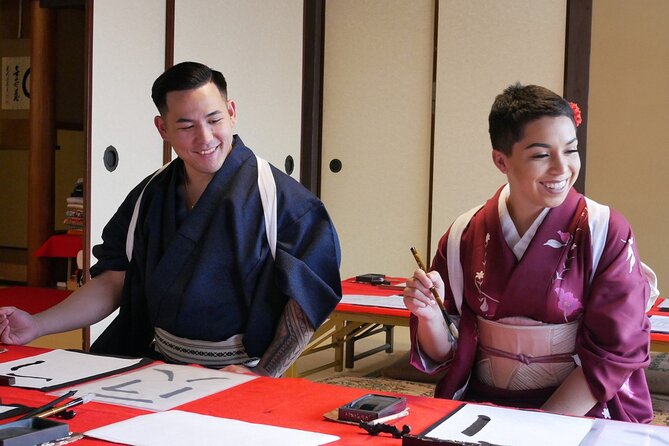
The experience is booked an average of 36 days ahead, so reserving early is sensible if you have a fixed Miyajima schedule. Confirmation is provided at booking, and mobile tickets are accepted.
You can cancel for a full refund up to 24 hours before the local start time. Changes or cancellations inside that 24-hour window are not refundable. The activity requires good weather, and if the operator cancels because of poor conditions, you are offered another date or a full refund.
The price is $84.92 per person. For a one-hour activity, that is a notable expense, but the cost includes more than admission to a viewing area. You receive help dressing, a guided calligraphy lesson, access to the temple setting, photographs, and a personalized rice scoop in a container. The value depends on how much you want the hands-on parts. I would not book it solely for a quick photo, but I would consider it fair for a small-group cultural workshop with a keepsake.
Should you book this Miyajima activity?
Book it if you want to slow down for an hour and take part in something rather than simply look at another sight. The quiet temple, large kimono selection, patient instruction, garden photos, and personalized rice scoop give the outing a clear sense of place.
Before booking, check the route to Tokujuji Temple, leave extra time for walking, and confirm any size or mobility concerns. If you do that, this is a strong pick for a small group, a family, or anyone who wants a memorable Miyajima activity beyond the usual shrine circuit.
FAQ
Where does the kimono and calligraphy activity begin?
It begins at Tokujuji Temple, also called Soto Zen Konkozan Tokujuji, at 741-1 Miyajimacho, Hatsukaichi, Hiroshima 739-0513, Japan.
Where does the activity end?
The activity ends back at the meeting point, Tokujuji Temple.
How long does the activity last?
The session lasts approximately one hour.
How many people can join?
The stated maximum is six participants.
What is the minimum age?
The minimum age is six.
Are kimono included?
Yes. You choose a kimono from a collection of more than 100 options, and the staff help you dress, including the obi belt and other needed pieces.
What do you learn in the calligraphy lesson?
You learn how to hold the brush, practice basic lines, choose a kanji character, and write your name in hiragana or katakana. You also sign and stamp your artwork.
Can you take anything home?
Yes. You can take home your calligraphy and a personalized wooden rice scoop. A container is provided for the artwork.
Is cancellation free?
You can cancel for a full refund up to 24 hours before the start time. Cancellations or changes made less than 24 hours before the activity are not refunded. If poor weather causes the operator to cancel, you are offered another date or a full refund.
More craft workshops in Hiroshima
- Calligraphy Workshop at Traditional Folk Craft Shop in Hiroshima
★ 5.0 · 26 reviews - Private Hiroshima Calligraphy: Create Your Own Kanji Art Souvenir
★ 5.0 · 12 reviews - Chopstick Making Workshop in Ginza
★ 4.8 · 1,366 reviews - Kyoto : Chopsticks Making Workshop in Gion with Engraving Option
★ 5.0 · 958 reviews
Just added in Hiroshima
- Iya Valley BROMPTON Slow Cycling Tour★ 5.0 · 28 reviews
- Iya Valley All Must-Sees Private Chauffeur Full-day Tour with a Driver★ 5.0 · 20 reviews
- Shore Excursion from Hiroshima Port : Private Tour in Hiroshima★ 5.0 · 17 reviews
- Hiroshima & Miyajima All-Inclusive Tour w/Licensed guide Pancho★ 5.0 · 54 reviews
- Okunoshima Rabbit Island Cycling Tour with Local Guide★ 4.5 · 17 reviews
- The Peace Memorial to Miyajima : Icons of Peace and Beauty★ 4.5 · 31 reviews
- Private Full Day Hiroshima Tour★ 4.5 · 29 reviews
- Hiroshima Saijo Sake Tasting Tour with visit to 7 Breweries★ 5.0 · 104 reviews
Hiroshima & Miyajima Day Trips, compared.
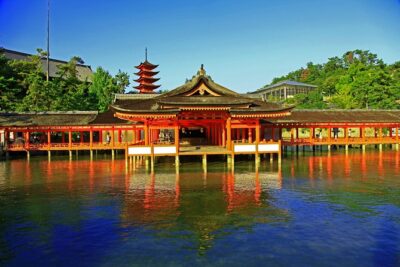
Peaceful Hiroshima & Miyajima UNESCO 1 Day Bus Tour
Read our review →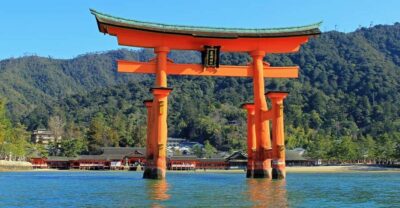
Hiroshima and Miyajima UNESCO Sites 1-Day Tour
Read our review →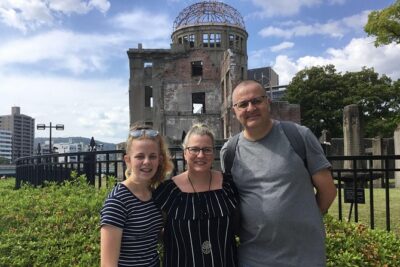
Hiroshima / Miyajima Full-day Private Tour with Government Licensed Guide
Read our review →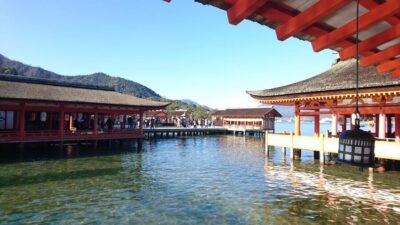
Osaka/Kyoto: Hiroshima Miyajima Bus Tour & Shinkansen Ticket
Read our review →
Hiroshima Historical Walking Tour – Why A-Bomb was Dropped
Read our review →
Hiroshima Peace (Heiwa) Walking Tour at World Heritage Sites
Read our review →
Hiroshima in a Nutshell: Morning Bike Adventure
Read our review →
Hiroshima City 4hr Private Walking Tour with Licensed Guide
Read our review →Browse the lists this tour appears in