
Reviewed · GEISHA & GION DISTRICT TOURS
Kyoto Early Bird English Tour: Gion & Higashiyama(Private opt)
Kyoto’s old streets are at their best early, before tour buses and shopping crowds fill the lanes. This three-hour walk takes you from Gion to Higashiyama, with stops at Kiyomizu-dera Temple, Yasaka Shrine, Yasaka Pagoda, and several smaller religious sites. I like the quiet start and the useful route: you get famous Kyoto sights without wasting time over a map. I also like that guide Ikki Kataoka has been praised for clear English, patience, detailed explanations, and taking excellent photos. The main drawback is the walking. Hills, stone lanes, and nearly an hour at Kiyomizu-dera call for moderate fitness.
The private-tour option is appealing if you want to ask questions or move at your own pace, though the details also describe a small-group choice, so check the format during booking. You pay $64.01 per person, plus ¥500 for Kiyomizu-dera. That is fair value if you want local context and photos, but less so if you prefer to stroll independently and read signs at your own speed.
Key points before you book
- A 7 a.m. start can change the whole morning: Early touring means quieter streets around Gion and Higashiyama.
- Ikki Kataoka may guide your walk: He is praised for careful English explanations, patience, and strong photography skills.
- Eight stops fit into about three hours: The route covers famous sights and smaller places such as Yasui-Konpiragu and Yasaka Koshin-Do.
- Kiyomizu-dera costs extra: Admission is ¥500 per person, while the other listed stops are free.
- Expect a real walking tour: Stone streets, uphill sections, and time on your feet are part of the experience.
- The group format needs checking: The tour information offers private or small-group choices, while the additional details describe a private activity.
Why the early start matters in Gion

The best feature here is not simply the list of famous places. It is the timing. A morning departure, including the advertised 7 a.m. option, gives you a chance to see Gion before the district becomes difficult to photograph and harder to walk through at a relaxed pace.
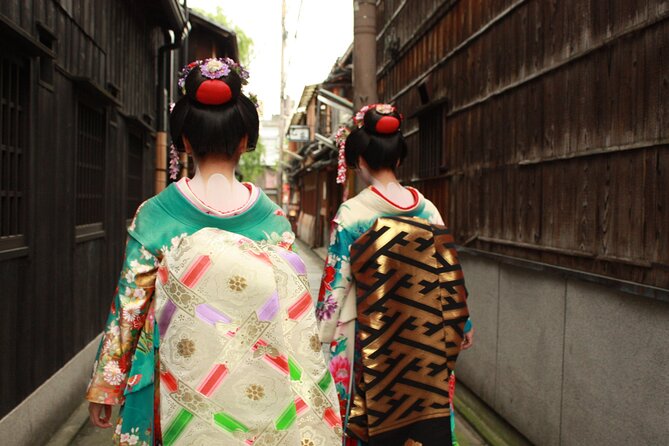
Gion is Kyoto’s most famous geisha district, known for wooden machiya houses, teahouses, and preserved streets. Your guide can help you understand the district as more than a photo stop. The architecture, narrow lanes, and traditional businesses show how old Kyoto still appears in selected parts of the city.
The first stop is listed as about 10 minutes, with no admission charge. That is enough for an introduction and a few photos, not a long historical lecture. You should think of it as the opening chapter of the walk, where your guide gets you oriented before the route turns toward Hanamikoji Street.
Gion is also a place where you need to behave carefully. The tour information notes the possibility of seeing geisha and maiko around Hanamikoji Street, but it does not promise an encounter. Treat any performers you see as people going to work, not as characters waiting for photographs. A guide is useful here because you can enjoy the setting without turning the visit into a chase for a picture.
Other evenings in the old entertainment quarters of Kyoto:
- Kyoto Geisha Walking Tour: Gion District & Hidden Gems
★ 4.7 · 3,273 reviews - Kyoto: Gion Magical Night Walking Tour with Geisha Trivia
★ 4.9 · 2,393 reviews - Kyoto: Gion Geisha District Walking Tour – Stories of Geisha
★ 4.7 · 2,187 reviews
Hanamikoji Street and the old wooden lanes
Hanamikoji Street receives about 15 minutes. It is one of the most recognizable roads in Gion, lined with historic wooden buildings and traditional teahouses. The appeal is visual, but the guide’s commentary gives the street more meaning by pointing out how its buildings and customs fit into Kyoto’s older social life.
This is a short stop, so you will not have time to inspect every lane or shop. That is a tradeoff built into the route. You cover a lot of ground in three hours, but each place receives a focused introduction rather than a long visit.
The route is likely to feel most comfortable in the morning. The streets are easier to cross, photographs are less crowded, and you can pay attention to the guide instead of trying to keep up with a busy group. If you want long shopping stops, this walk is not designed for that. If you want a useful first look at the area, the pace makes sense.
Yasui-Konpiragu, a shrine for cutting bad ties
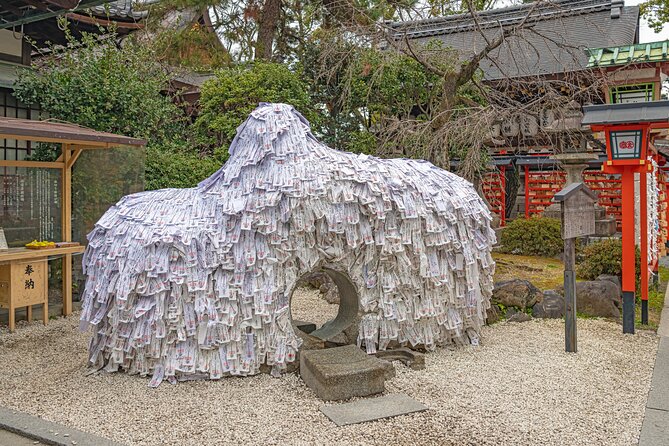
Yasui-Konpiragu brings a different kind of interest. This shrine is known for prayers involving the end of negative relationships and the beginning of better ones. It gives the tour a more personal and less polished side of Kyoto’s religious culture.
You spend about 15 minutes here, and admission is free. The stop helps balance the major temples and photogenic streets. Instead of moving only between postcard sights, you see a place tied to everyday hopes, worries, and decisions.
The time is brief, but that may be enough if your guide explains the shrine’s purpose clearly. This is one of the places where an English-speaking guide can help you notice why the site matters, rather than simply telling you its name and moving on.
Yasaka Pagoda and the climb toward Higashiyama
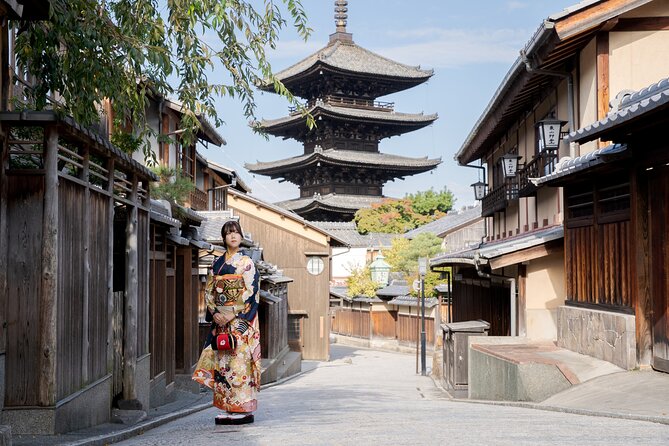
Yasaka Pagoda, also called Hokanji Temple, receives another 15 minutes. Its wooden tower is one of Kyoto’s most recognizable landmarks. The description emphasizes its age, scale, and construction without nails, though you should treat the stop mainly as an exterior sightseeing point unless your booking details say otherwise.
The pagoda is a strong photo stop because it rises above the traditional streets around it. It also signals a change in the walk. From here, the route continues through the historic lanes of Higashiyama, where the surface becomes more demanding underfoot.
This is where comfortable shoes matter. The tour is designed as a walking experience, and the route includes stone-paved streets and an uphill temple area. You do not need an athlete’s fitness, but you should be comfortable walking for several hours with short pauses.
Same base, a different sort of day:
- PERFECT KYOTO 1-Day Bus Tour
★ 5.0 · 13,518 reviews - Kyoto: Fushimi Inari, Kinkakuji, Bamboo Grove 1 Day Bus Tour
★ 4.8 · 4,316 reviews - Kyoto: Tea Ceremony in a Traditional Tea House in Kiyomizu
★ 4.9 · 3,519 reviews - Kyoto: Tea Ceremony Ju-An at Jotokuji Temple
★ 4.9 · 3,207 reviews
Sannenzaka and Ninenzaka, Kyoto’s prettiest shopping streets
Sannenzaka and Ninenzaka are two of the most atmospheric parts of the route. Their stone paving, wooden buildings, souvenir shops, and restaurants create the old-Kyoto scene many people hope to find.
You receive about 15 minutes here. That is enough to take in the setting and hear the guide explain what makes the streets distinctive. It is not enough for a leisurely meal or serious shopping, so save those plans for another time.
The slopes and paving can be awkward, especially if you are carrying luggage or using mobility equipment. The tour information calls for moderate physical fitness and does not promise an accessible route. If you have trouble with hills or uneven ground, ask the provider for details before paying.
These streets can also be more crowded later in the day. An early visit is a clear advantage, especially if your priority is photographs. The route may not give you time to enter many shops, but it does place you in the right area before the day gets busier.
Kiyomizu-dera, the tour’s main event
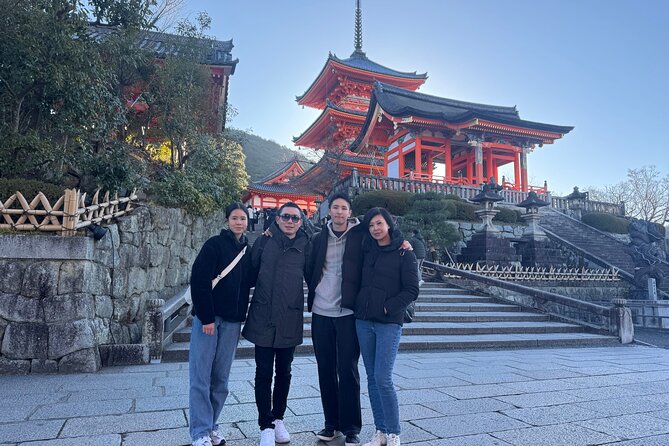
Kiyomizu-dera gets the longest stop, about one hour, and rightly so. This is the major temple visit on the route, with wide views over Kyoto and a setting on the hills above the city.
Admission is not included. Budget ¥500 per person, paid separately. The other listed stops are free, so this is the only stated entrance charge. At a total tour price of $64.01 per person, that extra fee is small, but it is still worth knowing in advance.
An hour allows your guide to explain the temple and gives you time to look around rather than rushing through. It also makes this the part of the tour most likely to shape your impression of the morning. The view over Kyoto is a major reason to come, while the temple’s history and design give the visit substance beyond a scenic overlook.
The drawback is the uphill approach and the number of people who want to see the same place. An early start helps, but Kiyomizu-dera is still the route’s most popular attraction. You should expect walking, steps or sloped paths, and time spent standing or moving through a large temple complex.
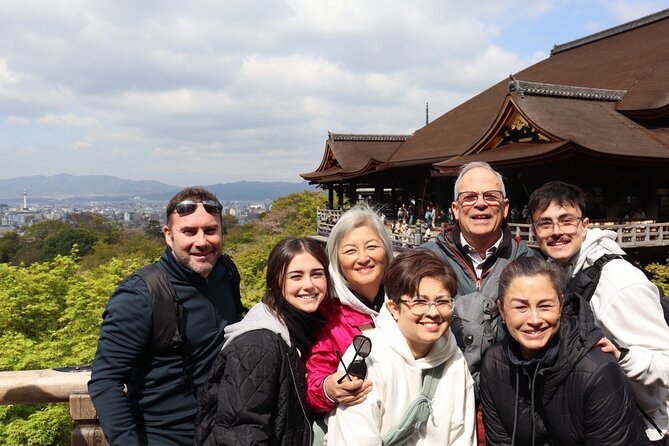
Your guide may also take professional photos during the experience. This is especially useful at Kiyomizu-dera and along the old streets, where it can be difficult to take a good group picture while also keeping up with the tour. The photos are part of the included experience, according to the tour details, though the exact number and delivery method are not specified.
Yasaka Koshin-Do, a small burst of color
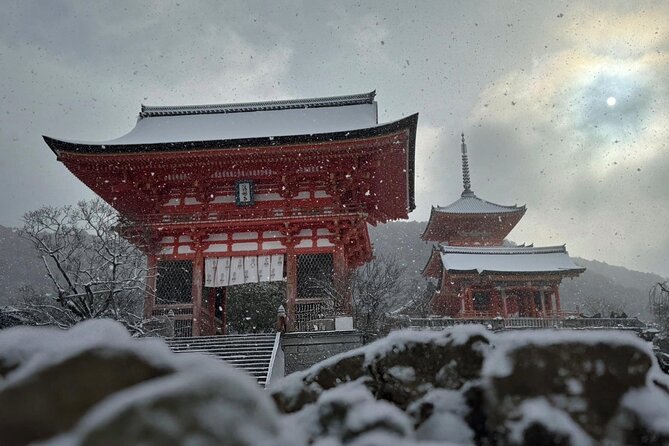
Yasaka Koshin-Do is a short but memorable stop. The temple is described as having an uncertain construction date and unusually colorful decorations. That makes it different from the more restrained appearance associated with many Kyoto temples.
You spend about 15 minutes here, with no admission fee. The stop works well late in the route because it offers a change of mood after the large temple complex. It is also a useful reminder that Kyoto’s religious sites are not all grand gates, gardens, and famous views. Some are small, bright, and tied to local practice.
Do not expect a long visit. The value is in seeing a distinctive place and learning why it looks so different from other temples in the area.
Yasaka Shrine completes the route
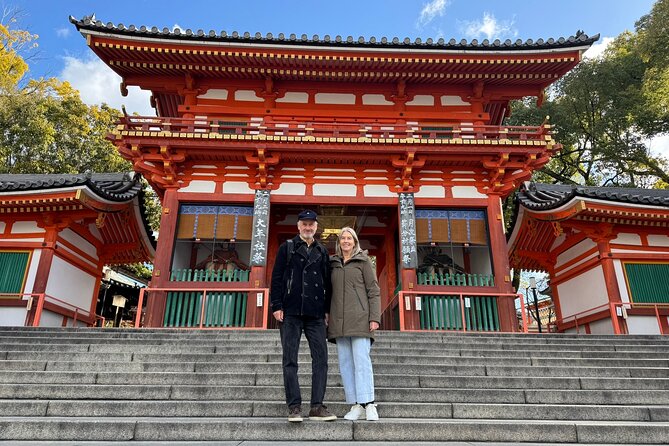
The final stop is Yasaka Shrine, with about 30 minutes planned. It is described as the headquarters of 2,300 related shrines across Japan and is dedicated to gods associated with prosperity and protection.
The shrine gives the walk a strong ending. After the narrow streets and hillside temple, you finish at a major religious site with enough time to look around without feeling hurried. The stop is free, and the activity ends back at the original meeting point near the Statue of Izumo-no-Okuni in Kawaramachi, Higashiyama Ward.
The return to the meeting point matters if you have afternoon plans. You are not left at an unfamiliar site with a separate transport problem. The tour ends where it begins, though you should still allow time to reach a train or bus after the official finish.
Guide style and the value of the photographs
The guide is one of the strongest reasons to choose this walk instead of following a route on your phone. Ikki Kataoka is specifically praised for speaking very good English, explaining details patiently, and making older participants feel comfortable. That suggests a calm style rather than a rushed, fact-heavy performance.
The photography is another practical benefit. Ikki is described as acting as both guide and professional photographer during the morning tour, with photos that turned out well. For couples, families, and solo visitors, this can be worth more than it first appears. You can pay attention to the place instead of taking turns behind the camera.
Still, photography should be viewed as a useful extra, not the sole reason to book. The tour’s main value is the route and commentary. The exact photo package is not stated, so ask how the pictures are delivered if this feature is important to you.
Price, group size, and the walking tradeoff
At $64.01 per person, this is not the cheapest way to see Gion and Higashiyama. You can walk through the districts for free, and most stops do not charge admission. The price pays for a guide, a planned route, English explanations, and professional photos rather than entrance tickets.
I think the value is strongest for a first visit to Kyoto. You avoid spending your morning sorting out directions, identifying shrines, and working out how the sites connect. A private format can make the price easier to justify if you want personal questions answered or need a gentler pace.
The tour information also presents a small-group option, while the additional details describe the activity as private. Confirm the exact format you are selecting. Group discounts are available, which may improve the cost for several people booking together.
Food and drinks are not included. Plan accordingly, especially because the walk starts early and lasts about three hours. No meal stop is listed, so do not count on breakfast during the activity.
Confirmation is provided at booking, and the meeting point is near public transportation. Arrive early. If you are late, you cannot join the tour and will not receive a refund. Cancellation is free up to 24 hours before the start time, but changes or cancellations inside that window are not accepted.
Who should choose this Kyoto walk?
I would choose this tour if you want a guided first look at Kyoto’s classic eastern districts, especially on your first morning in the city. It suits couples, families, older adults who prefer a patient guide, and anyone who wants good group photographs without asking strangers to take them.
It also works well for people who value context. Gion, Yasui-Konpiragu, Yasaka Pagoda, Kiyomizu-dera, and Yasaka Shrine are easy to visit independently, but the route can feel like a string of attractive streets unless someone explains what you are seeing.
I would skip it if you want a slow shopping morning, dislike hills, or already know Gion and Higashiyama well. The schedule is efficient, not leisurely. You move between eight stops, and the most important places receive limited time apart from Kiyomizu-dera.
Should you book it?
Book this tour if you want to see Kyoto’s famous eastern sights early, with an English-speaking guide who can explain the setting and take professional photos. The early timing, patient guiding style associated with Ikki Kataoka, and strong mix of major and smaller sites give it real appeal.
Before booking, confirm whether your selected departure is private or small-group, and add ¥500 for Kiyomizu-dera. If you can manage the walking and accept a structured pace, this is a practical way to get your bearings in Gion and Higashiyama without spending your first Kyoto morning lost in the lanes.
FAQ
How long does the Kyoto Gion and Higashiyama tour last?
The tour lasts approximately three hours.
What time does the morning tour start?
A 7 a.m. morning departure is available according to the tour information.
Which places are included on the route?
The route includes Gion, Hanamikoji Street, Yasui-Konpiragu, Yasaka Pagoda, Sannenzaka and Ninenzaka, Kiyomizu-dera Temple, Yasaka Koshin-Do, and Yasaka Shrine.
Is Kiyomizu-dera admission included?
No. Admission costs ¥500 per person and is paid separately.
Is the tour private or shared?
The tour information describes a choice between private and small-group formats, while the additional details describe the activity as private. Check the format available for your selected booking.
Where does the tour start and finish?
It starts at the Statue of Izumo-no-Okuni in Kawaramachi, Higashiyama Ward, Kyoto, and ends back at the meeting point.
What happens if I arrive late?
If you are late for the meeting time, you cannot join the tour and will not receive a refund.
Just added in Kyoto
- Private Cooking Class Udon in Kyoto Japan★ 5.0 · 23 reviews
- Your Private Vacation Photography Session In Kyoto★ 5.0 · 110 reviews
- Kyoto: Zen Meditation at a Private Temple with a Monk★ 5.0 · 25 reviews
- Private Pewter Sake Cup Experience with a Kyoto Artisan★ 5.0 · 31 reviews
- Kyoto Wagashi(Japanese sweets) Cooking Class near Fushimiinari★ 5.0 · 60 reviews
- Kyoto:Family-Friendly Kimono & Yukata Experience at WARGO★ 5.0 · 147 reviews
- Private Guided Traditional Buddhist Cooking in Japan★ 5.0 · 16 reviews
- Kyoto: Gion Geisha District & Sake-in-Hand Walking Tour★ 5.0 · 37 reviews
Geisha & Gion District Tours, compared.

Kyoto Geisha Walking Tour: Gion District & Hidden Gems
Read our review →
Gion Geisha District Walking Tour – Stories of Geisha
Read our review →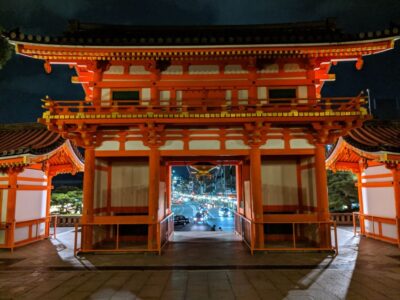
Best of Kyoto: Gion, Geisha, Pagodas & Cobblestones
Read our review →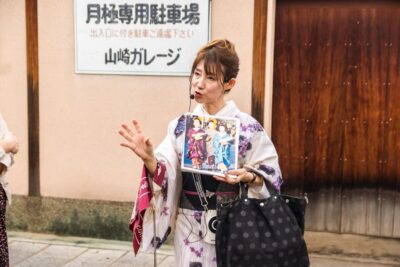

Kyoto Night Foodie Tour in Gion (9+ dishes + 6 Sake tastings)
Read our review →
Kyoto Gion: 2-Hour Geisha Culture & History Walking Tour
Read our review →
Chopsticks Making Workshop in Gion with Engraving Option
Read our review →
Browse the lists this tour appears in