
Reviewed · FUSHIMI INARI TOURS
Kyoto: Fushimi Inari Shrine and Tofukuji Temple E-Bike Tour
Kyoto’s famous shrines are only half the story. This four-hour ride links Fushimi Inari Shrine and Tofukuji Temple with quiet lanes, river paths, Gion streets, and ordinary neighborhoods that are easy to miss on foot. I like the mix of major sights and local corners, and I like that the electric bikes make the route manageable rather than punishing.
The guide is a major part of the experience. Maki is praised for her humor, clear English, cultural stories, and careful road leadership. The main consideration is time: four hours gives you a useful taste of several places, but Fushimi Inari is a large shrine complex, and you will not have time to explore every corner.
Key points before you book
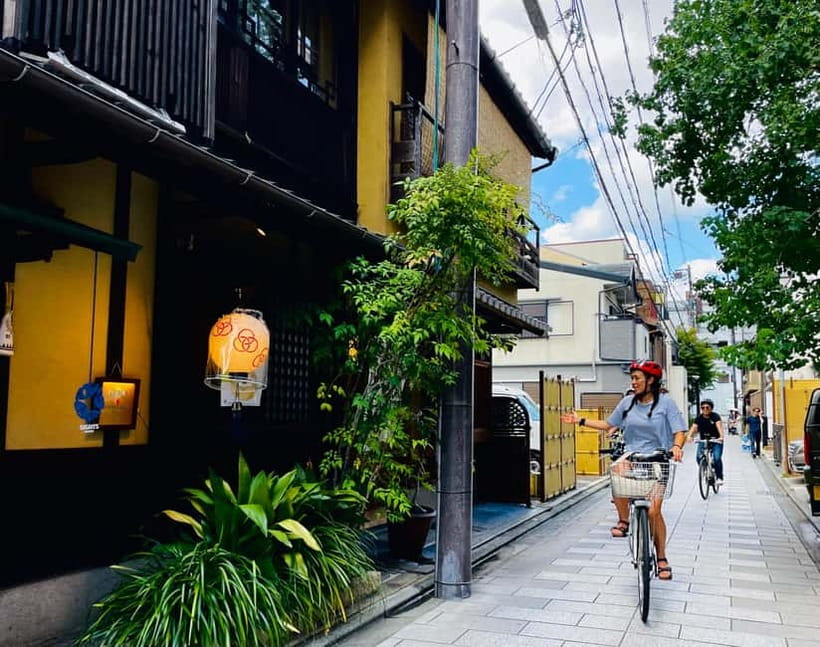
- A smart route through eastern and southern Kyoto: Ride from the Higashiyama-Sanjo area through Gion, residential streets, riverside paths, Fushimi Inari, and Tofukuji.
- Maki brings the culture to life: When Maki leads the tour, expect stories about geisha, samurai, customs, religion, and daily life, often with humor and personal examples.
- Electric assistance matters: The bikes help on slopes and when your legs tire, while frequent stops keep the pace comfortable.
- Small groups feel personal: The group is limited to eight people, giving you room to ask questions and receive riding guidance.
- The price covers useful extras: At $83, the tour includes the bike, helmet, insurance, snack, water bottle, and entrance fees for two places.
- Best for active visitors aged 12 and over: You need to be comfortable with a mix of cycling, walking, city traffic, and time outdoors.
Why an e-bike is a good way to see Kyoto
Kyoto is spread out, and its best sights do not always line up neatly beside train stations. Walking between Gion, Fushimi Inari, and Tofukuji can take a large part of your day. Public transport gets you close, but it does not show you the streets between the headline sights.
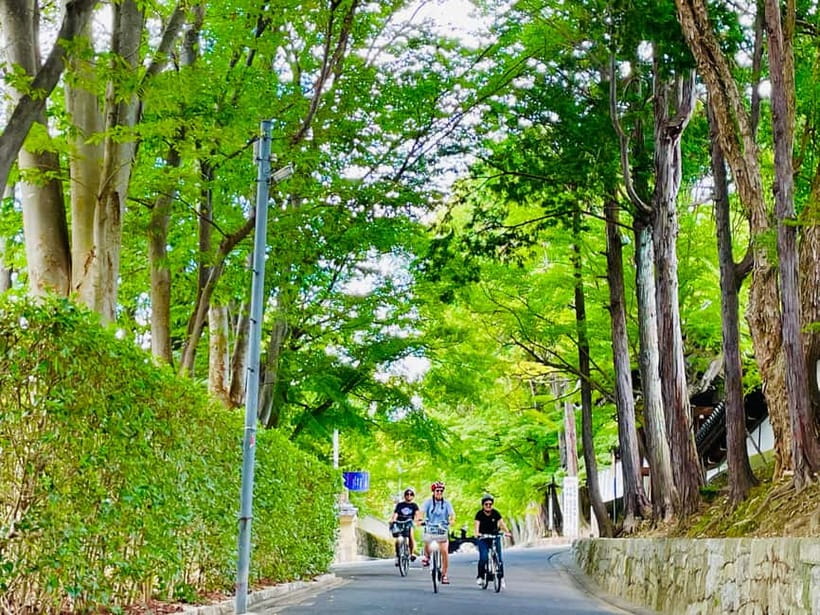
An e-bike fills that gap. You cover more ground than you would on foot, but you still move slowly enough to notice wooden homes, small shrines, waterways, and neighborhood life. The electric motor is especially useful on uphill sections and late in the ride, when even a gentle slope can feel less gentle.
You should not think of this as a race or a sporty cycling excursion. The route includes frequent stops, and the pace is designed for sightseeing. Riders describe the bikes as comfortable, sturdy, clean, and easy to use. You still need to pedal, steer, and pay attention, but you are not expected to be a serious cyclist.
The ride uses both quieter side streets and some busier roads. The guide gives an orientation on riding in Japan before setting off and leads the group through traffic. That matters if you are uneasy about cycling in a Japanese city. You will need to follow instructions closely and keep your place in the group.
Other cycling tours in Kyoto people book:
- Bike Tour Exploring North Kyoto plus Lunch
★ 5.0 · 1,087 reviews - Arashiyama Bamboo Forest & Hidden Gems Bike Tour (Early Bird)
★ 5.0 · 613 reviews - 5 Top Highlights of Kyoto Full Day Bike Tour (E-bike option)
★ 5.0 · 511 reviews
Starting near Higashiyama-Sanjo
The meeting point is Pedal Adventure Kyoto, near a temple in the Higashiyama-Sanjo area. The first part is practical: bike setup, helmet fitting, an explanation of the electric assist, and basic guidance for riding in Japan.
This introduction is valuable even if you cycle at home. Japanese road habits, narrow streets, and mixed traffic may feel different from what you know. Take this time to ask questions and make sure you are comfortable with the brakes, gears, and motor assistance before leaving.
The tour includes insurance and a helmet. You should arrive in comfortable clothes and shoes that work for both pedaling and walking. Sunscreen is sensible on sunny days, and a camera is worth bringing. Water is included, but staying hydrated is still your responsibility, particularly in Kyoto’s warmer months.
The group limit of eight is one of the tour’s strengths. A large bike group can become awkward at intersections and difficult to hear at stops. With fewer riders, the guide can watch the group more closely, answer questions, and take photos without turning the ride into a production.
Gion, geisha culture, and everyday Kyoto
The route moves through Gion, Kyoto’s best-known traditional entertainment district. Here, the guide explains geisha culture and local customs rather than treating the area as a backdrop for quick photographs.
Gion is more than its pretty lanes and traditional buildings. It is a working district with customs worth respecting. A good guide helps you understand where photography may be sensitive, how the area functions, and why Kyoto residents care about manners around cultural sites.
From Gion, the route continues into quieter parts of the city. This shift is one of the most useful parts of the ride. You get a look at ordinary streets and residential areas, where the experience is less about checking off sights and more about seeing how Kyoto works between them.
The route may include small shrines, temples, alleys, creeks, and riverside stretches. These stops give the guide room to explain Japanese customs in context. Instead of receiving a long lecture about religion, you can ask why a particular gate, gesture, offering, or building matters.
Maki is particularly well regarded for this kind of storytelling. Her approach combines dates and background with personal stories, jokes, and visual material such as a binder with photographs. That helps if Japanese religious terms and historical names start to blur together.
Fushimi Inari Shrine and the meaning of its gates
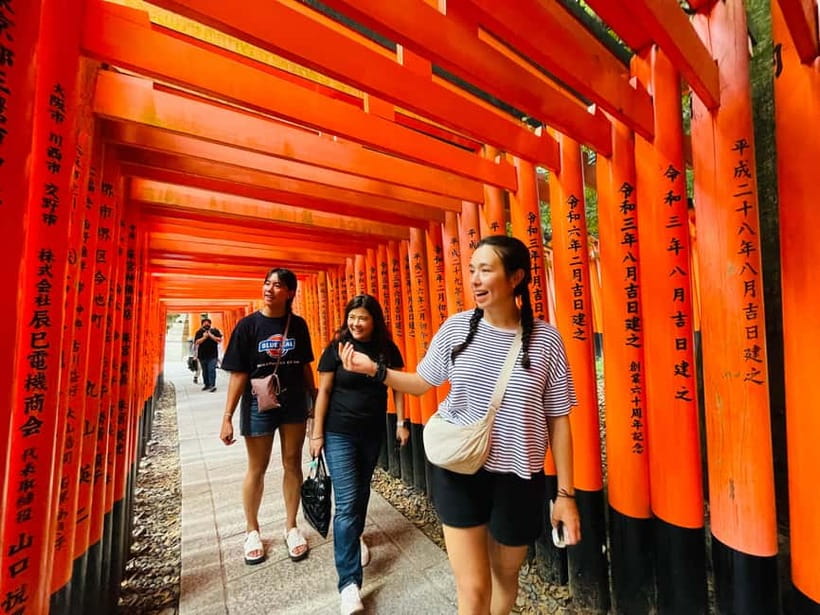
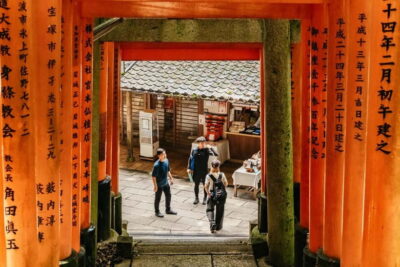
Fushimi Inari is the tour’s headline stop and one of Kyoto’s most recognizable sights. The shrine is dedicated to Inari, a Shinto deity associated with rice, prosperity, and business. Its long rows of orange torii gates have made it one of Japan’s most photographed religious sites.
The value of visiting with a guide is that you learn how to behave and what you are seeing. The guide explains Shinto practices, the role of the shrine, and the meaning behind customs that can otherwise look like a series of attractive photo opportunities.
You will have time at the shrine, but do not expect a full exploration of the entire mountain route. Fushimi Inari extends well beyond the lower gates, and four hours must also cover the cycling, Gion, Tofukuji, and other stops. If Fushimi Inari is your main priority, you may want to return on your own for a longer walk.
That limitation is not necessarily a flaw. The lower shrine area can be crowded, and a focused visit helps keep the half-day balanced. The guide gives you a framework, points out what matters, and then moves the group onward before one stop consumes the whole tour.
Wear shoes that can handle uneven walking. The experience is not only cycling, and you may walk through shrine and temple grounds. Comfortable clothing is also important because you will move between riding and standing outdoors.
Other temples and shrines in Kyoto people book:
- Kyoto: Tea Ceremony Ju-An at Jotokuji Temple
★ 4.9 · 3,207 reviews - Arashiyama Bamboo, Temple, Monkeys, or Secret Sake Brewery
★ 4.8 · 886 reviews - Kyoto: Arashiyama Bamboo Forest, Monkeys, Matcha & Temple Tour
★ 5.0 · 759 reviews - Osaka/Kyoto: Arashiyama, Nara & Fushimi Inari Shrine w/Lunch
★ 4.4 · 754 reviews
Tofukuji Temple and a quiet Zen pause
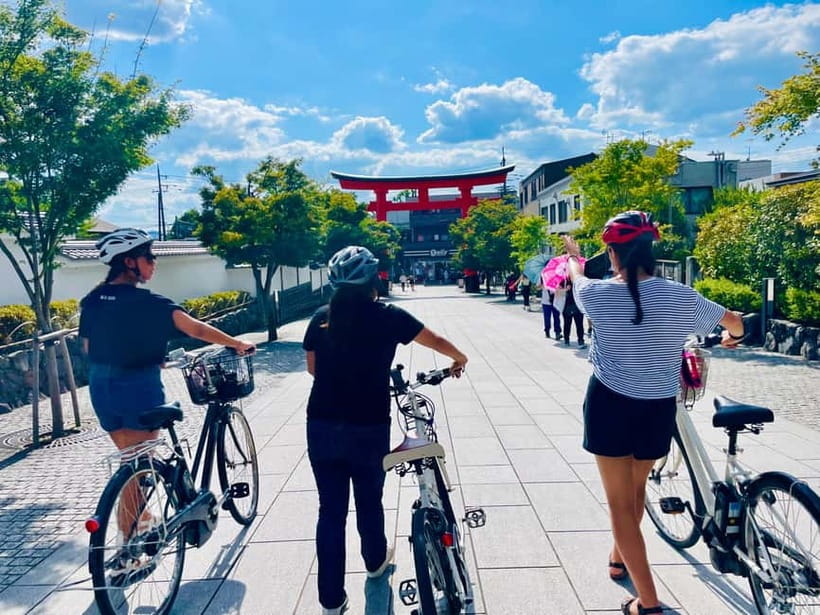
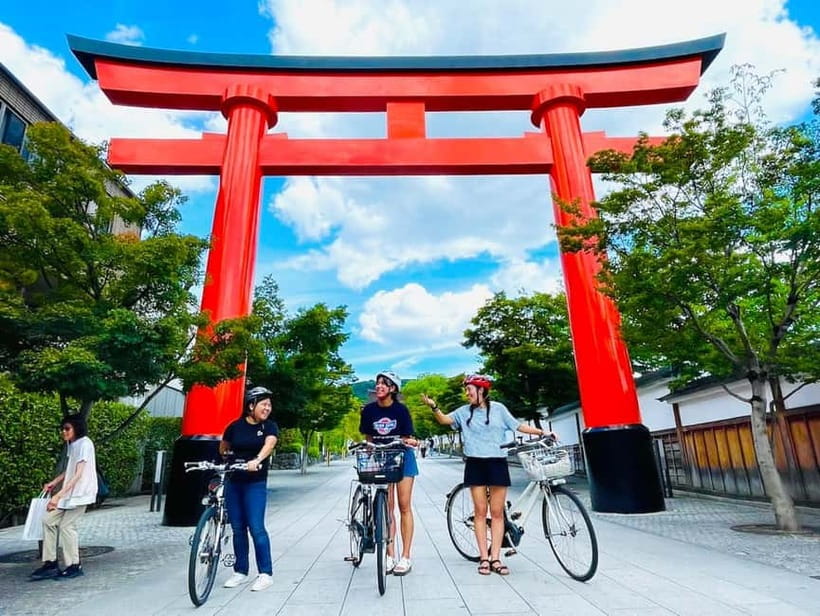
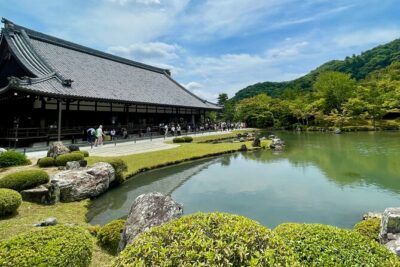
Tofukuji Temple provides a useful contrast to Fushimi Inari. The shrine is associated with Shinto practice, while Tofukuji is a Buddhist temple known for its Zen atmosphere and garden spaces.
The tour includes time to relax in the Zen garden. That pause is easy to underestimate. Kyoto sightseeing can become a procession of gates, roofs, photographs, and facts. A few quiet minutes in a garden give you time to look carefully and let the setting settle.
The guide explains the differences between Shinto and Buddhism in Japan, while also making clear that these traditions exist side by side in Japanese life. This is one of the strongest educational parts of the tour. You are not simply visiting two beautiful sites; you are learning why they feel and function differently.
Tofukuji also gives the itinerary a calmer middle or late section, depending on the exact route and timing. After the noise and crowds that can surround major attractions, a Zen garden offers a change of pace. You should not expect a lengthy private meditation session, but the scheduled pause is more than a quick photo stop.
Entrance fees for two places are included. The experience description identifies Fushimi Inari and Tofukuji as the main visits, so the included admissions add real value to the listed price.
The ride back along Kyoto’s waterways
The return route is part of the pleasure. Several riders describe the final stretch along the river as peaceful and scenic, a pleasant way to finish after the main temple visits.
A riverside route also shows you a different side of Kyoto. Instead of moving from one attraction gate to another, you ride through open space and watch the city pass at a slower rhythm. The route is chosen for sightseeing as well as efficiency, so you spend less time wasting energy on an awkward transfer.
The ride back is not a guarantee of complete quiet. Kyoto is still a city, and conditions depend on the day, traffic, weather, and group pace. Still, the mix of city streets, side roads, and waterway paths is more varied than a direct trip by taxi or train.
Cold drink breaks and a supplied snack help keep the outing comfortable. Lunch is not included, so plan to eat before or after the tour. Four hours is long enough to work up an appetite, particularly in warm weather.
What the $83 price really covers
At $83 per person, this is not the cheapest way to see Fushimi Inari. You can visit many Kyoto sights independently for much less. The comparison changes once you count the electric bike, helmet, insurance, English-speaking guide, snack, water bottle, and admission to two places.
You are also paying for route planning and local interpretation. The guide handles the transitions between districts, chooses streets suitable for a group, explains customs at the right moments, and keeps the ride together. For a first visit to Kyoto, that can save a great deal of time and uncertainty.
I see the strongest value in the combination of transportation and cultural context. A standard walking tour may explain Gion or a temple well, but it will not carry you across several parts of the city. A bicycle rental gives you freedom, but not the same help with traffic, religion, etiquette, or local life.
The price makes less sense if you already know Kyoto well, dislike group activities, or want a long, unhurried visit at Fushimi Inari. It makes more sense if you have only a few days and want an active introduction that helps you understand what you see during the rest of your stay.
The booking terms also reduce risk. You can cancel up to 24 hours ahead for a full refund, and the reserve-now, pay-later option keeps your plans flexible. Those terms are useful when weather or a changing Japan itinerary is a concern.
Who will enjoy this Kyoto bike tour
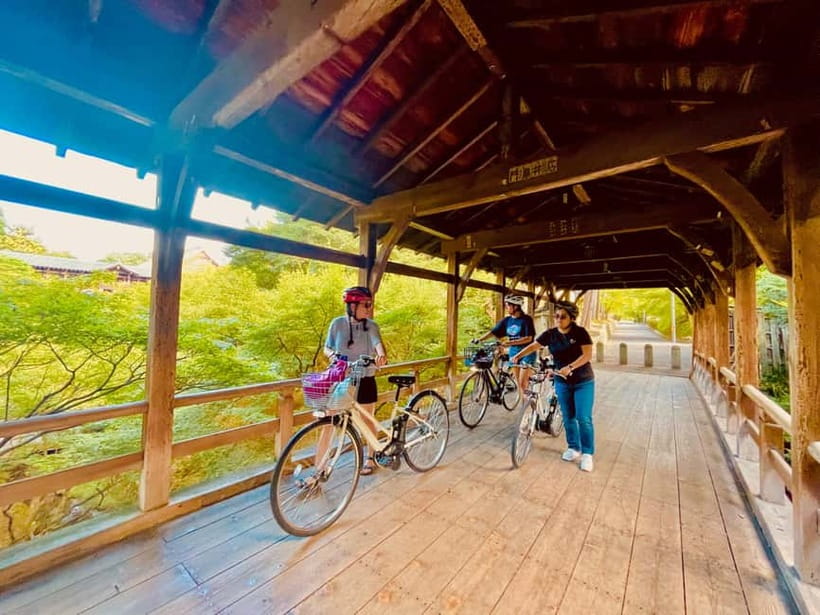
This tour suits adults, couples, families with teenagers, and visitors who like to learn while moving. Children under 12 cannot join, and the activity is not suitable for pregnant women or people with mobility impairments.
Families with teenagers are a good match because the electric bikes add movement and variety to a day that might otherwise involve several temples. The guide also interacts with younger riders and makes room for questions, which can help keep the cultural material from feeling like a classroom lesson.
You do not need to be a powerful cyclist. The route is repeatedly described as easy and not physically demanding, with electric assistance for slopes and tired legs. Still, you should be able to ride safely, respond to traffic instructions, and manage a combination of streets and walking.
This is also a good first activity in Kyoto. The route introduces Gion, religious customs, local streets, and major sights. Afterward, you will have a better sense of which places deserve a longer independent visit.
It is less suitable if your ideal day means staying indoors, avoiding roads, or spending hours at one shrine. The tour is active, social, and weather dependent. You should be ready for sun, changing temperatures, and time on a bicycle.
Small practical details that improve the ride
Book with comfortable shoes rather than stylish but stiff footwear. You will pedal, stand, walk through shrine and temple grounds, and possibly use uneven paths.
Bring sunscreen and use the supplied water sensibly. The snack and water bottle are helpful, but they do not replace a meal. Since lunch is not included, schedule food before or after the four-hour tour.
A camera is useful, and the guide may take photos of your group. Maki is often praised for taking family pictures, a small service that matters when everyone wants to appear in the same frame.
Smoking and alcoholic drinks are not allowed in the vehicle. In practical terms, this is a clean, family-friendly outing with no lunch stop built into the schedule.
The tour is in English. If you have questions about religion, etiquette, geisha culture, or Japanese daily life, ask them during the stops. The small group makes that possible, and the tour is designed around conversation as much as movement.
Should you book this tour?
I would book it if you want a four-hour introduction to Kyoto that combines major sights with streets you would probably skip on your own. The best reasons are the manageable e-bikes, the small group, the mix of Shinto and Buddhist sites, and Maki’s lively way of explaining culture when she leads the tour.
I would not book it if Fushimi Inari is your one great priority and you want to hike far up the mountain. You may prefer a dedicated shrine visit with more time. I would also skip it if cycling in city traffic makes you genuinely uncomfortable, even though the guide provides instruction and leads the group carefully.
For most active first-time visitors, the $83 cost is fair because it covers transport, interpretation, equipment, insurance, refreshments, and two admissions. You finish with a clearer sense of Kyoto’s layout and customs, not just a collection of shrine photographs.
FAQ
How long is the Kyoto e-bike tour?
The tour lasts four hours. Starting times vary, so you need to check availability when booking.
Where does the tour meet?
The meeting point is Pedal Adventure Kyoto, near a temple in the Higashiyama-Sanjo area.
Which places does the tour visit?
The route includes Gion, Fushimi Inari Shrine, and Tofukuji Temple, along with Kyoto neighborhoods, smaller religious sites, and scenic routes.
Is the tour conducted in English?
Yes. The tour has a live English-speaking guide.
How many people are in the group?
The group is limited to eight participants.
What does the price include?
The $83 price includes a local guide, electric bicycle, helmet, insurance, snack, water bottle, and entrance fees for two places.
Is the tour suitable for children?
Children under 12 cannot join. Families with teenagers can take part, provided the riders are comfortable with cycling and walking.
What should I bring?
Bring comfortable shoes, comfortable cycling clothes, sunscreen, and a water bottle. A camera is also recommended. Lunch is not included.
More temples and shrines elsewhere in Japan
- Kyoto: Ninnaji Temple Entry Ticket
★ 4.2 · 650 reviews - Kyoto Zen Meditation & Garden Tour at a Zen Temple with Lunch
★ 5.0 · 441 reviews - Kyoto: Zen Experience in a Hidden Temple
★ 5.0 · 437 reviews - KYOTO Tea Ceremony with kimono near by Imamiya Jinjya Shrine
★ 5.0 · 343 reviews
More Fushimi Inari tours from Kyoto
- Kyoto: Fushimi Inari, Kinkakuji, Bamboo Grove 1 Day Bus Tour
★ 4.8 · 4,316 reviews - Fushimi Inari Hidden Hiking Tour (Private Option Available)
★ 5.0 · 1,750 reviews - Kyoto/Osaka: Nara, Fushimi Inari Taisha, Arashiyama Bus Tour
★ 4.7 · 1,275 reviews - Kyoto: Nijo Castle, Kiyomizu & Fushimi Inari Guided Tour
★ 4.7 · 700 reviews
Just added in Kyoto
- Private Cooking Class Udon in Kyoto Japan★ 5.0 · 23 reviews
- Your Private Vacation Photography Session In Kyoto★ 5.0 · 110 reviews
- Kyoto: Zen Meditation at a Private Temple with a Monk★ 5.0 · 25 reviews
- Private Pewter Sake Cup Experience with a Kyoto Artisan★ 5.0 · 31 reviews
- Kyoto Wagashi(Japanese sweets) Cooking Class near Fushimiinari★ 5.0 · 60 reviews
- Kyoto:Family-Friendly Kimono & Yukata Experience at WARGO★ 5.0 · 147 reviews
- Private Guided Traditional Buddhist Cooking in Japan★ 5.0 · 16 reviews
- Kyoto: Gion Geisha District & Sake-in-Hand Walking Tour★ 5.0 · 37 reviews
Fushimi Inari Tours, compared.
Fushimi Inari Hidden Hiking Tour (Private Option Available)
Read our review →
Kyoto/Osaka: Nara, Fushimi Inari Taisha, Arashiyama Bus Tour
Read our review →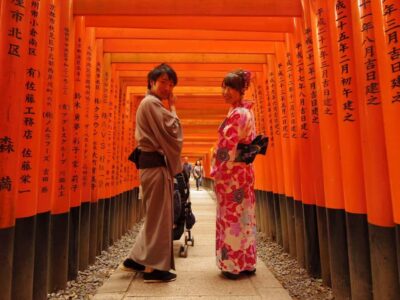
Osaka/Kyoto: Arashiyama, Nara & Fushimi Inari Shrine w/Lunch
Read our review →
Nijo Castle, Kiyomizu & Fushimi Inari Guided Tour
Read our review →
Nijo, Kinkaku-ji, Arashiyama, Kiyomizu & Fushimi Inari
Read our review →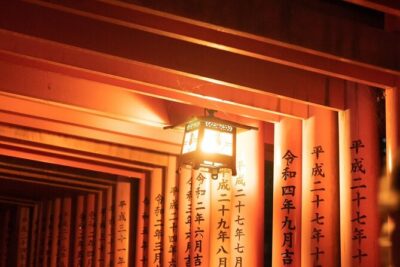
Kyoto Early Bird English Tour: Fushimi-Inari and Arashiyama
Read our review →Browse the lists this tour appears in