
Reviewed · GEISHA & GION DISTRICT TOURS
Kyoto: Geisha Dinner & Gion Cultural Walk
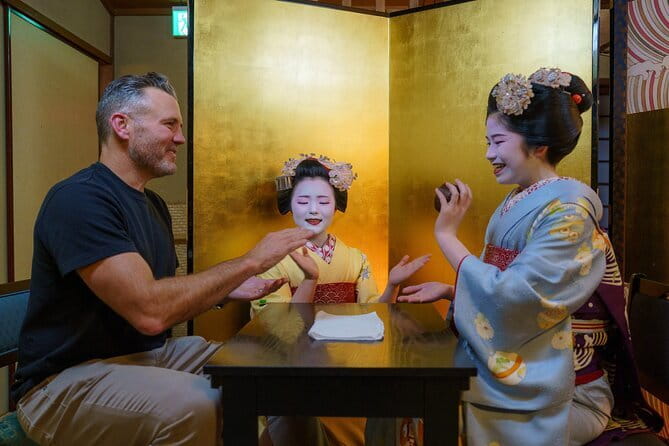
Kyoto’s geisha quarter makes its strongest impression after dark, when lanterns glow along old wooden houses and a geisha or maiko may join you for dinner, music, dance, and conversation. This experience gives you both the setting and the encounter, beginning at Gion Shirakawa and continuing to a kaiseki meal near Hanamikoji Street.
I like the way the evening combines a short walk with about two hours of geisha accompaniment, rather than sending you straight to a restaurant. I also like the small maximum group of 10, which should make the conversation more personal. The main caution is that the geisha or maiko’s attendance is subject to availability, and the group must reach four participants or the outing may be canceled.
Key points to know before booking
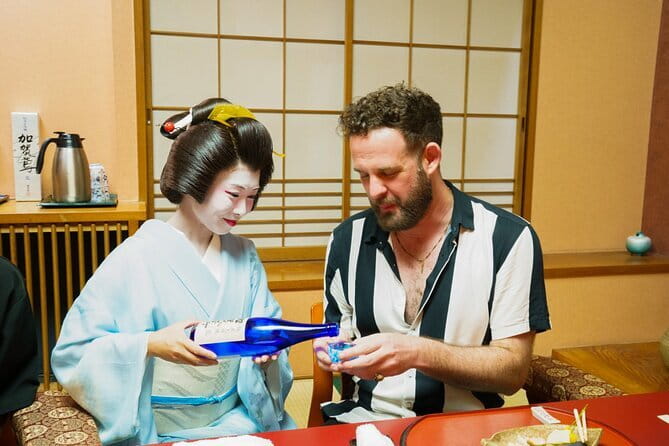
- A geisha or maiko joins the dinner for about two hours, with traditional dance, musical performance, and conversation.
- The evening begins at Gion Shirakawa, a scenic canal district lined with willows and traditional wooden buildings.
- Kaiseki dinner and unlimited drinks are included, giving the $274.35 price more value than a simple cultural talk.
- The group is capped at 10 people, but at least four participants are needed for the shared tour to proceed.
- Sayaka has helped arrange the outing for a wheelchair user, with advance communication and planning noted as a strong point.
- The booking is non-refundable, so you should be certain of your date before paying.
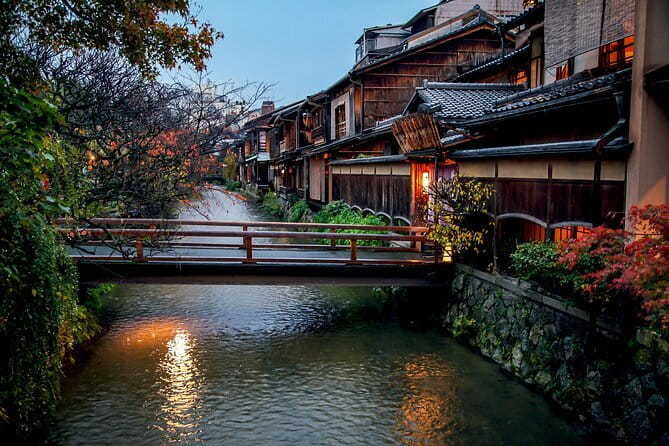
Starting beside the Shirakawa Canal
Your meeting point is CACAO MARKET by MARIEBELLE KYOTO, at 165-2 Tokiwacho in Higashiyama Ward. It is close to the Gion Shirakawa area and near public transportation, so you can reach it without making a long cross-town trip.
The first half hour takes place around Gion Shirakawa. This is one of Kyoto’s most photogenic old streets, with a canal edged by willow trees, wooden machiya houses, tea houses, and stone paving. During cherry blossom season, the canal becomes especially pretty, but the district has appeal in every season because the buildings and narrow streets retain their old Kyoto character.
I like this opening because it gives you a little context before dinner. You are not simply dropped at a restaurant and asked to absorb a performance without knowing where you are. The guide can explain how Gion fits into Kyoto’s cultural life and why the district has long been linked with geisha entertainment.
The walk is short, only about 30 minutes, so you should not expect a full walking tour of eastern Kyoto. That is a benefit if you want the main event to be dinner, but a limitation if you are hoping for a lengthy architectural tour. Wear shoes that are comfortable on uneven streets, and arrive ready to walk at an easy pace rather than treat this as a major sightseeing circuit.
Other evenings in the old entertainment quarters of Kyoto:
- Kyoto Geisha Walking Tour: Gion District & Hidden Gems
★ 4.7 · 3,273 reviews - Kyoto: Gion Magical Night Walking Tour with Geisha Trivia
★ 4.9 · 2,393 reviews - Kyoto: Gion Geisha District Walking Tour – Stories of Geisha
★ 4.7 · 2,187 reviews
Walking Hanamikoji Street after dark
From Gion Shirakawa, the outing continues toward Hanamikoji Street. This famous route runs through the Gion district toward Kenninji Temple and is lined with preserved machiya buildings, restaurants, and teahouses. Some establishments are private or difficult to enter without an arrangement, which is one reason a hosted visit can be useful.
At night, lanterns bring out the warm, old-fashioned mood of the street. You may see geisha or maiko moving between appointments, but the point of this tour is not to chase them or take hurried photographs. Your own scheduled meeting provides a more respectful way to learn about the tradition.
The walk and restaurant visit together occupy about two and a half hours. That timing likely includes the route to the restaurant and the dinner itself, so you should view Hanamikoji as part of the evening’s setting rather than a separate sightseeing stop with a long list of monuments.
This is also where your guide’s explanations matter. Geisha culture can be easy to misunderstand if you only see makeup, kimono, and evening appearances. The tour explains the training, customs, artistic work, and historical role behind the public image. You get a better sense that these performers are trained artists, not simply a photo opportunity in traditional dress.
What the kaiseki dinner adds
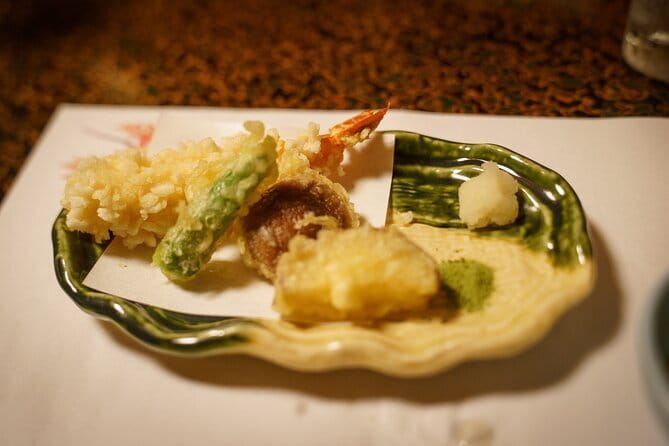
The meal is a kaiseki course dinner. Kaiseki is associated with carefully presented seasonal dishes and a measured dining style, though the exact menu is not provided here. You should not book expecting to choose a familiar western-style entrée. The meal is part of the cultural experience and may include foods or preparations that are new to you.
Dinner is included in the $274.35 price, along with unlimited drinks and about two hours of geisha accompaniment. Extra food and drinks are not included, so the phrase unlimited drinks should be read within the drinks provided as part of the arranged meal, not as a promise that every additional order is covered.
The price is high compared with a standard dinner in Kyoto. It becomes easier to justify if you would otherwise pay separately for a polished meal, a private cultural performance, and a guided introduction to Gion. You are paying for access, organization, and time with a geisha or maiko, not just for food.
I would compare the cost with your priorities. If you mainly want a good Japanese dinner, this is too expensive for that purpose alone. If you want a structured evening that brings together food, traditional arts, explanation, and one of Kyoto’s most atmospheric districts, the package offers a clearer value.
Meeting a geisha or maiko
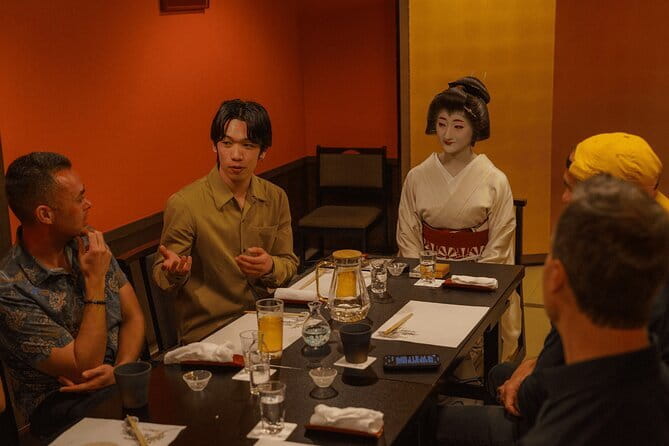
The central part of the evening is the two-hour appearance by a geisha or maiko. The program includes traditional dancing, musical instruments, and elegant conversation. Your guide explains the customs and training involved, helping you understand what you are seeing instead of leaving you to guess.
The difference between a geisha and a maiko is important. A maiko is an apprentice, while a geisha, also called a geiko in Kyoto, is a fully trained performer. The experience may include either, depending on availability, so you should not book with one specific type in mind unless the company confirms it directly.
The atmosphere is intended to be intimate. With a maximum of 10 people, the setting should be more manageable than a large-stage show. A small group also gives you a better chance to follow the conversation and ask polite questions through the guide.
Still, there is no absolute guarantee that a geisha or maiko will attend. Availability can change, and you are supposed to be notified in advance if an arrangement cannot be made. That condition is the biggest practical uncertainty in the experience. If meeting a performer is the only reason you are booking, check the status before committing to a non-refundable reservation.
You should also approach the encounter with good manners. Listen to the guide’s instructions, avoid treating the performer as a costume display, and remember that the artistry includes years of training in movement, music, conversation, and formal conduct. The evening works best when you treat it as a cultural meeting rather than a staged photo stop.
Same base, a different sort of day:
- PERFECT KYOTO 1-Day Bus Tour
★ 5.0 · 13,518 reviews - Kyoto: Fushimi Inari, Kinkakuji, Bamboo Grove 1 Day Bus Tour
★ 4.8 · 4,316 reviews - Kyoto: Tea Ceremony in a Traditional Tea House in Kiyomizu
★ 4.9 · 3,519 reviews - Kyoto: Tea Ceremony Ju-An at Jotokuji Temple
★ 4.9 · 3,207 reviews
The guide and the pace of the evening
The tour provides an informed guide who explains geisha customs, Kyoto’s past, and the city’s cultural traditions. The supplied details identify Sayaka as a guide who handled arrangements for a wheelchair user and was described as polite and helpful. That gives you one useful sign of attentive service, though the guide for your particular date may differ.
The pacing is straightforward: meet near Gion Shirakawa, walk for about 30 minutes, continue along Hanamikoji Street, and spend most of the remaining time at dinner and the cultural meeting. Three hours is long enough to feel like a full evening activity without taking over your entire night.
The tour ends at a FamilyMart at 573-4 Gionmachi Minamigawa, close to the geisha house used for the experience. That is practical if you want to continue exploring Gion afterward. It also means you should not expect a return transfer to your hotel.
The route is near public transportation, and most people can participate. A wheelchair user received advance contact and arrangements, with the experience described as almost barrier-free. Since the route includes old streets and a restaurant setting, contact the provider before booking if you need specific mobility arrangements. Do not assume that a general accessibility note answers every question about doorways, toilets, or seating.
Group size, timing, and booking conditions
The maximum group size is 10, which is a sensible limit for a dinner where conversation matters. It is small enough to avoid the feel of a bus tour, but it is still a shared experience rather than a fully private meal.
The group requires at least four participants. If fewer than four are booked close to the date, the tour may not go ahead. This is important if you are planning around a tight Kyoto schedule or arranging several linked activities. Leave some flexibility in your itinerary in case the provider needs to notify you of a change.
The experience is commonly booked well ahead, with an average lead time of about 55 days. That makes sense because geisha availability is limited and the dinner requires advance coordination. If your Kyoto dates are fixed, I would not wait until the last few days.
Mobile tickets are provided, and confirmation arrives when you book. The price is listed at $274.35 per person, with group discounts available. Since the exact discount terms are not supplied, ask for the current group rate rather than assuming a particular percentage.
The cancellation rule is strict: the booking is non-refundable and cannot be changed for any reason. That makes date selection especially important. Confirm your hotel dates, check the number of people in your party, and consider the possibility of illness or schedule changes before paying.
Who will get the most from this evening
I would recommend this experience to you if you want a polished introduction to Kyoto’s geisha culture and prefer a hosted evening over trying to find a private teahouse on your own. It suits couples, small groups, and first-time visitors who want dinner and cultural explanation in one booking.
It is also a good fit if you care about setting. Gion Shirakawa and Hanamikoji Street give the evening a strong sense of place, and you spend time walking through the district rather than viewing the performance in an anonymous event room.
You may want to choose something else if you dislike formal meals, prefer independent dining, or need a fully flexible booking. The high price, non-refundable terms, minimum group requirement, and possible change in performer all deserve serious thought.
The experience is not a complete study of Kyoto’s geisha districts. It is a compact evening built around one dinner, one short walk, and one cultural meeting. That focus is its strength. You get a clear plan and a rare type of access, but not a broad city tour.
Is the $274.35 price worth it?
For dinner alone, no. Kyoto has many fine meals that cost much less. For the full combination of kaiseki food, unlimited included drinks, a guide, a two-hour geisha or maiko appearance, and a walk through Gion, the price can make sense for a special occasion.
The best value comes from the time spent with the performer. A short dance show followed by a quick photo would feel thin at this price. Here, the program provides about two hours for performance and conversation, which gives the cultural side real weight.
The uncertainty over attendance keeps the value from being automatic. Confirm the provider’s current expectations before you pay, especially if you are booking months in advance. If the geisha or maiko cannot attend, the evening would be a different product, even though the dinner and Gion walk remain.
Should you book this Gion evening?
Book it if you want a small-group evening with traditional performance, a kaiseki meal, and a guide who can explain the customs behind what you see. The setting is excellent, the schedule is manageable, and the two-hour cultural meeting gives the experience more substance than a quick staged appearance.
Skip it if you mainly want inexpensive food, a guaranteed performer, or a booking you can change later. For everyone else, this is a focused way to spend one Kyoto night, provided you accept the strict cancellation rule and confirm that geisha or maiko availability is in place.
FAQ
How long does the Kyoto geisha dinner experience last?
The experience lasts about three hours. Around 30 minutes is spent at Gion Shirakawa, with the remaining time covering Hanamikoji Street, the restaurant, dinner, and the cultural meeting.
What does the price include?
The $274.35 per person price includes a kaiseki course dinner, about two hours of geisha accompaniment, and unlimited drinks. Extra drinks and food are not included.
Is a geisha or maiko guaranteed to attend?
No. Attendance depends on the availability of a geisha or maiko. If the provider cannot arrange it, you will be notified in advance.
How many people can join the tour?
The maximum group size is 10 people. The shared tour requires at least four participants to proceed.
Where does the experience begin and end?
The meeting point is CACAO MARKET by MARIEBELLE KYOTO at 165-2 Tokiwacho, Higashiyama Ward, Kyoto. The experience ends at FamilyMart at 573-4 Gionmachi Minamigawa, close to the geisha house.
Is the tour accessible for wheelchair users?
Most people can participate, and advance arrangements have been made for a wheelchair user. Contact the provider before booking to discuss your specific needs.
Can I cancel or change the reservation?
No. The experience is non-refundable and cannot be changed for any reason after booking.
Just added in Kyoto
- Private Cooking Class Udon in Kyoto Japan★ 5.0 · 23 reviews
- Your Private Vacation Photography Session In Kyoto★ 5.0 · 110 reviews
- Kyoto: Zen Meditation at a Private Temple with a Monk★ 5.0 · 25 reviews
- Private Pewter Sake Cup Experience with a Kyoto Artisan★ 5.0 · 31 reviews
- Kyoto Wagashi(Japanese sweets) Cooking Class near Fushimiinari★ 5.0 · 60 reviews
- Kyoto:Family-Friendly Kimono & Yukata Experience at WARGO★ 5.0 · 147 reviews
- Private Guided Traditional Buddhist Cooking in Japan★ 5.0 · 16 reviews
- Kyoto: Gion Geisha District & Sake-in-Hand Walking Tour★ 5.0 · 37 reviews
Geisha & Gion District Tours, compared.

Kyoto Geisha Walking Tour: Gion District & Hidden Gems
Read our review →
Gion Geisha District Walking Tour – Stories of Geisha
Read our review →
Best of Kyoto: Gion, Geisha, Pagodas & Cobblestones
Read our review →
Kyoto Night Foodie Tour in Gion (9+ dishes + 6 Sake tastings)
Read our review →
Kyoto Gion: 2-Hour Geisha Culture & History Walking Tour
Read our review →
Chopsticks Making Workshop in Gion with Engraving Option
Read our review →
Browse the lists this tour appears in