
Reviewed · GEISHA & GION DISTRICT TOURS
Kyoto: Geisha Dinner & Gion Cultural Walk
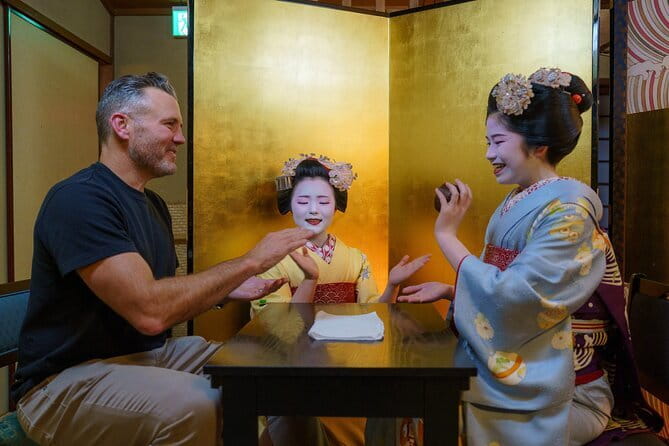
Kyoto’s geisha world is best understood across a dinner table, not through a quick photo stop. This three-hour evening pairs a 40-minute walk through Gion with a kaiseki-style meal, sake, conversation, dance, and traditional games with a geiko or maiko.
I like two things here: the guide gives you the cultural background before dinner, and the evening allows real time for questions rather than a rushed appearance. Guides such as Andi, Taiga, and Takuma have been praised for clear English, humor, and skill at translating between the performers, restaurant staff, and visitors.
The main consideration is the price, $257 per person, which is a serious splurge. The experience also depends on performer availability and requires at least four participants for the group tour, so the evening is special but not entirely guaranteed in its advertised form.
Key points to know before booking
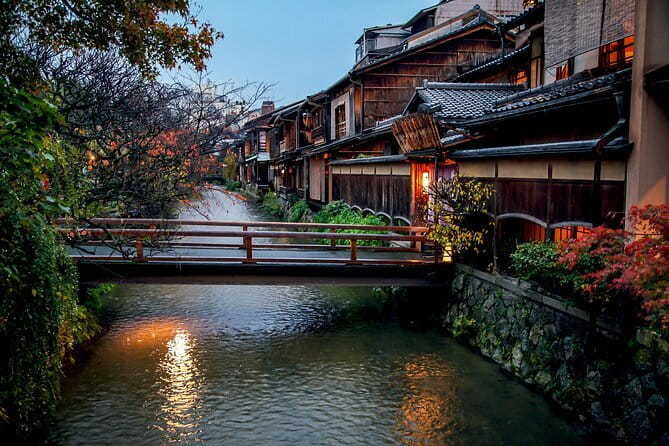
- Gion comes first: You begin at CACAO MARKET by MARIEBELLE KYOTO and walk for about 40 minutes through Kyoto’s famous geisha district.
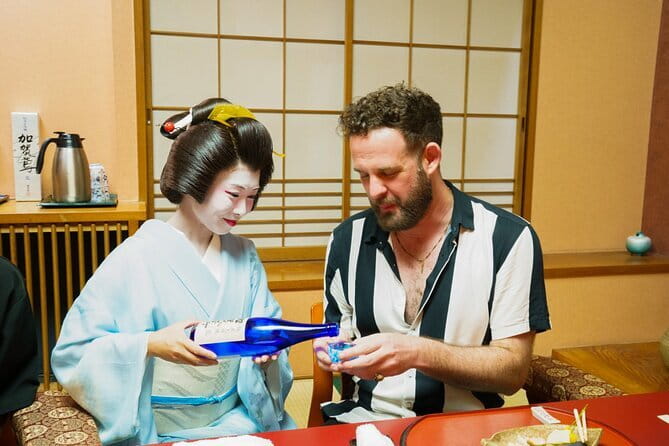
- The dinner is part of the cultural lesson: Expect a kaiseki-style meal, traditional dishes, flowing sake, and an introduction to what is being served.
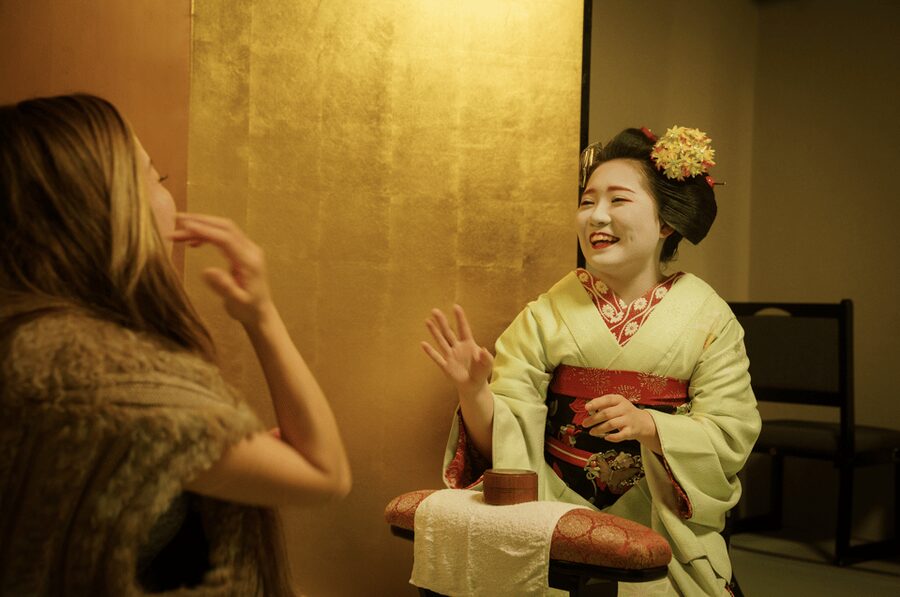
- You may meet a geiko or maiko: The performer may dance, answer questions, and lead a traditional game such as Konpira.
- The guide matters: Andi, Taiga, Takuma, Tomoko, Endy, and other English-speaking guides have been praised for explanation and translation.
- The evening is social: Group size can shape the mood, from a private-feeling dinner for four to a larger shared gathering.
- Availability is a real factor: The operator may not be able to arrange a geiko or maiko on every date.
Why this Gion evening feels different
A geiko or maiko dinner can easily become a shallow photo opportunity. This tour aims for something more useful: it gives you context before the performer arrives, then lets you see how music, dance, conversation, etiquette, and hospitality fit together.
In Kyoto, geiko is the local term for a professional entertainer often called a geisha elsewhere in Japan. Maiko are younger performers in training. The difference matters, and a good guide helps you understand it without turning the evening into a lecture.
The cultural value comes from seeing the work behind the elegance. The graceful appearance is only the visible part. You also hear about schedules, training, customs, and the discipline required to maintain the art. One guide explained a geiko’s class timetable before dinner, a small detail that helped set the scene for the rest of the night.
I also like the order of the evening. The walk gives you a starting point, the guide explains Gion and its traditions, and dinner provides the setting for the main encounter. You are not expected to arrive with specialist knowledge or perfect manners. The guide helps make the experience comfortable and understandable.
Other evenings in the old entertainment quarters of Kyoto:
- Kyoto Geisha Walking Tour: Gion District & Hidden Gems
★ 4.7 · 3,273 reviews - Kyoto: Gion Magical Night Walking Tour with Geisha Trivia
★ 4.9 · 2,393 reviews - Kyoto: Gion Geisha District Walking Tour – Stories of Geisha
★ 4.7 · 2,187 reviews
Starting at CACAO MARKET and walking through Gion
The meeting point is CACAO MARKET by MARIEBELLE KYOTO. From there, the group spends about 40 minutes walking through Gion before reaching the restaurant.
Do not expect a long sightseeing circuit. The walking portion is fairly short, and some evenings may feel closer to 30 minutes than 40. Its purpose is to introduce the neighborhood and explain the cultural setting, not to cover every shrine, lane, or landmark in eastern Kyoto.
That limited length can be a benefit. You save your energy for dinner, and the guide can focus on Gion’s geiko traditions instead of trying to squeeze in a full city tour. It also makes the activity manageable for anyone who wants a cultural evening without committing to a half-day excursion.
The walk is most valuable when you listen closely to the guide’s explanations. You may hear about the lives and customs of geiko, the role of the district, and the traditions that shaped Kyoto’s entertainment quarters. Guides including Endy, Andi, Taiga, and Takuma have been singled out for making this material approachable, with a mix of detail, humor, and respect.
One practical point: the tour finishes at FamilyMart rather than returning you to the starting point. Plan your next move from there. Since the walking route and final restaurant location can affect how you get around afterward, comfortable shoes are sensible even though this is not a strenuous walking tour.
Sitting down to a kaiseki-style dinner
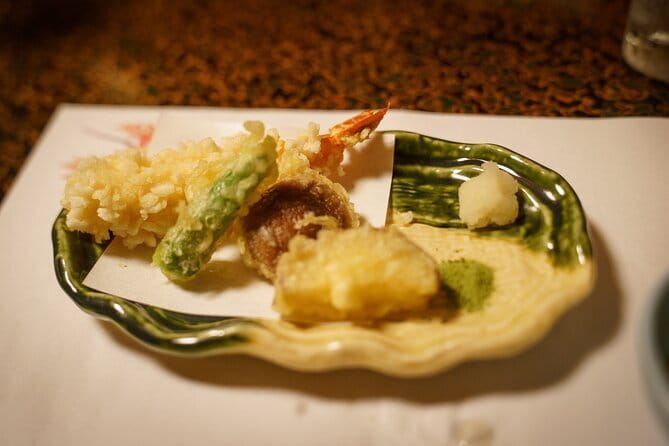
The meal is served at a local restaurant or tea-house setting, depending on the arrangement for your date. It is described as kaiseki style, so you should expect a sequence of traditional Japanese dishes rather than one large entrée.
The presentation is part of the experience. One account described the food as attractive and filling, while another wished the dishes had been explained more fully. That is useful advice: enjoy the meal, but ask your guide what you are eating if the restaurant staff do not explain every course.
The food appears to be a strong part of the evening, though it is not the main reason to book. The geiko or maiko visit is the rare element. Dinner gives the encounter a natural setting and enough time to slow down, eat, and talk.
Sake is included without a stated limit. Extra food and drinks are not included, so you should not assume that every beverage or additional order is covered. If you do not drink alcohol, the listing does not specify a substitute arrangement, so ask before booking if that affects your decision.
I appreciate that the meal is not treated as background decoration. Japanese dining customs, presentation, and hospitality help you understand the larger culture. Still, this is not a restaurant review or a fine-dining reservation in isolation. You are paying for the combination of dinner, guiding, drinks, and access to a traditional encounter.
The geiko or maiko meeting
The performer generally spends around two hours with the group, though the precise format can vary. You may see traditional dances, hear music, ask questions, and take part in a game.
The evening can include Konpira, a traditional game that gives the group something playful to do together. That detail matters because the setting is formal, but it does not need to feel stiff. A game can break the ice and make the interaction feel more human.
You may also see one or more dances. One evening included two dances, while another included a dance followed by questions and a game. The exact number is not promised, so book this for the chance to meet and speak with a performer, not for a fixed stage program.
Translation is important. English-speaking guides such as Tomoko and Andi have helped with questions and conversation, allowing the performer to respond fully rather than relying on short, awkward exchanges. This is one of the clearest reasons to use an organized tour instead of trying to arrange a dinner without language support.
The tone described for the evening is warm and open. The performer may discuss her perspective, answer questions, and explain aspects of her work. You should still treat the setting with respect. Ask thoughtful questions, listen to the answers, and remember that the geiko or maiko is a working artist, not a costume display.
Photography rules are not specified in the supplied information. Ask your guide before taking pictures, particularly during dances or conversation. A polite question is better than an uncomfortable mistake.
Same base, a different sort of day:
- PERFECT KYOTO 1-Day Bus Tour
★ 5.0 · 13,518 reviews - Kyoto: Fushimi Inari, Kinkakuji, Bamboo Grove 1 Day Bus Tour
★ 4.8 · 4,316 reviews - Kyoto: Tea Ceremony in a Traditional Tea House in Kiyomizu
★ 4.9 · 3,519 reviews - Kyoto: Tea Ceremony Ju-An at Jotokuji Temple
★ 4.9 · 3,207 reviews
The guides make or break the evening
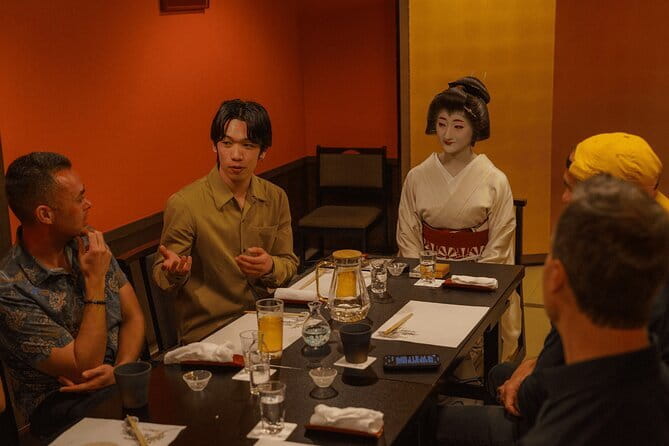
The strongest praise is aimed at the guides. That is not a minor detail. A guide sets the tone, fills in historical context, handles translation, explains the meal, and helps a mixed group participate without embarrassment.
Andi is repeatedly described as warm, informative, respectful, and good at explaining both Gion and Japan more broadly. Taiga is praised for enthusiasm, humor, excellent English, and a professional manner. Takuma is noted for his energy, kindness, and ability to make the evening comfortable.
Other named guides include Tomoko, Endy, Soma, and Moto. The experience can change depending on who leads your group, but the common thread is the guide’s role as interpreter and cultural bridge. You are not simply led from a meeting point to a restaurant. You receive the background needed to understand what you are seeing.
The guide also helps with the restaurant. One dinner included a lively restaurant owner, and the guide helped smooth communication between the group, the staff, and the performer. That support is especially useful when several customs are unfamiliar at once.
What the $257 price really covers
At $257 per person, this is expensive by ordinary Kyoto dinner standards. You should not compare it with the cost of a meal alone.
The price includes the Gion walk, an English-speaking local guide, a kaiseki-style dinner, unlimited sake, and about two hours with a geiko or maiko. The performer’s time and the small-scale cultural setting are the parts that push the cost well above a normal night out.
I see the value most clearly for someone who wants a focused, organized introduction to Kyoto’s geiko traditions. The guide’s explanations and translation reduce the risk of misunderstanding the customs, while the dinner gives you a relaxed place to ask questions.
The value is weaker if you mainly want a luxury meal or a guaranteed performance with a fixed program. The number of dances, the exact performer, and the group atmosphere can vary. You are buying access and context, not a standardized theater show.
A private group is available. That may appeal to families, couples traveling together, or anyone who wants more control over the conversation. The group tour requires at least four participants, and if fewer than four are booked as the date approaches, operation may become difficult.
Timing, group size, and the important caveats
The listed duration is three hours. The route describes about 40 minutes of walking followed by roughly 2.5 hours at the restaurant, while the included performer accompaniment is described as two hours. Treat the schedule as an approximate evening plan rather than a minute-by-minute guarantee.
The tour is offered in English with a live guide. It is wheelchair accessible, and private groups can be arranged. The information does not explain the exact walking surface, restaurant layout, or seating style, so if you use a wheelchair, ask for current details before paying.
Performer availability is the biggest uncertainty. A geiko or maiko may not be available for every date, and the operator says it will notify you as early as possible if the arrangement cannot be made. This matters because the performer is the central reason most people book.
Cancellation is also stricter than for many casual activities. You can cancel up to 14 days in advance for a full refund. After that point, the stated full-refund policy does not apply.
Who should book this Kyoto experience
I would recommend this evening to you if you:
- Want cultural context, not just a meal and a photograph
- Are curious about geiko and maiko training, customs, and daily work
- Appreciate having an English-speaking guide handle translation
- Enjoy Japanese food, sake, and social conversation
- Are comfortable paying more for a rare, organized encounter
- Prefer a three-hour evening to a longer sightseeing program
It is especially suitable for first-time visitors who feel unsure about how to approach Kyoto’s geiko culture respectfully. The guide gives you a useful framework, and the relaxed dinner setting makes questions easier.
You may want to skip it if your budget is tight, if you want a long Gion sightseeing walk, or if you need a guaranteed performer and fixed dance schedule. You should also think twice if you are looking only for a premium dinner, since the cultural meeting is the main attraction.
Is the Geisha Dinner and Gion Cultural Walk worth booking?
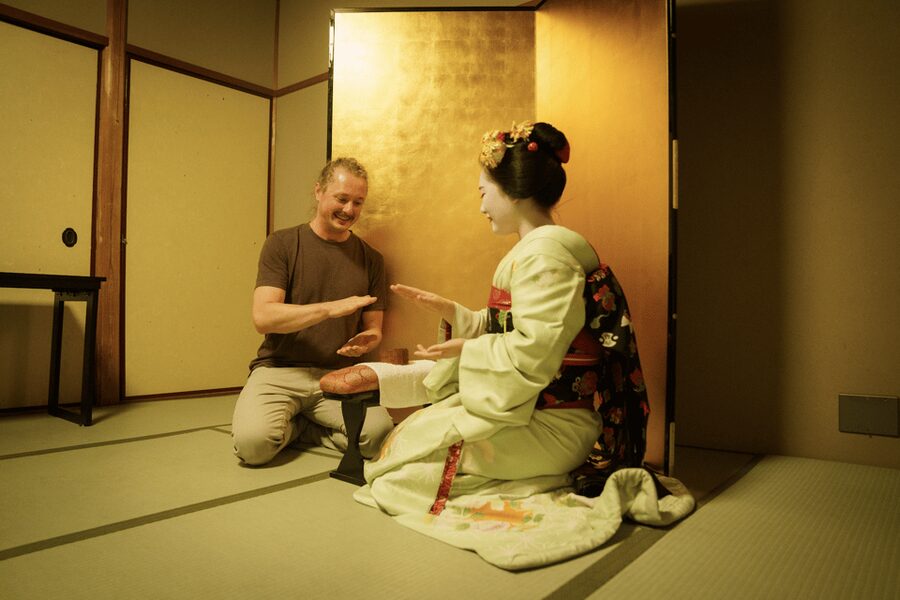
For the right visitor, yes. The evening combines three things that are difficult to arrange independently: an introduction to Gion, a traditional Japanese meal, and extended time with a geiko or maiko supported by an English-speaking guide.
The strongest reason to book is the quality of the explanation and translation. Guides such as Andi, Taiga, and Takuma have helped turn an unfamiliar tradition into a personal, understandable experience. The dinner, sake, dance, and game then give the information a human setting.
I would book it as a special Kyoto night, not as a routine dinner. Confirm the performer arrangement as your date approaches, remember that the tour needs at least four participants, and go in ready to listen as much as you photograph. If the $257 price fits your budget, this is one of the more meaningful ways to meet Kyoto’s living cultural traditions.
FAQ
How long is the Kyoto Geisha Dinner and Gion Cultural Walk?
The activity lasts three hours. The plan includes about 40 minutes of walking in Gion followed by roughly 2.5 hours at a local restaurant.
Where does the tour start?
The meeting point is CACAO MARKET by MARIEBELLE KYOTO.
Where does the tour finish?
The tour finishes at FamilyMart.
Is dinner included?
Yes. A kaiseki-style dinner is included, along with the Gion walking tour, an English-speaking guide, about two hours of geiko or maiko accompaniment, and unlimited sake.
Are extra drinks and food included?
No. Extra drinks and food are not included.
Is a geiko or maiko guaranteed?
No. Attendance depends on availability. If the operator cannot arrange a geiko or maiko, it says it will provide notice as early as possible.
Can I cancel for a full refund?
Yes. You can cancel up to 14 days in advance for a full refund.
Is the tour available in English?
Yes. The tour includes a live English-speaking guide.
Does the group tour require a minimum number of participants?
Yes. The group tour requires at least four participants. If fewer than four people are booked as the date approaches, the tour may be difficult to operate.
Just added in Kyoto
- Kyoto: Zen Meditation at a Private Temple with a Monk★ 5.0 · 25 reviews
- Private Cooking Class Udon in Kyoto Japan★ 5.0 · 23 reviews
- Your Private Vacation Photography Session In Kyoto★ 5.0 · 110 reviews
- Private Pewter Sake Cup Experience with a Kyoto Artisan★ 5.0 · 31 reviews
- Kyoto Wagashi(Japanese sweets) Cooking Class near Fushimiinari★ 5.0 · 60 reviews
- Kyoto:Family-Friendly Kimono & Yukata Experience at WARGO★ 5.0 · 147 reviews
- Private Guided Traditional Buddhist Cooking in Japan★ 5.0 · 16 reviews
- Kyoto: Gion Geisha District & Sake-in-Hand Walking Tour★ 5.0 · 37 reviews
Geisha & Gion District Tours, compared.

Kyoto Geisha Walking Tour: Gion District & Hidden Gems
Read our review →
Gion Geisha District Walking Tour – Stories of Geisha
Read our review →
Best of Kyoto: Gion, Geisha, Pagodas & Cobblestones
Read our review →
Kyoto Night Foodie Tour in Gion (9+ dishes + 6 Sake tastings)
Read our review →
Kyoto Gion: 2-Hour Geisha Culture & History Walking Tour
Read our review →
Chopsticks Making Workshop in Gion with Engraving Option
Read our review →
Browse the lists this tour appears in