
Reviewed · GEISHA & GION DISTRICT TOURS
Kyoto: Gion and Geisha District Walking Tour
Gion is best understood on foot, one quiet lane at a time. This small-group walk links shrines, old wooden streets, tea-house districts, and spots tied to geisha culture. Guides such as Sam, Shin, Amy, Tim, Naoya, and Maria have brought different strengths, from clear historical storytelling to thoughtful help in the heat and useful tips on where you might spot geisha.
I like the small group of no more than 10 and the sensible route through Gion and Higashiyama. I also like that the walk explains what you are seeing, rather than leaving you to admire pretty wooden buildings without context. The main drawback is pace: two hours covers a lot, so stops are brief and this is not a full geisha performance or tea ceremony.
Key points
- Six classic Kyoto stops: Yasaka Shrine, Maruyama Park, Nene-no-Michi, Ninenzaka, Yasui-Konpiragu, and Hanamikoji Street.
- Useful geisha guidance: Learn about the difference between geiko and maiko culture, traditional tea houses, and places where you might spot them.
- A compact two-hour route: Enough time to get oriented without giving up most of your day.
- A group capped at 10: Small enough for questions and easier movement through narrow streets.
- Strong guide element: Guides including Amy, Maria, Naoya, Sam, Shin, and Tim have been praised for clear English, friendly manner, and lively storytelling.
- Low extra cost: At $22.55, the fee covers the English-speaking guide and access to the Gion and Hanamikoji areas, while shrine entry is free.
Why Gion Makes More Sense With a Guide

Gion can look simple at first: wooden townhouses, stone lanes, lanterns, and visitors taking photographs. The details are easy to miss. A guide can point out the difference between an ordinary shopfront and a traditional machiya, explain why some lanes feel more private, and place the district’s tea houses within Kyoto’s long tradition of entertainment and the arts.
That context matters most around geisha culture. This tour is not built around chasing a glimpse of a geiko or maiko. Instead, it gives you background on the world they work in and offers practical suggestions about where you might see one. That is a more respectful way to approach Gion, where ordinary residents, shop workers, and performers share the same narrow streets.
The walk also adds stories about samurai, shrine customs, local legends, and seasonal celebrations. The result is more than a photo stop at a famous lane. You get a clearer idea of why this part of Kyoto has kept its old appearance and why certain streets carry such cultural weight.
Other walking tours in Kyoto people book:
- Kyoto Geisha Walking Tour: Gion District & Hidden Gems
★ 4.7 · 3,273 reviews - Kyoto: Gion Magical Night Walking Tour with Geisha Trivia
★ 4.9 · 2,393 reviews - Kyoto: Gion Geisha District Walking Tour – Stories of Geisha
★ 4.7 · 2,187 reviews
Meeting at Gion Hotel and Getting Oriented
The meeting point is Starbucks Coffee at the Kyoto Gion Hotel, 1F, at 555 Gionmachi Minamigawa in Kyoto’s Higashiyama Ward. The activity ends back at the same meeting point, which makes the tour easy to fit into a day of sightseeing.
You receive a mobile ticket, and confirmation is provided when you book. The area is close to public transportation, though the walk itself is on foot from start to finish. Wear shoes you can comfortably use on stone-paved streets and slopes. The route is only about two hours, but you will be standing and walking nearly throughout.
A group limit of 10 is important here. Gion’s lanes and historic streets can feel tight, especially when several groups arrive at once. A smaller party makes it easier to hear the guide and ask questions without holding up a large crowd.
Yasaka Shrine: A Strong Opening Point
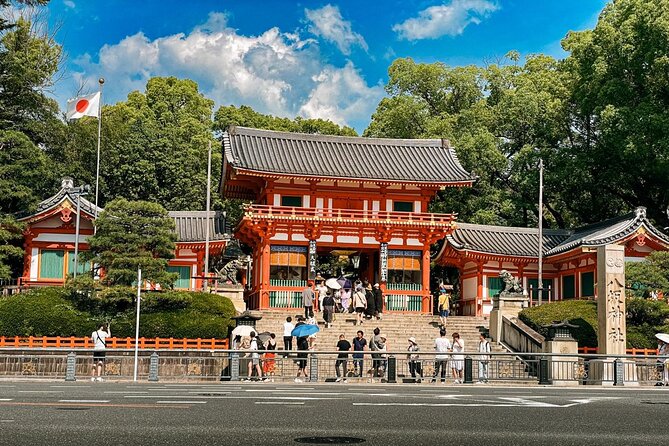
The tour begins at Yasaka Shrine, one of the best-known Shinto sites in Kyoto. Its position between Gion and Higashiyama makes it a natural starting point, since it connects the entertainment district with the wider temple and shrine area.
Expect around 20 minutes here. Entry is free, so the value comes from the explanation rather than a ticket. The shrine is known for its vermilion gate, lantern-lit paths, and long connection with local religious life. A guide can help you notice how the shrine functions as a living place of worship, not simply as an attractive backdrop.
This is also where the tour begins to connect daily Kyoto with ceremony and tradition. The guide may explain shrine rituals and seasonal celebrations, giving you a better sense of what you are seeing before the group moves into the quieter streets.
Because Yasaka Shrine is popular, it may not feel peaceful at every moment. The short stop is useful for orientation, but you will not have time to inspect every corner. If you want a long, unhurried shrine visit, return later on your own.
Maruyama Park and the Seasonal Side of Kyoto
From Yasaka Shrine, the route continues to Maruyama Park for about 10 minutes. Kyoto’s oldest public park is known for its seasonal beauty and its large weeping cherry tree, making this one of the route’s softer pauses.
The park helps break up the shrine and street scenes. You get open space, trees, and a chance to hear how seasonal events shape local life. One guide-led explanation mentioned celebrations and traditions connected to the changing year, which adds meaning to the scenery rather than treating the park as a simple shortcut.
Ten minutes is enough to look around and take photographs, but not enough for a full park visit. Think of this as a brief breathing space between major stops. If you visit during cherry-blossom season, the setting may be especially attractive, though the tour’s short schedule still applies.
Other evenings in the old entertainment quarters of Kyoto:
- Best of Kyoto: Gion, Geisha, Pagodas & Cobblestones
★ 4.9 · 2,058 reviews - Night Walk in Gion: Kyoto’s Geisha District
★ 4.5 · 2,003 reviews - Kyoto Night Foodie Tour in Gion (9+ dishes + 6 Sake tastings)
★ 5.0 · 1,762 reviews - Kyoto Gion Geisha District Walking Tour – The Stories of Geisha
★ 5.0 · 1,441 reviews
Nene-no-Michi and Preserved Wooden Kyoto
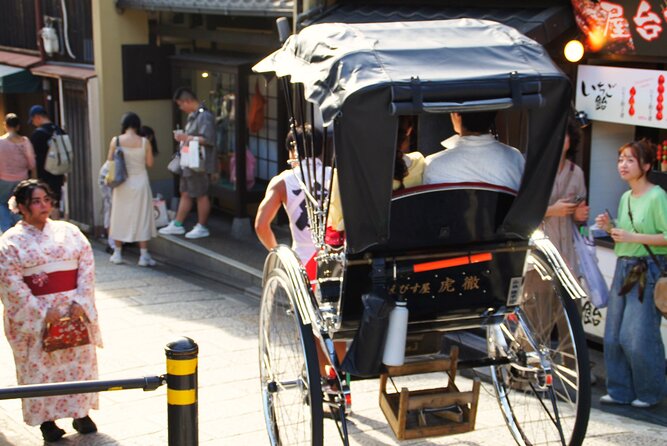
Nene-no-Michi is a picturesque lane named for Nene, the wife of samurai warlord Toyotomi Hideyoshi. The stop lasts about 10 minutes and focuses on traditional buildings, small shops, and tea houses.
This is the sort of street where a guide earns the fee. Without context, you may simply see an attractive old lane. With an explanation of the people connected to it, the architecture, and the role of tea houses, you can read more into the buildings and their arrangement.
The lane is scenic, but it is also one of the places where the tour’s short duration may feel limiting. You will have time to walk and look, but probably not to browse every shop. Keep your camera ready, listen for the guide’s directions, and save a longer shopping stop for after the tour.
Ninenzaka and Sannenzaka: Pretty, Sloped, and Busy
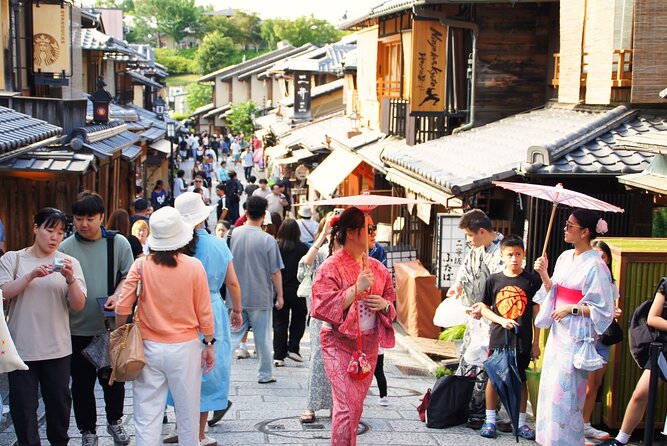
The route then reaches the famous Ninenzaka and Sannenzaka area for about 15 minutes. These stone-paved slopes are lined with historic wooden buildings, artisan shops, and places selling local food and souvenirs.
This is one of Kyoto’s most photogenic sections, but it is not a quiet secret. The lanes can be busy, and the sloping pavement calls for sensible footwear. Your guide’s historical explanation gives the streets more meaning, especially when you hear how the area looked and functioned in earlier periods.
The short visit works well if your aim is to get your bearings. You will see the classic architecture and learn where to return for more time. It is less suitable if you want to shop, eat, and photograph every doorway during the same visit.
I would pay attention to the building details here. The wooden facades, narrow fronts, and old-style street design are easy to pass without a second glance. A guide can direct your eye to features that make the area feel distinctly Kyoto.
Yasui-Konpiragu and the Power Stone
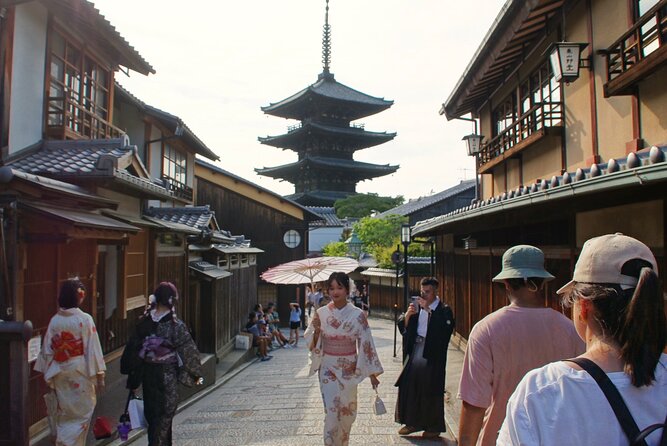
Yasui-Konpiragu is a smaller shrine with a memorable custom. Its central Power Stone archway is linked with prayers for strong relationships and with the wish to break ties with the past. Visitors crawl through the opening as part of the ritual.
The stop lasts about 10 minutes, and it is one of the most unusual moments on the route. The practice is physical, slightly comic, and emotionally meaningful at the same time. A good guide can explain the tradition without making it feel like a strange spectacle.
This shrine also shows why a walking tour can be more rewarding than simply ticking off famous sights. Yasaka Shrine and Ninenzaka are easy to find. Yasui-Konpiragu is less obvious, and its custom gives you a story you are likely to remember after the walk.
The space may feel compact, so you may need to wait briefly if others are using the archway. The tour does not promise a long private visit, but the guide’s explanation makes the stop worthwhile.
Hanamikoji Street and the Heart of Gion
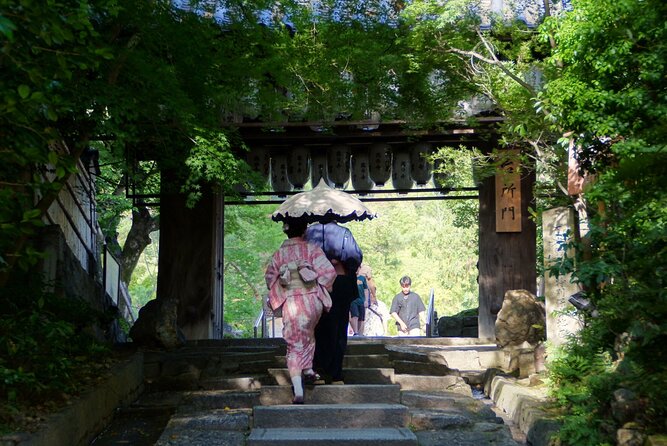
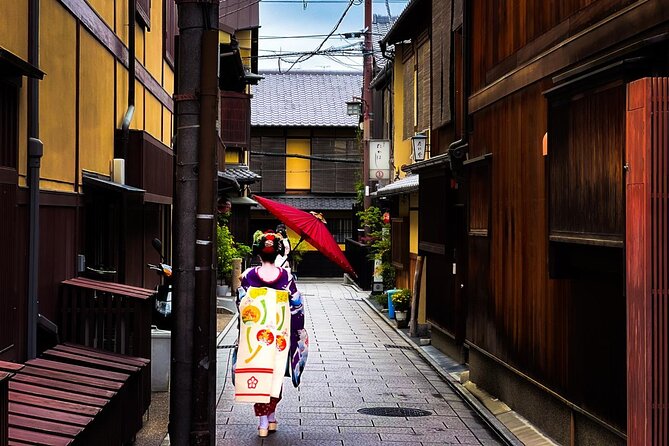
Hanamikoji Street is the final major stop and receives about 15 minutes. This is one of Gion’s signature streets, lined with preserved machiya townhouses, tea houses, and lanterns. It is the clearest place on the route to discuss geiko and maiko culture.
Here, listen carefully to the guide’s advice about spotting geisha. The point is not to follow or interrupt anyone. The useful information is knowing where this culture belongs, how the tea-house district works, and why the people you see are moving through the area for work rather than posing for photographs.
The street looks especially atmospheric in the evening, when lanterns begin to glow. A night departure can give the walk a different mood, with softer light and a stronger sense of the old district. The tour information does not promise a sighting, so book it for the stories and setting, not for a guaranteed encounter.
Hanamikoji is also where the limits of a two-hour tour become clear. Fifteen minutes is enough for an introduction, but you may want to return later if you want to explore nearby lanes or enjoy a meal. Follow local rules about photography and keep the street clear.
The Guides Make the Difference
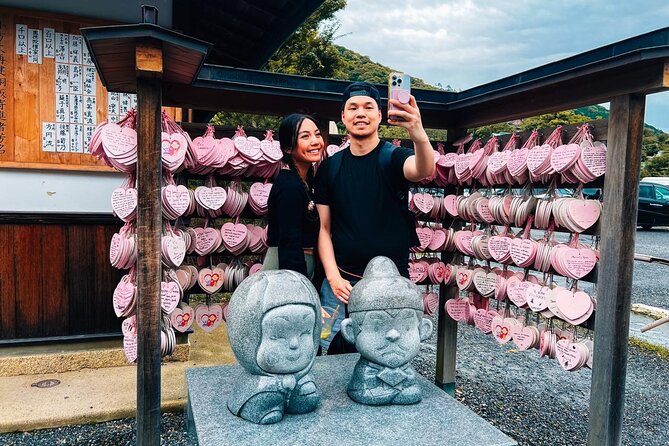
The guide is the central reason to choose this experience. Guides named in recent tour feedback include Sam, Shin, Amy, Tim, Naoya, and Maria. Their approaches differ, but the qualities that matter are consistent: clear English, friendly communication, useful organization, and enthusiasm for Kyoto’s traditional arts.
Amy has been singled out for keeping the explanations interesting from beginning to end. Maria contacted her group before the walk and adjusted the route to stay in the shade during hot weather. Naoya brought a strong sense of atmosphere to the lantern-lit lanes, while other guides focused on samurai traditions, shrine rituals, architecture, and maiko training.
You should still keep expectations realistic. A guide cannot provide every detail about Gion in two hours, and the experience is not a formal lecture. The best use of your time is to ask questions as you walk. The small group makes that easier than a large coach-style outing.
What $22.55 Buys You
At $22.55 per person, this is a reasonably priced way to get your first orientation to Gion. You are paying for about two hours with an English-speaking guide, a planned route through several important areas, and explanations that are difficult to gather quickly on your own.
All the named shrine and street stops are free to enter, so the price is not covering admission tickets. That is worth noting. The value comes from saving research time, understanding geisha culture with more care, and seeing several connected districts in one efficient walk.
It is a good deal for a first visit, especially if you want to spend the rest of your day choosing which places deserve a longer return. It is less compelling if you already know Gion well or prefer to wander without a schedule.
Tips are optional and not included. The tour has a free cancellation policy if you cancel at least 24 hours before the start time. Changes or cancellations inside that window are not refunded.
Who Should Book This Gion Walk
I would recommend this tour to first-time Kyoto visitors, solo visitors who want an easy introduction, couples interested in traditional arts, and anyone who wants historical context without giving up a full day.
It also suits you if geisha culture interests you but you are unsure how to approach the subject respectfully. The guide can explain where this world fits into Kyoto and give you practical location tips without making a sighting the entire purpose of the walk.
You may want something else if you are looking for a private tour, a geisha performance, a tea ceremony, or a long photography session. None of those are included. The route is a compact walking introduction, not a full evening of entertainment.
Most people can participate, and the tour is near public transportation. Still, remember the stone lanes and sloped streets around Ninenzaka and Sannenzaka. If the weather is hot, Maria’s example shows the benefit of a guide who pays attention to shade and comfort, but you should still plan sensibly.
Should You Book It?
Book this tour if you want a well-priced first look at Gion, clear English explanations, and a small group that can move through narrow streets without the fuss of a large outing. The strongest parts are the guide-led stories, the practical geisha advice, and the variety of stops packed into two hours.
Skip it if you have already spent substantial time in Gion or want a slower, private experience. For most first-time visitors, though, $22.55 is a fair price for getting oriented and learning what you would otherwise walk past.
FAQ
How long is the Gion and Geisha District Walking Tour?
The tour lasts approximately two hours.
Where does the tour start?
It starts at Starbucks Coffee in the Kyoto Gion Hotel, 1F, at 555 Gionmachi Minamigawa in Kyoto’s Higashiyama Ward.
Where does the tour end?
The activity ends back at the meeting point.
What places does the tour visit?
The route includes Yasaka Shrine, Maruyama Park, Nene-no-Michi, Ninenzaka and Sannenzaka, Yasui-Konpiragu, and Hanamikoji Street.
Is an English-speaking guide included?
Yes. An English-speaking guide is included.
Are admission tickets included?
Entry to Gion and Hanamikoji Street is included. The listed shrine stops have no admission charge.
How many people can join the tour?
The activity has a maximum of 10 participants.
Is the tour available with a mobile ticket?
Yes. A mobile ticket is available, and confirmation is provided at the time of booking.
Can I cancel for a refund?
You can cancel at least 24 hours before the start time for a full refund. Cancellations or changes made less than 24 hours before the start time are not refunded or accepted.
More walking tours elsewhere in Japan
- Nishiki Market Brunch Walking Tour (7 Tastings + Brunch)
★ 5.0 · 1,355 reviews - Kyoto Arashiyama Walking Tour: Bamboo, Monkeys, Gardens & Secrets
★ 5.0 · 1,216 reviews - Kyoto Gion: 2-Hour Geisha Culture & History Walking Tour
★ 5.0 · 1,186 reviews - Kyoto: Izakaya Bars Guided Walking Tour
★ 4.9 · 815 reviews
Just added in Kyoto
- Private Cooking Class Udon in Kyoto Japan★ 5.0 · 23 reviews
- Your Private Vacation Photography Session In Kyoto★ 5.0 · 110 reviews
- Kyoto: Zen Meditation at a Private Temple with a Monk★ 5.0 · 25 reviews
- Private Pewter Sake Cup Experience with a Kyoto Artisan★ 5.0 · 31 reviews
- Kyoto Wagashi(Japanese sweets) Cooking Class near Fushimiinari★ 5.0 · 60 reviews
- Kyoto:Family-Friendly Kimono & Yukata Experience at WARGO★ 5.0 · 147 reviews
- Private Guided Traditional Buddhist Cooking in Japan★ 5.0 · 16 reviews
- Kyoto: Gion Geisha District & Sake-in-Hand Walking Tour★ 5.0 · 37 reviews
Geisha & Gion District Tours, compared.

Kyoto Geisha Walking Tour: Gion District & Hidden Gems
Read our review →
Gion Geisha District Walking Tour – Stories of Geisha
Read our review →
Best of Kyoto: Gion, Geisha, Pagodas & Cobblestones
Read our review →

Kyoto Night Foodie Tour in Gion (9+ dishes + 6 Sake tastings)
Read our review →
Kyoto Gion: 2-Hour Geisha Culture & History Walking Tour
Read our review →
Chopsticks Making Workshop in Gion with Engraving Option
Read our review →
Browse the lists this tour appears in