
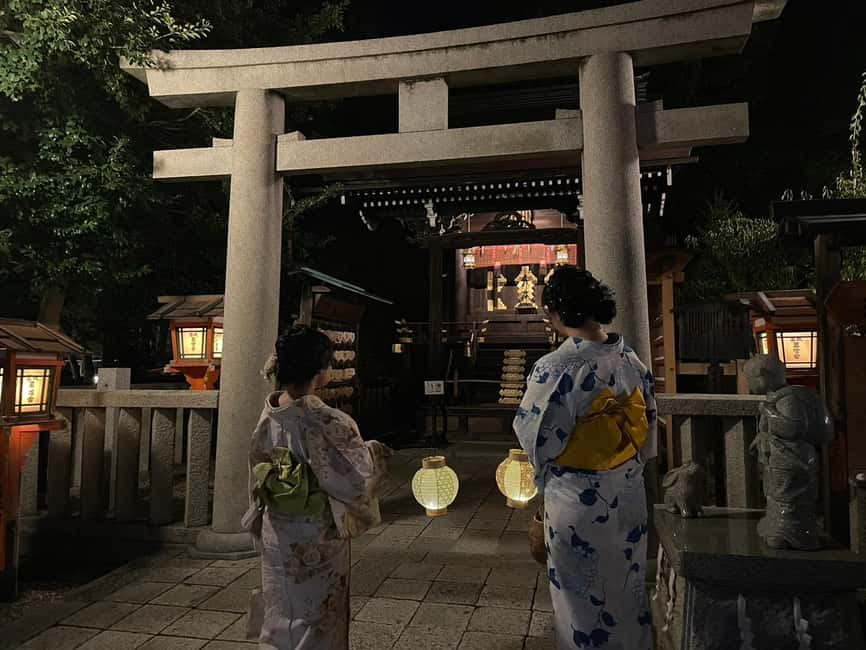
Reviewed · GEISHA & GION DISTRICT TOURS
Kyoto: Gion & Geisha District Night Time Walking Tour
Kyoto’s Gion is at its most atmospheric after sunset, when lanterns glow along wooden lanes and the crowds thin out. This two-hour walk connects Yasaka Shrine, Nene no Michi, Ninenzaka, and Hanamikoji Street, giving you a useful first look at one of Japan’s most traditional neighborhoods. The night setting suits Gion especially well.
I like the route’s mix of famous sights and quieter corners, and I like having a guide explain details that you would otherwise pass without understanding. The $20 price is easy to justify, especially if you are new to Kyoto or traveling alone and want someone to take photos. The main drawback is that this is a walking tour on stone lanes and slopes, so it is not suitable for wheelchair users, and winter evenings can be cold.
Key points
- Nighttime Gion atmosphere: See lantern-lit streets and traditional wooden buildings with fewer daytime crowds.
- Six notable stops: The route includes Yasaka Shrine, Maruyama Park, Nene no Michi, Ninenzaka, Yasui-Konpiragu Shrine, and Hanamikoji Street.
- Useful cultural context: Learn about geiko, maiko, shrine customs, Kyoto festivals, and the history of the Higashiyama district.
- English-speaking guides: Guides including Majo, Pedro, Wilber, Yuvia, Nayeen, and Bell have led tours with different strengths and personalities.
- Photos included: Your guide can take photos during the walk, a helpful touch for solo visitors and couples.
- Flexible booking: You can reserve now and pay later, with free cancellation up to 24 hours before the tour.
Why Gion Works So Well After Dark
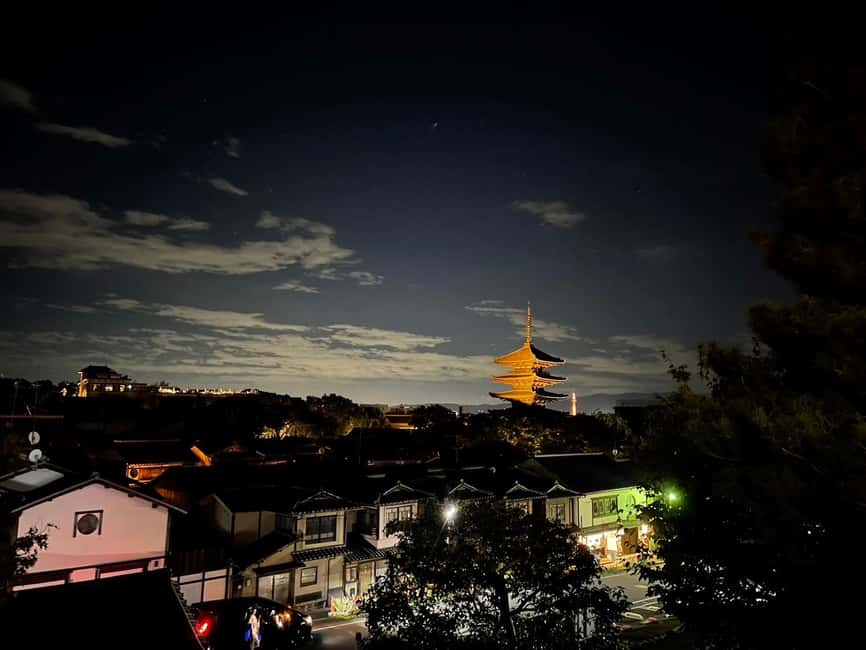
Gion is often treated as a daytime photo stop, but nighttime gives the district a different character. The stone lanes feel calmer, the shopfronts and teahouses take on a softer look, and the wooden buildings are easier to appreciate without the full daytime crush.
You should keep your expectations sensible. This is not a guaranteed geisha-sighting tour, and you may only catch a brief glimpse of a geiko or maiko, if any appear at all. That is part of the point. A good tour explains the district without turning local people into a spectacle.
The route focuses on the setting, customs, buildings, and stories that make Gion meaningful. Guides explain how geiko and maiko train, what their work involves, and why the teahouses of Hanamikoji remain private places. You get context rather than just a checklist of attractive streets.
The timing also helps if you have limited time in Kyoto. Two hours is long enough to cover the main streets and shrines without taking up your entire evening. You finish where you began, near the Kyoto Gion Hotel, so you can continue to dinner or return to your accommodation from a familiar spot.
Other walking tours in Kyoto people book:
- Kyoto Geisha Walking Tour: Gion District & Hidden Gems
★ 4.7 · 3,273 reviews - Kyoto: Gion Magical Night Walking Tour with Geisha Trivia
★ 4.9 · 2,393 reviews - Kyoto: Gion Geisha District Walking Tour – Stories of Geisha
★ 4.7 · 2,187 reviews
Meeting at Starbucks Near Kyoto Gion Hotel
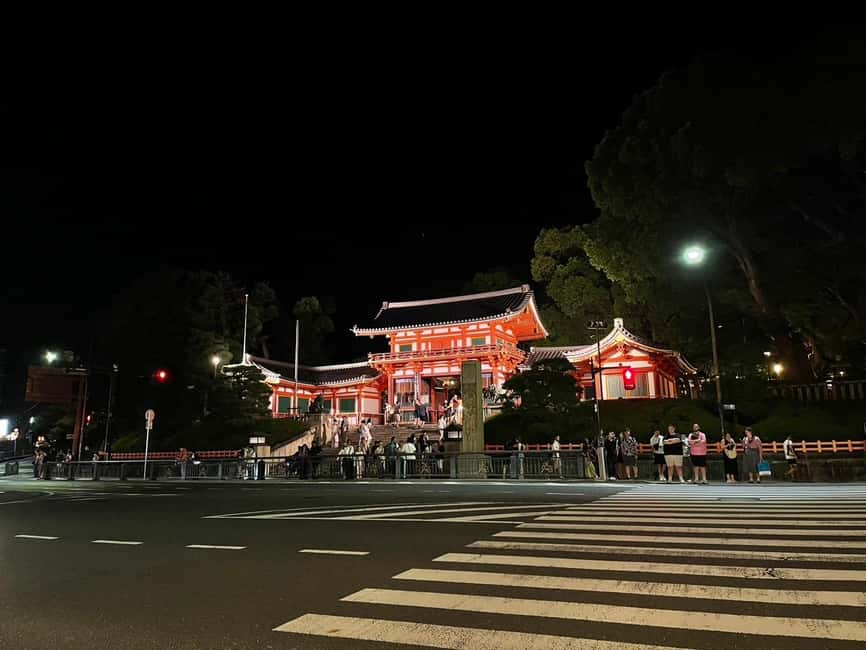
The meeting point is in front of the Starbucks next to Kyoto Gion Hotel, at coordinates 35.0036732, 135.7760837. It is within walking distance of the western entrance gate of Yasaka Shrine.
That starting point is practical because Yasaka Shrine is the natural gateway into Gion. Still, give yourself enough time to find the exact Starbucks and gather before the start. Kyoto has several branches of major coffee chains, and arriving at the wrong one would be an avoidable nuisance.
The walk ends at the same location. This is useful if you prefer a simple route with no complicated final transfer. It also lets you ask your guide for suggestions about food afterward. One guide helped a couple find a good place to eat after the walk, and guides have also answered questions about restaurants and the surrounding area.
The tour is conducted in English. Past guides have included Majo, sometimes written as Maja or Mayo in guest comments, as well as Pedro, Wilber, Yuvia, Nayeen, Jason, Sam, Amy, and Bell. The exact guide depends on the date, but the repeated strength of the experience is clear: friendly explanations, questions answered directly, and plenty of local background.
Yasaka Shrine and Kyoto’s Festival Traditions
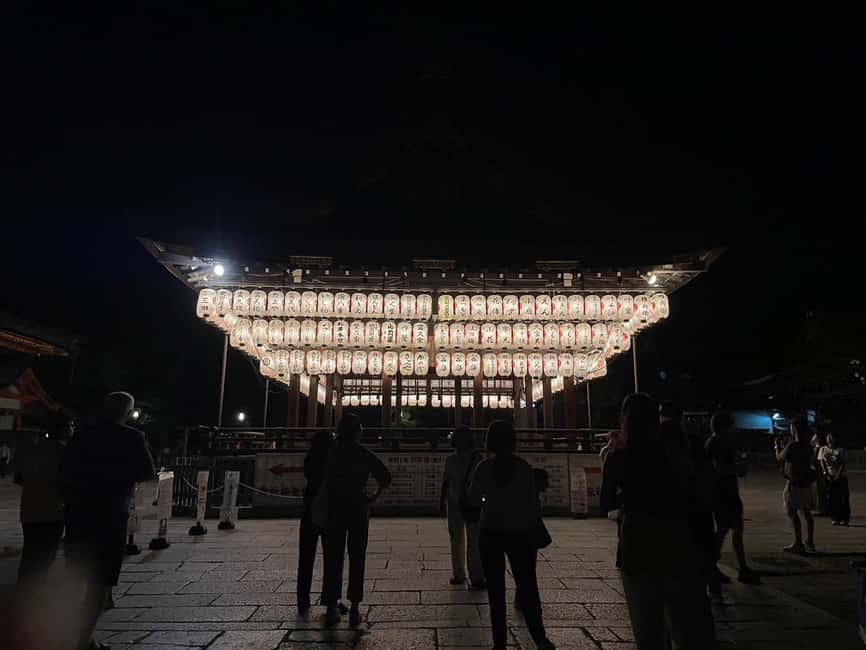
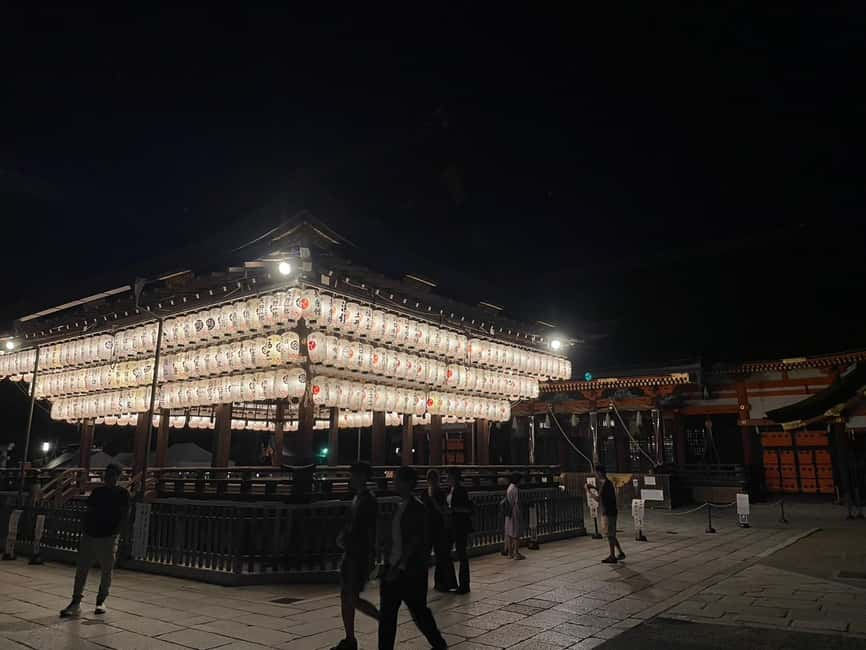
The first major stop is Yasaka Shrine, one of Kyoto’s most important Shinto sites. You spend about 20 minutes here with the guide, learning about its connection to Kyoto’s festivals and the customs tied to the shrine.
A guide makes a real difference at a place like this. Without explanation, you see gates, lanterns, buildings, and worshippers, but the meaning can be hard to follow. Your guide can point out the role of the shrine in local life and explain how it connects with the traditional culture of Gion.
This is also where the tour begins to separate geisha culture from popular myths. Gion is not simply a theatrical district decorated for tourists. It grew around long-standing entertainment and religious areas, with formal arts, strict training, and carefully maintained customs.
You will have time for photographs, but the focus is not on rushing from one picture spot to another. The guide’s historical explanations give the shrine a place in the wider story of Kyoto.
Maruyama Park and a Short Pause from the Streets
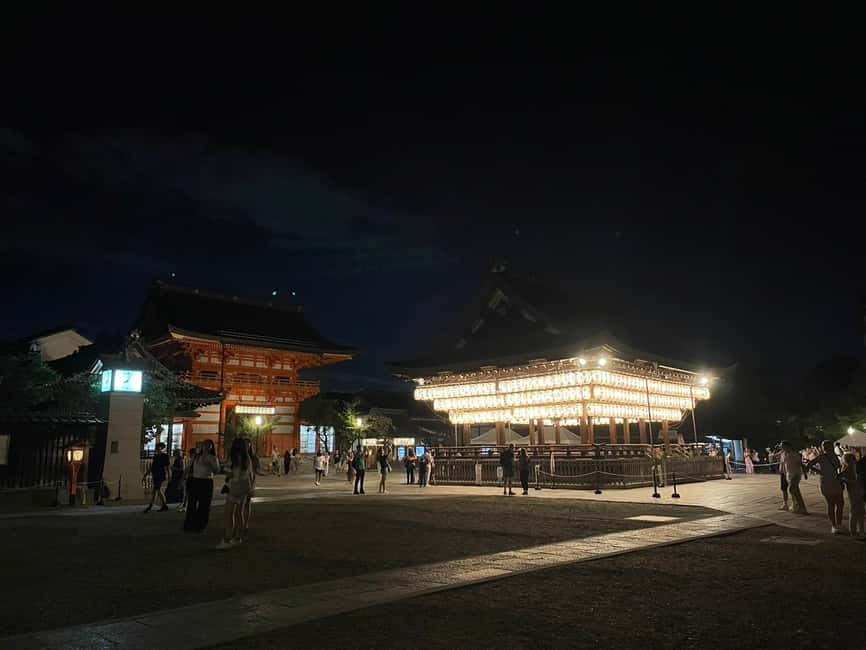
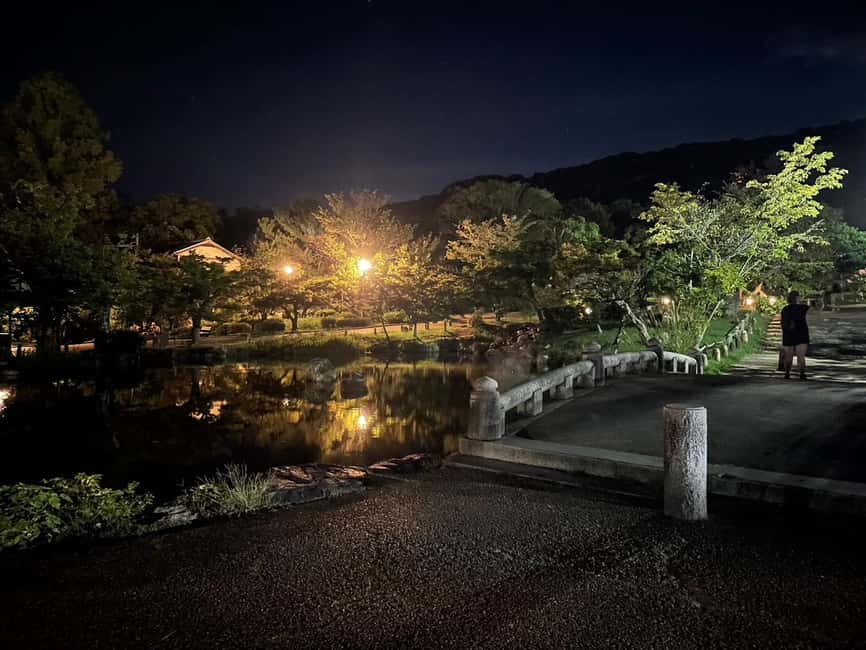
From Yasaka Shrine, the walk continues toward Maruyama Park. The park is described as Kyoto’s oldest public garden and provides a quieter change of pace before the group enters the narrow Higashiyama lanes.
The park matters because it shows a softer side of the district. Gion is famous for tea houses and traditional streets, but Kyoto’s appeal also comes from gardens, trees, open spaces, and the way religious sites sit beside ordinary city life.
You spend part of the walk slowing down here, taking in the surroundings while the guide explains the area. At night, the park is not the same as a daytime garden visit, and you should not expect a full botanical tour. Its value is as a calm transition between the shrine and the old streets.
If you are visiting during a cold season, this open section may feel chilly. Wear a warm layer, particularly in December, January, and February. One winter booking specifically praised the quieter night crowds but advised bringing warm clothing.
Other evenings in the old entertainment quarters of Kyoto:
- Best of Kyoto: Gion, Geisha, Pagodas & Cobblestones
★ 4.9 · 2,058 reviews - Night Walk in Gion: Kyoto’s Geisha District
★ 4.5 · 2,003 reviews - Kyoto Night Foodie Tour in Gion (9+ dishes + 6 Sake tastings)
★ 5.0 · 1,762 reviews - Kyoto Gion Geisha District Walking Tour – The Stories of Geisha
★ 5.0 · 1,441 reviews
Nene no Michi and the Old Higashiyama Streets
Nene no Michi is one of the most pleasing sections of the walk. This stone-paved lane takes its name from Nene, the wife of samurai leader Toyotomi Hideyoshi. Traditional townhouses, small teahouses, and artisan shops line the route.
The lane gives you the classic Kyoto scene without requiring a long trip outside the city. Wooden facades, narrow paths, and carefully preserved details create the feeling of an older neighborhood, though you should remember that this is still a working part of Kyoto, not an open-air museum.
Your guide explains the name of the lane and the people connected with it, adding meaning to what might otherwise be a pleasant but brief photo stop. This is one of the places where a guided walk is particularly useful because many buildings have little or no English information displayed outside.
The paving can be uneven, and you will be walking for most of the two hours. Comfortable shoes matter more than stylish footwear here. The route is not designed for visitors who need step-free access.
Ninenzaka, Sloping Streets, and Photo Stops
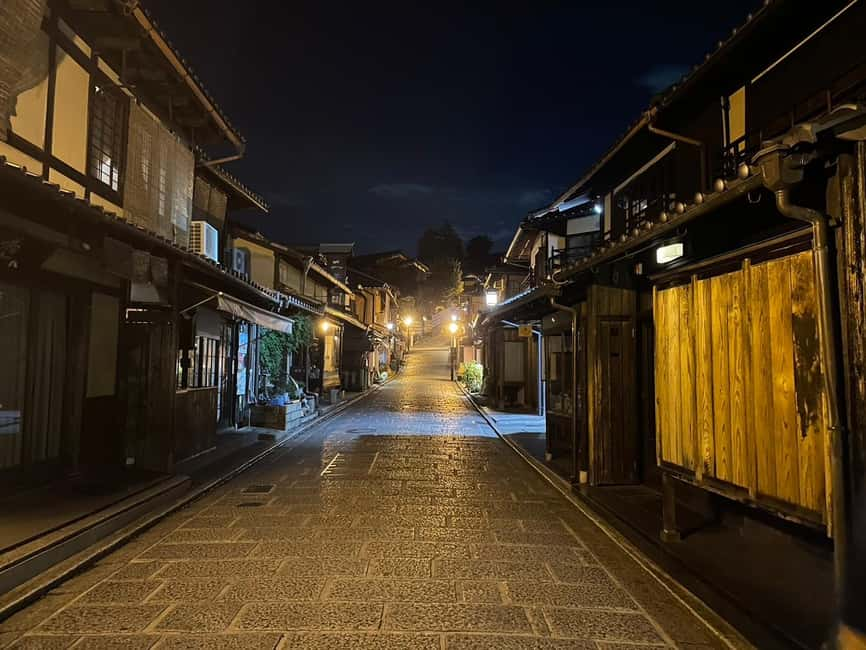
The route continues to Ninenzaka, a sloping historic street lined with wooden buildings and small storefronts. It is one of Kyoto’s most recognizable old-town scenes, and the evening setting can make it feel more manageable than the busy daytime version.
Ninenzaka is photogenic, but the slope and stone surface require care. You will want to stop for pictures, yet you also need to stay aware of other people and the uneven ground. The guide helps keep the walk moving while allowing time for photos.
This is another spot where the tour’s pace matters. You are not simply dropped at Ninenzaka and told to explore alone. The guide places the street within the history of Higashiyama and points out details you might miss, from the style of the buildings to the way old lanes connect the shrines and tea houses.
If you want extended shopping time, this tour may feel brief. The purpose is to see several connected areas in one evening, not to browse every shop or stop for a long snack break.
Yasui-Konpiragu Shrine and the Power Stone
Yasui-Konpiragu Shrine adds an unusual ritual to the route. The shrine is known for a stone archway often called the Power Stone. People pass through the opening while praying to strengthen a relationship or break away from an unwanted connection.
This stop gives you a more personal look at Japanese religious practice. It is not simply a place to admire architecture. The ritual has a clear symbolic purpose, and the guide explains how people use it.
You may see visitors crawling through the opening as part of their prayer. The custom is memorable because it is physical, direct, and easy to understand even if you do not follow the practice yourself.
The stop also breaks up the better-known Gion sights. Yasaka Shrine and Hanamikoji Street draw most of the attention, but Yasui-Konpiragu adds variety and shows that Kyoto’s shrines can have distinctive local traditions.
Hanamikoji Street and the World of Geiko
Hanamikoji Street is the heart of Gion and one of the most important parts of the walk. Preserved wooden teahouses line the street, and some continue to host Kyoto’s geiko and maiko.
Here your guide talks about training, performance, etiquette, and daily life. The subject requires care because geiko culture is formal and private. The best approach is to observe respectfully, avoid blocking doorways, and never treat a passing performer as a character in a show arranged for you.
You might see a geiko or maiko, but there is no guarantee. One evening group happened to see several geisha, while another account described only a brief sighting. The tour remains worthwhile without one. The buildings, lanes, and explanation of the district are the main experience.
The terms can also be confusing. In Kyoto, geiko is the local word for a professional geisha, while maiko refers to an apprentice. Your guide explains the difference and gives you a clearer idea of the years of training behind the clothing, music, dance, and formal conversation.
Hanamikoji is also a place where a guide’s judgment matters. You need someone who can explain the traditions without encouraging rude behavior. The guides praised most strongly for this tour, including Majo, Pedro, Wilber, and Yuvia, are described as friendly, clear, and willing to answer detailed questions.
What the Guides Add for $20
At $20 per person, this tour offers good value if you want both orientation and cultural background. You could walk through Gion independently, but the route is easy to experience as a collection of attractive streets without understanding how the pieces fit together.
The guide connects the shrine, garden, lanes, ritual, and teahouses into one story. You also have someone to answer questions as they arise. Several guides have helped with photos, which is particularly useful if you are traveling alone and want more than a string of self-portraits.
The price is also helped by the two-hour length. A short introduction near the hotel would not offer the same value, while a much longer walk could become tiring on the stone lanes. This duration gives you a solid first look without consuming a whole day.
The exact group size can vary. Some bookings have effectively become private walks when only one couple or a very small number of people attended. You should not assume that will happen, but a small group can make the guide’s explanations and photo help feel more personal.
The main limitation is that the experience depends on the guide assigned to your date. Names associated with particularly strong tours include Majo, Pedro, Wilber, Yuvia, Nayeen, Bell, Sam, Jason, and Amy, but you may meet someone else. The useful qualities to expect are English explanations, local history, cultural stories, and an open attitude toward questions.
Who Will Enjoy This Night Walk
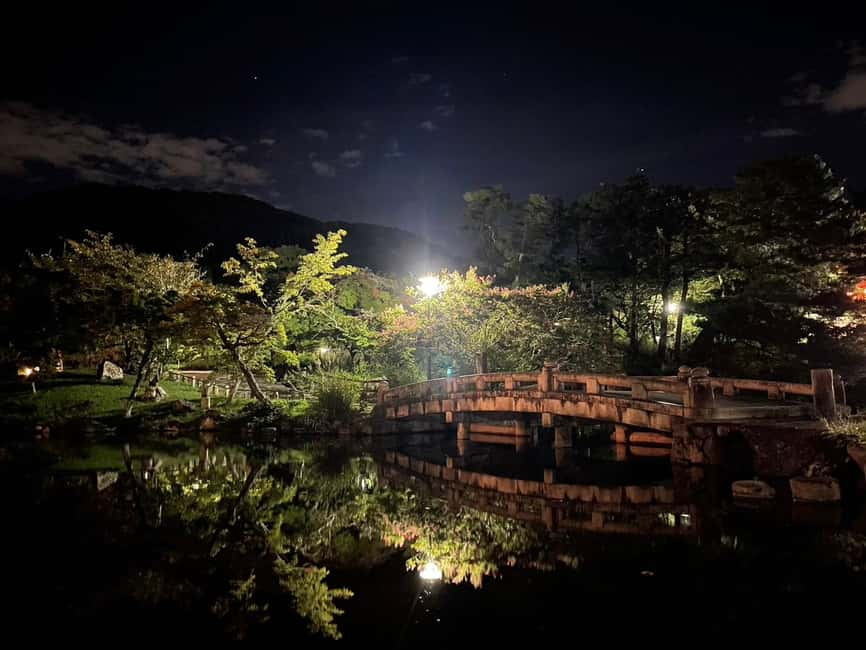
I would choose this tour if you are visiting Kyoto for the first time and want a clear introduction to Gion. It also suits solo visitors, couples, and anyone who prefers to learn while walking rather than read signs or guidebooks at every stop.
You will get the most from it if you enjoy history, architecture, shrine customs, and social traditions. The tour is less suited to anyone hoping for a guaranteed geisha encounter, a long shopping session, or a private dinner with performers.
Families with older children may find the route engaging, particularly at Yasui-Konpiragu Shrine and Ninenzaka. Very young children may struggle with the two-hour walk, the dark lanes, and the uneven paving, though the provided information does not specify an age limit.
Bring warm clothes in winter and shoes suited to slopes and stone surfaces. The walk is not suitable for wheelchair users, and anyone with mobility concerns should consider that the route includes traditional paths and a sloped street.
Booking, Cancellation, and Practical Value
The tour costs $20 per person and lasts two hours. You can reserve now and pay later, which is useful when you are arranging several Kyoto activities and do not want to pay for everything at once.
Free cancellation is available up to 24 hours before the start for a full refund. Check the available starting times when you book, since the exact departure schedule is not fixed in the information provided.
The tour includes an English-speaking guide, historical explanations about Yasaka Shrine, and photos during the walk. Food, drinks, admission fees, and transportation are not listed as included, so plan this as a walking experience rather than a meal or ticketed attraction.
Should You Book the Gion Night Tour?
Book it if you want an affordable, well-organized introduction to Gion with an English-speaking guide. The route covers the district’s key sights while also giving you smaller moments, such as the Power Stone ritual and the quiet paths around Maruyama Park.
Skip it if you need step-free access, dislike walking on slopes, or want a guaranteed geiko sighting. For most first-time Kyoto visitors, though, the combination of nighttime atmosphere, useful cultural explanation, photo help, and a $20 price makes this a sensible first evening in Gion.
FAQ
How much does the Gion night walking tour cost?
The tour costs $20 per person.
How long does the tour last?
The walking tour lasts two hours.
Where does the tour start?
You meet in front of the Starbucks next to Kyoto Gion Hotel. The location is within walking distance of the western entrance gate of Yasaka Shrine.
Where does the tour finish?
The tour returns to the Starbucks next to Kyoto Gion Hotel, the same location where it begins.
Is the tour conducted in English?
Yes. The experience includes a live English-speaking guide.
Which places are included on the walk?
The route includes Gion, Yasaka Shrine, Maruyama Park, Nene no Michi, Ninenzaka, Yasui-Konpiragu Shrine, and Hanamikoji Street.
Will I definitely see a geiko or maiko?
No. You might see one, but sightings are not guaranteed. The guide explains geiko and maiko traditions and the life of Kyoto’s traditional teahouse district.
Is the tour suitable for wheelchair users?
No. The tour is not suitable for wheelchair users and includes traditional paths, stone lanes, and a sloping street.
Can I cancel the booking?
Yes. You can cancel up to 24 hours in advance for a full refund. You can also reserve now and pay later.
More walking tours elsewhere in Japan
- Nishiki Market Brunch Walking Tour (7 Tastings + Brunch)
★ 5.0 · 1,355 reviews - Kyoto Arashiyama Walking Tour: Bamboo, Monkeys, Gardens & Secrets
★ 5.0 · 1,216 reviews - Kyoto Gion: 2-Hour Geisha Culture & History Walking Tour
★ 5.0 · 1,186 reviews - Kyoto: Izakaya Bars Guided Walking Tour
★ 4.9 · 815 reviews
Just added in Kyoto
- Private Cooking Class Udon in Kyoto Japan★ 5.0 · 23 reviews
- Your Private Vacation Photography Session In Kyoto★ 5.0 · 110 reviews
- Kyoto: Zen Meditation at a Private Temple with a Monk★ 5.0 · 25 reviews
- Private Pewter Sake Cup Experience with a Kyoto Artisan★ 5.0 · 31 reviews
- Kyoto Wagashi(Japanese sweets) Cooking Class near Fushimiinari★ 5.0 · 60 reviews
- Kyoto: Gion Geisha District & Sake-in-Hand Walking Tour★ 5.0 · 37 reviews
- Kyoto:Family-Friendly Kimono & Yukata Experience at WARGO★ 5.0 · 147 reviews
- Private Guided Traditional Buddhist Cooking in Japan★ 5.0 · 16 reviews
Geisha & Gion District Tours, compared.

Kyoto Geisha Walking Tour: Gion District & Hidden Gems
Read our review →
Gion Geisha District Walking Tour – Stories of Geisha
Read our review →
Best of Kyoto: Gion, Geisha, Pagodas & Cobblestones
Read our review →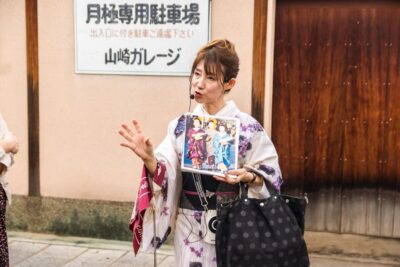
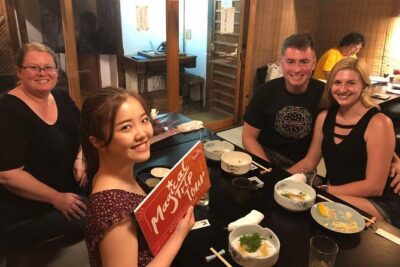
Kyoto Night Foodie Tour in Gion (9+ dishes + 6 Sake tastings)
Read our review →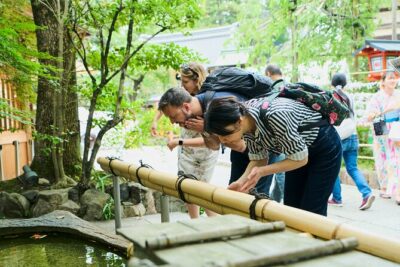
Kyoto Gion: 2-Hour Geisha Culture & History Walking Tour
Read our review →
Chopsticks Making Workshop in Gion with Engraving Option
Read our review →
Browse the lists this tour appears in