
Reviewed · GEISHA & GION DISTRICT TOURS
Kyoto Gion Night Walk & Geisha District Guided Tour
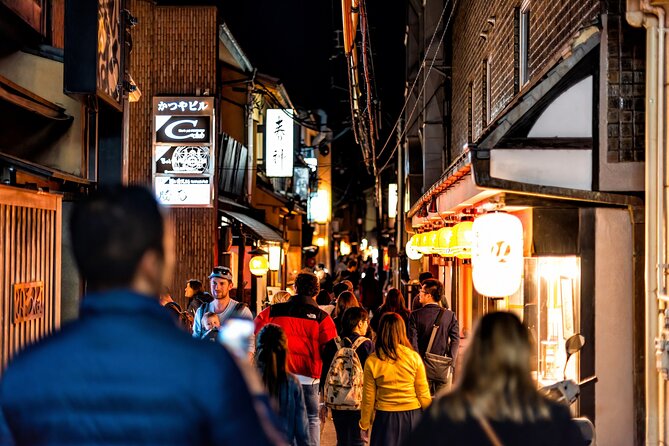
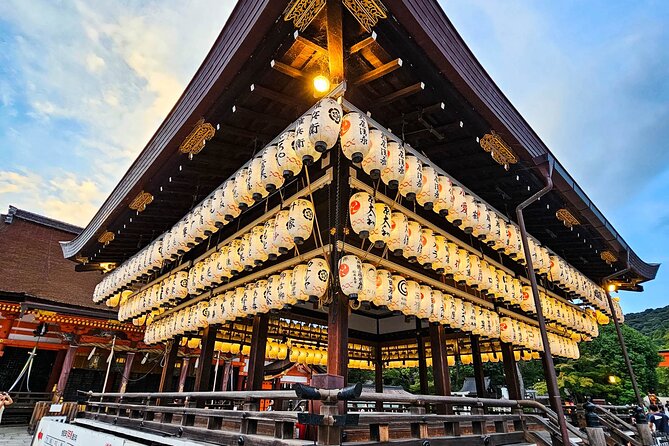
Gion is most atmospheric after sunset, when lanterns glow outside traditional restaurants and the narrow lanes take on a quieter, more mysterious feel. This three-hour evening walk brings you through Hanamikoji Street, Yasaka Shrine, and lesser-known corners with a guide explaining Kyoto’s customs, architecture, and geisha culture.
I like the small-group format, advertised at no more than nine people, and the chance to walk beyond the main tourist streets. I also like the range of guides, including Naoki, Jasmine, Shingo, Raphael, and Miyake, who are praised for clear English, patience, humor, and useful restaurant advice.
The main caution is simple: this is a long walk with few breaks, and the dinner-hour timing can leave you hungry. Winter visitors should dress warmly, and you should not book this expecting a guaranteed geisha sighting or a perfectly smooth meeting point.
Key points before you book
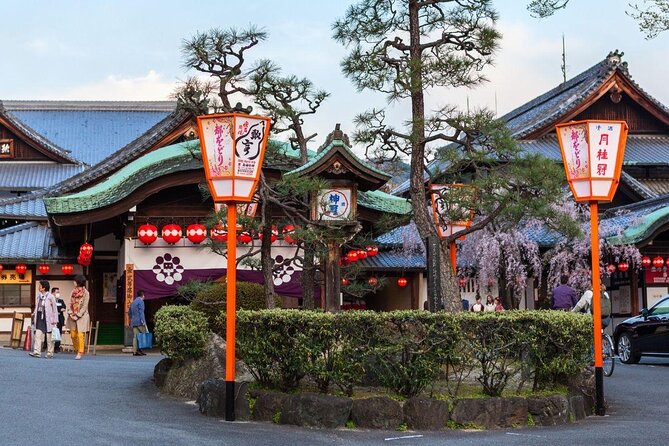
- Lantern-lit Gion after dark: See the district when teahouses, restaurants, bars, and shrine grounds take on their evening character.
- Three major stops: The route covers Gion, Hanamikoji Street, and Yasaka Shrine, with additional lanes and small sites along the way.
- Small group option: The outing is promoted for groups of no more than nine, though the general booking information lists a maximum of 25.
- Guides make the difference: Naoki, Jasmine, Shingo, Raphael, Miyake, Vincent, Eloise, and others have been praised for history, culture, humor, and personal help.
- Geisha sightings are possible, not promised: You may see a maiko or geisha, but timing, weather, holidays, and chance all matter.
- Good value at $18: The price is low for a three-hour guided walk, though snacks depend on the booking category.
Gion after sunset: the right time for Kyoto’s old quarter
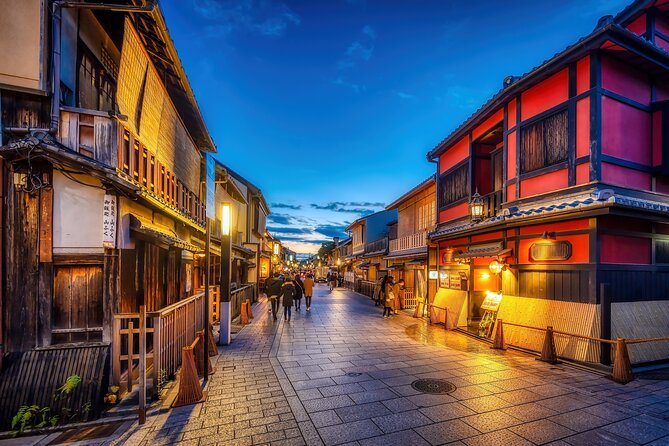
Gion is not a theme park, and the best way to approach it is as a living neighborhood with strict customs. At night, the district’s lanterns light up wooden facades, restaurant entrances, bars, and teahouses. The setting is atmospheric without needing much decoration.
I like the timing because the evening light gives Gion a very different mood from a daytime sightseeing walk. You see the streets as they are used for dinner, entertainment, and traditional appointments, rather than only as historic scenery.
Your guide will explain the difference between the district’s public streets and more private establishments. That matters here. A teahouse or restaurant may look inviting from outside but may not be open to casual entry. One poor experience involved a guide pointing out a private teahouse, which made the group uncomfortable. Stay with the guide, listen carefully, and treat private doors and people with respect.
The tour is built around walking, not performances or indoor visits. You will not be promised a show, a meal, or a meeting with a geisha. The reward is the setting, the stories, and a better sense of how the district works.
Other evenings in the old entertainment quarters of Kyoto:
- Kyoto Geisha Walking Tour: Gion District & Hidden Gems
★ 4.7 · 3,273 reviews - Kyoto: Gion Magical Night Walking Tour with Geisha Trivia
★ 4.9 · 2,393 reviews - Kyoto: Gion Geisha District Walking Tour – Stories of Geisha
★ 4.7 · 2,187 reviews
Hanamikoji Street and the lanes beyond it
Hanamikoji Street is one of the best-preserved historic streets in Gion. Its traditional buildings and restrained storefronts make it one of Kyoto’s most photogenic walks, especially once the lanterns come on.
The formal time here is about 30 minutes, but the route also uses nearby lanes and side streets. This is where a guide can add real value. On your own, you might photograph the main street and move on. With a guide, you can connect the buildings, customs, entertainment traditions, and neighborhood layout.
Several guides have been singled out for making the walk personal. Jasmine is praised for answering questions patiently and giving restaurant suggestions at the end. Naoki has been described as thoughtful and engaging, with a strong grasp of Kyoto’s culture and past. Shingo has taken visitors to places they would not have found alone.
That variety is worth keeping in mind. The basic route is fixed, but the feel of the evening may depend on who leads your group. Some guides may focus more on architecture and history, while others may spend more time on geisha traditions, food, or local stories.
You should also plan for respectful photography. Gion is a working neighborhood, and people moving through it are not automatically part of your sightseeing. The tour gives you chances for photos, but the best pictures will usually be of streets, buildings, lanterns, and shrine grounds rather than close-up shots of people.
Yasaka Shrine, the evening anchor
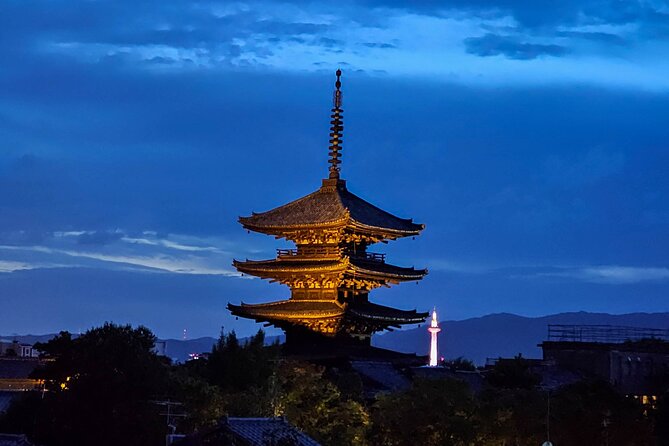
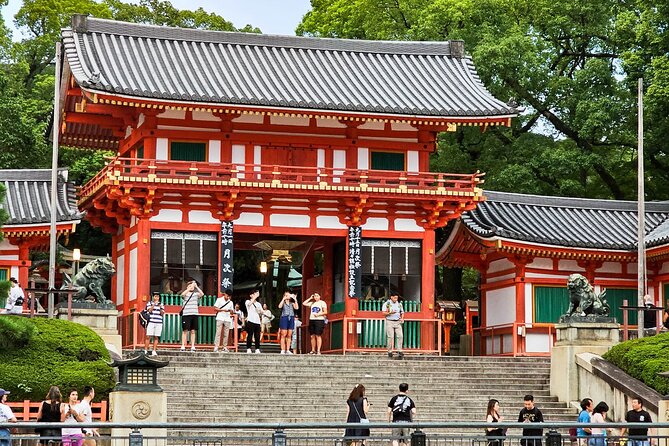
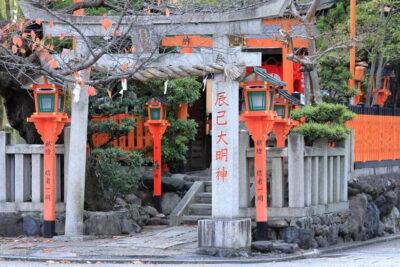
The walk includes Yasaka Shrine, also known as Gion Shrine. This is one of the most important stops because it gives the tour a wider cultural frame. Gion is not only about geisha districts and old wooden buildings. The shrine helps connect the neighborhood to Japanese religious practice, festivals, architecture, and daily life.
The shrine visit is listed at about 30 minutes. Your guide will discuss its history, design, and customs, though the exact detail may vary. Several strong guide comments point to the value of having someone explain what you are seeing instead of simply leading you past it.
I would pay close attention here if you are new to Japan. Shrine customs can seem easy to copy but confusing in meaning. A good guide can explain the difference between looking, praying, and taking photographs, while also showing how the shrine fits into the surrounding district.
The route may include additional small temples, shrines, or unusual spots. One guide even added a short side activity involving a so-called magic rock, which became a favorite moment for that group. Since extras are not guaranteed, treat these additions as a bonus rather than part of the promised schedule.
What the guides add to the walk
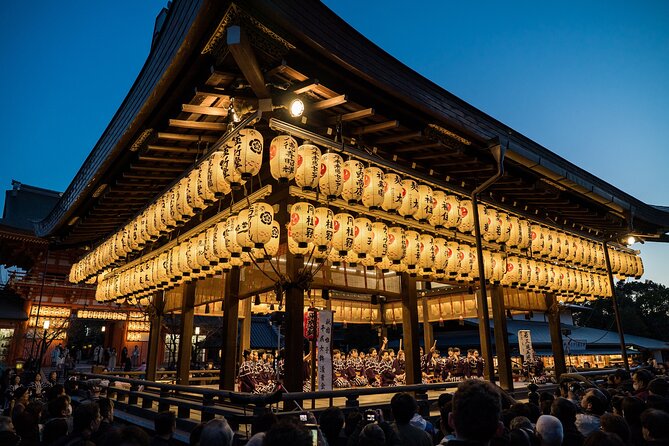
The most consistently praised part of this tour is the human side of it. Strong guides do more than recite dates. They answer questions, keep the group together, adjust the pace, and connect Gion to modern Kyoto.
Naoki receives praise for cultural insight and for making the night feel memorable. Jasmine is noted for her warm manner, detailed answers, and ability to include everyone in the group. Shingo is described as pleasant and fluent in English, while Raphael and Vincent are praised for their command of Kyoto and the geisha district.
Miyake has also been praised for patience, humor, and detailed knowledge of Japanese history. One particularly helpful detail is that he contacted a participant who was lost on the way to the meeting point. That kind of practical help can matter when you are trying to find a busy downtown meeting place.
Eloise is praised for being engaging and friendly, while another guide helped a visitor with an elderly mother. These details suggest that the better guides do not simply walk at one fixed pace. They watch the group and make room for questions.
Still, the experience is not guaranteed to be equally strong every night. A few participants found the storytelling disjointed or felt they received separate facts without a clear overview of Gion’s culture. If you prefer a tightly structured historical lecture, ask questions early and tell your guide what interests you.
Same base, a different sort of day:
- PERFECT KYOTO 1-Day Bus Tour
★ 5.0 · 13,518 reviews - Kyoto: Fushimi Inari, Kinkakuji, Bamboo Grove 1 Day Bus Tour
★ 4.8 · 4,316 reviews - Kyoto: Tea Ceremony in a Traditional Tea House in Kiyomizu
★ 4.9 · 3,519 reviews - Kyoto: Tea Ceremony Ju-An at Jotokuji Temple
★ 4.9 · 3,207 reviews
A three-hour walk requires sensible planning
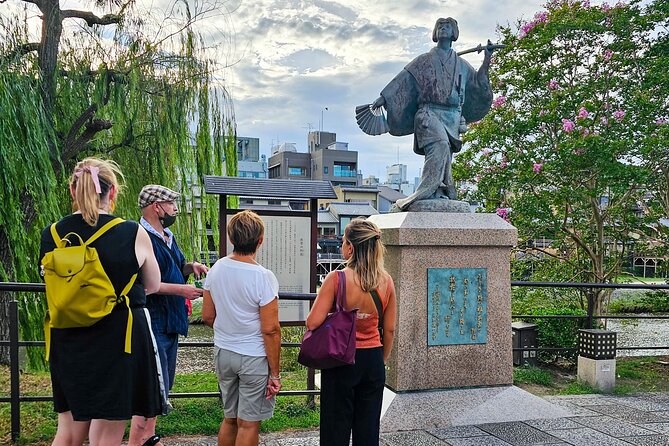
The tour lasts about three hours. That gives you enough time to cover several parts of Gion, but it also means you should treat this as a real walking outing rather than a short photo stop.
The route includes streets, lanes, shrine grounds, and likely some uneven surfaces. One positive comment specifically notes that children aged 12 to 16 enjoyed the tour, while another cautions that younger or less active legs may find it hard. The information says most people can participate, but the duration remains the key consideration.
There are limited breaks. One participant found the tour long but worthwhile, while another enjoyed the amount covered but noted the lack of pauses. I would wear comfortable shoes and avoid scheduling a demanding activity immediately afterward.
The start time can overlap with dinner. A family ended the tour hungry because the walk ran through the evening meal period. You have two sensible options: eat before meeting the group, or plan food for afterward. The supplied information mentions a snack for Premium Group and Private Tour bookings, but the general inclusion list does not promise it for every ticket. Check your chosen fare carefully rather than assuming a snack is included.
Water and a snack are described in the general overview, but the detailed inclusions specify a snack only for Premium Group and Private Tour bookings. That inconsistency is worth confirming before you pay. Meals and other drinks are not included.
Small groups, private upgrades, and the $18 price
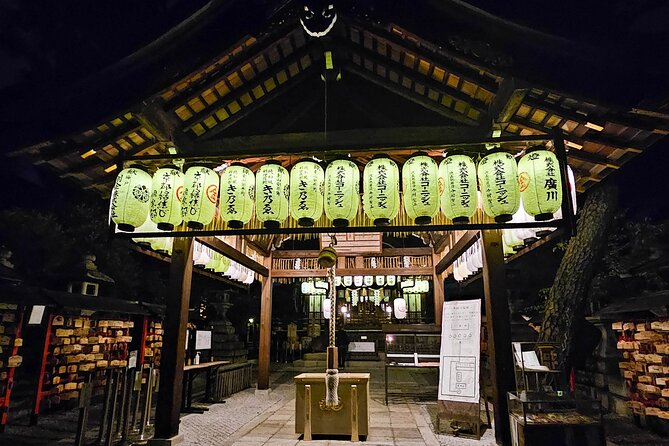
At $18 per person, this is priced as an accessible introduction to Gion. You are paying mainly for a guide’s time and interpretation, not for admission to a major attraction. Since Gion’s streets and Yasaka Shrine do not require a separate admission ticket on this tour, the value depends on how much context you want.
For a first evening in Kyoto, I think the price is appealing. A good guide can help you understand where you are, point out details you might miss, and suggest restaurants afterward. That can save time during a short visit.
The small-group promise is another reason to consider it. The outing is advertised at no more than nine people, which should make it easier to hear the guide and ask questions. However, the additional information gives a maximum of 25 participants. That may apply to the broader activity capacity or a different booking category, but it creates some uncertainty. If group size is crucial to you, confirm the exact option before booking.
A private upgrade is available, with multiple language options mentioned. The supplied details do not list every language, so check availability for your date. Private touring can make more sense for families, photographers, older relatives, or anyone who wants to shape the conversation around food, history, or geisha culture.
Meeting point, ending point, and practical details
The tour starts at Kyoto Kawaramachi Garden, 68 Shinchō, Shimogyo Ward. The stated end point is Sanjō Ōhashi Bridge in Nakagyo Ward. Both locations are near public transportation, and one participant found the start easy to reach by bus.
The meeting area can be confusing because several guides and groups may gather on a busy street. Give yourself extra time and look for the correct guide rather than joining the first group you see. Your booking confirmation should arrive at the time of booking, so keep the meeting details available on your phone.
One past itinerary description elsewhere suggested a different ending location, so check your confirmation for the final route and endpoint. Do not assume you will finish at Kyoto Station. The listed endpoint is Sanjō Ōhashi Bridge, which is useful because you can continue into central Kyoto from there.
This is a mobile-ticket experience. Hotel pickup and drop-off are not included, so you need to reach the starting point yourself and arrange your own return afterward.
Weather, seasons, and the chance of seeing a maiko
The tour requires good weather. If poor weather cancels it, you are offered another date or a full refund. That policy is useful because a three-hour walk through narrow streets and shrine grounds loses much of its appeal in heavy rain.
Winter deserves special planning. The lanterns can look striking at night, but the cold becomes noticeable during a slow walking tour. Wear warm layers, especially if you expect to pause while the guide explains a site.
A geisha or maiko sighting is possible, but it is never guaranteed. Some visitors see one geisha and two maiko near Hanamikoji Street, while others see none because restaurants are closed, the night is quiet, or the visit falls during a national holiday.
I would book this for the atmosphere and cultural explanation first. Consider a sighting a lucky extra. This approach keeps the evening enjoyable and avoids treating local people as an attraction that must appear on schedule.
The tour is also more rewarding when the district is active, though national holidays may affect restaurant openings and street life. The supplied details specifically point to national holidays as a less reliable time for seeing Gion at its usual pace.
Who will enjoy this Kyoto night walk?
I think the tour suits first-time Kyoto visitors who want an introduction to Gion without spending a large amount. It also works well early in your stay, since guides may suggest restaurants and help you understand the city’s customs.
History fans should consider it, especially if you are interested in Japanese culture, temples, shrines, or the geisha district. Naoki and Miyake, in particular, have been praised for adding wider historical detail beyond the immediate streets.
Families can enjoy it if everyone is comfortable walking for three hours. Older participants may need a steady pace, and the guide may be able to help, but the route has limited breaks. Children around the early teenage years have enjoyed it, while very young children may struggle with the timing and distance.
I would choose the private option if you want more control over the pace or language. A private tour also makes sense if your group has a particular interest in restaurants, architecture, or Japanese history.
Should you book the Gion night walk?
Book it if you want an affordable, guided introduction to Kyoto’s most atmospheric historic district. The strongest reasons are the lantern-lit setting, the chance to explore side streets, the small-group option, and guides such as Jasmine, Naoki, Shingo, Raphael, Vincent, and Miyake who can add warmth and detail.
Skip it if you want a guaranteed geisha encounter, a sit-down meal, or a short and easy outing. You should also think twice if you dislike walking at dinner time or need frequent breaks.
For most first-time visitors, I see this as a good-value evening orientation. Eat beforehand, dress for the season, arrive early at the meeting point, and treat any geisha sighting as luck. Cancel at least 24 hours before the start time for a full refund. Changes or cancellations within 24 hours are not refunded.
FAQ
How long does the Kyoto Gion night walk last?
The tour lasts approximately three hours.
What places are included on the route?
The route includes Gion, Hanamikoji Street, and Yasaka Shrine, also known as Gion Shrine. Additional lanes, temples, and shrines may also be included.
Is the tour conducted in English?
The standard tour includes an English-speaking guide.
How many people are in each group?
The tour is promoted as a small-group outing with no more than nine people. The general activity information also lists a maximum of 25 participants, so confirm the group size for your selected booking.
Will I definitely see a geisha or maiko?
No. You may see a geisha or maiko, but sightings depend on timing and chance and are not guaranteed.
Is food included?
A snack is listed for Premium Group and Private Tour bookings. Meals and other drinks are not included. The general information also mentions water and a snack, so check the inclusions for your selected ticket.
Where does the tour start and finish?
The tour starts at Kyoto Kawaramachi Garden, 68 Shinchō, Shimogyo Ward. It ends at Sanjō Ōhashi Bridge in Nakagyo Ward.
Is hotel pickup included?
No. Hotel pickup and drop-off are not included. You must reach the meeting point yourself.
Can I cancel for a full refund?
Yes, if you cancel at least 24 hours before the experience start time. Cancellations or changes made less than 24 hours before the start time are not refunded. If poor weather cancels the tour, you are offered another date or a full refund.
Just added in Kyoto
- Kyoto: Private Photoshoot Service★ 5.0 · 158 reviews
- Kyoto Rickshaw Tour★ 5.0 · 210 reviews
- Kyoto: Arashiyama Bamboo, Temple, Matcha, Monkeys & secret spots★ 5.0 · 219 reviews
- Izakaya Style Cooking Class★ 5.0 · 219 reviews
- Kyoto: Traditional Concert at Townhouse or Bathhouse★ 4.9 · 224 reviews
- Ninja 2-hour Hands-on Lesson by Japanese master in Kyoto -Medium★ 5.0 · 218 reviews
- Samurai Training with Modern day Musashi in Kyoto★ 5.0 · 256 reviews
- Kyoto: Kimono Tea Ceremony with Matcha and Sweet★ 4.9 · 249 reviews
Geisha & Gion District Tours, compared.
Kyoto Geisha Walking Tour: Gion District & Hidden Gems
Read our review →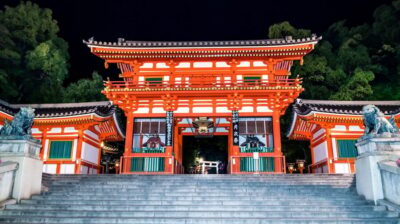
Gion Geisha District Walking Tour – Stories of Geisha
Read our review →
Best of Kyoto: Gion, Geisha, Pagodas & Cobblestones
Read our review →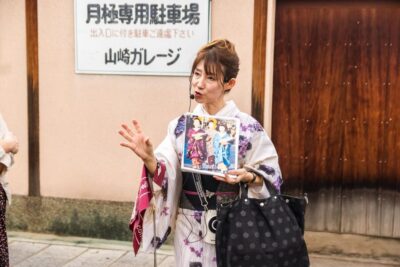
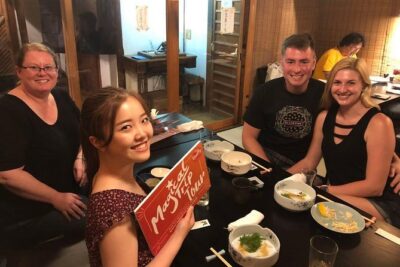
Kyoto Night Foodie Tour in Gion (9+ dishes + 6 Sake tastings)
Read our review →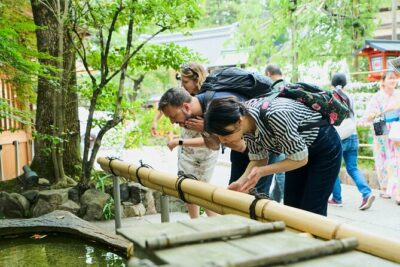
Kyoto Gion: 2-Hour Geisha Culture & History Walking Tour
Read our review →
Chopsticks Making Workshop in Gion with Engraving Option
Read our review →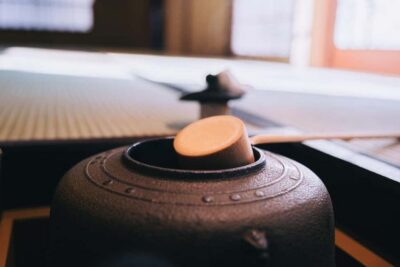
Browse the lists this tour appears in