
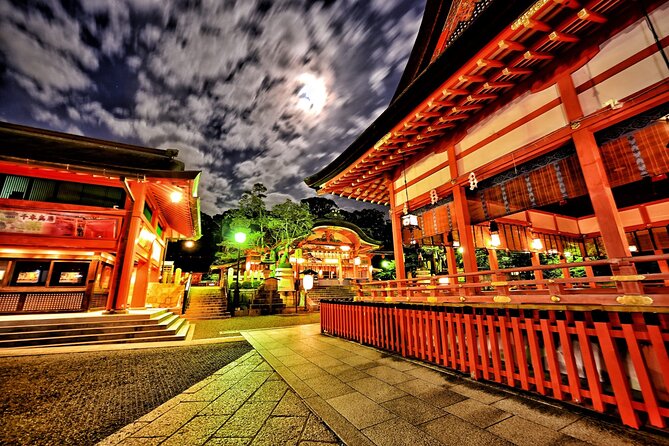
Reviewed · GEISHA & GION DISTRICT TOURS
Kyoto: Gion Night Walking Tour with Geisha Insight
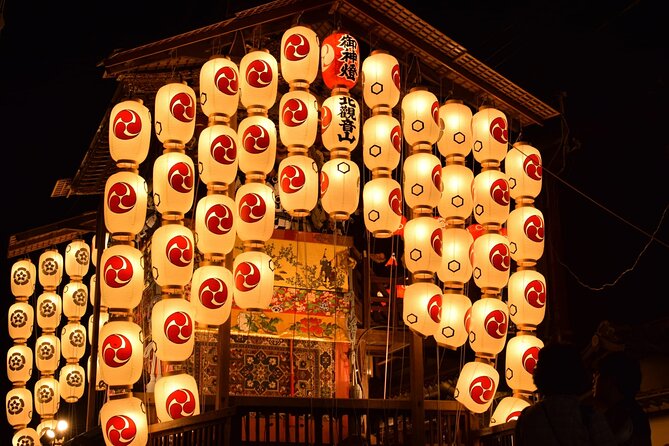
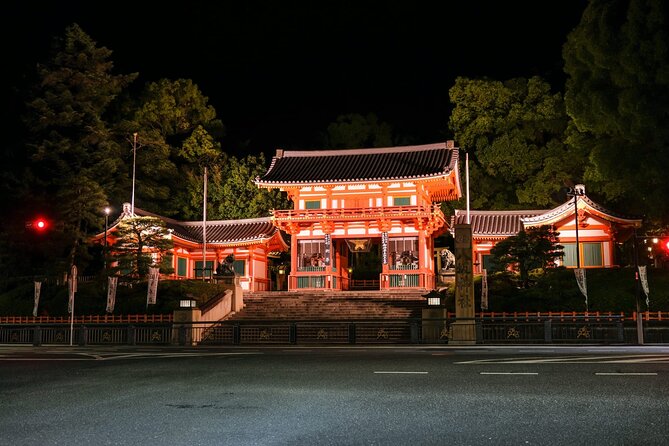
Gion is most atmospheric after dark, when lanterns glow along wooden teahouses and the narrow lanes grow quiet. This small-group walk takes you from famous Hanamikoji Street to the Shirakawa Canal, then on toward the lively Kawaramachidori area. You get Kyoto’s old and new sides in one evening.
I like the personal scale, with no more than 15 people, and the practical food advice you receive along the way. I also like the route’s mix of major sights and tucked-away streets, including Tatsumi Daimyojin Shrine and old machiya houses.
The main catch is simple: a geisha sighting is not promised. One guide, Ryu, received high praise for explaining geisha customs, but another visitor felt misled after learning early in the walk that seeing one was unlikely and that photos or conversation would not be appropriate.
Key points to know before booking
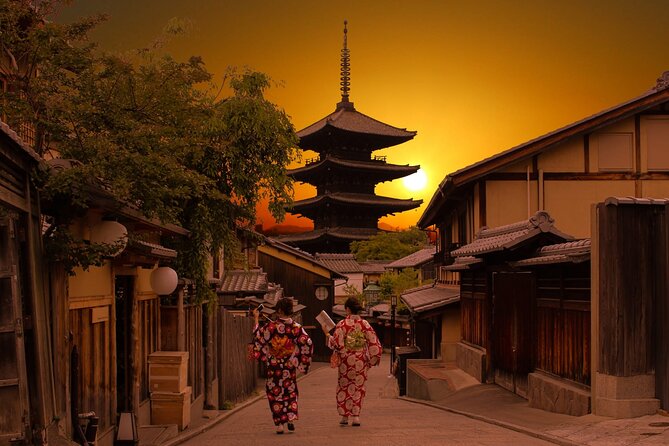
- Hanamikoji Street after dark: Walk through Gion’s best-known geisha quarter, lined with traditional wooden teahouses.
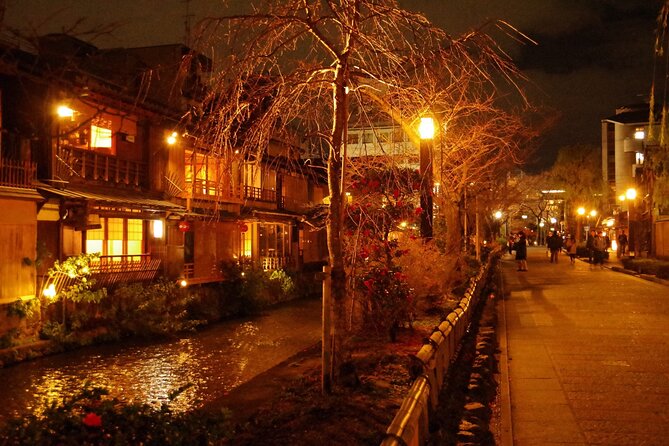
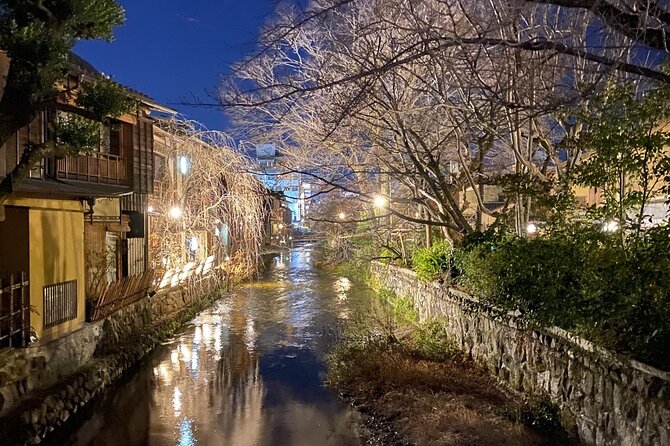
- Shirakawa Canal scenery: See stone paths, red bridges, and willow trees in one of Kyoto’s prettiest evening settings.
- Geisha guidance with realistic limits: Learn how to tell geisha and maiko apart, but treat an actual sighting as luck, not part of the guarantee.
- A small group of up to 15: The size should make it easier to hear the guide and ask questions.
- Two different Kyotos in one walk: The route shifts from traditional Gion to the modern energy around Shijo-Kawaramachi.
- Useful food suggestions: The guide shares tips for places to eat in Kyoto, adding value beyond sightseeing.
Gion after dark, with no map in hand
This is a walking tour for getting your bearings in one of Kyoto’s most atmospheric districts. Gion’s lanes can look simple on a map, yet the small streets, private entrances, teahouses, and quiet corners are easy to pass without knowing what you are seeing.
You meet at Tanaka Coffee Gion in Kyoto’s Higashiyama Ward. From there, the guide leads the group through the evening streets and brings you back to the same meeting point at the end. Since the experience uses a mobile ticket, you do not need to arrange a printed voucher.
The walk lasts about two hours. That is enough time to see the main areas without turning the evening into a long march, though you should still wear comfortable shoes. The route is on foot, and the provided information says most people can participate.
A group limit of 15 is a useful middle ground. You do not get the intimacy of a private walk, but you also avoid the feel of a large procession. If your guide is Ryu, expect a strong focus on explaining geisha traditions and practice. Guide assignments can vary, so book this for the route and subject, not for one named person.
Other walking tours in Kyoto people book:
- Kyoto Geisha Walking Tour: Gion District & Hidden Gems
★ 4.7 · 3,273 reviews - Kyoto: Gion Magical Night Walking Tour with Geisha Trivia
★ 4.9 · 2,393 reviews - Kyoto: Gion Geisha District Walking Tour – Stories of Geisha
★ 4.7 · 2,187 reviews
Hanamikoji Street and the world of ochaya
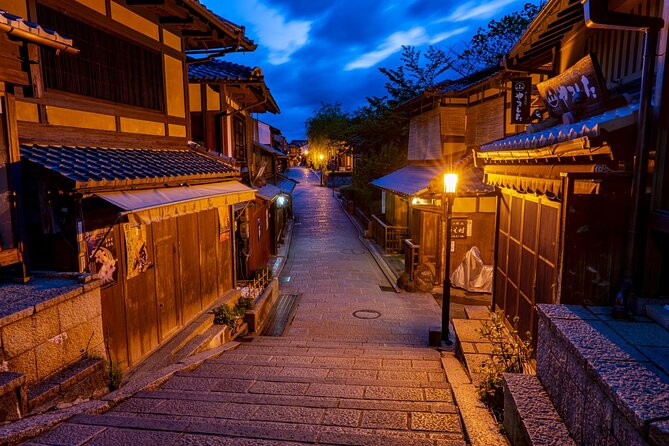
The first main section takes you along Hanamikoji Street, the heart of Gion’s traditional entertainment district. The street is lined with wooden ochaya, or teahouses, where geisha and maiko have long worked and entertained guests.
This is not simply a photo stop. The value lies in learning to read the setting. A plain wooden frontage may be part of a private establishment, not a shop open for casual entry. A quiet lane may lead to an appointment or residence rather than a public attraction.
At night, the street takes on a different mood from daytime Kyoto. Lantern light brings out the texture of the wooden buildings, while the lack of heavy daytime crowds makes the walk feel calmer. The trade-off is that some details become harder to see, and photography is less useful in dark areas.
Keep your expectations sensible here. Gion is a working neighborhood, not a stage set arranged for sightseeing. The tour helps you look with more care, but it does not turn private places into public ones.
The geisha discussion is likely to be the emotional center of the walk. You learn how to spot a real geisha or maiko and how to distinguish the two. You also get context for why they may be moving quickly between appointments.
That context matters. It is easy to treat a passing performer as a photo opportunity, but the etiquette is more important than the picture. A guide may tell you not to approach, speak to, or photograph them. One person found this limitation disappointing, especially after hoping for a close encounter, so consider the cultural explanation the main product and an actual sighting a lucky extra.
Shirakawa Canal and Tatsumi Daimyojin Shrine
The walk continues into the Shirakawa Canal area, one of the most scenic parts of Gion. Stone-paved lanes, red bridges, and willow trees create a quieter setting than Hanamikoji Street.
This section is where the tour earns its modest price most clearly. You are not only ticking off a famous street. You are seeing a connected set of small spaces that can be easy to miss when you explore alone, especially after sunset.
The canal area also gives the guide room to explain how the neighborhood works. The buildings, lanes, and waterways form part of Gion’s character, but you may not know what deserves your attention without someone pointing it out.
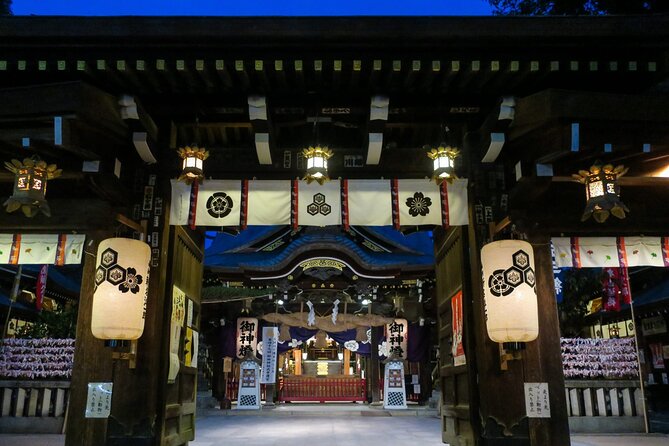
Next comes Tatsumi Daimyojin Shrine, a small religious site tucked into the backstreets. It is not a grand temple complex, and that is precisely why it fits the walk. You get a brief look at a modest local place rather than another major sight crowded with tour groups.
The shrine adds a pause to the route. After the bright names and famous streets, this smaller stop helps show how Kyoto’s traditional districts are made up of ordinary places as well as celebrated monuments.
Do not expect a long visit or a formal ceremony. It is one stop in a walking route, not a standalone shrine tour. Its value comes from the setting and the guide’s explanation, not from a long list of buildings or exhibits.
From old Gion to Kawaramachidori
The second hour changes the tone. Around the Shijo-Kawaramachi intersection, Kyoto’s modern side comes forward. Shops, streets, restaurants, and evening activity replace the quieter wooden lanes of Gion.
This contrast is a smart part of the route. You see how close the old district is to one of the city’s active commercial areas. Kyoto is not frozen in the past, and this part of the walk makes that clear.
The guide then takes you into backstreets and alleys where you may find cozy bars, eateries, and older machiya houses. The point is not that every lane is secret or inaccessible. It is that a local guide can direct your attention away from the main crossing and toward the smaller streets where the city feels more lived-in.
This portion can also help with dinner planning. Local eatery recommendations are included, which is useful if you have not yet decided where to eat. The guide can point you toward options in the area, though the experience does not include a meal or food tastings.
I would plan to eat after the walk unless you receive a specific suggestion that fits your timing. The tour ends back at Tanaka Coffee Gion, so you can use the advice to choose a nearby place afterward rather than trying to eat while keeping up with the group.
Other evenings in the old entertainment quarters of Kyoto:
- Best of Kyoto: Gion, Geisha, Pagodas & Cobblestones
★ 4.9 · 2,058 reviews - Night Walk in Gion: Kyoto’s Geisha District
★ 4.5 · 2,003 reviews - Kyoto Night Foodie Tour in Gion (9+ dishes + 6 Sake tastings)
★ 5.0 · 1,762 reviews - Kyoto Gion Geisha District Walking Tour – The Stories of Geisha
★ 5.0 · 1,441 reviews
How much geisha insight will you really get?
The title may draw you in with the promise of geisha insight, but the wording matters. You are learning about geisha and maiko culture, local etiquette, and ways to recognize them. You are not buying a guaranteed encounter.
That distinction protects the quality of the experience. Geisha and maiko follow evening schedules that are not made for public viewing. Their appearance depends on chance, timing, and respectful distance.
I would book this tour if you want a guide to explain what you see and what you should not do. I would not book it if your main goal is a close photograph or a conversation with a geisha.
One especially useful lesson is how to avoid treating the district like a performance venue. If someone is heading to an appointment, the appropriate response is to leave space and avoid blocking the lane. Even if you see no one, the walk can still give you a clearer idea of how Gion functions.
The mixed reactions make sense. A person expecting a guaranteed sighting may feel let down, particularly if the route is dark and photography is difficult. A person who values cultural context and a calm evening walk may find the explanation worthwhile even without seeing a geisha.
The price, group size, and overall value
At $25 per person, this is priced as an affordable orientation walk rather than a premium cultural event. You are paying for about two hours of guiding, navigation, local recommendations, and interpretation of places that can be confusing on your own.
The value is strongest for a first visit to Kyoto. If you are new to Gion, having someone connect Hanamikoji Street, Shirakawa Canal, the shrine, and Kawaramachidori helps you understand how the districts relate to one another.
The value is weaker if you already know Gion well or prefer to wander without a plan. You can walk through many of these public areas independently, and the tour does not include food, drinks, performances, or entry to a special geisha event.
A maximum of 15 people keeps the price low while allowing for questions. It is not a private tour, so you should expect some pauses for the group and some limits on how long the guide can spend with each person.
The 4.8 rating and 97 percent recommendation figure suggest strong overall satisfaction, but the low rating attached to the geisha expectation is worth taking seriously. The best way to avoid disappointment is to think of this as a Gion night walk with cultural explanation, not as a geisha sighting tour.
What to bring and how to approach the evening
Wear shoes suited to two hours of walking. The route includes stone-paved lanes and backstreets, so comfort matters more than dressing up.
Bring your phone for the mobile ticket and keep your expectations flexible about photographs. Some areas are dark, and the respectful rules around geisha may mean that you should not take pictures of people you encounter.
Arrive ready to listen as well as look. The setting can be beautiful, but much of the experience comes from understanding what the buildings and customs mean.
I would also leave space in your evening after the tour. Since the guide shares food recommendations and the walk ends where it begins, you can choose a restaurant or bar afterward instead of rushing away for another booking.
The tour offers free cancellation up to 24 hours before the start time. Changes or cancellations inside that window are not accepted for a refund, and the experience can be canceled if the minimum number of people is not reached. In that case, you are offered another date or experience, or a full refund.
Who should book this Gion walk?
This tour suits a first-time Kyoto visitor who wants a simple introduction to Gion without spending a large amount. It also works well for anyone who likes history and local customs but does not want a formal lecture or a full-day activity.
It is a good fit for couples, friends, and small families who can manage two hours on foot. Most people can participate, according to the provided details, but the experience does not promise a private pace or special accessibility arrangements.
You may also like it if you want dinner ideas. The local eatery suggestions are a practical extra, especially on a first night when choosing among Kyoto’s many restaurants can feel like work.
I would skip it if you need guaranteed access to a geisha performance, a meal included in the price, or extensive photography time. I would also skip it if you already know Gion’s main streets and want a highly specialized cultural program.
Should you book the Kyoto Gion Night Walking Tour?
Book it for the guide’s explanation, the evening atmosphere, and the efficient route through both traditional Gion and the Kawaramachi area. At $25, it is a fair way to get oriented, learn respectful behavior, and finish with ideas for where to eat.
Do not book it on the assumption that you will certainly see a geisha. The most honest expectation is a well-organized night walk where a sighting might happen, but the cultural insight remains the main event. If that sounds right for you, the small group and two-hour length make this an easy addition to a Kyoto evening.
FAQ
How long is the Kyoto Gion night walking tour?
The tour lasts approximately two hours.
How much does the tour cost?
The price is $25 per person.
Where does the tour begin?
The meeting point is Tanaka Coffee Gion in Kyoto’s Higashiyama Ward, at 993 Shinchisu Yoshichomachi, Kyoto 605-0085.
Where does the tour end?
The activity ends back at the meeting point.
What areas does the tour visit?
The route includes Gion, Hanamikoji Street, the Shirakawa Canal area, Tatsumi Daimyojin Shrine, and the area around Kawaramachidori and the Shijo-Kawaramachi intersection.
Is seeing a geisha guaranteed?
No. The tour explains how to spot geisha and maiko, but an actual sighting is not guaranteed.
What is included in the price?
The price includes the walking tour and insider recommendations for local eateries.
Is food included?
No. Food and drinks are not included, but the guide provides recommendations for places to eat in Kyoto.
How large is the group?
The tour allows a maximum of 15 people.
Can I cancel for a full refund?
Yes. You can cancel at least 24 hours before the experience start time for a full refund. Cancellations or changes made less than 24 hours before the start time are not refunded or accepted.
Is the ticket available on a phone?
Yes. The experience provides a mobile ticket.
More walking tours elsewhere in Japan
- Nishiki Market Brunch Walking Tour (7 Tastings + Brunch)
★ 5.0 · 1,355 reviews - Kyoto Arashiyama Walking Tour: Bamboo, Monkeys, Gardens & Secrets
★ 5.0 · 1,216 reviews - Kyoto Gion: 2-Hour Geisha Culture & History Walking Tour
★ 5.0 · 1,186 reviews - Kyoto: Izakaya Bars Guided Walking Tour
★ 4.9 · 815 reviews
Just added in Kyoto
- Private Cooking Class Udon in Kyoto Japan★ 5.0 · 23 reviews
- Your Private Vacation Photography Session In Kyoto★ 5.0 · 110 reviews
- Kyoto: Zen Meditation at a Private Temple with a Monk★ 5.0 · 25 reviews
- Private Pewter Sake Cup Experience with a Kyoto Artisan★ 5.0 · 31 reviews
- Kyoto Wagashi(Japanese sweets) Cooking Class near Fushimiinari★ 5.0 · 60 reviews
- Kyoto:Family-Friendly Kimono & Yukata Experience at WARGO★ 5.0 · 147 reviews
- Private Guided Traditional Buddhist Cooking in Japan★ 5.0 · 16 reviews
- Kyoto: Gion Geisha District & Sake-in-Hand Walking Tour★ 5.0 · 37 reviews
Geisha & Gion District Tours, compared.

Kyoto Geisha Walking Tour: Gion District & Hidden Gems
Read our review →
Gion Geisha District Walking Tour – Stories of Geisha
Read our review →
Best of Kyoto: Gion, Geisha, Pagodas & Cobblestones
Read our review →
Kyoto Night Foodie Tour in Gion (9+ dishes + 6 Sake tastings)
Read our review →
Kyoto Gion: 2-Hour Geisha Culture & History Walking Tour
Read our review →
Chopsticks Making Workshop in Gion with Engraving Option
Read our review →
Browse the lists this tour appears in