
Reviewed · GEISHA & GION DISTRICT TOURS
Kyoto Gion Private Tour with a Local Guide – Geisha District
Gion is best understood on foot, and this private tour gives you someone to explain what you are seeing as you pass wooden machiya houses, old teahouses, shrines, and narrow lanes. The route also reaches Yasaka Shrine and Pontocho Alley, so you get both sacred Kyoto and its old nightlife quarter.
I like the one-guide-to-one-group format, which lets you ask direct questions and adjust the pace. I also like the pre-tour questionnaire, since a good host such as Emi, Alexis, Brenda, Michael, or Milo can shape the walk around food, history, photography, or local customs.
The main caution is expectation. A geisha or maiko sighting is never promised, and Gion can be crowded. Guide quality can vary, too, so the private format is most valuable when your assigned host brings strong local knowledge and follows your interests.
Key points to know before you book
- Private attention: Only your group takes part, with the route adjusted to your interests.
- Five useful stops: The walk can include Gion, a famous teahouse street, Yasaka Shrine, Shinbashi Dori and Tatsumi Bridge, then Pontocho Alley.
- Geisha culture, not a guaranteed sighting: You learn about geiko and maiko traditions, but spotting one is a matter of timing and luck.
- A walking tour first: Transport is not included, and public transport or taxis may add a cost if your route needs them.
- Flexible timing: The experience lasts about 2 to 3 hours, with start times and duration arranged when you book.
- Strong hosts make the difference: Names praised in past bookings include Emi, Alexis, Olan, Nisa, Ai, Milo, Toga, Kenta, Brenda, Kokoro, Tess, Michael, and Ada.
Why a private walk works well in Gion
Gion is easy to photograph and harder to read. A paper lantern, a closed wooden door, a narrow lane, or a person in formal dress can mean more than it first appears. A local guide gives you context while you are standing in the place, rather than leaving you to sort out the details later.
That is the real value here. You are not simply following a guide from one famous corner to another. You can ask why a street is quiet, how a teahouse differs from an ordinary restaurant, what geiko and maiko do, or which customs matter when taking photographs.
The private format helps families and small groups. You can stop for a picture, ask for a slower pace, or spend more time on shrines if that is what interests you. A larger group tour usually has to keep moving. Here, your host can give more attention to each person in your party.
The experience is supplied by City Unscripted, and the guide is assigned rather than selected from a fixed roster. Past bookings have included Emi, Alexis, Olan, Nisa, Ai, Milo, Toga, Kenta, Brenda, Kokoro, Tess, Michael, and Ada. Several were praised for clear English, humor, flexibility, and strong local explanations. That also means you should see the guide as the key variable in the experience.
Other evenings in the old entertainment quarters of Kyoto:
- Kyoto Geisha Walking Tour: Gion District & Hidden Gems
★ 4.7 · 3,273 reviews - Kyoto: Gion Magical Night Walking Tour with Geisha Trivia
★ 4.9 · 2,393 reviews - Kyoto: Gion Geisha District Walking Tour – Stories of Geisha
★ 4.7 · 2,187 reviews
Starting near Shijo Kawaramachi
The stated meeting point is Matsumoto Kiyoshi Kyoto Shijo Kawaramachi, at 103-2 Hashimotocho in Shimogyo Ward. The walk ends back at the meeting point, although the description also notes that pickup can be arranged and a host may meet you at your hotel.
Confirm the exact meeting plan after booking. That small step matters in Kyoto, where a short address can be close to several busy streets and station exits. You receive confirmation at booking, followed by a short questionnaire about your interests, preferences, and must-see places.
Use that questionnaire carefully. If geisha culture is your priority, say so plainly. If you want food stops, shrine customs, photography, old architecture, or quieter lanes, spell that out. One unhappy booking centered on a guide who did not address geisha culture, while other strong experiences came from hosts who shaped the route around the group.
The starting area is convenient for public transportation, and the tour is primarily on foot. There is no private vehicle. If your host uses a train, bus, or taxi to connect parts of the route, you may need to pay that cost separately.
Gion’s wooden lanes and teahouse culture
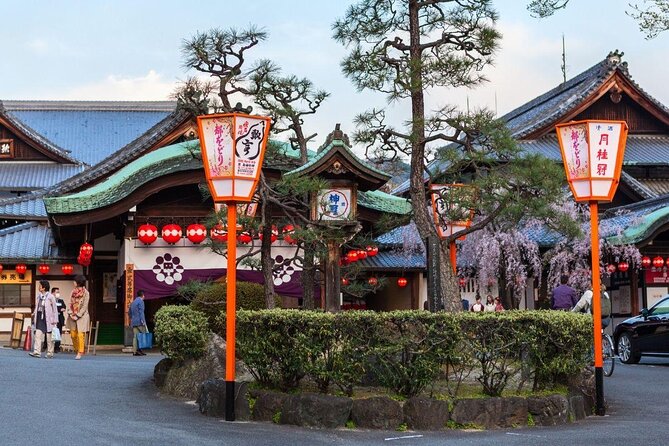
The first main section takes you into Gion, Kyoto’s traditional entertainment district. Narrow streets, lanterns, and wooden machiya houses give the area its familiar look, but the guide’s explanation is what makes the setting useful rather than merely pretty.
Your host can explain the difference between geiko and maiko, the local terms used for Kyoto’s professional entertainers and apprentices, and the role of ochaya, or traditional teahouses. The point is not to treat Gion like a stage set. It is an active neighborhood with working businesses, private spaces, and residents.
That calls for respectful behavior. Keep your camera ready, but do not block lanes or follow anyone in costume. A guide can help you understand when a photograph is appropriate and when it is better to watch quietly and move on.
Do not book this walk on the assumption that you will meet a geisha. One person did see a maiko, and another saw several geisha walking past, but those moments are chance encounters. Even local people cannot promise them. The dependable part is the explanation of the district and its customs.
The crowds are another factor. Gion is one of Kyoto’s best-known areas, and some streets can feel packed, especially at popular times. A night walk gives you lantern light and atmosphere, while a daytime walk makes architecture and street details easier to see. One booking specifically found daytime preferable to evening.
Gion’s famous teahouse street
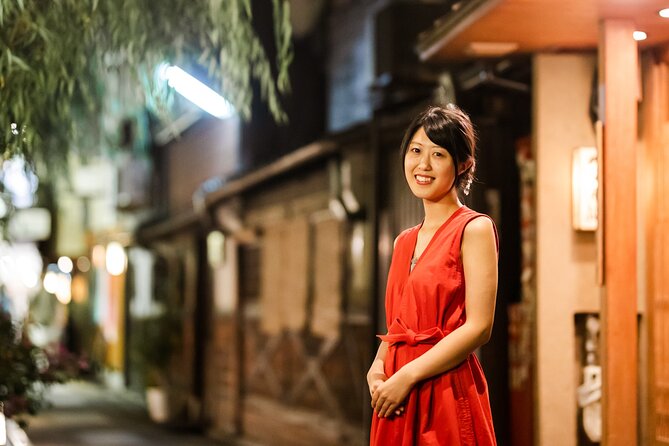
A second stop focuses on one of Gion’s best-known streets, lined with old ochaya and carefully preserved architecture from the Edo period. This is where a host’s eye can help you notice details you might otherwise pass without a glance.
Look for the narrow frontage of traditional wooden buildings, subdued entrances, and the way private teahouses keep a low profile. The street is visually appealing, but it is not a museum. Some businesses are not open to casual visitors, and you should not expect to enter every building.
This is also a good place to ask practical questions. You can ask how a formal evening at an ochaya differs from dinner at a restaurant, or how local customs shape access to these establishments. A strong guide will separate what you can see from what remains private.
The experience is better for curiosity than for a checklist. If you only want famous photo stops, you may find the cost hard to justify. If you want the social background behind Gion’s appearance, the private conversation adds real value.
Same base, a different sort of day:
- PERFECT KYOTO 1-Day Bus Tour
★ 5.0 · 13,518 reviews - Kyoto: Fushimi Inari, Kinkakuji, Bamboo Grove 1 Day Bus Tour
★ 4.8 · 4,316 reviews - Kyoto: Tea Ceremony in a Traditional Tea House in Kiyomizu
★ 4.9 · 3,519 reviews - Kyoto: Tea Ceremony Ju-An at Jotokuji Temple
★ 4.9 · 3,207 reviews
Yasaka Shrine and Kyoto’s spiritual side
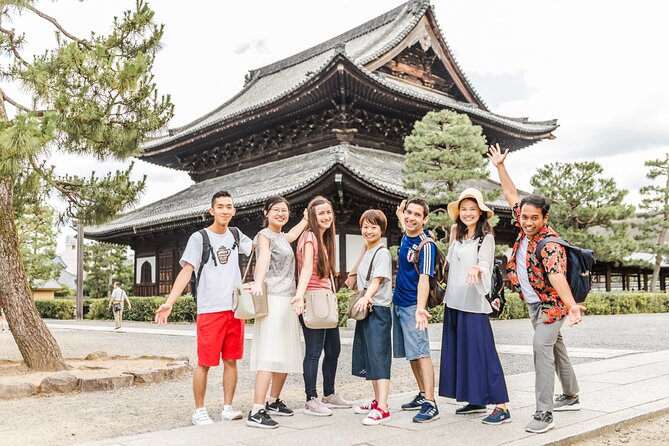
Yasaka Shrine brings a different mood to the route. Located between Gion and Higashiyama, it has more than 1,300 years of history and plays a central role in Kyoto’s festivals. It is not just a quick backdrop for a photograph.
Your host can point out how a Shinto shrine differs from the teahouse district, explain basic customs, and connect the shrine to the city’s festival life. This contrast is one of the tour’s strengths. In a short walk, you move from entertainment culture to a major religious site.
The shrine is open and active, so the experience may include ordinary worshippers, visitors, and vendors. That is part of the setting, but it can also make the visit feel less quiet than expected. Be ready to pause, watch, and follow local etiquette rather than treating the grounds as a photo studio.
Some past routes also included temples, gardens, or a small shrine connected to relationships. Those additions are not guaranteed, but the questionnaire gives you a chance to request more religious sites if they suit your interests.
Shinbashi Dori and Tatsumi Bridge
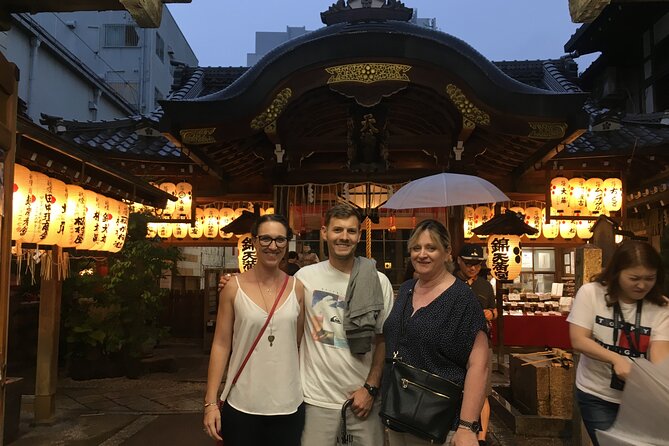
Shinbashi Dori is one of the most scenic parts of the walk, with willow trees and traditional facades. The route then reaches Tatsumi Bridge, a favorite photography point with local importance.
This section is likely to appeal to you if you want the classic Kyoto look without spending the whole tour inside a major attraction. The combination of water, trees, old buildings, and a small bridge gives the walk a calmer visual rhythm.
Allow time for pictures, but remember that a private tour is not a dedicated photo session unless you request one. Tell your host if photography matters to you. One guide, Alexis, was praised for taking photographs, and other hosts adjusted routes to cover specific interests at short notice.
The bridge and lane can still attract crowds. If you want a quieter feel, ask your host about a morning start. The duration is flexible, so a short stop here can remain short, or you can give it more time at the expense of another part of the route.
Ending in Pontocho Alley
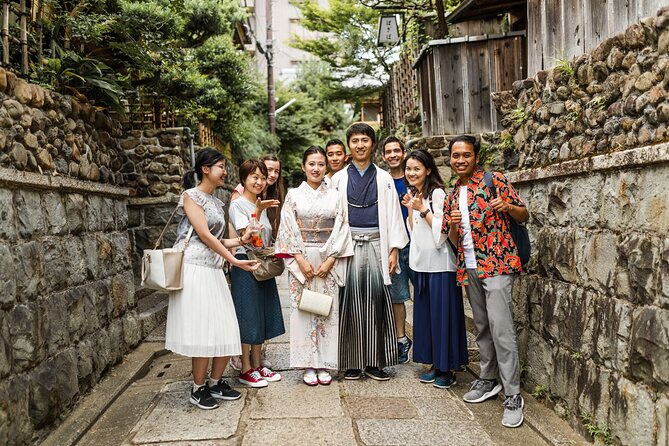
The final planned area is Pontocho Alley, one of Kyoto’s oldest nightlife quarters. It is a narrow passage with traditional character, intimate bars, and restaurants. The lane is especially useful as a contrast to Gion: both areas connect to old Kyoto entertainment, but Pontocho gives you a stronger sense of evening dining and nightlife.
Your guide can explain how to read the alley, suggest places to eat, and point out the difference between a restaurant you can enter casually and one that may require an advance booking or a larger budget. Food and drinks are not included, so any meal or stop here is your own expense.
Past hosts have helped with restaurant suggestions and reservations. Brenda arranged dinner for one late-arriving group, and another host ended the walk at Gion Corner for a booked geisha performance. These examples show why you should tell your guide about evening plans before the tour begins.
Pontocho is narrow and busy at popular times. Do not expect a quiet, empty lane. Its appeal comes from the mix of old facades, small entrances, and the sense that much of the action is happening behind doors.
How much value do you get for $101.57?
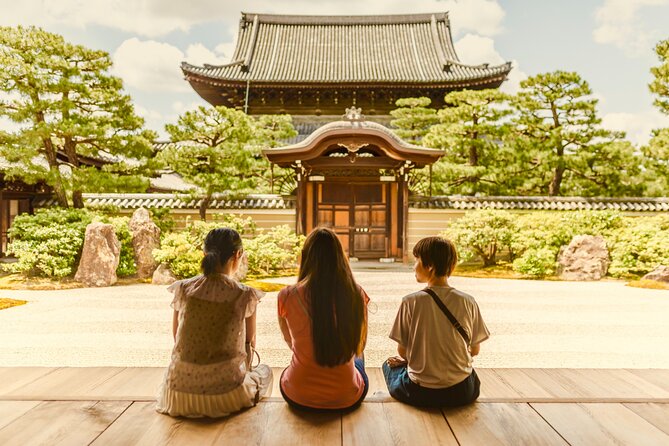
At $101.57 per person, the price needs to be judged against your group size and your priorities. For one or two people, it is a significant charge for a 2 to 3 hour walk. For a family or small group, private guiding can compare more favorably with several individual tickets and a larger paid tour, especially if you make good use of the customization.
You are paying mainly for time, conversation, route planning, and local interpretation. Food, drinks, attraction tickets, and transport are extra. If your host simply chats while leading you through streets you could find yourself, the value drops sharply. The best use of the tour is to arrive with questions and a clear wish list.
I would consider it good value for a first visit when you want cultural context quickly, have limited time, or are traveling with family members who need a flexible pace. It is less convincing if you already know Gion well, prefer independent wandering, or mainly want a guaranteed geisha encounter.
The private format also lets you combine sightseeing with practical planning. You can ask where to eat afterward, how to reach another district, or which cultural show fits your schedule. Those small benefits can save time during a short Kyoto stay.
Timing, walking, and what to pack
Expect to walk for most of the 2 to 3 hours. Comfortable shoes are sensible, since the route includes narrow streets and several areas where you may stop and move again. The exact amount of walking depends on the customized route and whether public transport or a taxi is used between sites.
Day and night offer different rewards. Daylight helps with wooden architecture, shrine details, and photographs. Evening brings lanterns and the traditional atmosphere associated with Gion, but it can also mean more people and less visibility. If you are unsure, tell the host what matters more to you.
The tour is suitable for most people, and service animals are allowed. Food and drinks are not provided. Gratuities are optional, and any public transport or taxi cost is separate.
Free cancellation is available up to 24 hours before the start time for a full refund. Changes or cancellations inside that 24-hour window are not accepted for a refund, based on local time.
Guide quality matters more than the route
The listed route is appealing, but the person leading it will shape your experience. Past guides such as Emi, Olan, Nisa, Toga, Michael, and Ada were praised for clear explanations and an easy manner. Milo was especially valued for including all five people in one group, while Kenta adjusted an ending to fit a booked Gion Corner show.
That flexibility is a real benefit. A host who asks questions, listens, and explains rather than reciting facts can turn familiar streets into a useful introduction to Kyoto. Humor helps too, especially when cultural rules are complicated.
Still, the private label does not guarantee expert performance. One booking described a pleasant guide who offered little information and did not cover geisha culture. Two separate bookings also described a guide failing to appear, which is a serious service problem. The available rating is 4.3 from 43 reviews, so the overall picture is positive but not flawless.
After booking, stay alert for the host’s message and answer the questionnaire in detail. If the assigned host does not confirm the meeting plan, contact the provider before the day of the walk. That simple check can protect valuable vacation time.
Who should book this Gion walk?
I would choose this experience if you want a personal introduction to Kyoto’s traditional districts and you value questions over a fixed script. It works particularly well for first-time visitors, families, small groups, and anyone interested in the connection between shrines, nightlife, architecture, and geiko culture.
It is also a sensible first or second day activity. You can learn the layout of Gion, ask about local dining, and use the guide’s suggestions for the rest of your stay.
I would skip it if your only goal is to see a geisha, since no sighting can be promised. I would also think twice if you want a silent photography walk, a food tour with included tastings, or entry to traditional teahouses. Those are not part of the standard price.
Should you book it?
Book this tour if you want private guidance through Gion, a flexible route, and useful explanations of places that can otherwise feel closed to outsiders. Put your interests in writing, ask for the guide to focus on geiko culture if that is important, and consider a daytime start for clearer views.
Do not book it expecting a guaranteed geisha encounter or a polished performance every time. The route is strong, but the guide makes the difference. With an attentive host such as Emi, Brenda, Michael, Milo, or Ada, the experience can give you a warm and practical introduction to old Kyoto. If your assigned plan remains vague, confirm the details before you set out.
FAQ
How long does the Kyoto Gion private tour last?
The tour lasts approximately 2 to 3 hours. The duration may be flexible when you arrange your preferred time and interests.
Is this a private tour?
Yes. Only your group takes part, and the guide’s attention is dedicated to your party.
Can I choose the start time?
Flexible start times are offered when booking. You can share your preferred timing with the host.
Will I definitely see a geisha or maiko?
No. The tour explains geiko and maiko culture, but an actual sighting is not guaranteed.
Is transportation included?
No private vehicle is included. The experience is mainly on foot, and public transportation or local taxis may be used at an additional cost.
Are food, drinks, or attraction tickets included?
No. Food, drinks, and tickets to attractions are not included in the tour price.
Where does the tour start and finish?
The stated meeting point is Matsumoto Kiyoshi Kyoto Shijo Kawaramachi at 103-2 Hashimotocho, Shimogyo Ward, Kyoto. The activity ends back at the meeting point, although pickup may be offered.
Just added in Kyoto
- Private Cooking Class Udon in Kyoto Japan★ 5.0 · 23 reviews
- Your Private Vacation Photography Session In Kyoto★ 5.0 · 110 reviews
- Kyoto: Zen Meditation at a Private Temple with a Monk★ 5.0 · 25 reviews
- Private Pewter Sake Cup Experience with a Kyoto Artisan★ 5.0 · 31 reviews
- Kyoto Wagashi(Japanese sweets) Cooking Class near Fushimiinari★ 5.0 · 60 reviews
- Kyoto:Family-Friendly Kimono & Yukata Experience at WARGO★ 5.0 · 147 reviews
- Private Guided Traditional Buddhist Cooking in Japan★ 5.0 · 16 reviews
- Kyoto: Gion Geisha District & Sake-in-Hand Walking Tour★ 5.0 · 37 reviews
Geisha & Gion District Tours, compared.

Kyoto Geisha Walking Tour: Gion District & Hidden Gems
Read our review →
Gion Geisha District Walking Tour – Stories of Geisha
Read our review →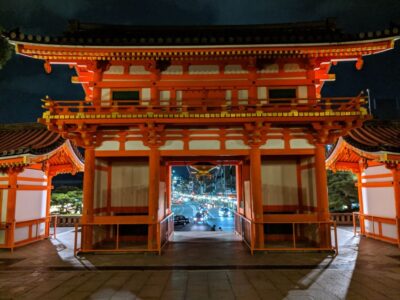
Best of Kyoto: Gion, Geisha, Pagodas & Cobblestones
Read our review →
Kyoto Night Foodie Tour in Gion (9+ dishes + 6 Sake tastings)
Read our review →
Kyoto Gion: 2-Hour Geisha Culture & History Walking Tour
Read our review →
Chopsticks Making Workshop in Gion with Engraving Option
Read our review →
Browse the lists this tour appears in