
Reviewed · GEISHA & GION DISTRICT TOURS
Kyoto: Gion World of the Geisha Guided Walking Tour
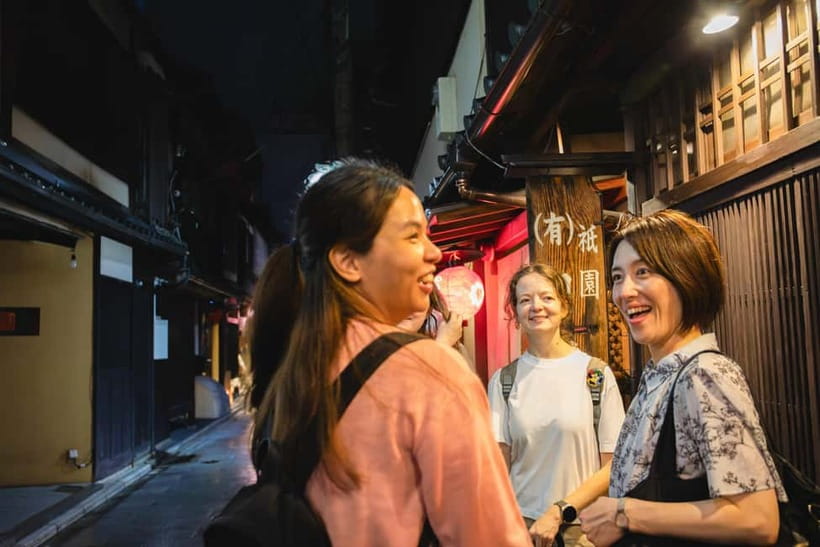
Gion is best understood on foot, and this tour takes you beyond the main shopping streets into the lanes where Kyoto’s geisha culture still has a daily presence. Your guide explains the difference between maiko, apprentice geisha, and geiko, Kyoto’s word for geisha, while pointing out shrines, old buildings, canals, and quiet corners you could easily miss alone.
I like the local storytelling and the chance to see two geisha districts in one walk. I also like the small-group option, which should make it easier to ask questions and hear the guide. The main drawback is that the walk is not suitable for wheelchair users or anyone who has trouble with stairs, and the tour runs rain or shine.
Key points to know before booking
- Two sides of Gion: The route covers two geisha districts, giving you more than the usual quick look at Hanamikoji Street.
- A guide-led cultural walk: You learn about maiko, geiko, the kagai system, and local customs through stories rather than a museum display.
- Strong guide feedback: Ito is singled out for clear, friendly guidance, while another recent review calls the guide the best they had encountered.
- Yasaka Shrine starts the walk: The shrine gives useful religious and cultural context before you enter Gion’s narrow streets.
- Shirakawa Canal adds atmosphere: The canal area brings traditional architecture, water, and quieter photo stops into the route.
- Good value at $29: For a two-hour walk, the price is modest, especially if you want context you would not get from a self-guided stroll.
Why Gion Makes More Sense With a Guide
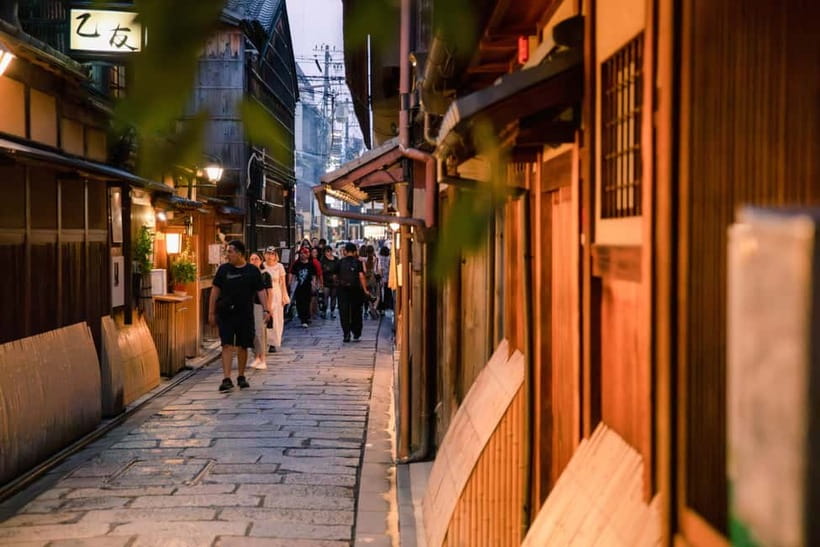
Gion can look simple at first: wooden facades, narrow lanes, lanterns, tea houses, and people taking photos. The difficulty is knowing what you are seeing and where you may walk. A guide gives the streets meaning and helps you approach this living neighborhood with some care.
This is not a performance staged for your group. The tour focuses on the district itself and on the people who have worked within Kyoto’s traditional entertainment quarters. You learn about maiko and geiko, the customs surrounding their work, and the history of the kagai, the traditional geisha district.
That context matters. Without it, a person in an elaborate kimono can seem like a photo opportunity. With a guide, you can understand the difference between a maiko and a geiko, why their clothing and makeup differ, and how their work fits into Kyoto’s older cultural life.
Your guide may also explain where you have a chance of seeing maiko in action. That is useful, but keep your expectations sensible. An encounter is possible, not promised, and the tour is more dependable as a cultural walk than as a guaranteed geisha sighting.
Other walking tours in Kyoto people book:
- Kyoto Geisha Walking Tour: Gion District & Hidden Gems
★ 4.7 · 3,273 reviews - Kyoto: Gion Magical Night Walking Tour with Geisha Trivia
★ 4.9 · 2,393 reviews - Kyoto: Gion Geisha District Walking Tour – Stories of Geisha
★ 4.7 · 2,187 reviews
Starting Beside Yasaka Shrine
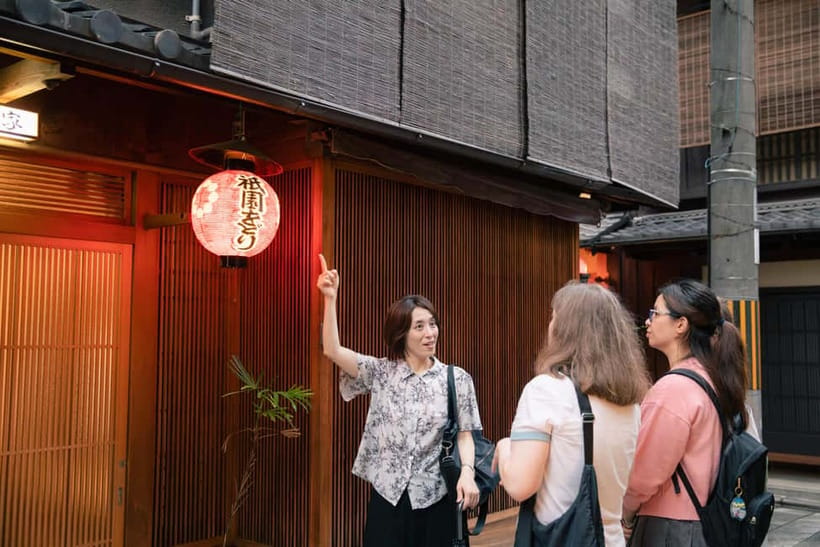
The exact meeting point depends on the option you choose. Starting locations include the Statue of Izumo-no-Okuni, the wargo Kyoto Kimono Rental Kyoto Gion Store, and the Kyoto Kanji Museum and Library.
The walk includes about 40 minutes at Yasaka Shrine. This is a smart opening stop because the shrine helps place Gion in its wider setting. You are not simply moving from one photogenic lane to another. You begin with a major religious site before hearing about the entertainment district beside it.
Your guide leads you through the shrine area and provides the background needed to understand Kyoto’s traditions. The stop is guided rather than a quick pass-by, so it gives you time to ask questions and get oriented.
If you book the kimono rental option, there is one extra step to plan for. After changing into your kimono, you must go to the Japan Kanji Museum and Library on your own, where the guide will meet you. Read that instruction carefully so you do not wait at the wrong place.
The kimono option can add visual fun to the walk, but it also changes the logistics. You need to allow time for changing clothes and walking to the museum. Comfortable shoes still matter, even under traditional clothing.
Walking Through Gion’s Traditional Streets
The main Gion portion lasts about 80 minutes. This is where the tour earns its price. Instead of only showing you the famous street fronts, the guide explains how the district works and points out details that are easy to pass without notice.
Expect picturesque alleys, traditional architecture, shrines, and quieter corners. The charm comes from the contrast between public streets and the more private atmosphere of the lanes. Your guide can help you understand which parts are appropriate for photographs and why respectful behavior matters in a working neighborhood.
The route includes two geisha districts in Gion. That gives you a broader picture than a single short walk along Hanamikoji Street. You get a sense of how the area is arranged and how the traditional quarters connect to the rest of Kyoto.
I would pay attention to the guide’s explanations more than trying to collect photographs. Gion changes quickly from a broad street to a narrow alley, and the best details may be small: an entrance, a sign, a building style, or a quiet passage. The route is designed to help you notice those details.
The district is also a place where you need to be considerate. Do not treat maiko or geiko as costumed characters placed in the street for visitors. If you happen to see one, listen to the guide and follow local etiquette. The cultural lesson is more valuable than a rushed photograph.
Shirakawa Canal and the Best Photo Moments
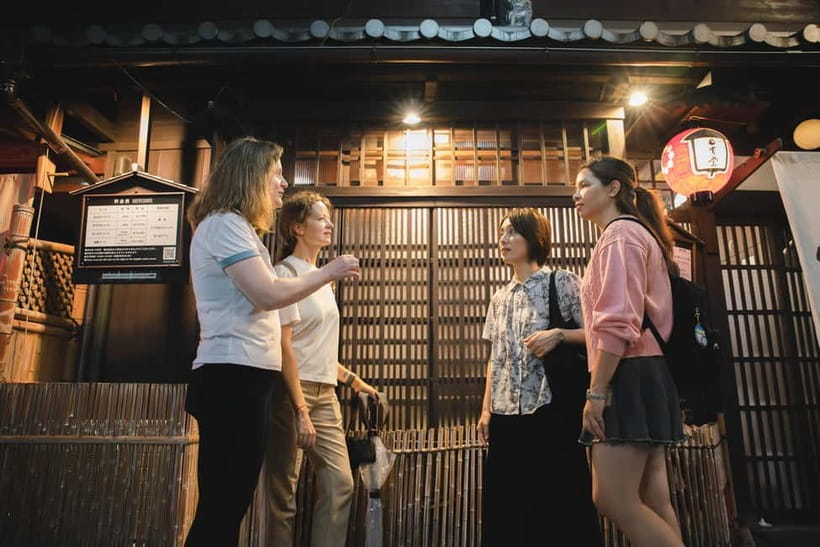
The tour includes a stop at Shirakawa Canal, one of the more atmospheric parts of the walk. Water, traditional buildings, and narrow streets create a different mood from the shrine grounds and busier approach roads.
There is sightseeing and a photo stop here, with roughly five minutes listed for one of the brief pauses. That is enough for a quick picture and a look around, but not a long, unhurried photography session.
The canal section is useful because it shows another side of Gion. You see why the district is so appealing without relying only on ornate costumes or staged cultural activities. The setting itself carries much of the atmosphere.
If photography matters to you, this is one of the places where you will want your camera ready. Still, the exact pace depends on the group, weather, and guide. The walk is built around explanation and movement, not a dedicated photo workshop.
Other evenings in the old entertainment quarters of Kyoto:
- Best of Kyoto: Gion, Geisha, Pagodas & Cobblestones
★ 4.9 · 2,058 reviews - Night Walk in Gion: Kyoto’s Geisha District
★ 4.5 · 2,003 reviews - Kyoto Night Foodie Tour in Gion (9+ dishes + 6 Sake tastings)
★ 5.0 · 1,762 reviews - Kyoto Gion Geisha District Walking Tour – The Stories of Geisha
★ 5.0 · 1,441 reviews
Gion Corner and the Meaning Behind the District
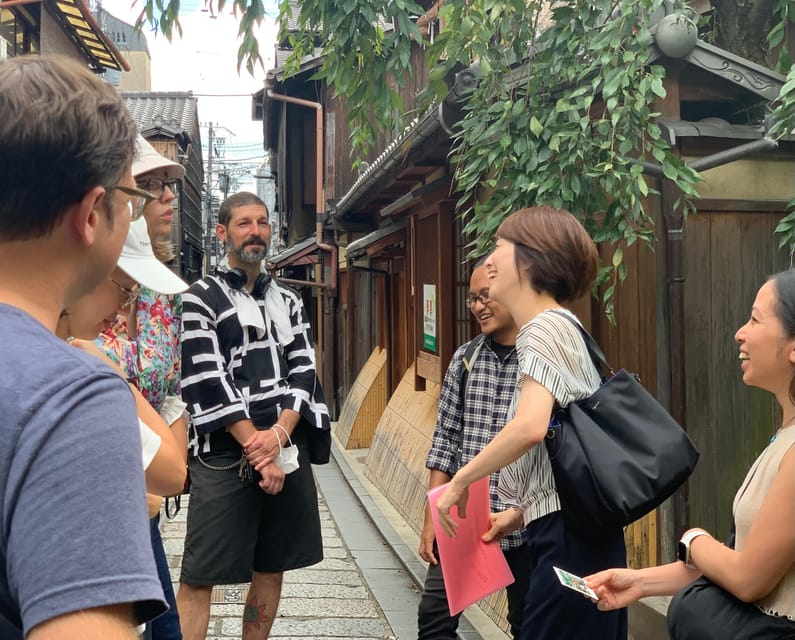
Gion Corner is another listed stop, with guided sightseeing in the area. The route also includes additional short guided and sightseeing sections, followed by drop-off near Gion Kōbu Kabur enjo, the Gion Kōbu Kaburenjō.
These locations help connect what you see on the street with the formal side of traditional performance. The tour does not present a full show as part of the price, so you should not book it expecting a stage performance. Instead, you receive an introduction to the cultural setting and practical advice about where maiko may be seen.
That distinction is important. At $29, this is an orientation walk, not a theater ticket or private geisha dinner. You pay for the guide’s time, the route, and the explanations that make the neighborhood easier to understand.
The end point near Gion Kōbu Kaburenjō is also useful for continuing your own sightseeing. The exact drop-off point varies among the available options, so check the selected version when booking.
What the Guide Adds to the Experience
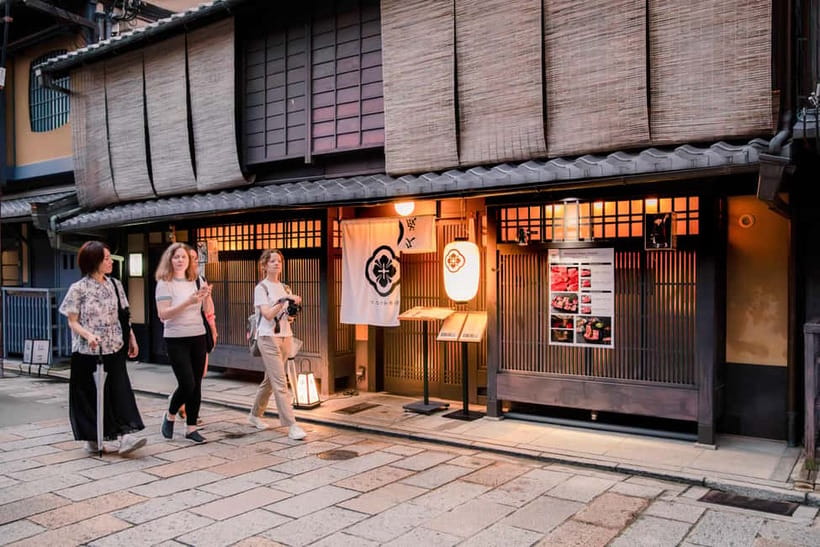
A local guide is the heart of this activity. The route itself is easy to walk without help, but the stories turn it into something more than a pleasant stroll.
The strongest feedback centers on the guide. Ito is described as friendly and very well informed about the Gion district, and another recent participant called the guide the best they had encountered. Those comments point to the feature I would value most here: a guide who can answer questions and explain local life clearly.
The tour is offered in English. That makes the details about maiko, geiko, and the kagai system accessible even if you know little about Japanese culture before arriving.
Small groups are available. Group size can affect a walking tour a lot. In a large crowd, it is harder to hear in a narrow lane and harder to ask about a particular building or custom. A smaller group should make the experience more personal, though the booking option should be checked because the exact group size is not specified.
How Long the Walk Takes
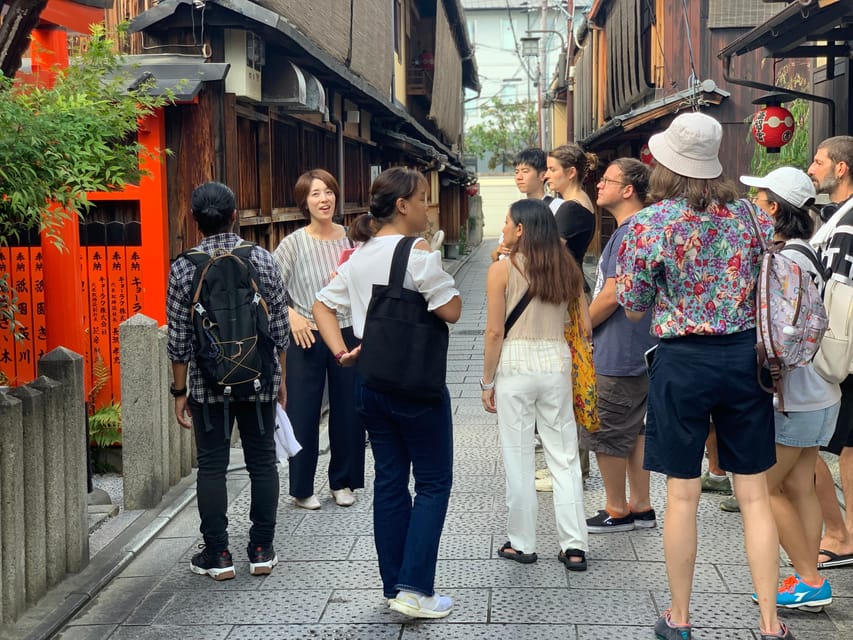
The advertised duration ranges from two hours to 270 minutes, or four and a half hours, depending on the option and starting arrangement. That is a wide range, so do not assume every version takes the same amount of time.
The core route is a two-hour experience with Yasaka Shrine, Gion, Shirakawa Canal, and Gion Corner. Some options may include extra time connected with the kimono rental arrangement or a different meeting point.
Check the start time and duration before paying. If you have an evening reservation, train departure, or another timed activity, leave a generous gap. Gion’s lanes are easy to walk but not always quick to cross, and a guided group moves at a shared pace.
The walk takes place in all weather. Bring suitable rain protection in wet conditions and wear comfortable walking shoes. This is not a good place for thin, slippery footwear, especially if you have difficulty going up and down stairs.
Is $29 Good Value in Kyoto?
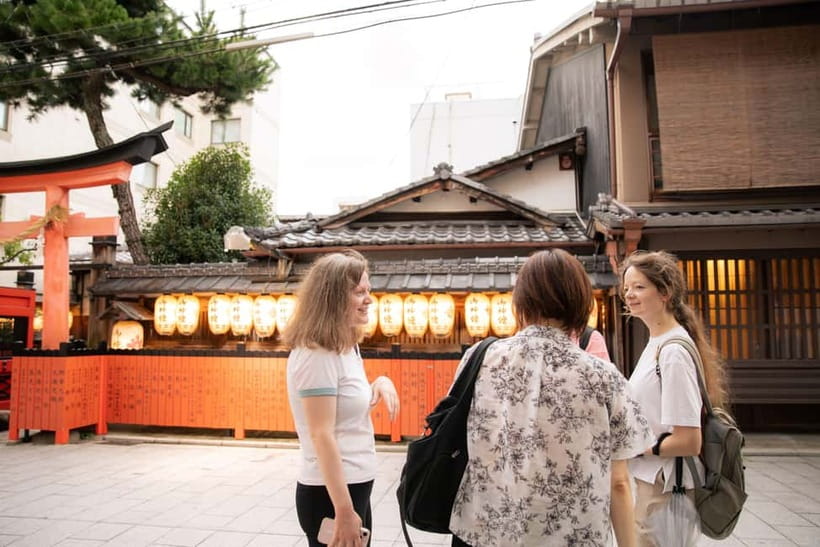
At $29 per person, this tour is fairly priced for a guided cultural walk in one of Kyoto’s most famous districts. You are not paying for entry to a major attraction or a meal. You are paying for a local guide, a planned route, and the cultural explanation that makes Gion easier to read.
The value is strongest if you are new to Kyoto or uneasy about exploring a geisha district on your own. A guide can explain what you are seeing in real time and help you avoid treating the neighborhood like a film set.
The price is less compelling if you already know Gion well or mainly want photographs. You can walk through the district without booking a tour, and the activity does not include a geisha performance, food, kimono rental in every option, or guaranteed encounters with maiko and geiko.
For most first-time visitors, the modest cost makes sense. You get a focused introduction rather than spending half a day wondering which lanes matter and what the signs mean.
Who Should Book This Gion Walk?
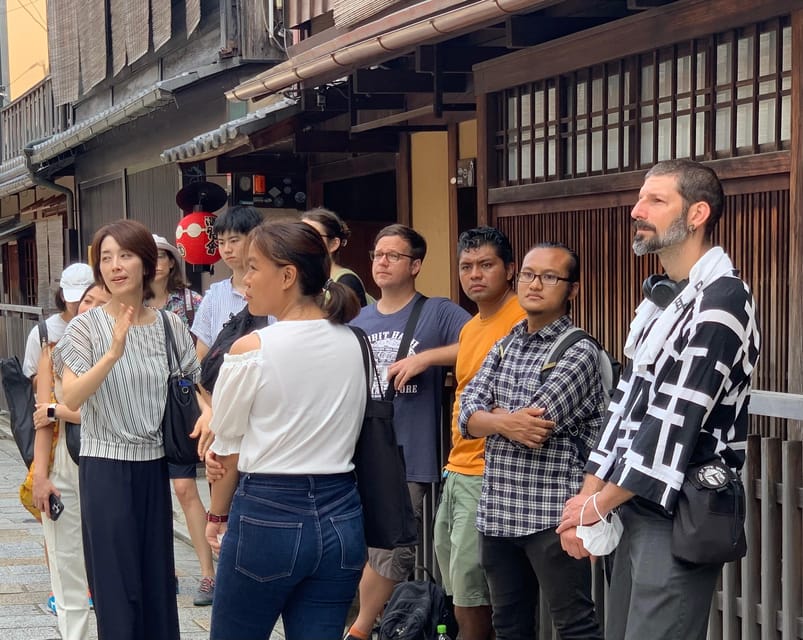
I would recommend this tour to first-time Kyoto visitors, people interested in traditional Japanese culture, and anyone who prefers a guide to explain local customs as they walk.
It also suits photographers who want to see Shirakawa Canal and the older streets, as long as they understand that the group sets the pace. The tour can work well early in a Kyoto stay because it gives you useful context for returning to Gion later.
Families can book it, but children must be accompanied by an adult. The walk is not suitable for wheelchair users or people with mobility impairments, especially anyone who cannot manage stairs.
I would be more cautious about booking it if you need a fully accessible route, want a guaranteed maiko sighting, or expect a formal geisha show. Those are not what this experience promises.
Practical Details Before You Go
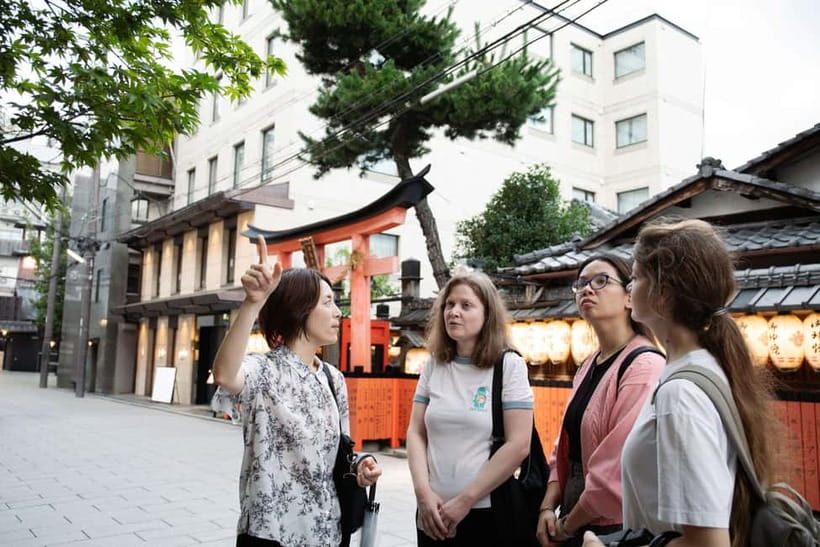
Meeting points vary by the option selected. Read the booking details carefully, especially if you choose the kimono rental version. That option requires you to go to the Japan Kanji Museum and Library after changing clothes, where the guide will be waiting.
Wear comfortable shoes and plan for weather. The activity runs rain or shine, so a wet forecast does not automatically cancel the walk.
You can cancel up to 24 hours before the start for a full refund, and the reserve-now, pay-later option keeps you from paying immediately. Those policies make it easier to fit the tour into a changing Kyoto schedule.
The activity is in English, and small-group availability is offered. The exact meeting and drop-off locations depend on the option you select.
Should You Book the Gion World of the Geisha Tour?
Book it if you want Gion explained by a local guide rather than simply photographed. The route covers Yasaka Shrine, two geisha districts, Shirakawa Canal, and Gion Corner, while the strongest guide feedback points to clear and engaging explanations, especially from Ito.
Skip it if you need step-free access, want a guaranteed encounter with maiko or geiko, or are looking for an evening performance. For $29, though, this is a sensible way to get your bearings and learn how to look at Gion with more respect and understanding.
FAQ
Where does the Gion walking tour start?
The meeting point depends on the option booked. Possible starting locations include the Statue of Izumo-no-Okuni, the wargo Kyoto Gion Kimono Rental Store, and the Kyoto Kanji Museum and Library.
How long does the tour last?
The available durations range from two hours to 270 minutes. Check the available start times and selected option before booking.
What language is the tour offered in?
The live tour guide speaks English.
Does the tour include Yasaka Shrine?
Yes. The itinerary includes a guided visit to Yasaka Shrine lasting about 40 minutes.
Does the tour visit more than one geisha district?
Yes. The walk covers two geisha districts in Gion.
Will I definitely see a maiko or geiko?
No. You might encounter one during the walk, but sightings are not guaranteed. The guide also shares tips on where you may see maiko in action.
Is a kimono included?
A kimono rental option is available, but it is not part of every version of the tour. If you select that option, you change into the kimono and then go to the Japan Kanji Museum and Library on your own.
Is the tour suitable for wheelchair users?
No. The activity is not suitable for wheelchair users or people with mobility impairments, including those who have trouble using stairs.
What should I wear?
Wear comfortable walking shoes. The walk takes place outdoors and continues in rainy weather.
Can I cancel for a full refund?
Yes. You can cancel up to 24 hours before the activity for a full refund. A reserve-now, pay-later option is also available.
More walking tours elsewhere in Japan
- Nishiki Market Brunch Walking Tour (7 Tastings + Brunch)
★ 5.0 · 1,355 reviews - Kyoto Arashiyama Walking Tour: Bamboo, Monkeys, Gardens & Secrets
★ 5.0 · 1,216 reviews - Kyoto Gion: 2-Hour Geisha Culture & History Walking Tour
★ 5.0 · 1,186 reviews - Kyoto: Izakaya Bars Guided Walking Tour
★ 4.9 · 815 reviews
Just added in Kyoto
- Kyoto: Zen Meditation at a Private Temple with a Monk★ 5.0 · 25 reviews
- Private Cooking Class Udon in Kyoto Japan★ 5.0 · 23 reviews
- Your Private Vacation Photography Session In Kyoto★ 5.0 · 110 reviews
- Private Pewter Sake Cup Experience with a Kyoto Artisan★ 5.0 · 31 reviews
- Kyoto Wagashi(Japanese sweets) Cooking Class near Fushimiinari★ 5.0 · 60 reviews
- Kyoto:Family-Friendly Kimono & Yukata Experience at WARGO★ 5.0 · 147 reviews
- Private Guided Traditional Buddhist Cooking in Japan★ 5.0 · 16 reviews
- Kyoto: Gion Geisha District & Sake-in-Hand Walking Tour★ 5.0 · 37 reviews
Geisha & Gion District Tours, compared.

Kyoto Geisha Walking Tour: Gion District & Hidden Gems
Read our review →
Gion Geisha District Walking Tour – Stories of Geisha
Read our review →
Best of Kyoto: Gion, Geisha, Pagodas & Cobblestones
Read our review →

Kyoto Night Foodie Tour in Gion (9+ dishes + 6 Sake tastings)
Read our review →
Kyoto Gion: 2-Hour Geisha Culture & History Walking Tour
Read our review →
Chopsticks Making Workshop in Gion with Engraving Option
Read our review →
Browse the lists this tour appears in