
Reviewed · CALLIGRAPHY & CRAFT WORKSHOPS
Kyoto: Make Your Own “Daruma” Craft & Painting Workshop
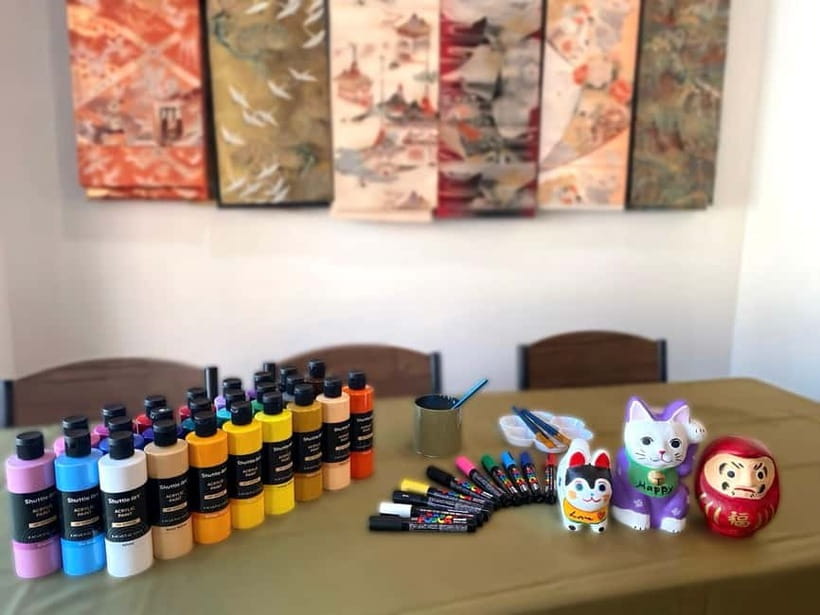
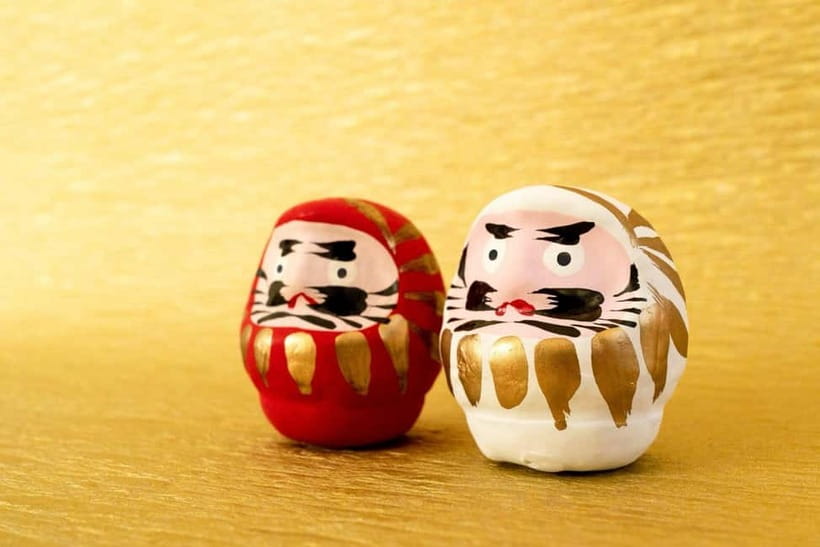
Kyoto is full of temples, shrines, gardens, and polished souvenirs. This workshop gives you something different: a quiet table, a blank papier-mâché figure, and time to make a keepsake with your own hands. You can paint a Daruma, lucky cat, dog, or Kitsune fox, with local craftswoman May offering help when you want it and space when you do not.
I like two things right away. First, the four-person limit keeps the session personal. Second, the $25 price includes every material, a drink, and a traditional Japanese confectionery, so you are paying for an activity as well as a souvenir. The main thing to consider is that the paint is acrylic, so you will need to protect your finished piece if you are walking through rain afterward.
Key points at a glance
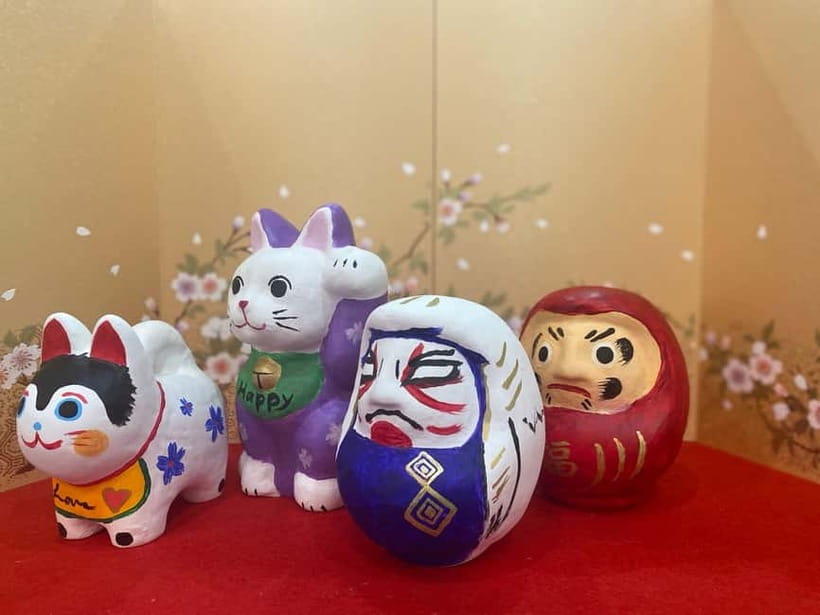
- Choose your own figure: Paint a Daruma, beckoning cat, dog, or Kitsune fox in a style that suits you.
- A genuinely small group: With no more than four participants, May can offer personal help without taking over your design.
- Tea and a Japanese sweet included: The complimentary drink and confectionery turn the craft session into a pleasant cultural break.
- Good for all ages: No artistic background is needed, and the activity works for children, adults, couples, families, and solo visitors.
- A useful rainy-day plan: The two-hour indoor session offers a calm change from temple hopping when Kyoto weather turns wet.
- Close to traditional sights: You can pair the workshop with Kyoto’s nearby temples and shrines before or after your painting time.
Why this Kyoto craft workshop feels different
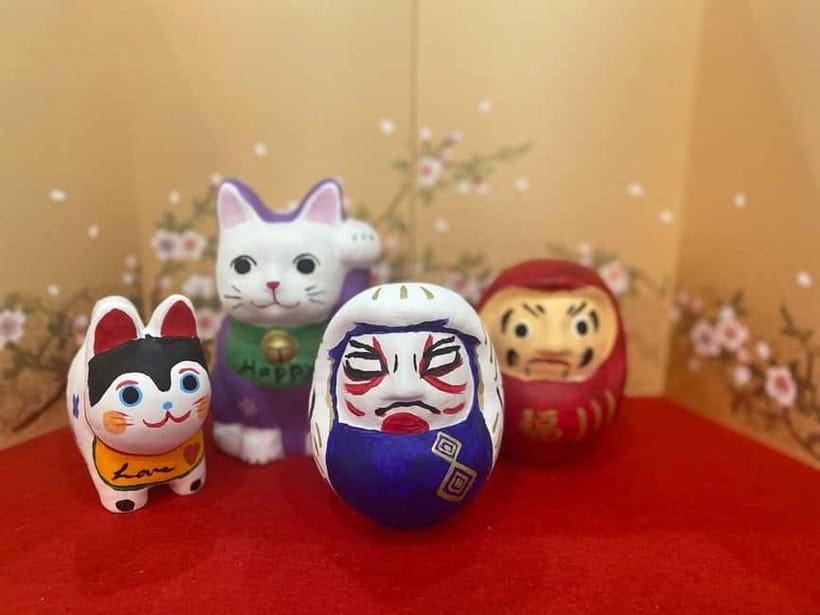
Many Kyoto activities ask you to watch, listen, or follow a set demonstration. Here, you spend most of the time making something. That small shift matters. You are not simply buying a Daruma from a shop. You are deciding its colors, expression, patterns, and personality.
The workshop takes place in a newly renovated boutique craft shop. It is also the working space of May, an artist and craftsperson who makes other handmade items, including silk kimono pieces, bags, and lacquer goods. You may find these available to browse or buy, but the main booking is the papier-mâché workshop.
The atmosphere is designed to be gentle rather than hurried. May can explain the meaning behind the figures, suggest ways to approach the design, and answer questions about Japanese customs. At the same time, you are free to work in your own style. That balance is important. A craft class can become stressful if an instructor expects everyone to copy a model. This one is better suited to people who want guidance without pressure.
The session is conducted in English. That makes it easier to ask about Daruma symbolism, the lucky cat’s raised paw, or the meaning behind the fox shape as you paint.
Other things to make with your hands in Kyoto:
- Kyoto : Chopsticks Making Workshop in Gion with Engraving Option
★ 5.0 · 958 reviews - Authentic knife making experience at a blacksmith in Kyoto
★ 4.8 · 350 reviews - Kyoto: Calligraphy class at Buddhist temple in city center
★ 5.0 · 167 reviews
Choosing between a Daruma, cat, dog, and fox
Your first creative decision is the figure itself. Each shape gives your souvenir a different character.
The Daruma is the most immediately recognizable choice. It is traditionally linked with determination and goals, which makes it a meaningful object to create at the start or end of a trip. You can keep the design simple or cover the rounded form with bold colors and patterns.
A beckoning cat, often called a lucky cat, gives you a more playful option. Its familiar shape works well for children and for anyone who wants a cheerful ornament for a shelf or desk. The dog shape has a softer, friendlier feel, while the Kitsune fox connects your craft to another familiar part of Japanese folklore.
You do not need to arrive with a polished design. That would defeat the point. The useful part of the workshop is deciding as you go. You can begin with a basic color scheme, then add details once the main paint is in place.
If you are bringing children, the range of shapes helps. A young child may prefer a cat or dog, while an adult might choose the Daruma for its symbolism. Couples can pick different figures and compare their finished creations without producing identical souvenirs.
The two-hour session, step by step
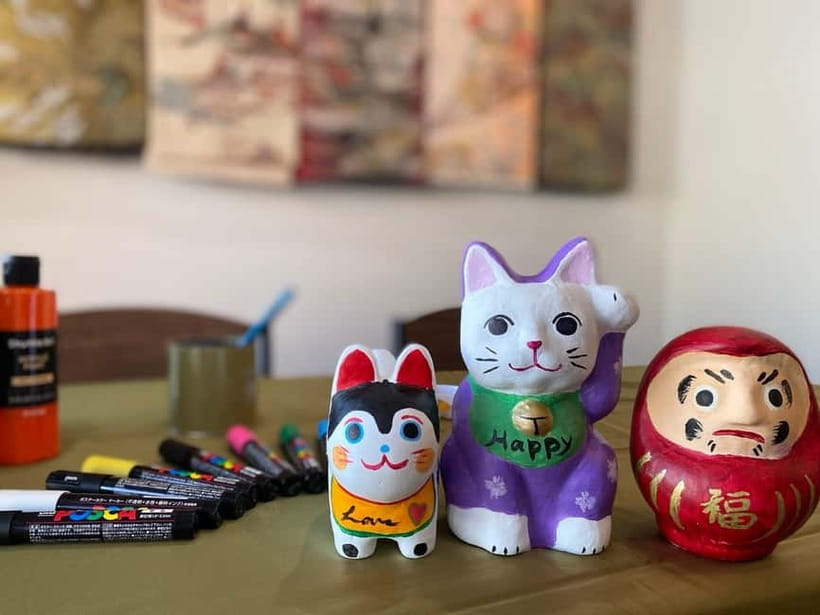
Arriving at the small Kyoto workshop
The meeting point is the workshop itself. You simply enter when you arrive, and your host will be waiting to greet you. The setting is central to the experience, since you are working inside a craft shop rather than a large activity studio.
That boutique setting gives the session a more personal feel, though it also means you should not expect a big classroom with rows of tables. The group is limited to four people. If all four places are filled, you will still have individual support, but the mood may be a little less private than a session for two.
The first moments are a chance to settle in, look at the available figures, and ask questions. If you are visiting Kyoto at a fast pace, this pause is welcome. It is a chance to stop checking the next temple on your schedule.
Same base, a different sort of day:
- PERFECT KYOTO 1-Day Bus Tour
★ 5.0 · 13,518 reviews - Kyoto: Fushimi Inari, Kinkakuji, Bamboo Grove 1 Day Bus Tour
★ 4.8 · 4,316 reviews - Kyoto: Tea Ceremony in a Traditional Tea House in Kiyomizu
★ 4.9 · 3,519 reviews - Kyoto Geisha Walking Tour: Gion District & Hidden Gems
★ 4.7 · 3,273 reviews
Learning the meaning behind the shapes
Before or during the painting, May explains the symbolism connected with the traditional forms. The amount of instruction can suit your interest. You can ask more questions about Japanese traditions, or keep the conversation light and focus on the design.
This cultural context adds value to the souvenir. A painted object is more memorable when you know why the form matters. You are not expected to study a long lecture, and there is no prior knowledge requirement.
The small group helps here. With only a few people, the host can respond to different interests. A family may want a simple explanation for children, while a couple or solo visitor may enjoy learning more about the figure’s place in Japanese culture.
Painting your chosen papier-mâché figure
The hands-on portion makes up the heart of the activity. All needed materials are supplied, and you work on a papier-mâché figurine. You choose the colors and details, then build the design at your own pace.
May’s approach is encouraging rather than forceful. You can ask for suggestions when you need them, but you are not expected to copy her work. That is a good fit if you are not confident with paint. It is also useful if you are already artistic and want room to make something personal.
Do not compare your finished figure with anyone else’s. The pleasure here comes from making a slightly uneven, very personal object. A small mistake becomes part of the story of your Kyoto visit.
The activity is suitable for all ages and skill levels. That does not mean every child will have the same patience for two hours of painting, of course, but the format allows adults and children to work side by side. Families can treat it as a shared project rather than splitting up for separate activities.
Taking a break for tea and sweets
Each person receives a complimentary drink and a traditional Japanese confectionery of their choice. Several people especially enjoyed the tea and snack as part of the calm mood, and one account specifically mentions matcha and a cookie.
This is a modest inclusion, not a full meal. Think of it as a pleasant pause while your paint dries or while you decide what to add next. It also gives the session a social side. You can chat with May about the craft, the local area, or other Japanese traditions without feeling as if you are on a formal lecture tour.
If you are planning this around lunch, keep the scale of the refreshment in mind. The drink and sweet are a bonus, not a substitute for a meal.
Finishing the details and taking it home
The workshop lasts two hours, which gives you time to work without racing through the final details. A careful painter may use the full session, while someone with a simple design may finish sooner.
The finished piece is your souvenir. That is the strongest reason to choose this activity over another purchased trinket. You will remember the colors you chose, the small decisions you made, and the quiet time spent in the shop.
One practical warning matters. The paint is acrylic, and wet weather can damage an unfinished or poorly protected creation. If rain is in the forecast, bring a way to wrap your piece or ask the host how best to carry it. Do not plan to leave the shop and immediately expose it to heavy rain.
What the $25 price really gives you
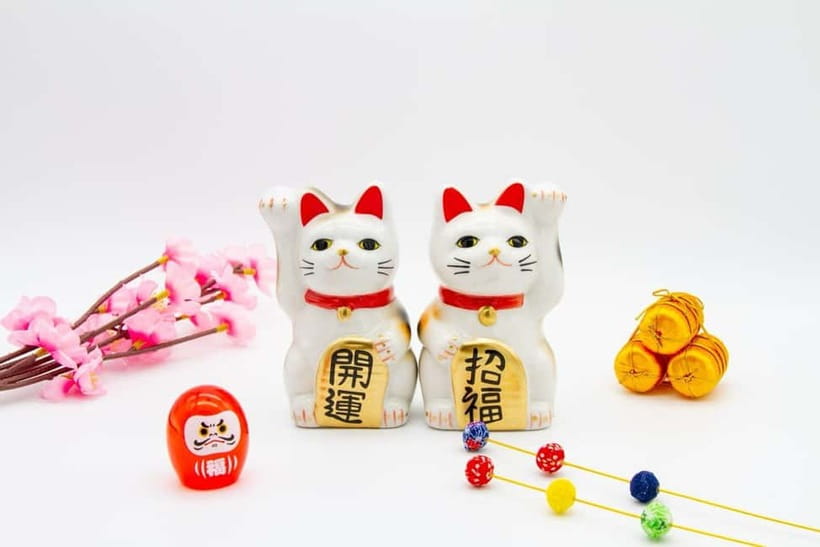
At $25 per person, this is a fairly easy activity to fit into a Kyoto itinerary. The fee includes the figure, craft materials, instruction from a local craft master, a drink, and a traditional sweet.
The value is not just the raw materials. You are also paying for two hours of calm time in a small setting, with someone who can explain the symbols and help you when needed. A mass-produced souvenir may cost less, but it will not carry the same memory of making it.
The price makes the workshop especially sensible for couples and families. Four people can attend together, and each person produces a separate object. If you are watching your budget, the included refreshment and lack of extra material fees make the total cost easier to judge from the start.
There is one limit to the value. If you are not interested in crafts, painting, or souvenirs, two hours may feel long. You should book this because you want a creative break, not because you feel obliged to fill a spare afternoon.
Pairing the workshop with Kyoto sightseeing
The workshop is in the heart of Kyoto and is surrounded by historically significant temples and shrines. The activity itself does not include a guided temple visit, entrance tickets, or transport, so plan those separately.
I would place it between sightseeing stops rather than treat it as a full-day tour. A morning at temples can leave you ready for a chair, a drink, and a quiet indoor activity. On a rainy day, the workshop becomes even more useful. You can still have a cultural day without spending every hour under an umbrella.
The location also gives you a chance to combine two sides of Kyoto. Nearby religious sites show the city’s formal traditions, while the craft shop gives you a smaller, hands-on connection with Japanese design. Keep enough time around the booking for getting to and from the workshop, since the supplied details do not specify a travel time from individual temples or stations.
Who will enjoy this most
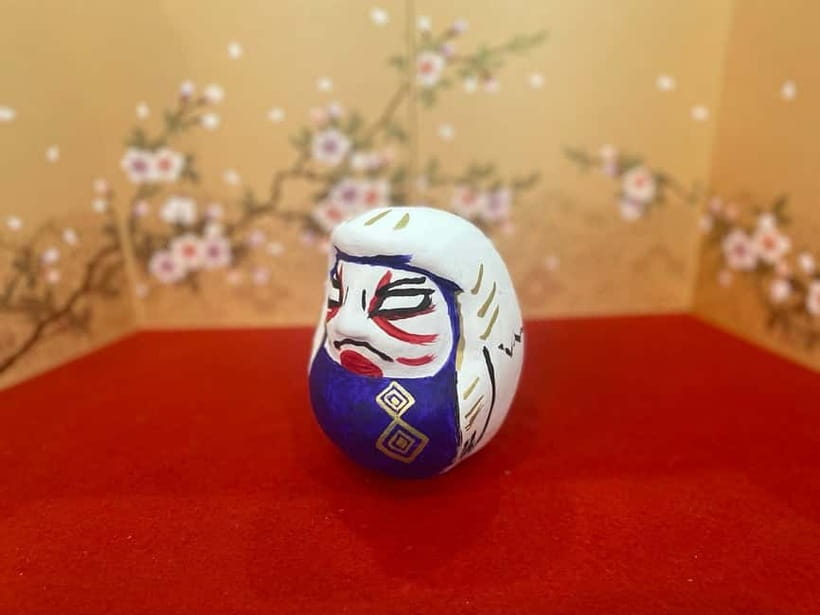
I would recommend this to:
- Families looking for an indoor Kyoto activity that works across age groups
- Couples who want a shared souvenir rather than another purchased gift
- Solo visitors who enjoy creative work and conversation
- First-time visitors who want a simple introduction to Daruma and related symbols
- Anyone needing a relaxed plan for a rainy afternoon
- People who prefer small businesses and handmade goods to large commercial attractions
It is less suitable if you want a tightly scheduled sightseeing tour, a detailed art lesson, or a food-focused experience. The teaching is supportive, but the goal is personal expression rather than professional technique.
The workshop is wheelchair accessible, which makes it a practical option for visitors who need an accessible indoor activity. The group size is capped at four, and the session is offered in English.
A few practical tips before you book
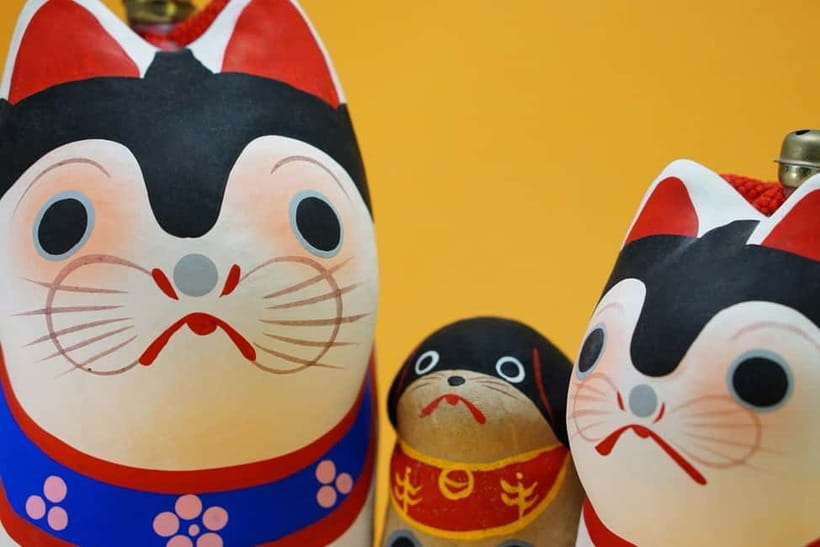
Reserve enough time to finish without rushing. Two hours is the stated duration, but a detailed design can take most of that period.
Wear or bring clothing you do not mind getting paint on. The supplied information does not describe protective clothing, so a little care is sensible.
Think about your figure before arrival, but do not overplan the design. A simple idea gives you a starting point while leaving room for May’s suggestions and your own changes.
If you are visiting with a child, consider choosing a less complicated pattern. The activity is suitable for children, but a design with many tiny details may become tiring.
The booking offers free cancellation up to 24 hours before the start time, and you can reserve now and pay later. That flexibility is useful in Kyoto, where weather and sightseeing plans can change quickly.
Should you book the Daruma painting workshop?
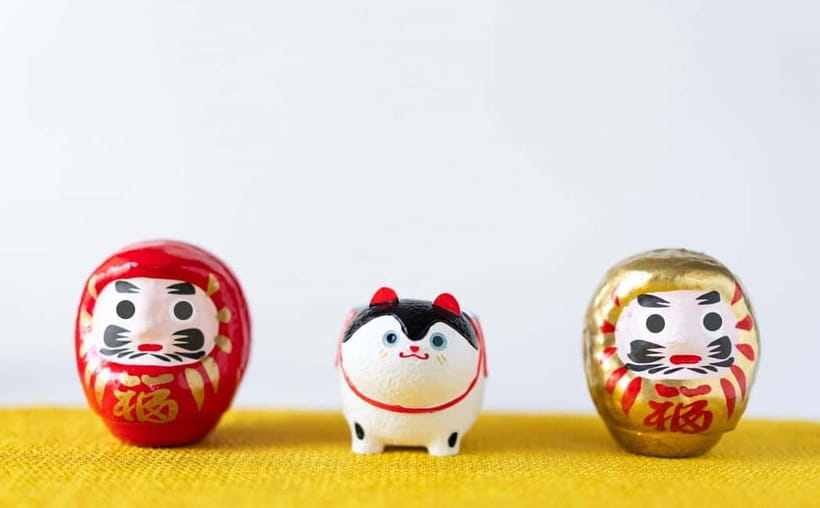
Book it if you want two quiet hours of hands-on culture, a small group, and a souvenir you actually made. May’s friendly, patient style suits beginners, families, and people who like to work without someone hovering over them.
The best reasons to go are the personal scale, the freedom to create your own design, and the chance to learn about the figures while enjoying tea and a Japanese sweet. At $25, it offers solid value for a two-hour indoor activity with materials included.
Skip it if your Kyoto schedule is packed with major sights and you would resent giving up two hours of temple time. Otherwise, this is a smart change of pace, especially on a rainy day. Just protect your acrylic-painted creation before heading back outside.
FAQ
How long does the Kyoto Daruma painting workshop last?
The workshop lasts two hours.
How much does the workshop cost?
The price is $25 per person.
What can I paint?
You can paint a papier-mâché Daruma, beckoning cat, dog, or Kitsune fox figurine.
Are materials included?
Yes. All materials needed for the papier-mâché workshop are included.
Is a drink included?
Yes. Each person receives a complimentary drink.
Is traditional Japanese confectionery included?
Yes. Each person can choose a traditional Japanese confectionery.
Is the workshop taught in English?
Yes. The instructor language is English.
How many people can join the group?
The group is limited to four participants.
Do I need painting experience?
No. No prior experience or artistic skill is required.
Is the workshop wheelchair accessible?
Yes. The activity is wheelchair accessible.
Can children take part?
Yes. The workshop is suitable for all ages, including adults and children.
What is the cancellation policy?
You can cancel up to 24 hours in advance for a full refund.
Can I reserve now and pay later?
Yes. You can reserve your place and pay later, which keeps your plans flexible.
Just added in Kyoto
- Private Cooking Class Udon in Kyoto Japan★ 5.0 · 23 reviews
- Your Private Vacation Photography Session In Kyoto★ 5.0 · 110 reviews
- Kyoto: Zen Meditation at a Private Temple with a Monk★ 5.0 · 25 reviews
- Private Pewter Sake Cup Experience with a Kyoto Artisan★ 5.0 · 31 reviews
- Kyoto Wagashi(Japanese sweets) Cooking Class near Fushimiinari★ 5.0 · 60 reviews
- Kyoto:Family-Friendly Kimono & Yukata Experience at WARGO★ 5.0 · 147 reviews
- Private Guided Traditional Buddhist Cooking in Japan★ 5.0 · 16 reviews
- Kyoto: Gion Geisha District & Sake-in-Hand Walking Tour★ 5.0 · 37 reviews
Calligraphy & Craft Workshops, compared.
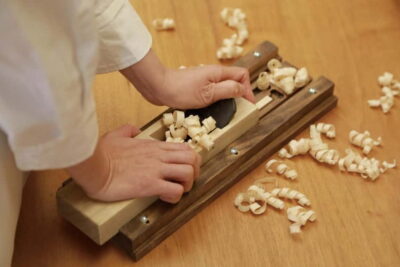
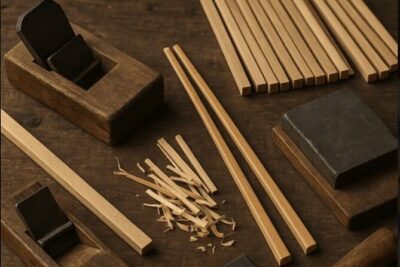
Chopsticks Making Workshop in Gion with Engraving Option
Read our review →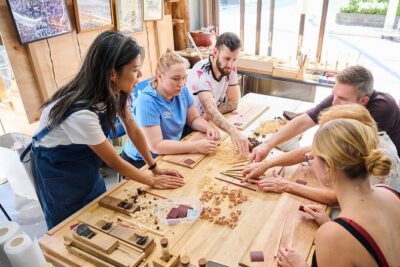

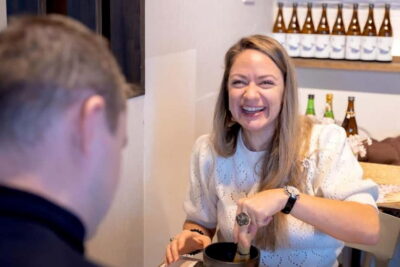
Matcha Making Experience with Mochi Sweets in Asakusa
Read our review →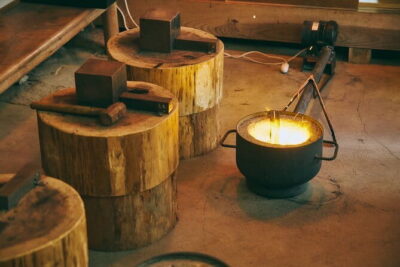
Authentic knife making experience at a blacksmith in Kyoto
Read our review →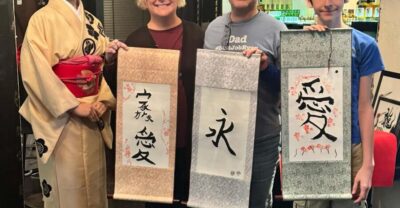
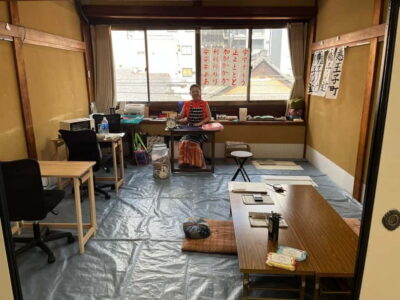
Calligraphy class at Buddhist temple in city center
Read our review →Browse the lists this tour appears in