
Reviewed · GEISHA & GION DISTRICT TOURS
Kyoto night walk tour (Gion district)
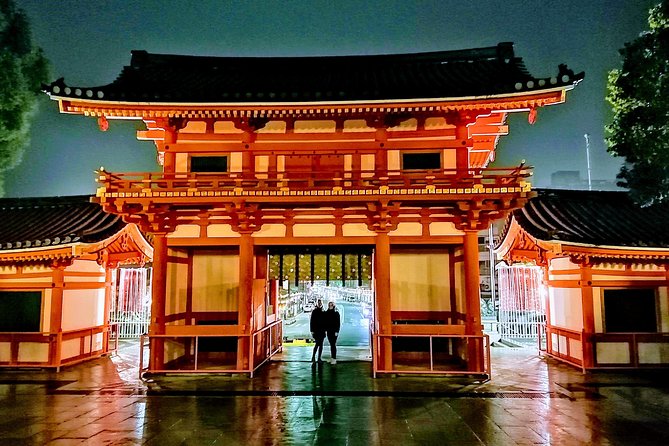
Gion changes character after dark. Lanterns glow along narrow lanes, the stone walls call for quiet, and Yasakanoto Pagoda makes a striking backdrop for photographs. This private 90-minute walk begins outside Minamiza Kabuki Theatre and moves through the traditional Gion and Yasaka districts with guide Hiro, also known as Hero in some tour details.
I like two things here: the personal guiding and the photographs. Hiro explains customs, history, food, and local sights in clear English, then often takes pictures of you along the way. The walk also reaches side streets and viewpoints that can be easy to miss when you explore alone.
The main consideration is pace. You cover several sights in about an hour and a half, and the route includes slopes and plenty of walking. Kiyomizu-dera admission is not included, and its nighttime illumination depends on the season.
Key points at a glance
- Meet at Minamiza Kabuki Theatre: The tour starts at 194 Kawabatacho, in front of the Minamiza Kabuki theatre, a central and easy-to-find location in Gion.
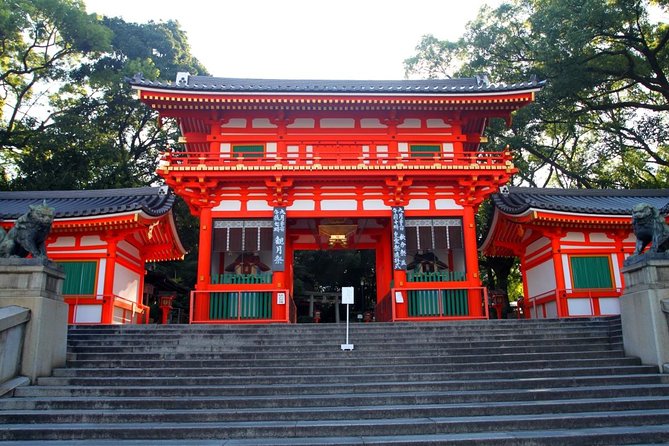
- Visit Yasaka Shrine: You receive a short introduction to the shrine’s history and local significance. Admission is free.
- Walk quietly through the stone-wall district: This part is intentionally low-key, since the area requires silence and respectful behavior.
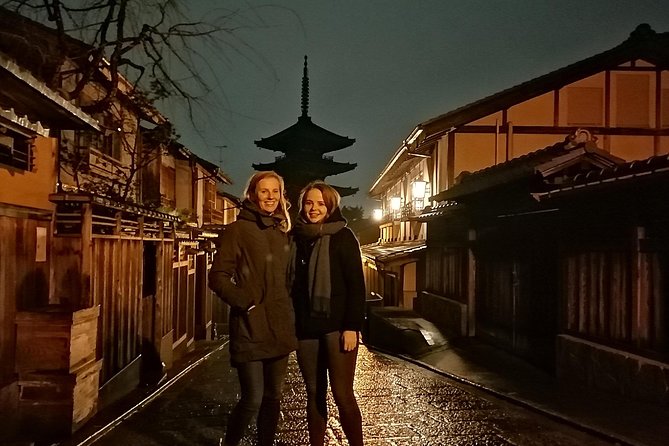
- Photograph Yasakanoto Pagoda: Hiro explains the pagoda’s background and stops for pictures in front of it.
- Private experience for your group: You do not share the walk with strangers, which makes it easier to ask questions or adjust the pace.
- Restaurant help after the walk: Hiro has suggested ramen, barbecue, gyoza, and Kobe beef restaurants to past clients, and some groups have been helped toward dinner afterward.
Starting outside Minamiza Kabuki Theatre
Your evening begins outside Minamiza Kabuki Theatre at 194 Kawabatacho in Kyoto’s Higashiyama Ward. This puts you right beside the southern end of the Gion area, near public transportation and the busy streets along the Kamo River.
Meeting at a theater is useful because it gives you a clear landmark rather than an anonymous street corner. Still, allow a little extra time to find the exact meeting spot. The tour ends back at the same meeting point, so you are not left trying to work out a new route at the end of the night.
The walk is sold with a mobile ticket, and confirmation is sent within 48 hours, subject to availability. Since the activity is commonly booked well ahead, an average of about 32 days, I would arrange it early if you have fixed Kyoto dates.
This is a private tour. That matters more than it might sound. A private guide can answer your questions, slow down for family photographs, or shorten the outing if you are tired. One group even arranged a quicker version after arriving worn out from a long day, while still seeing the main sights and receiving photographs.
Other evenings in the old entertainment quarters of Kyoto:
- Kyoto Geisha Walking Tour: Gion District & Hidden Gems
★ 4.7 · 3,273 reviews - Kyoto: Gion Magical Night Walking Tour with Geisha Trivia
★ 4.9 · 2,393 reviews - Kyoto: Gion Geisha District Walking Tour – Stories of Geisha
★ 4.7 · 2,187 reviews
Yasaka Shrine after sunset
The first main stop is Yasaka Shrine, about 15 minutes. Hiro introduces its history using local knowledge rather than simply pointing out the gates and sending you on.
Yasaka Shrine is a useful first stop because it gives you a cultural frame for the rest of the evening. You are not only looking at old streets and attractive buildings. You begin to understand how shrine space, neighborhood customs, and Kyoto’s traditional districts fit together.
The shrine visit is free, which helps keep the $35 price reasonable. It also means the tour can focus on atmosphere and explanation rather than rushing through a paid attraction.
Do not expect a long formal lecture here. The entire tour lasts about 90 minutes, so the introduction is compact. That is a strength if you want a relaxed orientation on your first night in Kyoto. It is less suitable if you want a detailed academic treatment of shrine architecture or religious practice.
Quiet streets and the stone-wall district
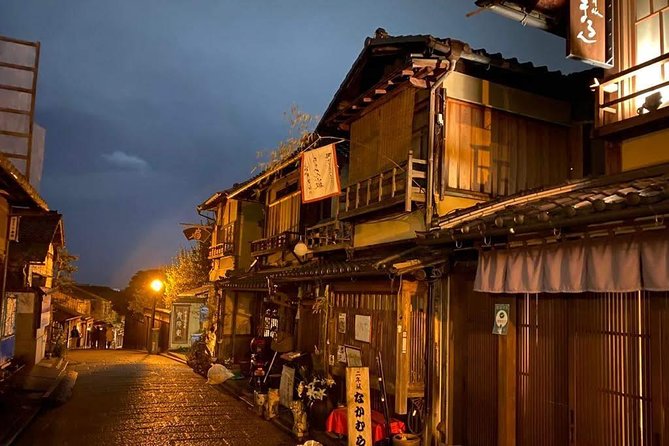
From Yasaka Shrine, the walk moves through the traditional lanes of Gion and the surrounding Yasaka area. One section is described as the stone-wall district, where the guide keeps explanations brief because visitors are expected to remain quiet.
That silence is part of the experience. You are asked to look closely rather than treat the area as a stage set. The atmosphere depends on respectful behavior, low voices, and careful photography. If you are hoping for nonstop commentary, this section may feel unusually quiet. If you want a calmer view of Kyoto, it is one of the more appealing parts of the route.
You may also pass through narrow side streets and less obvious corners of the district. The exact path can vary, but the purpose is clear: to show you the traditional character around Gion rather than only the most famous road.
This is where a local guide adds practical value. Kyoto’s older districts can look simple at first glance, with walls, lanes, and wooden buildings repeating from one block to the next. Hiro helps you notice what you might otherwise walk past, while also reminding you when to lower your voice and give the neighborhood space.
Yasakanoto Pagoda and the best photo stop
The next named stop is Yasakanoto, also called Yasaka Pagoda. The stop lasts about 20 minutes and includes an explanation of the pagoda’s history, followed by time for photographs.
The pagoda is one of the most recognizable sights in this part of Kyoto. Its height gives you a strong visual anchor in an area made up largely of lanes and low buildings. At night, it can be especially photogenic, although the final effect depends on the lighting and weather.
Photography is one of the strongest reasons to choose this walk. Several past groups received family pictures, couple portraits, and solo photographs taken by Hiro. That is a real benefit when you are traveling alone or when everyone in your party wants to appear in the picture. It also saves you from handing your phone to a stranger in a dark street.
Hiro’s photo service should be understood as a thoughtful extra, not a formal professional photo session. The tour’s main purpose remains walking and local explanation. Still, the repeated attention to photographs makes this a good pick for birthdays, anniversaries, family trips, or anyone who wants more than self-timer shots.
The pagoda stop is free, according to the tour details. You are viewing it from outside rather than taking part in a paid interior visit, so your time goes toward the setting, the story, and the pictures.
Same base, a different sort of day:
- PERFECT KYOTO 1-Day Bus Tour
★ 5.0 · 13,518 reviews - Kyoto: Fushimi Inari, Kinkakuji, Bamboo Grove 1 Day Bus Tour
★ 4.8 · 4,316 reviews - Kyoto: Tea Ceremony in a Traditional Tea House in Kiyomizu
★ 4.9 · 3,519 reviews - Kyoto: Tea Ceremony Ju-An at Jotokuji Temple
★ 4.9 · 3,207 reviews
Walking the famous slope toward Kiyomizu-dera
After Yasakanoto, the route follows a well-known slope in the Yasaka area. Sloped streets are part of what gives this section its old-Kyoto feel, but they also make comfortable shoes important.
The walk is not described as strenuous, yet it is a real walking tour. You cover several districts and stops in 90 minutes, with hills and uneven urban surfaces possible along the way. Wear shoes you can comfortably use for an evening out, especially if you have already spent the day sightseeing.
The slope also gives the route a natural rhythm. You move from shrine grounds into quieter lanes, then toward the pagoda and uphill streets near Kiyomizu-dera. Rather than staying in one compact square, the tour shows how these famous sights connect.
Because the time is limited, you should not expect to explore every lane or spend long periods at each landmark. The benefit is orientation. You finish with a better sense of how Gion, Yasaka, Yasakanoto, and Kiyomizu-dera relate to one another.
Kiyomizu-dera and seasonal illumination
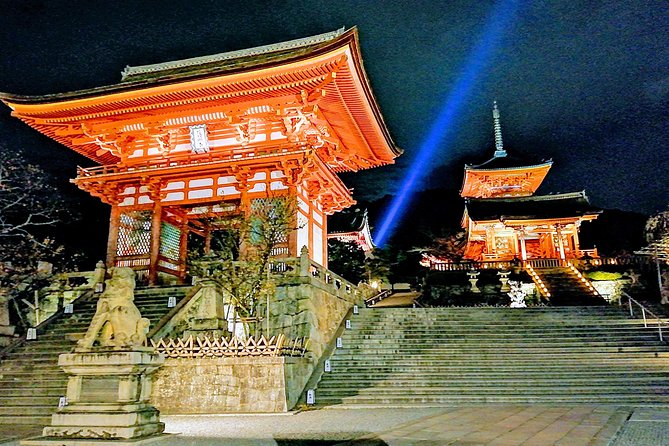
The final listed stop is Kiyomizu-dera Temple, with about 10 minutes set aside. The temple may be lit at night depending on the season.
This is an important limitation to understand before booking. The temple is part of the route, but nighttime lighting is not guaranteed year-round. The experience may therefore be a view of the temple area rather than a full illuminated temple visit.
Admission is not included. The tour information does not give a separate entrance price, so check the current fee if you plan to enter. At the listed price of $35 per person, it is sensible to treat the tour as a guided neighborhood walk with temple views, not as an admission package.
Ten minutes is enough for a brief look and a few photographs, but not for a thorough temple visit. If Kiyomizu-dera is your top priority, plan a separate daytime or evening visit. If you mainly want to see how the temple area fits into a larger Gion walk, this stop adds useful context without taking over the tour.
What Hiro adds beyond the route
The route itself includes famous Kyoto sights, but the guide’s role is a major part of the value. Hiro explains local customs and history, answers questions, and keeps the evening conversational. Past customers have described him as friendly, flexible, and easy to talk with, and his English is reported as strong.
His recommendations can also extend beyond the 90-minute walk. He has pointed people toward ramen, Japanese barbecue, gyoza, and Kobe beef restaurants. In some cases, he helped guests find a restaurant or walked with them toward their chosen place after the tour. That kind of help is especially useful on your first night, when restaurant choices in central Kyoto can feel confusing.
Do not assume restaurant assistance is guaranteed as a formal part of every booking. It is better viewed as a possible benefit of having a local guide who enjoys sharing food suggestions.
The personal tone also suits solo visitors. One solo customer described the evening as feeling like exploring with a friend. Families have appreciated the extra photographs and the way the walk could be adjusted to suit children or a tired group.
How much value do you get for $35?
At $35 per person, this is inexpensive for a private Kyoto tour, particularly if you are traveling with several people. The price includes the guide, the walking route, local explanations, and the private format. It does not include Kiyomizu-dera admission.
The photo help improves the value. A family or couple could easily spend part of the evening trying to take pictures of one another, while Hiro can capture the group in the setting. The restaurant suggestions may also save time later, though you should not book this solely for dining help.
The tour is most useful at the beginning of a Kyoto stay. You get an overview of Gion and the Yasaka area, learn which streets appeal to you, and can return later on your own. Booking it on your first evening also gives you a chance to ask about dinner and nearby sights while the information is still useful.
For repeat visitors who already know Gion well, the value depends on your interest in photography and local conversation. The route includes major sights, so it may feel familiar if you have already walked the district extensively.
Who should book this night walk?
I would choose this tour for:
- Couples who want evening photographs in traditional Kyoto settings
- Families who want a private pace and help taking group pictures
- Solo visitors who prefer company after dark
- First-time Kyoto visitors looking for a simple introduction to Gion
- People who want restaurant suggestions from someone local
- Visitors who enjoy quiet lanes more than crowded attraction-hopping
It is less suitable if you want a long temple visit, a detailed religious lecture, or a completely flat route. It is also not the best choice if Kiyomizu-dera’s interior is the main reason you are booking, since admission is separate and the stop is short.
Service animals are allowed, and most people can participate. The tour requires good weather. If poor weather cancels it, you are offered another date or a full refund.
Practical booking advice
Book early if your Kyoto schedule is fixed. The experience is often reserved about a month ahead, and availability controls when confirmation is issued.
Check the meeting address carefully: 194 Kawabatacho, Higashiyama Ward, Kyoto, 605-0075, Japan, in front of Minamiza Kabuki Theatre. A mobile ticket is provided, and the walk returns to that same point.
You can cancel for a full refund up to 24 hours before the start time. Cancellations or changes made within 24 hours are not refunded or accepted. The cut-off follows Kyoto local time.
Bring comfortable shoes and a charged phone if you want to receive or keep photographs. Keep your voice low in the stone-wall district, and remember that nighttime lighting at Kiyomizu-dera changes with the season.
Should you book it?
Book this walk if you want a friendly private introduction to Gion, especially one that includes local food suggestions and useful photographs. The strongest features are the quiet evening setting, Hiro’s personal approach, and the chance to see several Kyoto landmarks without joining a large group.
Skip it if you want extensive time inside Kiyomizu-dera or a long, highly detailed temple tour. For most first-time visitors, though, $35 is a fair price for a relaxed orientation, a few hard-to-find streets, and an evening that helps Kyoto feel easier to navigate.
FAQ
How long does the Kyoto night walk last?
The walk lasts approximately 1 hour and 30 minutes.
Where does the tour begin?
It begins at 194 Kawabatacho, Higashiyama Ward, Kyoto, 605-0075, Japan, in front of Minamiza Kabuki Theatre.
Where does the tour end?
The activity ends back at the meeting point.
Is this a private tour?
Yes. Only your group participates in the activity.
Is admission to Yasaka Shrine included?
Yes. Yasaka Shrine is listed with free admission.
Is Kiyomizu-dera admission included?
No. Admission to Kiyomizu-dera is not included.
Does the tour always include illuminated views of Kiyomizu-dera?
No. Kiyomizu-dera may be lit depending on the season.
Can I cancel for a full refund?
Yes. You can cancel at least 24 hours before the start time for a full refund. If poor weather cancels the activity, you are offered a different date or a full refund.
Just added in Kyoto
- Private Cooking Class Udon in Kyoto Japan★ 5.0 · 23 reviews
- Your Private Vacation Photography Session In Kyoto★ 5.0 · 110 reviews
- Kyoto: Zen Meditation at a Private Temple with a Monk★ 5.0 · 25 reviews
- Private Pewter Sake Cup Experience with a Kyoto Artisan★ 5.0 · 31 reviews
- Kyoto Wagashi(Japanese sweets) Cooking Class near Fushimiinari★ 5.0 · 60 reviews
- Kyoto:Family-Friendly Kimono & Yukata Experience at WARGO★ 5.0 · 147 reviews
- Private Guided Traditional Buddhist Cooking in Japan★ 5.0 · 16 reviews
- Kyoto: Gion Geisha District & Sake-in-Hand Walking Tour★ 5.0 · 37 reviews
Geisha & Gion District Tours, compared.

Kyoto Geisha Walking Tour: Gion District & Hidden Gems
Read our review →
Gion Geisha District Walking Tour – Stories of Geisha
Read our review →
Best of Kyoto: Gion, Geisha, Pagodas & Cobblestones
Read our review →
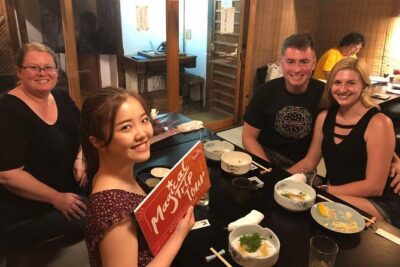
Kyoto Night Foodie Tour in Gion (9+ dishes + 6 Sake tastings)
Read our review →
Kyoto Gion: 2-Hour Geisha Culture & History Walking Tour
Read our review →
Chopsticks Making Workshop in Gion with Engraving Option
Read our review →
Browse the lists this tour appears in