
Reviewed · CALLIGRAPHY & CRAFT WORKSHOPS
Kyoto: Replica food making experience
Kyoto’s replica food workshop turns a familiar Japanese sight into a hands-on craft. You pour melted wax into hot water, shape it before it sets, then build convincing shrimp and pumpkin tempura. The finished pieces look good enough to eat, which is exactly why you should keep them well away from the dinner table.
I like the small group size of four, which gives the instructor time to show each step and rescue a wonky piece of wax. I also like the useful souvenir: your creation is packed like a supermarket food item, so you leave with something far more personal than a standard key ring. The main drawback is that hot wax requires care, especially with children, and the workshop may take closer to 45 minutes than a full hour.
Key points to know before booking
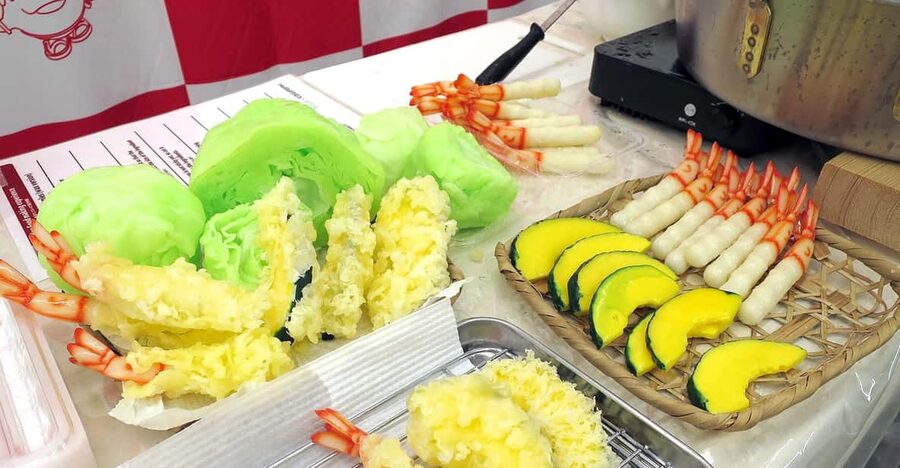
- Make real-looking tempura from hot wax: Shape shrimp and pumpkin, then add the textured coating.
- Learn a distinctly Japanese craft: Replica food displays help restaurants show their menus at a glance.
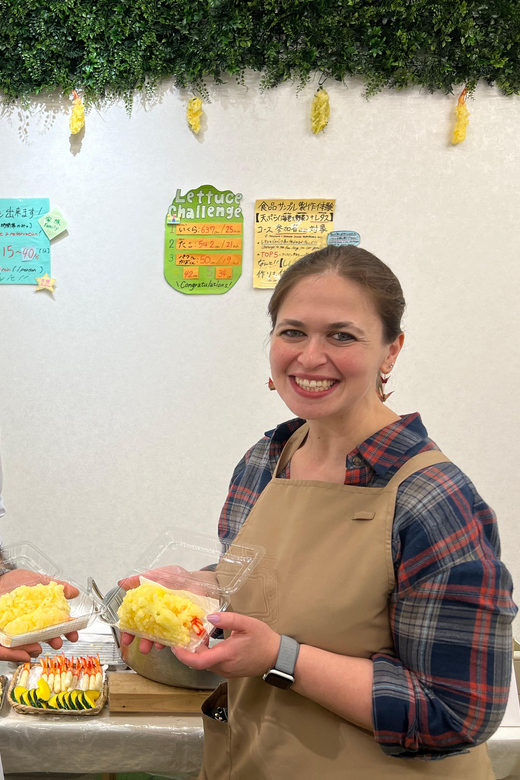
- Take home your own work: Finished pieces are packaged in a realistic food-style container.
- Small groups help beginners: The workshop accepts up to four participants and offers instruction in English or Japanese.
- Easy central location: Find the meeting point diagonally across from Kani Douraku, marked by its huge crab sign.
- Best for children six and older: Younger children cannot join, and adults may need to assist with the hot wax.
Why Kyoto’s fake food is worth your time
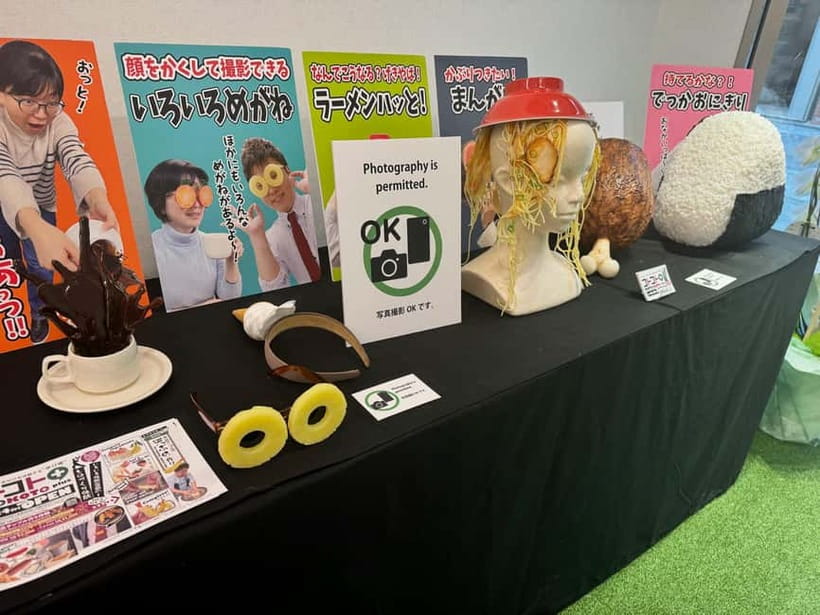
Walk past a Japanese restaurant and you may see bowls of ramen, sushi, curry, or tempura sitting in the window. They are not photographs. They are carefully made models called replica food, designed to show the meal clearly before you walk inside.
This practical art has a simple purpose. A restaurant menu can be hard to understand if you do not read Japanese, but a plastic or wax bowl of tempura needs no translation. You can see the portion, the ingredients, and the style of the dish in one glance.
That makes this workshop more than a quick craft class. You get a small lesson in how Japanese restaurants communicate with customers. I like activities that explain something you have already noticed on the street, and this one does exactly that.
The setting is in the Sanjo Meiten-gai shopping arcade, with Nishiki Market not far away. That makes it easy to fit into a central Kyoto day. You can shop, make your replica food, then find an actual meal nearby. After working on convincing tempura, you may find yourself craving the real thing.
Other things to make with your hands in Kyoto:
- Kyoto : Chopsticks Making Workshop in Gion with Engraving Option
★ 5.0 · 958 reviews - Authentic knife making experience at a blacksmith in Kyoto
★ 4.8 · 350 reviews - Kyoto: Calligraphy class at Buddhist temple in city center
★ 5.0 · 167 reviews
Finding the workshop near the giant crab sign
The meeting point is diagonally across from Kani Douraku, the restaurant known for its large crab signboard. That landmark is much more useful than a vague street address, especially in a busy shopping area where several arcades and side streets can look alike.
Give yourself enough time to locate the spot. You must arrive at your reserved time because the instructor explains the making process to the group together. Arriving late could mean missing the first demonstration, and the early steps matter.
The central location is one of the activity’s practical strengths. You do not need to spend half a day reaching a distant craft village or museum. The workshop fits neatly between sightseeing stops, shopping, or lunch around Nishiki Market and Sanjo.
The first lesson: turning wax into food
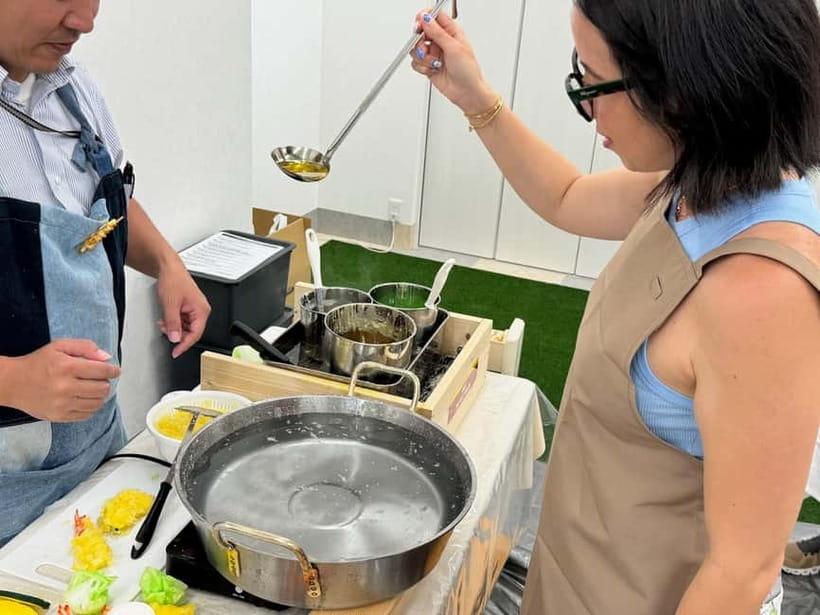
The workshop begins with an explanation of how replica food is made. The main material is melted wax, which is poured into hot water so it cools enough to handle. You then shape it before it becomes firm.
This sounds simple until you try it. The timing matters. If the wax sets too soon, it becomes hard to form. If you handle it too quickly, the shape can lose its form. The instructor demonstrates the movements and gives you time to try them.
One especially useful detail is the way the wax is poured. Dropping it from different heights creates different textures. A controlled pour can help produce the uneven, airy look of tempura batter rather than a smooth plastic shell.
That small technical point gives the workshop real value. You are not just assembling parts from a kit. You are learning how changes in height, timing, and hand movement affect the final surface.
The instructors are described as patient and friendly, and the activity is taught in English and Japanese. Communication does not need to be perfect for the workshop to work. Demonstration, repetition, simple directions, and occasional translation tools can carry you through the process.
Making shrimp and pumpkin tempura
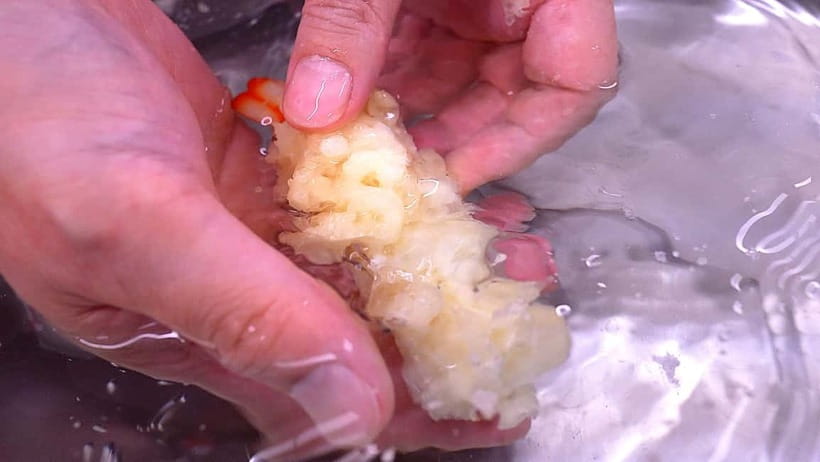
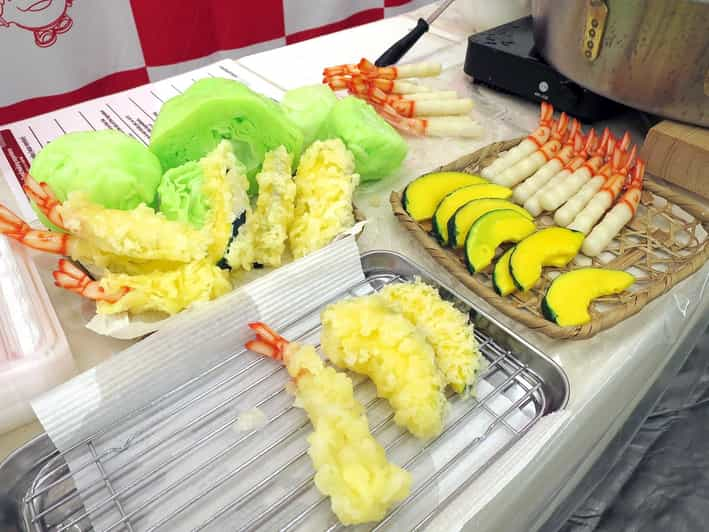
The central project is a tempura bowl with shrimp and pumpkin. You shape the food elements, then cover them with a realistic-looking wax batter.
The shrimp requires enough definition to look like a recognizable ingredient, while the pumpkin needs a different shape and surface. The contrast makes the finished bowl more interesting. It also gives you two chances to practise instead of relying on one identical object.
The batter is the fun part. Real tempura has an irregular coating, and a perfectly smooth replica would look less convincing. You work toward those rough edges and uneven folds that make the food appear crisp.
Do not expect to produce a perfect shop display on your first attempt. That is part of the charm. The instructor can offer tips and corrections, but your finished bowl still shows your own hand. A slightly uneven piece can make the souvenir more amusing and more personal.
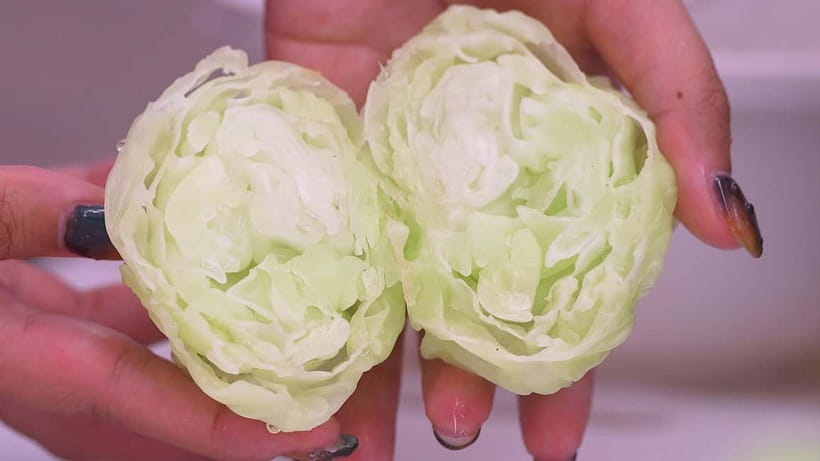
A lettuce replica may also be available as an additional option. The supplied information does not promise it for every session, so check what is offered when you book or arrive.
Same base, a different sort of day:
- PERFECT KYOTO 1-Day Bus Tour
★ 5.0 · 13,518 reviews - Kyoto: Fushimi Inari, Kinkakuji, Bamboo Grove 1 Day Bus Tour
★ 4.8 · 4,316 reviews - Kyoto: Tea Ceremony in a Traditional Tea House in Kiyomizu
★ 4.9 · 3,519 reviews - Kyoto Geisha Walking Tour: Gion District & Hidden Gems
★ 4.7 · 3,273 reviews
A craft that works for families
This is a strong choice for families because the activity is short, visual, and hands-on. Children can see the wax change shape and texture right in front of them. They also get a souvenir they made themselves, rather than something selected by an adult in a shop.
The minimum age is six. Adults may need to help children, particularly around the hot wax and during the shaping process. I would treat this as a family craft with supervision, not as a session where parents can sit back and watch.
The small group limit helps here. With no more than four participants, the instructor can watch the process closely and give extra help when a child loses the shape or needs a second explanation. Families of four can also work together without being split into separate groups.
Older children and teenagers should find enough challenge in the process to stay interested. Adults will enjoy it too, especially if you appreciate food displays, Japanese design, or unusual souvenirs.
What to wear and what to expect at the table
Aprons and chef jackets may be available, but wax can still land on clothing. One useful precaution is to wear something you do not mind getting marked, or bring a change of clothes if you are concerned.
The work is not described as physically demanding, but it does require attention. You will be handling warm material and shaping it while it is still workable. Follow the instructor’s timing rather than rushing ahead.
The finished pieces are display items only. Do not taste them, serve them, or place them near real food where somebody could mistake them for lunch. The realistic appearance is the point, but it also creates the workshop’s only obvious practical warning.
How long the hour really feels
The advertised duration is one hour. A session includes the explanation, demonstrations, practice, the main tempura work, and packaging. One account describes the hands-on portion as lasting about 45 minutes, so you should allow the full hour in your schedule while understanding that the active crafting may finish a little sooner.
That length works well in Kyoto. You learn enough to feel that you made something, but you are not tied up for an entire afternoon. It is also a useful pause after temples and shopping, when you want an activity that changes the pace without requiring a long journey.
The experience is offered as a small group, though a quiet session may feel almost one-on-one. That can be helpful if you want detailed guidance or if language differences make you nervous. The instructor can show the movement again instead of rushing to the next large group.
What your $22 buys
At $22 per person, the price is fair for a central Kyoto activity that includes all materials and a finished souvenir. You are paying for instruction, the wax, the food forms, the tools and work area, and packaging, not just admission to watch a demonstration.
The souvenir adds real value. Many craft activities leave you with a small object that needs careful wrapping or gets forgotten in a suitcase. Here, the finished tempura is presented like a supermarket item, which makes it easy to carry and fun to show friends at home.
I would not book this as a way to save money on lunch. The replicas are not edible, and the workshop does not replace a meal. Think of the $22 as the cost of a compact cultural lesson and a made-by-you keepsake.
For families, the total cost rises with each participant, but the group format keeps the activity shared. For couples or solo visitors, it offers a light, distinctive stop that costs less than many longer attractions.
English support and the language question
Instruction is available in English and Japanese. That should make the main process manageable for English-speaking visitors, and the activity relies heavily on visual demonstrations.
Some sessions may involve more hand signals, simple phrases, or translation apps than others. That is not necessarily a problem here. Wax shaping is easier to understand when you can watch the instructor perform it, and the process repeats in clear stages.
If you have questions about the finer points of the craft, ask them early. The instructors are there to explain the method, and the small group format gives you a better chance to get an answer than a large tour would.
The activity also offers a pleasant bit of cultural exchange. Instructors may chat with you about where you come from while helping you work. That informal contact can be as memorable as the replica itself.
The best time to fit it into your Kyoto day
Book it near other central stops rather than treating it as a destination across town. The Sanjo Meiten-gai shopping arcade and Nishiki Market area provide plenty to do before and after the session.
A midday booking can give you a break from outdoor sightseeing. Kyoto’s temples and shrines demand walking and attention, while this workshop gives you a seat and a focused task. An afternoon time also works well if you want to eat tempura afterward and compare the real dish with your wax version.
Arrive on time. The workshop explanation is given all at once, so late arrival is more disruptive than it would be at a drop-in museum. If your schedule is uncertain, the booking terms allow free cancellation up to 24 hours in advance, and you can reserve now and pay later.
Who should book this experience
I would recommend it to families with children aged six and above, couples looking for a shared activity, and anyone who wants a souvenir with a story attached. It is also a good choice if you have already seen replica food outside restaurants and want to understand how those displays are made.
Food lovers may enjoy the connection between craft and restaurant culture. So might photographers, since the finished pieces are deliberately made to look edible. The packaging adds another visual joke: your fake tempura leaves the workshop looking like something bought from a Japanese food counter.
You may want to skip it if you dislike messy handwork, cannot safely work around hot wax, or want an edible cooking class. This is not a lesson in preparing tempura for dinner. It is a short craft workshop about making a convincing display model.
Final verdict: a small activity with a big souvenir
I like this workshop because it explains an everyday Japanese detail and lets you try the technique yourself. The instructors provide patient guidance, the group stays small, and the finished shrimp and pumpkin tempura give you a souvenir that is easy to remember and hard to confuse with a typical Kyoto purchase.
Book it if you want a one-hour change of pace near Sanjo and Nishiki Market, especially with children or with someone who enjoys making things. Just arrive on time, protect your clothes, supervise younger participants, and remember that the appetizing bowl is strictly for display.
FAQ
How much does the replica food workshop cost?
The experience costs $22 per person. This includes the workshop, all materials, and the replica food you make as a souvenir.
How long does the activity last?
The stated duration is one hour. The active crafting may take around 45 minutes in some sessions, but you should allow the full hour.
What food replicas will I make?
The main project is shrimp and pumpkin tempura made with melted wax. A lettuce replica may also be available as an option.
Where is the meeting point?
The meeting point is diagonally across from Kani Douraku, the restaurant with the large crab signboard. The workshop is in the Sanjo Meiten-gai shopping arcade area.
Is the workshop offered in English?
Yes. Instruction is available in English and Japanese.
How many people can join one session?
The group is limited to four participants.
Can children take part?
Children under six cannot join. Older children may participate, but adults may be asked to help, particularly when working with hot wax.
Can I take my replica food home?
Yes. The replica food you make is included as a souvenir and is packaged in a way that resembles real supermarket food.
Can I cancel my booking?
You can cancel up to 24 hours in advance for a full refund. You can also reserve the activity and pay later.
Just added in Kyoto
- Your Private Vacation Photography Session In Kyoto★ 5.0 · 110 reviews
- Kyoto: Zen Meditation at a Private Temple with a Monk★ 5.0 · 25 reviews
- Private Cooking Class Udon in Kyoto Japan★ 5.0 · 23 reviews
- Private Pewter Sake Cup Experience with a Kyoto Artisan★ 5.0 · 31 reviews
- Kyoto Wagashi(Japanese sweets) Cooking Class near Fushimiinari★ 5.0 · 60 reviews
- Kyoto:Family-Friendly Kimono & Yukata Experience at WARGO★ 5.0 · 147 reviews
- Private Guided Traditional Buddhist Cooking in Japan★ 5.0 · 16 reviews
- Kyoto: Gion Geisha District & Sake-in-Hand Walking Tour★ 5.0 · 37 reviews
Calligraphy & Craft Workshops, compared.
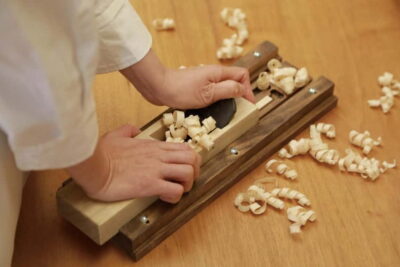
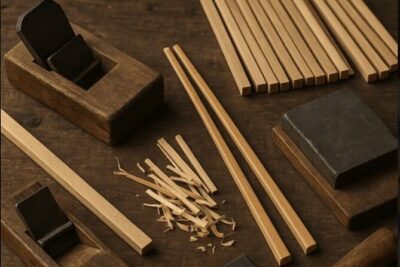
Chopsticks Making Workshop in Gion with Engraving Option
Read our review →

Matcha Making Experience with Mochi Sweets in Asakusa
Read our review →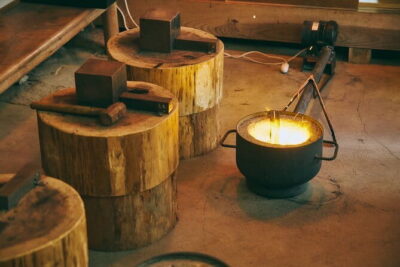
Authentic knife making experience at a blacksmith in Kyoto
Read our review →
Calligraphy class at Buddhist temple in city center
Read our review →Browse the lists this tour appears in