
Reviewed · GEISHA & GION DISTRICT TOURS
KYOTO: Tempio Kiyomizu Pagode Gion “Geisya” (Guida Italiana)
Kiyoto’s best-known old streets make far more sense with someone who can explain what you are seeing. This five-hour walk links Kiyomizu-dera and its pilgrimage routes with Sannenzaka, Ninenzaka, Gion, and Pontocho, while an Italian-speaking Kyoto guide fills in the cultural details that signs often miss.
I like two things right away: transport and entrance fees are included, and the guide can adjust the timing or route when possible. Guide Omae is repeatedly praised for clear Italian, careful explanations, good humor, and patience with questions. The main consideration is the amount of walking on historic streets, so comfortable shoes matter.
Key points at a glance
- Start at Kyoto Station: Meet outside the north entrance, between the four escalators and the taxi terminal, with Kyoto Tower visible to your upper left.
- Five classic Kyoto areas in one route: Kiyomizu-dera, Sannenzaka, Ninenzaka, Gion, and Pontocho fit into a single guided outing.
- Italian explanations throughout: Omae provides cultural, historical, and religious context in Italian and helps with questions along the way.
- Transport and scheduled admissions included: The bus transfer and entrance tickets for planned monuments are covered in the $117 price.
- A street-level Kyoto experience: The route uses old pilgrimage approaches, souvenir shops, sweets stores, cafés, and lanes around the Gion district.
- Some planning flexibility: Start times and the precise route can be adjusted on request when practical.
Why this route gives you a useful first look at Kyoto
Kyoto can feel like several cities stitched together. One minute you are beside a major railway station, and soon after you are walking through narrow lanes shaped by centuries of religious visits, craft shops, and local businesses. This tour gives you that change in setting without asking you to solve the transport puzzle alone.
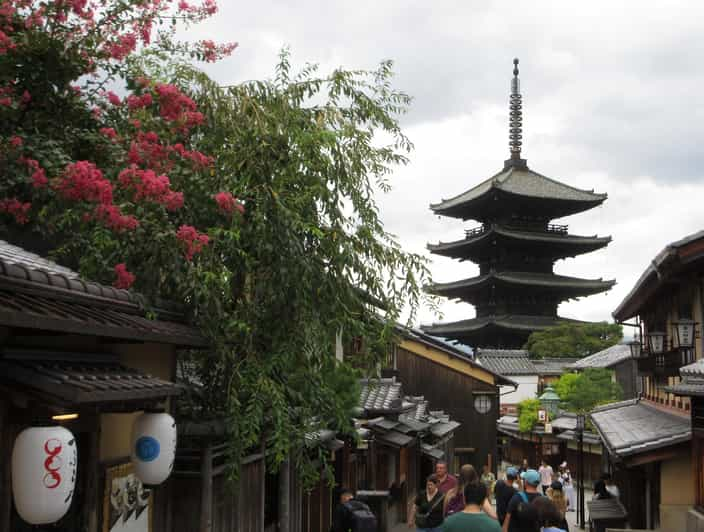
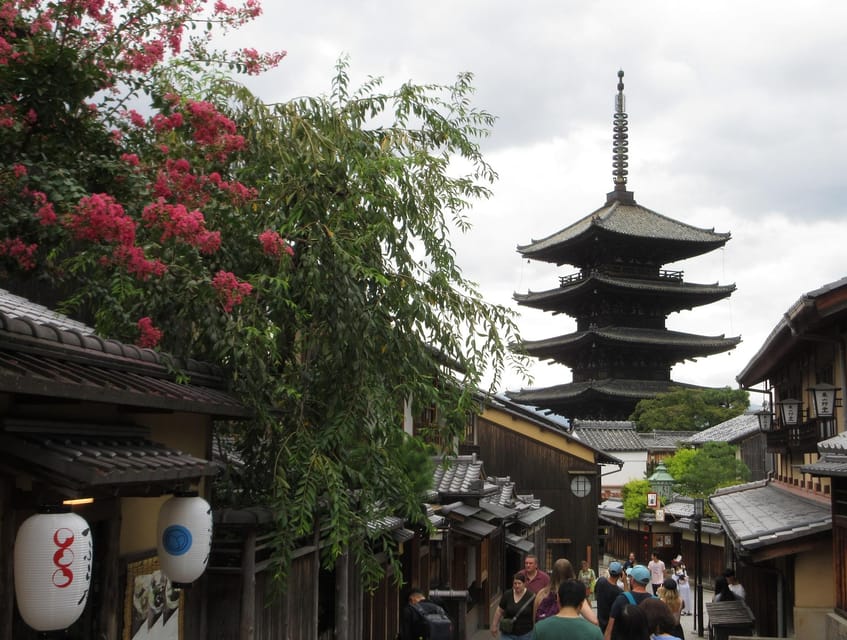
The focus is the eastern side of central Kyoto. Kiyomizu-dera is the main anchor, but the approach matters just as much. The old pilgrimage roads are lined with small shops selling souvenirs and sweets, plus cafés that keep the route lively and easy to browse. You are not only moving from one famous temple to another. You are following the path that makes the temple feel connected to everyday Kyoto.
The Italian language is a major reason to choose this experience. Guide Omae explains historical, cultural, and religious points in Italian, then answers questions as they arise. That can be especially helpful when a custom or Buddhist detail is hard to grasp from a short English sign or a translated plaque.
This is also a practical choice if Kyoto is your first stop in Japan. The guide offers assistance during the outing, and the included bus fare and admissions reduce the number of small decisions you need to make. At $117 per person, it is not a budget walk, but it combines a private or group format, a five-hour schedule, transport, entry fees, and Italian-language guiding.
Other evenings in the old entertainment quarters of Kyoto:
- Kyoto Geisha Walking Tour: Gion District & Hidden Gems
★ 4.7 · 3,273 reviews - Kyoto: Gion Magical Night Walking Tour with Geisha Trivia
★ 4.9 · 2,393 reviews - Kyoto: Gion Geisha District Walking Tour – Stories of Geisha
★ 4.7 · 2,187 reviews
Meeting at Kyoto Station without guessing
The meeting point is specific, but Kyoto Station is large enough to make any vague instruction a nuisance. Go to the central north entrance, also called the Karasuma-Guchi side. Outside, find the open space between the four escalators in front of the taxi terminal, not the bus terminal.
Use Kyoto Tower as your visual check. From the meeting area, the tower should be in front of the station and toward the upper left of your view, not the right. This small detail is useful because the station has several exits and a wrong turn can cost time before the tour even begins.
You receive a message by the day before confirming and detailing the meeting point. Still, I would arrive with enough time to orient yourself. The tour begins with a roughly 15-minute bus ride, so a late arrival could affect the whole schedule.
The 15-minute ride toward Kiyomizu-dera
The short bus transfer moves you from Kyoto’s modern transport hub toward the eastern temple district. Since the transport fare is included, you do not need to work out the payment process for this part of the route.
The ride itself is not the main attraction. Its value is practical. It lets the tour cover more ground while preserving your energy for the old streets and temple grounds. Once you begin walking, the outing becomes a sequence of closely linked areas rather than a series of disconnected stops.
The total experience lasts five hours. That gives the guide time to explain places properly, but it also means this is not a quick photo stop at Kiyomizu-dera followed by a rushed transfer. Plan for a substantial half-day.
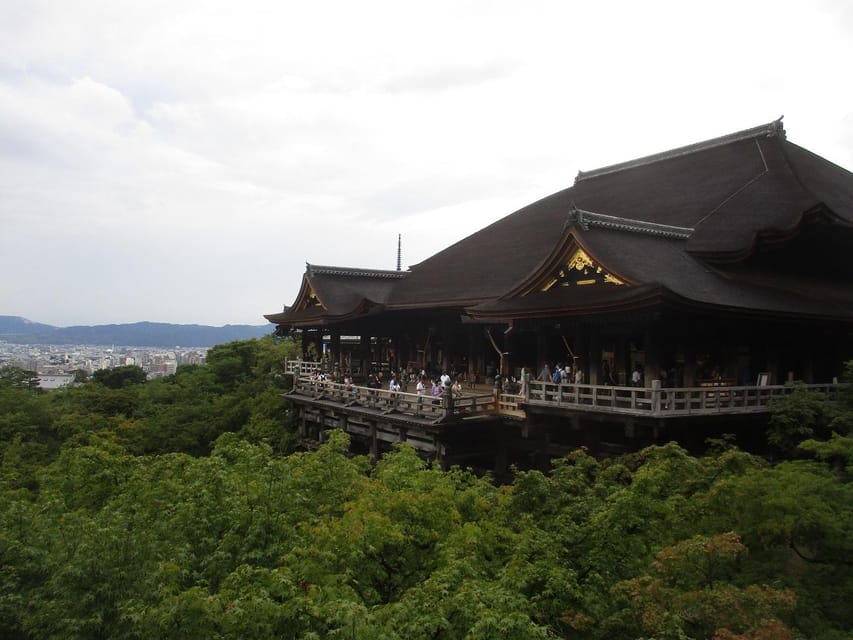
Kiyomizu-dera, the main temple visit
Kiyomizu-dera receives about an hour of guided sightseeing. This is the centerpiece of the route, and rightly so. The temple sits at the end of ancient pilgrimage approaches, so the visit begins before you reach the main grounds. The surrounding lanes show how religious sites became part of Kyoto’s visitor culture over time.
You can expect Omae to place the temple in historical and religious context rather than simply point out the most photographed features. The supplied information emphasizes explanations of details that are easy to miss, including the cultural meaning behind what you see. That is where an Italian-speaking guide can make the visit more satisfying.
The hour is long enough for a real introduction, but not so long that the whole afternoon disappears inside one complex. If you like lingering at every view or reading every sign, you may want more time than the standard schedule allows. On the other hand, the fixed visit keeps the route moving and leaves room for Gion and Pontocho.
The admission ticket is included. That matters at a major site, where a tour price can look attractive until entrance charges appear separately. Here, the scheduled monument admission is part of the stated fare.
Same base, a different sort of day:
- PERFECT KYOTO 1-Day Bus Tour
★ 5.0 · 13,518 reviews - Kyoto: Fushimi Inari, Kinkakuji, Bamboo Grove 1 Day Bus Tour
★ 4.8 · 4,316 reviews - Kyoto: Tea Ceremony in a Traditional Tea House in Kiyomizu
★ 4.9 · 3,519 reviews - Kyoto: Tea Ceremony Ju-An at Jotokuji Temple
★ 4.9 · 3,207 reviews
Sannenzaka and Ninenzaka, Kyoto on foot
After Kiyomizu-dera, the route turns to Sannenzaka and Ninenzaka. The two areas are visited on foot, with only short connections between them. One segment is listed as about five minutes, followed by a brief walk of roughly three minutes and another five-minute connection.
These old streets are lined with souvenir shops, sweet stores, and cafés. They are designed for browsing, so you will have chances to look at local products and pause for something small to eat or drink. The setting is part shopping street, part historic approach, and part open-air introduction to Kyoto’s visitor traditions.
The short walking times in the schedule do not mean the whole section feels rushed. The actual pace depends on the guide, the group, and how much time is spent explaining or looking around. Flexible timing can be requested when possible, which is useful if you want to slow down for a shop or need a steadier pace.
There is a practical tradeoff here. These lanes can be popular and the route is not a quiet, empty temple path. You are choosing this tour for access to famous Kyoto scenery and context, not solitude. The narrow old streets also call for comfortable footwear and attention underfoot.
Walking toward Gion
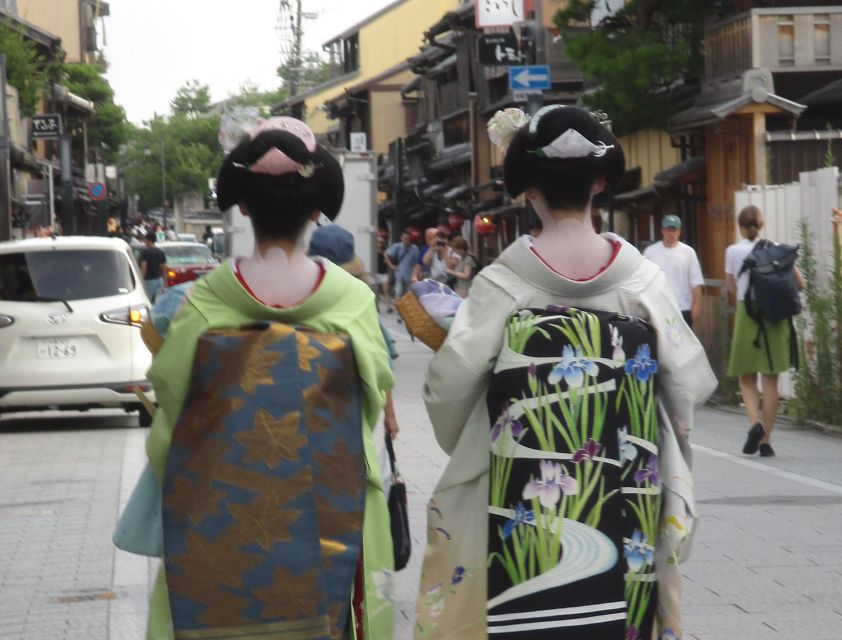
The connection from Ninenzaka to Gion takes about 15 minutes on foot. This is the longest listed walking stretch of the tour, and it helps tie the districts together. Instead of treating Gion as a separate attraction, the route lets you move through the eastern side of central Kyoto toward the entertainment district.
The guide’s role becomes especially useful during this transition. Without context, the route can feel like a series of attractive streets. With explanations in Italian, you can ask how the religious quarter, old shopping lanes, and traditional entertainment areas fit together.
The itinerary gives a total of about 30 minutes to Gion for a visit and guided sightseeing. That is enough for an introduction, not an exhaustive exploration of every lane. If Gion is your main reason for booking, keep your expectations in check. The tour gives you a guided look and orientation, then continues toward the final area.
Gion, traditional atmosphere with a short visit
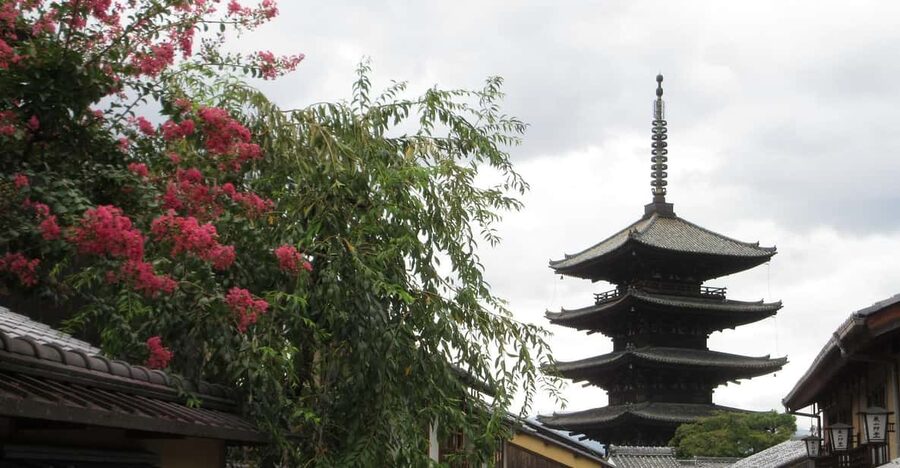
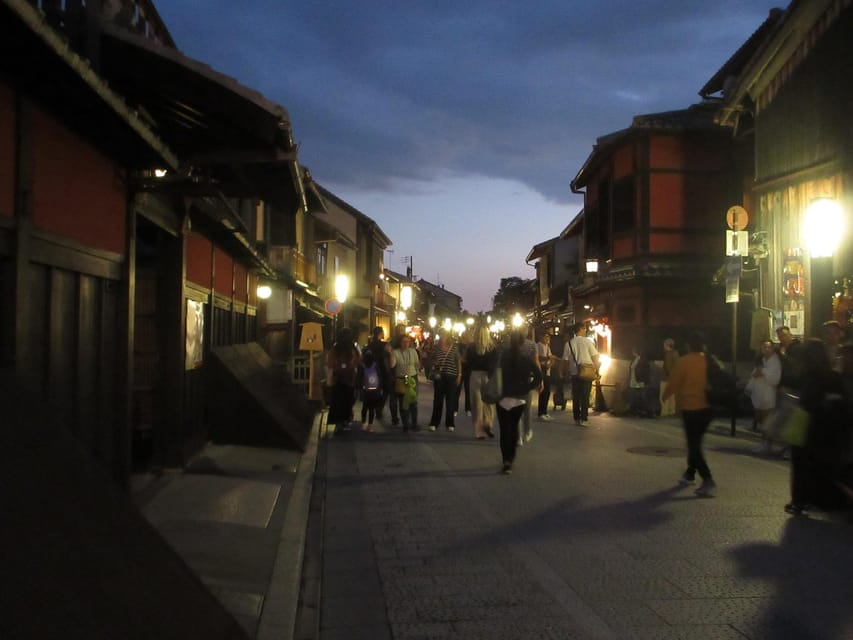
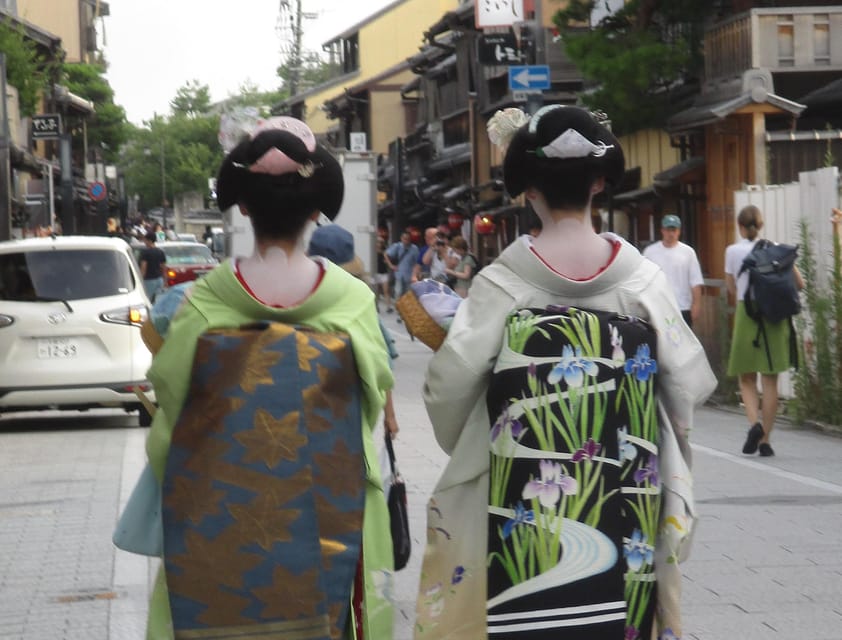
Gion is one of Kyoto’s most recognizable districts, and the tour uses it as a cultural stop rather than a promise of a staged show. The supplied description refers to the area associated with geisha, but it does not include a performance or a guaranteed meeting with geisha. You should book this for the streets, history, and explanation, not for a manufactured encounter.
Omae can help explain the details that distinguish Gion from the temple approaches. The emphasis is on Kyoto’s cultural and historical background, with time for questions in Italian. That combination is valuable if you want to understand the setting without turning the visit into a hunt for people at work.
The 30-minute stop is compact. You will get an overview and see the district as part of a larger route. If you want extended photography or time in cafés, use the flexible scheduling option when requesting the tour, or return to Gion later on your own.
Minami-za and the route to Pontocho
After Gion, the group passes by Kyoto Minami-za. The theater receives only a short pass-by, listed at about three minutes, so it is not a full performance visit or interior tour. Its place in the route adds another piece to Kyoto’s traditional entertainment story.
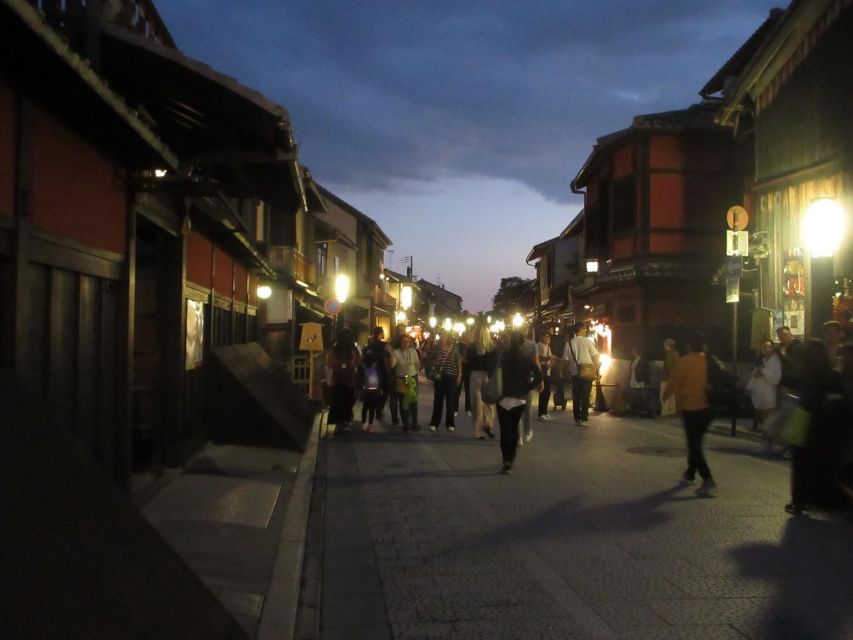
The final walks are short, about five minutes and then three minutes, ending at Pontocho. This finish is well chosen for a half-day outing. Pontocho is a natural place to continue your evening, find a meal, or explore nearby streets independently, though the tour information does not include a meal or restaurant booking.
Ending here also gives you a useful sense of orientation. You began at the large, modern station and finish in one of Kyoto’s older central districts. The route shows how the city’s religious sites, shopping lanes, traditional entertainment quarters, and dining streets connect.
What Omae adds to the experience
The strongest praise centers on Omae’s manner and Italian. The feedback describes him as sympathetic, lively, accurate, well prepared, and attentive to questions. That combination matters more than a memorized list of dates. You want a guide who can explain clearly, notice what interests you, and adjust when you need help.
Several comments specifically praise his command of Italian and attention to small details. For an Italian-speaking visitor, this can change the day from simply seeing famous places to understanding why the places matter.
The activity is available as a group or individual tour. The supplied details do not promise a fixed group size, so ask for the format and any preferences when booking. Flexible itineraries and times are available on request as far as practical, but they are not an unlimited custom itinerary.
Is $117 a fair price?
The $117 per-person price makes the most sense when you use the included services. Your fare covers the bus transport and entrance tickets for scheduled monuments, plus an Italian-speaking guide for five hours. You also receive assistance during the route and the convenience of starting at Kyoto Station.
A self-guided visit would cost less, especially if you already speak Japanese or feel comfortable navigating Kyoto’s buses. You would need to plan the route, find the right stop, handle admissions, and research the religious and cultural background yourself. This tour charges a premium for language access, organization, and personal help.
I see the best value for visitors who want Italian explanations or who have limited time in Kyoto. It is also useful for anyone who prefers not to manage several connected stops alone. The value is weaker if you only want a quick visit to Kiyomizu-dera or prefer to wander at your own pace for a full day.
Free cancellation is available up to 24 hours before the start, and you can reserve now while paying later. Those terms provide some planning flexibility, but the main value question remains simple: do you want a guided half-day with transport and entry covered, or would you rather build this route yourself?
Who should book this Kyoto tour?
I would point this tour toward Italian-speaking visitors who want a clear introduction to Kyoto’s eastern districts. It suits couples, families, and solo visitors who value direct answers and practical help. The wheelchair-accessible designation also makes it worth considering for visitors who need that feature, though you should still discuss the exact route and walking needs when arranging the tour.
It is less suited to someone seeking a silent temple visit, a long food crawl, or a dedicated geisha performance. The schedule covers several landmarks, so each area receives an introduction rather than unlimited free time.
The physical side deserves attention. Much of the experience is on foot, including old approach streets and connections between districts. Even though the tour is five hours rather than a full-day marathon, you should plan for steady walking and wear comfortable shoes.
Should you book it?
Book this tour if Italian guidance is central to your Kyoto visit and you want Kiyomizu-dera, Sannenzaka, Ninenzaka, Gion, Minami-za, and Pontocho connected in one organized outing. Omae’s clear explanations, friendly approach, and willingness to answer questions are the main reasons this experience earns attention.
Skip it if you prefer complete independence or want to spend most of the day at one temple. For everyone else, the combination of included transport, scheduled admissions, local context, and a practical five-hour route makes this a sensible way to get oriented in Kyoto.
FAQ
What language is the tour conducted in?
The live tour guide speaks Italian. Historical, cultural, and religious explanations are provided in Italian.
How long does the experience last?
The tour lasts five hours.
How much does the tour cost?
The stated price is $117 per person.
Where does the tour begin?
It begins at Kyoto Station, at the north entrance on the Karasuma-Guchi side.
How do I find the meeting point at Kyoto Station?
Go to the space between the four escalators in front of the taxi terminal, not the bus terminal. From there, Kyoto Tower should appear in front of the station toward your upper left. A message is sent by the day before with confirmation and further meeting details.
Where does the tour finish?
The tour finishes at Pontocho.
Are transport and entrance tickets included?
Yes. The stated fare includes transport for the itinerary and entrance tickets to the scheduled monuments.
Can the itinerary or start time be changed?
Itineraries and times can be adjusted on request as far as possible. Changes are subject to practical limits.
Can I cancel the booking or pay later?
You can cancel up to 24 hours in advance for a full refund. You can also reserve now and pay later.
Just added in Kyoto
- Private Cooking Class Udon in Kyoto Japan★ 5.0 · 23 reviews
- Your Private Vacation Photography Session In Kyoto★ 5.0 · 110 reviews
- Kyoto: Zen Meditation at a Private Temple with a Monk★ 5.0 · 25 reviews
- Private Pewter Sake Cup Experience with a Kyoto Artisan★ 5.0 · 31 reviews
- Kyoto Wagashi(Japanese sweets) Cooking Class near Fushimiinari★ 5.0 · 60 reviews
- Kyoto:Family-Friendly Kimono & Yukata Experience at WARGO★ 5.0 · 147 reviews
- Private Guided Traditional Buddhist Cooking in Japan★ 5.0 · 16 reviews
- Kyoto: Gion Geisha District & Sake-in-Hand Walking Tour★ 5.0 · 37 reviews
Geisha & Gion District Tours, compared.

Kyoto Geisha Walking Tour: Gion District & Hidden Gems
Read our review →
Gion Geisha District Walking Tour – Stories of Geisha
Read our review →
Best of Kyoto: Gion, Geisha, Pagodas & Cobblestones
Read our review →
Kyoto Night Foodie Tour in Gion (9+ dishes + 6 Sake tastings)
Read our review →
Kyoto Gion: 2-Hour Geisha Culture & History Walking Tour
Read our review →
Chopsticks Making Workshop in Gion with Engraving Option
Read our review →
Browse the lists this tour appears in