
Reviewed · COOKING CLASSES
Osaka Cooking Class: Okonomiyaki &Japanese cuisines experience
Osaka is famous for food you cook at the table, and this class puts you right into that tradition. In Yayo’s home, you make okonomiyaki, takoyaki, and miso soup rather than simply watching a chef work. I like the small maximum of eight people and the careful, friendly teaching style that makes even first-time cooks feel at ease.
I also like the generous meal and the personal touches, including matcha tea, taiyaki, printed recipe help in some cases, and thoughtful parting gifts. The main consideration is the setting: the cooking studio is a small private home, not a large professional kitchen, and arriving more than 10 minutes late can mean losing your place without a refund.
Key points to know before booking
- Cook in Yayo’s home: This is a personal home-based class, not a restaurant demonstration.
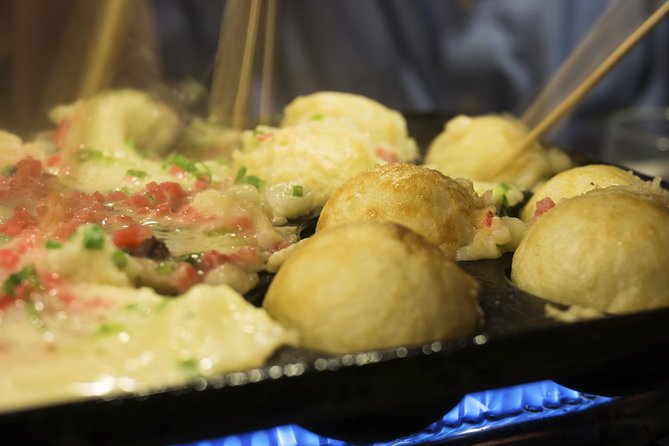
- Three Osaka favorites: Make savory okonomiyaki, octopus-filled takoyaki, and miso soup from the ground up.
- More food than you may expect: The meal can include omelet, taiyaki, matcha, and other small extras, so arrive hungry.
- Small class size: The maximum is eight people, though some sessions may be much smaller or even private.
- Optional drinks: Add local sake and beer if you want a pairing with the food you prepare.
- Practical meeting point: Meet outside Noda Station in Osaka, with the class ending back at the same meeting point.
Cooking Osaka favorites in Yayo’s home
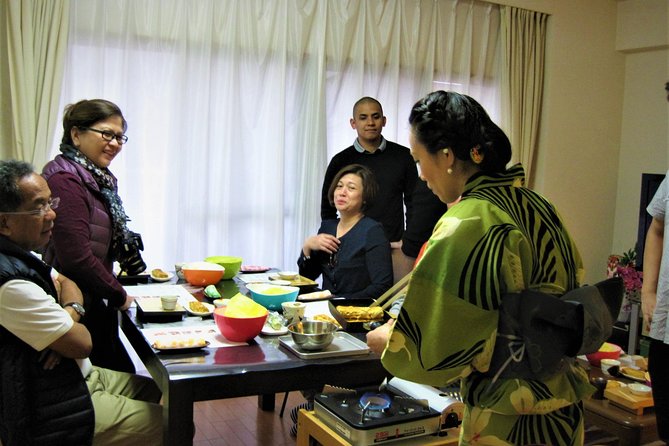
The most appealing part of this experience is its setting. You do not sit in a classroom facing a distant instructor. You follow Yayo into her own home, where the class feels more like being welcomed to a Japanese meal than attending a formal cooking school.
That difference matters. A home kitchen gives the class a relaxed pace and makes room for conversation about daily life, family food, and the place each dish holds in Japanese cooking. Yayo is described as fluent in English, warm, patient, funny, and easy to talk with. Her teaching is hands-on, but she also prepares parts of the process in advance so the class can cover several dishes within two and a half hours.
The group limit is eight people. That is small enough for direct help at the counter and around the cooking area. If fewer people book your session, you may receive an even more personal lesson. Some dates have operated with only one person or one couple, creating something close to a private class.
There is one trade-off. A home kitchen has limited space, so you should not expect the room or equipment of a large culinary school. Only people with confirmed bookings can join, and punctuality is important. Arrive at the meeting point on time, since participation is not guaranteed after 10 minutes late.
Other cooking classes in Osaka people book:
- Osaka: Ramen and Gyoza Cooking Class in Dotonbori
★ 5.0 · 378 reviews - Osaka: Sumo Stage Show with Bento or Snack + Fight & Photo
★ 4.3 · 364 reviews - Ramen and Gyoza Cooking Class in Osaka
★ 5.0 · 202 reviews
What you make during the 2.5-hour class
The class begins after you meet Yayo outside Noda Station in Osaka’s Fukushima Ward. From there, you continue to the cooking studio, which is her home. The exact order can vary, but the class works through several dishes and ends with a full meal.
Miso soup and the basics of dashi
Miso soup looks simple, but small changes in the broth and seasoning can affect the final taste. Yayo uses this dish to explain technique and ingredients rather than treating it as a quick side dish.
One especially useful lesson is dashi, the broth that forms the base of many Japanese dishes. A participant specifically noted that the class made dashi feel easy to understand and less mysterious. That is useful knowledge to take home because it gives you a starting point for Japanese cooking beyond the dishes prepared in class.
You also get context for the ingredients and how food can differ across parts of Japan. This is one reason the class works well for people who want more than a recipe card. You learn what the ingredients do and why the method matters.
Takoyaki and the Osaka connection
Takoyaki is one of Osaka’s signature foods: small balls of wheat-flour batter filled with octopus and cooked until browned. The cooking method requires attention, since the batter must be shaped and turned as it sets.
You get to try the process yourself with guidance from Yayo. That hands-on part is important. Takoyaki can look easy when someone else is turning the pieces, but the class gives you a chance to learn the movement and timing in a setting where mistakes are part of the lesson.
The result is also fun to eat. Takoyaki is casual Osaka food, often associated with shared plates and quick local meals. Preparing it yourself helps explain why the dish is so popular: the ingredients are straightforward, but the cooking technique gives it character.
More cooking in Osaka:
- Ramen Cooking Class at Ramen Factory in Kyoto
★ 5.0 · 1,937 reviews - Ramen & Gyoza Cooking Class in Tokyo with Local Supermarket Visit
★ 5.0 · 823 reviews - Kyoto: Ramen Cooking Class at a Ramen Factory with Souvenir
★ 4.9 · 532 reviews - Kyoto: Ramen, Gyoza, and Onigiri Cooking Class
★ 5.0 · 445 reviews
Okonomiyaki, the main event
Okonomiyaki is a savory pancake made with egg, flour, cabbage, pork, and dried bonito flakes. The name is often explained as meaning something like cooked as you like it, and the dish is flexible enough to support different ingredients.
For many people, this is the class centerpiece. You mix and cook the pancake, then learn how the ingredients come together. Yayo also shares professional tips that you can use in your own kitchen, which gives the class value beyond the meal in front of you.
The food is filling. Several accounts of the class make clear that you may have more to eat than expected, and leftovers can be possible. I would not schedule a heavy lunch or dinner immediately afterward. If you take the class in the morning, it effectively becomes your main meal of the day.
Omelet, taiyaki, matcha, and extra touches
The core description focuses on miso soup, takoyaki, and okonomiyaki, but the class can include other items. Participants have prepared dashimaki tamago, a Japanese rolled omelet, and some sessions have included tamago-maki.
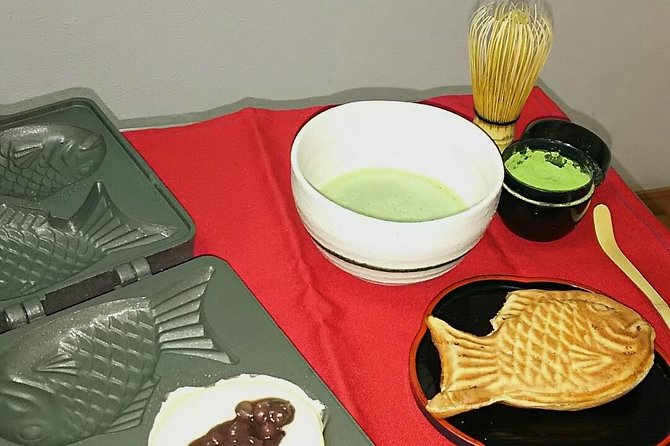
The class finishes with taiyaki and matcha tea. Taiyaki is a fish-shaped cake, usually associated with a sweet filling, though the supplied details do not specify the filling used in this class. It gives the meal a pleasant final course and adds a familiar Japanese snack to the cooking experience.
The extras help make the session feel generous. You are not just shown three recipes and sent away. You sit down to eat what you have made, enjoy tea, and may receive small gifts such as chopsticks, handmade paper cranes, or homemade items. These touches vary by session, so treat them as possible additions rather than guaranteed inclusions.
Why the hands-on format works
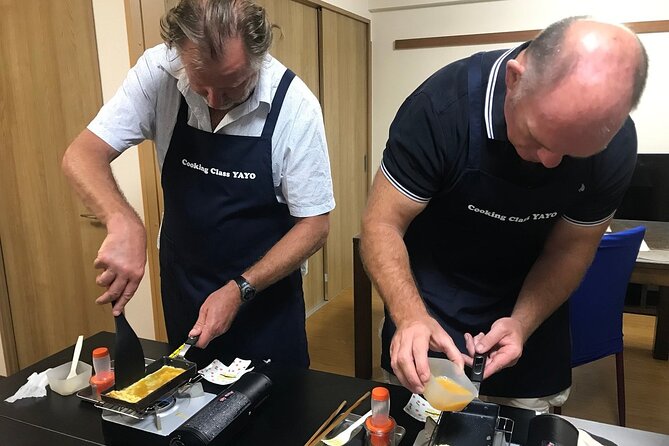
A cooking class can be disappointing if the teacher does everything while you watch. This one is designed around participation. You help prepare each dish, while Yayo demonstrates the parts that require more control or timing.
The format suits beginners. You do not need advanced cooking skills, and the teaching style is meant to keep the process manageable. At the same time, people who already enjoy cooking can pick up useful details about dashi, batter, seasoning, and Japanese ingredients.
I especially like the balance between preparation and explanation. The class is not only about producing lunch. Yayo explains the cultural background of the dishes, the role of certain ingredients, and practical methods for making Japanese food at home.
Her English is described as quite good, which matters in a cooking class. Clear instructions are important when you are handling hot pans, batter, and small pieces of food. Her humor and patience also help take the pressure off, particularly if you are cooking with children or with a partner who does not normally enjoy kitchen activities.
The meal is part of the experience
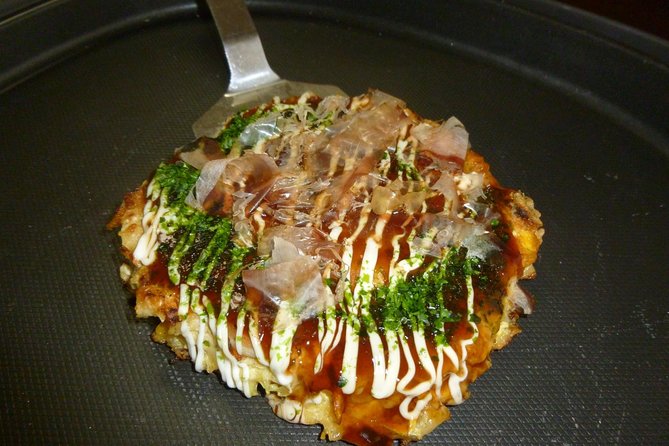
At the end, you eat the dishes you helped prepare. This is more satisfying than receiving a plate made by someone else because you can taste the result of each technique while the instructions are still fresh.
The meal can be substantial. With okonomiyaki, takoyaki, miso soup, possible omelet, taiyaki, and drinks or tea, you may be served enough to leave full. The practical advice is simple: come hungry, but do not assume you will finish every item.
You can add a sake and beer pairing if you select that option. This adds a local drinking element and gives you a chance to match Japanese drinks with the food. Sake tasting is optional, and extra food or drinks beyond the selected inclusions are not covered.
The class includes lunch or dinner, depending on the start time. You eat what you cook, rather than receiving a separate restaurant meal. That makes the $104.13 price easier to assess. It is not a cheap way to grab lunch, but it covers a 2.5-hour guided activity, ingredients, utensils, instruction, and a full meal in a personal setting.
For someone who already plans to eat okonomiyaki and takoyaki in Osaka, the class costs more than simply ordering them. You are paying for the teaching, the conversation, the cooking practice, and the chance to understand how the dishes come together. If you want only a quick taste, a restaurant is better value. If you want a memory and skills you can use at home, the price is more reasonable.
Who will enjoy this Osaka cooking class
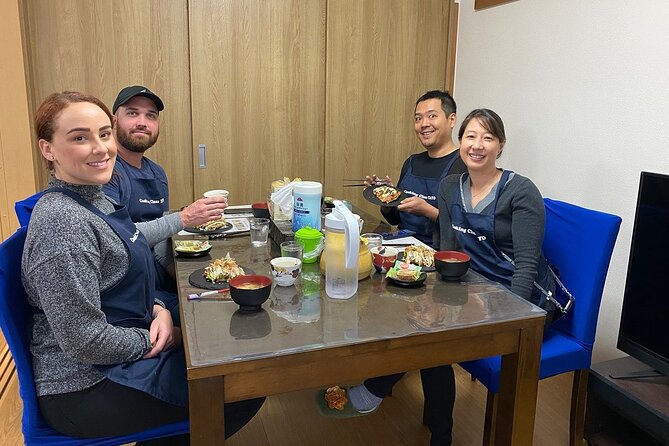
This is a strong choice for solo visitors, couples, families, and small groups. A solo participant may be paired with others or could find the class nearly private, depending on bookings. Couples have used it for birthdays and special occasions, while parents and children have found the pace approachable.
It also suits people who usually skip organized activities. The home setting is informal, and the focus stays on food rather than sightseeing commentary. You get a direct connection to Osaka through dishes that are closely tied to the city’s eating culture.
The class is especially useful early in a Japan trip. It gives you a friendly introduction to ingredients and cooking methods that may appear elsewhere during your visit. It can also be a good final activity if you want to take home recipes and try the dishes in your own kitchen.
Vegetarians and pescatarians can request suitable options when booking. You should make that request in advance rather than waiting until the class begins. The supplied information does not detail every substitution, so ask for confirmation if you have strict dietary requirements.
This may be less suitable for someone who dislikes a home setting, wants a large professional kitchen, or prefers a class devoted to one dish only. The itinerary covers several foods, so the session is broad rather than a long technical workshop on okonomiyaki alone.
Getting there and planning your timing
The meeting point is outside Noda Station at 1 Chome-1 Ohiraki, Fukushima Ward, Osaka, 553-0007. The area is near public transportation, but you should allow time to locate the exact meeting spot.
The tour ends back at the meeting point. Hotel pickup and drop-off are not included, so you handle your own transportation before and after the class.
The two-and-a-half-hour length is long enough for instruction, cooking, eating, and tea without taking up your entire day. Still, do not book a tight connection or another fixed activity immediately afterward. A late start can cause problems, and the class may leave you too full for an early meal reservation.
The class runs with a maximum of eight people. Group discounts may be available, which can improve the value for families or friends booking together. Confirmation is provided at booking, and only confirmed participants may enter the small cooking studio.
Booking, cancellation, and value
The experience costs $104.13 per person. That price includes the English-speaking instructor, ingredients, utensils, and the lunch or dinner made during the class. The optional sake tasting is included only if selected, and additional food or drinks are extra.
Free cancellation is available when you cancel at least 24 hours before the local start time. Cancellations or changes made less than 24 hours before the start are not refunded or accepted.
The strongest value comes from the personal instruction. Yayo does not simply hand you prepared ingredients and point you toward a pan. She explains the food, answers questions, and gives practical advice aimed at helping you repeat the recipes at home.
If you want a low-cost meal, this is not the right pick. If you want a friendly home visit built around Osaka food, with enough instruction to recreate the dishes later, the cost is justified.
Should you book it?
Book this class if you want to cook rather than watch, enjoy generous portions, and value contact with a local host. It is particularly good for solo visitors, couples, families, and anyone who wants to bring a piece of Osaka’s food culture home.
Skip it if you need a spacious commercial kitchen, have a strict schedule, or only want a short tasting. For most food-minded visitors, the combination of okonomiyaki, takoyaki, miso soup, taiyaki, matcha, and Yayo’s personal teaching makes this one of the more memorable ways to spend a morning or evening in Osaka.
FAQ
Where does the cooking class meet?
You meet outside Noda Station at 1 Chome-1 Ohiraki, Fukushima Ward, Osaka, 553-0007, Japan.
Where does the class end?
The activity ends back at the meeting point near Noda Station.
How long does the experience last?
The class lasts approximately 2 hours and 30 minutes.
What dishes do you prepare?
The class includes miso soup, takoyaki, and okonomiyaki. Taiyaki and matcha tea are served before you leave, and some sessions also include dishes such as dashimaki tamago.
Do you eat the food you make?
Yes. Lunch or dinner is included, and you eat the dishes prepared during the class.
Is a sake tasting included?
A local sake tasting and beer pairing are optional add-ons. They are included only if selected when booking.
How many people can join?
The maximum group size is eight participants.
Are vegetarian and pescatarian options available?
Yes. Vegetarian and pescatarian options are available if requested at the time of booking.
Is hotel pickup included?
No. Hotel pickup and drop-off are not included. You travel to and from the meeting point yourself.
What happens if you arrive late?
You should arrive on time. Participation cannot be guaranteed if you arrive more than 10 minutes late, and no refund is provided in that case.
Can you cancel for a refund?
Yes. You can receive a full refund if you cancel at least 24 hours before the experience start time. Cancellations or changes made less than 24 hours before the start are not accepted or refunded.
Just added in Osaka
- Osaka Temple Cool Foot Bath & Matcha Experience〈45min〉★ 4.9 · 82 reviews
- Osaka: Mind & Spirit Balance Temple Reiki Healing★ 5.0 · 41 reviews
- Full Day Kyoto Tour : Bamboo Forest, Golden Temple, Fushimi Inari★ 5.0 · 84 reviews
- Osaka: Minoh, Katsuoji Temple, & Minoh Falls Full-day Tour★ 4.9 · 172 reviews
- Ramen and Gyoza Cooking Class in Osaka★ 5.0 · 202 reviews
- OSAKA NIGHT FUSION Japanese Taiko Kabuki Samurai Dance Show★ 4.8 · 155 reviews
- Osaka: A Modern Samurai, Kabuki, Taiko, & Dance Show★ 4.5 · 66 reviews
- Osaka: Samurai Training Experience KENDO in Osaka★ 5.0 · 111 reviews
Cooking Classes, compared.
Ramen Cooking Class at Ramen Factory in Kyoto
Read our review →
Ramen & Gyoza Cooking Class in Tokyo with Local Supermarket Visit
Read our review →
Ramen Cooking Class at a Ramen Factory with Souvenir
Read our review →
Japanese Washoku Bento Small Group Cooking Class
Read our review →
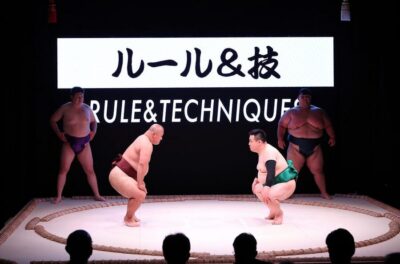
Sumo Stage Show with Bento or Snack + Fight & Photo
Read our review →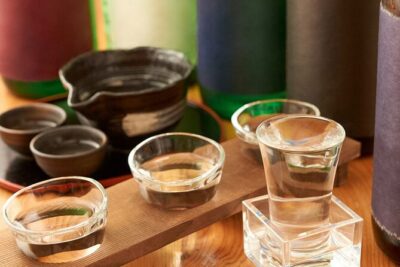
Ramen and Sushi Cooking Class with Sake Pairing Set in Tokyo
Read our review →Browse the lists this tour appears in