
Reviewed · SUSHI-MAKING CLASSES
Osaka: Sushi Class in Dotonbori
Osaka’s local sushi is not just raw fish on rice. In this three-hour class near Dotonbori, you learn three distinct styles, including oshizushi, the square pressed sushi tied closely to Kansai cooking. I like that the lesson gives you more than a quick roll-making demo: you shape nigiri, build a salad roll, and use a wooden mold for a local specialty. I also like the small class size and clear English instruction from teachers such as Yoshi, Yoko, Ami, Naomi, and Eriko.
The main consideration is finding the entrance. Cooking Sun Osaka is in room 202, and you must press 202 followed by the 呼出 call button. One participant had trouble locating the building, so allow a little extra time and look for the tree outside as a useful landmark. You will also need to request vegetarian or gluten-free ingredients when you book.
Key points
- Three sushi techniques: Make a salad roll, hand-formed nigiri, and Osaka-style pressed sushi.
- A true Osaka specialty: Oshizushi, also called box sushi, gives this class a local Kansai focus.
- Small groups: The class holds no more than eight people, with some sessions much smaller.
- A filling meal: You eat the sushi you prepare, and the portions are generous enough for a substantial lunch.
- English instruction: Teachers explain each step clearly and add useful notes about Japanese food customs.
- Good practical value: At $67 per person, the three-hour class includes all sushi-making ingredients and a meal.
Three kinds of sushi, not one quick rolling lesson
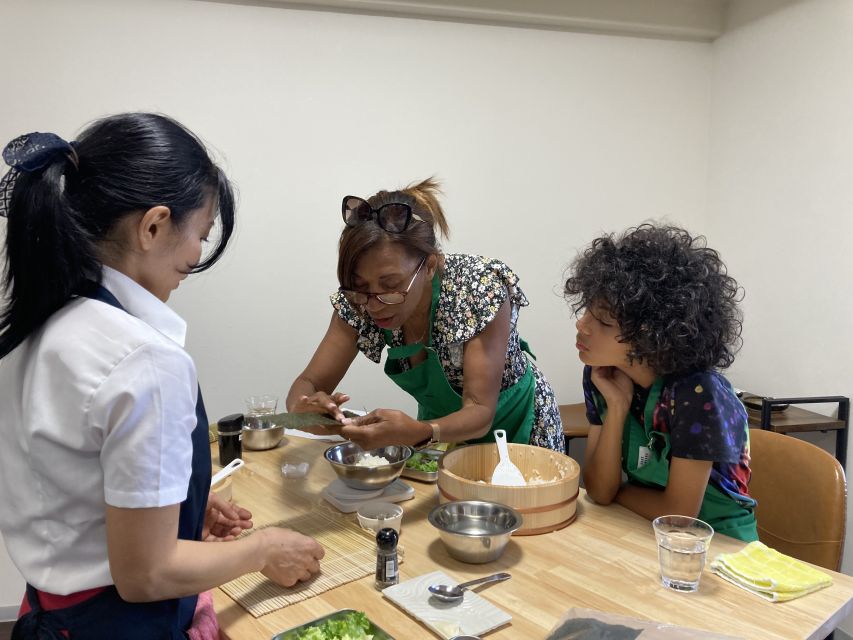
Many sushi classes focus almost entirely on makizushi, the familiar rolled sushi cut into rounds. This one gives you a wider view of the subject.
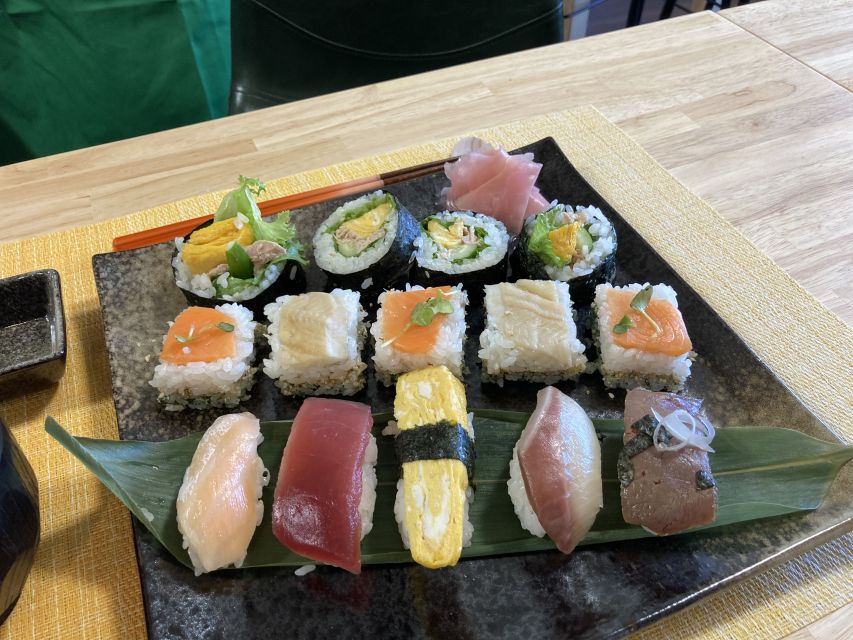
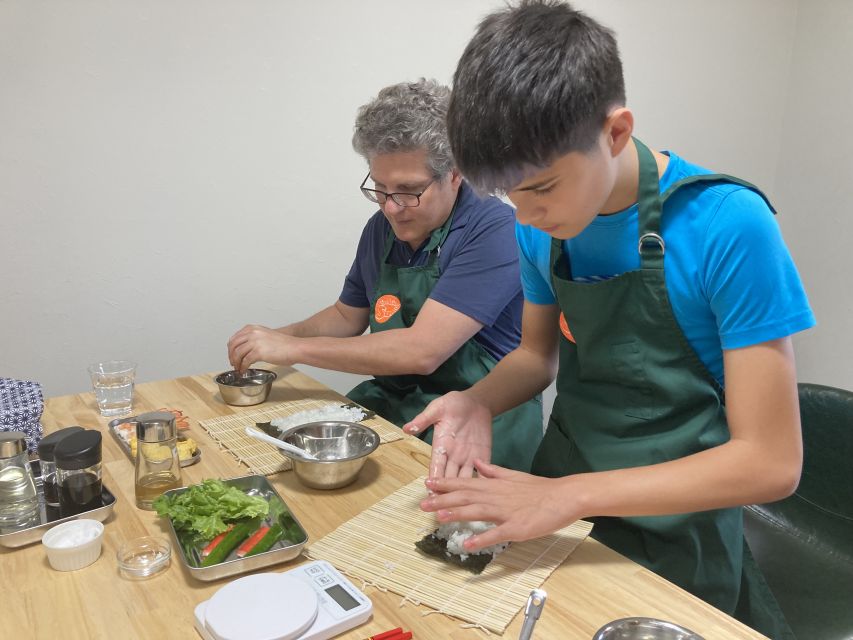
You begin with a salad roll containing crab-flavored kamaboko, lettuce, cucumber, tuna mixed with mayonnaise, and nori seaweed. A core of tamagoyaki, or Japanese rolled omelet, runs through the center. It is approachable food, with familiar textures and flavors, and gives you a good first lesson in handling nori without making the process feel too technical.
Next comes nigiri, the sushi most people picture first. You place fish, shellfish, or omelet on a small mound of vinegared rice. The tricky part is forming rice that holds together without becoming a hard block. The instructor demonstrates the hand position and pace, then guides you as you try it yourself.
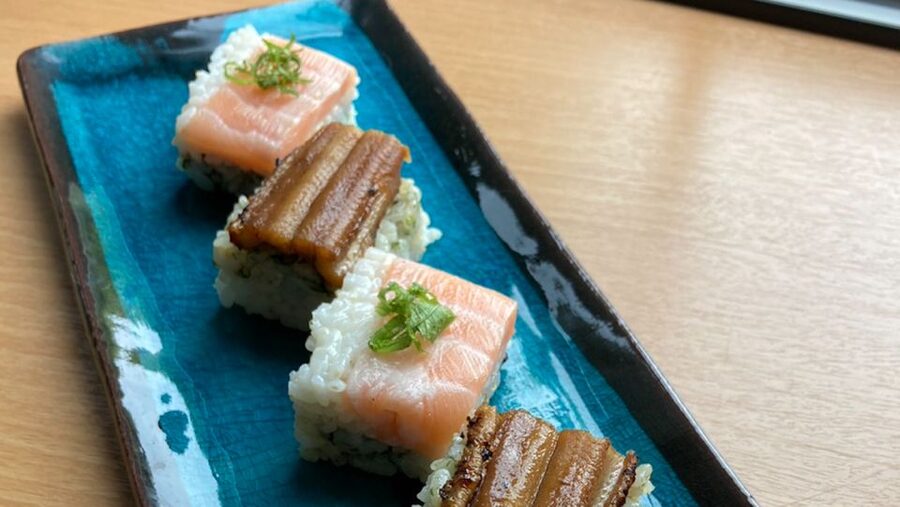
The third technique is oshizushi. You fill a square wooden frame with sushi rice and toppings, then press it so the rice binds to the ingredients. The finished piece is square rather than rounded, and you cut it into smaller portions just before eating. This is a useful lesson in regional food culture because pressed sushi is strongly associated with Osaka and the wider Kansai region.
Other classes behind the counter in Osaka:
- Sushi Making Osaka Roll and Authentic Japanese Sushi Class
★ 5.0 · 1,220 reviews - Osaka Sushi Making Experience
★ 5.0 · 400 reviews - Osaka Sushi Making Class – Hands-On Nigiri & Rolls (Same-Day OK)
★ 5.0 · 352 reviews
Why oshizushi makes this class feel local
Nigiri is famous around the world, but oshizushi gives the class its Osaka character. Also called box sushi, it is made by pressure rather than by shaping each piece by hand. That changes the texture, the look, and the way the finished sushi is served.
The square mold also makes the technique friendly for beginners. You are not trying to make every piece identical by hand. Instead, you layer the rice and toppings, press the mixture, and cut the block into neat pieces. It is still hands-on, but the method gives you a clear structure to follow.
I would especially recommend paying attention during this part if you want to recreate Japanese food at home. The class does not just present sushi as restaurant food. It shows how different techniques developed for different ingredients, shapes, and ways of serving.
What the three-hour class is like
The session is long enough to teach several methods without rushing. You should expect instruction, preparation, shaping, and time to eat what you make. The focus is practical, so you are not simply watching a chef work from across the room.
The teachers demonstrate each step and then let you try it. Yoshi has been praised for patient, detailed instruction and for chatting about places to eat and things to do in Osaka. Yoko has also led sessions described as funny, friendly, and clear. Other named instructors include Ami, Eriko, Naomi, and other Cooking Sun staff.
The class is taught in English. That matters here because sushi depends on small details: how much rice to use, how tightly to roll the nori, and how firmly to press the oshizushi. Clear demonstrations make the difference between a plate that holds together and one that falls apart before lunch.
You do not need previous cooking experience. The class is designed for first-timers, and the instruction moves step by step. If you are already comfortable making sushi, you may find the pace gentle, but the regional focus and the pressed sushi technique still give the session something different from a basic home cooking lesson.
Fresh ingredients and a generous finish
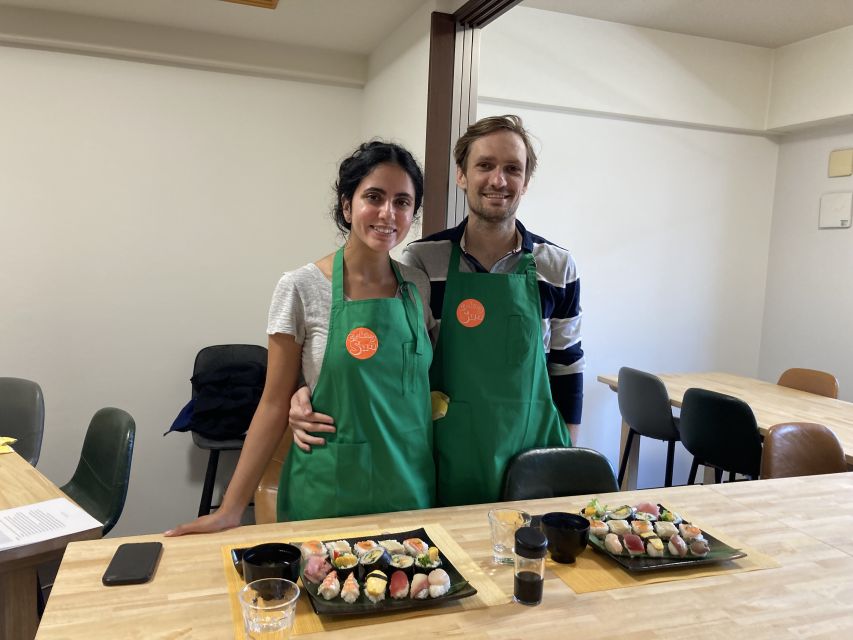
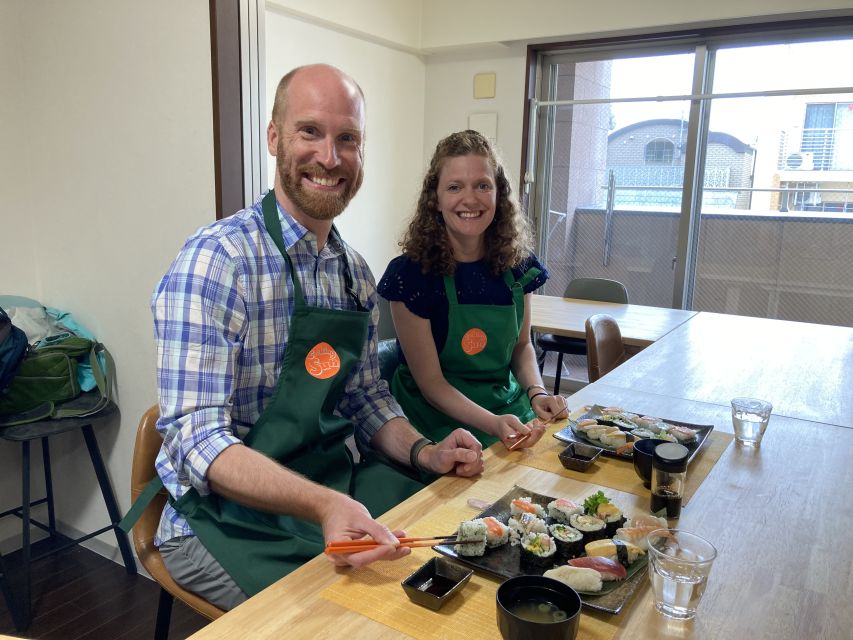
All ingredients for the sushi are included. The food list covers the fillings and toppings needed for the three featured styles, including tuna, crab-flavored kamaboko, cucumber, lettuce, tamagoyaki, nori, and vinegared rice.
The meal at the end is one of the strongest reasons to consider the price. The amount of food is described as substantial, and the finished sushi serves as the meal rather than a tiny sample. If you arrive hungry, that is useful. You get the satisfaction of eating what you prepared, not just carrying home a recipe.
The class also offers a small lesson in Japanese food culture. Instructors have discussed cooking methods, preservation, pickling, dashi, and the place of different foods in Japanese meals. The exact menu beyond the three listed sushi styles can vary, so treat those extra food lessons as a possible bonus rather than a guaranteed part of every session.
Same base, a different sort of day:
- Osaka Go Karting Tour with Funny Costume
★ 5.0 · 2,658 reviews - Osaka Castle: Museum and Tower Entry Ticket
★ 4.5 · 2,380 reviews - Osaka: Shinsekai Food Tour with 13-15 Dishes at 5 Eateries
★ 4.8 · 2,204 reviews - Osaka Food Tour: 13 Dishes at 5 Local Eateries
★ 5.0 · 2,149 reviews
A small group makes the instruction personal
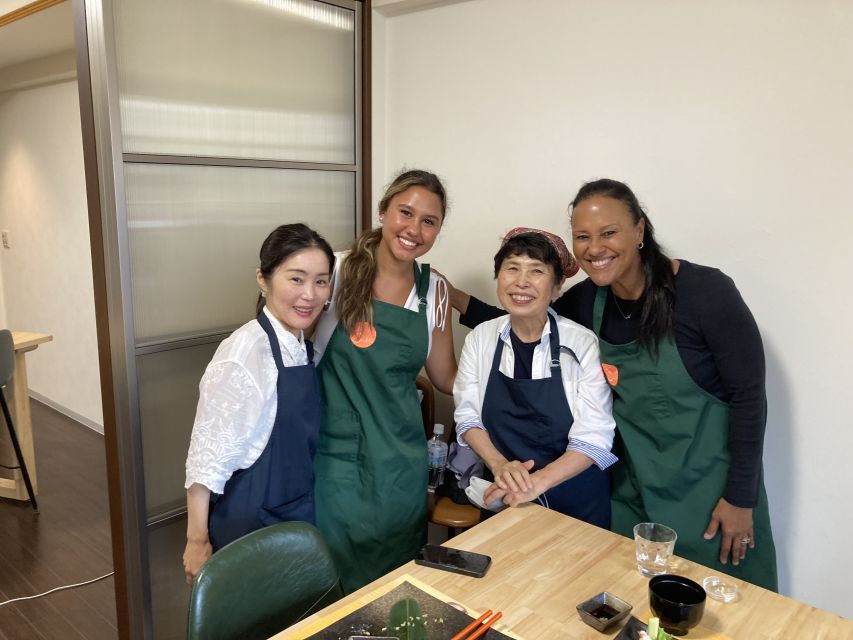
The maximum group size is eight. That is small enough for the instructor to watch your technique and answer questions without leaving you waiting through a long line of classmates.
Some sessions have had only four people, which gives the class a quieter, more personal feel. A small group also helps if you are shy about asking for help. Sushi shaping can feel awkward at first, and a teacher who can correct your hands or show the movement again is worth more than a large demonstration with little practice time.
The group format has one trade-off. You are sharing the lesson, so the timing is set by the class rather than by your own pace. If you prefer private instruction, this is not presented as a private class. For most people, though, a group of eight or fewer is a comfortable middle ground.
The English-speaking instructors add more than recipes
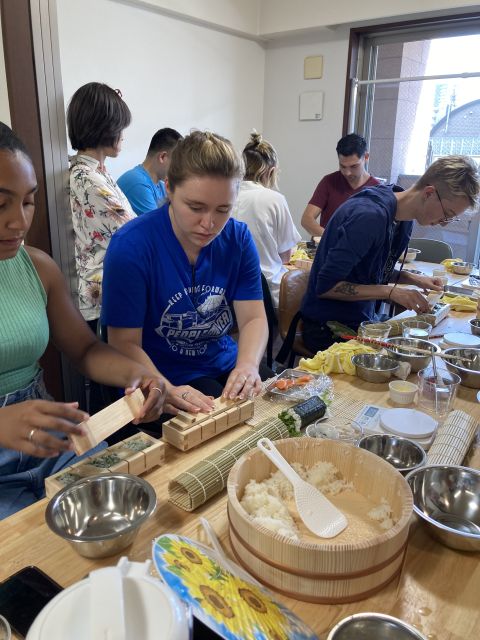
The strongest part of the teaching is not only the sushi technique. The instructors also explain Japanese food customs and answer questions about ingredients and local eating.
Yoshi, in particular, has been praised for offering Osaka food suggestions during the lesson. That can be useful early in your stay, when you are still working out what to order and where to eat. Other instructors have been praised for their English, patience, and ability to keep the class lively without losing track of the cooking.
You should still keep your expectations sensible. This is an introductory class, not professional sushi training. You will learn the basic handling and assembly of three styles, but the course does not promise fish-slicing practice. One participant specifically wished for that step after taking other Japanese cooking classes. If cutting whole fish is your main goal, this is not the best match.
Price, timing, and what you get for $67
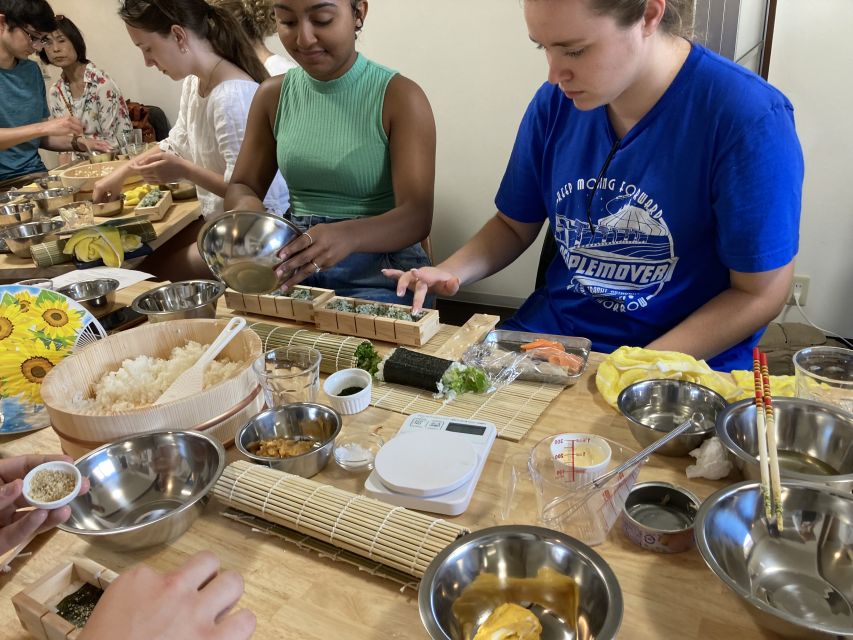
At $67 per person, the value depends on how you use the class. You get three hours of guided instruction, all the sushi-making ingredients, a small group setting, and a meal of the food you prepare.
That is a fair package in a city where a good meal and a structured cultural activity can quickly cost more when booked separately. The class is also long enough to feel like a proper activity rather than a short tourist demonstration. Several participants found the food quantity alone generous, but the real value is the combination of practical instruction and local context.
The class lasts three hours, with starting times available according to the booking calendar. Plan it as a half-day anchor in your Dotonbori schedule. It works well before an evening walk through the area, though you may want to avoid placing it immediately before another large meal.
Cancellation is free up to 24 hours before the activity for a full refund. You can also reserve now and pay later, which helps if you are still arranging a Japan itinerary.
Finding Cooking Sun Osaka in room 202
The meeting point is Cooking Sun Osaka, room 202. At the entrance, press 202 and then the 呼出 call button.
This is the one practical detail to take seriously. The building can be difficult to spot, and one person reported that even a taxi driver had trouble finding it. The tree outside is a useful visual clue. I would arrive early, keep the full address and room number handy, and avoid assuming that a driver will know the cooking school by name.
Once inside, the facility has been described as clean and modern, with the equipment needed for the lesson. The activity is wheelchair accessible, which makes it a practical option for many visitors, though you should still allow extra time to locate the entrance.
Dietary requests need to be made in advance
Vegetarian and gluten-free options are available, but you must leave a note when booking. Do not wait until the class begins to mention a restriction.
This is especially important in sushi preparation, where ingredients can appear in sauces, fillings, seasonings, and prepared items. Giving the school notice lets the instructors plan the right ingredients before you arrive.
The listed salad roll includes tuna, crab-flavored kamaboko, mayonnaise, egg, and nori. If you need substitutions, make the request clearly and early. The available information confirms that vegetarian and gluten-free arrangements can be requested, but it does not provide a full alternative menu.
Who will enjoy this sushi class most
I would choose this class for a first visit to Osaka, especially if you want an activity that connects food with place. The inclusion of oshizushi makes it more useful than a generic sushi workshop, and the meal gives you a satisfying finish.
It also suits couples, families, and small groups who want to do something together rather than sit across a restaurant table. The hands-on format gives everyone a task, and the small class size keeps the instruction manageable.
Sushi fans who already know the basics may enjoy the Osaka-style pressed sushi and the cultural explanations. You may find the lesson too introductory if you are looking for advanced knife work, whole-fish preparation, or restaurant-level speed.
People with dietary needs can consider it, provided they leave a clear note at booking. The English instruction and wheelchair accessibility also make it easier to fit into an international itinerary.
Who may want a different food activity
I would skip this class if your main goal is a market tour, a restaurant tasting, or a lesson centered on cutting fish. The activity is about preparing and assembling sushi, not visiting several eateries or practicing professional fish butchery.
It may also be a poor fit if you dislike structured group activities. The three-hour format has a clear sequence, and you will be working alongside other people rather than setting your own timetable.
Finally, do not book it only because you want a quick snack. The class takes three hours and is best treated as a full activity with lunch built in. If that sounds like too much time, a sushi restaurant will be simpler. If you want to understand how several sushi forms are made, the longer class earns its place.
Should you book it?
Book this Osaka sushi class if you want to make your own food, eat a generous meal, and learn a local technique in English. The combination of nigiri, salad roll, and oshizushi gives you real variety, while the group limit of eight keeps the teaching personal.
The main cautions are simple: request dietary changes in advance, allow time to find room 202, and do not expect whole-fish cutting. At $67, the class is a strong value for a three-hour activity with ingredients, instruction, and food included. For a hands-on introduction to Osaka cooking, I would put it high on your list.
FAQ
Where does the sushi class meet?
The class meets at Cooking Sun Osaka, room 202. At the entrance, press 202 and then press the 呼出 call button.
How long does the activity last?
The sushi class lasts three hours.
How much does the class cost?
The listed price is $67 per person.
What types of sushi will I make?
You will make a salad roll, nigiri, and oshizushi, also called pressed sushi or box sushi.
Is the class taught in English?
Yes. The instructor teaches in English, and English is the listed activity language.
Are ingredients included?
Yes. All ingredients needed for the sushi-making class are included.
Can I request vegetarian or gluten-free food?
Yes. You must leave a note about a vegetarian or gluten-free option when booking.
How large is the group?
The class is limited to eight participants.
Can I cancel for a refund?
Yes. You can cancel up to 24 hours in advance for a full refund. You can also reserve now and pay later.
Just added in Osaka
- Private arrival transfer from Kansai International airport to Kyoto City★ 5.0 · 32 reviews
- (Ticket Included) Explore Osaka Castle & Museum of History★ 4.8 · 21 reviews
- Hidden Osaka – Yukaku Red Light Tour & Culinary Adventure★ 4.8 · 96 reviews
- Osaka: Walking Tour and Top Highlights★ 4.8 · 104 reviews
- Pickleball in Osaka, Kobe & Kyoto with Locals!★ 4.7 · 80 reviews
- Osaka: Private Ceramic Painting Workshop★ 5.0 · 13 reviews
- Osaka:SUMO BEATS SHOWCASE: Taiko Drum and Wagyu burger!★ 4.2 · 37 reviews
- Eat Like a Local in Osaka – Private Custom Street Food Tour★ 4.3 · 33 reviews
Sushi-Making Classes, compared.
Sushi Making Tokyo Roll and Authentic Japanese Sushi Class
Read our review →
Roll and Authentic Sushi Making Class in Asakusa
Read our review →
Sushi Making Class in a Happi Coat near a Famous Spot
Read our review →
Tokyo Sushi Making Class in Tsukiji with Professional Chef
Read our review →
Tsukiji Fish Market Guided Tour and Sushi Making with Pro Chef
Read our review →
Sushi Making in Kyoto! Same-day bookings welcome!
Read our review →
Tsukiji Fish Market Sushi Making Class with Pro Chef
Read our review →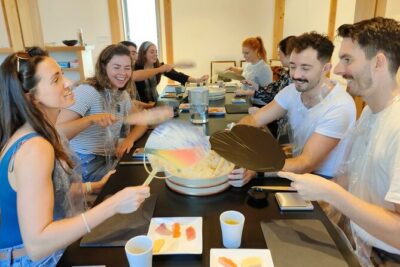
The Original Small-Group Sushi Making Class in Kyoto
Read our review →Browse the lists this tour appears in