
Reviewed · CALLIGRAPHY & CRAFT WORKSHOPS
Private Japanese Calligraphy in Kyoto – Learn Shodō with a Master
Japanese calligraphy here is less a quick craft project than a quiet lesson in brush control, patience, and Japanese culture. Aya, who has practiced for more than 55 years, teaches in her home near Nijo Castle, giving your party her full attention. The private setting and the chance to make several pieces are the experience’s strongest points.
I especially like the personal souvenir and the calm, hands-on teaching. You can choose a kanji character, try it repeatedly, and write your name in Japanese rather than simply watching a demonstration. The main caution is time: one hour goes quickly, and some people find the class rushed if they hope for a long history lesson or want to write a complicated name.
Key points
- A true private class: Only your group attends, with Aya teaching directly in her Kyoto home.
- A master with 55-plus years of practice: You learn brush movements from an experienced instructor, not from a short video demonstration.
- Near Nijo Castle: The meeting point is about 200 meters west of the castle, though you should rely on the map pin and entrance instructions.
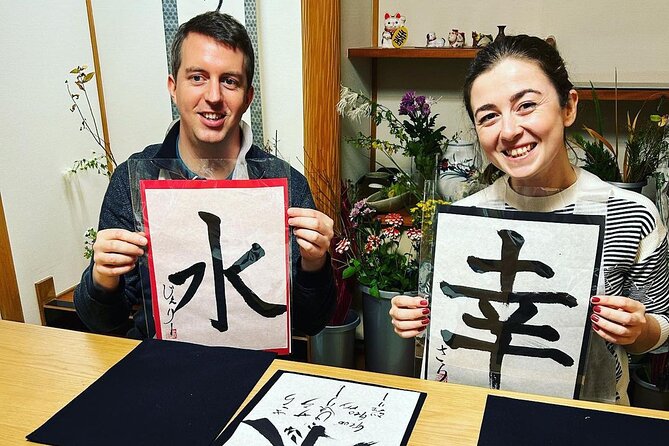
- Your own artwork goes home with you: Practice pieces, kanji, and possibly your Japanese name become personal souvenirs.
- Tatami-room etiquette matters: Wear or bring clean socks, since bare feet are not permitted.
- Best for motivated participants age 12 and older: Children under 12 cannot be accommodated.
Learning shodō in a Kyoto home
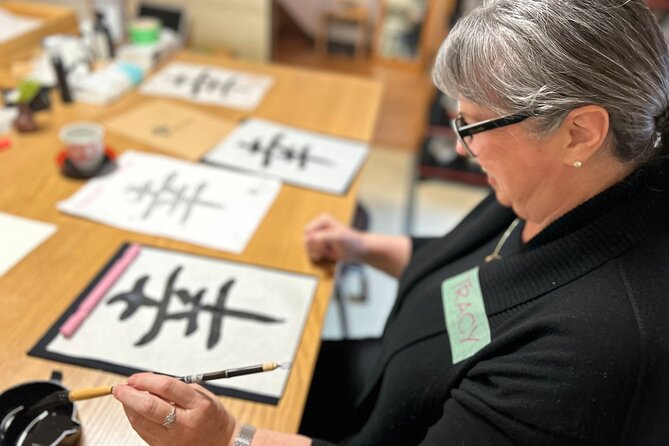
Shodō means the way of writing, and Japanese calligraphy rewards attention more than artistic talent. The goal is not simply to copy a symbol until it looks attractive. You learn how pressure, speed, direction, and posture shape each stroke.
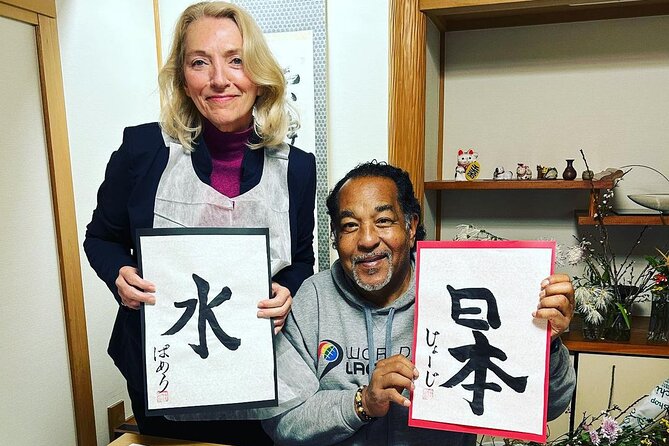
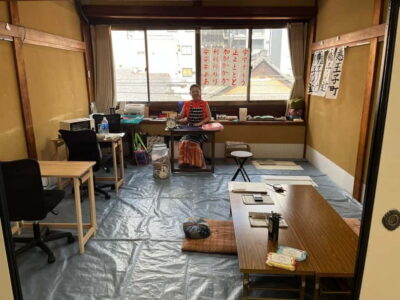
Aya teaches from a private home near Nijo Castle. That setting gives the class a personal feel that a large cultural center cannot easily match. You sit in a traditional tatami room, work with real brushes and ink, and learn in a calm space rather than in a crowded workshop.
Aya’s husband, Manabu, may also help welcome you and take photographs during the session. Past participants have appreciated the friendly atmosphere, tea, traditional Japanese sweets, and the chance to ask questions about Japanese culture beyond calligraphy.
This is not a formal school course. You will not become a trained calligrapher in one hour. Instead, you get a focused introduction with enough practice to understand why the art requires such careful control.
Other things to make with your hands in Kyoto:
- Kyoto : Chopsticks Making Workshop in Gion with Engraving Option
★ 5.0 · 958 reviews - Authentic knife making experience at a blacksmith in Kyoto
★ 4.8 · 350 reviews - Kyoto: Calligraphy class at Buddhist temple in city center
★ 5.0 · 167 reviews
What happens during the one-hour class
The class begins with an introduction to Japanese calligraphy and its background. The amount of spoken explanation can vary with the pace of your group, so if cultural context matters to you, ask questions early.
You then learn basic brush movements and practice copying characters. Aya guides your hand and offers corrections as you work. Beginners are welcome, and the teaching style is patient and encouraging rather than competitive.
The brush can feel awkward at first. You hold it upright, control the amount of ink, and try to begin and finish each stroke cleanly. Even a simple character demands attention. That is part of the fun: you see improvement within a few attempts, but you also discover why experienced calligraphers continue practicing for years.
You choose a favorite kanji character for your own artwork. The exact choice depends on what you want to express and what can reasonably be completed during the session. You can also try writing your name in Japanese, though a long name may take much of the available hour.
Several people have completed multiple pieces, while others have found that the time passed too quickly. I would arrive with a simple plan: choose one meaningful character first, then use any remaining time for your name or additional practice.
The personal value of choosing your kanji
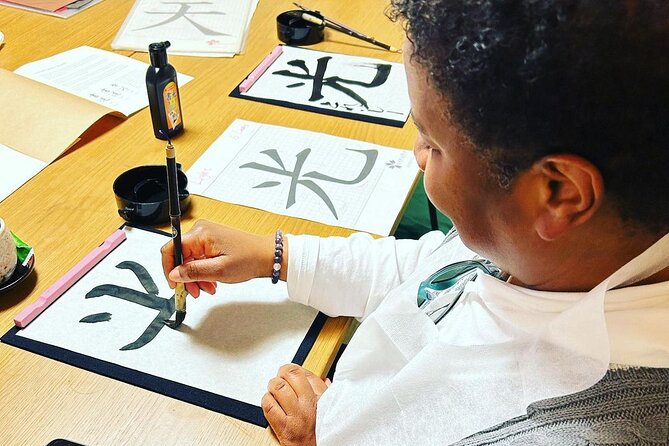
The strongest part of this activity is the choice of what to write. A character becomes more meaningful when you understand at least some of its meaning and decide why it appeals to you.
You might choose a character connected to family, courage, peace, gratitude, or another personal idea. The class helps you see that the character is not just a decorative mark. Its balance and movement matter, and the writing style reflects the person holding the brush.
Be realistic about the result. You are a beginner working under time limits, so your finished piece will not look like Aya’s professional work. That difference is useful. Your artwork records the process of learning, not an attempt to buy a perfect wall decoration.
If you want a specific phrase, ask whether it can be completed in the time available. A single kanji is more practical than a long expression. One participant hoped to write an extended name but found that an hour was not enough. A short, well-practiced character usually makes a better souvenir.
Why the private format matters
The private format is more than a marketing label. There are no other groups competing for the instructor’s attention, so Aya can watch your grip, stroke direction, and pace.
That helps if you are nervous about making mistakes. You can ask for another demonstration, practice at your own speed, and receive corrections without performing in front of strangers.
It also makes the class suitable for couples, families with older children, and friends who want a quieter cultural activity. A family with teenagers enjoyed the class together, and a motivated younger child was able to take part after the age issue was discussed. Still, the stated rule is clear: children under 12 cannot be accommodated.
The private setting can feel more intimate than a standard tourist workshop. You are entering someone’s home, so basic courtesy matters. Arrive on time, keep the space tidy, and follow tatami etiquette.
Same base, a different sort of day:
- PERFECT KYOTO 1-Day Bus Tour
★ 5.0 · 13,518 reviews - Kyoto: Fushimi Inari, Kinkakuji, Bamboo Grove 1 Day Bus Tour
★ 4.8 · 4,316 reviews - Kyoto: Tea Ceremony in a Traditional Tea House in Kiyomizu
★ 4.9 · 3,519 reviews - Kyoto Geisha Walking Tour: Gion District & Hidden Gems
★ 4.7 · 3,273 reviews
A master teacher, not a rushed demonstration
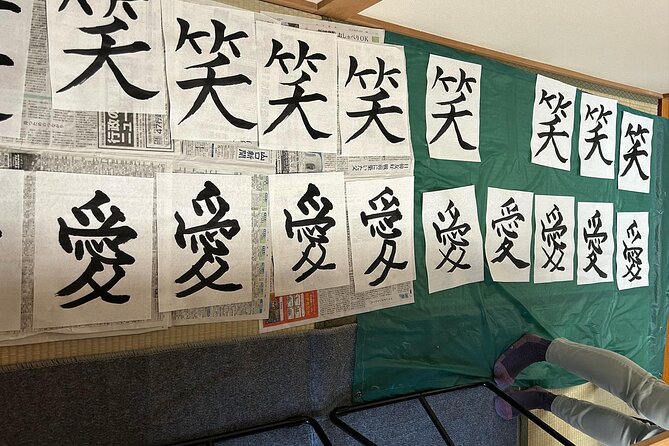
Aya has more than 55 years of calligraphy experience. That does not mean the class is a lengthy masterclass, but it does give her a long perspective on the small details beginners miss.
She can show how a brush should move and explain how the artist’s state of mind affects the work. The teaching is practical, with hands-on instruction instead of a lecture followed by a worksheet.
Her English is strong enough for instruction, and the activity is offered in English and Japanese. If your group includes people who do not understand English well, this may not be the right choice, since the class depends on following spoken guidance.
The atmosphere is generally warm and low-pressure. Aya encourages beginners and does not expect you to arrive with any artistic background. That makes this a good choice if you normally avoid art classes because you fear producing something embarrassing.
At the same time, expectations should stay sensible. One hour allows an introduction, practice, and finished pieces. It does not allow a full survey of calligraphy history or detailed coaching on every aspect of the art.
Finding the home near Nijo Castle
The meeting point is SAKURA Experience Japanese Culture Nijo Home at 660 Izumicho, Nakagyo Ward, Kyoto. It is near public transportation and about 200 meters west of the front of Nijo Castle.
The location has caused confusion for some people. The map pin is reported to be accurate, but street-view images may show a different place. Use the exact Google Maps pin and the entrance photograph sent by the host, rather than relying only on street-view images.
I would build in extra time. Kyoto’s grid can look simple on paper, yet similar streets and entrances can slow you down when you are looking for a private home. If you have trouble, contact the host promptly. A late arrival of more than 15 minutes means the class cannot begin, and no refund is offered in that situation.
This strict timing is understandable for a private lesson. Aya prepares the room and reserves the hour for your group. It is still an important practical point, especially if you are connecting from another sightseeing stop.
Tatami etiquette and what to bring
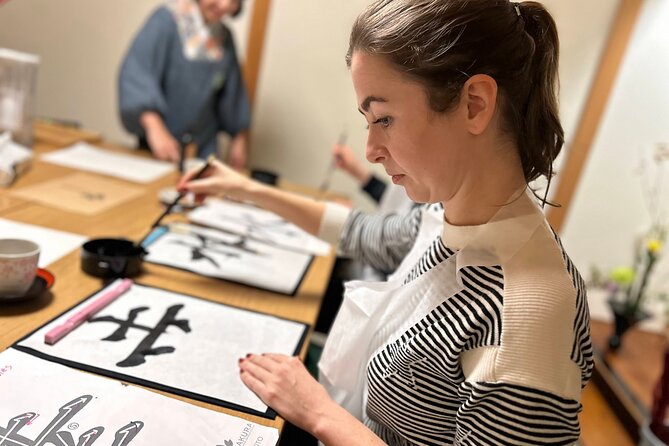
You need to wear or bring clean socks. Bare feet are not permitted in the tatami room, and entering without socks is considered impolite.
You do not need to bring brushes, ink, or paper. The class includes the calligraphy tools and paper, plus guidance on selecting and writing your character.
Wear clothing that allows you to sit comfortably and work carefully. The provided information does not specify a dress code beyond socks, so you only need to plan for a traditional room and an activity involving ink.
The finished artwork is included. You can take home the pieces you create, which adds real value for anyone looking for a souvenir connected to a personal experience rather than a shop purchase.
Some sessions also include photographs taken by Aya or Manabu and shared afterward. This is a welcome extra, but I would treat it as a courtesy rather than the main reason to book.
What the $77.51 price buys you
At $77.51 per person, this is not the cheapest one-hour activity in Kyoto. Its value depends on what you want from the hour.
You are paying for a private class, an experienced teacher, all materials, personal instruction, and artwork to take home. A large group workshop might cost less, but it would not necessarily provide the same attention or relaxed access to the instructor.
The private format becomes better value when two or more people in your group genuinely want to participate. Group discounts are available, though the exact saving is not provided, so check the price for your party before booking.
The class also works well as a short cultural activity between larger Kyoto sights. Since it is near Nijo Castle, you can pair it with a visit there rather than spending half a day crossing the city.
The value is weaker if you want a long, academic discussion of Japanese calligraphy or advanced instruction. For that, you would need a longer or more specialized course. This experience is best understood as a personal introduction and souvenir-making session.
Who will enjoy this most
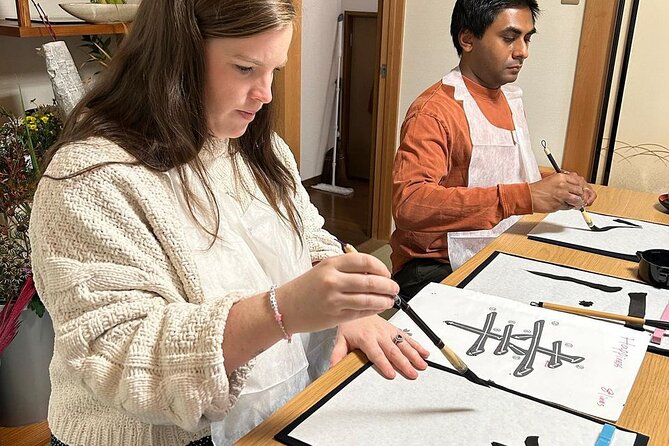
I would recommend the class to first-time visitors who want to try a traditional Japanese art without committing to a full-day course. You do not need previous experience, and the private format takes some pressure out of learning.
It suits:
- Couples seeking a quiet activity
- Families with children age 12 or older
- Solo visitors who want direct instruction
- Friends looking for a rainy-day plan
- Anyone who wants a handmade Kyoto souvenir
- Visitors interested in Japanese culture but unsure about formal art lessons
It is less suitable for children under 12, people who dislike sitting in a tatami room, or anyone expecting a long and technical workshop.
You should also think about your priorities. If you mainly want photographs and a fun cultural stop, the class fits well. If your main goal is to produce flawless calligraphy, one hour may leave you wanting more.
Timing, cancellations, and a few practical warnings
The activity lasts about one hour and ends at the same home where it begins. There is no private transportation included, so you must reach the meeting point yourself.
You can cancel for a full refund up to 24 hours before the start time. Cancellations or changes made within 24 hours are not refunded or accepted. If public transportation or weather causes a delay, contact the host as soon as possible.
The experience is confirmed at booking, and most people can participate. The firm age limit and late-arrival rule are the two details I would pay closest attention to before reserving.
Should you book this Kyoto calligraphy class?
Book it if you want personal instruction, a calm home setting, and artwork that you actually create yourself. Aya’s long practice, patient approach, and private teaching make this a strong introduction to shodō for beginners.
Go in with the right expectations. You will learn the basics, practice meaningful characters, and leave with a personal keepsake. You will not receive a full course in calligraphy history, and the hour may feel short if you want to write a long name or several complex phrases.
For the best experience, choose one simple kanji in advance, arrive early, bring clean socks, and use the exact map pin. With those details handled, this is a thoughtful Kyoto activity that gives you more than a souvenir: it gives you a small understanding of how much care can fit into a single brushstroke.
FAQ
Where is the Japanese calligraphy class held?
The class is held at SAKURA Experience Japanese Culture Nijo Home, 660 Izumicho, Nakagyo Ward, Kyoto, 604-0015, Japan. It is about 200 meters west of the front of Nijo Castle.
How long does the calligraphy class last?
The activity lasts approximately one hour and ends back at the meeting point.
Is the class private?
Yes. Only your group participates, and the instructor gives your party her full attention.
Who teaches the class?
Aya teaches the class. She has more than 55 years of calligraphy experience. The activity is offered in English and Japanese.
Are calligraphy materials included?
Yes. Brushes, ink-related tools, paper, and other calligraphy equipment needed for the lesson are provided.
Can I take my artwork home?
Yes. Your finished calligraphy pieces are included and can be taken home as a keepsake.
Can children join the activity?
Children under 12 cannot be accommodated. Children age 12 and older may participate.
What should I wear or bring?
You should wear or bring clean socks. Bare feet are not permitted in the tatami room.
What happens if I arrive late?
If you arrive more than 15 minutes late, the class cannot be offered and no refund is available. If public transportation or weather delays you, contact the host as soon as possible.
Just added in Kyoto
- Private Cooking Class Udon in Kyoto Japan★ 5.0 · 23 reviews
- Your Private Vacation Photography Session In Kyoto★ 5.0 · 110 reviews
- Kyoto: Zen Meditation at a Private Temple with a Monk★ 5.0 · 25 reviews
- Private Pewter Sake Cup Experience with a Kyoto Artisan★ 5.0 · 31 reviews
- Kyoto Wagashi(Japanese sweets) Cooking Class near Fushimiinari★ 5.0 · 60 reviews
- Kyoto:Family-Friendly Kimono & Yukata Experience at WARGO★ 5.0 · 147 reviews
- Private Guided Traditional Buddhist Cooking in Japan★ 5.0 · 16 reviews
- Kyoto: Gion Geisha District & Sake-in-Hand Walking Tour★ 5.0 · 37 reviews
Calligraphy & Craft Workshops, compared.
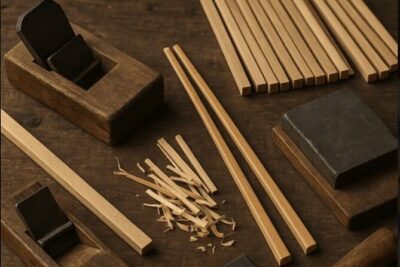
Chopsticks Making Workshop in Gion with Engraving Option
Read our review →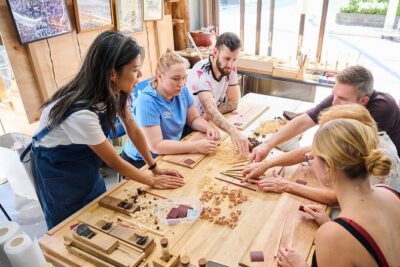


Matcha Making Experience with Mochi Sweets in Asakusa
Read our review →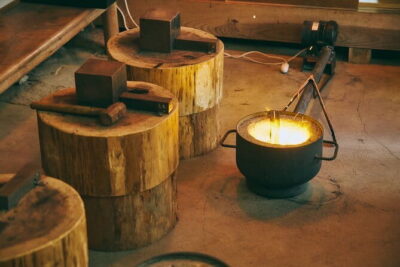
Authentic knife making experience at a blacksmith in Kyoto
Read our review →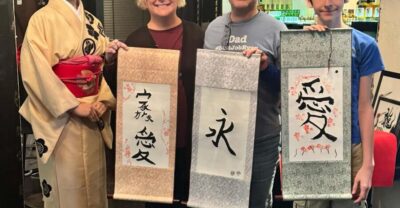
Calligraphy class at Buddhist temple in city center
Read our review →Browse the lists this tour appears in