
Reviewed · CALLIGRAPHY & CRAFT WORKSHOPS
Sekka Cotton Furoshiki Class
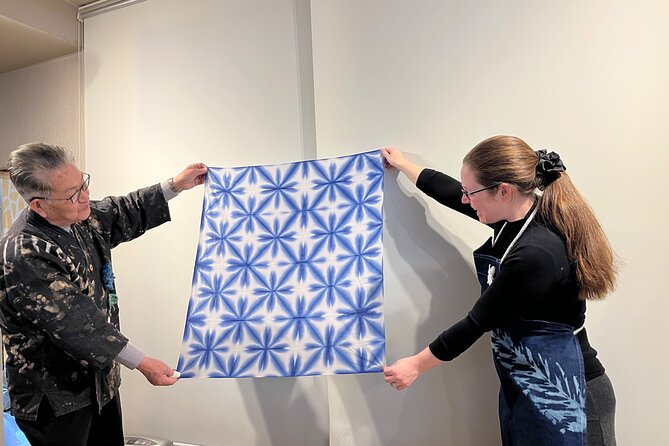
The best part of this Kyoto class is that you do not simply buy a handmade souvenir. You create one. At the Kyoto Shibori Museum, your private group folds and dyes an 86 by 89 cm cotton furoshiki with the sekka shibori method, then watches the pattern appear as the cloth is opened.
I like the one-party format, which keeps the lesson personal and works well for families or small groups. I also like the clever use of drying time: while your cloth sets for about 30 minutes, you tour the museum’s textile displays, tools, and samples. The hands-on portion is fairly simple and standardized, so experienced crafters may want more freedom to design.
Key points at a glance
- Make a useful Kyoto souvenir: You leave with the cotton furoshiki you dyed yourself.
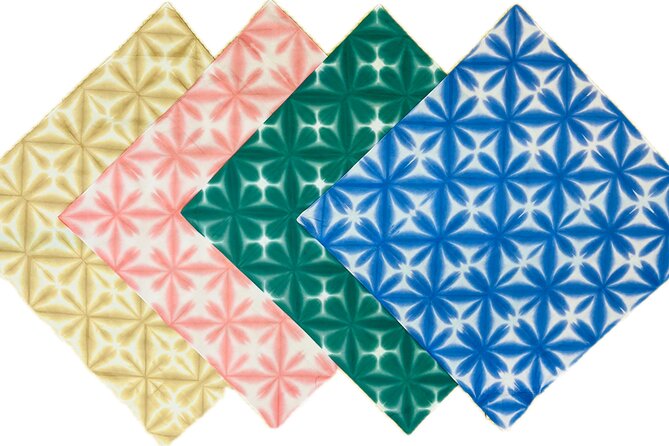
- Choose your own color: The class starts with a color selection before folding and dyeing.
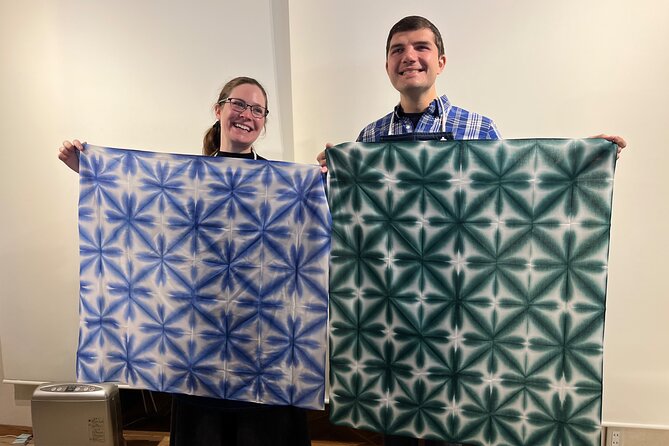
- See the sekka shibori pattern take shape: Folded cloth, two boards, and dye create the design.
- Private lesson for your party: Only your group takes part, with a more personal pace.
- Use the drying time well: Explore shibori art, tools, historical samples, and museum displays.
- Plan for a short craft session: The full class generally takes about 30 to 60 minutes.
Making a furoshiki at Kyoto Shibori Museum
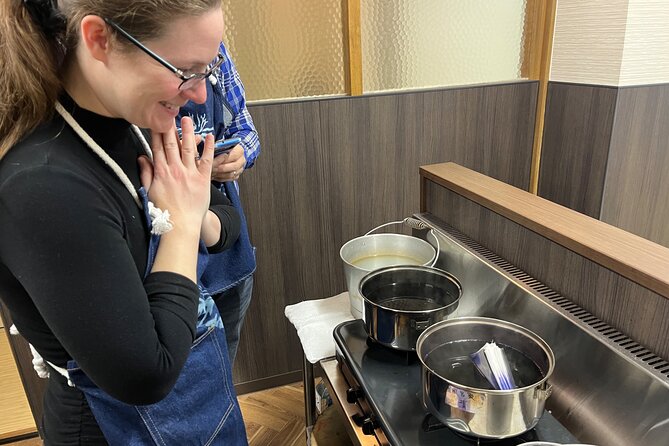
This is a compact craft experience at 135-5 Shikiamichō in Kyoto’s Nakagyo Ward. You meet at the Kyoto Shibori Museum and return there when the activity ends. The museum is near public transportation, so it can fit neatly between sightseeing stops in central Kyoto.
The class begins with the cloth itself. You work with a cotton furoshiki measuring about 86 by 89 centimeters. That is large enough to use later for wrapping gifts, carrying belongings, or displaying at home, yet manageable during a short lesson.
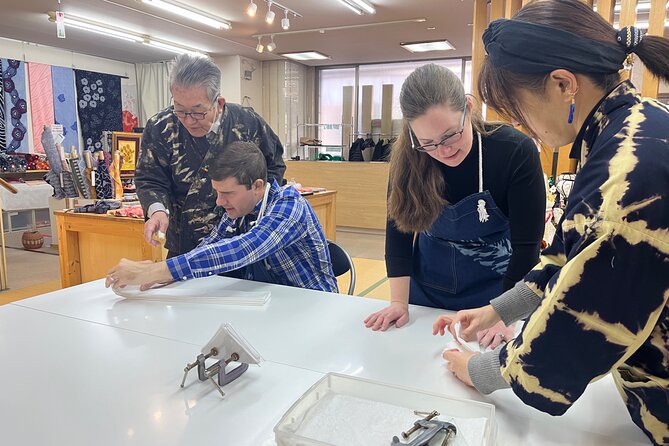
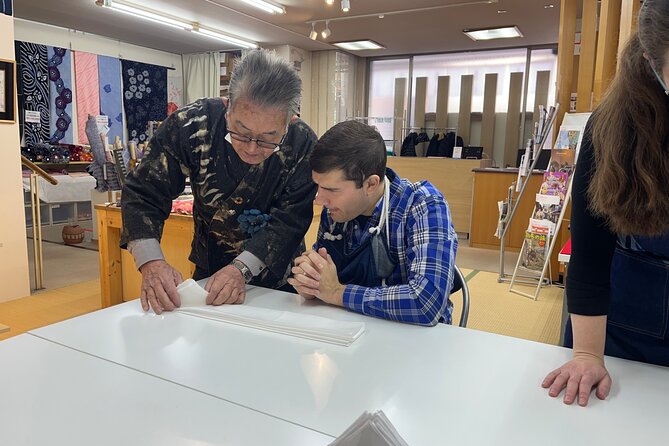
You first pick a color. Then the instructor shows you how to fold the cloth in a particular way. This step matters because the folds determine how the dye reaches the fabric. The method is guided rather than open-ended, so you are not starting with a blank sheet and inventing a pattern from scratch.
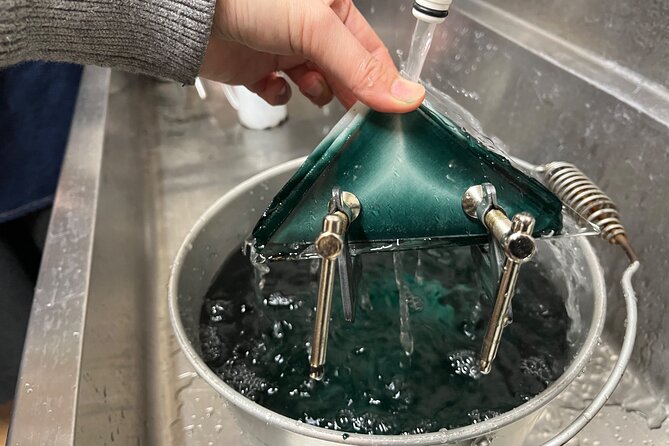
Next, the folded fabric goes between two boards. The boards hold the cloth in place as it is dyed. This is the key moment in the class, though it is also the part some craft-minded adults may find too easy. You follow a set process, and the result comes from the relationship between folding, pressure, and dye rather than from detailed hand stitching or complex preparation.
That simplicity is useful if you have children with you, limited time, or no previous experience with Japanese textile crafts. You can understand the main idea quickly and leave with a finished item instead of spending half a day learning a demanding technique.
Other things to make with your hands in Kyoto:
- Kyoto : Chopsticks Making Workshop in Gion with Engraving Option
★ 5.0 · 958 reviews - Authentic knife making experience at a blacksmith in Kyoto
★ 4.8 · 350 reviews - Kyoto: Calligraphy class at Buddhist temple in city center
★ 5.0 · 167 reviews
What makes sekka shibori interesting
Shibori is a family of Japanese resist-dyeing methods. Fabric is folded, tied, stitched, clamped, or otherwise protected before dye is applied. The protected sections resist the color, creating patterns when the cloth is unfolded.
Here, the focus is sekka shibori. The folding and board method produces a patterned design without requiring you to stitch the fabric or tie many separate sections. The finished pattern is partly predictable and partly a small surprise, which gives the opening of the cloth its appeal.
I like this kind of lesson because it gives you a physical connection to a craft that can otherwise seem distant behind glass. You handle the fabric, make decisions, and see how a simple process creates a decorative result. The activity does not try to turn you into a professional dyer in one hour. It gives you a clear introduction and a keepsake with a story attached.
The private format also helps. Your party can ask questions without competing with a large class. The instructors are described as friendly and helpful, and English is spoken by several people at the museum. That makes the lesson more comfortable for an international audience, particularly when the folding instructions need to be followed closely.
The 30-minute drying period is part of the experience
After dyeing, the fabric needs about 30 minutes to dry. Rather than leaving you to wait, the class uses this time for a museum visit.
You can browse textile art, tools, and shibori samples displayed in the museum. There is also an educational video and an exhibition that includes remarkable shibori work made by 50 artisans over 50 years. That display gives useful scale to the craft. Your furoshiki is a short introduction, while the museum shows what artists can achieve after years of practice.
This second part is important when you are deciding if the price feels worthwhile. The class itself is quick. If you only want the folding and dyeing, the hands-on portion may feel brief. But the museum visit adds context and turns the booking into two linked activities: making a small textile and seeing more ambitious examples.
I would allow yourself time to look carefully rather than rushing through the displays. The museum helps explain why a basic folding exercise connects to kimono-making and other Japanese textile traditions. Several people who took the class found the museum and its textile art to be a highlight, not just a waiting room for the finished cloth.
A private lesson that suits families and small groups
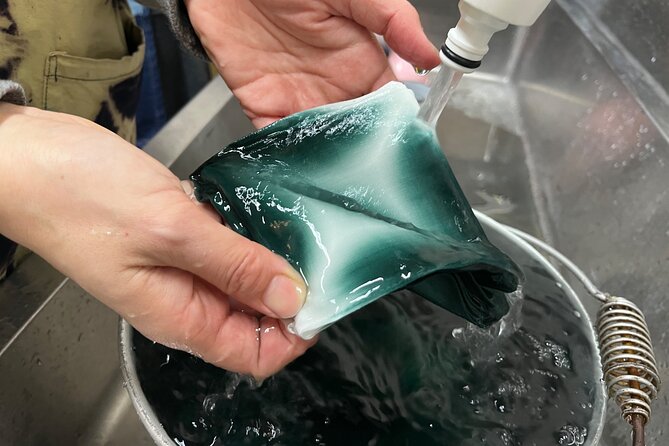
The experience is private, so only your party participates. That gives you more control over the pace and makes it easier to include different ages.
Families can work on their own pieces while learning the same process. The activity has also been enjoyed by teenagers, and the straightforward instructions make it suitable for people who do not consider themselves artistic. You do not need to arrive with specialist skills.
The class can also work well for adults who want a quiet change from temples, shopping streets, and crowded sightseeing sites. Kyoto offers no shortage of major attractions, but a short craft lesson gives your hands something to do and leaves you with an object tied to the city.
The main limitation is the level of creative freedom. If you want to choose several colors, invent your own folding scheme, or spend hours refining a pattern, this is not that kind of workshop. The process is deliberately controlled and easy to complete. I see that as a strength for first-timers and children, but a possible weakness for experienced textile artists.
Same base, a different sort of day:
- PERFECT KYOTO 1-Day Bus Tour
★ 5.0 · 13,518 reviews - Kyoto: Fushimi Inari, Kinkakuji, Bamboo Grove 1 Day Bus Tour
★ 4.8 · 4,316 reviews - Kyoto: Tea Ceremony in a Traditional Tea House in Kiyomizu
★ 4.9 · 3,519 reviews - Kyoto Geisha Walking Tour: Gion District & Hidden Gems
★ 4.7 · 3,273 reviews
What you take home for $43.35
The listed price is $43.35 per person. For that fee, you receive a private lesson, the cotton furoshiki you dye, and access to the museum portion during the drying period.
The value depends on what you want from a craft class. If you judge it only by active making time, the price may seem high for a session that can take as little as 30 minutes. The dyeing itself is described as quick and straightforward.
If you count the private instruction, the finished cloth, the museum displays, and the chance to learn about sekka shibori in its working setting, the cost makes more sense. You are paying for a small cultural activity rather than just a piece of fabric. The furoshiki is also more useful than a typical souvenir. You can use it at home, give it as a gift, or keep it as a reminder of Kyoto.
The museum shop sells additional shibori items, fabrics, souvenirs, and textile goods. I would set a spending limit before you browse. The class price does not include anything you buy there, and the shop offers plenty of tempting ways to extend the experience.
Timing, location, and practical planning
The activity lasts approximately one hour, with individual classes generally taking 30 to 60 minutes. The exact pace can depend on how quickly your group completes the folding and dyeing steps, followed by the drying period and museum visit.
Book with the short duration in mind. This is easy to pair with other Kyoto plans, but you should avoid scheduling something that begins immediately afterward if you want time to see the displays and collect your finished cloth.
The meeting point is Kyoto Shibori Museum at 135-5 Shikiamichō, Nakagyo Ward, Kyoto, 604-8261, Japan. The activity ends back at the same location. It is near public transportation, and most people can participate.
You receive confirmation at the time of booking, and the ticket is mobile, which keeps arrival simple. The experience permits free cancellation up to 24 hours before the start time. Changes or cancellations made less than 24 hours before the start time are not accepted for a refund, so check your Kyoto schedule before committing.
How this compares with ordinary souvenir shopping
A shop-bought textile may be more polished, larger, or more intricate. It may also be easier to pack. But it will not show the folds you made or carry the memory of learning a traditional dyeing method.
The furoshiki format adds practical value. In Japan, wrapping cloths can be used for gifts and carrying items, so this is not a decorative object with no purpose. The finished cloth can serve as a table accent, a gift wrap, or a useful travel item.
I also appreciate that the class makes you notice process. At first, the folded fabric may look plain. After dyeing and drying, its pattern reflects the decisions built into the fold. That is a better souvenir story than simply saying you purchased something in Kyoto.
Still, you should not book this expecting a long artisan apprenticeship. The class offers an accessible sample of shibori, followed by a museum visit. It does not cover every form of Japanese dyeing, and it does not give you a broad set of techniques to practice independently.
Who should book this Kyoto craft class
I would recommend it most strongly to:
- Families looking for a short, hands-on activity
- Couples or friends who want a private cultural lesson
- First-time crafters who prefer clear instructions
- Teenagers who enjoy making a physical souvenir
- Anyone interested in Japanese textile art and kimono-making techniques
- Visitors who want a calm break from sightseeing
It is less suited to someone seeking an advanced textile workshop. The process is standardized, and the dyeing portion is not especially long. If your priority is an extensive class with multiple patterns and techniques, you may find this one limited.
The museum makes the booking more useful for anyone curious about the larger craft. You do not just make a furoshiki and leave. You also see tools, samples, and major textile works that show how the same general tradition can develop into highly detailed art.
Should you book the Sekka Cotton Furoshiki Class?
Book it if you want a short private activity, a useful handmade souvenir, and a clear introduction to Japanese shibori. The instructors are described as kind and helpful, the class works well for families, and the museum visit adds substance to the quick dyeing lesson.
Think twice if you want a long, highly creative workshop. The folding and dyeing steps are guided and fairly simple. For most first-time visitors, though, that is exactly why the class works: you can make something attractive without giving up a full afternoon in Kyoto.
At $43.35 per person, I consider it a fair choice when you value both the private instruction and the museum visit. It is especially worthwhile if you would otherwise buy a textile souvenir anyway. Here, you leave with one you made yourself.
FAQ
Where does the Sekka Cotton Furoshiki Class take place?
The class takes place at Kyoto Shibori Museum, 135-5 Shikiamichō, Nakagyo Ward, Kyoto, 604-8261, Japan.
How long does the activity last?
The activity lasts approximately one hour. Individual classes usually take between 30 and 60 minutes.
Is the class private?
Yes. Only your group participates in the activity.
What will I make?
You will dye an approximately 86 by 89 centimeter cotton furoshiki, or wrapping cloth, using the sekka shibori method.
Can I choose the color?
Yes. Choosing your preferred color is part of the class before you fold and dye the fabric.
What happens during the drying time?
The fabric dries for about 30 minutes. During that time, you can explore the Kyoto Shibori Museum, including its textile art, tools, and shibori samples.
Is the museum visit included?
Yes. The museum displays are part of the activity while your furoshiki dries.
Is the class suitable for families?
Yes. Most people can participate, and the activity is described as family-friendly. Teenagers have also taken part.
Is the activity near public transportation?
Yes. The museum is near public transportation.
What is the cancellation policy?
You can cancel up to 24 hours before the start time for a full refund. Cancellations or changes made less than 24 hours before the start time are not accepted for a refund.
Just added in Kyoto
- Private Cooking Class Udon in Kyoto Japan★ 5.0 · 23 reviews
- Your Private Vacation Photography Session In Kyoto★ 5.0 · 110 reviews
- Kyoto: Zen Meditation at a Private Temple with a Monk★ 5.0 · 25 reviews
- Private Pewter Sake Cup Experience with a Kyoto Artisan★ 5.0 · 31 reviews
- Kyoto Wagashi(Japanese sweets) Cooking Class near Fushimiinari★ 5.0 · 60 reviews
- Kyoto:Family-Friendly Kimono & Yukata Experience at WARGO★ 5.0 · 147 reviews
- Private Guided Traditional Buddhist Cooking in Japan★ 5.0 · 16 reviews
- Kyoto: Gion Geisha District & Sake-in-Hand Walking Tour★ 5.0 · 37 reviews
Calligraphy & Craft Workshops, compared.
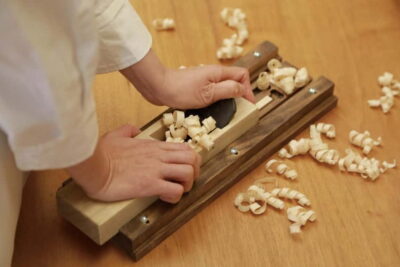
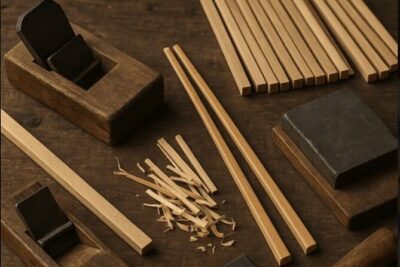
Chopsticks Making Workshop in Gion with Engraving Option
Read our review →


Matcha Making Experience with Mochi Sweets in Asakusa
Read our review →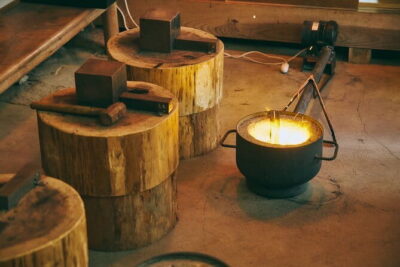
Authentic knife making experience at a blacksmith in Kyoto
Read our review →
Calligraphy class at Buddhist temple in city center
Read our review →Browse the lists this tour appears in