
Reviewed · RAMEN TOURS & WORKSHOPS
Shibuya: Ramen Dojo Tokyo | Make All 3 (Tonkotsu/Shoyu/Miso)
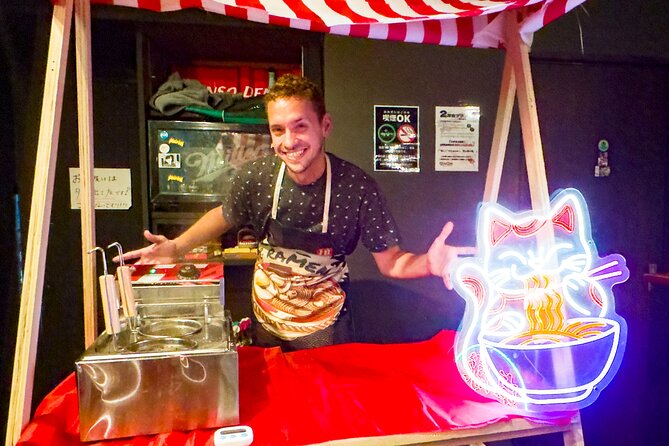
Three bowls of ramen in 90 minutes is the clever hook here. At Ramen Dojo Tokyo, you make fresh noodles, prepare chicken chashu, and compare tonkotsu, shoyu, and miso side by side. I like the professional noodle machine and the fact that beginners get real hands-on work, not just a cooking demonstration.
I also like the small groups, English guidance, and digital recipe you receive afterward. Instructors such as Kazuki, Kensei, Kai, and Arata are praised for clear, friendly teaching. The catch is that the broths are prepared ahead of time, and the studio is reached by stairs, so this is not a full from-scratch ramen course for every dietary need.
Key points at a glance
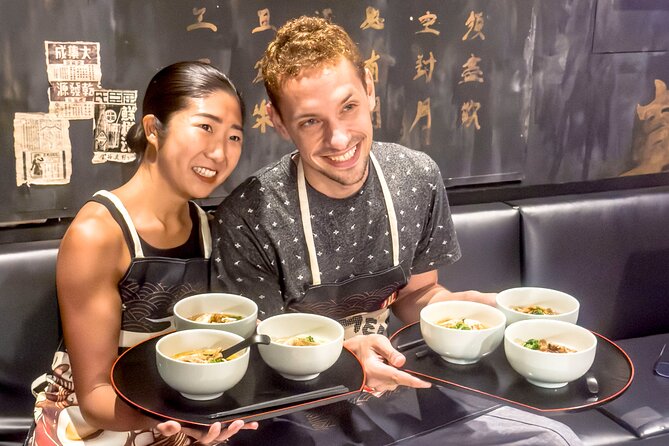
- Three ramen styles in one sitting: Taste mini bowls of tonkotsu, shoyu, and miso, then compare their different flavors.
- Fresh noodles are the main hands-on project: Knead the dough, roll it, and cut it with a professional noodle machine.
- Chicken chashu is part of the class: You prepare and finish the meat before adding it to your bowls.
- English support keeps the pace easy: Groups are capped at eight, with step-by-step help from the instructor.
- The meal is more filling than it sounds: Three mini bowls can add up, so arrive hungry and avoid eating right before class.
- You leave with a recipe: The digital recipe makes it possible to repeat the noodle and ramen process at home.
Why three ramen styles make this class worthwhile
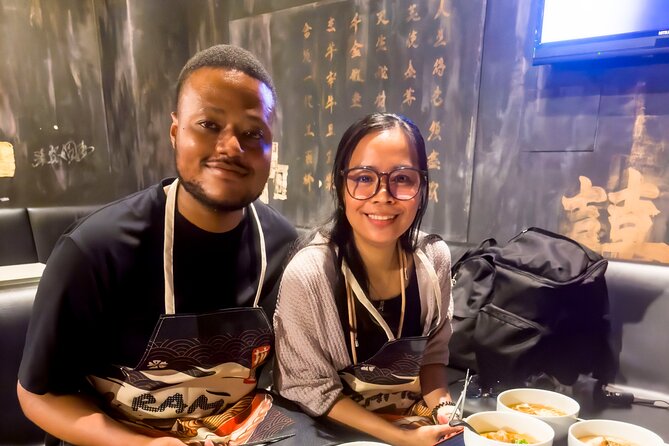
Many cooking classes focus on one finished dish. This one gives you a small tasting flight. Tonkotsu, shoyu, and miso are not simply three colors on the same soup. They offer different ways to understand ramen.
Tonkotsu is the heavier, pork-based style. Shoyu brings the salty, savory character of soy sauce. Miso gives the soup a fuller, deeper seasoning. The bowls are mini portions, but you still get enough food to compare the broths and judge how the same fresh noodles work with each base.
That comparison is the best reason to book this rather than a standard ramen lunch. You are not only eating a bowl and moving on. You are adjusting the soup, adding toppings, and seeing how small changes affect the final dish.
You should also keep expectations in check. The broths are prepared before class because proper stock takes much longer than 90 minutes. You will taste and adjust the bases, but you will not spend the morning simmering pork bones or building every soup from raw ingredients. That is a sensible tradeoff for a short activity in central Tokyo.
Other bowls worth queuing for in Tokyo:
- Eat and Drink Like a Local: Tokyo Ueno Food Tour-Taverns&Ramen
★ 5.0 · 957 reviews - Ramen & Gyoza Cooking Class in Tokyo with Local Supermarket Visit
★ 5.0 · 823 reviews - Tokyo: Ramen Tasting Tour with 6 Mini Bowls of Ramen
★ 4.9 · 432 reviews
The 10-minute walk and a practical arrival plan
The studio is about a 10-minute walk from Shibuya Station, though the listed address is in Meguro-ku at 1F, 2-16-29 Ohashi, Tokyo 153-0044. Allow enough time to leave the station, find the studio, and arrive five to ten minutes before your start time.
Doors open 10 minutes before class. There is no waiting area and no early entry, so arriving much sooner will not help. Late arrival is a serious matter here. If you are five or more minutes late, you may need to join while the class is already underway or be refused entry without a refund in some cases. Contact the provider before the start time if you are delayed.
The activity begins and ends at the same studio. That makes it easy to pair with more time in Shibuya before or after the class. Since the workshop lasts 90 minutes, it can fit neatly into a morning, lunch break, or early evening plan.
The studio has stairs only. If you cannot comfortably use stairs, this is not the right choice.
What happens during the 90-minute class

The schedule is tightly arranged, but it does not feel like a race when the instructor keeps everyone moving. Here is how the time is divided.
Check-in and briefing, 10 minutes
The class begins with an explanation of the plan, the ramen styles, and the kitchen process. This is where the instructor sets expectations and explains safety.
The English instruction is aimed at beginners. You do not need Japanese cooking experience, and you do not need to arrive knowing the difference between shoyu and miso ramen. The small-group limit of eight helps the instructor check each person’s work rather than simply speaking from the front of the room.
Same base, a different sort of day:
- Mt Fuji and Hakone 1-Day Bus Tour Return by Bullet Train
★ 5.0 · 26,383 reviews - 1-Day Tokyo Bus Tour
★ 5.0 · 14,250 reviews - Tokyo: TOKYO SKYTREE® Admission ticket
★ 4.5 · 11,192 reviews - Tokyo: teamLab Planets TOKYO Digital Art Museum Entry Ticket
★ 4.6 · 9,779 reviews
Chicken chashu preparation, 5 minutes
You prepare the chicken chashu early in the class. This is a short stage, but it gives you another useful cooking task beyond noodle making.
The course uses chicken chashu rather than asking you to handle a long pork-cooking process. Pork is still among the listed ingredients because of the soup and kitchen environment, so you should not treat the chicken option as proof that the class is pork-free.
Noodle making, 20 minutes
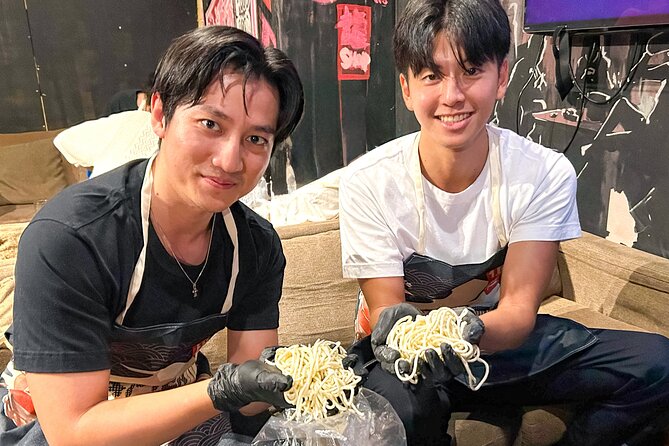
This is the heart of the activity. You work the dough, knead it, roll it, and cut it into noodles with professional equipment.
The machine gives the process a fun, tactile quality. It also makes the results more consistent for beginners. One instructor may encourage hand techniques before using the equipment, so you get a feel for the dough rather than simply pressing a button and waiting.
Expect flour on your clothes. Aprons are supplied, but the class advises you to dress with noodle making in mind. This is a good reason not to wear your best dinner outfit.
The noodle stage is also the part most likely to feel useful after the trip. The method is designed to be manageable at home, according to the activity details and the practical experiences shared by people who took the class. You will not need a restaurant kitchen to repeat the basic process, although a home cook may need to adapt the equipment.
Finishing the chicken chashu, 10 minutes
You return to the chicken and finish it for serving. This gives the class a nice rhythm. You are not stuck doing one long task, and the instructor can help you with the parts that require more care.
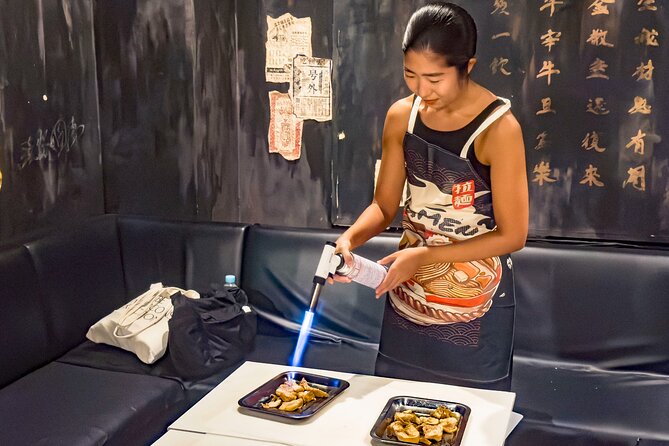
Some sessions may include finishing touches such as torch work handled by the instructor. You should follow the staff’s directions closely around heat and kitchen tools.
Boiling noodles and preparing soup, 10 minutes
The broth bases are already prepared, which keeps the timetable realistic. You adjust the soup to your preferred strength and prepare the noodles for each bowl.
This is where the class shifts from basic preparation to personal choice. You can make the seasoning lighter or stronger, within the options provided, and notice how the same noodle behaves in each soup.
Plating, 5 minutes
You assemble three mini bowls and add the toppings. Plating is quick, but it is the moment when the separate tasks finally make sense.
The three bowls also make good photographs. You can take pictures during the process and at the finished table, as long as you continue to follow the instructor’s kitchen and safety directions.
Tasting and photo time, 30 minutes
The final half hour gives you time to eat, compare, and ask questions. This is not a rushed taste at the counter. You sit down with the three bowls you helped prepare.
Do not schedule a large meal immediately before class. Three small servings can become a substantial lunch, especially with noodles, soup, chicken, and toppings in the mix. Arrive hungry, but not so hungry that you are distracted during the practical work.
The instructors make the difference
The format is beginner-friendly, but the instructor controls the experience. The teaching team includes English and Japanese speakers, with English used for this activity.
Several instructors are specifically named in past sessions, including Kazuki, Kensei, Kai, Arata, Onodera, Rin-san, Ivy, and others. The most useful pattern is not one particular personality. It is the repeated focus on clear steps, friendly help, and answering questions as the class moves along.
Kazuki is noted for precise explanations and attention to hand technique. Kensei is frequently associated with a relaxed, encouraging approach. Kai is praised for keeping the class informative and fun. These details matter because noodle dough can be confusing at first, and a good instructor can correct your technique before the mixture becomes frustrating.
The group limit is eight. That does not guarantee a private class, but smaller sessions may leave more time for questions and personal help. Some scheduled classes may have only two people, while others can be fuller.
What you really make, and what is prepared ahead
This class is hands-on, but not every element is made from raw ingredients in front of you. You make the noodles, prepare the chicken chashu, assemble the bowls, adjust the soup, and add toppings.
The three soup bases are prepared in advance. That is important if you are comparing this with a full-day ramen workshop. Tonkotsu stock, in particular, takes far longer than the class allows, so the prepared broth lets you taste the finished style without turning the activity into a long kitchen shift.
I see this as a strength for most visitors. You get the fun parts that are practical to repeat at home, plus a clear lesson in how the three bases differ. If your main goal is learning to make stock from bones, this class will feel limited.
Is $64 a fair price?
At $64 per person, this is not the cheapest ramen meal in Tokyo. It is also more than a simple cooking demonstration. The price includes the instructor, ingredients, kitchen equipment, apron use, three mini bowls, and a digital recipe after class.
The value depends on what you want from the experience. If you only want to eat ramen, spend less at a local shop. If you want a meal plus an activity that gives you a method to try at home, the price is more reasonable.
You are also paying for structure. The class keeps the noodle work, meat preparation, soup adjustment, plating, and tasting inside 90 minutes. For a visitor with limited time, that makes the cost easier to justify.
The strongest value comes at lunchtime. You get a practical cooking session and a filling meal in one booking. The activity also works well for couples and small groups because everyone has a role and a finished trio of bowls to compare.
Dietary limits and family suitability
The listed ingredients include wheat, egg, soy, chicken, and pork. Cross-contamination cannot be fully prevented. This class is not suitable for severe wheat, egg, or soy allergies, celiac disease, severe airborne flour sensitivity, or anyone who needs strict dietary compliance.
Partial accommodation may be possible for no chicken or pork, vegetarian, and vegan requests, but you need to ask in advance. Do not assume a substitute will be available on the day. Special dietary replacements beyond the stated options are not included.
Children aged six and older are recommended for the activity. Younger children are not specifically covered by the information provided. Since the class includes flour, hot cooking equipment, stairs, and careful timing, parents should consider whether the child can follow kitchen instructions for the full 90 minutes.
Who will enjoy Ramen Dojo Tokyo most
I would choose this class for you if you want a food activity that is active but not exhausting. You will learn a few practical techniques, eat a proper amount of ramen, and leave with a recipe rather than only a souvenir photograph.
It suits first-time cooks especially well. The instructor explains the process step by step, and you do not need to know Japanese culinary terms before arriving. Couples can divide tasks, while solo visitors have a good chance to meet a few other people in a small setting.
It is also a good rainy-day plan near Shibuya. The activity is indoors, has a clear 90-minute finish, and does not require travel between several locations.
I would hesitate if you want a rigorous professional cooking course. The pace is designed for enjoyment and access, not technical chef training. I would also avoid it if you have strict dietary restrictions, dislike flour on your clothing, or cannot use stairs.
Booking details worth knowing
Cancellation is free up to 24 hours before the start time, with a full refund. You can also reserve now and pay later, which helps if your Tokyo schedule is still changing.
The class is offered in English, with Japanese also available through the instructors. Check the available start times when booking, since the duration is fixed at 90 minutes but session times can vary.
Wear comfortable clothing and expect a little mess. An apron is provided, but flour may still reach your clothes. Photography is welcome, and you can tag the studio with #RamenDojoTokyo if you post your finished bowls.
Should you book this ramen class?
Book it if you want to do more than order ramen from a counter. The fresh noodle work, three-broth comparison, chicken chashu, small group format, and take-home recipe give the class real substance for a short activity.
Skip it if your idea of ramen school means making the soup stock entirely from scratch, or if you need a fully controlled allergen-free kitchen. For most beginners who want a lively meal and a useful taste of Japanese cooking near Shibuya, $64 is a fair price, especially when you arrive hungry and make the class part of a wider Shibuya day.
FAQ
How long does the Ramen Dojo Tokyo class last?
The activity lasts 90 minutes. It includes a briefing, chicken chashu preparation, noodle making, soup preparation, plating, tasting, and photo time.
How many ramen styles will I taste?
You will make and taste three mini bowls: tonkotsu, shoyu, and miso.
Are the ramen broths made from scratch during the class?
No. The broth bases are prepared in advance because they require more cooking time than the 90-minute class allows. You adjust the soup and prepare the other components during the workshop.
Is the class taught in English?
Yes. The activity is conducted in English, and the instructors also speak Japanese.
What is included in the $64 price?
The price includes the English-speaking instructor, ingredients, kitchen equipment, apron loan, three mini ramen bowls, and a digital recipe provided after class.
Where does the class take place?
The studio is at 1F, 2-16-29 Ohashi, Meguro-ku, Tokyo 153-0044, Japan. It is about a 10-minute walk from Shibuya Station.
Can people with vegetarian or vegan diets join?
Partial accommodation may be possible for vegetarian, vegan, or no chicken and pork requests, but you must ask in advance. Strict dietary compliance cannot be guaranteed, and cross-contamination is possible.
What should I know about arriving late?
Arrive five to ten minutes before the start time. Doors open 10 minutes early, and there is no early-entry waiting area. Arrivals five or more minutes late may need to join after the class has begun or may be refused without a refund in some cases.
Just added in Tokyo
- The 10 Tastings of Tokyo With Locals: Private Street Food Tour★ 5.0 · 48 reviews
- Small Town in the Big City: Tasting Tokyo’s Kichijoji★ 5.0 · 195 reviews
- Small Town in the Big City: Tasting Tokyo’s Kichijoji★ 5.0 · 16 reviews
- EXCLUSIVE Tokyo Secret: Kichijoji Small-Group Food & Bar Hopping★ 5.0 · 29 reviews
- Explore Kichijoji: Walk Through One of Tokyo’s Beloved Districts★ 5.0 · 21 reviews
- :Tokyo,Shibuya/ Pro Photography in Kimono / English-Friendly★ 5.0 · 26 reviews
- 【R34】Tokyo:Private Daikoku tour in Modified R34★ 4.9 · 92 reviews
- Tokyo:Calligraphy &Make your original folding fan in Asakusa★ 5.0 · 62 reviews
Ramen Tours & Workshops, compared.
Ramen Cooking Class at Ramen Factory in Kyoto
Read our review →
Eat and Drink Like a Local: Tokyo Ueno Food Tour-Taverns&Ramen
Read our review →
Ramen & Gyoza Cooking Class in Tokyo with Local Supermarket Visit
Read our review →
Ramen Cooking Class at a Ramen Factory with Souvenir
Read our review →
Five Must-See Highlights Walking Tour & Ramen Lunch
Read our review →
Browse the lists this tour appears in