
Reviewed · CALLIGRAPHY & CRAFT WORKSHOPS
Tokyo: Calligraphy Workshop Craft Your Own Art in Asakusa
The best part of this Asakusa workshop is that you do not simply watch someone write beautiful Japanese characters. You learn the basic strokes yourself, practice with guidance from Mei, then create a finished piece you can take home. The calm, hands-on format gives you a useful break from Tokyo’s busy streets.
I like the mix of traditional brushes and modern fude pens, which lets you feel the craft without making the first attempt too intimidating. I also like that you can work toward a personal final piece on a scroll, fan, or hard-backed square. The main drawback is simple: 90 minutes is enough for an introduction, not a full study of shodo, and transportation to the venue is not included.
Key points to know
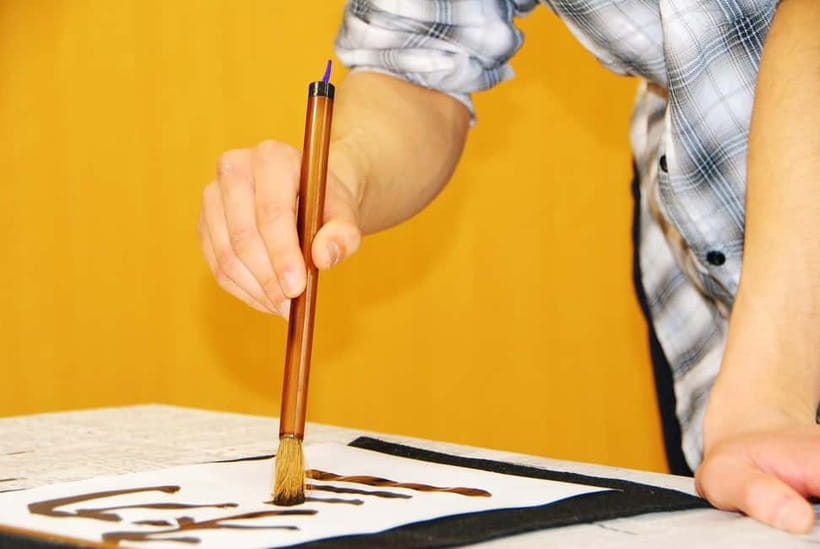
- Mei’s patient instruction: She explains stroke order, brush handling, and the cultural background in English.
- Practice before the final artwork: You get time to repeat basic strokes before working on your souvenir.
- Two writing tools: Use both a traditional brush and a modern fude pen for different levels of control.
- A personal keepsake: Finish a piece on a scroll, fan, or square board, depending on the available format.
- Small English-language group: The class is limited to 10 participants and welcomes beginners.
- A quiet Asakusa activity: It offers a slower cultural experience between sightseeing stops.
Learning shodo in the heart of Asakusa
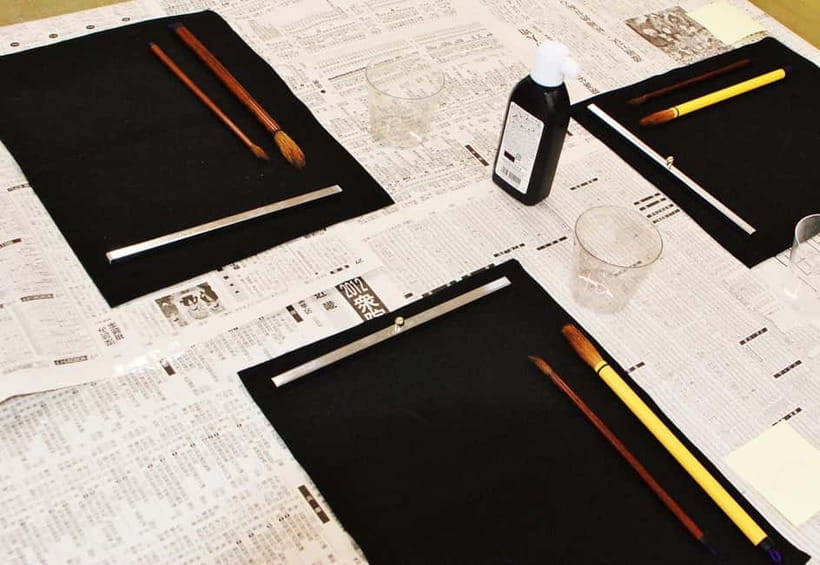
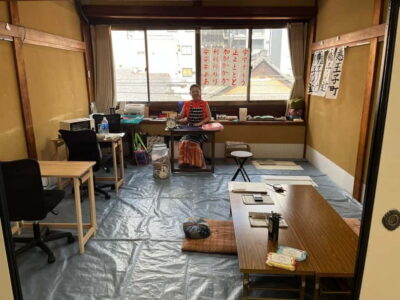
Asakusa is one of Tokyo’s best areas for traditional culture, so it is a fitting place to try Japanese calligraphy. The workshop takes place at Tokyo Tourist Lounge Asakusa, on the fifth floor of the building. You will need to make your own way there, but the meeting point is indoors and the class itself is set up as a focused studio activity.
Japanese calligraphy, or shodo, is more than writing neatly with a brush. The position of the brush, the pressure of each stroke, the order of the lines, and the way you finish a character all matter. At first, the rules can feel precise. That is part of the appeal. Instead of rushing from one sight to the next, you pay attention to one movement at a time.
I like this kind of cultural activity because it gives you something to do with your hands. You are not just receiving information about Japan. You are trying a small part of the tradition yourself, with room to make mistakes and improve.
Other things to make with your hands in Tokyo:
- Chopstick Making Workshop in Ginza
★ 4.8 · 1,366 reviews - Tokyo Chopstick Making Workshop with Artisan
★ 5.0 · 466 reviews - Tokyo: Matcha Making Experience with Mochi Sweets in Asakusa
★ 4.9 · 388 reviews
What happens during the 90-minute class
The class lasts about 90 minutes, though the stated duration can range from one to one and a half hours. Starting times vary, so check availability when you book. The group size is limited to 10 people, which should allow the instructor to watch your technique and offer individual help.
The opening portion focuses on the basics. Mei introduces the art of calligraphy and explains some of its cultural background. You then begin with brush control, stroke order, and simple techniques. This early practice matters. If you rush straight to a character, you may spend the whole session trying to correct the way you hold the brush.
You will likely repeat individual strokes several times. That can feel slow if you expect an instant souvenir, but it is the part that makes the final work more satisfying. Mei’s teaching style is described as patient and clear, with plenty of help for people who are not confident artists or fast learners.
The class also uses writing templates. These give you a structure to follow while you work on the shape and balance of each character. That is useful for beginners because Japanese characters can look complicated when you first see them. A template turns the task into a series of manageable movements.
Traditional brushes and the modern fude pen
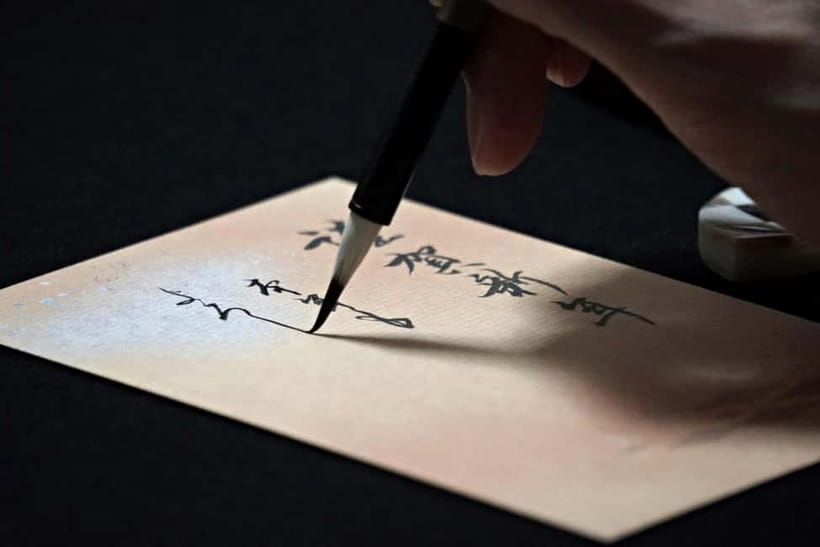
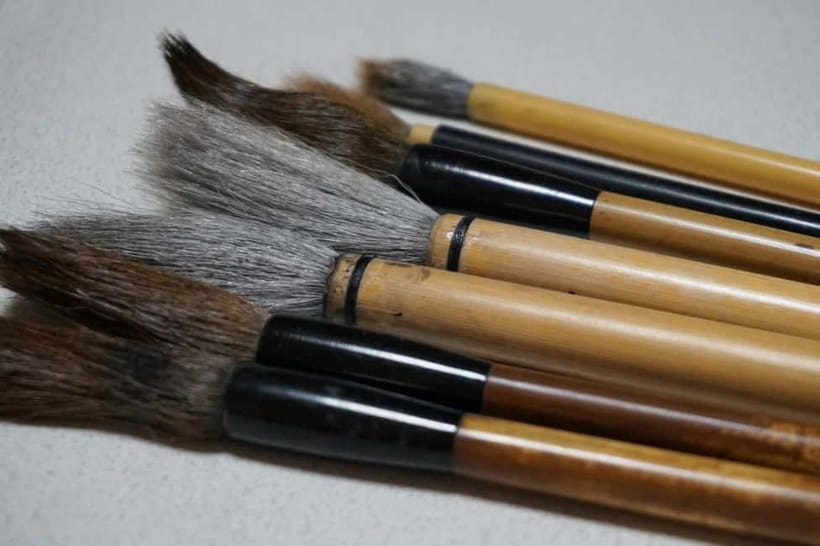
One useful feature is the chance to use two kinds of tools. The traditional brush gives you the classic calligraphy experience. It responds to pressure and movement in a way that feels very different from an ordinary pen. Your lines can become thicker or thinner, and small changes in your hand affect the result.
The fude pen, or brush pen, offers more control. It has a flexible tip but is easier to handle than a full brush. For a first class, this can help you understand the shape of a stroke before trying to repeat it with more ink and movement.
I see this as a smart setup for a short workshop. A traditional brush gives you the feel of shodo, while the fude pen lets you focus on precision. You do not have to choose between an authentic tool and an easy tool. You get a chance to try both.
Do not expect to master the brush in a single visit. That is not the point. The goal is to understand how the tool works, learn a few foundations, and create something that reflects your own effort.
Choosing and making your final artwork
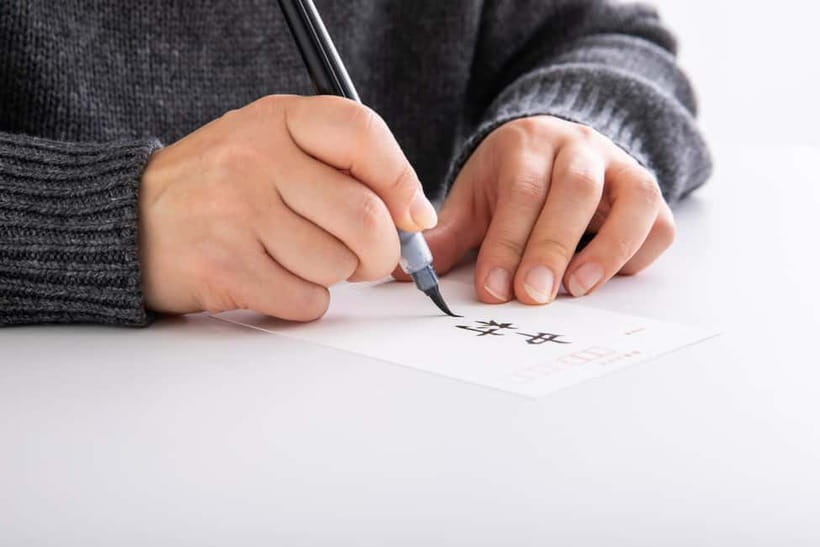
After practicing, you move toward a finished calligraphy piece. You can write characters of your choice, with Mei helping you decide how to approach them. The final work may be made on a scroll, a fan, or a hard-backed square, depending on the format available in the class.
This choice gives the souvenir more meaning than a standard printed gift. You are taking home something you made, not something selected from a shop shelf. It may not look like a professional calligrapher’s work, and it does not need to. The value is in remembering the process and seeing how your final brush strokes compare with your first attempts.
If you want a piece for your wall, think ahead about the kind of character or word you would like to create. The activity information does not specify a fixed list of choices, so you should expect guidance rather than a guaranteed character menu. A personal word, name, or idea may give the artwork more connection to your time in Japan, but the instructor will help you work within the session.
The class allows time to practice before the final piece. That is important. A rushed souvenir can feel like a craft exercise, while a final work made after several attempts feels more personal.
Same base, a different sort of day:
- Mt Fuji and Hakone 1-Day Bus Tour Return by Bullet Train
★ 5.0 · 26,383 reviews - 1-Day Tokyo Bus Tour
★ 5.0 · 14,250 reviews - Tokyo: TOKYO SKYTREE® Admission ticket
★ 4.5 · 11,192 reviews - Tokyo: teamLab Planets TOKYO Digital Art Museum Entry Ticket
★ 4.6 · 9,779 reviews
Why Mei makes a difference
Mei is the instructor named for this experience, and her role goes beyond showing you where to place the brush. She explains the strokes, introduces the background of calligraphy, and gives individual corrections as you work.
The strongest praise centers on her patience, kindness, clear English, and enthusiasm for the subject. That matters in a class where many people will be seeing Japanese writing tools for the first time. You need an instructor who can explain a movement in simple terms and then let you try it yourself.
Mei also brings in ideas of patience, focus, and calm. Those qualities fit calligraphy well. The class is not presented as a formal meditation session, but the steady pace can give you a quieter hour in the middle of Tokyo. You focus on the paper, the brush, and the next stroke instead of checking your phone or watching the clock.
She also adjusts her help to the person in front of her. If you are artistic, you may want to refine the balance and shape of your work. If you are a complete beginner, you may need more help with the basics. The activity suits both, as long as you are willing to practice.
The value of a $38 cultural activity
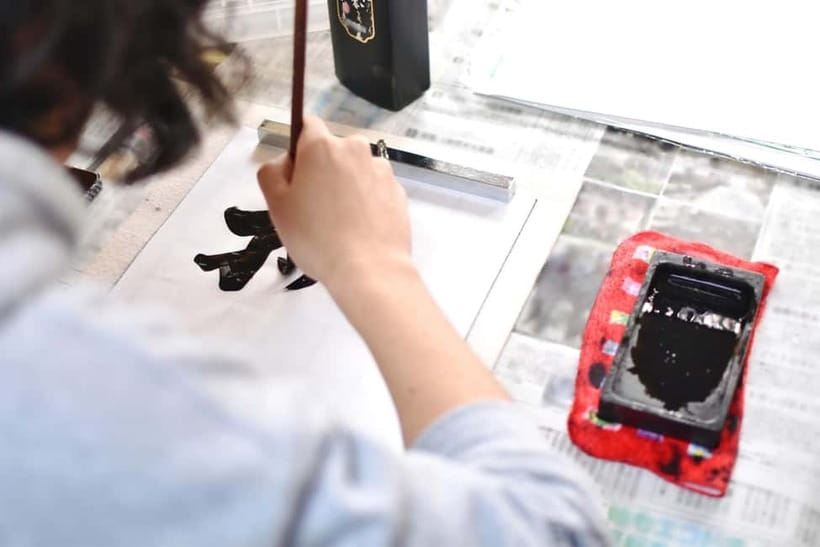
At $38 per person, this is not the cheapest way to fill 90 minutes in Tokyo. You can visit many cultural sites for less, especially if you are simply looking for something to see. But this is a hands-on class with an English-speaking instructor, use of the materials, and a finished artwork to take home.
I think the price makes sense if you value participation and a personal souvenir. You are paying for instruction, practice time, traditional tools, a modern brush pen, and the chance to make a piece under supervision. The class also avoids the common problem of a short cultural demonstration where you watch someone else perform the craft and then leave with little to show for it.
The value is weaker if you only want a quick photo opportunity or a polished piece made by an expert. Your artwork will be your own work, with all the uneven lines and small imperfections that come with learning. That is precisely why many people find it meaningful, but it is worth setting the right expectation before booking.
The small group also helps the price. With a maximum of 10 participants, the class is not a large production. You should have a reasonable chance to ask questions and receive help, though the amount of one-on-one time can vary with the group.
A good break from a full Tokyo day
Calligraphy works well as part of an Asakusa day. You can place it between other activities in the district and use it as a slower indoor stop. The workshop is also a sensible option for a rainy day, when you want a cultural activity that does not depend on being outside.
The class is suitable for adults and children, according to the experience details and teaching feedback. Families should still consider each child’s ability to sit, listen, and practice for part of the session. The group format means the instructor must divide attention among participants, so very young children may need extra help from an accompanying adult.
It can also work for couples, friends, solo visitors, and small groups. You do not need to be artistic. In fact, the structured practice may be more useful if you have never held a calligraphy brush before.
For returning visitors to Japan, this offers a different kind of cultural contact. You may already have seen temples, gardens, and traditional performances. Here, you get to work with one small part of Japan’s artistic culture and take the result with you.
Practical details before you book
The workshop is taught in English. No previous experience is required, and the activity is wheelchair accessible. Transportation to and from the venue is not included, so plan your route to Tokyo Tourist Lounge Asakusa before the class begins.
The experience provider is Localized Walking & Food Tours, but this particular activity is a calligraphy workshop rather than a walking or food tour. You should arrive with enough time to find the building and reach the fifth floor.
The booking terms are flexible. You can reserve now and pay later, and cancellation is allowed up to 24 hours in advance for a full refund. Check the available start times because the exact schedule is not fixed in the basic activity details.
The class is listed as 90 minutes, while the expected duration is also described as one to one and a half hours. Some sessions may run longer when there is extra guidance or time to finish the artwork. If you have a tight connection to another booking, leave some space rather than scheduling the next activity immediately afterward.
Who should take this class
I would choose this workshop for you if you want a cultural activity that is active but not exhausting. It is a good fit for first-time visitors who want to try something beyond sightseeing, and for returning visitors who want a personal souvenir from Tokyo.
It is especially suitable if you:
- Like learning through practice rather than watching a demonstration
- Want an artwork you can take home
- Are curious about Japanese writing and traditional arts
- Prefer a small group and English instruction
- Need an indoor activity in Asakusa
- Enjoy calm, focused experiences
You may want to skip it if you are looking for a long, advanced course in calligraphy. Ninety minutes gives you an introduction and a finished project, not mastery. You should also avoid booking it back-to-back with an important timed attraction, since the session may take closer to the full one and a half hours.
Should you book the Asakusa calligraphy workshop?
Yes, if you want to do something with your hands and bring home a souvenir that carries your own effort. The class has a clear beginner-friendly structure, a small group, an English-speaking instructor, and enough practice time to make the final artwork feel earned.
I especially like the combination of Mei’s patient teaching and the two writing tools. You can enjoy the traditional brush without being left on your own, then use the fude pen when you want more control. At $38, it offers fair value for a guided cultural activity with materials and a finished piece included.
Book it if you are happy with a personal artwork rather than a perfect one. If that sounds right, this is one of the more thoughtful ways to slow down in Asakusa and connect with Japanese culture.
FAQ
Where is the calligraphy workshop held?
The meeting point is Tokyo Tourist Lounge Asakusa, located on the fifth floor of the building.
How long does the class last?
The class lasts 90 minutes. The activity information also gives an expected duration of one to one and a half hours.
Is the workshop suitable for beginners?
Yes. No previous calligraphy experience is required.
Is the class taught in English?
Yes. The instructor language is English.
What tools will I use?
You will use traditional Japanese calligraphy brushes and a modern fude pen, also called a brush pen.
Do I take home a finished artwork?
Yes. A personal calligraphy artwork is included for you to take home. The available format may be a scroll, fan, or hard-backed square.
Is transportation included?
No. Transportation to and from the workshop is not included.
Just added in Tokyo
- The 10 Tastings of Tokyo With Locals: Private Street Food Tour★ 5.0 · 48 reviews
- Small Town in the Big City: Tasting Tokyo’s Kichijoji★ 5.0 · 195 reviews
- Small Town in the Big City: Tasting Tokyo’s Kichijoji★ 5.0 · 16 reviews
- EXCLUSIVE Tokyo Secret: Kichijoji Small-Group Food & Bar Hopping★ 5.0 · 29 reviews
- Explore Kichijoji: Walk Through One of Tokyo’s Beloved Districts★ 5.0 · 21 reviews
- :Tokyo,Shibuya/ Pro Photography in Kimono / English-Friendly★ 5.0 · 26 reviews
- 【R34】Tokyo:Private Daikoku tour in Modified R34★ 4.9 · 92 reviews
- Tokyo:Calligraphy &Make your original folding fan in Asakusa★ 5.0 · 62 reviews
Calligraphy & Craft Workshops, compared.
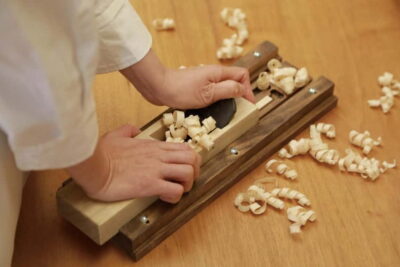
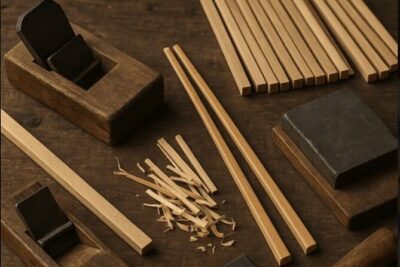
Chopsticks Making Workshop in Gion with Engraving Option
Read our review →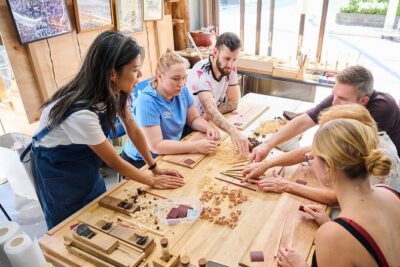
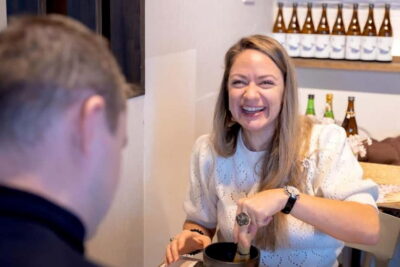
Matcha Making Experience with Mochi Sweets in Asakusa
Read our review →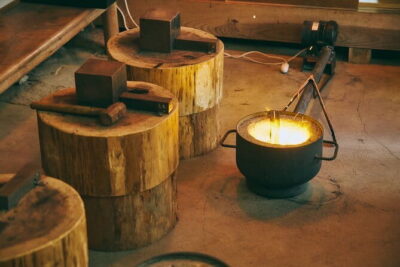
Authentic knife making experience at a blacksmith in Kyoto
Read our review →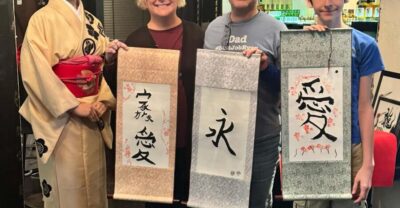
Calligraphy class at Buddhist temple in city center
Read our review →Browse the lists this tour appears in