
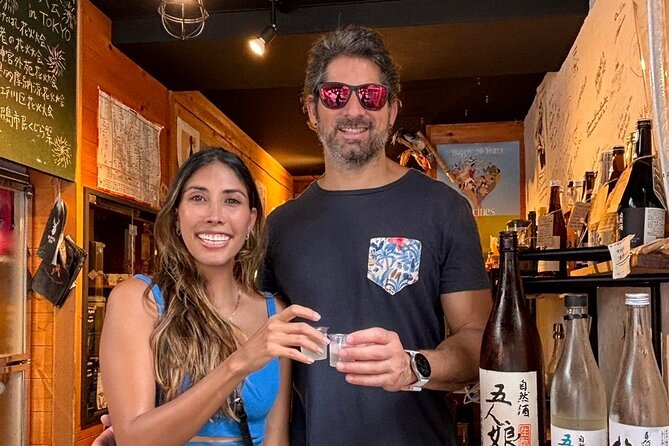
Reviewed · TSUKIJI & TOYOSU FISH MARKET TOURS
Tokyo: Tsukiji Fish Market Food and Walking tour
Tsukiji is easiest to enjoy when someone helps you make sense of the crowded lanes, unfamiliar foods, and dozens of tempting stalls. This tour pairs the market with a visit to Tsukiji Hongwanji Temple, then lets you choose what to eat rather than forcing you into a set menu.
I like the flexible pace and the guide’s practical role. Rie, Haydn, Minori, Jim, Shino, Sayaka, and others are praised for steering people toward good-value food and away from tourist traps. The main drawback is that food is not included, so your final cost depends on your appetite, and some visitors may prefer to skip the temple.
Key points
- Choose your own food: Pay only for the dishes you want, including sushi, seafood, fruit, omelets, fish cakes, and other market snacks.
- Small groups: A maximum of 10 people makes it easier to ask questions and stay together in tight market lanes.
- Temple before the stalls: The tour begins with about 30 minutes at Tsukiji Hongwanji Temple, an unusual architectural stop that some people find a welcome pause.
- Helpful market guidance: Guides such as Rie and Haydn are especially praised for vendor advice, prices, and finding worthwhile food.
- Bring Japanese yen: Food and drinks cost extra, and stalls generally take cash. Around ¥10,000 gives you useful spending room for samples.
- Simple logistics: Meet at the Starbucks near Tsukiji Station, spend about two hours walking and tasting, and return to the same meeting point.
Why a guide helps at Tsukiji
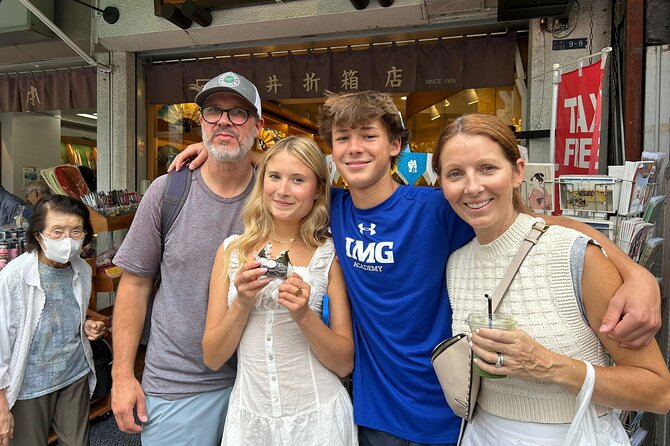
Tsukiji is not one neat indoor market with a single entrance and a clear route. The area is a network of food stalls, shops, counters, and side streets. You can certainly wander on your own, but the first visit can feel like trying to read a menu in a language you do not know while people move around you.
This tour gives you a local Japanese English-speaking guide to explain what you are seeing and help you decide what is worth buying. That practical help is the main reason to book. Guides have been praised for pointing out good prices, explaining unfamiliar ingredients, and keeping the group moving without making the experience feel rushed.
The group limit of 10 is useful here. Tsukiji’s lanes are tight, and a large crowd would make ordering food and hearing explanations harder. With a smaller group, you can ask about dishes, compare options, and keep up with the guide.
The food arrangement is also refreshingly simple. There is no fixed tasting menu. You choose what interests you and pay the individual stall or shop. That keeps the tour price low at $30 per person, but you need to budget separately for eating.
Other walking tours in Tokyo people book:
- Tokyo Tsukiji Fish Market Food and Culture Walking Tour
★ 5.0 · 3,184 reviews - Tokyo: Imperial Palace and Shogun Historical Walking Tour
★ 5.0 · 2,251 reviews - Tokyo: Shinjuku Local Bar and Izakaya Guided Walking Tour
★ 4.9 · 1,794 reviews
Meeting at Tsukiji Station
The tour begins at the Starbucks Coffee near Tsukiji Station, at 2-chome 12-8 in Chuo City. Meet there rather than heading directly into the market, since the guide uses the cafe as the starting point for the group.
The activity lasts about two hours and ends back at the meeting point. That makes it easy to fit into a morning or pair with other sights in central Tokyo. It also means you are not left trying to find your way back after the food walk.
The schedule has some flexibility. Guides may adjust the pace based on what the group wants to see and eat. That is helpful if one person wants to focus on sushi while another is more interested in fruit, grilled foods, or Japanese sweets.
Still, keep your expectations realistic. Two hours is enough for an introduction and several tastings, not a complete tour of every lane and shop. If you want to eat slowly at each stop, you may need to choose fewer dishes.
Tsukiji Hongwanji Temple: a calm first stop
The first stop is Tsukiji Hongwanji Temple, where you spend about 30 minutes with the guide. The temple is included in the tour price, and its distinctive architecture gives the experience a cultural beginning before the market’s food and crowds take over.
This stop can add useful context. You learn about the area and Japanese culture before entering the food stalls, rather than treating Tsukiji as nothing more than a place to buy raw fish. Guides including Haydn and Yayoi have been praised for making the temple explanation engaging.
There is also a fair criticism here: some people book this experience mainly for food and may feel that 30 minutes at a temple uses time they would rather spend eating. That is the clearest mismatch to consider before booking. If you want a food-only walk, an independent visit may suit you better.
I see the temple as a reasonable trade if you enjoy cultural context. It gives the tour a slower opening and breaks up the food-focused portion. But if you are hungry, short on time, or traveling with someone interested only in the market, know that the temple is part of the planned route.
Entering Tsukiji Fish Market
After the temple, the group spends about an hour exploring Tsukiji Fish Market. The guide explains the area’s connection to Tokyo’s seafood trade and the famous tuna auctions that once took place here.
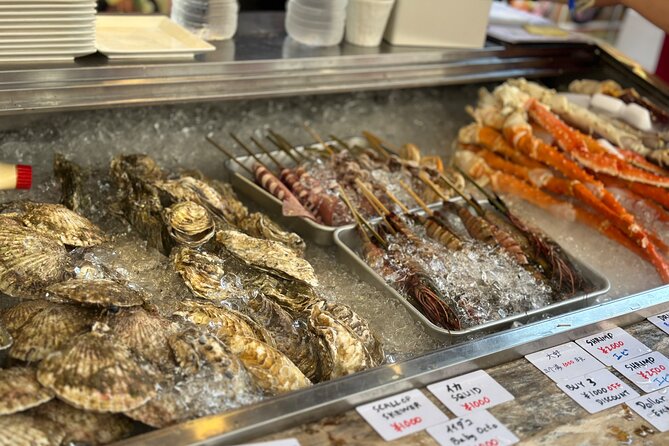
The key point is that this is a food and culture walk through the market area, not a behind-the-scenes auction visit. The tour focuses on the shops and food stalls open to visitors. You will see sellers offering seafood and Japanese specialties, while the guide explains ingredients and local eating habits.
This is where the guide’s value becomes clearest. Haydn has been praised for knowing the vendors and helping families move through the market without stress. Rie is noted for encouraging people to try foods they might otherwise skip, including sea urchin and eel. Shino, who is also described as a chef, is praised for getting a lot done within the available time.
You can ask what an ingredient is, how it is usually eaten, and whether a price seems reasonable. That matters in Tsukiji, where unfamiliar labels and similar-looking stalls can make it hard to judge your choices. The guide can also help you avoid buying something simply because it is displayed attractively.
Other market mornings in Tokyo:
- Tokyo: Tsukiji Fish Market Guided Walking Tour
★ 4.9 · 1,397 reviews - Tokyo Sushi Making Class in Tsukiji with Professional Chef
★ 5.0 · 1,177 reviews - Tsukiji Fish Market Guided Tour and Sushi Making with Pro Chef
★ 5.0 · 775 reviews - Tokyo: Tsukiji Fish Market Food and Culture Walking Tour
★ 4.7 · 757 reviews
Tsukiji Jogai Market and the food stops
The final 30 minutes are spent in Tsukiji Jogai Market, the outer market area filled with seafood shops, food counters, and Japanese street food. This is the part most people picture when they imagine a Tsukiji food walk.
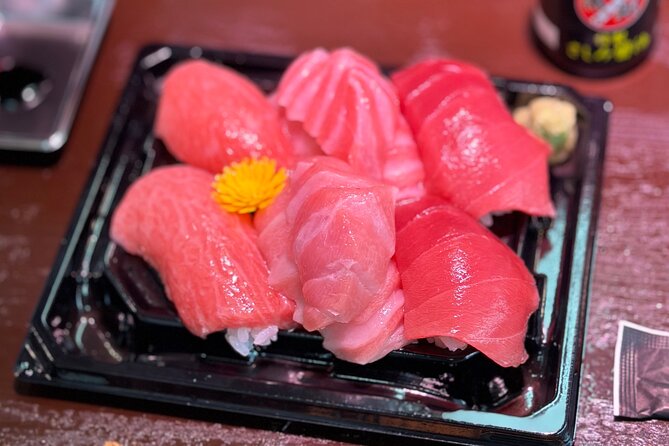
The possible tastings are varied. Depending on what you choose and what is available, you might sample fresh seafood, sushi, fruit, Japanese omelets, fried fish cakes, eel, sea urchin, or wagyu beef. The important detail is that these are not guaranteed courses. You decide what appeals to you, and each purchase is paid separately.
That setup works well for mixed groups. You can spend on one or two special bites instead of paying for a menu that includes foods you do not want. It also lets adventurous eaters try more unusual items while cautious eaters choose familiar options.
The downside is that the $30 price does not cover lunch. One person may spend very little, while another could quickly spend much more on sushi, beef, and premium seafood. Bring Japanese yen, since the food purchases are generally made with cash. One useful guide from the experience is to carry around ¥10,000 if you want freedom to sample several things, though your actual spending depends on what you order.
Expect some walking and standing. The route is not described as strenuous, and most people can participate, but this is not a seated restaurant meal. You will move between stalls, pause to eat, and stand in busy areas.
What the guides add to the experience
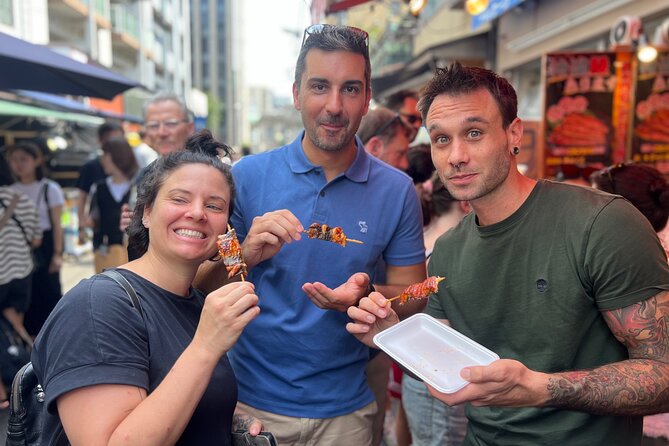
The individual guide matters more here than on a simple sightseeing route. Tsukiji is easy to enter but harder to interpret. A good guide turns the market into a series of clear choices.
Rie is praised for energy, careful attention, and strong food recommendations. She is also noted for finding lower prices on similar products. Haydn is described as particularly good at guiding families and explaining both the temple and market. Minori is praised for food advice and explanations of Japanese culture.
Jim is noted for offering a distinctive perspective on Japanese culture, while Yayoi is described as upbeat and informative. Sayaka is praised for making the choose-your-own-food format friendly and fun. Nicolas and Joe are also described as helpful guides who answer questions and offer practical advice.
You should not expect every guide to run the tour in exactly the same way. The flexible format leaves room for different personalities and group preferences. That is mostly a benefit, though it means the experience may be more food-focused with one guide and more history-focused with another.
The strongest common thread is practical assistance. You are not simply walked past stalls while hearing a speech. The guide helps you make decisions, explains what you are looking at, and keeps the group organized.
Is $30 good value?
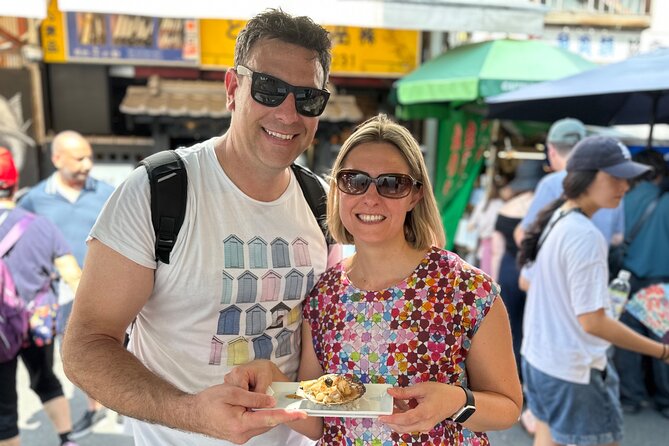
At $30 per person, the tour is reasonably priced for a small-group orientation to Tsukiji. The fee covers the English-speaking guide, the temple visit, the market walk, and the organization needed to move through a busy area.
The value is strongest if this is your first visit to Tsukiji or you feel uncertain about ordering food in Japan. A guide can save you time and reduce the chance of spending money on something that does not suit you. The advice about vendors and prices can also be worth more than the formal sightseeing commentary.
The price is less compelling if you already know Tsukiji well or mainly want to browse independently. Since food is extra, the total may be closer to a modest lunch or more, depending on your choices. You are paying for orientation and personal guidance, not an all-inclusive meal.
I would think of the $30 as a navigation and introduction fee. Add a separate food budget, then judge the total against what you want from the morning. For a first visit, that is a fair exchange. For repeat visitors, the value depends on how much new food and cultural information you expect to gain.
Who should book this walk?
This suits first-time Tokyo visitors who want to see Tsukiji but do not know where to begin. It is also useful for families, since the guide can help children and adults choose different foods without forcing everyone into the same menu.
Food-curious visitors will get the most from it. You can try sea urchin, eel, sushi, fresh seafood, omelets, fruit, fried fish cakes, and other choices at your own pace. The format also works for selective eaters because no set menu is imposed.
It may be less suitable if you dislike crowds, standing, or paying separately for each tasting. It is also not the best match if your only goal is a long, leisurely meal. The experience is a guided introduction to a market, not a restaurant reservation.
Service animals are allowed, and the tour is near public transportation. Most people can participate, but the practical demands remain the same: walking, standing, and moving through crowded market lanes.
Useful booking details before you go
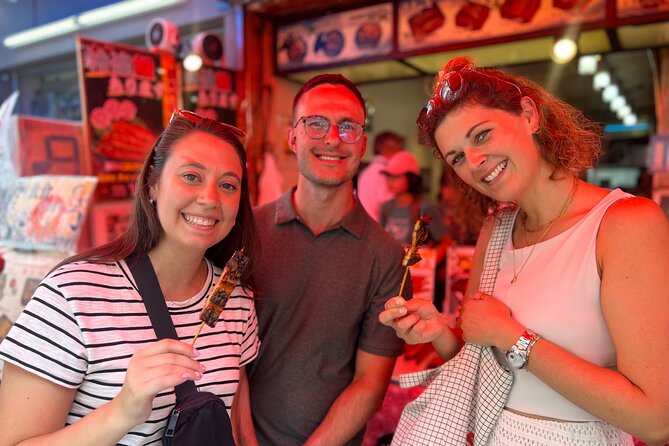
Bring cash in Japanese yen for food. The tour price covers the guide and listed admissions, but it does not cover food or drinks.
The meeting point is Starbucks Coffee near Tsukiji Station, at Japan, 104-0045 Tokyo, Chuo City, Tsukiji 2-chome 12-8, Daiko Building 1F. The tour returns there after roughly two hours.
The group can include up to 10 people. Confirmation is provided when you book, and free cancellation is available if you cancel at least 24 hours before the start time. Changes or cancellations inside that 24-hour window are not accepted for a refund.
Should you book the Tsukiji food walk?
Book it if you want a friendly guide to make Tsukiji easier to understand and you like choosing your own food. The strongest reasons are the small group, flexible route, practical vendor advice, and the chance to sample several Japanese foods without a fixed menu.
Think twice if you want every minute devoted to eating, since the temple takes about 30 minutes. Also remember that your food bill is separate from the $30 tour fee.
For a first visit, I would book this early in a Tokyo stay. You get a useful introduction to Tsukiji, learn what foods interest you, and can return later with more confidence. If you already know the market and prefer to wander alone, save the fee and explore at your own pace.
FAQ
How long does the Tsukiji food and walking tour last?
The tour lasts approximately two hours.
Where does the tour meet?
You meet at Starbucks Coffee near Tsukiji Station, at 2-chome 12-8, Daiko Building 1F, Tsukiji, Chuo City, Tokyo.
Where does the tour finish?
The activity ends back at the meeting point near Tsukiji Station.
Is food included in the tour price?
No. Food and drinks are not included. You choose the dishes you want and pay for them separately.
How much food should I budget for?
The provided guidance recommends carrying around ¥10,000 for food purchases if you want to sample several items. Your actual cost depends on what you choose.
What foods can I try?
Possible foods include fresh seafood, sushi, fruit, Japanese omelets, fried fish cakes, sea urchin, eel, wagyu beef, and other market items. Specific dishes are not guaranteed because you choose what to buy.
Does the tour include Tsukiji Hongwanji Temple?
Yes. The route includes about 30 minutes at Tsukiji Hongwanji Temple, with admission included.
How many people can join the tour?
The maximum group size is 10 travelers.
Can I cancel for a full refund?
Yes, if you cancel at least 24 hours before the experience start time. Cancellations or changes made less than 24 hours before the start time are not accepted for a refund.
More walking tours elsewhere in Japan
- Tokyo: Asakusa Walking Tour with Sensoji Temple Visit
★ 4.8 · 1,583 reviews - Tokyo Castle & Imperial PalaceーShogun Walking Tour
★ 4.7 · 1,068 reviews - Tokyo: Imperial Palace Japanese History Walking Tour
★ 4.9 · 987 reviews - Tokyo: Imperial Palace and Shogun Walking Tour
★ 4.9 · 935 reviews
Just added in Tokyo
- Wagyu & Sake Pairing in Shinjuku – Steak, Shabu-Shabu & More★ 5.0 · 112 reviews
- Small-Group Wagyu Beef and 7 Japanese Dishes Tokyo Cooking Class★ 5.0 · 190 reviews
- Nikko: Edo Wonderland Edomura Cultural Theme Park Ticket★ 4.3 · 205 reviews
- 《MEMBERS-ONLY-BAR-HOPPING》Discover Your Special Whiskey in Tokyo!★ 5.0 · 29 reviews
- Japanese Whisky Hunting《HIGH-QUALITY-ONLY》Rare Tasting Class★ 5.0 · 20 reviews
- Luxury Tokyo Sake, Cocktail, Whisky and Pairing Tour★ 5.0 · 18 reviews
- From Tokyo: Private Tour to Fuji/Hakone – Onsen, Art, Nature★ 5.0 · 116 reviews
- Tokyo: KABUKI Show at Kabukiza Theatre Admission Ticket★ 4.8 · 152 reviews
Tsukiji & Toyosu Fish Market Tours, compared.
Tokyo Tsukiji Fish Market Food and Culture Walking Tour
Read our review →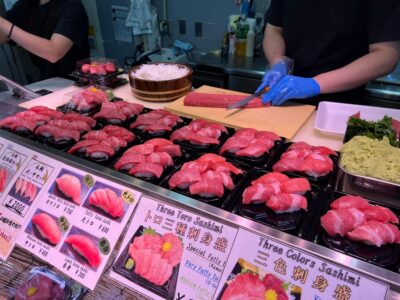
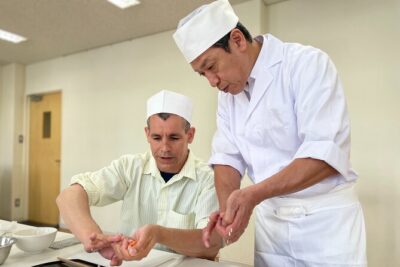
Tokyo Sushi Making Class in Tsukiji with Professional Chef
Read our review →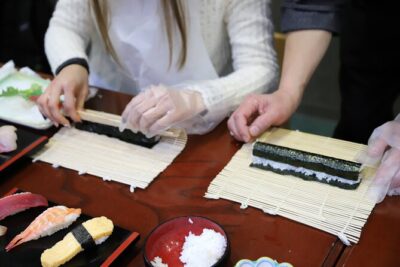
Tsukiji Fish Market Guided Tour and Sushi Making with Pro Chef
Read our review →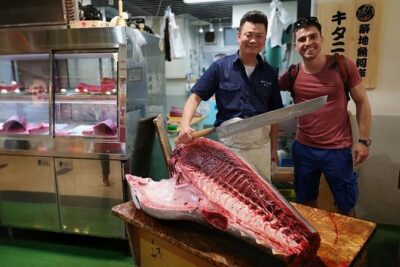
Tsukiji Fish Market Small-Group Food Walking Tour
Read our review →
Tsukiji Fish Market Sushi Making Class with Pro Chef
Read our review →
Tokyo Food Tour Taste Fresh Delights at Tsukiji Market
Read our review →
Tokyo Tsukiji Fish Market Tour and Sushi Making Lesson
Read our review →Browse the lists this tour appears in