
Reviewed · CALLIGRAPHY & CRAFT WORKSHOPS
Tokyo: Chopstick Making Workshop with Artisan
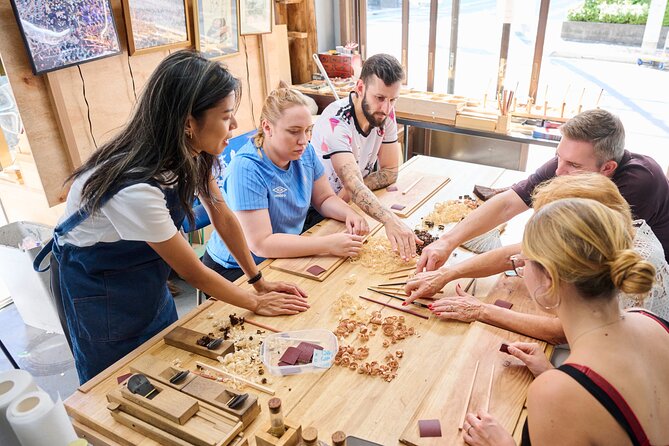
Making your own chopsticks turns an everyday object into a personal souvenir. At this one-hour workshop in Tokyo’s old craft district, you shape the wood, smooth it by hand, and learn why chopsticks carry such meaning in Japanese life. I especially like the hands-on work and the fact that you take home a useful object, not a trinket. The main caution is timing: the hour can feel tight if the room is full or you work slowly.
I also like the friendly, patient instruction. Guides including Yuki, Angie, Chihiro, and Victoria have helped beginners, children, and first-time crafters through the process. The $16 price is easy to justify, though premium woods and optional engraving cost extra.
Key points at a glance
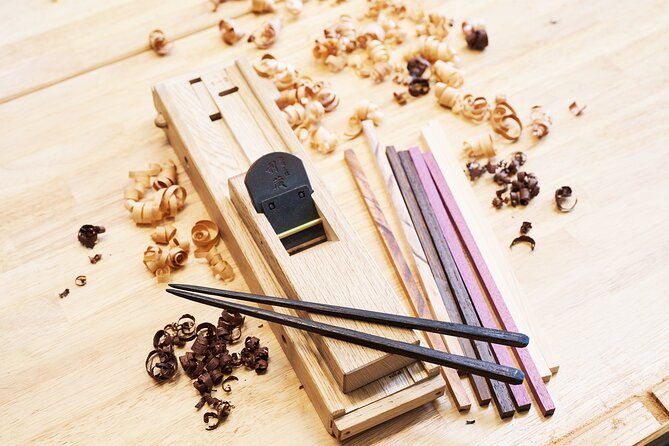
- Choose your own wood: More than 10 types are available, with three wood choices included in the base price.
- Use traditional hand tools: You shape and smooth the chopsticks yourself instead of simply decorating a finished pair.
- Finish with a useful souvenir: Your personalized chopsticks are wrapped for you to take home that day.
- Get clear English guidance: English and Japanese are spoken, and the instructors are used to helping complete beginners.
- Keep the group small: The workshop accepts up to 10 people, though a full session can feel busy.
- Consider engraving: Past participants found the extra ¥1,000 worthwhile for a name or gift message.
A quiet craft hour in Tokyo’s Taito district
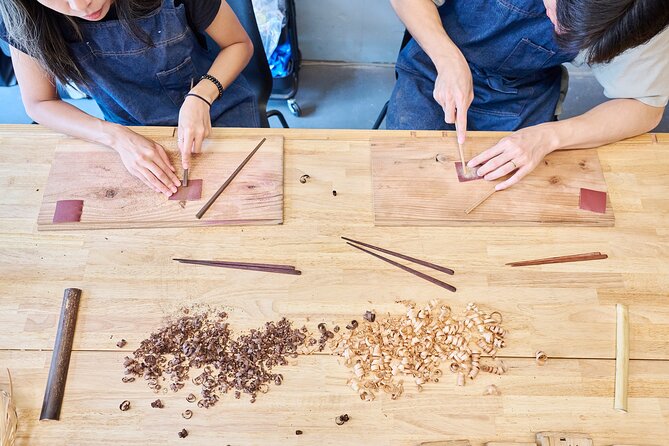
The workshop takes place at Hashiyuki Chopsticks Shop & Workshop, at 1-7-1 Misuji, Taito-ku. The meeting point is also identified by the Japanese name 雪入紙業社, or Yukiirishigyosya. This is not a sightseeing stop where you stand back and admire finished objects. You sit down and make something with your own hands.
That change of pace matters in Tokyo. The city can fill your day with stations, crowds, neon, and long walks. Here, the task is small and focused. You handle a piece of wood, watch its shape change, and pay attention to the feel of the surface. I like this kind of activity because it gives you a short break without wasting precious holiday time.
The workshop lasts one hour, so it fits neatly between other plans. A morning booking can make a pleasant start to the day, although one participant found the process rushed when several people were working at once. If you want to take your time, arrive ready to begin and avoid treating the session as a casual drop-in.
Other things to make with your hands in Tokyo:
- Chopstick Making Workshop in Ginza
★ 4.8 · 1,366 reviews - Tokyo Chopstick Making Workshop with Artisan
★ 5.0 · 466 reviews - Tokyo: Matcha Making Experience with Mochi Sweets in Asakusa
★ 4.9 · 388 reviews
Choosing wood before the work begins
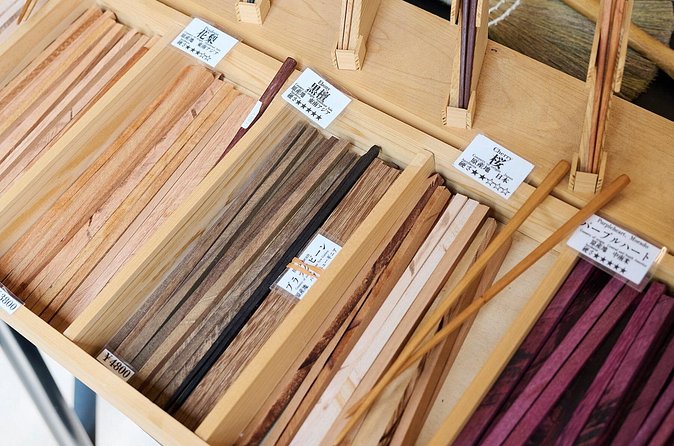
One of the first meaningful choices is the wood. You can choose from more than 10 types, and three wood options are included in the $16 price. Higher-grade woods are available for an additional fee.
This is a useful distinction when you budget. The advertised price covers a complete beginner-friendly activity and a finished pair of chopsticks, but it does not automatically cover every premium material. Ask about the added cost before selecting a higher-grade wood. That keeps the final bill clear.
The wood choice also gives the activity a personal touch. You are not simply following a fixed craft kit. You make a decision about the material, then work with its color and feel. The supplied information does not identify every wood species, so do not book this expecting a formal lesson in Japanese forestry. The focus is practical: choose, shape, smooth, and finish.
Shaping the chopsticks with traditional tools
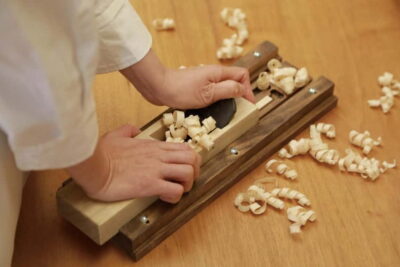
Once you have your wood, the artisan explains how to shape it. You work on the chopsticks yourself while the instructor shows you how to remove material and keep the pair balanced.
The process includes shaving or carving the wood, then sanding the surface. Several people found the instructions easy to follow, and that matters here. You do not need previous woodworking experience. When a mistake happens, the instructor can show you how to correct it rather than leaving you to guess.
The work has just enough challenge to keep it interesting. It is not a passive demonstration, but it is also not a demanding carpentry class. One participant described it as difficult enough to be fun without becoming stressful. That is a good way to think about it.
Pay attention to the guidance on the shape. Chopsticks need to feel comfortable in your hand and work as a pair. Rushing the shaving stage may leave more sanding to do later. Use the instructor’s help early, especially if you are unsure how much wood to remove.
Sanding, smoothing, and the value of patience
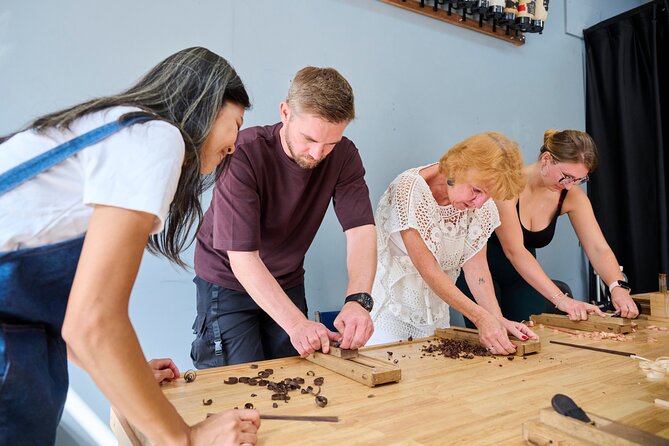
Sanding is where the rough wooden pieces begin to feel like finished utensils. You smooth the surface and refine the ends, working toward a pair that feels comfortable rather than simply looking complete.
This is the calmest part of the session. You can focus on the texture under your fingers and see small improvements with each pass. For families, it gives children a real task instead of a quick craft designed only for a photograph. A family of five, with ages ranging from 8 to 42, completed the activity together, which suggests that the format works across age groups.
The time limit deserves attention here. The official duration is one hour, but one participant said a very fast or experienced person could finish in about 30 minutes. That does not mean you should expect a half-hour session. It means the pace depends on your care, the number of people in the room, and how much help you need.
The workshop has a maximum of 10 participants. That is a small group by city activity standards, but the room can still feel busy if people start at different times. One guest found that two employees were assisting about 10 people and had to move quickly between them. I would treat the hour as a working appointment, not an open-ended studio visit.
Same base, a different sort of day:
- Mt Fuji and Hakone 1-Day Bus Tour Return by Bullet Train
★ 5.0 · 26,383 reviews - 1-Day Tokyo Bus Tour
★ 5.0 · 14,250 reviews - Tokyo: TOKYO SKYTREE® Admission ticket
★ 4.5 · 11,192 reviews - Tokyo: teamLab Planets TOKYO Digital Art Museum Entry Ticket
★ 4.6 · 9,779 reviews
Learning why chopsticks matter in Japan
The craft also comes with a short cultural lesson. Your guide explains the role of chopsticks in Japan and the thought given to an object used at nearly every meal.
That context makes the activity more than a souvenir project. Chopsticks are ordinary, but their daily use gives them meaning. Making your own pair helps you notice their balance, finish, and shape in a way you might not after buying a mass-produced pair from a shop.
The cultural explanation is part of the workshop rather than a separate lecture. Guides speak English and Japanese, and the English-speaking staff can explain the steps and answer questions as you work. Past sessions have included chats about Japan, Scotland, Tokyo food, and local recommendations. Yuki even suggested a ramen lunch spot to one group.
Do not expect a long historical tour of the neighborhood. The supplied details promise insight into Japanese chopstick culture and craftsmanship, not an extended lecture. The value comes from connecting a simple household object with the hands-on work required to make it.
Personalizing the pair and adding engraving
After shaping and sanding, you finish the chopsticks and prepare them to take home. They are wrapped beautifully, which makes them easy to give as a present or pack as a keepsake.
Engraving is an optional extra, not part of the stated $16 price. Several participants paid an additional ¥1,000 for engraving, including one person who added a friend’s name as a gift. Another specifically felt the engraving was worth the cost because it was done neatly.
This option changes how you might use the finished pair. For yourself, a name or personal mark makes the object more memorable. For a gift, engraving gives the souvenir a clear purpose. If you are watching your spending, skip it and still leave with a personalized pair you made yourself.
Your chopsticks are ready to take home the same day. That is a practical advantage over craft experiences that mail the finished item later. You can use them during the rest of your trip, pack them for the journey home, or give them away before you leave Japan.
The instructors make the difference
The strongest part of the workshop is the staff. Names that come up in the session include Yuki, Angie, Chihiro, Victoria, Kaana, Tomo, and Anthony. The exact instructor depends on the booking, but the teaching style described is consistent: friendly, patient, and willing to step in when the wood does not behave as expected.
Angie has been especially helpful to beginners, explaining how to get a better result and comparing the available wood types. Chihiro has helped participants who wanted careful guidance, while Yuki has been praised for fluent English and a warm manner. Tomo and Angie have also explained the differences between shaving and sanding in detail.
That matters more than a polished sales pitch. Woodworking is easier to enjoy when someone can correct your grip or show you how to fix an uneven section. The workshop is designed for beginners, and the instruction keeps the task approachable.
Still, the small room and short schedule mean you should speak up if you need help. The instructors may be assisting several people at once. Do not wait until the final minutes to show them a problem.
Who will enjoy this workshop most
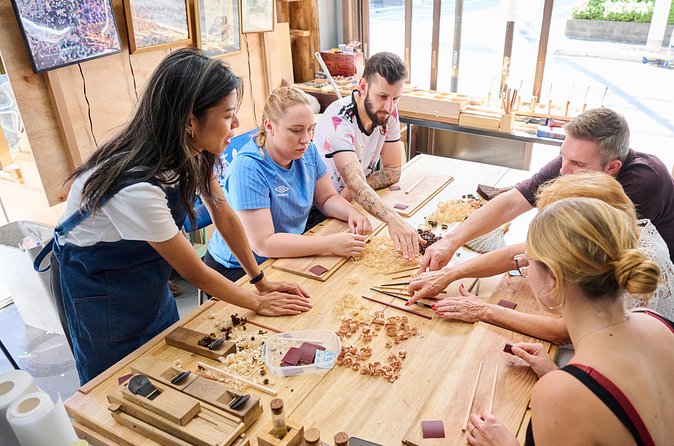
This is a good choice for solo visitors who want a quiet activity with a finished object at the end. One solo participant enjoyed the peaceful pace and also received Tokyo tips from the staff. It works well for couples, friends, and families, too.
Children can take part, but they will need to follow tool instructions and remain engaged. The family group that included an 8-year-old completed the workshop successfully, but the activity is still hands-on rather than a simple coloring project.
You will probably enjoy it most if you like making things, want a practical souvenir, or need a break from sightseeing. It is less suitable if you want a long cultural tour, a large studio with lots of free time, or a completely finished product with no effort from you.
The wheelchair-accessible setting also makes the workshop available to a wider range of visitors. The provided details do not explain the exact room layout or equipment arrangements, so contact the provider if you need specific accessibility information.
Is $16 good value?
At $16 per person, the price is strong for a one-hour activity that includes instruction, tools, materials, and a pair of chopsticks you make yourself. You are paying for the process as well as the object. That gives it more staying power than a standard souvenir purchase.
The included wood selection keeps the basic cost clear. Premium woods add to the bill, and engraving costs extra, with ¥1,000 cited by participants. Even with one optional upgrade, the total can remain reasonable for a personalized gift, but check the added prices before you choose.
The biggest value is personal. If you only want inexpensive chopsticks, a shop can sell you a pair faster. If you want a story attached to the object, this workshop gives you one: you selected the wood, shaped the pieces, corrected mistakes, and finished them in Tokyo.
Booking details that affect your day
You can cancel up to 24 hours before the activity for a full refund, and you can reserve now and pay later. That is useful when your Tokyo plans are still shifting.
The experience is offered at set starting times, so check availability for your date. The duration is one hour, and the group limit is 10 people. English and Japanese are available.
The meeting point is Hashiyuki Chopsticks Shop & Workshop, 1-7-1 Misuji, Taito-ku, Tokyo, at coordinates 35.7032168, 139.7853879. Use the full address and Japanese business name when checking your route, since a precise meeting point matters in Tokyo’s tightly packed neighborhoods.
Should you book the chopstick workshop?
Book it if you want a modestly priced, creative break with a useful souvenir. The patient guidance, beginner-friendly tools, choice of wood, and same-day finished product make it a good fit for solo visitors, couples, families, and small groups.
Give yourself permission to work carefully, and consider engraving if the chopsticks are a gift. If you dislike timed activities or want a leisurely studio session, the one-hour limit may feel tight, especially when the room is full.
For most visitors, I would book it. You leave with more than chopsticks. You leave with a small piece of Japanese craft that carries the memory of making it yourself.
FAQ
How long does the chopstick-making workshop last?
The workshop lasts one hour. Some people may finish in about 30 minutes, but the full session gives you time to shape, sand, and finish the chopsticks.
How much does the workshop cost?
The listed price is $16 per person. Higher-grade woods and optional engraving cost extra.
How many types of wood can I choose from?
You can choose from more than 10 types of wood. Three wood types are included at no extra cost, while higher-grade choices require an additional fee.
Are tools and materials provided?
Yes. The workshop includes all tools and materials needed to make your personalized chopsticks.
Can I have the chopsticks engraved?
Yes. Engraving is available for an extra fee. Participants have paid ¥1,000 for this option.
Is the workshop suitable for beginners?
Yes. The activity is designed for beginners, and the instructors provide guidance while you shape, sand, and finish the wood.
What languages are spoken?
The instructors speak English and Japanese. English-speaking staff are available to guide you through the workshop.
Where does the workshop take place?
It takes place at Hashiyuki Chopsticks Shop & Workshop, 1-7-1 Misuji, Taito-ku, Tokyo. The meeting point is also identified as 雪入紙業社, or Yukiirishigyosya.
Just added in Tokyo
- The 10 Tastings of Tokyo With Locals: Private Street Food Tour★ 5.0 · 48 reviews
- Small Town in the Big City: Tasting Tokyo’s Kichijoji★ 5.0 · 195 reviews
- Small Town in the Big City: Tasting Tokyo’s Kichijoji★ 5.0 · 16 reviews
- EXCLUSIVE Tokyo Secret: Kichijoji Small-Group Food & Bar Hopping★ 5.0 · 29 reviews
- Explore Kichijoji: Walk Through One of Tokyo’s Beloved Districts★ 5.0 · 21 reviews
- :Tokyo,Shibuya/ Pro Photography in Kimono / English-Friendly★ 5.0 · 26 reviews
- 【R34】Tokyo:Private Daikoku tour in Modified R34★ 4.9 · 92 reviews
- Tokyo:Calligraphy &Make your original folding fan in Asakusa★ 5.0 · 62 reviews
Calligraphy & Craft Workshops, compared.
Chopsticks Making Workshop in Gion with Engraving Option
Read our review →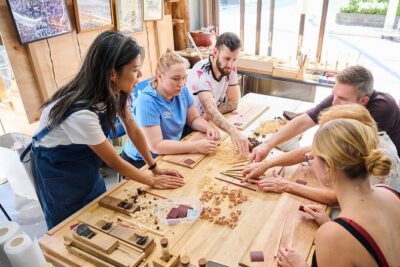

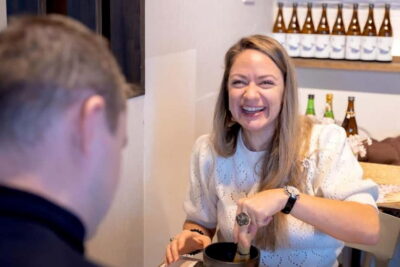
Matcha Making Experience with Mochi Sweets in Asakusa
Read our review →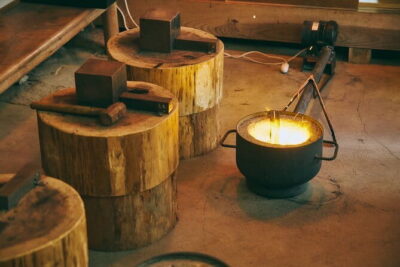
Authentic knife making experience at a blacksmith in Kyoto
Read our review →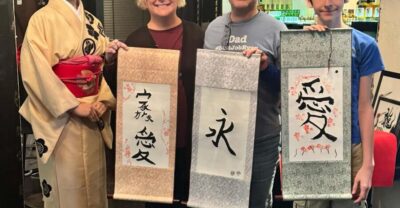
Calligraphy class at Buddhist temple in city center
Read our review →Browse the lists this tour appears in