
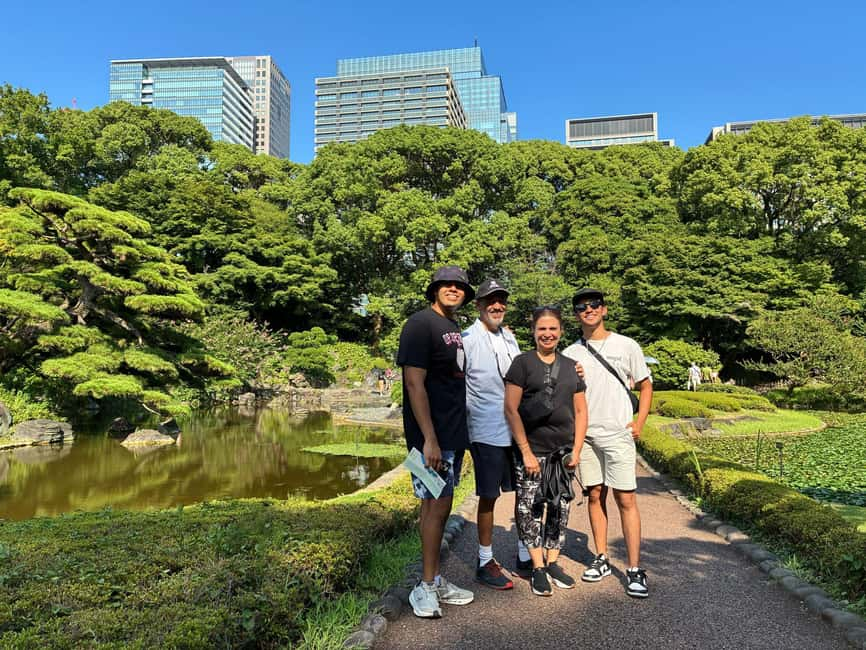
Reviewed · IMPERIAL PALACE & HISTORIC SITES
Tokyo: Edo Castle Ruins & Imperial Palace East Garden Tour
Edo Castle is gone, but its gates, stone walls, guardhouses, moat, and hilltop keep site still make central Tokyo feel surprisingly historic. I like that this two-hour walk links samurai-era defenses with the living Imperial Palace, and I like the peaceful finish in Ninomaru Garden, where koi move through the pond. The Tenshu-dai also gives you a useful view over the former castle grounds and the city beyond.
The main drawback is simple: you do not enter the Imperial Palace buildings or its inner grounds. This is a tour of the East Gardens and former Edo Castle site, so you should book it for history, gardens, and ruins rather than palace interiors. The quality also depends on your guide. Some guides, including Mari and Isao, have been praised for patient, detailed explanations, while one quiet outing felt little different from a walk through a park.
Key points to know before you book
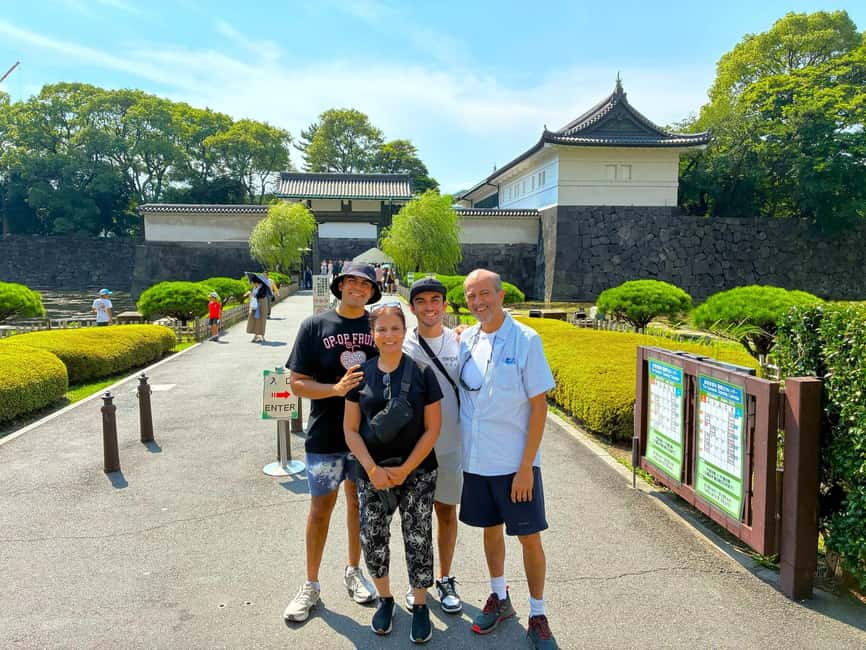
- Otemon Gate sets the scene: You enter through the castle’s grand former gateway before reaching the guard posts and ruins.
- The tour follows samurai security lines: Ote San-no-mon, Doshin Bansho, and Hyakunin Bansho show how carefully the castle was protected.
- The Tenshu-dai is a key stop: You see the site of Edo Castle’s main keep and enjoy broad views from its raised base.
- Ninomaru Garden provides the calm finish: Expect ponds, greenery, and koi after the heavier castle history.
- The guide makes the difference: English commentary can add much more than a self-guided stroll, but the level of detail may vary.
- It is a walking tour, not a palace visit: Comfortable shoes, water, and realistic expectations matter.
What this two-hour walk really covers
This experience gives you a compact introduction to the political heart of old Tokyo. You begin near Wadakura Fountain and move east toward the former Edo Castle grounds, passing through major gates, security posts, ruins, gardens, and the site of the old main keep.
The word castle can be misleading if you picture a complete Japanese fortress with timber buildings and soaring roofs. Edo Castle was once one of the greatest castle compounds in Japan, but much of it has disappeared. What remains is a set of powerful clues: massive stone foundations, moats, gates, guardhouses, broad open spaces, and the high base where the main keep once rose.
That is where a guide earns the fee. On your own, you can see the stones and take photographs. With a good English-speaking guide, you can connect them to the shoguns, emperors, samurai guards, castle planning, and the later use of the site by Japan’s Imperial Family.
The tour costs $37 per person and lasts two hours. That is a reasonable price if you want historical context without giving half a day to a large museum or a longer city tour. It is less attractive if you prefer to wander at your own pace or already know the story of Edo Castle.
Other historic grounds in Tokyo:
- Tokyo: Imperial Palace and Shogun Historical Walking Tour
★ 5.0 · 2,251 reviews - Tokyo: Imperial Palace Japanese History Walking Tour
★ 4.9 · 987 reviews - Tokyo: Imperial Palace and Shogun Walking Tour
★ 4.9 · 935 reviews
Meeting at Wadakura Fountain
Your meeting point is outside the Wadakura Free Rest Area, in front of the entrance. The guide waits with a yellow sign, which gives you a clear visual marker in a busy part of central Tokyo.
The first stop is Wadakura Fountain National Park. The fountain was built to commemorate a royal wedding, and the guide explains its connection to the Imperial Family. This is a good opening because it brings the story into the present before the walk moves back through the shogun era.
You also visit Wadakura Moat. Water was not just decoration in a Japanese castle compound. Moats slowed attackers, controlled movement, and helped define the boundaries of the fortified center. A five-minute stop will not turn you into a castle engineer, but it gives you the basic idea before you reach the gates.
Bring water and wear comfortable shoes. The tour is only two hours, but it includes several outdoor stops and uneven historic surfaces. There is no food or drink included, so plan that part yourself.
Otemon Gate and the castle’s first defenses
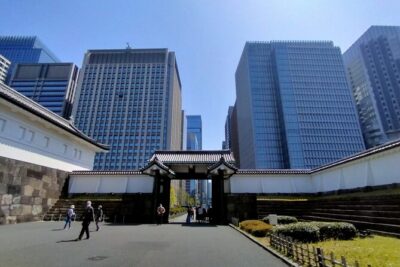
Otemon Gate is one of the most rewarding early stops. It was the main entrance to the castle’s eastern side, and its scale helps you picture how important and heavily controlled Edo Castle once was.
From there, the route reaches the Ote San-no-mon Gate Ruins. The remains may look modest beside Tokyo’s modern towers, but their value is in the layout. A guide can explain how gates, turns, walls, and checkpoints made it difficult for an enemy to move directly toward the castle center.
You then see Doshin Bansho and Hyakunin Bansho, two former guard facilities. These names can blur together if you visit without context, so listen for the different roles they played in castle security. The point is not simply that samurai were present, but that access was managed in stages.
Hyakunin Bansho is especially useful for understanding the manpower behind the fortress. Its name is associated with a hundred guards, and the stop helps you picture the castle as a working military and administrative center, not just a residence for a powerful ruler.
I like this early stretch because the history stays tied to visible features. You are not standing in front of an empty lawn while someone recites dates. You are looking at gates and guardhouses while learning why they were positioned where they were.
Edo Castle ruins and the Honmaru grounds
The route continues into the Edo Castle ruins and the Honmaru area. Honmaru means the main central compound, the heart of the castle where the principal buildings and halls were located.
The Site of Edo Castle Honmaru, once home to the main hall, helps explain the scale of the compound. The original buildings are not here for you to enter, so this is a place where imagination matters. A guide can fill in the missing walls and rooms with the political story of the shogunate.
This is also where expectations matter most. If you want preserved interiors, ornate furnishings, or a complete castle tower, you will find the visit limited. If you enjoy reading a site through foundations, open spaces, and surviving stonework, the stop becomes much more rewarding.
You also see a restoration model of the Edo Castle keep. The model is particularly helpful because it shows what the massive tower would have looked like when complete. The keep itself is no longer standing, so the model gives you a visual reference that the ruins alone cannot provide.
Other castles reached from Tokyo:
- Tokyo Castle & Imperial PalaceーShogun Walking Tour
★ 4.7 · 1,068 reviews - Tokyo Castle & Imperial PalaceーShogun Walking Tour
★ 5.0 · 724 reviews - Imperial Palace East Garden and Edo Castle Walking Tour in Tokyo
★ 5.0 · 510 reviews - Tokyo Castle, Imperial Palace, Shogun & Garden Walking Tour
★ 5.0 · 211 reviews
The Tenshu-dai and a city view
The Tenshu-dai is the raised stone base for the former castle keep. From here, you get panoramic views of the surrounding area and a strong sense of the old castle’s commanding position.
This is one of the tour’s best photography stops. You can look across the grounds and compare the quiet historic site with the modern city nearby. The contrast tells you something important about Tokyo: its present-day center grew around layers of political power rather than replacing them entirely.
The Tenshu-dai is not a restored tower, and there is no climb through a castle interior. Still, the broad base and open view help you understand why the keep mattered. It was a symbol of authority as much as a defensive structure.
The guide may also point out the prefectural tree area, listed in the route as 都道府県の木. This stop is less dramatic than the gate or keep site, but it adds a different note to the walk. The grounds are not only a history lesson. They are also maintained public gardens with plantings and open paths.
Suwan Tea House and the East Gardens
Suwan Tea House, or Suwa-no-Chaya, gives the itinerary a change of pace. After gates, guardhouses, and the former castle center, a tea house brings in the quieter side of Japanese court and garden culture.
The stop is guided for about ten minutes. You should not expect a tea ceremony or a food tasting, since food and drinks are not included. Instead, treat it as a chance to see a traditional-style structure within the garden setting and hear how the site’s character shifted from military headquarters to an imperial garden.
The Imperial Palace East Gardens are the main setting for the second half of the walk. They are open garden grounds connected with the former Edo Castle site, not the private palace buildings where the Imperial Family resides.
This distinction is important. The tour includes admission to Edo Castle and the Imperial Palace area covered by the experience, but it does not take you into the palace buildings or the inner grounds. You will see gardens and historic remains, not throne rooms, private residences, or ceremonial interiors.
Ninomaru Garden and the koi pond
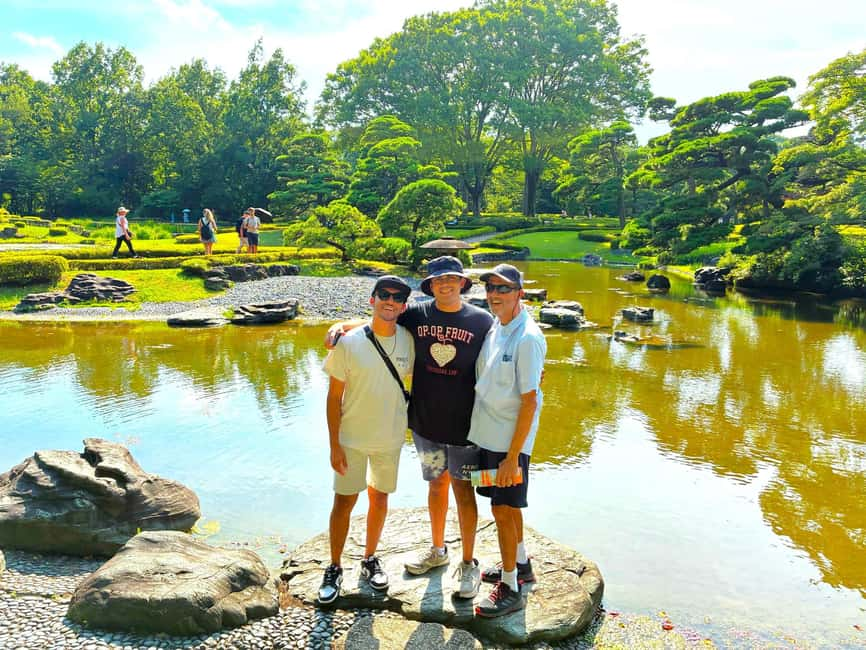
Ninomaru Garden is the gentlest part of the route. Its ponds, plantings, and koi give you time to slow down after the more factual castle stops.
I like ending here because the garden shows another side of the site. Edo Castle was a place of power and defense, but it also had carefully planned spaces for beauty, status, and relaxation. You get a better feel for that balance while walking beside the pond than you would from a list of architectural facts.
The garden stop lasts about fifteen minutes. That is enough for photographs and a look at the koi, but not enough for a long, unhurried garden visit. If you want to linger over every path, you may prefer to return on your own after the tour ends.
The route returns to the Wadakura Free Rest Area. Because the start and finish are in the same general area, you can continue sightseeing nearby without arranging a separate pickup. Hotel pickup and drop-off are not included.
How much value do you get for $37?
At $37, the strongest part of the value is the live guide. Admission to the site matters, but the gardens and ruins can be visited with less explanation on your own. You are paying mainly for a structured route and an English-speaking person who can make sense of what remains.
The price feels fair if your guide is like Mari or Isao, who have been described as friendly, patient, and willing to answer questions. One guide was praised for taking extra time to explain the palace and Japan’s history, and another was noted for answering questions carefully. That kind of conversation can turn a short walk into a useful introduction to Japanese history.
The value is weaker if the commentary is very brief. A two-hour stroll through open gardens is easy to arrange independently, and one quiet experience was judged not much different from walking through the park alone. I would book this tour if you want help understanding the site, but I would not pay the fee expecting a museum-style stream of detail at every stop.
Private and small-group options are available. A smaller group can make it easier to ask questions and hear the guide, especially at open-air stops. If you choose a private option, the extra cost may make sense when you have a strong interest in Japanese political history or want the pace adjusted for your group.
Who should book this experience?
I would recommend it to first-time visitors who want a manageable introduction to Tokyo’s historical center. It works well as a two-hour addition to a busy sightseeing day because the route covers several major points without taking you far outside central Tokyo.
History fans will get the most from the gates, guardhouses, Honmaru site, and Tenshu-dai. Garden lovers may prefer the latter half, especially Ninomaru Garden and the koi pond. Photographers will appreciate the mix of stonework, water, garden views, and modern city scenery.
This is not a strong choice for anyone who mainly wants to enter the Imperial Palace. You cannot do that here. It is also not suitable for children under six, people with mobility impairments, or wheelchair users, according to the activity information.
The tour is conducted in English. Guides may have different styles, so come prepared with a few questions if you want a fuller explanation. Asking about the shogunate, the castle’s defenses, or the transition from Edo Castle to the Imperial Palace should help you get more from the walk.
Cancellation is flexible up to 24 hours before the start for a full refund, and you can reserve now and pay later. Those terms are useful when Tokyo plans are still shifting, but they should not be the main reason to book.
Final verdict: a useful history walk with realistic limits
Book this tour if you want the story behind Tokyo’s castle ruins, not just a pleasant garden stroll. The best moments come at Otemon Gate, the guardhouses, the Tenshu-dai, and Ninomaru Garden, where a good guide connects military history, royal history, and daily scenery.
Skip it if you need palace interiors, a complete castle, or a guaranteed lecture packed with detail. The site is accessible on its own, and guide quality appears to vary. For $37, I see it as a sensible choice for a first visit, especially in a small group with an engaged guide. Just arrive expecting ruins and gardens, then let the surviving stones do some of the talking.
FAQ
Where does the tour meet?
Meet outside the Wadakura Free Rest Area, in front of the entrance. The guide will be holding a yellow sign.
How long does the tour last?
The tour lasts two hours.
What language is the tour conducted in?
The live tour guide speaks English.
Can I enter the Imperial Palace buildings?
No. The inner grounds and palace buildings are not open to the public on this tour because the Imperial Family still resides there.
What can I see instead of the palace interiors?
You visit the Imperial Palace East Gardens and the historic remains of Edo Castle, including gates, guardhouses, castle ruins, the Honmaru site, the keep model, and Ninomaru Garden.
Is admission included?
Yes. Admission to Edo Castle and the Imperial Palace area covered by the tour is included.
Is hotel pickup provided?
No. Hotel pickup and drop-off are not included.
What should I bring?
Bring comfortable shoes, water, and a camera.
Are food and drinks included?
No. Food, drinks, and personal expenses are not included.
Is the tour suitable for wheelchair users?
No. The activity is not suitable for wheelchair users or people with mobility impairments. Children under six are also not accepted.
More gardens in Tokyo
- Tokyo: Imperial Palace East Gardens Walking Tour
★ 4.8 · 353 reviews - Tokyo: Edo Castle & East Garden of the Imperial Palace Tour
★ 4.7 · 112 reviews - Tokyo: Tsukiji Market and Hama-rikyu Gardens Guided Tour
★ 4.8 · 73 reviews - Tokyo: Pvt. Tour – Edo Castle & Imperial Palace East Gardens
★ 4.8 · 63 reviews
Just added in Tokyo
- The 10 Tastings of Tokyo With Locals: Private Street Food Tour★ 5.0 · 48 reviews
- Small Town in the Big City: Tasting Tokyo’s Kichijoji★ 5.0 · 195 reviews
- Small Town in the Big City: Tasting Tokyo’s Kichijoji★ 5.0 · 16 reviews
- EXCLUSIVE Tokyo Secret: Kichijoji Small-Group Food & Bar Hopping★ 5.0 · 29 reviews
- Explore Kichijoji: Walk Through One of Tokyo’s Beloved Districts★ 5.0 · 21 reviews
- :Tokyo,Shibuya/ Pro Photography in Kimono / English-Friendly★ 5.0 · 26 reviews
- 【R34】Tokyo:Private Daikoku tour in Modified R34★ 4.9 · 92 reviews
- Tokyo:Calligraphy &Make your original folding fan in Asakusa★ 5.0 · 62 reviews
Imperial Palace & Historic Sites, compared.
Imperial Palace and Shogun Historical Walking Tour
Read our review →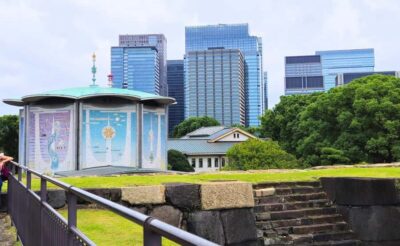
Imperial Palace East Garden and Edo Castle Walking Tour in Tokyo
Read our review →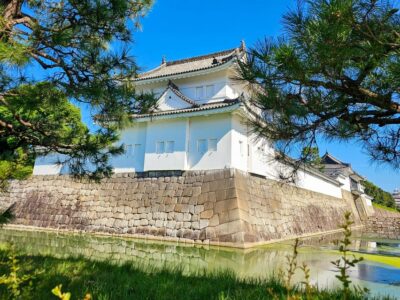
Imperial Palace & Nijo Castle Guided Walking Tour
Read our review →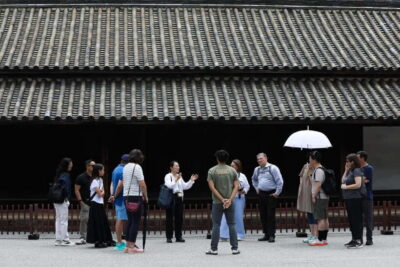
Imperial Palace, Sensō-ji Temple, & Tokyo Tower Tour
Read our review →
Tokyo Castle, Imperial Palace, Shogun & Garden Walking Tour
Read our review →
Imperial Palace, the history of Japan (ENGLISH GUIDE)
Read our review →Browse the lists this tour appears in